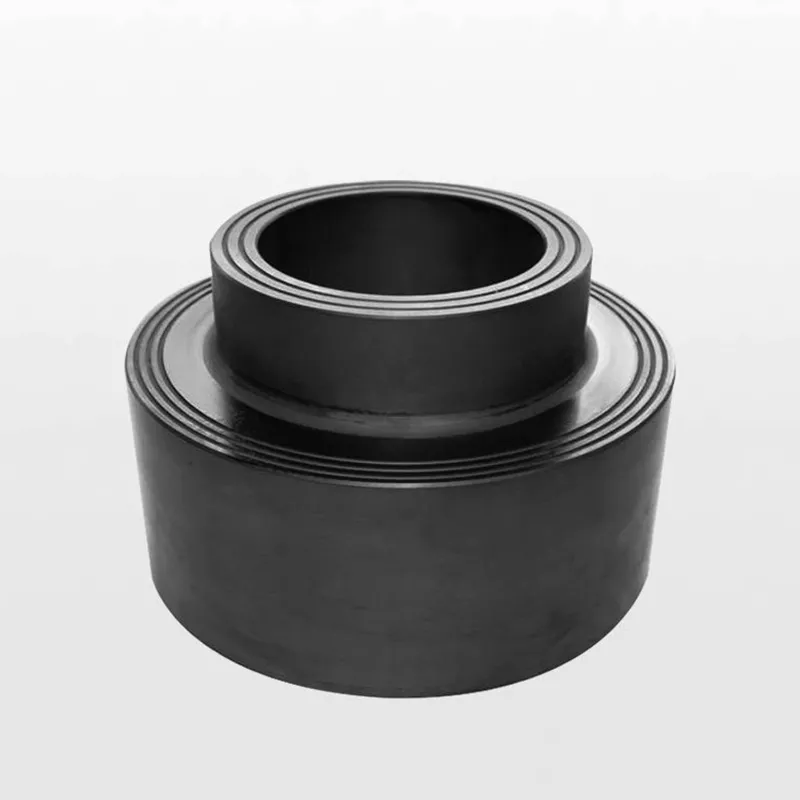
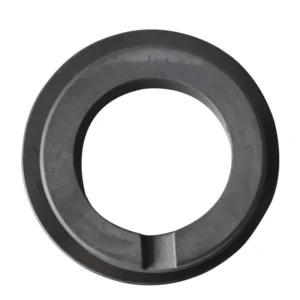
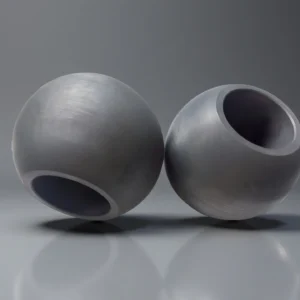
What Is a Silicon Carbide End Cover?
A silicon carbide end cover is a ceramic sealing and closing component used at the end of a block-type heat exchanger assembly. It helps maintain compression, media separation and sealing stability between the heat exchange block, gasket and external connection structure.
Compared with graphite, metal or polymer-lined covers, silicon carbide provides higher hardness, stronger corrosion resistance and better dimensional stability in aggressive chemical and thermal environments. This makes it suitable for heat exchangers handling HF, sulfuric acid, hydrochloric acid, alkali solutions, solvent vapors, chloride-containing streams and abrasive process fluids.
Why Use SiC End Covers in Corrosive Heat Exchanger Systems?
- Strong Acid Exposure
Graphite, metal or lined covers may erode, pit or lose sealing geometry when exposed to strong acids or mixed chemical media. Silicon carbide supports stable chemical resistance in many acid and mixed-media environments, helping the end cover maintain a reliable sealing interface during operation.
- Abrasive Slurry Flow
Particle-containing fluids can gradually wear sealing steps, grooves and contact surfaces, which may reduce compression uniformity over time. The high hardness of silicon carbide helps reduce surface wear and maintain consistent contact geometry in abrasive process streams.
- Repeated Thermal Cycling
Temperature changes can create expansion mismatch, gasket stress variation, leakage risk or cracking around the sealing area. Silicon carbide has low thermal expansion, which helps maintain dimensional stability when the heat exchanger is exposed to repeated heating and cooling cycles.
- Long Operating Campaigns
Chemical processing lines often require fewer shutdowns and more predictable maintenance planning. Stable ceramic geometry helps the SiC end cover support consistent sealing performance over extended service intervals, especially in systems where frequent replacement is costly.
- Custom Block Interface
Replacement end covers must match the existing heat exchanger block, gasket area and mounting structure. ADCERAX supports drawing-based machining for custom diameter, thickness, steps, grooves, sealing faces and mounting interfaces to fit specific block heat exchanger layouts.
Technical Specifications of Silicon Carbide End Cover
The following material properties provide a general reference for reaction-bonded silicon carbide end covers. Final design suitability should be confirmed according to the actual media, pressure, temperature, gasket material and block heat exchanger structure.
| Property |
Specification |
| Material |
Reaction-Bonded Silicon Carbide (RBSiC / SiSiC) |
| Density |
3.03–3.10 g/cm³ |
| Hardness |
>2400 HV |
| Flexural Strength |
380–450 MPa |
| Compressive Strength |
>2000 MPa |
| Thermal Conductivity |
28–32 W/m·K |
| Thermal Expansion Coefficient |
4.5×10⁻⁶ /K (20–1000°C) |
| Maximum Operating Temperature |
1350°C (oxidizing atmosphere) |
| Acid Resistance |
Suitable for many HF, H₂SO₄, HCl, HNO₃ and mixed-acid conditions after application review |
| Alkali Resistance |
Suitable for selected NaOH / KOH conditions after temperature and concentration review |
| Oxidation Behavior |
Stable under suitable oxidizing conditions up to 1350°C |
| Porosity |
<0.5% |
Dimensions of Silicon Carbide End Cover
|
SiC End Cover |
|
Item No. |
Diameter(mm) |
Height (mm) |
|
AT-THG-HRK2001-1 |
Customize |
Packaging of Silicon Carbide End Cover
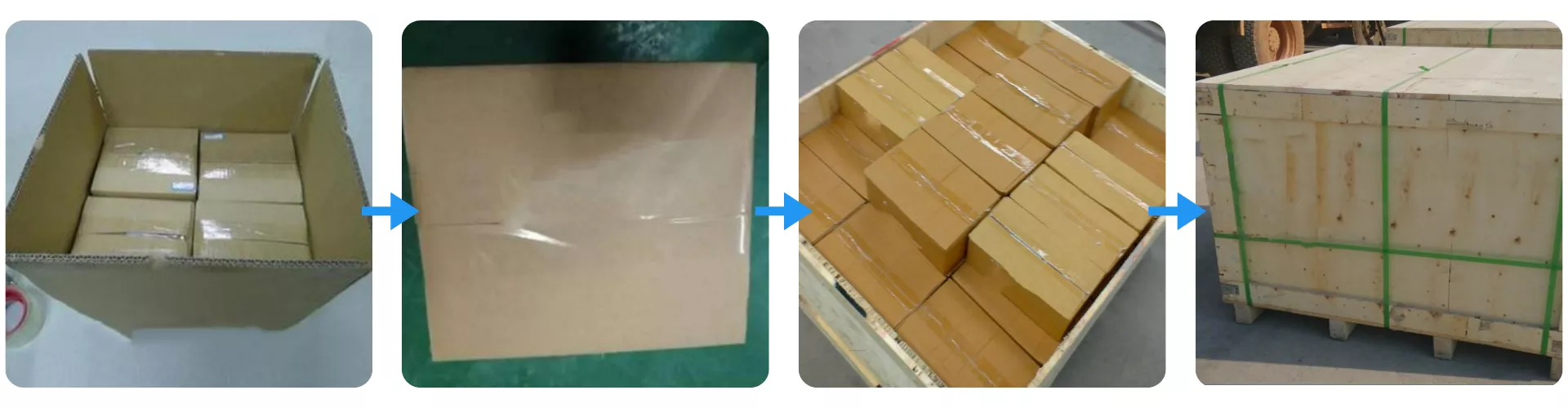
Silicon Carbide End Cover is packed in reinforced inner cartons to protect each component from impact during handling and transit. The sealed cartons are then consolidated into export-grade wooden crates designed for long-distance shipment. This multilayer packaging method ensures stable loading, moisture resistance, and safe arrival at the customer’s facility.
Applications of Silicon Carbide End Covers in Heat Exchanger Systems
Silicon carbide end covers are used in block heat exchanger systems where aggressive media, temperature changes and sealing pressure create high demands on component stability. ADCERAX supports custom SiC end covers for chemical processing, acid recovery, pharmaceutical production and environmental treatment systems.
Fluorochemical and Acid Processing Heat Exchangers
In fluorochemical and acid-processing units, end covers must resist chemical attack while maintaining sealing contact with the heat exchange block and gasket. SiC end covers are suitable for systems where graphite or metallic covers may suffer from surface erosion, swelling, pitting or loss of compression stability.
For these applications, ADCERAX reviews the acid type, concentration, operating temperature, pressure cycle and gasket material before confirming the end-cover geometry.
Sulfuric Acid Recovery and Waste-Heat Systems
Sulfuric acid recovery and waste-heat sections often combine corrosive vapor, thermal cycling and continuous compression loads. A silicon carbide end cover helps maintain stable interface geometry where long campaign operation and predictable maintenance planning are important.
Custom step design, sealing face control and thickness selection are especially important when the end cover must fit an existing block heat exchanger assembly.
VOC Off-Gas and Environmental Treatment Systems
VOC off-gas recovery, scrubbing and environmental treatment systems may expose heat exchanger components to chlorides, acidic condensate and particle-containing flow. SiC end covers help reduce wear on the sealing interface and support stable media isolation in demanding operating environments.
For these systems, buyers should provide flow conditions, expected particulates, temperature range and cleaning media so the end cover design can be reviewed before production.
Handling and Installation Guide for SiC End Covers
Proper handling and installation are important because silicon carbide end covers are hard and stable under compression, but ceramic edges and sealing steps can still be damaged by sharp impact or uneven assembly stress.
-
Pre-Installation Handling of the Silicon Carbide End Cover
1. Inspect the sealing surface before assembly.
Check the sealing face, edges and mounting area for cracks, chips, scratches or contamination. Any visible defect should be reviewed before installation to avoid uneven compression or leakage risk.
2. Avoid impact during transportation.
Silicon carbide components should be handled with cushioned support. Do not drop, strike or clamp directly on the sealing steps, edges or thin sections.
3. Clean all contact surfaces.
Remove dust, packaging fibers, oil residue and chemical deposits before mounting. Clean contact surfaces help maintain uniform sealing pressure.
-
Installation Guidelines for Consistent Sealing Performance
1. Confirm alignment with the heat exchanger block.
The end cover should be aligned with the block interface before compression. Misalignment may create local stress and reduce sealing reliability.
2. Apply compression evenly.
Fasteners should be tightened gradually and uniformly according to the equipment assembly procedure. Sudden or uneven loading may damage the ceramic or gasket interface.
3. Verify gasket compatibility.
The gasket or sealing material should match the working media, temperature and pressure conditions. This is especially important for HF, H₂SO₄, HCl, alkalis and mixed-acid environments.
-
Operational Recommendations for Chemical Processes
1. Control temperature changes during startup.
Gradual heating helps reduce thermal stress between the end cover, gasket and heat exchanger block. Rapid temperature changes should be avoided where possible.
2. Maintain stable flow conditions.
Abrasive slurry or particle-rich media should be kept under controlled flow conditions to reduce localized wear on sealing steps and contact areas.
3. Check sealing pressure during operation.
Periodic checks help identify gasket relaxation, bolt loosening or uneven compression before they develop into leakage problems.
-
Maintenance and Long-Cycle Service Practices
1. Inspect the sealing interface regularly.
Routine inspection helps detect surface wear, chemical etching, deposits or early edge damage before shutdown risk increases.
2. Record operating conditions.
Temperature cycles, acid concentration, pressure changes and flow rate should be documented. These records help evaluate replacement timing and future design improvements.
3. Store spare end covers properly.
Spare SiC end covers should be stored in a dry, clean and vibration-free area. Separate packaging helps prevent edge chipping during storage and handling.