Process-Stable Silicon Carbide Wafer Boat for PV Furnace Operations

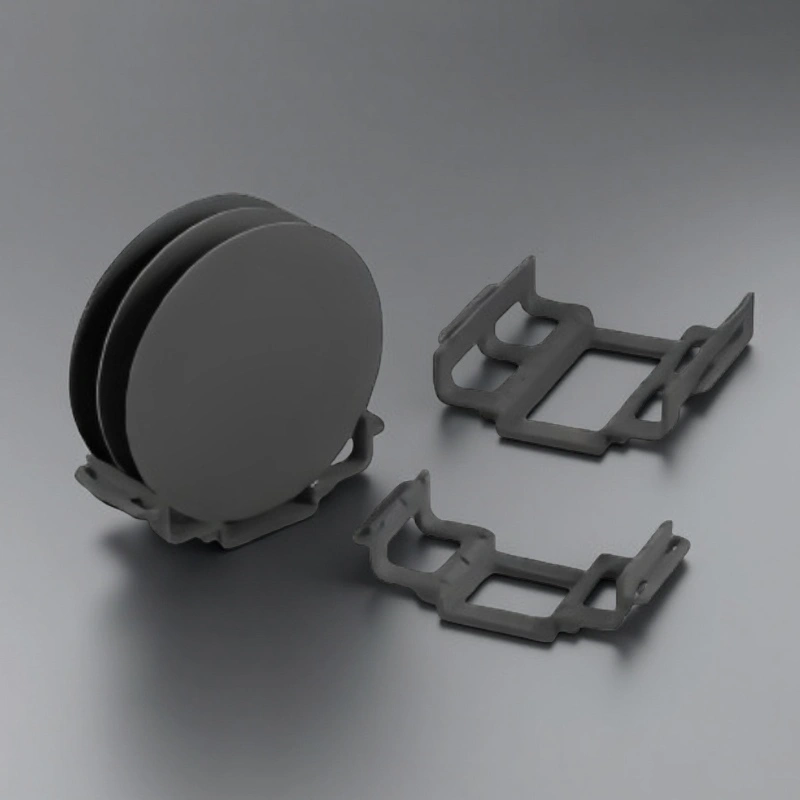
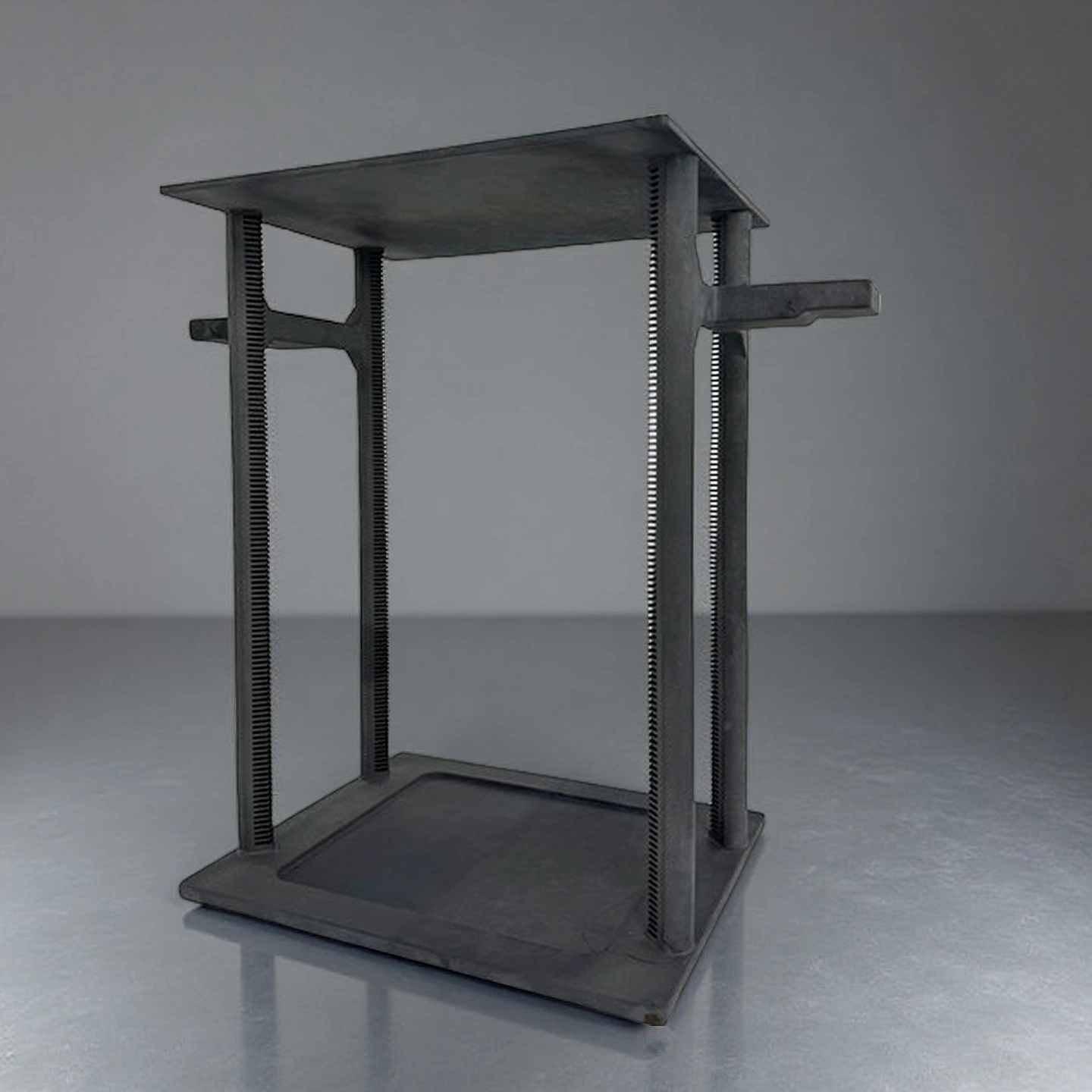
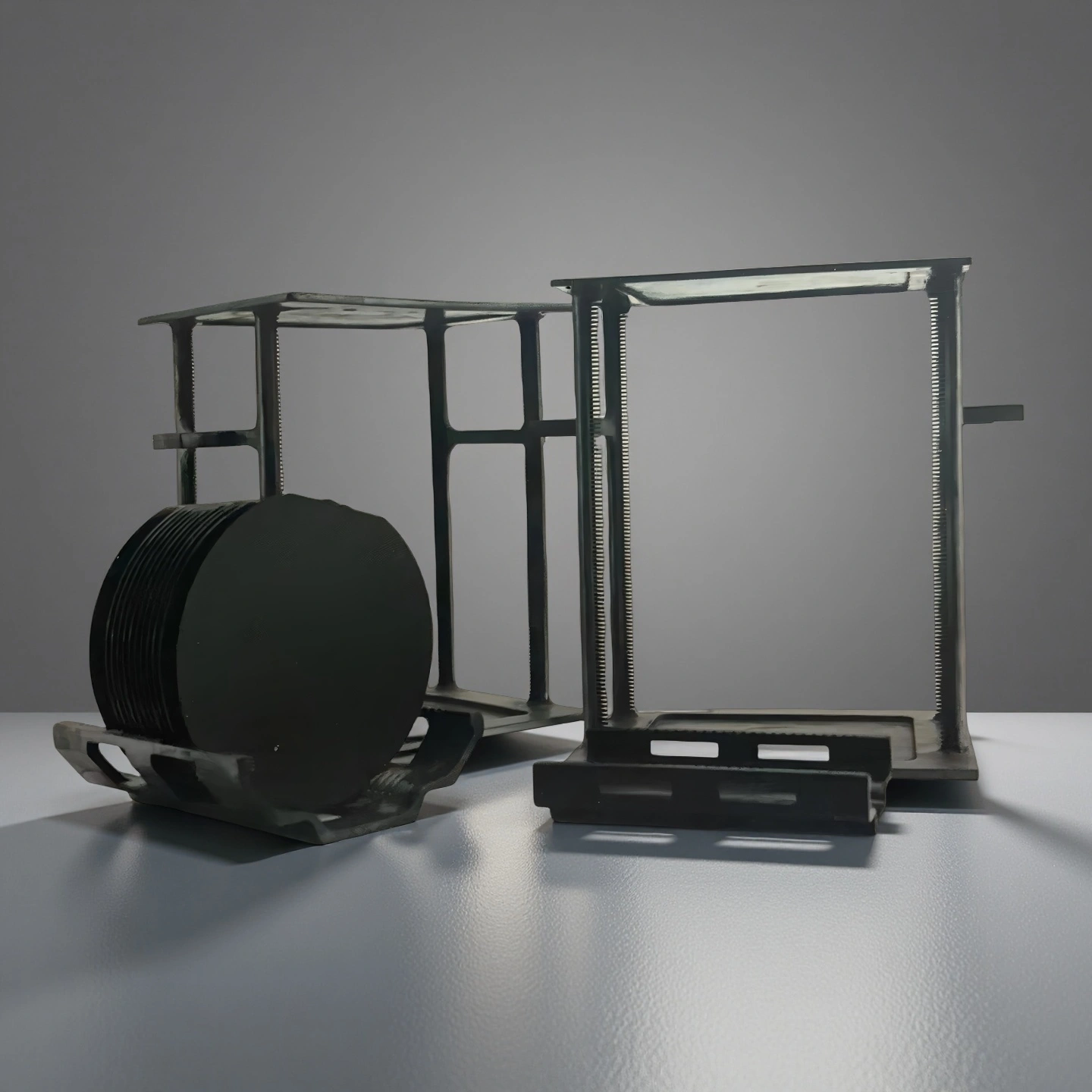
ADCERAX® supplies custom silicon carbide wafer boats for PV diffusion, oxidation, annealing and LPCVD furnace processes. The SiC structure helps maintain stable slot geometry, wafer spacing and gas-flow behavior under repeated high-temperature cycles.

Each wafer boat is made to customer drawings, wafer size, slot pitch and loading requirements. ADCERAX reviews temperature, atmosphere and furnace orientation before confirming the suitable SiC grade and design.

Catalogue No. AT-SIC-J1001
Material RBSiC / SSiC high-density silicon carbide
Max Operating Temperature 1400–1500°C continuous furnace operation
Thermal Expansion Coefficient 4.0–4.5×10⁻⁶/K (RT–1000°C)
Flexural Strength 220–290 MPa (RBSiC) / 350–430 MPa (SSiC)
Engineering RFQ Review
Small-Batch Custom Support
Factory-Direct Manufacturing
Drawing & Process Review

ADCERAX® Silicon Carbide Wafer Boat supports wafer handling and high-temperature processing in diffusion, oxidation and annealing furnace environments where stable geometry and thermal consistency are critical. Its SiC structure maintains mechanical rigidity and predictable behavior across extended heating cycles, allowing controlled wafer positioning and reliable gas-flow interaction throughout the process chamber. This performance makes the SiC Wafer Carrier Boat suitable for equipment builders and furnace system integrators seeking dependable loading stability and long operating life under demanding thermal conditions. For broader furnace carrier assemblies, ADCERAX also supports silicon carbide wafer handling furnace components for PV thermal-processing equipment.

Precision Material and Thermal Performance Features of the Silicon Carbide Wafer Boat

  • High-Temperature Stability Across Continuous Furnace Cycles


    The structure maintains shape under 1400–1500°C thermal exposure, allowing the sintered sic wafer boat to remain dimensionally stable through extended heat cycles.
    Its low thermal expansion of 4.0–4.5×10⁻⁶/K supports uniform wafer spacing during long oxidation or diffusion runs without drift.
    High flexural strength of 350–430 MPa ensures the carrier endures repeated loading sequences without deformation accumulation.

  • Controlled Surface and Slot Geometry for Consistent Wafer Alignment


    Surface roughness of Ra 0.2–0.6 μm minimizes friction and reduces particle generation during loading and unloading.
    Slot pitch stability within ±0.05–0.10 mm supports accurate wafer placement and repeatable gas-flow interaction during furnace processing.
    Straightness maintained at ≤0.05 mm / 100 mm ensures predictable wafer support over the full carrier length.

  • Chemical and Atmospheric Compatibility for Furnace Process Requirements


    The high purity sic wafer boat remains chemically inert in H₂, N₂, Ar, NH₃, Cl₂, HCl, and SiH₄ atmospheres, supporting clean thermal environments.
    Oxidation resistance validated in O₂-based cycles enables stable performance in dry and wet oxidation steps without surface degradation.
    Low porosity at <0.1–0.5% reduces absorption and prevents micro-crack development during repeated heating and cooling sequences.

Technical Specifications for Silicon Carbide Wafer Boats

The following values are typical reference ranges for RBSiC and SSiC wafer boat designs. Final specifications should be confirmed according to wafer size, furnace layout, loading weight, process atmosphere and drawing requirements.

Specification Typical Reference Range Buyer Relevance
Material RBSiC / SSiC high-density silicon carbide Determines strength, porosity and thermal-cycle stability.
Bulk Density 3.05–3.17 g/cm³ Supports stable structure under repeated furnace use.
Open Porosity <0.5% for RBSiC / <0.1% for SSiC Helps reduce particle entrapment and gas absorption.
Flexural Strength 220–290 MPa for RBSiC / 350–430 MPa for SSiC Important for loaded wafer stacks and long carrier spans.
Thermal Conductivity 80–120 W/m·K Helps maintain more balanced thermal behavior.
Thermal Expansion 4.0–4.5×10⁻⁶/K Helps reduce dimensional drift during heating and cooling.
Service Temperature Grade-dependent, usually reviewed by process Should be confirmed according to furnace atmosphere and cycle profile.
Surface Finish Drawing-based Ra control Affects particle risk and wafer contact behavior.

The final material grade should be selected according to the silicon carbide ceramic structure, furnace atmosphere and loading conditions.

Dimensions of Silicon Carbide Wafer Boat

Silicon Carbide Wafer Boat
Item No. Diameter(mm) Height (mm)
AT-SIC-T1001 Customize

Packaging and Shipment Protection for Silicon Carbide Wafer Boat

Silicon Carbide Wafer Boat units are packed in reinforced multi-layer cartons with internal cushioning to prevent vibration and contact damage during transport. Each carton is further secured with strapping and stacked within a protective wooden frame to stabilize the load throughout long-distance handling. The finished pallets are prepared for international shipping, ensuring safe arrival under standard sea or air-freight conditions.
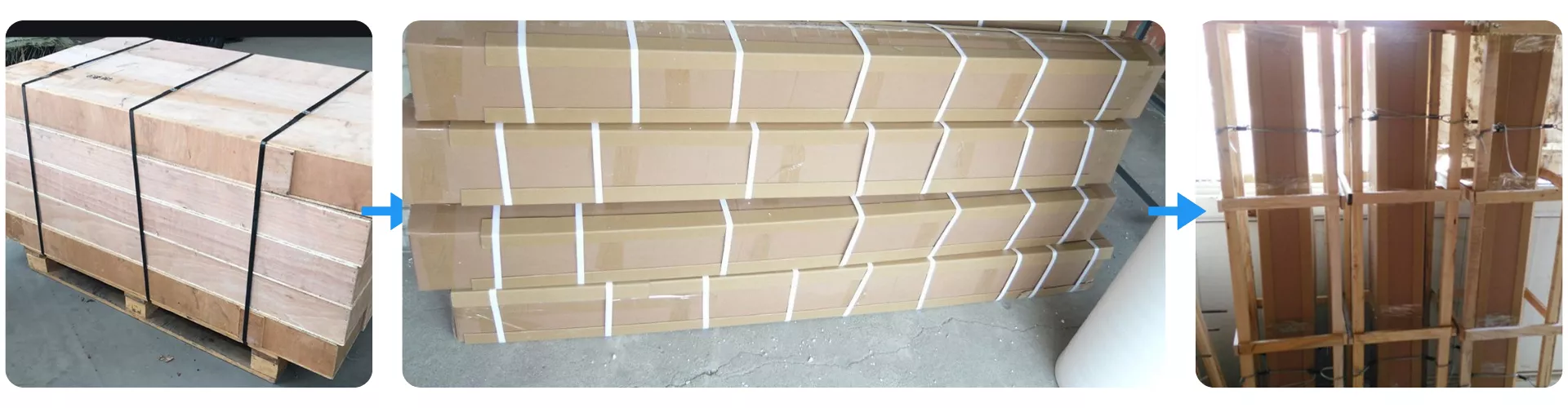

ADCERAX® Packaging of Silicon Carbide Wafer Boat


PV Furnace Applications for Silicon Carbide Wafer Boats

Silicon carbide wafer boats are used in photovoltaic thermal processes where wafer spacing, carrier rigidity and gas-flow exposure must remain stable through repeated high-temperature cycles. ADCERAX designs SiC wafer boats for diffusion, oxidation, annealing and LPCVD-related furnace layouts, with geometry reviewed according to the actual equipment interface.

  • Phosphorus Diffusion Furnaces

    In phosphorus diffusion furnaces, wafer boats must keep slot spacing stable while wafers are exposed to long high-temperature cycles and dopant gas flow. A silicon carbide wafer boat helps maintain carrier rigidity, reduce geometry drift and support more consistent wafer positioning across the loaded stack. For custom projects, ADCERAX reviews slot pitch, loading capacity, furnace tube size and wafer format before production.

  • Oxidation and Annealing Lines

    During oxidation and annealing, repeated heating and cooling can create stress in weaker carrier materials. SiC wafer boats provide low thermal expansion, high-temperature strength and good thermal shock resistance, helping reduce carrier deformation and wafer-position variation during repeated cycles. This makes the component suitable for PV lines requiring stable batch handling and predictable thermal response.

  • LPCVD and Anti-Reflection Coating Processes

    For LPCVD and anti-reflection coating processes, consistent wafer spacing and stable gas exposure are important for coating uniformity. A silicon carbide wafer boat with controlled slot geometry and a clean contact surface helps maintain repeatable spacing inside the furnace tube. Surface finish, slot profile and cleaning requirements should be confirmed based on the process atmosphere and wafer handling method.

For related PV thermal-processing components, visit ADCERAX photovoltaic ceramics solutions.

Handling and Maintenance Guide for SiC Wafer Boats

Proper loading, inspection and cleaning help maintain slot accuracy, surface condition and long-term furnace compatibility. Operators should avoid impact on slot areas, uneven loading and abrasive cleaning methods that may affect wafer contact surfaces.

  • Wafer Loading

    Load wafers gently and keep the carrier aligned with the furnace loading arm or track. Avoid side pressure on slot walls, because localized force may affect slot geometry or create micro-damage on contact areas.

  • Pre-Furnace Inspection

    Before each run, check visible slot surfaces, support ribs and contact areas for debris, chips or abnormal wear. Remove loose particles using a non-abrasive cleaning method approved for the furnace process.

  • Thermal Operation

    Use ramp rates suitable for the actual furnace recipe and SiC grade. Sudden thermal transitions, uneven support or off-center loading may increase stress on the carrier body and reduce dimensional consistency.

  • Cleaning and Storage

    Use compatible cleaning procedures according to the process residue and material grade. Store wafer boats with separation protection and avoid stacking parts directly against slot surfaces.

Silicon Carbide Wafer Boat FAQ

  1. Q1: What is a silicon carbide wafer boat used for?

    A silicon carbide wafer boat is used to hold and position photovoltaic wafers during diffusion, oxidation, annealing and LPCVD-related furnace processes. It helps maintain stable wafer spacing, carrier rigidity and gas-flow exposure during repeated high-temperature cycles.

  2. Q2: Why use SiC instead of quartz or alumina for wafer boats?

    SiC offers higher thermal conductivity, stronger high-temperature rigidity and better thermal shock resistance than many conventional ceramic carriers. It is often selected when the furnace process requires stable slot geometry, reduced deformation and longer dimensional consistency under repeated thermal cycling.

  3. Q3: Can ADCERAX customize the slot pitch and wafer size?

    Yes. ADCERAX can manufacture silicon carbide wafer boats according to customer drawings, samples or furnace interface requirements. Slot pitch, slot depth, wafer size, loading capacity, support ribs, overall dimensions and contact surfaces can be reviewed before quotation.

  4. Q4: Which SiC grade should be selected for a wafer boat?

    The choice depends on furnace temperature, process atmosphere, loading weight, cleanliness requirements and dimensional tolerance. RBSiC may suit many structural furnace carrier needs, while SSiC is usually preferred when lower porosity, higher density and stronger thermal-cycle stability are required.

  5. Q5: What information should I provide for quotation?

    Please provide wafer size, slot pitch, slot count, overall dimensions, furnace orientation, process temperature, gas atmosphere, loading method, drawing files or sample photos. These details help ADCERAX review manufacturability, material grade and inspection requirements.

  6. Q6: How are silicon carbide wafer boats inspected before shipment?

    Inspection can include visual surface checks, dimensional verification, slot spacing review, flatness or straightness checks and packaging inspection. The exact inspection items should be confirmed according to the drawing, tolerance requirements and application environment.

  7. Q7: How should a SiC wafer boat be handled during use?

    Operators should avoid impact, uneven support, abrasive cleaning and direct force on slot walls. Regular inspection of slot surfaces, support areas and contact edges helps identify wear or damage before it affects wafer alignment or furnace repeatability.

customize size

Custom Dimension Review for Silicon Carbide Wafer Boats

Silicon carbide wafer boats are usually produced according to equipment drawings, existing carrier samples or furnace interface requirements. ADCERAX reviews the wafer size, slot pitch, slot depth, loading capacity, overall length, support position and furnace orientation before confirming a manufacturable design.

Dimension Item What to Confirm Why It Matters
Wafer Size 156 mm, 182 mm, 210 mm or custom PV wafer format Ensures proper slot clearance and wafer seating.
Slot Pitch Drawing-based spacing Controls wafer-to-wafer distance and gas-flow consistency.
Slot Depth and Width Matched to wafer thickness and handling method Reduces sliding, edge stress and loading damage.
Overall Length / Width / Height Matched to furnace tube and loading arm Ensures equipment compatibility.
Loading Capacity Number of wafers per boat Affects weight, span strength and thermal uniformity.
Support Rib Layout Drawing-based or sample-based Improves long-span rigidity.
Orientation Vertical or horizontal furnace use Determines slot profile and support geometry.
Inspection Points Flatness, straightness, slot spacing, visual surface Helps reduce installation and batch-use risk.

Related Products

ADCERAX - Your Trusted Advanced Ceramics Manufacturing Partner

Direct factory manufacturing with comprehensive ceramic materials expertise and global supply capabilities

China-Based Manufacturer

ADCERAX supplies ceramic components for overseas OEMs, equipment builders, and labs.

Custom Drawing Support

We review drawings, dimensions, materials, and application conditions before quotation.

Ceramic Process Control

Forming, sintering, machining, grinding, and finishing are arranged by part requirements.

Pre-Shipment Inspection

Dimensional checks, visual inspection, and packaging review help reduce procurement risk.

Get in Touch with Us

Our team will be happy to respond to you in less than 24 hours.

Pingxiang Factory — Silicon carbide, silicon nitride, high-temperature ceramics

Quick Quotation

*Our team will answer your inquiries within 24 hours.

*Your information will be kept strictly confidential.

Ready to Solve Your Engineering Challenge?

Partner with ADCERAX for reliable, high-performance advanced ceramic solutions. Our engineers are ready to discuss your project.

E-mail

info@adcerax.com

Phone

+(86) 0731-74427743 | WhatsApp: +(86) 19311583352

Response Time

Within 24 hours

Quick Quote

The more details you provide, the faster we can quote.

*We respond within 24 hours. All inquiries are confidential.

Get Your Custom Solution

The more details you provide, the faster we can respond.

customize size

*We respond within 24 hours. All inquiries are confidential.

Download Catalog