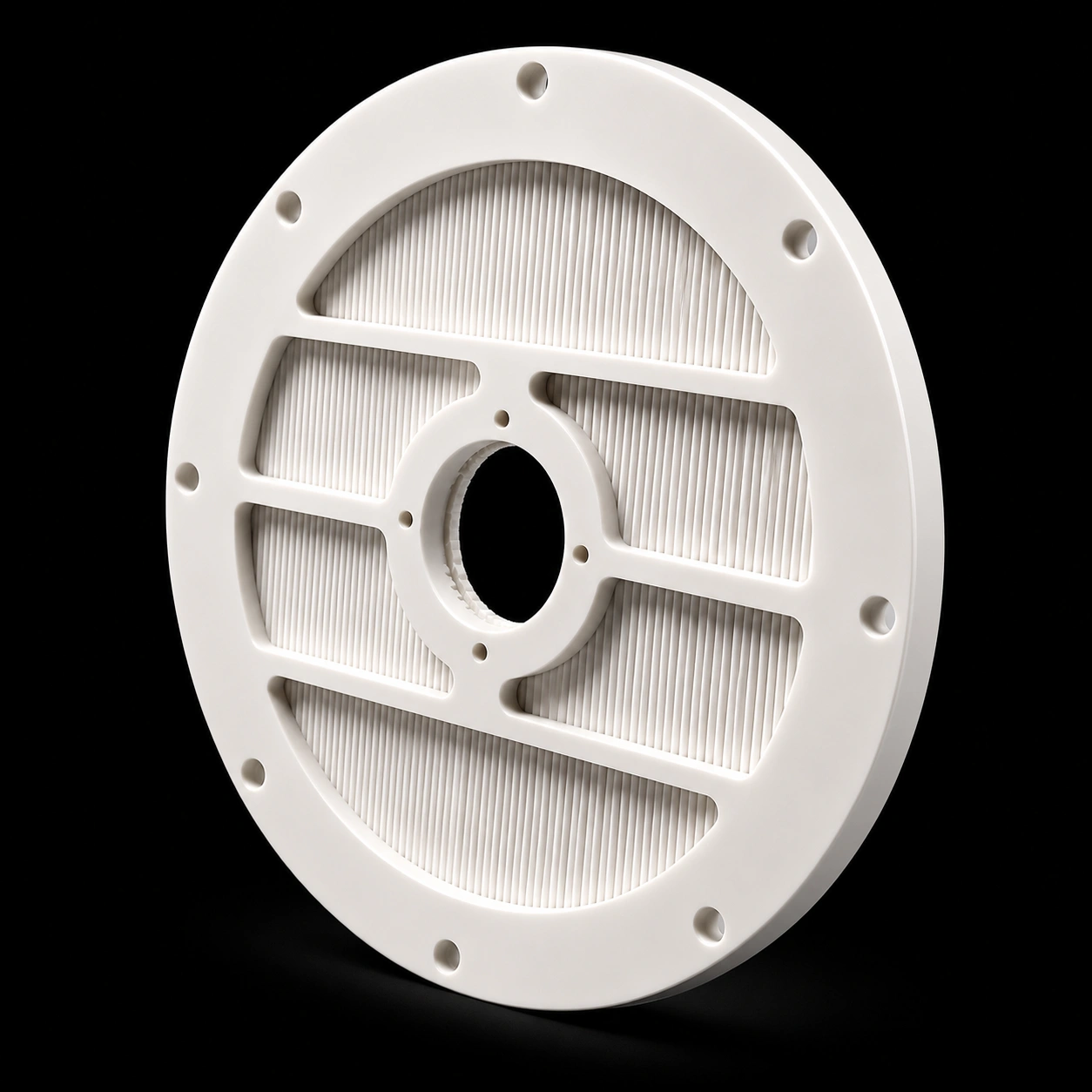
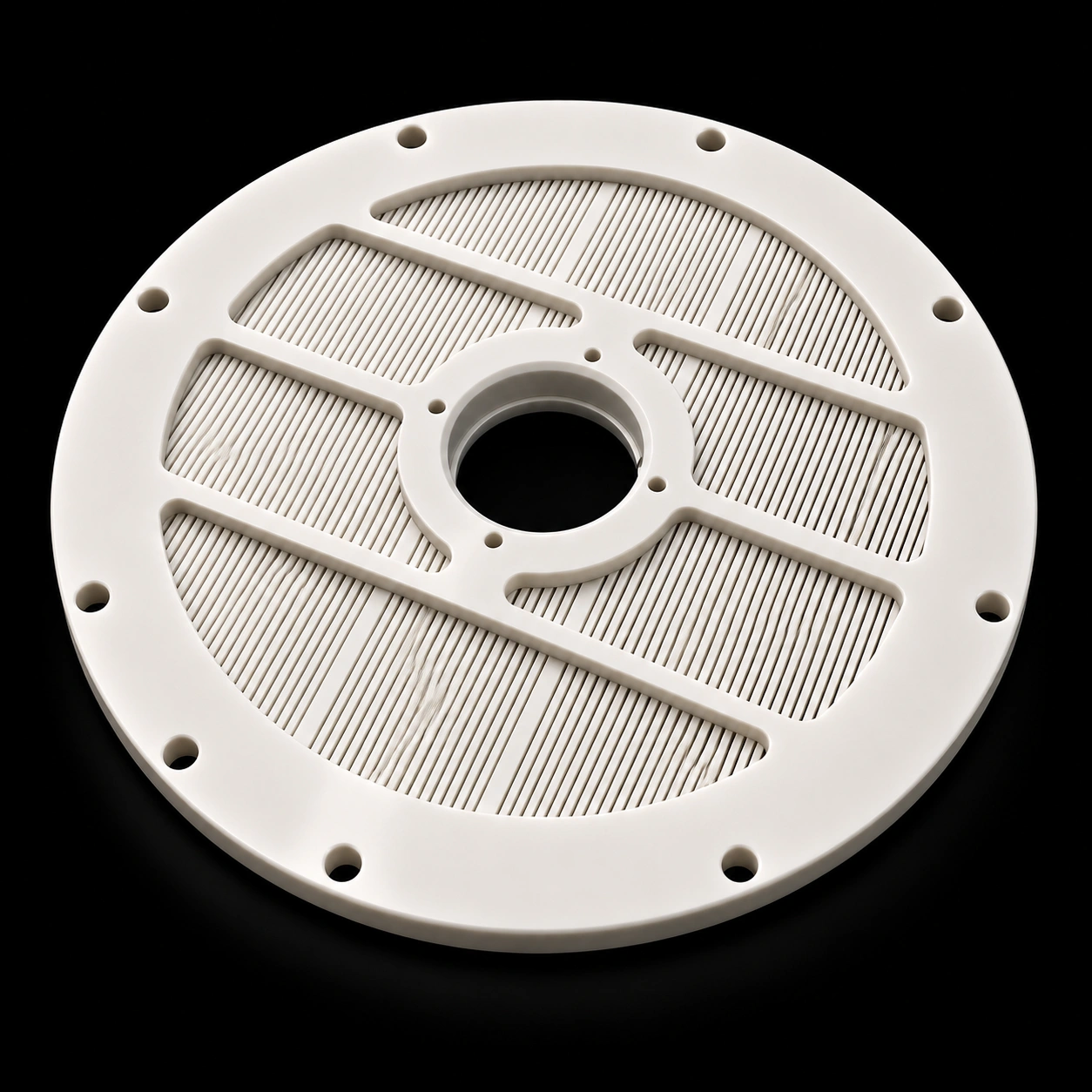
What Is a Zirconia Ceramic Separator Screen?
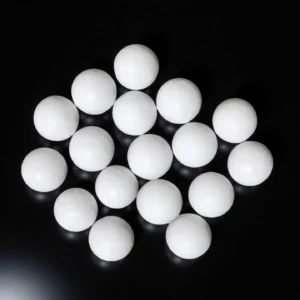
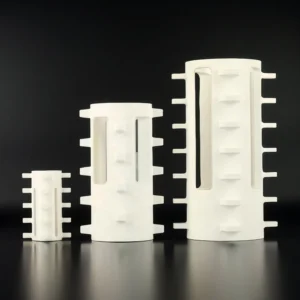
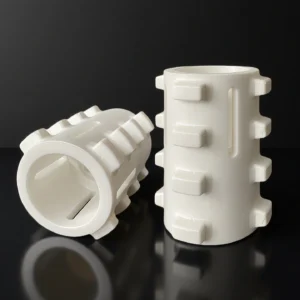
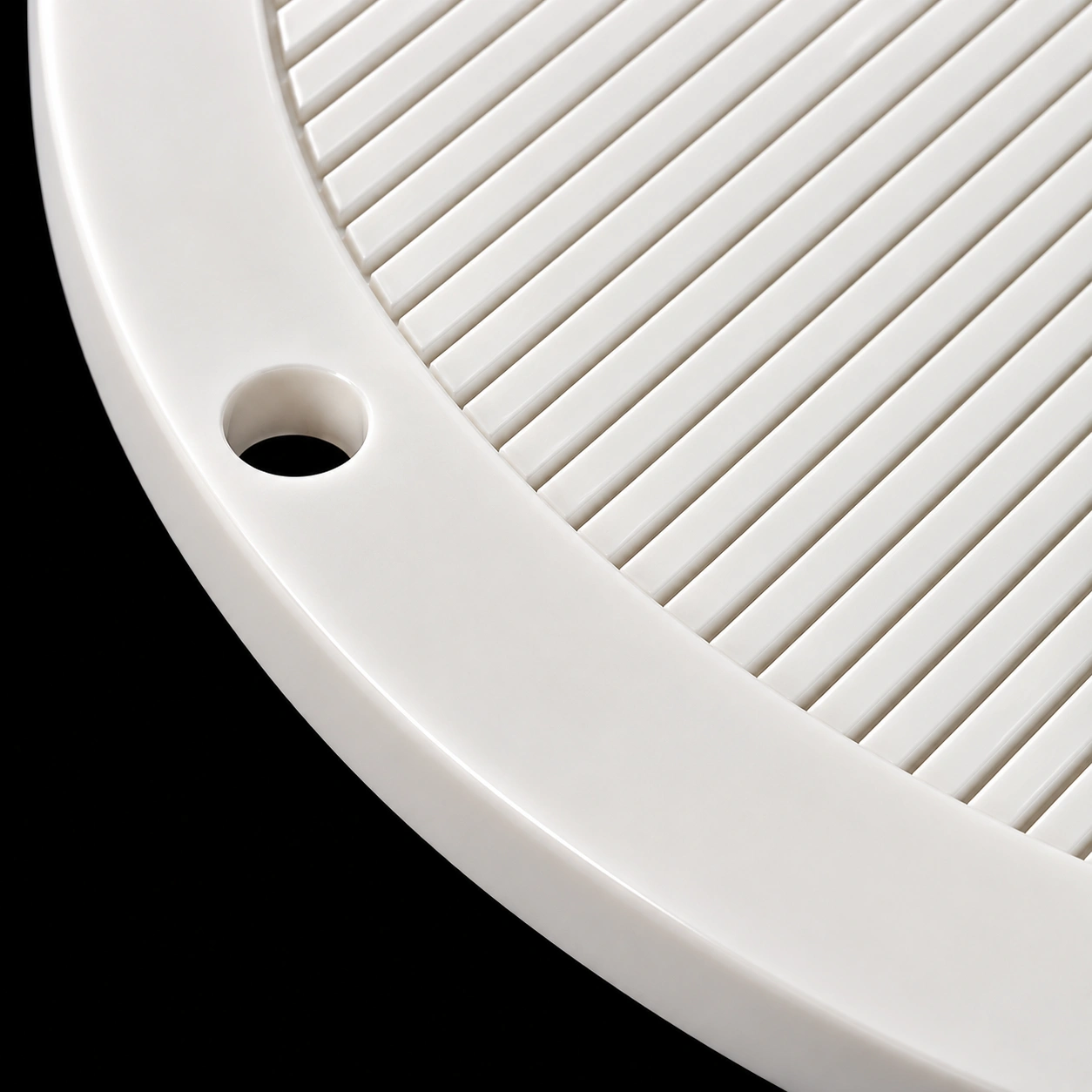
A zirconia ceramic separator screen is a slotted ceramic plate used in screen-equipped wet mills. Its job is to keep grinding beads inside the grinding zone while the slurry passes through the separation area. In bead, basket and sand mills, this part sits at the outlet or in the basket assembly, depending on the machine design.
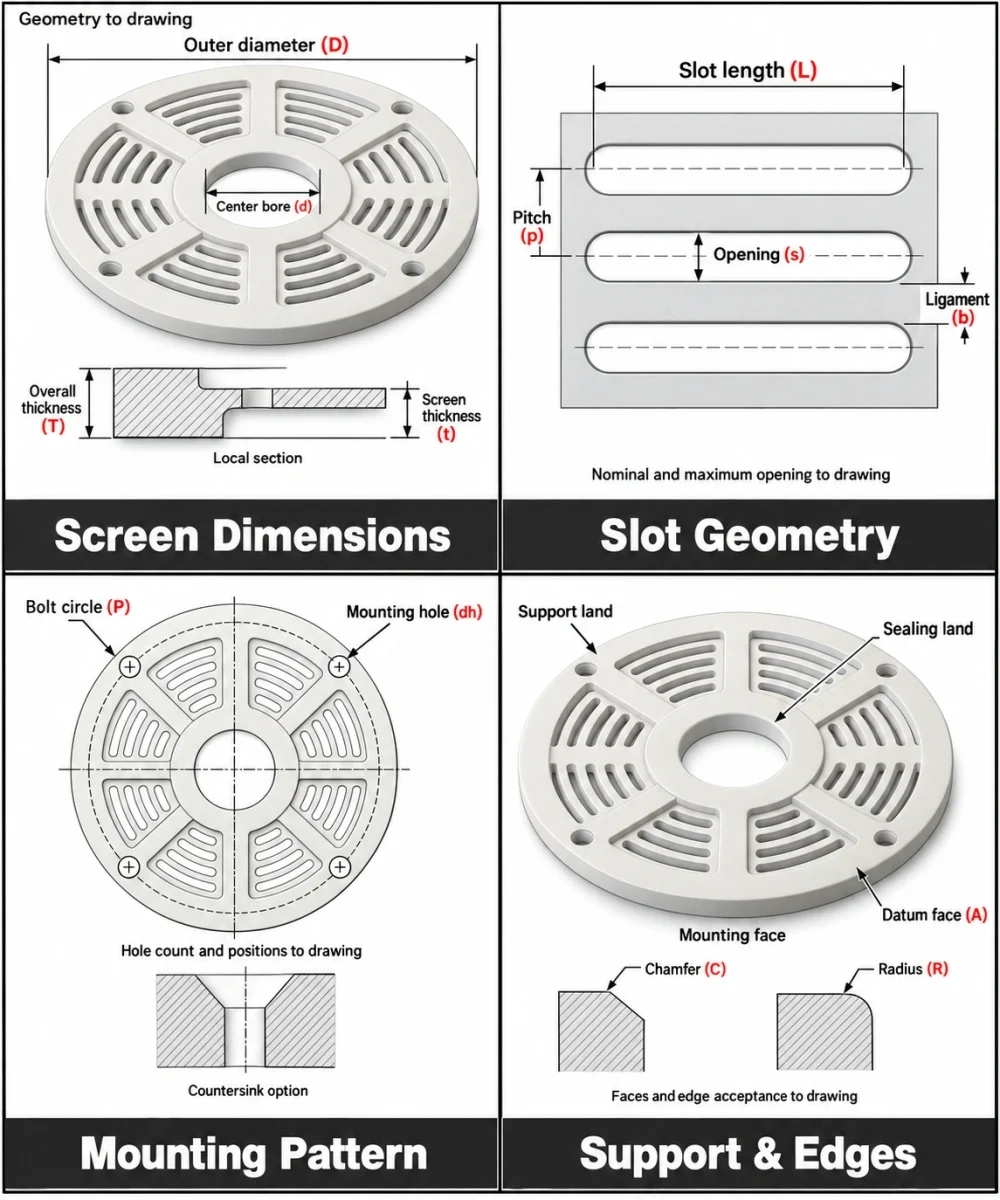
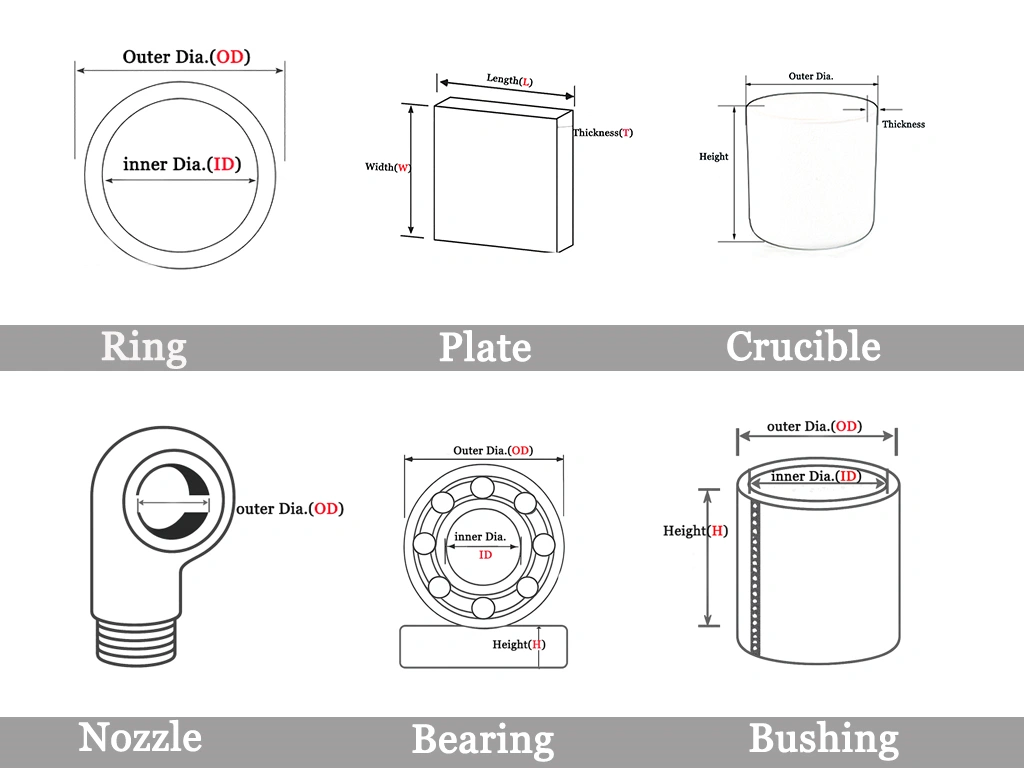
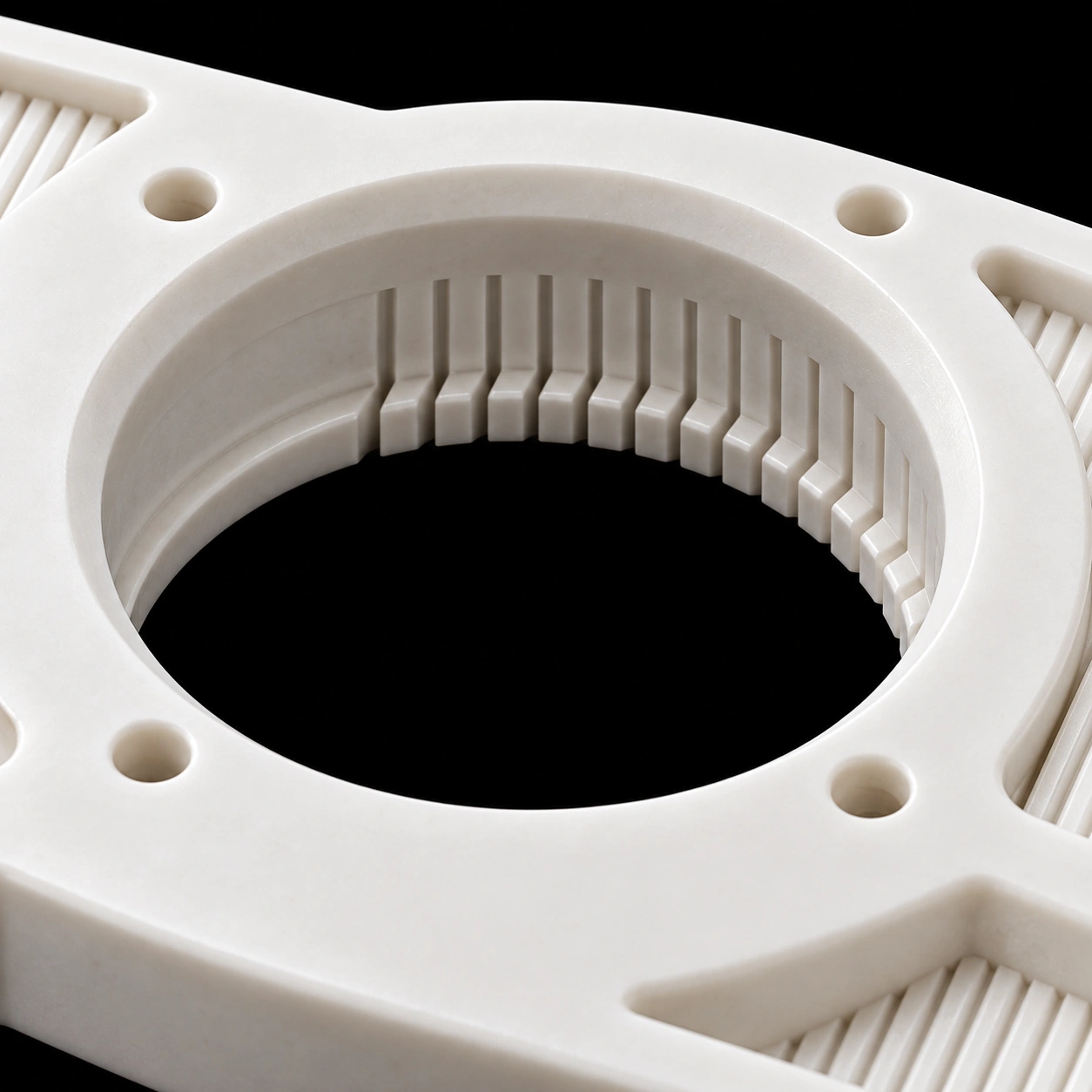
Three variables decide whether a screen works: the smallest bead diameter still in service, the maximum accepted slot opening, and the mounting and seal path in the actual assembly. The plate is made to a drawing, so outer diameter, center bore, slot layout and mounting holes are specified per project rather than taken from a stock list.
It is not a calibrated test sieve, a membrane filter or a particle-size classifier. The milling process sets the final particle size; the screen opening only sets which beads stay behind.
Bead Size and Zirconia Ceramic Separator Screen Opening References
Published OEM ranges can help frame a preliminary review, but they do not represent ADCERAX manufacturing limits or confirm compatibility with a specific mill configuration.
| OEM / Configuration | Published Bead Reference | Review Note |
|---|---|---|
| VMA TML Standard | From 0.5 mm | Keep this configuration separate from TML-NANO when reviewing screen requirements. |
| VMA TML-NANO | From 0.2 mm | Nano configurations require their own screen and system review. |
| WAB DYNO-MILL UBM | 0.2–2.5 mm | The separation rotor and screen operate as a system; this should not be treated as a flat-screen compatibility statement. |
NIEMANN KREIS Basket-Mill Reference
| Published Bead Size | Published Maximum Screen Opening |
|---|---|
| 0.4–0.7 mm | 0.2 mm |
| 0.7–1.2 mm | 0.3 mm |
| 1.2–1.7 mm | 0.4 mm |
| 1.7–2.4 mm | 0.6 mm |
Note: These values belong to the named OEM configurations. They are not universal ratios, ADCERAX slot tolerances, or confirmation that one separator screen can cover the full range.
Zirconia Material Selection and System Considerations
Four zirconia systems are used for separator screens. The values below are typical material-selection data from the current grade sheet. They describe the material, not the finished slotted plate, and they do not replace sample testing on a thin-rib screen.
| Property | Condition/unit | 3Y-TZP | 8Y | Mg-PSZ | Ca-PSZ |
|---|---|---|---|---|---|
| Color | Visual | White | Not listed | Ivory | White |
| Bulk density | g/cm³, typical | 6.00–6.08 | 5.90 | 5.70–5.80 | 5.60–5.75 |
| Flexural strength | MPa, 20 °C, typical | 800–1000 | 300 | 500–755 | 400–600 |
| Compressive strength | MPa, 20 °C, typical | 2000–3500 | Not listed | 2100 | 2000–2500 |
| Vickers hardness | GPa, typical | 12.5 | 12.3 | 11.5 | 10–11 |
| Fracture toughness, K_IC | MPa·m¹ᐟ², 20 °C, method-dependent | 7.2–9.0 | 3.5–4.0 | 6–12 | 5–8 |
| Young’s modulus | GPa, 20 °C, typical | 200–220 | Not listed | 200 | 180–200 |
| Thermal conductivity | W/(m·K), 20 °C, typical | 3 | Not listed | 2.5 | 2 |
| Linear thermal expansion | 10⁻⁶/K, 40–80 °C | 11 | Not listed | 10.5 | 10.0–10.5 |
| Water absorption | %, dense sintered body | 0 | Not listed | 0 | 0 |
| Volume resistivity | Ω·cm, 20 °C | >10¹⁴ | Per duty | >10¹⁴ | >10¹⁴ |
How to Choose a Zirconia Separator Screen
1. Confirm the separator design.
Check whether your mill uses a flat screen, slotted plate, ring screen, slotted tube or screen-assisted rotor. Match the existing design before requesting a replacement.
2. Identify the smallest bead to retain.
Include worn beads and your media replacement limit. Nominal bead size alone is not enough.
3. Define the opening and slot layout.
Specify the maximum opening, slot length, quantity, pitch and ligament width. Allow for manufacturing tolerances and wear while balancing bead retention, flow and strength.
4. Check the mounting interface.
Confirm outer diameter, center bore, mounting holes, support faces, clamping and seals. Use current part and assembly drawings to avoid poor fit or bead bypass.
5. Select the grade for your process.
Provide slurry chemistry, solids content, viscosity and temperature, flow rate, pressure differential, cleaning conditions and temperature cycles. These guide material selection and any contamination requirements.
To get started, send your mill model, the smallest bead size to retain, and a drawing or photo of the current screen.
Zirconia Ceramic Separator Screen Packaging
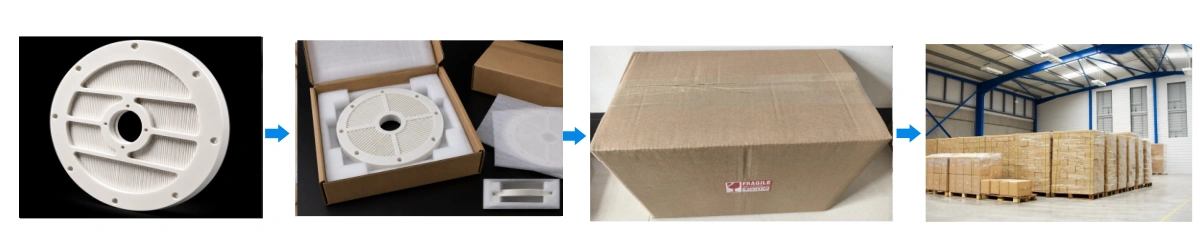
Each zirconia ceramic separator screen is individually protected with cushioning material and secured in foam to prevent movement and edge damage during transportation. The slotted area is kept free from direct compression. Reinforced cartons or wooden cases can be used for large or heavy components.