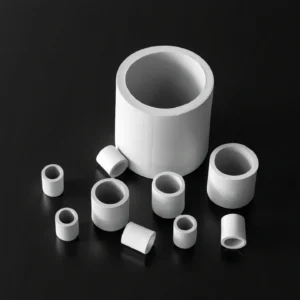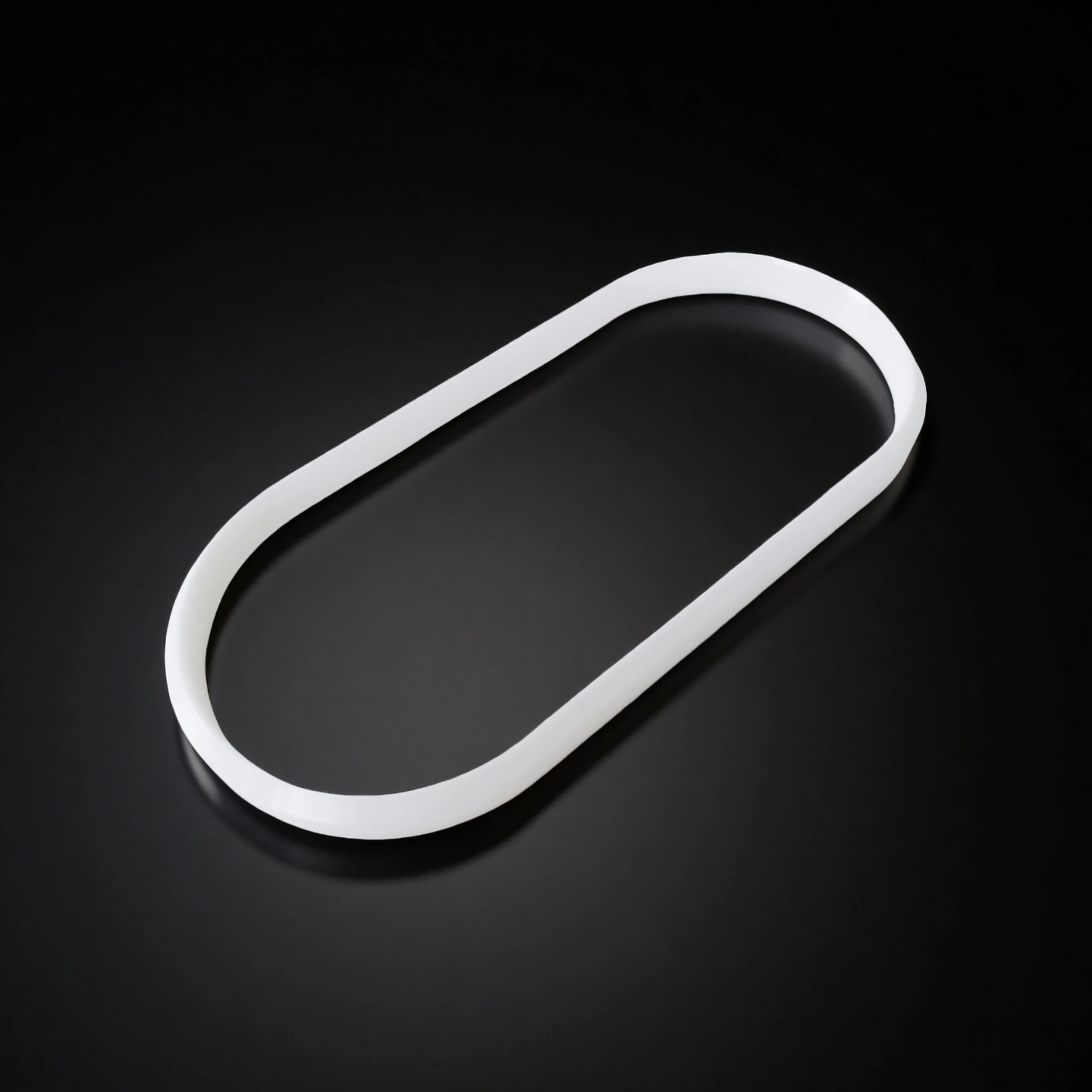
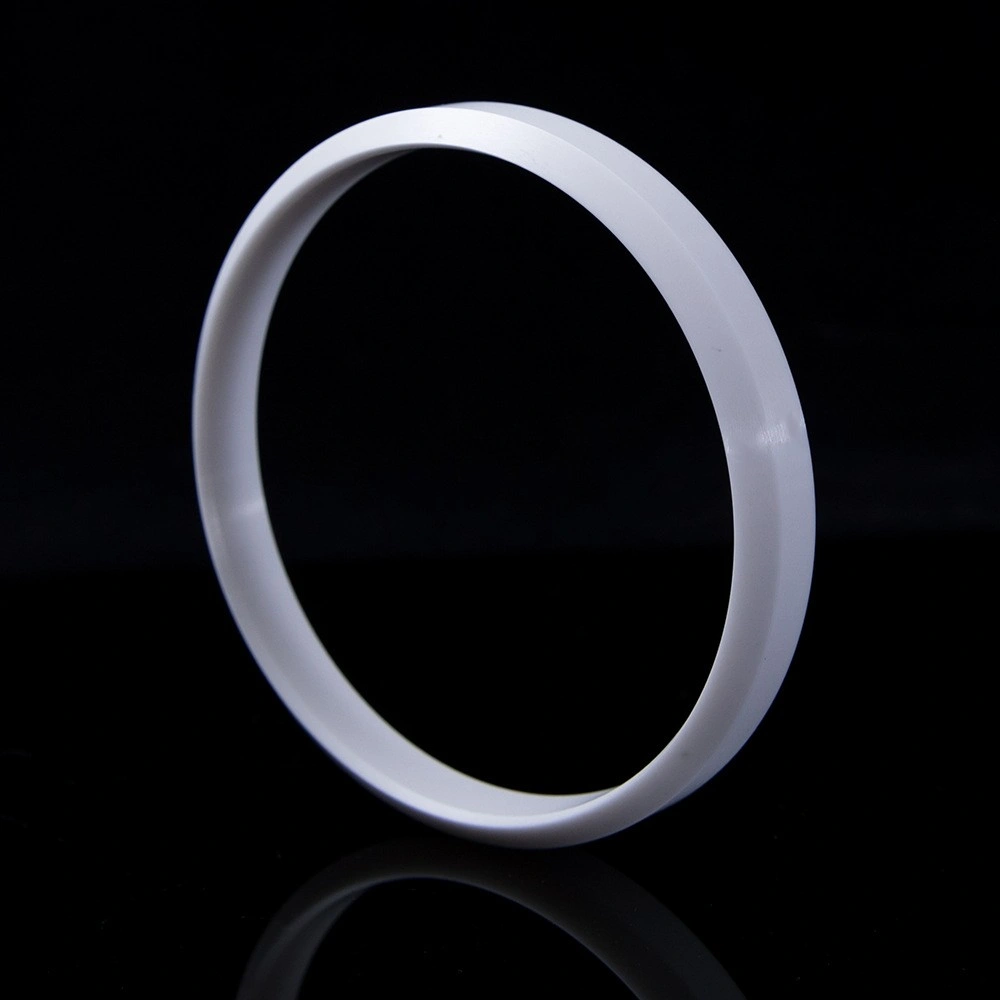
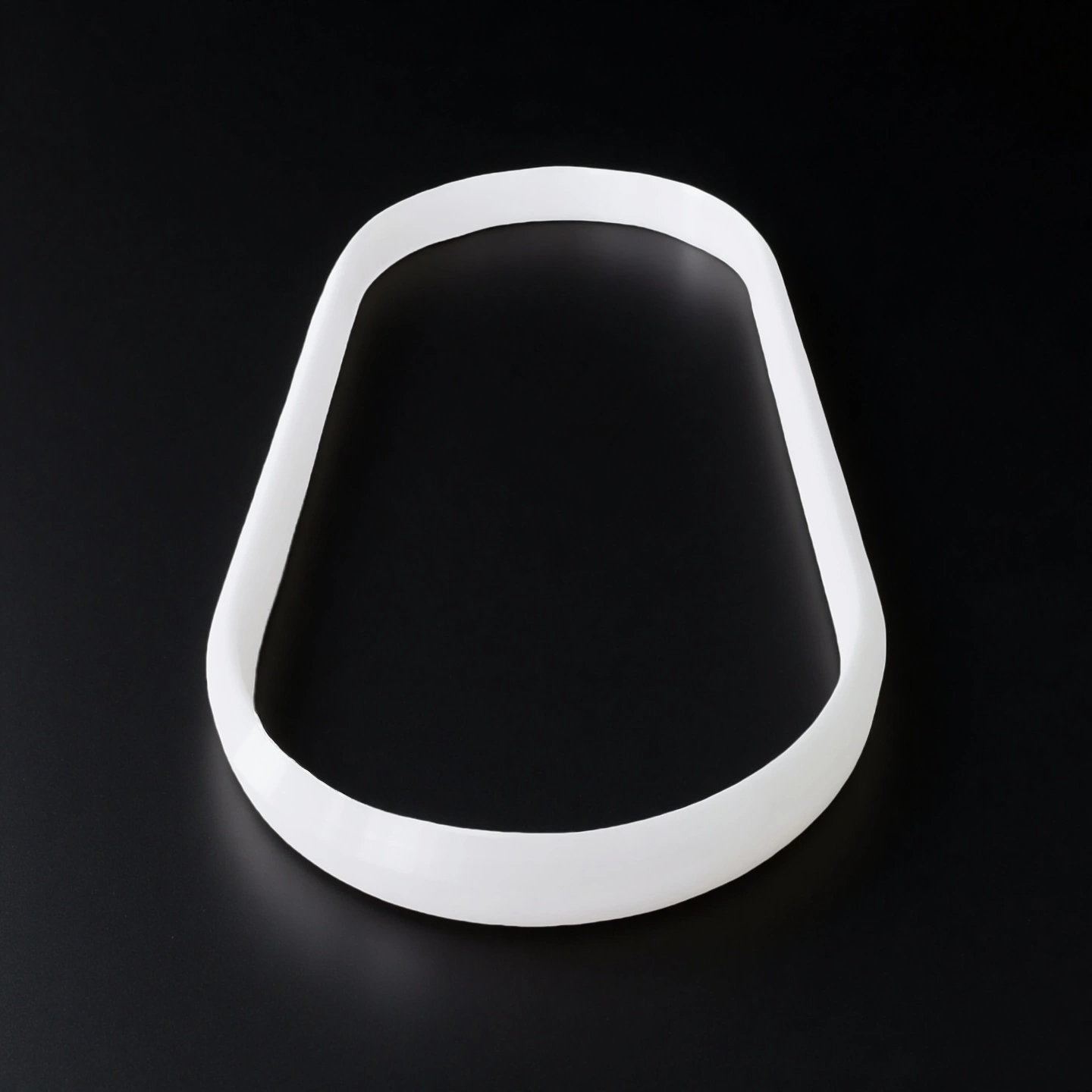
What Is a Zirconia Pad Printing Ceramic Ring?
A zirconia pad printing ceramic ring is the sealing and doctoring ring installed on a closed ink cup used in pad printing equipment. It contacts the cliché plate, controls the ink film, removes excess ink and helps keep the ink cup sealed during repeated printing cycles. Compared with metal rings, zirconia ceramic rings are selected when the application requires wear resistance, corrosion resistance, smooth doctoring contact and stable performance with solvent-based or UV-curable inks.
Key Engineering Benefits of Zirconia Ceramic Rings for Pad Printing Ink Cups
Wear-Resistant Contact Edge
The zirconia contact edge helps maintain clean doctoring contact during repeated movement across the cliché plate. This supports more consistent ink control and reduces the need for frequent ring replacement in demanding pad printing setups.
Solvent and Ink Chemical Resistance
ZrO2 ceramic is suitable for many solvent-rich printing environments where metal rings may corrode, stain or lose surface quality. This makes zirconia ceramic rings useful for closed ink cup systems exposed to cleaning agents, solvent-based inks and specialty printing fluids.
Smooth Sealing Surface
A polished ceramic contact surface helps reduce ink leakage, smearing and uneven wiping. For applications that require fine graphics, small text or clean edge definition, the sealing surface quality of the ring is an important factor.
Plate-Friendly Doctoring Behavior
Ceramic rings are often selected to reduce aggressive wear on photopolymer, thin steel or sensitive cliché plates. Proper edge geometry and contact pressure can help protect the plate surface while maintaining stable ink doctoring performance.
Dimensional Stability
A dense zirconia ceramic structure helps the ring maintain its shape under repeated loading, cleaning and machine cycling. This supports stable fit with the ink cup assembly and helps reduce performance variation caused by ring deformation.
Non-Rusting Ceramic Material
Zirconia does not rust like steel, making it suitable for ink systems exposed to moisture, solvents or cleaning agents. This helps keep the ink cup contact area cleaner and reduces contamination risk during repeated printing and cleaning operations.
Technical Properties of Zirconia Pad Printing Ceramic Ring
Engineered for high-load ink cup sealing systems, the zirconia pad printing ceramic ring demonstrates exceptional hardness, thermal endurance, wear resistance, and surface finish consistency under demanding industrial printing conditions.
| Property | Specification | What It Means for Pad Printing |
|---|---|---|
| Material Type | Yttria-Stabilized Zirconia (Y-TZP) | Y-TZP zirconia provides a strong balance of wear resistance, toughness and chemical stability for closed ink cup ceramic rings. |
| Purity | ≥ 99.8% ZrO₂ + Y₂O₃ | High zirconia content helps maintain stable ceramic performance in repeated printing, cleaning and ink-contact conditions. |
| Bulk Density | ≥ 6.0 g/cm³ | A dense ceramic structure helps improve edge durability and reduces the risk of porous surface contamination. |
| Surface Roughness (Ra) | ≤ 0.2 μm, mirror-polished | A polished contact surface supports cleaner doctoring, smoother ink control and reduced scratching risk on the cliché plate. |
| Hardness | HRA 88–90 | High hardness helps the ring resist edge wear during repeated movement across the printing plate. |
| Fracture Toughness (KIC) | ≥ 8 MPa·m¹ᐟ² | Higher toughness helps reduce chipping risk compared with more brittle ceramic materials when the ring is handled correctly. |
| Flexural Strength | ≥ 1,000 MPa | Strong flexural strength supports dimensional stability under repeated loading from the ink cup assembly. |
| Compressive Strength | ≥ 2,000 MPa | High compressive strength helps the ring withstand contact pressure during sealed cup operation. |
| Thermal Expansion Coefficient | ~10.3 × 10⁻⁶/K (25–800 °C) | Stable thermal behavior helps maintain dimensional consistency during cleaning, drying or moderate temperature variation. |
| Maximum Operating Temperature | 1,200 °C continuous | This is a zirconia material reference value, although pad printing applications normally operate far below this temperature. |
| Corrosion Resistance | Resistant to many acids, alkalis and solvents | Chemical resistance helps the ring perform in solvent-based inks, cleaning agents and specialty printing fluids. |
| Electrical Resistivity | ≥ 10¹² Ω·cm | Electrical insulation is not the main selection factor, but it reflects the non-conductive ceramic nature of zirconia. |
| Thermal Shock Resistance | ΔT ≥ 300 °C without cracking | Thermal shock resistance helps reduce cracking risk during temperature changes, cleaning or drying processes. |
| Wear Rate | ≤ 1.0 μm / 1 million cycles | Low wear supports longer contact-edge stability, but actual service life depends on ink, pressure, plate type and machine setup. |
| Magnetic Properties | Non-magnetic | The non-magnetic ceramic material is suitable for ink cup systems where magnetic behavior must not interfere with assembly or operation. |
Standard Size Reference for Zirconia Pad Printing Ceramic Rings
The following zirconia pad printing ceramic ring sizes are reference options for early selection. Final availability, tolerance and lead time should be confirmed according to OD, ID, height, ring shape, edge profile, quantity and whether the part matches an existing ink cup system. Drawing-based sizes can also be reviewed.
| Zirconia Ceramic Ring for Pad Printer | ||||
| Item No. | Outer Diameter(mm) | Inner Diameter(mm) | Height(mm) | Shape |
| AAT-YHG-DH001 | 30 | 26 | 6 | Round |
| AAT-YHG-DH002 | 43 | 37 | 9 | Round |
| AAT-YHG-DH003 | 46 | 12 | 6 | Round |
| AAT-YHG-DH004 | 46 | 42 | 12 | Round |
| AAT-YHG-DH005 | 47 | 42 | 5 | Round |
| AAT-YHG-DH006 | 54 | 49.6 | 7.3 | Round |
| AAT-YHG-DH007 | 59 | 53 | 10 | Round |
| AAT-YHG-DH008 | 60 | 53 | 12 | Round |
| AAT-YHG-DH009 | 64 | 56 | 12 | Round |
| AAT-YHG-DH010 | 65 | 58 | 10 | Round |
| AAT-YHG-DH011 | 65 | 55 | 12 | Round |
| AAT-YHG-DH012 | 68 | 60 | 10 | Round |
| AAT-YHG-DH013 | 70 | 60 | 5 | Round |
| AAT-YHG-DH014 | 70 | 60 | 7 | Round |
| AAT-YHG-DH015 | 70 | 60 | 12 | Round |
| AAT-YHG-DH016 | 70 | 62 | 8 | Round |
| AAT-YHG-DH017 | 75 | 65 | 12 | Round |
| AAT-YHG-DH018 | 80 | 70 | 12 | Round |
| AAT-YHG-DH019 | 85 | 75 | 12 | Round |
| AAT-YHG-DH020 | 89 | 82 | 12 | Round |
| AAT-YHG-DH021 | 89 | 82 | 12.1 | Round |
| AAT-YHG-DH022 | 90 | 80 | 10 | Round |
| AAT-YHG-DH023 | 90 | 81 | 12 | Round |
| AAT-YHG-DH024 | 90 | 82 | 12 | Round |
| AAT-YHG-DH025 | 90 | 82 | 13 | Round |
| AAT-YHG-DH026 | 90 | 82 | 15 | Round |
| AAT-YHG-DH027 | 94 | 86 | 12 | Round |
| AAT-YHG-DH028 | 95 | 90 | 5 | Round |
| AAT-YHG-DH029 | 95.31 | 88.96 | 19.18 | Round |
| AAT-YHG-DH030 | 101 | 90 | 10 | Round |
| AAT-YHG-DH031 | 100 | 90 | 12 | Round |
| AAT-YHG-DH032 | 100 | 90 | 12.3 | Round |
| AAT-YHG-DH033 | 101 | 91 | 11.5 | Round |
| AAT-YHG-DH034 | 101 | 90 | 12 | Round |
| AAT-YHG-DH035 | 120 | 110 | 12 | Round |
| AAT-YHG-DH036 | 125 | 116 | 14 | Round |
| AAT-YHG-DH037 | 128 | 120 | 8 | Round |
| AAT-YHG-DH038 | 136 | 126 | 14 | Round |
| AAT-YHG-DH039 | 140 | 131 | 14 | Round |
| AAT-YHG-DH040 | 140 | 135 | 6 | Round |
| AAT-YHG-DH041 | 147 | 142 | 6 | Round |
| AAT-YHG-DH042 | 165 | 155 | 12 | Round |
| AAT-YHG-DH043 | 165 | 6 | 1 | Round |
| AAT-YHG-DH044 | 180 | 170 | 14 | Round |
| AAT-YHG-DH045 | 190 | 180 | 14 | Round |
| AAT-YHG-DH046 | 240 | 230 | 12 | Round |
| AAT-YHG-DH047 | 247 | 237 | 12 | Round |
| AAT-YHG-DH048 | 332 | 320 | 15 | Round |
| AAT-YHG-DH049 | 357 | 345 | 15 | Round |
| AAT-YHG-DH050 | 227 | 85 | 16 | Ellipse |
| AAT-YHG-DH051 | 228 | 83 | 16 | Ellipse |
Zirconia vs Tungsten Carbide vs Steel Rings for Pad Printing Ink Cups
| Material | Main Strength | Limitation | Best Fit |
|---|---|---|---|
| Zirconia Ceramic | Wear resistance, corrosion resistance and smooth doctoring behavior. | It still requires careful handling to avoid edge chipping. | Closed ink cup systems that need clean wiping and solvent resistance. |
| Tungsten Carbide | Very hard and sharp contact edge. | It may be more aggressive on some plate materials and can be brittle at thin edges. | Applications requiring a very sharp edge and compatible plate material. |
| Stainless Steel | Easy to machine and lower initial cost. | It may wear, corrode or lose edge quality faster in aggressive ink systems. | Lower-demand printing or short-run replacement needs. |
| Alumina Ceramic | Good hardness and chemical stability. | Lower toughness than zirconia in impact-sensitive handling. | General ceramic ring applications with moderate mechanical demand. |
Packaging of Zirconia Pad Printing Ceramic Ring
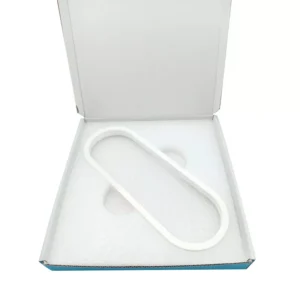
The zirconia pad printing ceramic ring is securely housed in anti-static foam with recessed contours to prevent movement during transport. Each unit is individually boxed to protect against impact and contamination. This packaging ensures surface integrity is maintained from our factory to your production line.