
What Is a ZTA Ceramic Plate?
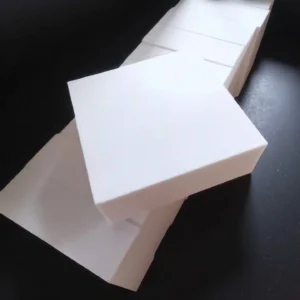
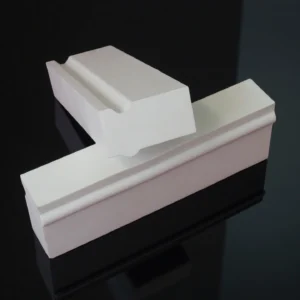
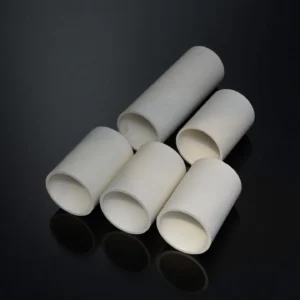
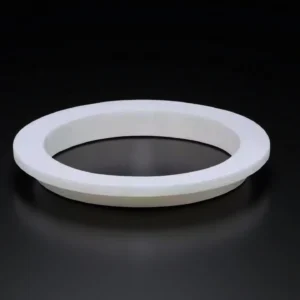
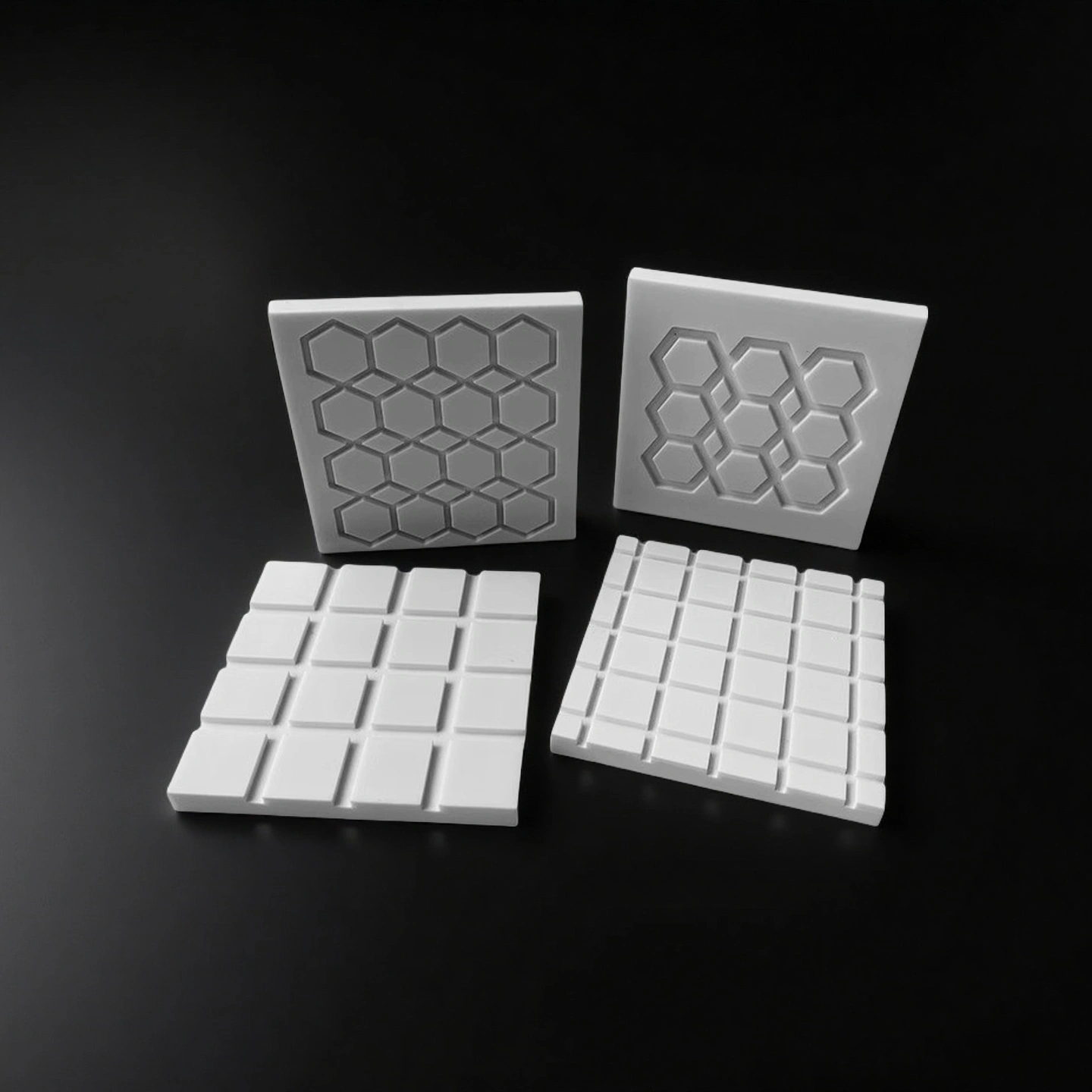
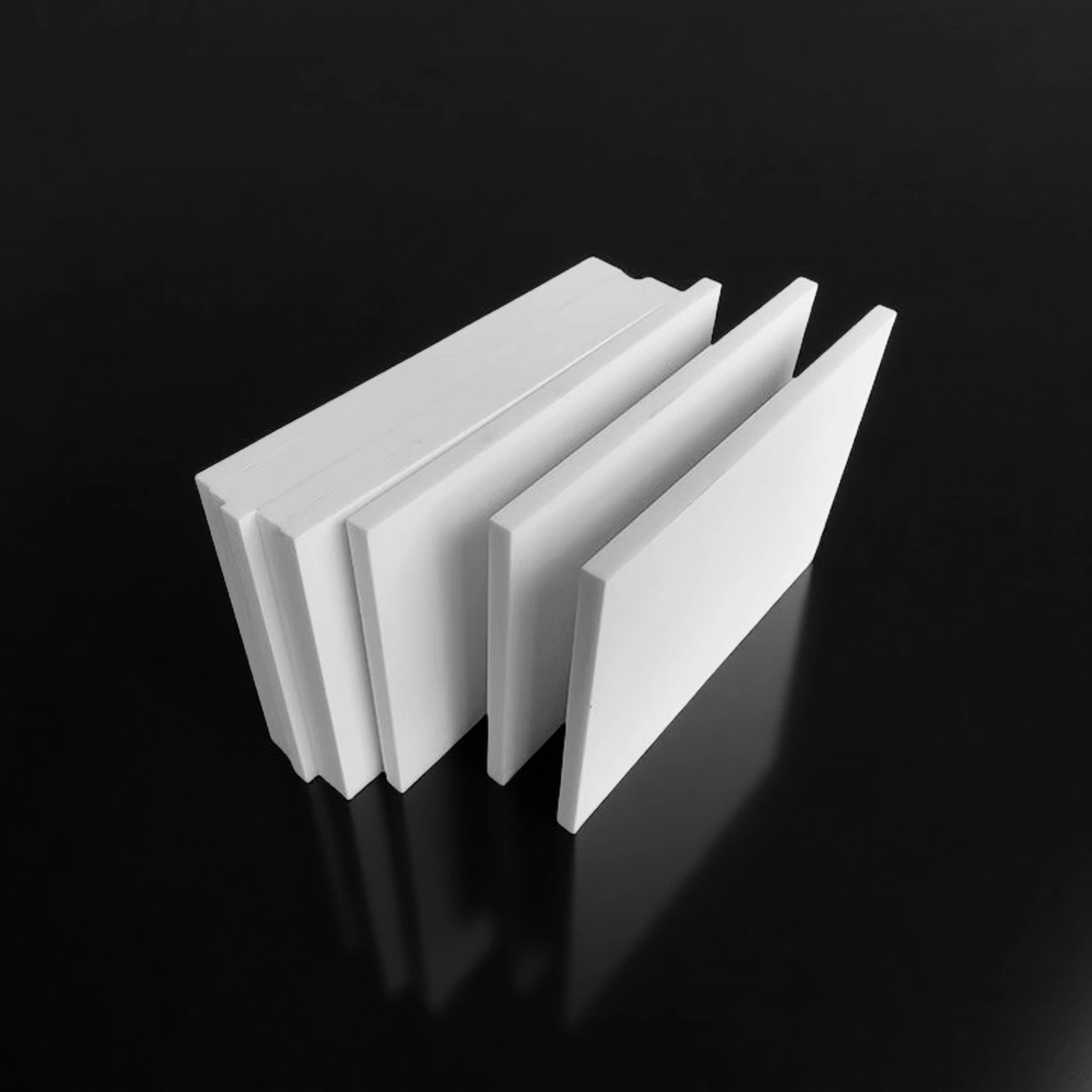
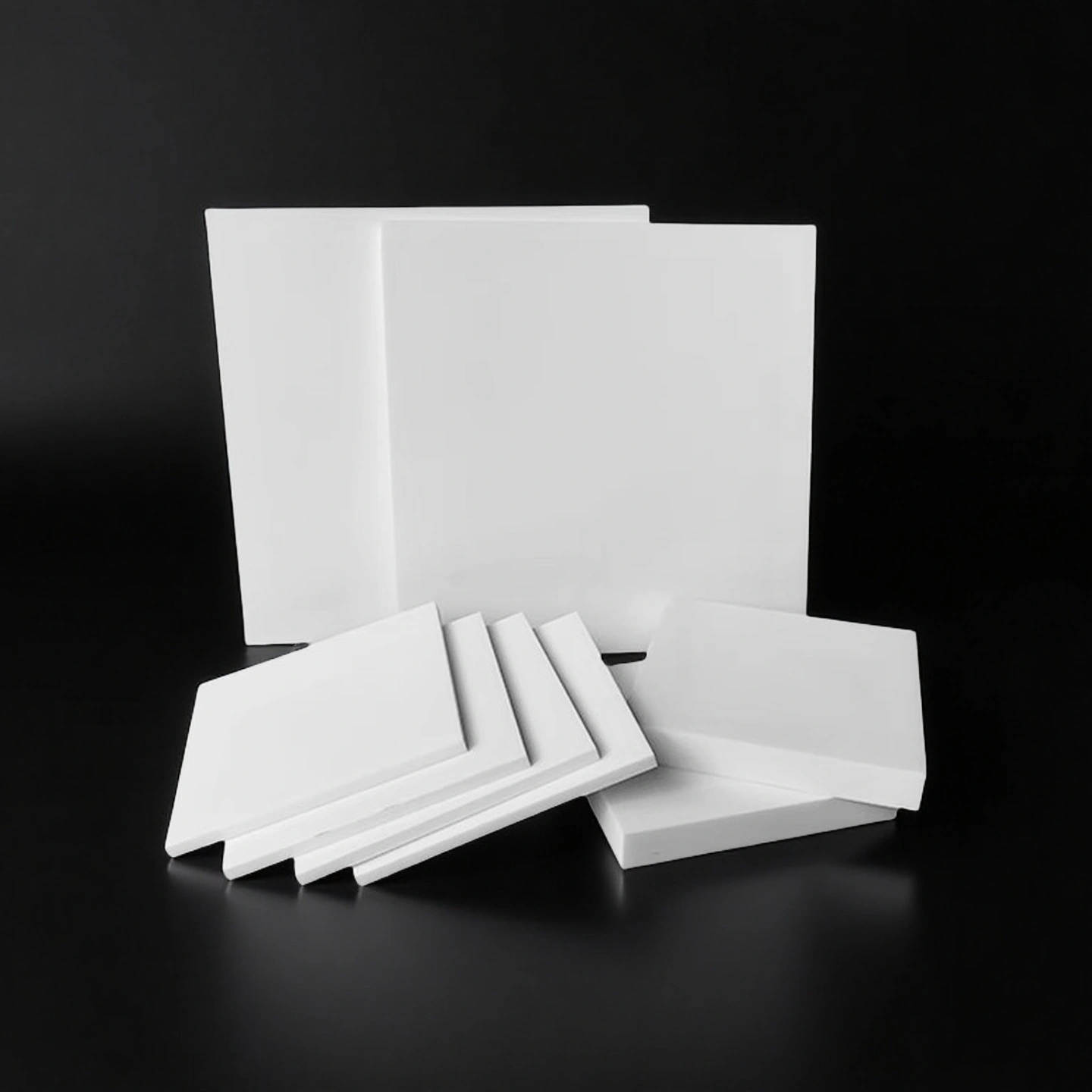
A zirconia toughened alumina (ZTA) plate is a flat ceramic part formed from an alumina (Al₂O₃) matrix with dispersed zirconia (ZrO₂) particles. The zirconia is added to absorb part of the stress at small cracks, which changes how the plate behaves at edges and impact zones compared with a plain alumina plate. The plate itself is a fired ceramic; the grade, forming route, working face, support and fixing are defined for each order.
ZTA Ceramic Plates Specifications
| ZTA Plate | |||
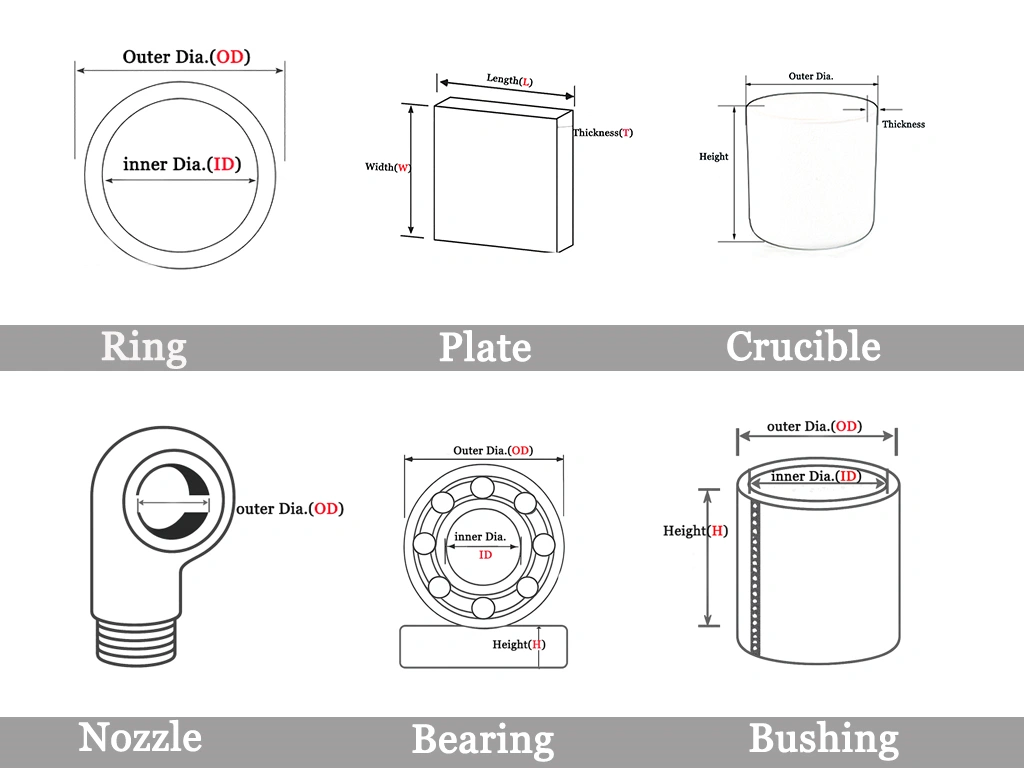
| Item No. | Length (mm) | Width (mm) | Thickness (mm) |
| AT-ZR-CB001 | 50 | 25 | 5-12 |
| AT-ZR-CB002 | 50 | 50 | 5-20 |
| AT-ZR-CB003 | 100 | 100 | 6-30 |
| AT-ZR-CB004 | 120 | 80 | 8-30 |
| AT-ZR-CB005 | 150 | 100 | 6-50 |
| AT-ZR-CB006 | 100 | 25 | 5-15 |
| AT-ZR-CB007 | 100 | 50 | 6-30 |
| AT-ZR-CB008 | 100 | 75 | 12-50 |
| AT-ZR-CB009 | 150 | 50 | 6-50 |
| AT-ZR-CB010 | 70 | 70 | 10-25 |
| AT-ZR-CB011 | 75 | 50 | 6-15 |
| AT-ZR-CB012 | 120 | 100 | 6-25 |
| AT-ZR-CB013 | 120 | 50 | 6-25 |
| AT-ZR-CB014 | 100 | 80 | 6-25 |
| AT-ZR-CB015 | 150 | 75 | 6-50 |
| AT-ZR-CB016 | 27 | 27 | 5-18 |
| AT-ZR-CB017 | 37.5 | 37.5 | 5-18 |
| AT-ZR-CB018 | 39.2 | 39.2 | 6-18 |
| AT-ZR-CB019 | 50 | 30 | 5-15 |
ZTA Ceramic Plate Material Properties
The values below are typical selection values for plate grade AD-ZTA series, a dry-pressed or CIP-formed plate. They describe the material, not a finished plate size or a design allowance for your assembly.
| Property | Unit and basis | AD-ZTA-20-P |
|---|---|---|
| Bulk density | g/cm³; typical | 4.20 |
| Flexural strength | MPa; typical selection value | 500 |
| Compressive strength | MPa; typical | 2100 |
| Young's modulus | GPa; typical | 310 |
| Vickers hardness | HV; typical | 1650 |
| Water absorption | %; rounded nominal result | 0 |
| Surface roughness, Ra | µm; specified plate surface | <0.6 |
| Color | Visual | White / off-white |
How to Choose a ZTA Ceramic Plate
1. Define the Application
Identify whether the plate serves as a wear face, thermal or support plate, or precision fixture insert.
Provide: Equipment type, contact location and the component being protected or supported.
2. Confirm Contact and Loading
- Wear applications: Particle size and hardness, flow speed, impact angle, and sliding or impact contact.
- Support applications: Applied load, support points, contact area and allowable deflection.
3. Specify Operating Conditions
Include:
- Continuous and peak temperatures
- Operating atmosphere
- Heating and cooling rates
- Number of thermal cycles
For precision fixtures, define how flatness is checked after cycling.
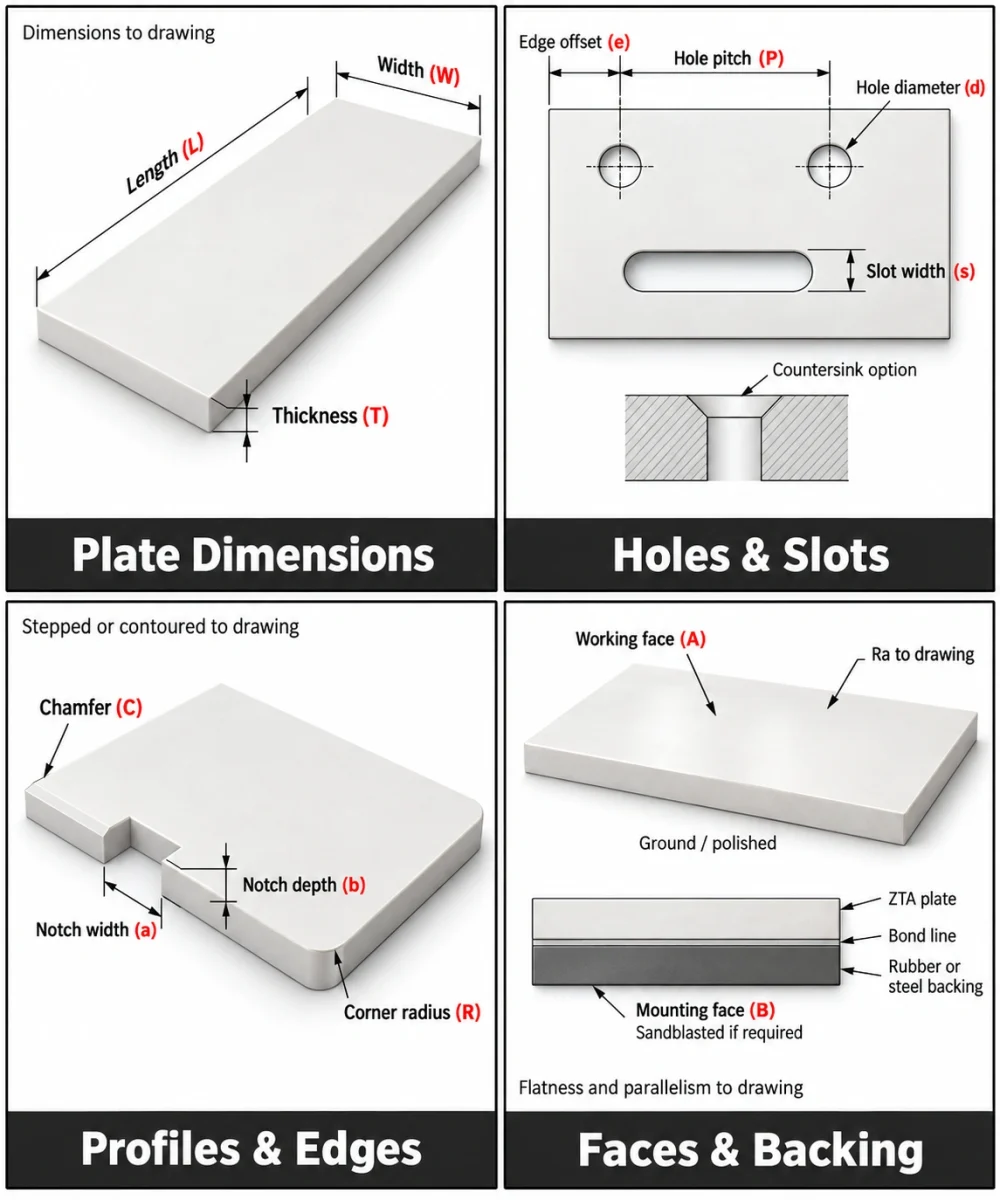
4. Define Plate Geometry
Specify length × width × thickness, overall profile, holes, slots and edge details.
Show the fixing layout, support areas and hole-to-edge spacing. Avoid unsupported spans and concentrated point contact.
Provide: A dimensioned drawing or sketch.
5. Specify Each Face
- Working face: Define its function, finish and surface roughness.
- Bonding or mounting face: Specify the texture and cleanliness required by the adhesive or backing arrangement.
Identify each face clearly on the drawing.
6. Agree on Acceptance
Define acceptance at material, individual-plate or assembly level.
Include:
- Dimensional, flatness and surface requirements
- Inspection method and reference conditions
- Sampling plan and acceptance limits
ZTA vs Alumina, Zirconia and Silicon Carbide Plates
Select the material around the plate’s loading, wear pattern and operating environment.
ZTA — Edge Chipping and Localized Impact
Consider ZTA when an alumina plate develops chipped edges or cracks at impact points. Review performance using the same plate geometry and support arrangement.
Check: Failure location, chip size, particle characteristics and impact conditions.
Alumina — Stable, Cost-Sensitive Service
A common option for wear faces and support plates with low impact. Specify purity where the application requires it, alongside mechanical and dimensional requirements.
Check: Actual wear rate, chemical compatibility and allowable edge damage.
Zirconia — Toughness and Contact Requirements
Consider zirconia where toughness is a priority. Select the specific grade for the application, including an aging assessment where hot water or steam is present.
Check: Material grade, surface requirements, assembly weight and water or steam exposure.
Silicon Carbide — Abrasive Sliding Contact
Consider SiC for demanding sliding wear and selected high-temperature applications. Review impact, edge loading and support before selection.
Check: Abrasion conditions, impact loading, support layout and chemical environment.
Compare materials using the same plate geometry, support arrangement and operating conditions. Agree on the acceptance test before ordering.
Zirconia Toughened Alumina Plates Packaging
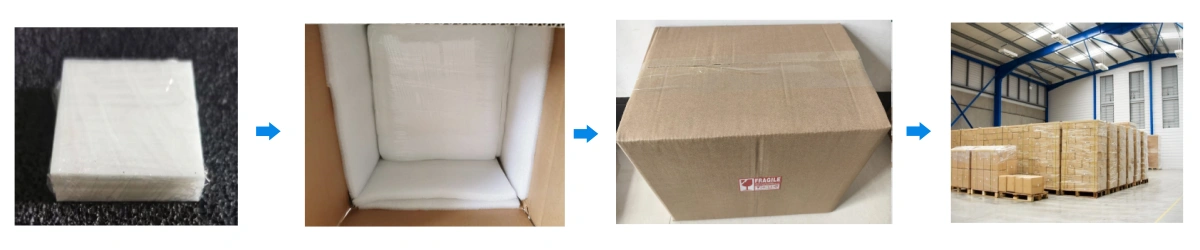
- ZTA Plates in Carton Padded Trays – Prevent vibration