Advanced Silicon Carbide Nozzles for Stable Droplet Control in Harsh Industrial Systems by ADCERAX®
Silicon carbide nozzles are applied in demanding gas-scrubbing, heating, and slurry-spray environments where long-term geometric stability and consistent droplet behavior are essential for process reliability.
Their ability to withstand abrasive slurries, corrosive atmospheres, and fluctuating thermal loads supports continuous plant operation across multiple industrial sectors.
For engineering-grade sourcing and rapid customization, contact ADCERAX® today for project-ready solutions.

0.03 mm
Machining Accuracy
What Is a Silicon Carbide Nozzle?
A Silicon Carbide Nozzle is a ceramic spray or burner component used in gas-scrubbing, quenching, and high-temperature firing systems, designed to maintain stable geometry under abrasive and corrosive conditions.
The silicon carbide nozzles resist slurry wear and chloride exposure while preserving accurate spray angles over extended cycles. A silicon carbide spray nozzle supports consistent droplet distribution even when operating in high-dust or high-load gas flows. This material class enables reliable service where metallic and polymer nozzles experience deformation or premature failure.
Technical Specification of ADCERAX® Silicon Carbide Nozzles
Silicon carbide industrial nozzles are specified by material grade, geometry, thermal rating, and fluid-dynamic performance to support long-cycle operation in diverse industrial sectors.
| Category | Specification |
| Material System | RBSiC / SSiC (Reaction-Bonded or Sintered Silicon Carbide) |
| Density | 3.02–3.10 g/cm³ (grade-dependent) |
| Flexural Strength | Up to 250 MPa |
| Hardness | >2,200 HV |
| Open Porosity | <0.5% |
| Thermal Conductivity | 18–35 W/m·K |
| Maximum Operating Temperature | 1,350–1,500°C (environment-dependent) |
| Thermal Shock Resistance | Up to 250°C/min |
| Chemical Resistance | Stable in Cl⁻, HF, HCl, SO₂, and acidic condensates |
| Spray Angle Stability | Deviation <3° after extended cycles |
| Flow Coefficient Variation | Within ±5% under rated conditions |
| Droplet Size (SMD) | Typically 250–400 µm (geometry-dependent) |
| Interface Standards | DIN / ASME / JIS flanges; NPT / BSPT threads; sleeve/insert types |
| Machining Tolerances | 0.05–0.10 mm depending on geometry |
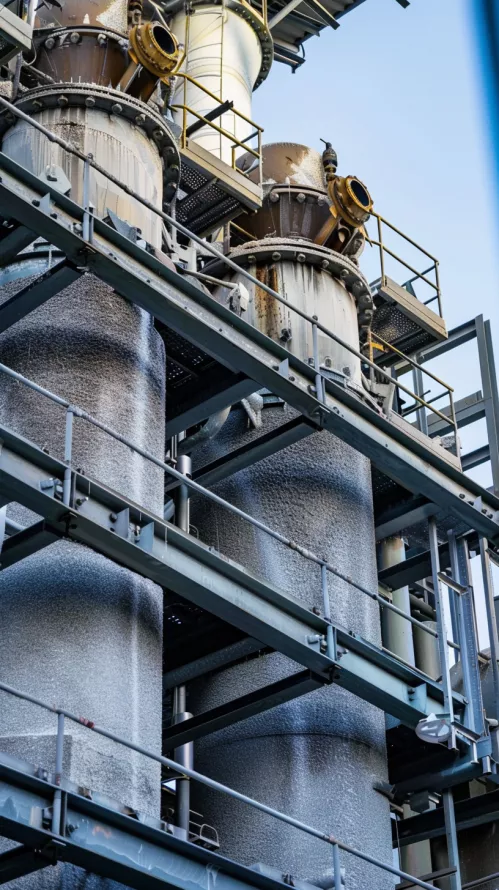
Properties of ADCERAX® Silicon Carbide Nozzles
Silicon carbide spray components combine structural stability, thermal endurance, and corrosion tolerance required for high-demand industrial gas and liquid processes. Their performance depends on the base SiC system (RBSiC/SSiC) and the internal geometry that defines the spray or burner behavior.
Mechanical Strength & Wear Resistance
Load-bearing performance is controlled through dense SiC microstructure.
-
High flexural strength:
Up to 250 MPa typical -
Erosion-resistant surface:
Endures 20–30% solids -
Impact tolerance:
Maintains outlet diameter -
Wear-cycle stability:
Resists long-term abrasion
Thermal Endurance & Shock Resistance
Dimensional integrity is preserved under rapid heating and cooling.
-
Thermal shock tolerance:
Withstands 250°C/min shift -
High-temperature limit:
Operates to 1,450°C+ -
No geometric drift:
Maintains fixed angles -
Surface stability:
Prevents micro-crack growth
Spray Geometry & Dynamic Performance
Droplet characteristics remain consistent across varying pressures.
-
Full-cone uniformity:
Angle deviation <3° -
Stable flow coefficient:
Holds within 5% -
Controlled droplet size:
SMD range >250 µm -
Anti-clog outlet:
Clears high-solids flow
Dimensional Precision & Interface Compatibility
Tolerance consistency is maintained across repeated batches.
-
Coaxial accuracy:
Deviation <0.1 mm -
Flange alignment:
Fits DIN/ASME/JIS -
Thread compatibility:
NPT/BSPT options -
Surface flatness:
Stable sealing contact
ADCERAX® Silicon Carbide Nozzles Product Range
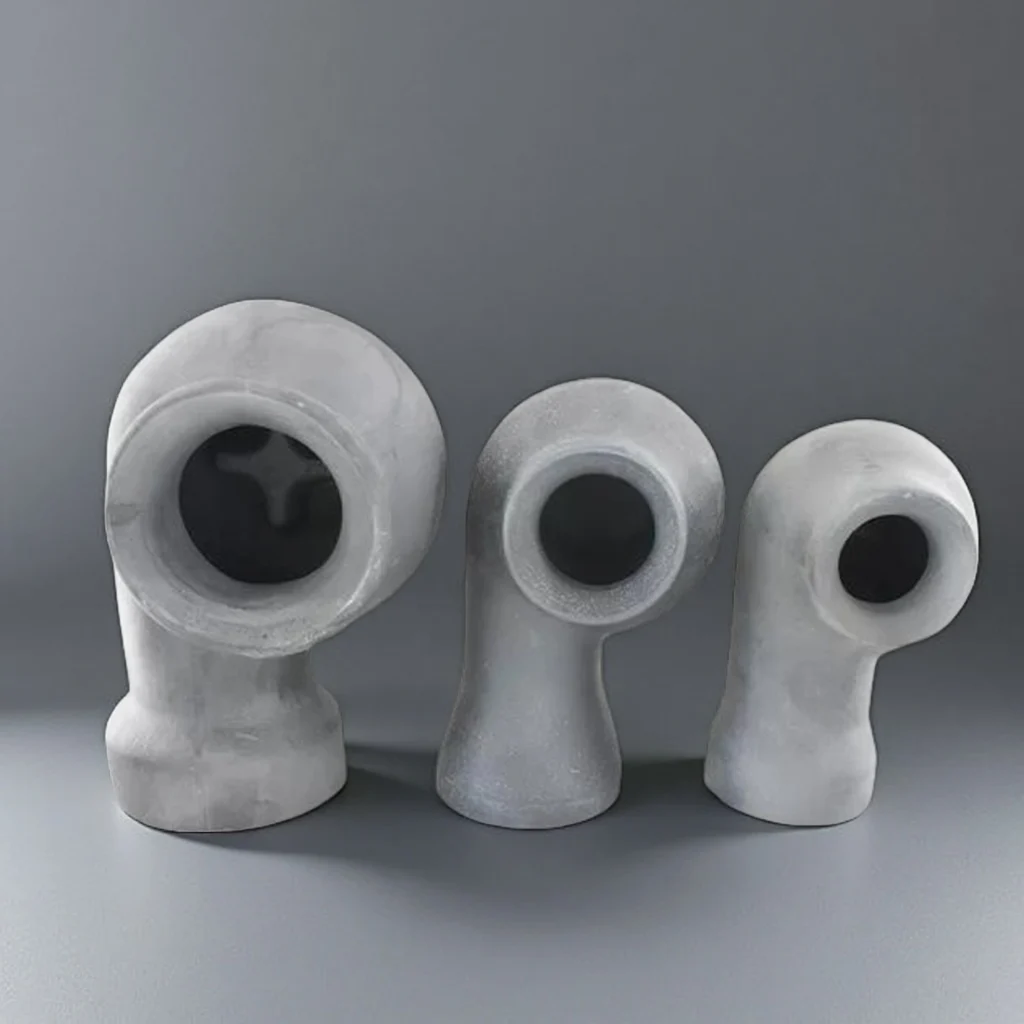
Vortex-induced internal flow is maintained through the SiC chamber structure.
- Uniform vortex cone: Angle drift <3°
- Rotational flow chamber: Stable at 1.2 bar
- Anti-abrasion design: Endures 25% solids
- Consistent droplet size: SMD near 280 µm
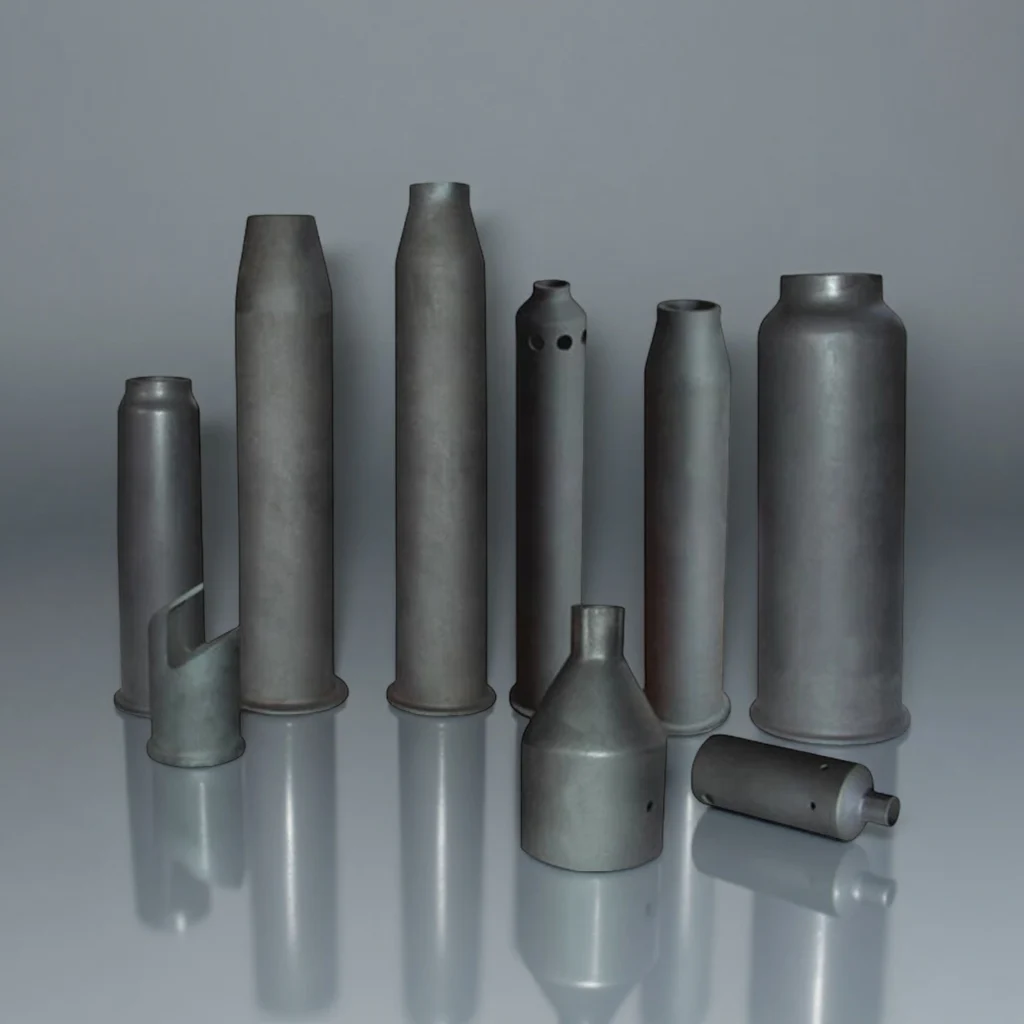
Flame geometry is preserved under high-temperature gradients.
- High heat tolerance: Stable at 1,450°C
- Low expansion rate: Limits shape change
- Thermal shock stable: 250°C/min tolerance
- Consistent flame core: Drift <2 mm
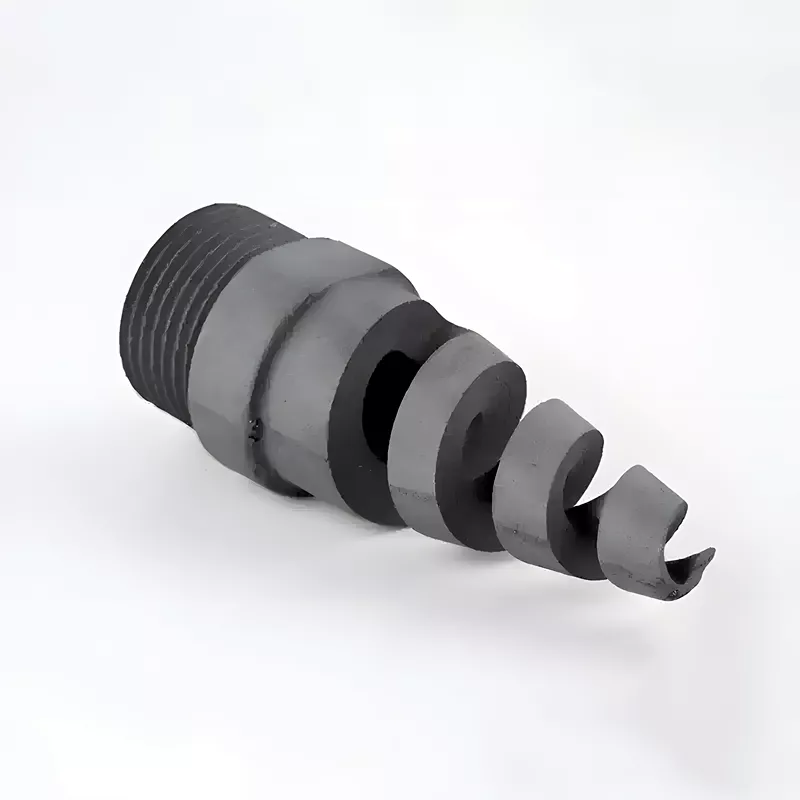
Spiral-cut channels drive uniform cone formation.
- Full-cone coverage: Deviation <3°
- Multi-stage flow path: Stable at 1 bar
- Slurry-tolerant outlet: Clears 20% solids
- Droplet uniformity: SMD near 300 µm
Need Silicon Carbide Nozzle Guidance For Your Industrial Operation?
Stable nozzle geometry and controlled spray behavior are essential for ensuring absorber efficiency, kiln firing consistency, and quench accuracy in complex process environments.
Material selection, interface matching, and spray-angle evaluation can be aligned with engineering requirements through structured technical consultation.
For application assessment or customization pathways, reach out to ADCERAX® for direct project-focused support.
ADCERAX® SiC Nozzles Applications Across Industrial Systems
Silicon carbide nozzles operate in gas-treatment, thermal-processing, and corrosive-washdown environments where mechanical abrasion, chloride exposure, and temperature gradients demand long-cycle material performance.

Flue-Gas Desulfurization (FGD) Absorber Systems
Stable atomization is required to maintain absorber efficiency under high-slurry circulation.
- The silicon carbide spray nozzle maintains cone angle deviation under 3° during continuous SO₂ absorption.
- High-hardness SiC resists slurry concentrations up to 30% solids without outlet deformation.
- The nozzle structure tolerates dust loads above 800 mg/m³ in absorber inlets.
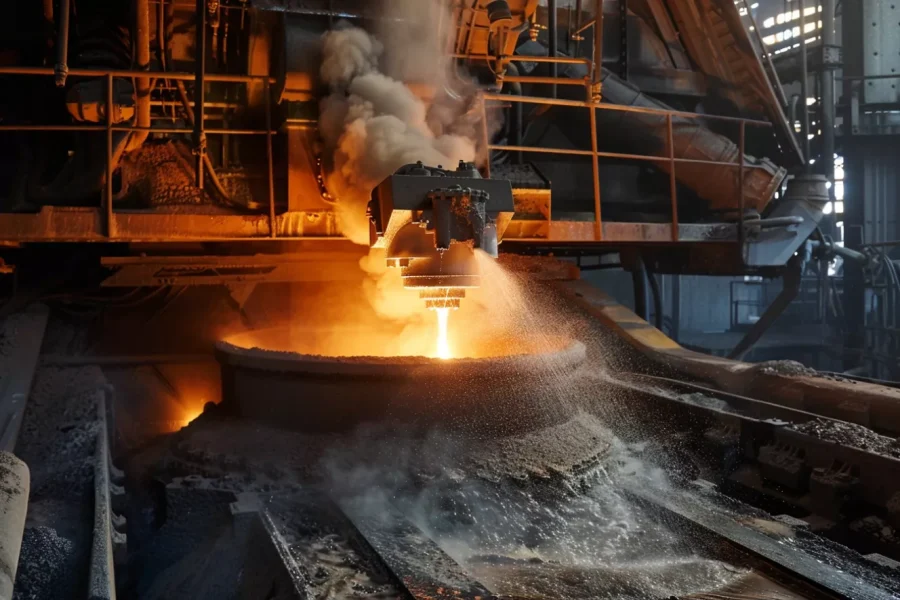
Cement Preheater and Calciner Exhaust Cooling
Temperature control depends on spray uniformity under dust-rich gas environments.
- The silicon carbide nozzles sustain dust concentrations above 600 mg/m³ without spray collapse.
- The outlet section maintains dimensional integrity during exposure to 20–30% particulate entrainment.
- Spray-angle stability remains within 3° despite variable preheater exhaust temperatures.
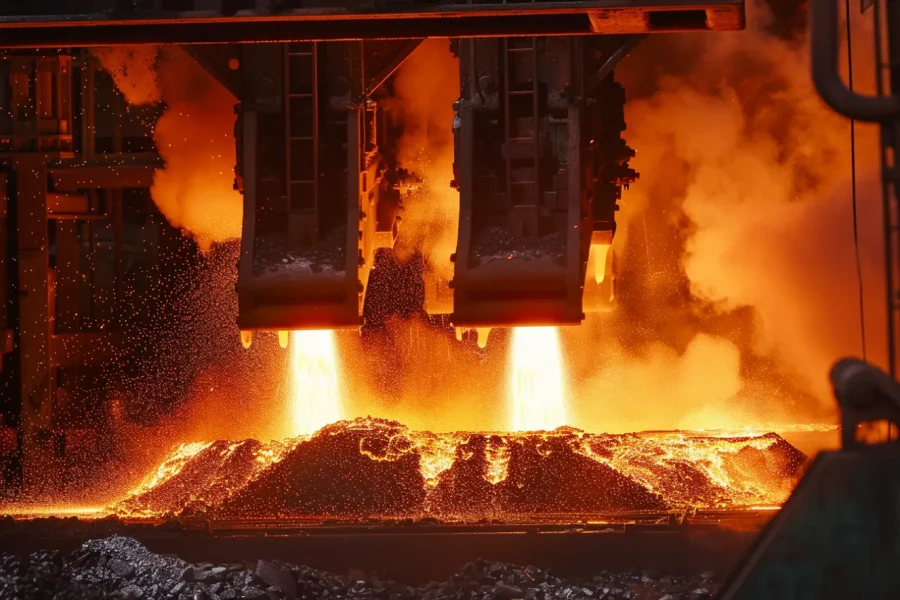
Steel and Metallurgical Gas-Cleaning Units
Particle-laden quench and desulfurization flows require geometry-stable ceramic nozzles.
- The silicon carbide ceramic nozzle resists chloride levels above 1,000 mg/m³ in gas-cleaning ducts.
- Thermal-shock stability up to 250°C/min prevents cracking during furnace-to-scrubber transitions.
- Dimensional accuracy is maintained during continuous impact from 20% solids particulate flow.

Waste-Incineration Quench & Scrubber Systems
Acidic gas compositions and fly-ash loading demand corrosion-resistant spray pathways.
- The silicon carbide nozzle tolerates quench temperature drops exceeding 300°C without microcracking.
- Corrosion stability is maintained in high-chloride washdown zones with Cl⁻ above 1,000 mg/m³.
- Droplet size remains within the 250–350 µm range during variable waste-gas loads.
One-Stop Custom Supplier for Silicon Carbide Nozzles by ADCERAX®
One-Stop Engineering & Technical Coordination Service
Comprehensive technical coordination is required to ensure silicon carbide nozzles match absorber hydraulics, gas-flow regimes, and temperature–slurry interactions across diverse industrial systems. End-to-end engineering support enables predictable spray geometry, reduced retrofit risk, and stable operation under high-dust, corrosive, and thermally fluctuating environments.
- Process Condition Mapping: Operating temperature, slurry solids %, and gas-load patterns are reviewed for spray compatibility.
- Retrofit Geometry Assessment: Existing flange, thread, and bonding dimensions are compared to ensure structural interchangeability.
- Spray Behavior Evaluation: Spray-angle drift and droplet-size stability are examined to match absorber or kiln performance needs.
- Material Suitability Guidance: RBSiC and SSiC selections are aligned with corrosion, abrasion, and thermal-shock profiles.
- Flow–Pressure Curve Interpretation: Nozzle performance is correlated to tower or duct pressure regimes for predictable spray formation.
- CFD-Based Spray Matching: Internal vortex or full-cone patterns are reconciled with CFD results to maintain uniform coverage.
- Documentation & Verification Support: Technical drawings, tolerance records, and inspection notes are supplied for project integration.


Manufacturing Strength for Silicon Carbide Nozzles
High-consistency production capability is essential for maintaining spray geometry, dimensional stability, and long-cycle reliability of silicon carbide nozzles used in abrasive, corrosive, and high-temperature operating conditions. A controlled manufacturing chain ensures every nozzle body, interface configuration, and internal chamber geometry aligns with the required engineering specifications across global industrial applications.
| Manufacturing Capabilities Overview | |||
|---|---|---|---|
| Manufacturing Capability | Engineering Strength Description | ||
| Cold Isostatic Pressing (CIP) Capacity | Pressing force up to 2000 bar ensures high-density uniformity for complex vortex, spiral, and burner-type silicon carbide nozzles. | ||
| High-Temperature Sintering Stability | Controlled sintering range 1350–2200 °C delivers low shrinkage deviation for both RBSiC and SSiC nozzle bodies. | ||
| Precision CNC Machining Accuracy | Thread, flange-face, and sealing-surface machining maintained within ±0.03 mm tolerance for interface reliability. | ||
| Internal Chamber Profile Control | Dedicated vortex-chamber tooling achieves repeatability within ±0.05 mm, ensuring consistent spray-path geometry. | ||
| Advanced Dimensional & Quality Inspection | OD/ID profiles, concentricity, and thread pitch measured with 0.01 mm resolution, supported by NDT detecting cracks ≥0.2 mm. | ||
| High-Volume & Repeatable Production Output | Monthly capacity up to 8000 pcs with mass-production dimensional variation controlled within ±0.2 mm for OEM-level repeatability. | ||
customized silicon carbide Nozzles supplier
We specialize in customizing silicon carbide nozzles with special sizes, tight tolerances, and complex features. OEM and small-batch support available.
Customization Options
Extra-large / Extra-small diameters, non-standard thicknesses, and ultra-long / ultra-short lengths.
Provide higher - level dimensional accuracy and concentricity control than the standard.
Flanges, steps, threads, drilling holes, grooves, etc.
Adjust the material according to the application requirements.
Polish and grind the surface to achieve a specific surface roughness.
Customization Process
Send us your drawing, CAD file, or physical sample with material grade, dimensions, tolerances, and quantity. Our engineers will evaluate the design and provide a detailed quotation with lead time and pricing.
Once the quote is approved, we proceed with sample prototyping (1–50 pcs) if needed, for testing and validation.
After sample approval or direct confirmation, we begin batch manufacturing using CNC machining, sintering, and polishing. All parts undergo dimensional checks, material purity testing, and surface finish inspection.
Finished products are securely packed and shipped via DHL/FedEx/UPS or your preferred method. We support global delivery with full documentation.
FAQs About ADCERAX® Silicon Carbide Nozzles
A desulfurization silicon carbide nozzle maintains stable spray geometry under abrasive limestone–gypsum slurries by resisting wear rates that typically deform metal nozzles within weeks. The high hardness and low porosity of Silicon Carbide Nozzles prevent spray-angle drift, which directly stabilizes SO₂ absorption efficiency in absorber layers. Even under fluctuating slurry density, the nozzle preserves droplet SMD distribution and avoids over-spray or under-spray conditions. This ensures long operating intervals without pattern collapse.
A reaction bonded silicon carbide nozzle features a dense microstructure that resists chloride, sulfate, and acidic condensates commonly present in FGD and chemical scrubbers. The low open porosity prevents fluid infiltration, maintaining geometry and internal passage dimensions over long cycles. Its dimensional stability ensures that Silicon Carbide Nozzles deliver consistent flow coefficients even under thermal gradients. This reduces maintenance shutdown frequency and minimizes hydraulic imbalance in multi-layer absorber grids.
A silicon carbide ceramic burner nozzle for tunnel kiln provides high thermal conductivity and structural rigidity, stabilizing flame jet geometry during rapid heating and cooling cycles. The high hot-strength of Silicon Carbide Nozzles prevents ovality or warping at the burner outlet, ensuring repeatable flame penetration depth. Under turbulent premixed gas patterns, the nozzle maintains alignment with burner blocks. This supports uniform temperature distribution and reduces product rejection rates.
A silicon carbide full cone spiral nozzle produces uniform full-cone coverage with high droplet density, minimizing gas bypass zones in tall absorber structures. The spiral profile maintains predictable droplet spectra even when slurry contains suspended gypsum or fly-ash particles. Silicon Carbide Nozzles reduce clogging tendencies by stabilizing internal clearance and spiral channel geometry. This results in longer continuous runtime and more consistent mass-transfer performance.
The nozzle’s internal geometry, especially vortex or spiral chambers, is unaffected by elastic deformation because of SiC’s high modulus. As pressure fluctuates, the flow path remains dimensionally stable, preserving the designed spray angle and droplet distribution. This ensures consistent absorber hydraulics and prevents system inefficiencies caused by drift in spray patterns. It also reduces the need for frequent angle recalibration in retrofit projects.
The abrasion-resistant surface keeps the internal passages smooth, preventing roughness-induced particle adhesion. Spiral and vortex geometries are dimensioned to tolerate the passage of gypsum crystals, fly ash, and unburned solids without rapid obstruction. This minimizes manual cleaning intervals and sustains uniform coverage in absorber or quench zones. It also reduces the formation of dead zones due to incomplete liquid distribution.
Silicon carbide’s inert lattice structure is resistant to chloride ion penetration and intergranular corrosion. This prevents premature expansion, cracking, or geometry collapse, which is common in metal or polymer nozzles operating in chloride-rich exhaust. The chemical stability preserves spray performance in variable-salinity environments. It also extends service life in marine exhaust gas cleaning systems subject to rapid thermal swings.
Their tight control over droplet size distribution increases gas–liquid interfacial area, improving mass-transfer rates in absorber zones. Because the spray angle remains stable over long use cycles, gas flow channels receive consistent liquid coverage. This prevents bypassing effects that reduce overall removal efficiency. Plants operating under strict emission limits gain more predictable compliance margins.
Get in touch with us
We believe that Adcerax will become your best partner!
Please fill in your contact information in the form or call us.
*Our team will answer your inquiries within 24 hours.
*Your information will be kept strictly confidential.
Partner with ADCERAX for Silicon Carbide Nozzles
Looking for a reliable silicon carbide nozzle supplier? Let us help you with your next project.
info@adcerax.com
Tel.:
+(86) 0731-74427743
WhatsApp:
+(86)19311583352
Within 24 hours