What Is a Silicon Carbide Mechanical Seal Ring?
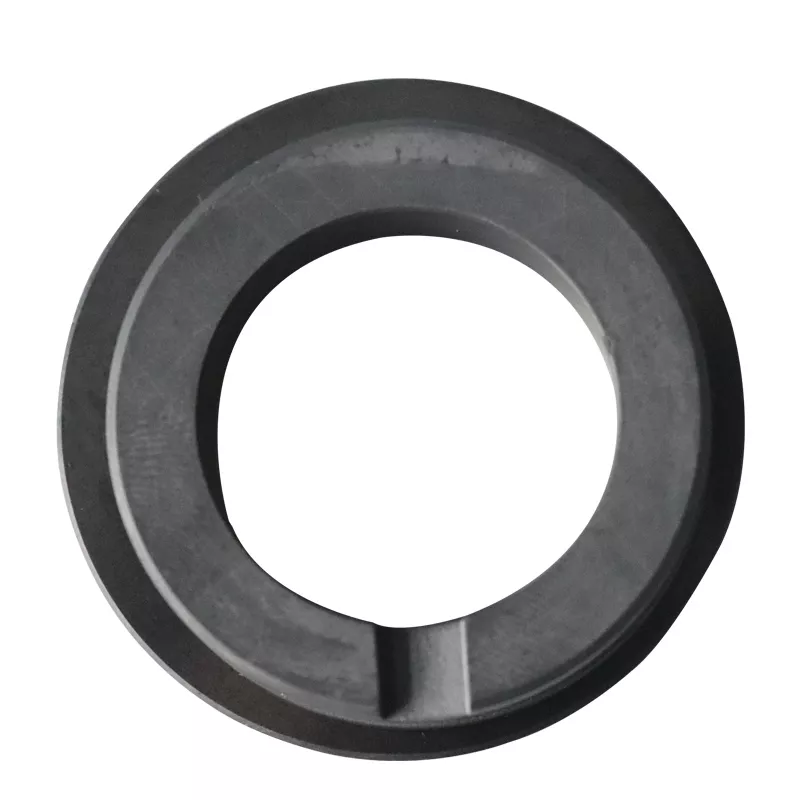
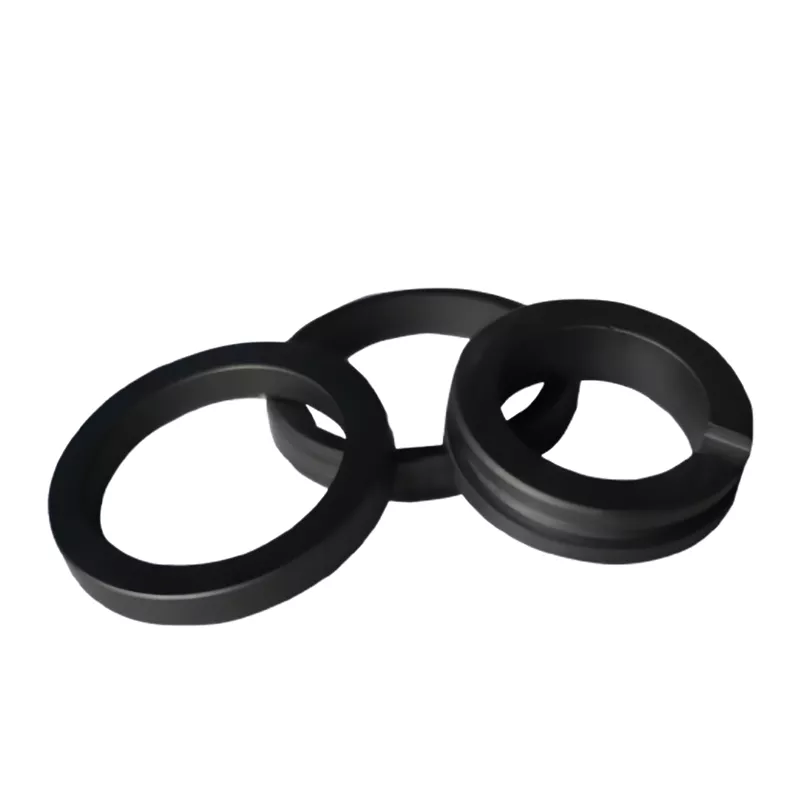
A silicon carbide mechanical seal ring is a precision ceramic sealing face used in rotating equipment to control leakage between stationary and rotating components. It is selected when abrasive particles, corrosive liquids, hot water, hydrocarbons or slurry media make carbon, alumina or metal seal faces wear too quickly.
For most industrial buyers, the key selection point is not only the ring diameter. The final sealing performance depends on the silicon carbide grade, face flatness, surface finish, mating material, lubrication or flushing method, and the real operating conditions of the equipment.
Functional Properties Supporting the Silicon Carbide Sealing Ring in Industrial Service
-
Uniform Grain Packing
The microstructure maintains a homogeneous grain distribution with porosity typically <0.2%, which limits fluid penetration into the seal face. -
High Vickers Hardness
Material hardness in the HV2200–2600 range offers resistance to slurry erosion, allowing the Silicon Carbide Sealing Ring to handle solids content commonly reaching 5–15% in pulp, paper, and mining applications. -
Corrosion Rate Reduction
Typical corrosion loss remains below 1–3 mg/cm²·year in strong acids such as HCl and H₂SO₄. -
High Thermal Conductivity
Values in the 70–120 W/m·K range allow heat from face friction to dissipate rapidly, reducing thermal gradients that could cause localized deformation. -
Controlled Face Flatness
Surface flatness maintained within micro-level deviation ranges ensures a uniform pressure distribution across the seal face.
Technical Specifications of Silicon Carbide Sealing Ring
The characteristics of the Silicon Carbide Sealing Ring are defined by its dense ceramic microstructure, stable thermal behavior, and consistent mechanical performance across corrosive, abrasive, and elevated-temperature operating conditions. These material indicators support laboratory verification of structural reliability, chemical resistance, and wear stability in long-cycle industrial service.
| Buyer Concern | Recommended Specification Focus | Engineering Meaning |
|---|---|---|
| Abrasive slurry wear | Vickers hardness around HV2200–2600 | Higher hardness helps the seal face resist scoring from suspended solids, pigments, mineral particles and pulp fibers. |
| Corrosive fluids | Acid and alkali resistance should be reviewed by media type | Silicon carbide is suitable for many aggressive fluids, but the final selection should consider concentration, temperature and cleaning chemistry. |
| Thermal distortion | Thermal conductivity around 70–120 W/m·K | Faster heat spreading helps reduce local hot spots at the seal face during start-up, friction and temperature cycling. |
| Face stability under load | Flexural strength above 380 MPa | Mechanical strength helps the ring maintain geometry under axial load, radial force and uneven process conditions. |
| Leakage control | Lapped face flatness and polished surface finish | Surface finish and flatness directly affect sealing film stability, leakage behavior and friction heat. |
| Material selection | RBSiC or SSiC grade review | RBSiC and SSiC may suit different cost, corrosion, density and machining requirements. The grade should be selected by application rather than name only. |
| Custom assembly fit | OD, ID, thickness, chamfer, groove and shoulder design | Correct geometry helps the ring seat properly in the seal assembly and reduces installation-related edge loading. |
Dimensions of Silicon Carbide Sealing Ring
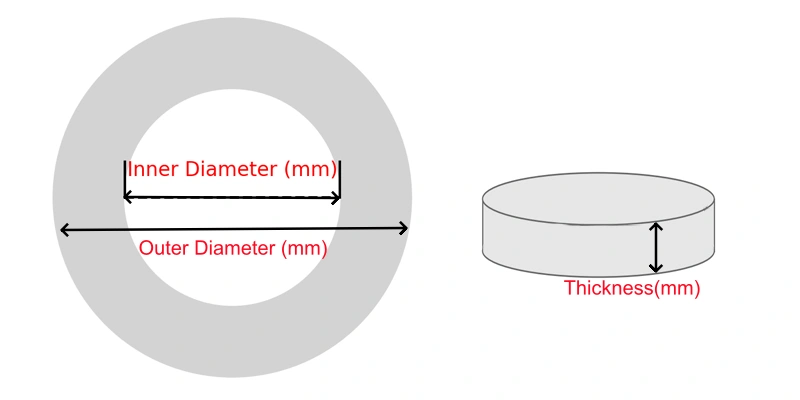
| Silicon Carbide Sealing Ring | ||||
| Model NO. | Outer Dia.(mm) | Inner Dia.(mm) | Thickness(mm) | Purity(%) |
| AT-SC-H001 | 10.0 | 5.0 | 2.1 | 99 |
| AT-SC-H002 | 10.0 | 6.0 | 3.5 | 99 |
| AT-SC-H003 | 11.0 | 6.0 | 3.0 | 99 |
| AT-SC-H004 | 11.5 | 4.0 | 3.5 | 99 |
| AT-SC-H005 | 11.9 | 6.0 | 4.5 | 99 |
| AT-SC-H006 | 12.0 | 6.0 | 4.0 | 99 |
| AT-SC-H007 | 12.9 | 8.5 | 3.0 | 99 |
| AT-SC-H008 | 14.5 | 8.5 | 3.5 | 99 |
| AT-SC-H009 | 14.5 | 8.0 | 4.0 | 99 |
| AT-SC-H010 | 14.5 | 9.0 | 3.5 | 99 |
| AT-SC-H011 | 14.5 | 9.0 | 4.0 | 99 |
| AT-SC-H012 | 14.5 | 10.0 | 4.0 | 99 |
| AT-SC-H013 | 14.5 | 8.5 | 3.5 | 99 |
| AT-SC-H014 | 18.0 | 12.0 | 4.0 | 99 |
| AT-SC-H015 | 20.0 | 6.0 | 4.0 | 99 |
| AT-SC-H016 | 22.3 | 15.2 | 11.0 | 99 |
| AT-SC-H017 | 25.0 | 16.0 | 6.0 | 99 |
| AT-SC-H018 | 25.0 | 18.0 | 6.0 | 99 |
| AT-SC-H019 | 26.0 | 14.0 | 4.0 | 99 |
| AT-SC-H020 | 26.0 | 20.0 | 5.0 | 99 |
| AT-SC-H021 | 28.0 | 12.0 | 4.0 | 99 |
| AT-SC-H022 | 28.0 | 22.0 | 7.0 | 99 |
| AT-SC-H023 | 28.0 | 21.0 | 4.0 | 99 |
| AT-SC-H024 | 31.0 | 18.0 | 10.0 | 99 |
| AT-SC-H025 | 32.0 | 20.0 | 3.0 | 99 |
| AT-SC-H026 | 32.8 | 22.6 | 11.0 | 99 |
| AT-SC-H027 | 34.0 | 23.0 | 4.5 | 99 |
| AT-SC-H028 | 34.5 | 28.0 | 5.0 | 99 |
| AT-SC-H029 | 36.0 | 20.0 | 10.0 | 99 |
| AT-SC-H030 | 36.0 | 26.0 | 14.0 | 99 |
| AT-SC-H031 | 37.0 | 30.0 | 7.0 | 99 |
RBSiC vs SSiC Seal Rings: Which Grade Should Be Reviewed?
| Material Option | Better Suited For | Buyer Should Confirm |
|---|---|---|
| Reaction-Bonded Silicon Carbide, RBSiC | General industrial seal rings where cost control, dimensional stability and wear resistance are important. | Fluid chemistry, solids content, working temperature, mating face material and whether free silicon content is acceptable. |
| Sintered Silicon Carbide, SSiC | More demanding chemical, high-temperature or high-purity fluid environments where dense microstructure and chemical stability are more critical. | Acid or alkali concentration, thermal cycling, shaft speed, seal design, surface finish and required inspection standard. |
| Custom SiC Grade Review | Equipment replacement projects, non-standard seal assemblies and harsh slurry or chemical systems. | Drawing, sample photos, OD, ID, thickness, face width, groove details, tolerance needs and operating conditions. |
Protective Packaging for Silicon Carbide Sealing Ring
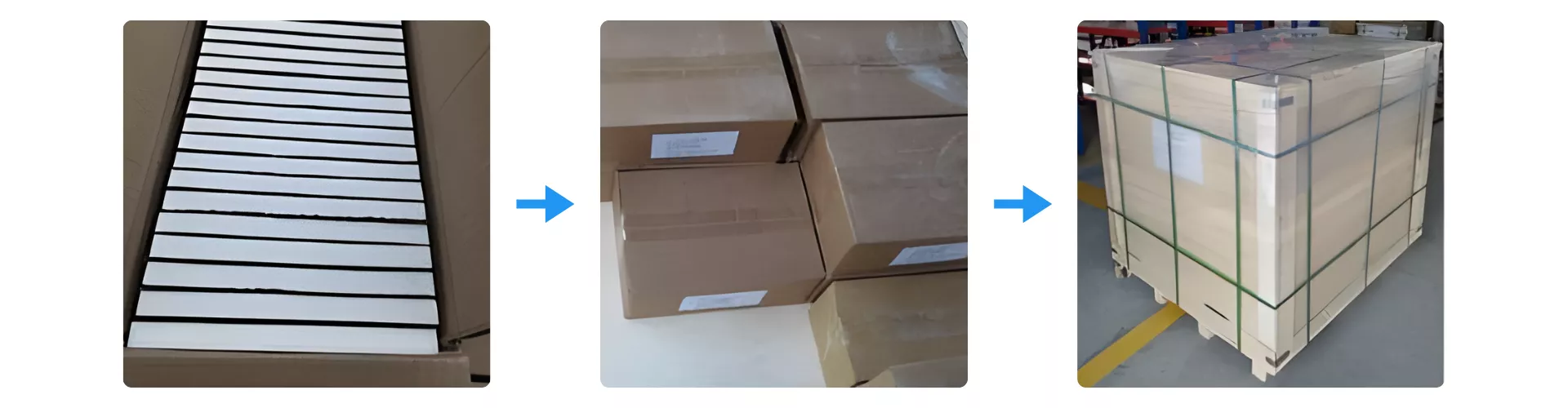
Silicon Carbide Sealing Ring is individually protected in lined inner boxes to prevent surface contact and vibration during transit. Each boxed unit is then consolidated into reinforced cartons with clear labeling to support batch traceability and handling. All cartons are finally palletized and secured with strapping and film wrap to ensure stable, impact-resistant transport for international shipment.