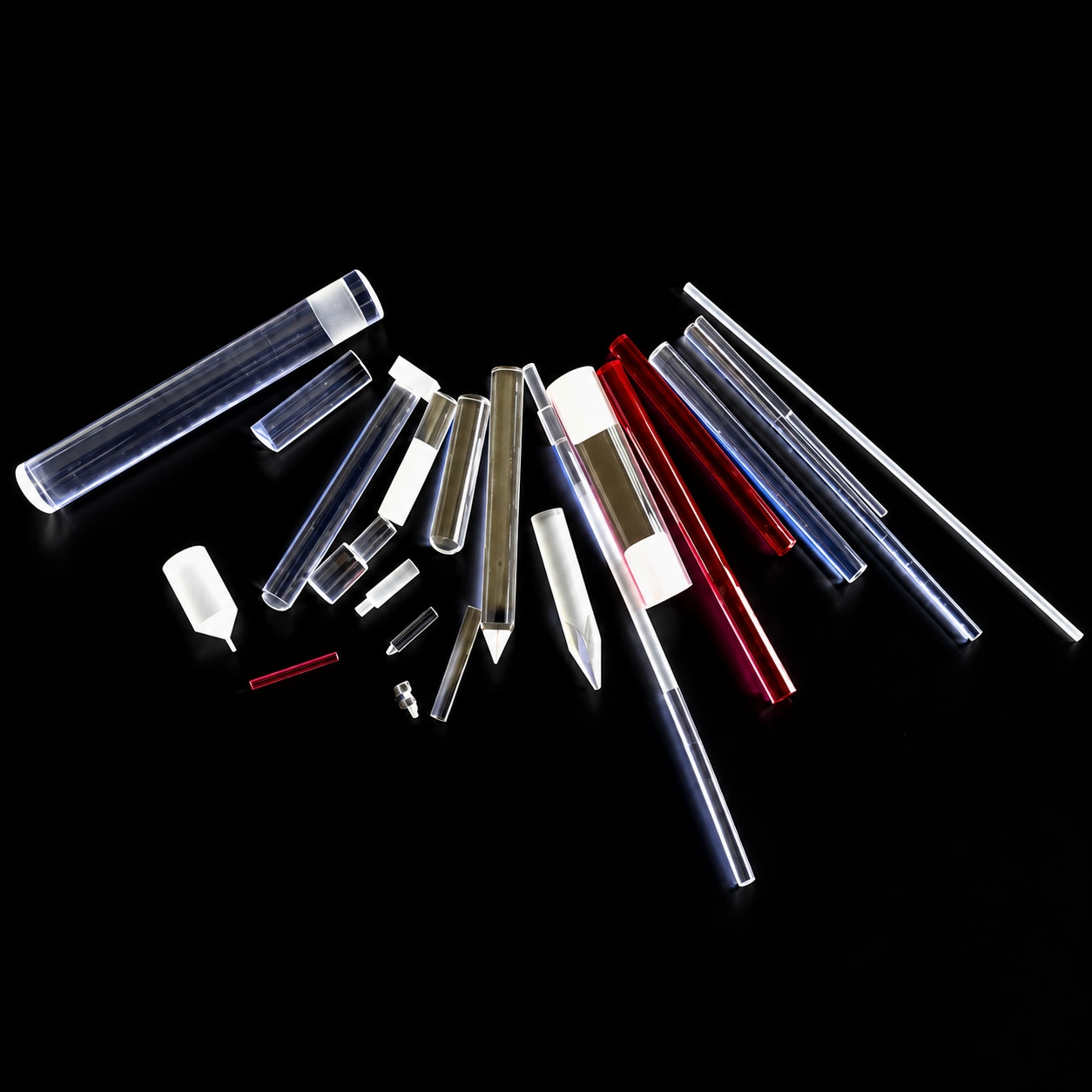
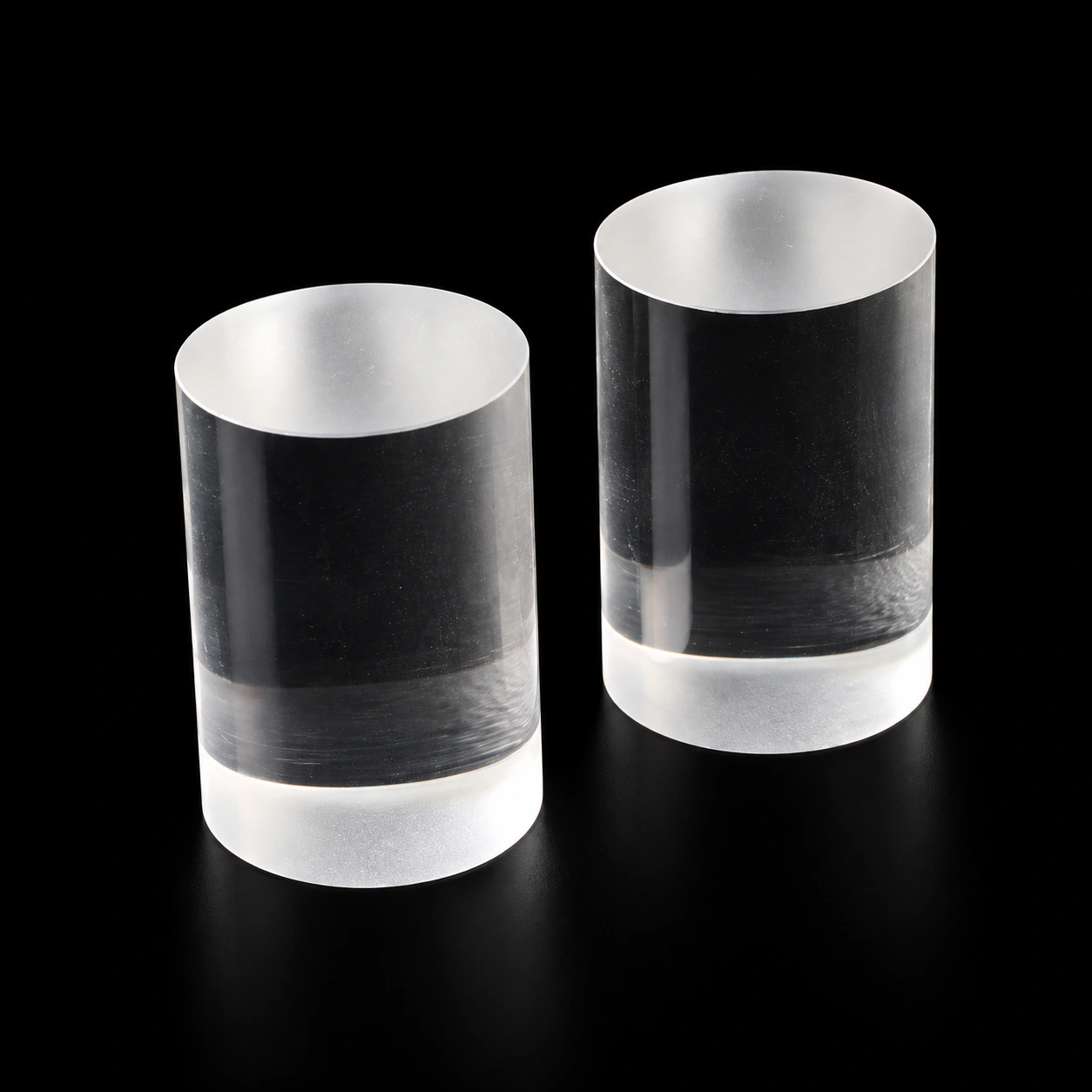
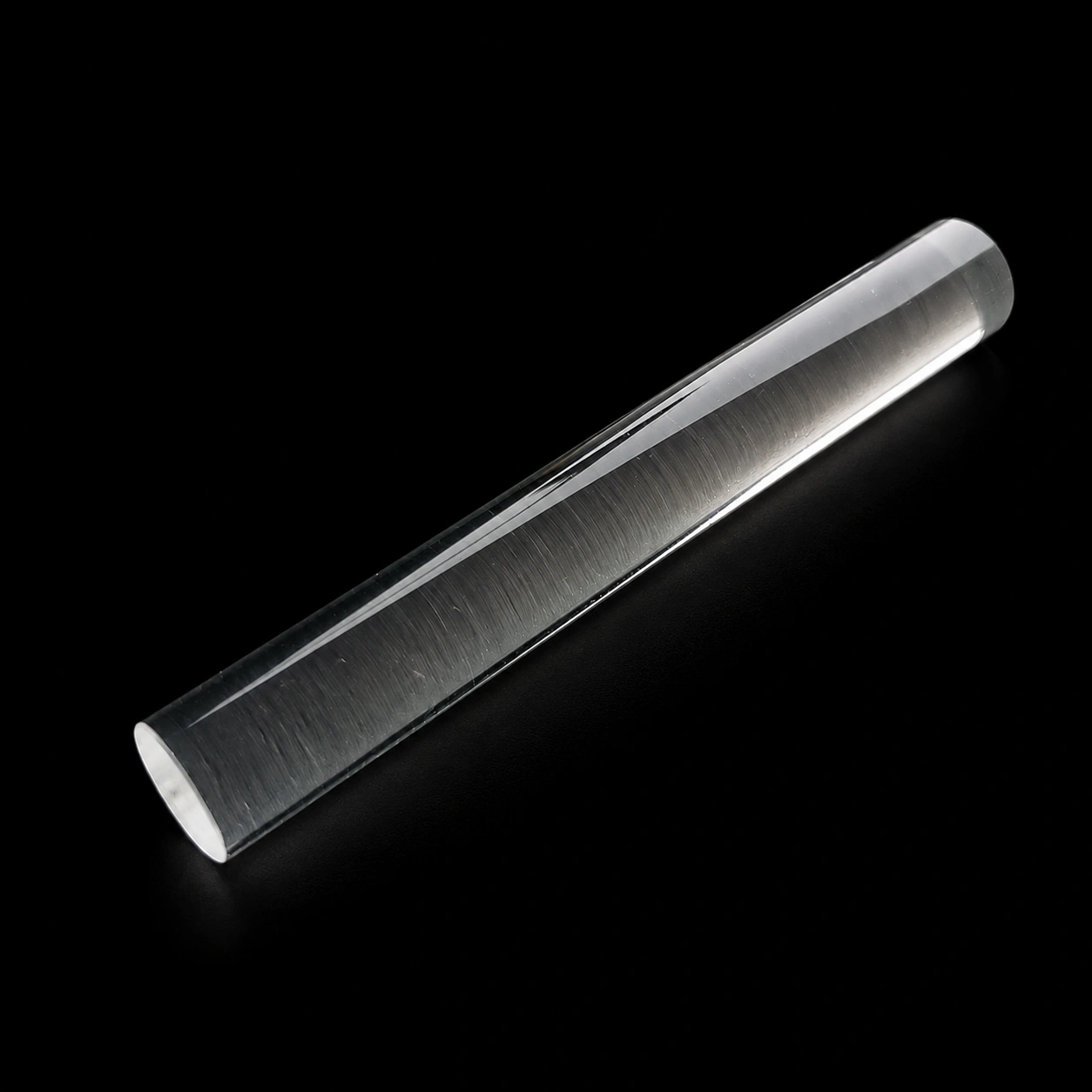
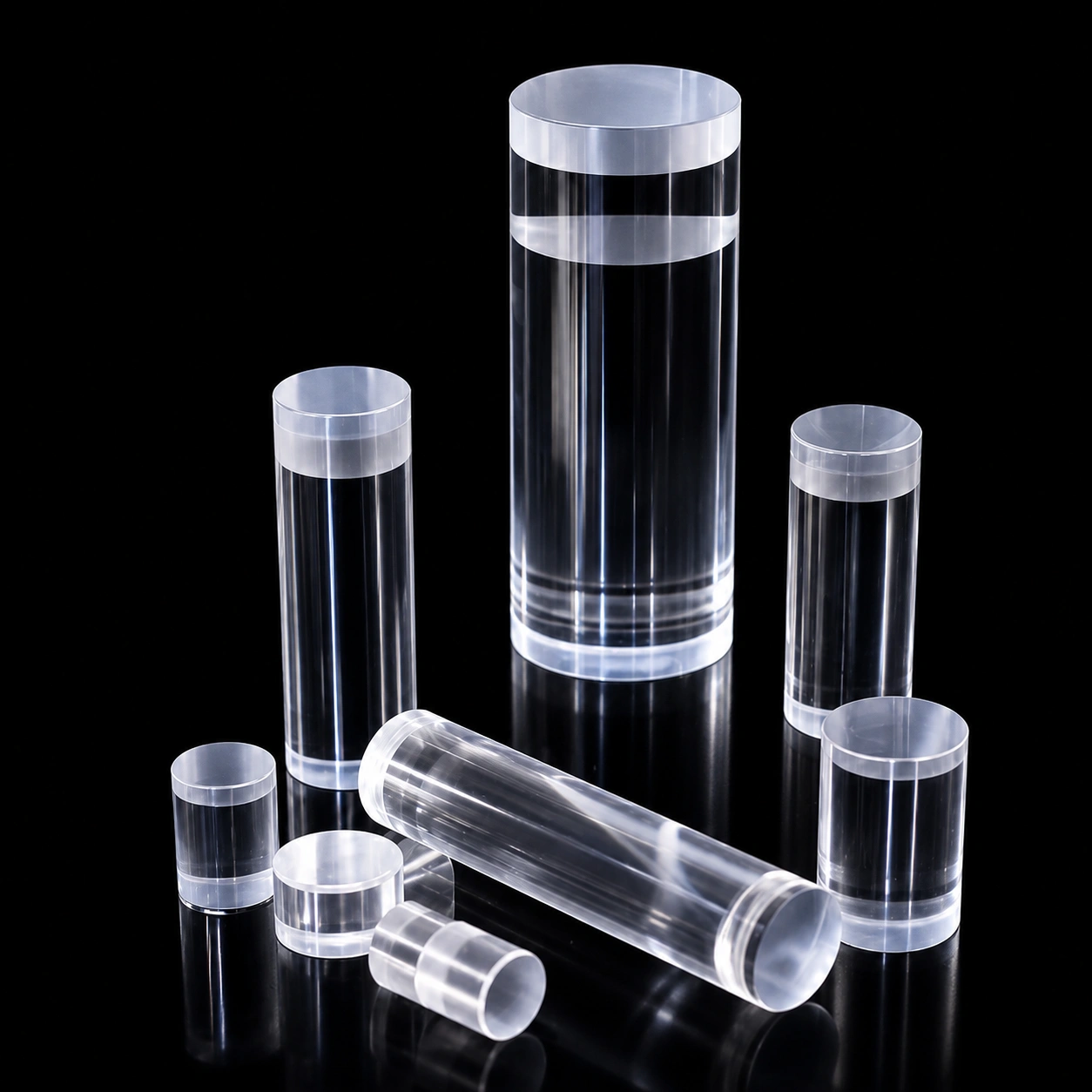
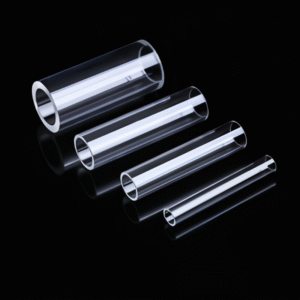
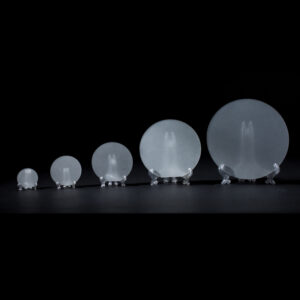
Sapphire rods are solid cylindrical components made from synthetic single-crystal aluminum oxide (Al₂O₃). Available as blanks, ground, polished, or finished parts, they provide hardness, wear resistance, electrical insulation, thermal stability, and optical transmission for plungers, light guides, and precision assemblies.
Choose the Sapphire Rod Supply Condition
A cored or ground cylindrical blank reviewed for downstream cutting, grinding, polishing or conversion. Specify crystal orientation, machining allowance, OD, length and internal-quality requirements.
Best fit: sapphire/optics processors and downstream component manufacturers.
A drawing-reviewed rod with controlled dimensions and geometric requirements while the functional surfaces remain ground or partially finished.
Define: OD, length, straightness, roundness, cylindricity, datums, end geometry and surface condition.
A rod with the cylindrical surface, end faces or both polished to project-specific optical or mechanical acceptance criteria.
Define: functional polished zones, roughness / optical surface criteria, end-face requirements and handling.
- Fully finished Functional Rod
A drawing-defined sapphire rod such as a plunger, light guide, insulating rod or wear/alignment component with finished functional surfaces and custom ends/features.
Define: mating assembly, working environment and system-validation plan.
A sapphire rod blank and a finished sapphire rod are not the same purchase specification. Select the delivery condition first, then define the crystal orientation, final geometry, functional surfaces, inspection criteria and application interface.
Choose a Sapphire Rod by Functional Requirement
Select a sapphire rod by the function it must perform, not by diameter alone. The application determines the appropriate rod form, crystal orientation, geometry, surface requirements, inspection criteria, and validation method.
| Functional Requirement |
Recommended Sapphire Rod Form |
Specifications to Define |
Why They Matter |
| Further Sapphire or Optical Processing |
Ground rod blank with downstream machining allowance |
Orientation, OD, length, machining allowance, internal-defect criteria, edge condition, and packaging |
The blank must support the finished-part orientation and yield target; diameter alone does not define usable material. |
| Analytical or HPLC Pump Plunger |
Precision-ground and polished functional plunger rod |
OD, roundness, straightness, cylindricity, functional length, surface finish, end geometry, pump, seal, fluid, and validation method |
Roundness, surface finish, and alignment interact with the seal and can affect leakage, wear, and pump consistency. |
| High-Temperature Light Guide |
Polished optical sapphire rod |
Wavelength, length, orientation, cylindrical and end-face quality, coupling geometry, temperature gradient, and mounting |
Optical coupling, scatter, birefringence, and thermal stress depend on more than the rod diameter and material name. |
| Electrical Insulation or Feedthrough |
Ground or polished insulating rod |
Voltage, frequency, seal or braze interface, geometry, surface finish, thermal cycling, vacuum or atmosphere, and assembly testing |
Sapphire’s insulation properties alone do not determine the rating of the assembled feedthrough. |
| Wear, Alignment, or Precision Motion |
Ground or finished wear rod or pin |
Load, impact, fit, mating material, medium, motion, edge geometry, surface finish, and fracture risk |
Sapphire offers high hardness, but brittle fracture risk and mating-surface conditions must also be considered. |
Sapphire Rods Properties
| Property |
Typical Reference Value |
Why It Matters |
| Material |
Single-crystal Al₂O₃ / synthetic sapphire |
Provides a different structure and performance profile from polycrystalline alumina ceramic rods. |
| Density |
Approximately 3.97 g/cm³ |
Supports material identification, component-weight estimation, and assembly planning. |
| Vickers Hardness |
Approximately 22.5 GPa |
Provides excellent resistance to scratching and abrasive wear in demanding applications. |
| Thermal Conductivity |
Approximately 42 W/(m·K) at room temperature |
Helps manage heat transfer and thermal gradients in high-temperature applications. |
| Coefficient of Thermal Expansion |
Approximately 7.0–7.7 × 10⁻⁶/K, direction dependent |
Important when designing mounts, seals, and assemblies exposed to thermal cycling. |
| Volume Resistivity |
Greater than 10¹⁴ Ω·cm at room temperature |
Supports electrical-insulation applications; final assembly ratings require system validation. |
| Refractive Index |
nₒ ≈ 1.768 / nₑ ≈ 1.760 at a reference visible wavelength |
Demonstrates sapphire’s birefringence and the importance of crystal orientation in optical applications. |
Material note: These are typical reference values. Sapphire is anisotropic, so its mechanical, thermal, electrical, and optical properties may vary with crystal orientation, temperature, and test method.
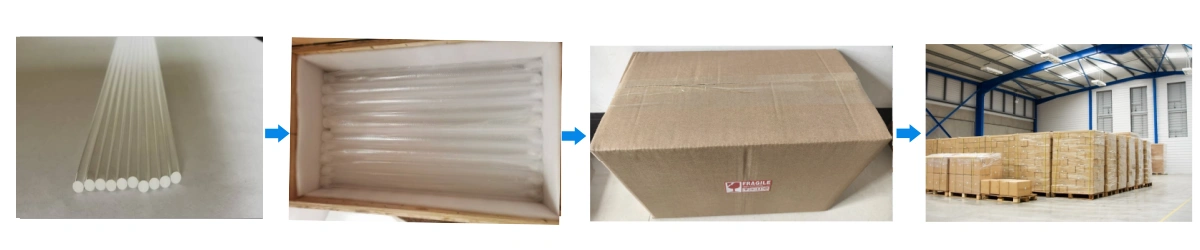
Sapphire Rod Packaging
Sapphire Rods for Demanding Industrial Applications
ADCERAX sapphire rods are available as blanks, precision-ground rods, polished rods, and finished functional components for optical, analytical, electrical, wear-resistant, and precision-motion applications.
-
Sapphire Rod Blanks for Optical and Precision Machining
1. For sapphire processors, optical manufacturers, and precision component producers.
2. Ground sapphire rod blanks are suitable for downstream cutting, grinding, polishing, and component manufacturing.
3. Single-crystal sapphire provides hardness, chemical resistance, thermal stability, and optical performance.
-
Sapphire Plungers for HPLC and Analytical Pumps
1. For analytical-instrument manufacturers, pump producers, and replacement-component suppliers.
2. Precision-ground and polished sapphire plungers are used in analytical pumps and fluid-handling systems.
3. Their hard, smooth working surfaces support reliable interaction with pump seals.
-
Sapphire Light Guide Rods for High-Temperature Sensors
1. For optical-sensor manufacturers and high-temperature monitoring systems.
2. Polished sapphire light guide rods transmit optical signals through hot or demanding environments.
3. Finished cylindrical surfaces and optical end faces support stable light transmission and coupling.
-
Sapphire Rods for Precision Metering Pumps and Valves
1. For precision pump, dosing, metering, and valve manufacturers.
2. Sapphire plunger rods provide hard, wear-resistant working surfaces for controlled fluid movement.
3. They are suitable for applications involving repeated motion, sealing, and precision positioning.
-
Sapphire Insulating Rods for Electrical and Hermetic Assemblies
1. For electrical equipment, vacuum systems, feedthroughs, and hermetically sealed assemblies.
2. Sapphire insulating rods combine electrical insulation with thermal and chemical stability.
3. Ground or polished rods can be used in sealing, mounting, and high-temperature assemblies.
-
Sapphire Wear Pins and Alignment Rods
1. For precision machinery, positioning systems, measuring equipment, and wear-resistant assemblies.
2. Sapphire wear pins and alignment rods provide hard surfaces for guiding, locating, and repeated-contact applications.
3. They are suitable for precision motion systems where wear resistance and dimensional stability are important.
How to Handle, Install, and Maintain Sapphire Rods
Sapphire rods offer excellent hardness, wear resistance, thermal stability, electrical insulation, and optical performance. However, sapphire is a brittle material and must be handled, installed, and operated correctly.
- Handling1. Wear clean gloves when handling polished or optical surfaces.
2. Avoid dropping, striking, bending, or applying concentrated force to the rod.
3. Do not allow the rod to contact hard edges or other sapphire components.
4. Protect polished cylindrical surfaces and end faces from scratches and contamination.
- Inspection Before Use1. Check the rod for cracks, chips, scratches, and surface contamination.
2. Inspect the edges, end faces, steps, and other functional areas carefully.
3. Do not install a visibly damaged rod in a precision, pressure, optical, or high-temperature assembly.
- Installation1. Keep the rod correctly aligned with the holder, seal, bearing, or mating component.
2. Apply clamping force evenly and avoid excessive tightening.
3. Use suitable supports, seals, sleeves, or cushioning materials to prevent point loading.
4. Avoid direct contact with sharp metal edges.
- Operating Conditions1. Operate the sapphire rod only within the approved temperature, load, pressure, chemical, optical, and electrical conditions.
2. Avoid rapid temperature changes that may create thermal stress.
3. Prevent impact, misalignment, vibration, and unexpected side loading.
4. Validate the complete assembly before continuous operation.
- Cleaning1. Use clean, non-abrasive materials to remove dust or surface contamination.
2. Clean polished surfaces with a lint-free wipe and a compatible cleaning solution.
3. Do not use abrasive pads, metal tools, or aggressive cleaning methods.
4. Dry the rod completely before installation or storage.
- Application-Specific Care1. Keep sapphire plunger rods correctly aligned with the pump seal to reduce uneven contact.
2. Protect the polished end faces of sapphire light guides to maintain optical coupling.
3. Prevent concentrated mechanical loads on insulating rods and hermetic components.
4. Inspect wear pins and alignment rods regularly for chips, cracks, or surface damage.
- Storage1. Store sapphire rods individually in clean protective packaging.
2. Use end-face protection for polished or optical rods.
3. Support long rods securely to prevent impact or bending during storage and transport.
4. Keep the rods separated from hard or abrasive components.
How ADCERAX Reviews and Validates Sapphire Rods
Reliable sapphire rods require more than material selection. Before quotation, ADCERAX reviews the drawing, crystal orientation, geometry, GD&T, functional surfaces, inspection criteria, and application conditions. First-article inspection and system validation are treated as separate steps to reduce qualification risk.
| Review Stage |
What We Define |
Why It Matters |
| Material and Supply Route |
Single-crystal material requirement, grade or source route, crystal orientation, and required documentation |
Prevents incorrect assumptions about the material, grade, or orientation. |
| Drawing Review |
Complete dimensions, datums, GD&T, edges, steps, end features, and functional zones |
Connects manufacturing feasibility to the finished part and actual assembly. |
| Surface and Internal Quality |
Cylindrical and end-face criteria, polished or optical zones, defect limits, and measurement methods |
Creates measurable acceptance criteria for terms such as “polished” or “optical grade.” |
| First Article or Prototype |
Agreed drawing-level measurements and inspection points when included in the project |
Confirms that the manufactured part meets the approved specification. |
| System Validation |
Pump and seal testing, optical coupling, thermal cycling, electrical assembly, or other application-specific testing |
Confirms application performance; dimensional inspection alone does not validate the complete system. |
| Lot and Change Control |
Part identification, traceability, and change requirements when included in the order |
Supports repeat production and controlled qualification. |
| Protective Packaging |
Individual protection, end-face protection, and long-rod support as required |
Reduces the risk of edge, surface, and transportation damage. |
Engineering note: For replacement, second-source, or new-design projects, ADCERAX reviews the drawing and acceptance plan first. A dimensionally correct sapphire rod is not automatically a validated pump plunger, light guide, or insulating component.