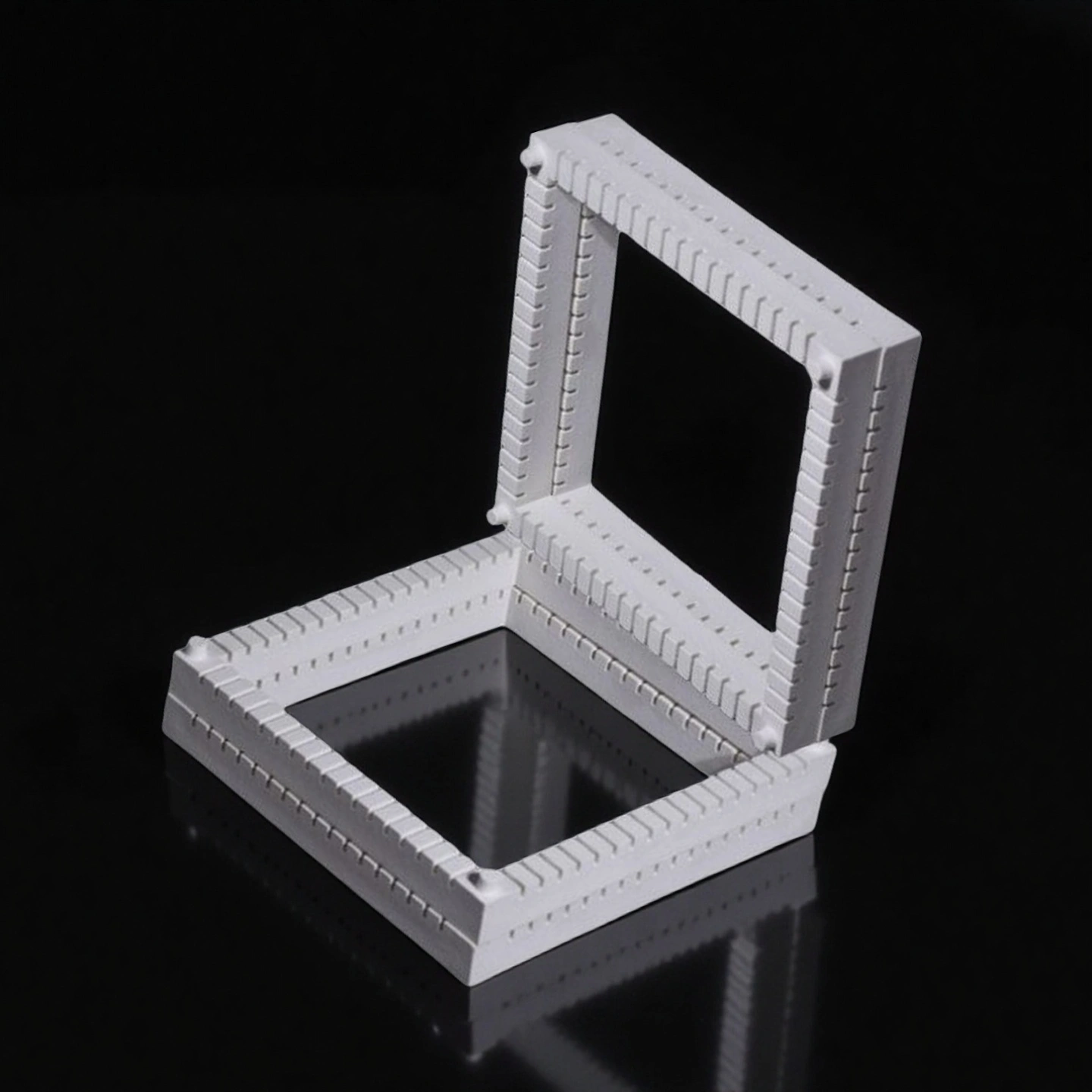
Custom Alumina Ceramic Frames for PCB Support and Insulation

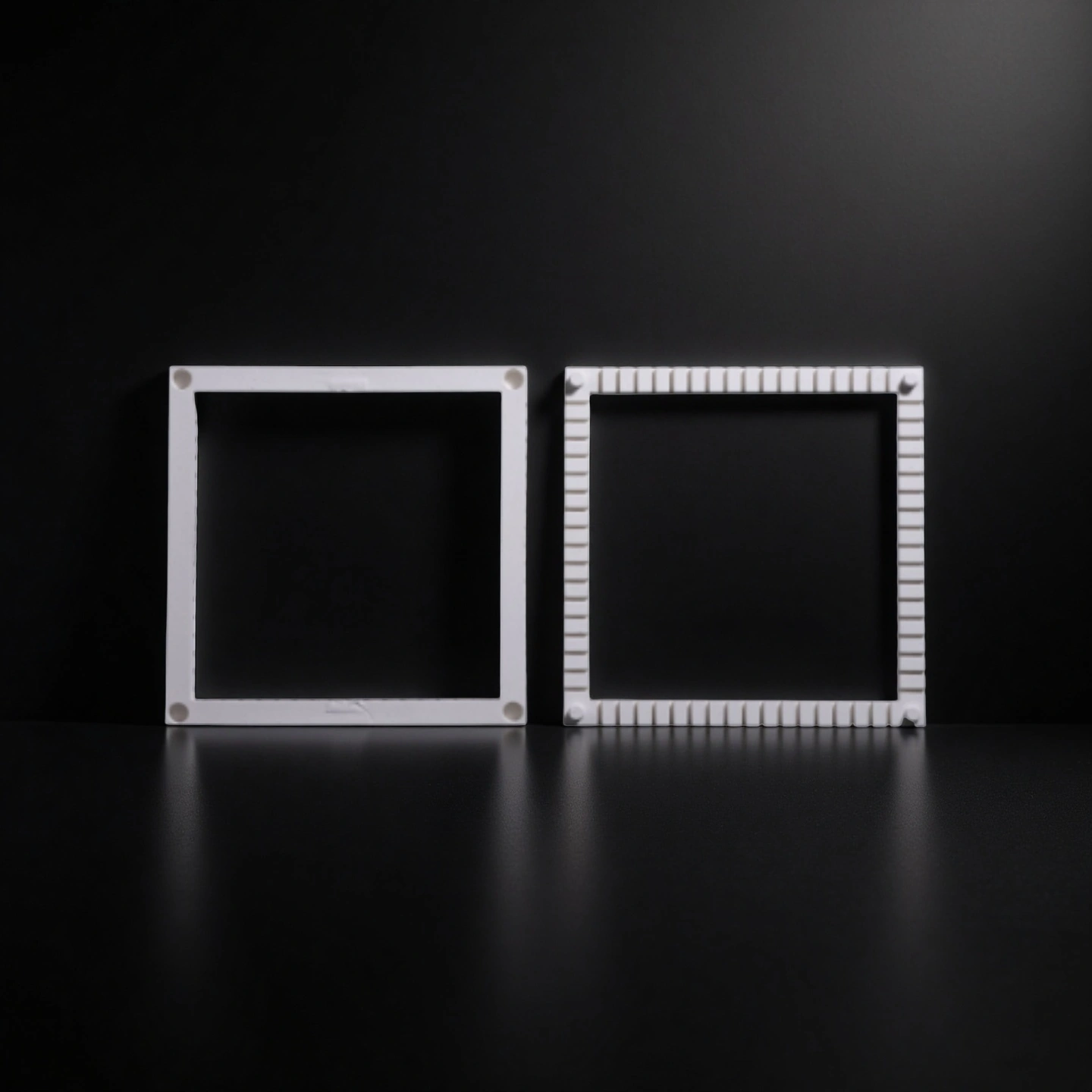
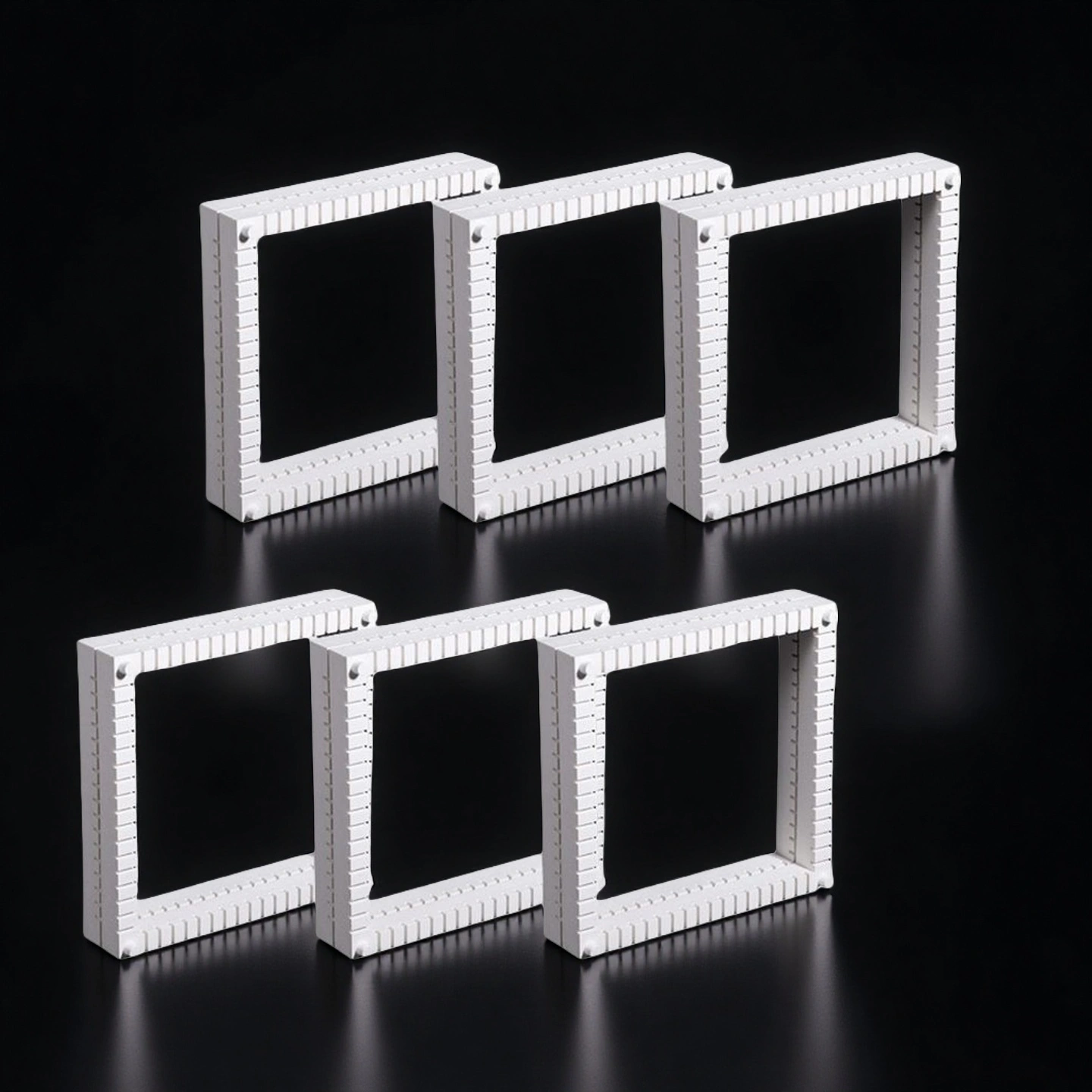
ADCERAX supplies custom alumina ceramic frames for PCB support, sensor modules, electronic housings and thermal insulation assemblies. These Al₂O₃ frames are used when plastic or metal borders cannot maintain stable insulation, alignment or dimensional control under heat, humidity or vibration.

Each frame can be reviewed by outer size, inner window, wall thickness, hole layout, slot design, flatness, edge condition, alumina grade, mounting method and working temperature.

Catalog No. AT-CF-F001
Material ≥ 96% Al2O3
Flexural Strength ≥300 MPa
Dielectric Strength  >10^12 Ω·cm
Volume Resistivity >10¹² Ω·cm, depending on material grade and test condition.
Engineering RFQ Review
Small-Batch Custom Support
Factory-Direct Manufacturing
Drawing & Process Review

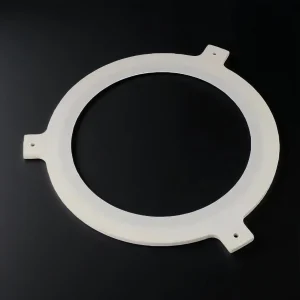
Alumina ceramic frames are square or rectangular structural borders made from approximately 95% Al₂O₃, used as insulating base parts and housings in industrial devices. They combine high mechanical strength, hardness, thermal stability and electrical insulation, so they can support and protect electronic components, sensors and actuators in harsh environments such as high temperature, high humidity or corrosive atmospheres.

What to Confirm Before Choosing an Alumina Ceramic Frame

Selecting an alumina ceramic frame is usually not only a material choice. Engineers also need to confirm whether the frame can hold the required clearance, mounting accuracy and insulation distance after machining, assembly and thermal exposure. ADCERAX reviews the drawing and working condition before quotation so that the ceramic frame can match the real housing, PCB, sensor or insulation structure.

Design Requirement Engineering Review Focus Why It Matters
Window size and wall thickness Outer size, inner opening, wall width and corner radius are checked against the drawing. These dimensions control PCB position, component clearance and mechanical support.
Hole and slot layout Mounting holes, through slots, countersinks and step features are reviewed before machining. Poor hole design can create stress concentration or assembly mismatch.
Insulation distance Voltage condition, metal housing clearance and contact position are reviewed. The frame must maintain electrical separation under heat, humidity or vibration.
Edge and corner condition Chamfer, radius, burr-free edges and handling risk are reviewed. Sharp corners or thin bridges can increase chipping risk.
Operating condition Temperature, humidity, cleaning method and chemical exposure are checked. Material grade and surface finish should match the real service environment.

Why Use Alumina Ceramic Frames in Insulation Assemblies

Alumina ceramic frames are selected when a plastic, metal or resin-based border cannot maintain stable shape, insulation clearance or surface condition during long-term operation. The dense Al₂O₃ body provides a rigid insulating structure around PCBs, sensor elements, contact pads and heating-zone components.

High Mechanical Stability for Frame Support

The alumina ceramic frame carries mechanical loads and resists surface wear, so it can act as a stable structural border or base in long-term industrial operation without deformation or rapid abrasion.

Electrical Insulation Around Conductive Parts

Alumina ceramic frames provide a rigid insulating barrier between conductive parts, PCB areas, electrodes and metal housings. This helps reduce leakage paths, short-circuit risk and unwanted electrical contact in compact industrial assemblies.

Dimensional Control for PCB and Sensor Positioning

The frame’s inner window size, wall thickness, hole position and flatness can be controlled according to the drawing, helping PCBs, substrates, sensor chips or contact areas sit in defined positions during assembly.

Better Heat Resistance Than Polymer Frames

Compared with many polymer support parts, 95% alumina maintains better shape stability near heaters, hot modules or furnace-adjacent equipment areas where softening, creep or thermal distortion may affect assembly reliability.

Inorganic and Chemically Stable Surface

The alumina ceramic frame is based on an inorganic ceramic body without volatile organic compounds, making it a stable, inert choice for devices where outgassing or contamination must be minimized.

Alumina Ceramic Frame Properties

Property Unit 96% Al₂O₃ 99% Al₂O₃ 99.5% Al₂O₃ 99.6% Al₂O₃ 99.7% Al₂O₃ 99.8% Al₂O₃ 99.9% Al₂O₃ 99.99% Al₂O₃
Alumina content % 96 99 99.5 99.6 99.7 99.8 99.9 99.99
Density g/cm³ 3.6-3.75 3.83 3.89 3.91 3.92 3.93 3.94 3.98
Color white Ivory Ivory Ivory Ivory Ivory Ivory Ivory
Water absorption % 0 0 0 0 0 0 0
Young’s modulus (Elastic modulus) GPa 300 350 375 356 357 358 359 362
Shear modulus GPa 152
Bulk modulus GPa 228
Poisson’s ratio 0.22
Compressive strength MPa 1910 2210 2600 2552 2554 2556 2558 2570
Flexural strength MPa 260 300 379 312 313 314 315 320
Fracture toughness MPa·m¹ᐟ² 4
Hardness GPa 14.5 17 17 23 24 25 26 30
Thermal conductivity W/m·K 22 24 35 32–37 33–38 34–39 35–40 36–42
Thermal shock resistance ΔT °C 222 223 224 225 228
Maximum use temperature (no load) °C 1450 1680 ≤1750 1755 1760 1765 1770 1800
Coefficient of thermal expansion 10⁻⁶/°C 7.6 7.6 8.4
Volume resistivity Ω·cm >1×10¹⁴ >1×10¹⁴ >1×10¹⁴ >1×10¹⁴ >1×10¹⁴ >1×10¹⁴ >1×10¹⁴ >1×10¹⁴
Dielectric constant (relative permittivity) 9.2 9.5 9.8 9.83 9.84 9.85 9.86 9.92
Dielectric strength kV/mm 15 19 16.9 23.2 23.4 23.6 23.8 24
Dissipation factor (loss factor @ 1 kHz) 0.0002


Alumina Ceramic Frame Specifications

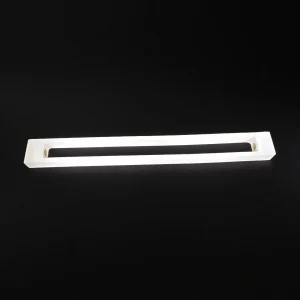
Type 1: Rectangle Alumina Ceramic Frame
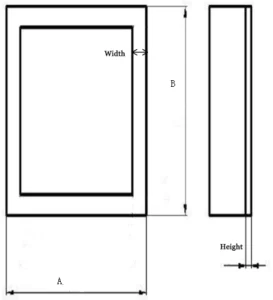
rectangle Alumina Ceramic Frame


Rectangle Alumina Ceramic Frame
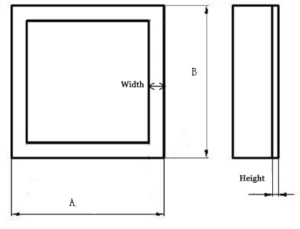
Item No. A(mm) B(mm) Width (mm) Height (mm) Purity (%)
AT-CF-F001 20 30 3 4 96-99
AT-CF-F002 45 62 5 5 96-99
AT-CF-F003 70 80 4 6 96-99
AT-CF-F004 106 120 5 12 96-99
AT-CF-F005 160 100 10 8 96-99
AT-CF-F006 200 180 20 35 96-99


Type 2: Square Alumina Ceramic Frame

square Alumina Ceramic Frame

Square Alumina Ceramic Frame
Item No. A = B (mm) Width (mm) Height (mm) Purity (%)
AT-CF-Z001 20 5 5 96-99
AT-CF-Z002 25 4 3 96-99
AT-CF-Z003 30 3.5 8 96-99
AT-CF-Z004 45 4.8 7.5 96-99
AT-CF-Z005 60 12 16 96-99
AT-CF-Z006 75 20 20 96-99
AT-CF-Z007 86 15 15 96-99
AT-CF-Z008 120 45 16 96-99
AT-CF-Z009 130 30 18 96-99


Packaging for Alumina Ceramic Frames

  • Each alumina ceramic frame should be separated and protected to avoid edge impact, corner chipping and ceramic-to-ceramic contact during transport. Thin walls, machined windows, holes and polished surfaces can be packed with foam positioning, face protection and reinforced outer cartons according to order requirements.
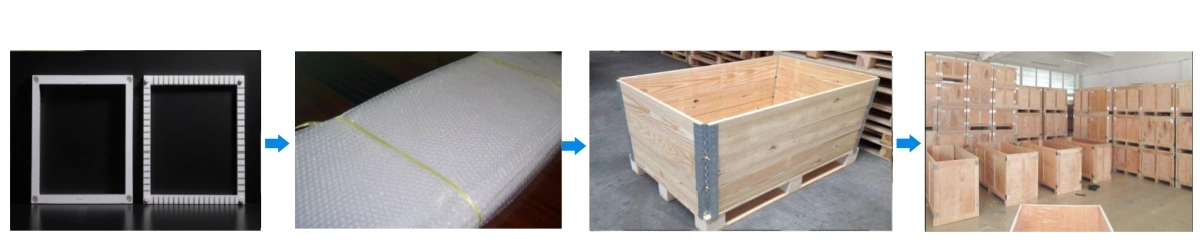

Alumina Ceramic Frames Packaging

Applications of Alumina Ceramic Frames

ADCERAX alumina ceramic frames are used in electronic, sensor and thermal equipment assemblies where a rigid insulating border is required. The frame can support internal components, maintain spacing from metal structures and reduce deformation problems caused by heat, humidity or repeated assembly.

  • Industrial Electronics and PCB Support

    Alumina ceramic frames can be used as insulating borders, spacer frames or support bases for PCBs, power boards and compact electronic modules. They help maintain clearance from metal housings and provide a stable seating structure when polymer supports may deform under heat.

    Key review points include PCB outline, mounting holes, frame height, insulation distance, screw load and whether the ceramic surface contacts copper, solder joints or sensitive components.

  • Sensor and Actuator Packages

    In sensor and actuator assemblies, alumina ceramic frames can define the mounting window, protect internal elements and maintain alignment around electrodes, contact pads or sensing areas. The ceramic body is useful when the package requires stable insulation, chemical resistance or long-term dimensional control.

    Key review points include inner window size, electrode clearance, contact surface finish, environmental exposure and sealing or bonding method.

  • High-Temperature Insulation Assemblies

    Alumina ceramic frames can be used around heaters, furnace-adjacent modules, thermal fixtures and hot-zone insulation structures. Compared with metal or polymer frames, alumina helps maintain insulation and shape stability under elevated temperature.

    Key review points include working temperature, thermal gradient, mounting method, frame thickness, edge protection and heating or cooling rate.

  • Communication and RF Module Housings

    For selected communication and RF-related assemblies, alumina ceramic frames may be used where insulation, dimensional control and stable ceramic contact are required around module borders. Final suitability should be reviewed according to the electrical design, frequency condition and grounding structure.

    Key review points include frame geometry, flatness, surface finish, contact pad clearance and housing material.

How to Use Alumina Ceramic Frames Safely

  • Installation

    1. Verify that the mounting surface is flat and free from burrs before placing the alumina ceramic frame.

    2. Use flat washers or dedicated clamping plates instead of direct point contact from screws to the frame.

    3. Avoid forcing the frame into a misaligned housing; adjust the metal structure rather than bending or twisting the ceramic border.

    4. Check the inner window dimension against the component or substrate so that clearance is sufficient for thermal expansion.

  • Operation and Handling

    1. During assembly, handle alumina ceramic frames with gloved hands or soft tools to avoid edge impact.

    2. When used near heat sources, follow the recommended heating and cooling profiles to reduce thermal shock on the 95% alumina ceramic frame.

    3. In devices that generate high heat, ensure that contact surfaces and thermal paths are designed to minimize steep temperature gradients across the frame.

  • Storage

    1. Store alumina ceramic frames in dedicated trays or shelves, with each layer separated by foam or paper.

    2. Do not stack heavy metal tools or components on top of stored frames.

    3. Keep storage areas dry and clean to avoid contamination or accidental knocks.

  • Cleaning and Maintenance

    1. Remove dust with clean, dry compressed air or a lint-free cloth.

    2. For residues such as flux or process film, use compatible aqueous or solvent cleaners recommended for alumina and electronic parts, then dry thoroughly before reinstallation.

    3. Inspect frames periodically for edge chips or micro-cracks in critical corners; replace any frames showing significant damage.

  • Typical Misuse and How to Avoid It

    1. Overtightened screws causing cracks: Avoid applying excessive torque directly on the alumina ceramic frame; use torque-limited tools, flat washers and compliant layers where possible.

    2. Impact during assembly or transport: Do not drop frames onto hard surfaces; design trays and fixtures that guide frames into position without hard collisions.

    3. Thermal shock from rapid heating or quenching: Prevent exposing the alumina ceramic frame to sudden temperature jumps; introduce controlled ramp rates and avoid direct cold air or liquid contact on hot parts.

Alumina Ceramic Frames FAQ

  1. What is an alumina ceramic frame used for?
    An alumina ceramic frame is used as a rigid insulating border, support frame or mounting structure in PCB assemblies, sensor packages, electronic housings and thermal equipment. It helps maintain component position, electrical clearance and dimensional stability under heat or harsh operating conditions.
  2. Why choose alumina ceramic instead of plastic or metal frames?
    Alumina ceramic is selected when plastic frames may soften, creep or deform, or when metal frames may create electrical conduction risks. Dense Al₂O₃ provides electrical insulation, heat resistance, wear resistance and stable geometry for demanding industrial assemblies.
  3. Can alumina ceramic frames be machined with holes, slots or steps?
    Yes. Alumina ceramic frames can be produced with drawing-based holes, slots, windows, steps, chamfers and countersinks. The final design should be reviewed before quotation because thin walls, sharp corners and closely spaced holes can increase machining and chipping risk.
  4. What alumina grade should be used for ceramic frames?
    95% or 96% alumina is suitable for many industrial insulation and structural support frames. Higher-purity alumina can be considered when the application requires lower contamination risk, improved dielectric behavior or more stable performance in demanding thermal or chemical environments.
  5. How can I reduce cracking or chipping during installation?
    Use flat support surfaces, avoid point loading from screws, add washers or clamping plates where needed, and do not force the ceramic frame into a misaligned housing. Chamfers, corner radius and proper edge protection should be defined on the drawing.
  6. What information is needed for quotation?
    Useful information includes outer size, inner window size, wall thickness, height, hole and slot layout, tolerance requirements, surface finish, alumina grade, operating temperature, electrical insulation requirement and how the frame is mounted in the final assembly.
customize size

Custom Manufacturing – Alumina Ceramic Frames

ADCERAX manufactures alumina ceramic frames according to customer drawings so that the frame geometry, opening size and mounting features match your industrial insulation device or electronic package.

1. Outer dimensions

  • Square or rectangular frames from a few millimetres up to around 200–300 mm per side for typical industrial fixtures.

2. Inner window and border width

  • Opening width and height; border width on each side; optional stepped or recessed windows for substrates or chips.

3. Wall thickness and cross-section

  • Wall thickness generally in the 1.0–6.0 mm range depending on required stiffness and available mounting space.

4. Dimensional tolerances and flatness

  • Linear tolerances for critical dimensions; flatness and parallelism for base surfaces that mate with metal or PCB assemblies.

5. Slots, holes and alignment features

  • Through-holes, countersinks, slots for leads, notches and keying features to locate the alumina ceramic frame inside housings or on circuit boards.

6. Edge and corner treatment

  • Chamfered or rounded edges to reduce chipping and protect wires or sensitive components.

7. Surface condition

  • As-fired surfaces for general insulation frames; ground or selectively polished surfaces for sealing, bonding or tight tolerance interfaces.

Related Products

ADCERAX - Your Trusted Advanced Ceramics Manufacturing Partner

Direct factory manufacturing with comprehensive ceramic materials expertise and global supply capabilities

China-Based Manufacturer

ADCERAX supplies ceramic components for overseas OEMs, equipment builders, and labs.

Custom Drawing Support

We review drawings, dimensions, materials, and application conditions before quotation.

Ceramic Process Control

Forming, sintering, machining, grinding, and finishing are arranged by part requirements.

Pre-Shipment Inspection

Dimensional checks, visual inspection, and packaging review help reduce procurement risk.

Get in Touch with Us

Our team will be happy to respond to you in less than 24 hours.

Pingxiang Factory — Silicon carbide, silicon nitride, high-temperature ceramics

Quick Quotation

*Our team will answer your inquiries within 24 hours.

*Your information will be kept strictly confidential.

Ready to Solve Your Engineering Challenge?

Partner with ADCERAX for reliable, high-performance advanced ceramic solutions. Our engineers are ready to discuss your project.

E-mail

info@adcerax.com

Phone

+(86) 0731-74427743 | WhatsApp: +(86) 19311583352

Response Time

Within 24 hours

Quick Quote

The more details you provide, the faster we can quote.

*We respond within 24 hours. All inquiries are confidential.

Get Your Custom Solution

The more details you provide, the faster we can respond.

customize size

*We respond within 24 hours. All inquiries are confidential.

Download Catalog