What Is a Custom Boron Nitride Crucible?
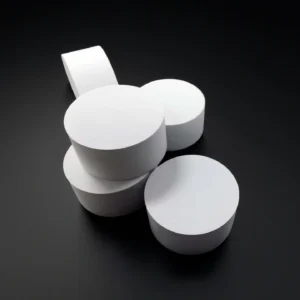
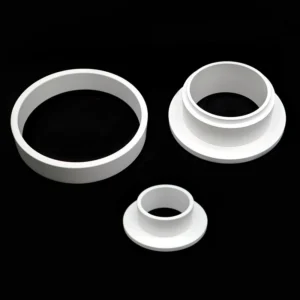
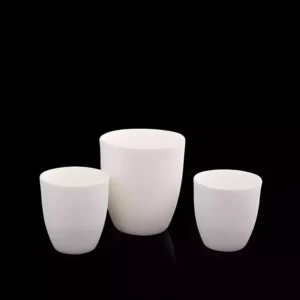
A custom boron nitride crucible is a high-temperature ceramic container machined from hot-pressed boron nitride material to match a specific furnace, melt, coating fixture or laboratory process.
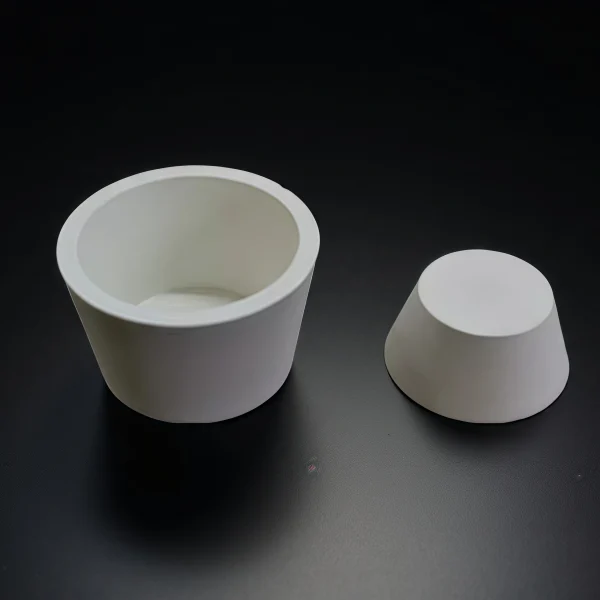
Unlike standard crucibles with fixed dimensions, custom BN crucibles can be designed with controlled wall thickness, stepped rims, matching lids, thermocouple ports, gas vents, grooves, drainage features and special bottom shapes. This makes them useful when the crucible must fit an existing chamber, reduce metal adhesion, limit contamination, or maintain stable geometry during repeated thermal processing.
Why Hot-Pressed Boron Nitride Works for Custom Crucibles?
- Non-wetting surface for selected molten metals
Hot-pressed BN helps reduce adhesion when used with suitable non-ferrous metals such as aluminum, magnesium, zinc, copper and precious metals. This supports cleaner release and easier residue removal.
- Machinable ceramic structure
BN can be machined into complex crucible shapes, including thin walls, stepped rims, lids, grooves, small ports and fixture-matching features.
- Suitable for vacuum and inert gas processes
BN is commonly selected for high-temperature processes where oxygen exposure must be controlled and contamination from crucible materials should be reduced.
- Electrical insulation
BN provides electrical insulation, which is useful near induction coils, resistance heaters or electrically sensitive thermal fixtures.
- Low thermal expansion behavior
BN’s low expansion behavior helps reduce dimensional stress when the crucible is properly heated and cooled under controlled conditions.
BN Crucible Material Properties for Engineering Review
| Property |
Typical Review Value / Description |
Why It Matters |
| Material Type |
Hot-pressed boron nitride ceramic |
Defines the machinability, thermal behavior and non-wetting performance of the crucible. |
| Density |
Grade-dependent |
Affects strength, thermal mass and machining stability. |
| Maximum Use Temperature |
Application-dependent; vacuum or inert gas is preferred |
Temperature capability depends on atmosphere, heating cycle, material grade and processed media. |
| Electrical Insulation |
High electrical resistance |
Useful near induction systems, heaters and electrically sensitive fixtures. |
| Thermal Conductivity |
Grade-dependent |
Influences heating uniformity, thermal response and local hot-spot risk. |
| Machinability |
Suitable for CNC machining |
Allows custom ID, OD, wall thickness, lids, grooves, ports and special bottom geometries. |
| Chemical Compatibility |
Process-dependent |
Must be checked against molten metals, fluxes, slag, additives and reactive alloys. |
| Surface Finish |
As-machined, ground or polished options |
Affects metal release, residue removal and fixture contact behavior. |
Customize BN Crucible Specifications
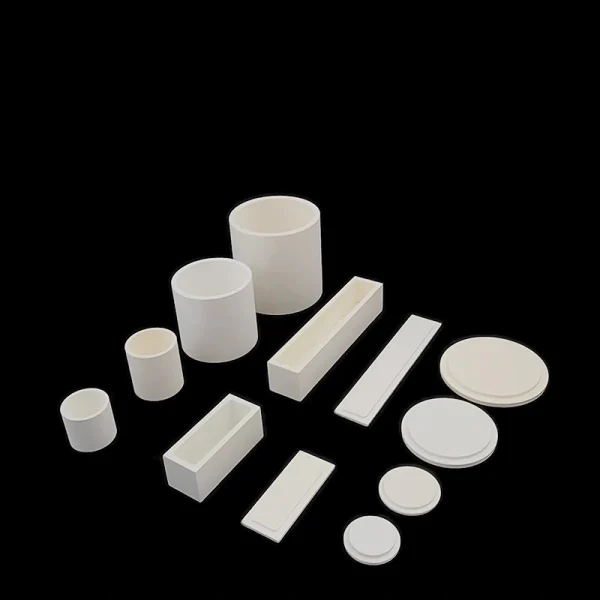
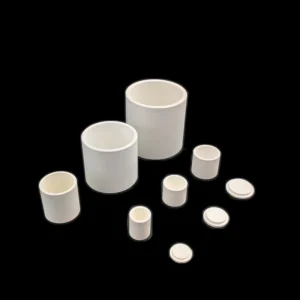
Type 1: Boron Nitride Cylindrical Crucible
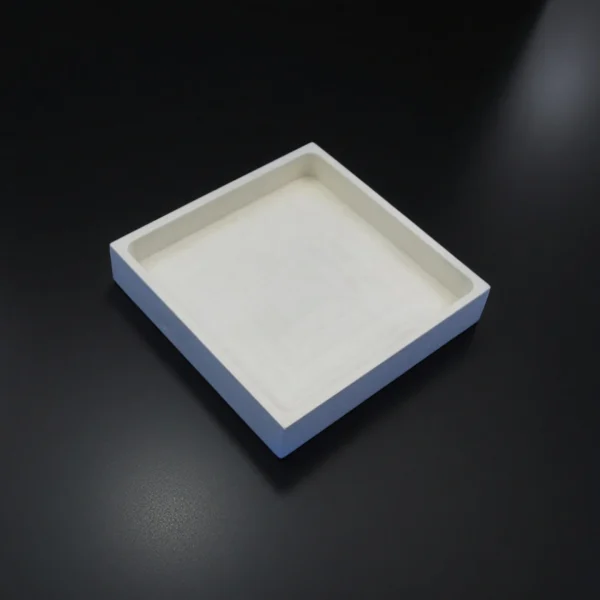
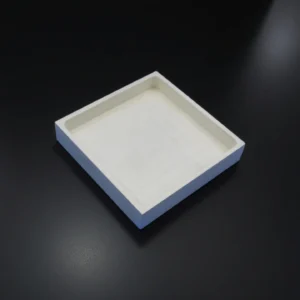
Type 2: Boron Nitride Rectangular Crucible
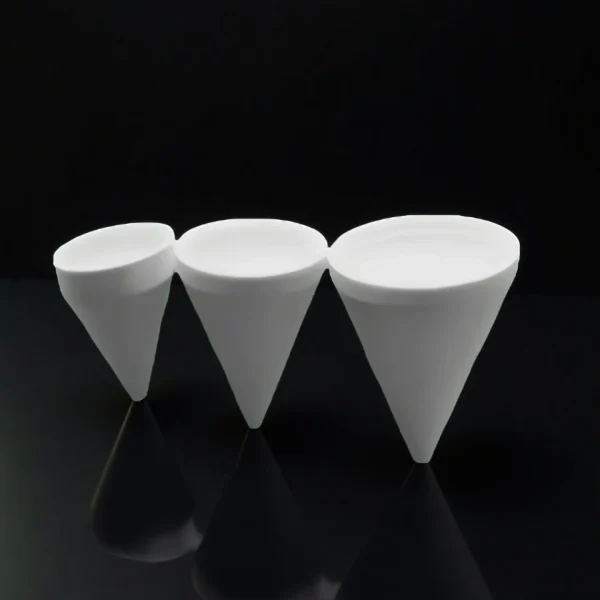
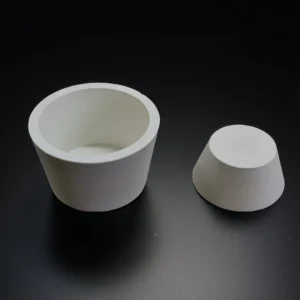
Type 3: Boron Nitride Arc-Shape Crucible
|
Boron Nitride Arc-Shape Crucible |
|
Item No. |
Outer diameter of the upper port(mm) |
Height(mm) |
|
AT-BN-GG3001 |
30 |
17 |
|
AT-BN-GG3002 |
32 |
17 |
|
AT-BN-GG3003 |
35 |
17 |
|
AT-BN-GG3004 |
37 |
15 |
|
AT-BN-GG3005 |
40 |
20 |
|
AT-BN-GG3006 |
42 |
22 |
|
AT-BN-GG3007 |
50 |
25 |
|
AT-BN-GG3008 |
55 |
25 |
|
AT-BN-GG3009 |
60 |
30 |
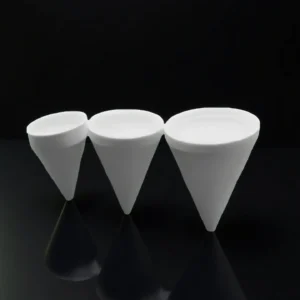
Type 4: Boron Nitride Conical Crucible
|
Boron Nitride Conical Crucible |
|
Item No. |
Capacities(ml) |
|
AT-BN-GG5001 |
0.25 |
|
AT-BN-GG5002 |
0.5 |
|
AT-BN-GG5003 |
1 |
|
AT-BN-GG5004 |
2 |
|
AT-BN-GG5005 |
3 |
Material Compatibility Notes for BN Crucibles
| Processed Material |
Suitability Review |
| Aluminum and magnesium alloys |
Usually good review targets because BN can help reduce wetting and residue adhesion. |
| Zinc, copper, silver and gold |
Often suitable depending on melt temperature, atmosphere and contamination requirements. |
| Glass, slag or flux-containing materials |
Requires separate review because chemistry and additives may affect BN surface behavior. |
| Titanium, hafnium and highly reactive alloys |
Not recommended without a detailed material review because reactive melts may form borides or nitrides. |
| Oxidizing atmosphere at high temperature |
Requires caution because BN can oxidize in air at elevated temperatures. Vacuum or inert gas is preferred for many high-temperature uses. |
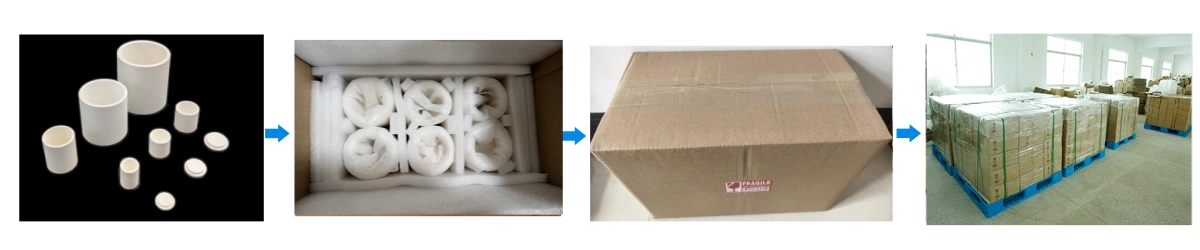
Custom Boron Nitride Crucible Packaging
- Clean handling: parts dust-blown and bagged; lid and cup packaged as a set.
- Unit protection: each crucible seated in a foam cavity with full rim and base support.
Applications for Custom Boron Nitride Crucibles
Custom boron nitride crucibles are mainly used where standard ceramic crucibles cannot provide the required combination of non-wetting behavior, machinable geometry, electrical insulation and compatibility with vacuum or inert gas processing. The final material selection should be reviewed according to the processed material, atmosphere, heating cycle, fixture design and cleaning method.
-
Vacuum Furnace and Inert Gas Thermal Processing
Custom BN crucibles are used in vacuum and inert gas furnaces where the container must hold high-temperature samples without introducing unnecessary contamination or dimensional mismatch. They are often selected for processes that require clean material contact, controlled thermal exposure and stable fit inside graphite, molybdenum or ceramic furnace fixtures.
For these applications, the crucible design should be reviewed together with the chamber size, support method, heating source, working atmosphere, sample weight and cooling cycle. Common custom features may include matching lids, stepped rims, vent holes, thermocouple ports, controlled wall thickness and flat or radiused bottoms for stable placement inside the furnace.
-
Non-Ferrous Molten Metal Handling
Boron nitride crucibles are widely considered for non-ferrous molten metal handling because BN can help reduce adhesion with suitable metals such as aluminum, magnesium, zinc, copper, silver and gold. This makes the material useful when the process requires easier release, cleaner residue removal and reduced reaction between the melt and the crucible surface.
Before production, ADCERAX reviews the metal type, alloy composition, melt temperature, use of flux, pouring direction, preheating method and cleaning process. For molten metal applications, important design points include rim strength, wall thickness, bottom geometry, handling clearance and whether the crucible requires a lid, spout, groove or positioning feature.
-
Vacuum Coating and Thin-Film Material Processing
In vacuum coating, evaporation and thin-film material processing, custom BN crucibles can be used as material holders or thermal processing containers where chamber fit, low contamination risk and controlled geometry are important. The material is especially useful when the crucible must work near heaters, electrodes or fixture systems that require electrical insulation and dimensional stability.
For coating-related applications, the crucible is usually designed around the evaporation source, material charge volume, heating method, chamber clearance and cleaning cycle. Custom BN crucibles may include small cavities, shallow cups, flat-bottom holders, vent features, positioning grooves or special outer profiles to match existing coating equipment.
-
Laboratory R&D and Small-Batch Material Testing
Small custom BN crucibles are useful for laboratory R&D, alloy sampling, powder treatment, experimental melting and high-temperature material screening. They are often chosen when standard alumina, quartz or graphite crucibles cannot meet the required combination of non-wetting behavior, electrical insulation, custom geometry and material compatibility.
For research and small-batch testing, the main value of BN is design flexibility. ADCERAX can review micro crucibles, deep cavities, thin-wall containers, matching lids, ports, slots and special sample chambers according to the test method. This helps engineers build a crucible shape around the experiment instead of changing the experiment to fit a standard crucible.
If your crucible must fit an existing furnace, coating chamber, metal melting setup or laboratory test fixture, ADCERAX can review your drawing, sample or process conditions before recommending a BN crucible design.
Custom BN Crucible Usage Instructions
This guide helps users correctly install, operate, maintain and extend the service life of custom boron nitride crucibles in vacuum, inert, or molten metal applications.
-
Installation & Pre-Use Preparation
Check the ID, OD, depth, lid fit, rim profile and support contact area before heating. Avoid press-fitting the BN crucible into a metal holder because BN is machinable but brittle. If the crucible has a matching lid or orientation feature, confirm the alignment before loading materials.
-
Heating and Atmosphere Control
Use controlled heating, especially during the first cycle. Vacuum or inert gas is preferred for high-temperature operation. Avoid rapid temperature changes, direct flame impingement or sudden contact with a cold support surface.
-
Molten Metal Loading
Preheat the crucible before adding molten metal or solid charge materials. The processed metal should be reviewed before use, especially if it contains reactive alloying elements, flux, slag or aggressive additives.
-
Cleaning & Maintenance
1. Residue removal: Use soft brush or compressed air. For metal residues, gently scrape using a plastic or BN tool; avoid steel tools.
2. Chemical cleaning: Use only non-reactive solvents. Avoid acids or alkalis that can attack BN or leave ionic contamination.
3. Surface reconditioning: Slight surface glazing or metal films can be sanded with 600–1000 grit SiC paper; remeasure dimensions if tolerance is critical.
4. Storage: Store in a dry cabinet or sealed PE bag with desiccant. Keep lids paired with corresponding crucibles to avoid mismatch.
-
Common Issues & Solutions
| Issue |
Possible Cause |
Solution |
| micro-cracks after first use |
heated too fast, no pre-bake |
use preheating cycle, reduce ramp rate |
| lid stuck or warped |
thermal expansion mismatch, uneven heating |
increase lid clearance by 0.05–0.1 mm or refine heating profile |
| metal wetting or sticking |
crucible too cold, contaminated surface |
preheat crucible; clean or polish inner surface |
| vacuum level instability |
residual moisture or surface dust |
pre-bake at 200–300 °C; clean surface before chamber entry |
| brittle edge breakage |
direct tooling contact |
use graphite or ceramic-handling tools |