
Industrial Ceramics in Glass Manufacturing
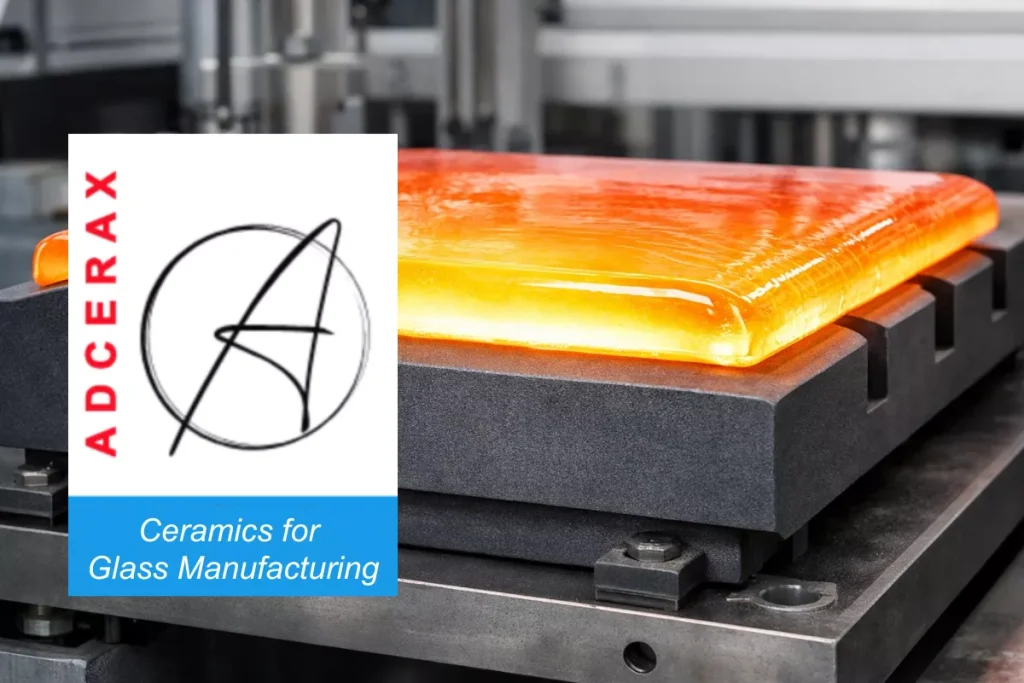
Industrial ceramics play a critical role across glass production systems where sustained heat, chemical exposure, and mechanical load coexist.
In Ceramics for Glass Manufacturing, these materials replace metals in zones where deformation, oxidation, or contamination would otherwise disrupt process stability. Consequently, ceramics used in glass manufacturing support forming accuracy, controlled heat transfer, and reliable measurement inside demanding furnace environments.
As a result, glass manufacturing ceramic components are treated as functional process elements rather than passive structural parts.
maintains shape under continuous high temperature exposure
withstands glass vapors and corrosive atmospheres
isolates sensors and heaters in energized zones
carries load without creep or deformation
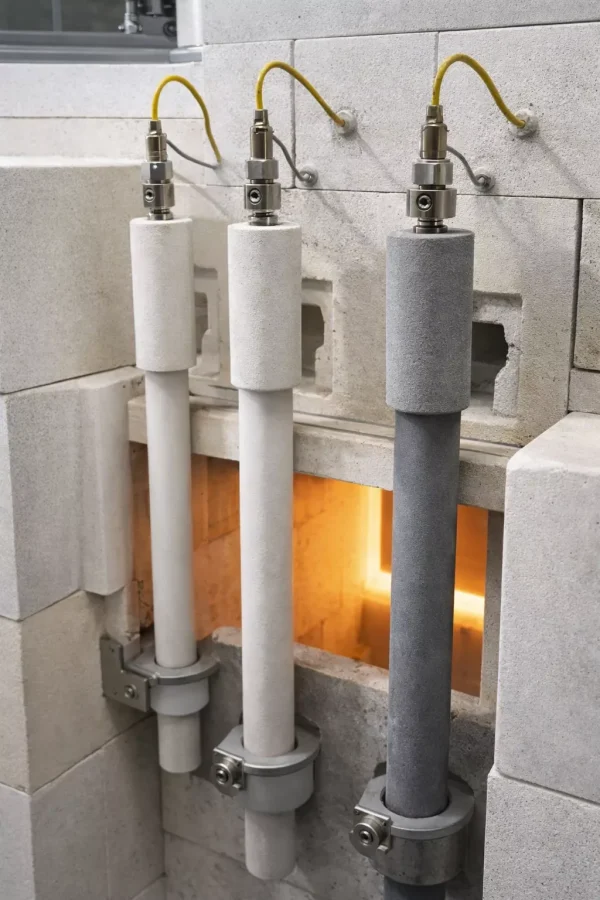
ADCERAX® Material Performance Characteristics in Ceramics for Glass Manufacturing
Ceramic material selection in Ceramics for Glass Manufacturing is driven by quantified thermal, electrical, chemical, and mechanical properties that directly affect furnace stability, process control accuracy, and component service life.
Thermal Properties
| Material | Max Continuous Temperature (°C) | Thermal Conductivity (W/m·K @25°C) | Thermal Expansion (×10⁻⁶/K, 20–1000°C) | Thermal Shock Resistance (ΔT, °C) | Test Conditions |
|---|---|---|---|---|---|
| Silicon Carbide Ceramic | 1600 | 120–180 | 4.0–4.5 | ≥400 | Air atmosphere, steady-state |
| Nitride Bonded SiC Ceramic | 1450 | 20–35 | 4.5–5.0 | ≥300 | Air/N₂, long-duration cycles |
| Aluminum Nitride Ceramic | 1400 | 140–180 | 4.5–5.3 | ≥250 | Inert atmosphere preferred |
Electrical Properties
| Material | Volume Resistivity (Ω·cm @25°C) | Dielectric Strength (kV/mm) | Dielectric Constant (1 MHz) | Electrical Insulation Stability (°C) | Test Conditions |
|---|---|---|---|---|---|
| Silicon Carbide Ceramic | 10²–10⁵ | 3–5 | 9.7–10.0 | ≤600 | Dry air |
| Nitride Bonded SiC Ceramic | 10⁶–10⁸ | 6–8 | 9.5–10.0 | ≤800 | Dry air |
| Aluminum Nitride Ceramic | ≥10¹² | 12–15 | 8.5–9.0 | ≤1000 | Dry/inert atmosphere |
Chemical Stability
| Material | Oxidation Onset (°C) | Resistance to Alkali Vapors | Resistance to Glass Vapors | Acid Resistance (pH range) | Test Conditions |
|---|---|---|---|---|---|
| Silicon Carbide Ceramic | ~1000 | High | High | 2–10 | Static exposure |
| Nitride Bonded SiC Ceramic | ~900 | Very High | Very High | 2–12 | Continuous exposure |
| Aluminum Nitride Ceramic | ~700 | Moderate | Moderate | 4–9 | Controlled humidity |
Mechanical Properties
| Material | Flexural Strength (MPa) | Compressive Strength (MPa) | Elastic Modulus (GPa) | Creep Rate (10⁻⁶/h @1200°C) | Test Conditions |
|---|---|---|---|---|---|
| Silicon Carbide Ceramic | 350–450 | ≥2200 | 410 | ≤0.3 | 1200°C, 10 MPa |
| Nitride Bonded SiC Ceramic | 250–350 | ≥1800 | 300 | ≤0.5 | 1200°C, 10 MPa |
| Aluminum Nitride Ceramic | 300–380 | ≥2000 | 310 | ≤0.4 | 1100°C, 10 MPa |
ADCERAX® Application Domains of Ceramics for Glass Manufacturing
Ceramic materials are specified in glass manufacturing according to furnace zones, thermal loads, and process functions, with each material supporting a distinct stage of forming, melting, heating, or temperature control.
Glass Forming and Shaping Systems
In glass forming and shaping systems, ceramic materials must maintain dimensional stability and surface integrity during repeated thermal cycles and direct glass contact.
- Silicon carbide ceramic maintains dimensional stability during glass hot bending and pressing cycles.
- Oxide silicon carbide resists surface wear caused by repeated glass contact at forming temperatures.
- Glass forming ceramic molds improve forming consistency and reduce deformation-related scrap rates.
Supports precise glass hot bending and pressing under repeated thermal cycles
Temperature Measurement & Protection Systems
Accurate temperature control in glass furnaces depends on ceramic materials that protect sensors while remaining chemically and thermally stable.
- Silicon carbide ceramic protects thermocouples from glass vapors and furnace atmospheres.
- Nitride bonded silicon carbide improves resistance to corrosive furnace gases during long cycles.
- Aluminum nitride ceramic supports signal stability where electrical insulation is required.
Extends thermocouple service life inside aggressive glass furnace environments
Supports stable temperature measurement with electrical insulation at high temperature
Glass Melting and Heating Zones
Glass melting zones require ceramic materials that withstand continuous high temperatures while delivering controlled heat transfer.
- Silicon carbide ceramic enables efficient heat transfer in glass melting furnaces.
- Aluminum nitride ceramic combines thermal conductivity with electrical insulation for heating control.
- Ceramic heating components for glass melting support uniform temperature distribution across furnace zones.
Provides stable radiant heating for glass melting and surface treatment
Delivers uniform heating with electrical insulation in glass processing systems
Combustion and Flame Control Systems
Combustion zones rely on ceramic materials that tolerate extreme temperatures and maintain flame geometry under continuous operation.
- Silicon carbide ceramic withstands direct exposure to high energy combustion flames.
- Ceramic burner components maintain flame stability in glass furnace heating systems.
- High temperature ceramic nozzle improves combustion efficiency and thermal uniformity.
Forms concentrated high energy flames for glass furnace heating
Glass Melting and Refining Containers
Glass melting and refining operations require ceramic containers that resist chemical attack and structural degradation.
- Nitride bonded silicon carbide withstands prolonged contact with molten glass.
- High temperature SiC crucible maintains structural integrity during extended melting cycles.
- Refractory ceramic parts for glass production reduce contamination risks in refining stages.
Supports glass melting and refining under sustained high temperature conditions
Industrial Ceramic Components Supply for Glass Manufacturing
As an industrial ceramics supplier for glass manufacturing, component performance depends on consistent material processing and dimensional control.
Direct collaboration with a glass manufacturing ceramics factory improves response speed for both standard and custom requirements.
ADCERAX® Ceramics for Glass Manufacturing by Material Systems
In glass production systems, ceramic materials are selected according to thermal load, chemical exposure, and functional role within each furnace zone.
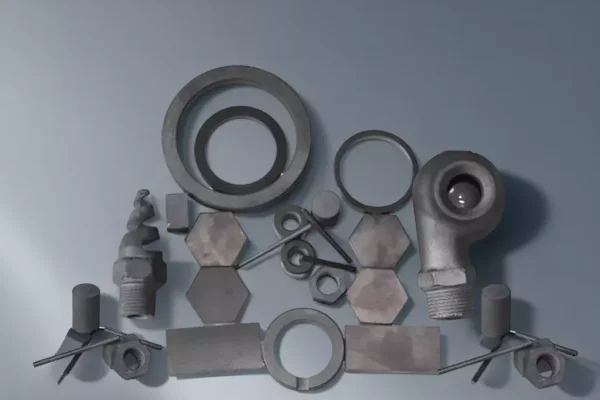
SiC Ceramics
A core ceramic material supporting high-temperature and high-load glass manufacturing environments.
- High thermal conductivity
- Excellent thermal shock resistance
- Strong oxidation resistance
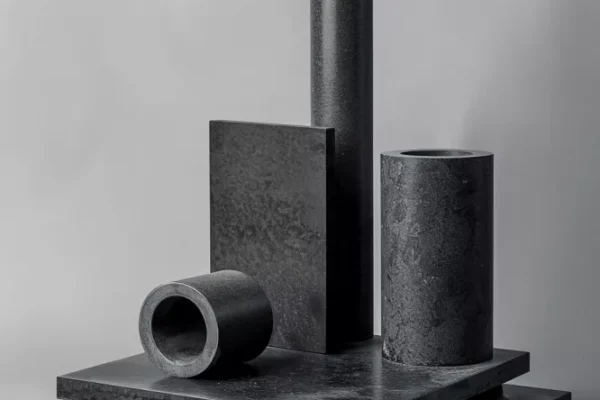
NBSiC Ceramic
A corrosion-resistant ceramic material for extended service in aggressive furnace atmospheres.
- Superior chemical stability
- Low creep at temperature
- Long service lifespan

AlN Ceramic
A functional ceramic material combining thermal conductivity with electrical insulation.
- High thermal conductivity
- Reliable electrical insulation
- Stable dimensional performance
Integrated Manufacturing Services for Ceramics for Glass Manufacturing
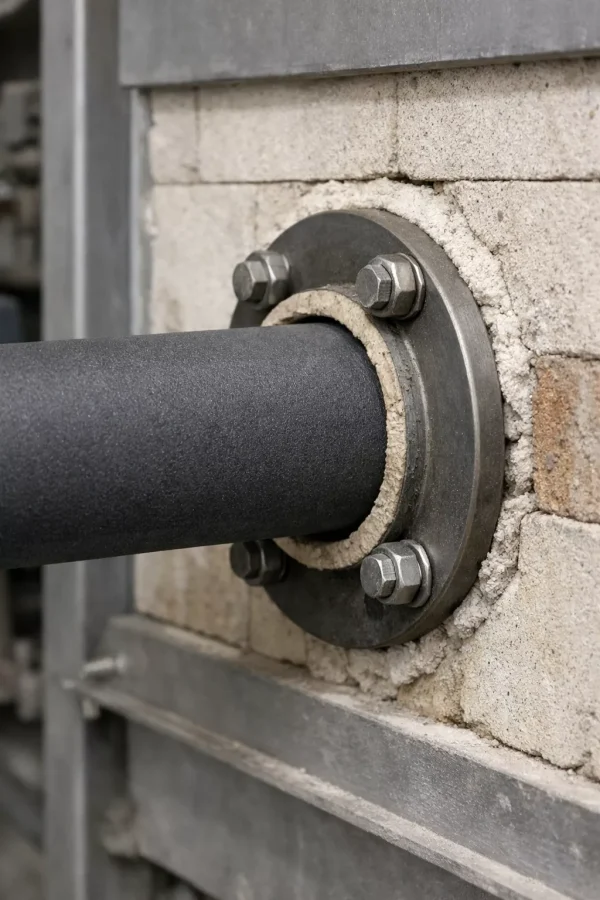
ADCERAX® provides an integrated manufacturing service for Ceramics for Glass Manufacturing supporting complex glass production environments.
Production of glass manufacturing ceramic components spans multiple temperature zones and installation constraints.
A unified manufacturing structure reduces engineering iteration while maintaining dimensional and material control.
This approach enables ceramic components for glass furnaces to reach stable operation with predictable performance.
Ceramic systems evaluated against furnace conditions and process demands
Unsintered ceramic compacts shaped for distortion control
Firing profiles tuned to minimize warpage and shrinkage
Critical interfaces machined to ±0.05 mm
Contact surfaces optimized for molten glass exposure
Geometry adjusted to existing furnace layouts
ADCERAX® Precision Manufacturing Processes for Ceramics for Glass Manufacturing
Advanced Ceramic Forming
Accurate forming establishes the geometric foundation for stable performance in glass manufacturing environments.
High-temperature furnaces rated up to 1700 °C
Stable air and inert gas environments
Controlled porosity and stable thermal performance
High-Temperature Controlled Sintering
Thermal processing defines the final structure and reliability of ceramic components exposed to furnace conditions.
Board, tube, rod, and plug molding equipment
Thickness and diameter tolerance within ±0.1 mm
Uniform shape retained after high-temperature firing
Precision Ceramic Machining
Final machining ensures ceramic components integrate reliably with glass manufacturing equipment.
CNC grinding and diamond tooling centers
Final dimensions controlled to ±0.05 mm
Clean edges and controlled surface roughness
Custom Ceramic Components Tailored for Glass Manufacturing Systems
ADCERAX® delivers Ceramics for Glass Manufacturing through part-level customization that aligns geometry, material systems, and interfaces with real furnace layouts and operating conditions.
Engineering input and manufacturing execution converge to deliver ceramic parts made to drawing for glass industry applications.
FAQs on Ceramics for Glass Manufacturing at ADCERAX
Glass production exposes components to sustained temperatures above 1000 °C rather than short thermal peaks.
Engineering ceramics retain mechanical strength and dimensional stability under long heat exposure where metals creep or oxidize.
This stability allows glass manufacturing ceramic components to maintain alignment and function over extended furnace cycles.
Ceramic components for glass melting furnaces combine low thermal expansion with high thermal shock resistance.
This reduces stress accumulation during heating and cooling cycles common in glass melting processes.
As a result, furnace structures experience fewer alignment shifts and less unplanned intervention.
High temperature ceramic parts for glass furnaces resist oxidation, softening, and chemical attack from molten glass vapors.
Metal components lose strength and scale at elevated temperatures, leading to deformation or contamination.
Ceramic materials preserve structural integrity and surface cleanliness throughout furnace operation.
Low creep rates and stable crystal structures allow ceramics to resist deformation under load at high temperature.
This property is essential for glass forming molds and heating fixtures that must hold geometry precisely.
Stable shape retention directly supports consistent glass thickness and dimensional accuracy.
Ceramic heating components exhibit predictable thermal conductivity across operating temperatures.
This enables controlled heat transfer without local overheating or cold spots in the melt zone.
Uniform thermal profiles improve melting efficiency and reduce glass defects.
Refractory ceramic parts for glass production resist alkali vapors and aggressive furnace atmospheres.
These chemical stability characteristics prevent surface degradation and particulate release.
Cleaner furnace conditions help protect glass quality and downstream equipment.
Ceramics remain chemically inert when exposed to molten glass and combustion byproducts.
Unlike metals, ceramic surfaces do not scale, flake, or introduce foreign elements.
This inert behavior protects optical clarity and chemical consistency of the glass.
Ceramic components provide electrical insulation and thermal stability around sensing elements.
These properties protect thermocouples from heat, corrosion, and mechanical stress.
Accurate temperature measurement supports precise furnace control.
Engineering ceramics resist creep, oxidation, and chemical degradation simultaneously.
This combination supports long-term exposure without progressive loss of performance.
Extended campaign cycles reduce shutdown frequency in glass production.
Ceramics withstand direct flame exposure without melting or structural collapse.
Low thermal expansion limits stress caused by radiant heating.
This makes ceramic components reliable in high-flux heating zones.
Get in touch with us
We believe that Adcerax will become your best partner!
Please fill in your contact information in the form or call us.
*Our team will answer your inquiries within 24 hours.
*Your information will be kept strictly confidential.
