
Industrial Ceramics in Kiln Systems
Industrial ceramics used in kiln environments are functional materials selected to operate reliably under sustained high temperatures, repeated thermal cycling, and controlled furnace atmospheres.
In real production settings, industrial ceramics serve as insulation layers, heating interfaces, and load-bearing elements that directly influence thermal uniformity and system stability. Rather than acting as passive linings, these materials become active industrial furnace components that shape heat flow, energy efficiency, and maintenance intervals.
In practice, ceramic selection within an industrial ceramic for furnace system is closely tied to operating temperature ranges, mechanical loads, and long-term service expectations.
Maintains structure under prolonged high temperatures
Remains inert within reactive furnace atmospheres
Supports insulation or controlled heating functions
Sustains load and thermal cycling stress
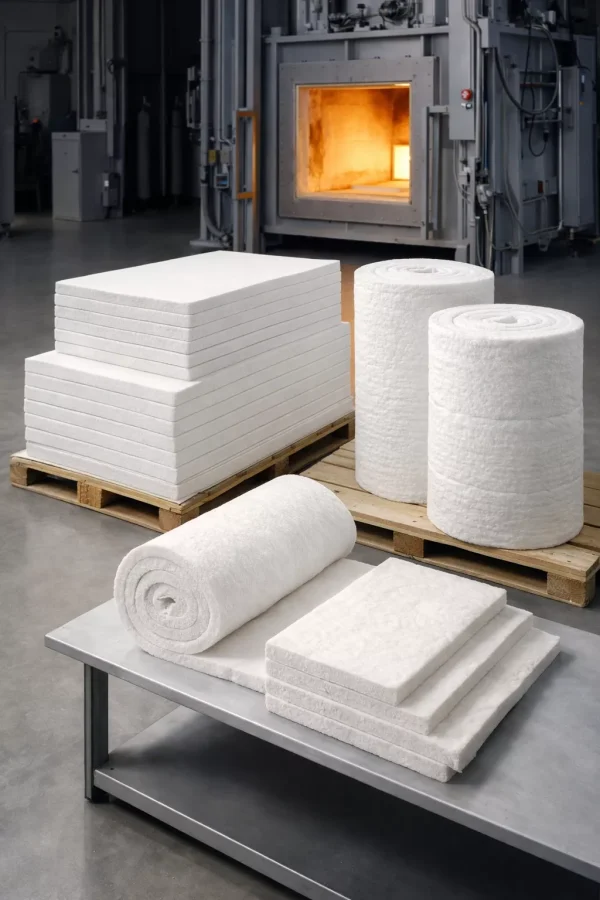
ADCERAX® Physicochemical Performance of Industrial Furnace Ceramics
Material behavior under high-temperature operation determines how Industrial Furnace Ceramics perform over long service cycles, particularly when exposed to heat, electrical load, chemical atmospheres, and mechanical stress inside kiln systems.
Thermal Properties
| Material Type | Max Continuous Temperature (°C) | Thermal Conductivity (W/m·K @1000°C) | Thermal Shock Resistance (ΔT, °C) | Test Conditions |
|---|---|---|---|---|
| Alumina Ceramics | 1260–1400 | 0.18–0.25 | ≥800 | Static air furnace, ambient pressure |
| Zirconia Ceramics | 1600–1700 | 0.12–0.18 | ≥1000 | High-temperature kiln insulation zone |
| Silicon Carbide Ceramics | 1500–1600 | 35–120 | ≥300 | Electrically heated furnace environment |
Electrical Properties
| Material Type | Volume Resistivity (Ω·cm @25°C) | Dielectric Strength (kV/mm) | Electrical Function | Test Conditions |
|---|---|---|---|---|
| Alumina Ceramics | ≥10¹² | 6–10 | Electrical insulation | Room temperature, dry air |
| Zirconia Ceramics | ≥10¹¹ | 5–8 | Electrical insulation | Elevated temperature furnace |
| Silicon Carbide Ceramics | 10⁻²–10² | N/A | Electrical heating | AC power, controlled resistance |
Chemical Stability
| Material Type | Atmosphere Compatibility | Oxidation Resistance Limit (°C) | Corrosion Resistance Scope | Test Conditions |
|---|---|---|---|---|
| Alumina Ceramics | Air, neutral gases | ≤1300 | Acids, alkalis (non-molten) | Static gas exposure |
| Zirconia Ceramics | Air, inert gases | ≤1600 | Slag vapors, oxides | High-temperature insulation testing |
| Silicon Carbide Ceramics | Air, inert, reducing | ≤1400 (oxidizing) | Molten metals, reactive vapors | Flowing gas furnace |
Mechanical Properties
| Material Type | Bulk Density (kg/m³) | Flexural Strength (MPa) | Compressive Strength (MPa) | Test Conditions |
|---|---|---|---|---|
| Alumina Ceramics | 260–320 | 0.8–1.5 | 0.6–1.2 | Insulation board compression test |
| Zirconia Ceramics | 300–380 | 1.2–2.0 | 1.0–1.8 | High-temperature insulation panels |
| Silicon Carbide Ceramics | 3100–3200 | 250–400 | ≥2000 | Dense sintered SiC specimens |
ADCERAX® Industrial Furnace Ceramics Across Kiln Operating Scenarios
Kiln systems impose different thermal, mechanical, and operational demands across insulation zones, ignition areas, and heating sections, making material-specific ceramic selection a critical part of furnace system design.
Furnace Sealing and Port Protection
Sealing and port protection areas require ceramic materials that maintain insulation continuity while accommodating thermal expansion and repeated furnace access.
- Alumina fiber-based sealing components prevent heat leakage around furnace openings, improving overall industrial ceramic for furnace system efficiency.
- Flexible ceramic structures allow stable sealing performance during furnace door cycling and inspection intervals.
- Controlled density ceramic plugs support localized insulation without compromising furnace atmosphere control.
Fiber-based plugs for sealing access ports and furnace openings
High-Temperature Furnace Insulation
High-temperature insulation zones rely on ceramic materials that limit heat loss, stabilize internal temperature profiles, and reduce structural stress across kiln cycles.
- Alumina ceramics for kiln insulation minimize thermal loss in furnace walls, enabling stable temperature distribution across large kiln chambers.
- Zirconia ceramics for furnace insulation maintain low thermal conductivity under extreme temperatures, supporting energy-efficient operation in high-end kiln systems.
- Lightweight fiber-based ceramics reduce structural load on furnace shells, improving long-term reliability of industrial furnace components.
Rigid insulation panels for stable high-temperature kiln wall sections
Flexible insulation layers supporting fast furnace maintenance operations
Advanced insulation boards for ultra-high temperature kiln environments
Furnace Heating and Load-Bearing Zones
Heating and load-bearing zones require ceramic materials capable of combining thermal resistance, electrical conductivity, and mechanical strength under continuous operation.
- Silicon carbide ceramics for furnace heating deliver controlled electrical resistance for uniform heat generation.
- Dense ceramic structures support mechanical loads while maintaining dimensional stability at elevated temperatures.
- Long-cycle furnace operation benefits from ceramics resistant to creep and oxidation under sustained heating.
Primary heating components for electric industrial furnaces
Rod-type heating elements for uniform thermal distribution
Structural tubes supporting atmosphere control and load handling
Furnace Ignition and Start-Up Systems
Ignition and start-up zones depend on ceramic materials that withstand rapid heating, electrical loading, and repeated thermal shock during furnace activation.
- Industrial furnace ceramics used in ignition systems maintain structural stability during rapid temperature rise phases.
- Ceramic igniters provide electrically stable interfaces that support controlled ignition without metal degradation.
- Repeated start-stop cycles benefit from ceramics resistant to oxidation and localized thermal stress.
Ceramic igniters supporting stable furnace ignition cycles
Electrically conductive igniters for rapid furnace start-up
Ceramic Components Supporting Kiln Performance
Insulation, ignition, and heating zones place different demands on ceramic materials inside kiln systems.
Properly specified industrial furnace components improve thermal control and extend service intervals in high-temperature environments.
ADCERAX® Ceramic Material Families for Kiln Applications
Material selection within kiln environments is commonly organized by ceramic composition, as different materials respond differently to temperature limits, operating cycles, and functional demands inside furnace systems.
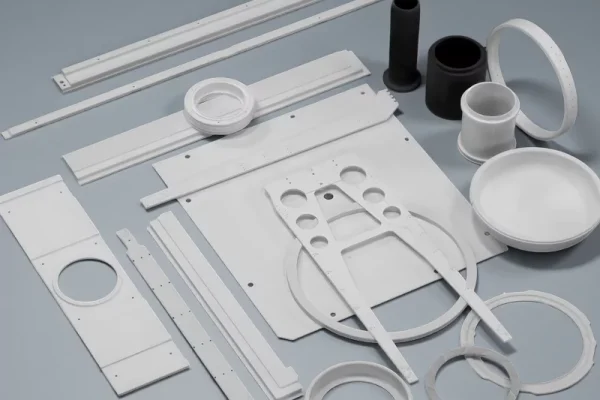
Alumina Ceramics
Lightweight insulation components supporting thermal efficiency and flexible furnace layouts.
- Optimized for alumina ceramics for kiln insulation zones
-Standard formats enable fast replacement cycles
- Suitable for continuous and batch kilns
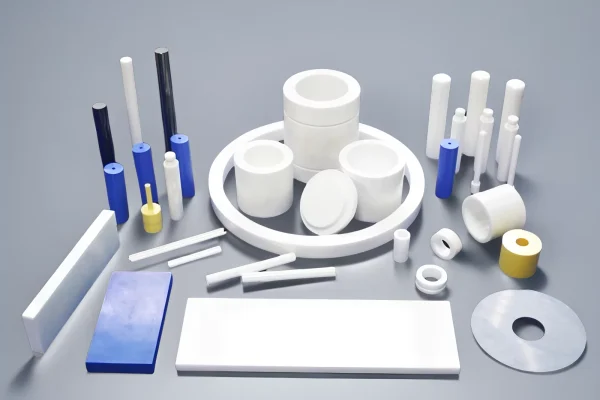
Zirconia Ceramics
Advanced insulation materials used in ultra-high temperature furnace sections.
- Applied in zirconia ceramics for furnace upgrades
- Maintains insulation performance above alumina limits
- Preferred for energy-efficient kiln retrofits
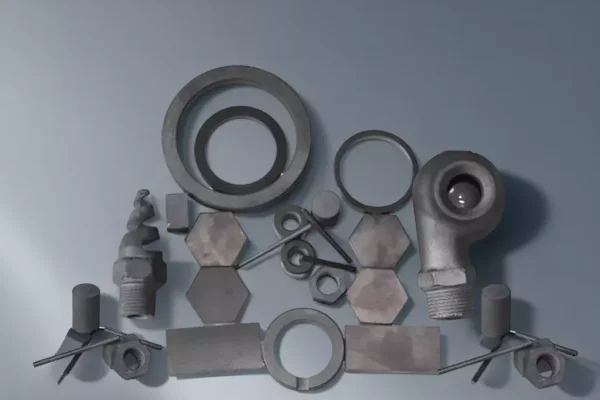
Silicon Carbide Ceramics
Functional ceramic components enabling heating, load support, and atmosphere control.
- Core silicon carbide ceramics for furnace systems
- Handles electrical and thermal loading simultaneously
- Supports long-cycle industrial furnace components
Integrated Manufacturing Services for Kiln Ceramic Components
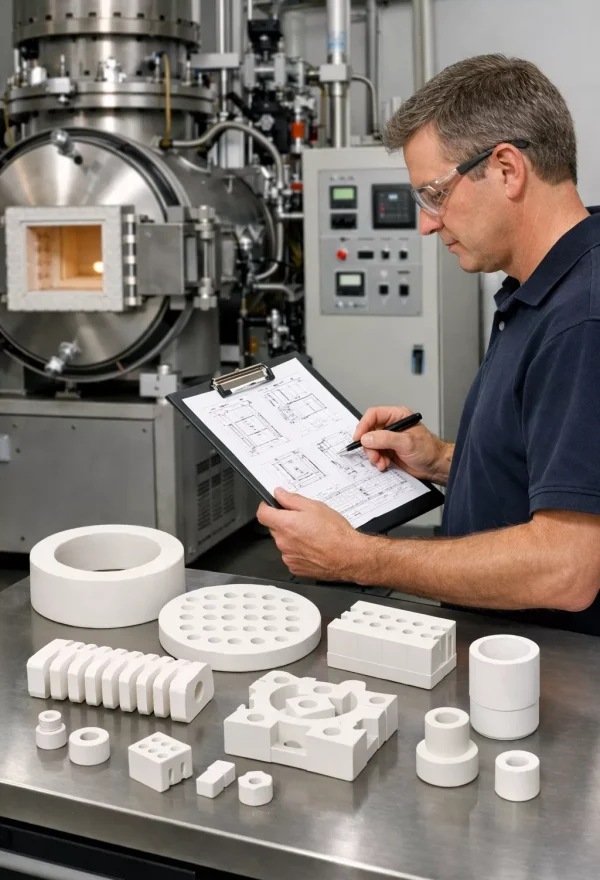
Complex kiln systems demand ceramic components that move seamlessly from material selection to finished geometry without fragmentation across suppliers.
ADCERAX® consolidates ceramic processing stages into a single manufacturing framework, reducing coordination loss while stabilizing delivery outcomes for industrial furnace components.
Controlled powder formulation and fiber processing for kiln-grade ceramics
Board, blanket, plug, tube, and rod shaping within tight tolerances
High-temperature firing up to 1700 °C in controlled atmospheres
CNC finishing achieving dimensional tolerances down to ±0.05 mm
Multi-part ceramic component assembly for furnace submodules
Transition from sample quantities to stable production batches
ADCERAX® Advanced Processing of Industrial Furnace Ceramics
High-Temperature Sintering Control
High-temperature sintering determines the final microstructure and thermal stability of ceramic components used inside kiln systems.
High-temperature furnaces rated up to 1700 °C
Stable air and inert gas environments
Controlled porosity and stable thermal performance
Precision Ceramic Forming
Forming accuracy defines whether ceramic parts fit furnace geometry and maintain functional alignment during operation.
Board, tube, rod, and plug molding equipment
Thickness and diameter tolerance within ±0.1 mm
Uniform shape retained after high-temperature firing
CNC Ceramic Machining
Machining capability enables ceramic components to meet exact interface and assembly requirements within furnace systems.
CNC grinding and diamond tooling centers
Final dimensions controlled to ±0.05 mm
Clean edges and controlled surface roughness
Custom Ceramic Solutions Aligned with Kiln Conditions
Custom ceramic development becomes essential when standard components cannot fully match furnace geometry, thermal gradients, or operating cycles within complex kiln systems.
ADCERAX® acts as a custom kiln ceramics manufacturer, translating drawings and operating parameters into ceramic components that integrate reliably into industrial furnace components and long-cycle kiln environments.
For project-specific ceramic requirements, direct technical alignment shortens iteration cycles and reduces system-level risk.
Industrial Furnace Ceramics Engineering Questions Answered by ADCERAX
Industrial Furnace Ceramics maintain structural stability at temperatures where metallic alloys soften or oxidize. Ceramic materials preserve insulation or electrical behavior without deformation under continuous heat exposure. This performance directly reduces furnace efficiency loss and unplanned maintenance. ADCERAX® specifies ceramics based on actual operating temperature ranges rather than nominal limits.
Ceramic insulation materials reduce lateral heat loss and stabilize internal thermal gradients. Uniform heat distribution improves process consistency across large furnace chambers. Industrial furnace ceramics enable controlled energy flow without localized overheating. This directly supports stable production cycles in industrial ceramic for furnace system designs.
Premature failure often results from material mismatch rather than ceramic limitations. Incorrect density, porosity, or thickness selection leads to thermal stress concentration. Industrial Furnace Ceramics selected with proper thermal and mechanical margins reduce crack initiation risk. ADCERAX® aligns ceramic properties with furnace cycling behavior to mitigate this issue.
Furnace start-up and shutdown cycles generate rapid temperature changes. Ceramic materials with insufficient thermal shock resistance develop microcracks over time. Industrial Furnace Ceramics with controlled microstructure absorb thermal gradients more evenly. This extends service life in furnaces operating with frequent cycling.
Silicon carbide ceramics exhibit predictable electrical resistance across operating temperatures. Stable resistance enables consistent heat output without power fluctuation. Industrial furnace ceramics used as heating elements resist oxidation better than metal heaters. This ensures reliable long-term electrical behavior in industrial furnace components.
Lifespan depends on operating temperature, atmosphere, and mechanical loading. Industrial Furnace Ceramics designed for insulation retain low thermal conductivity under prolonged exposure. Fiber-based ceramics also reduce structural load on furnace shells. Proper specification delays insulation degradation and replacement frequency.
Ceramic components resist chemical interaction with furnace gases at elevated temperatures. Stable ceramic surfaces prevent contamination of processed materials. Industrial ceramic for furnace system designs rely on this inert behavior for atmosphere stability. This is critical in controlled gas or reducing environments.
Density affects insulation efficiency, strength, and thermal response. Low-density ceramics reduce heat loss, while higher-density ceramics support load-bearing functions. Industrial Furnace Ceramics are specified with density matched to application zones. This balance optimizes both energy efficiency and structural reliability.
Ceramic components resist oxidation, creep, and corrosion under high temperatures. Reduced material degradation slows performance decline over time. Industrial Furnace Ceramics sustain stable behavior across extended operating cycles. This minimizes shutdowns for component replacement.
Dense ceramics such as silicon carbide sustain compressive and bending loads at elevated temperatures. Structural stability prevents deformation under product weight or fixture pressure. Industrial furnace components made from ceramics maintain geometry over long cycles. This reliability supports consistent furnace operation.
Get in touch with us
We believe that Adcerax will become your best partner!
Please fill in your contact information in the form or call us.
*Our team will answer your inquiries within 24 hours.
*Your information will be kept strictly confidential.
