
Industrial Ceramics Supporting Battery Manufacturing
Lithium battery processing ceramics are ceramic components used inside lithium battery production equipment and material processes, where metal or polymer parts wear, corrode, introduce contamination or drift dimensionally.
Typical positions include slurry-contact and metering pump parts, plungers, dispersion and grinding contact parts, seals, insulation supports, guides and wear parts, and saggers and setters for cathode and precursor sintering.
ADCERAX reviews the equipment position, medium, wear mode, contamination limit, drawing, dimensions and tolerance, then confirms the material route across alumina, zirconia, silicon carbide, silicon nitride and fused quartz.<
Maintains geometry under continuous temperature cycling
Withstands electrolyte and aggressive slurry exposure
Prevents leakage and unintended current paths
Resists wear in long-term moving assemblies
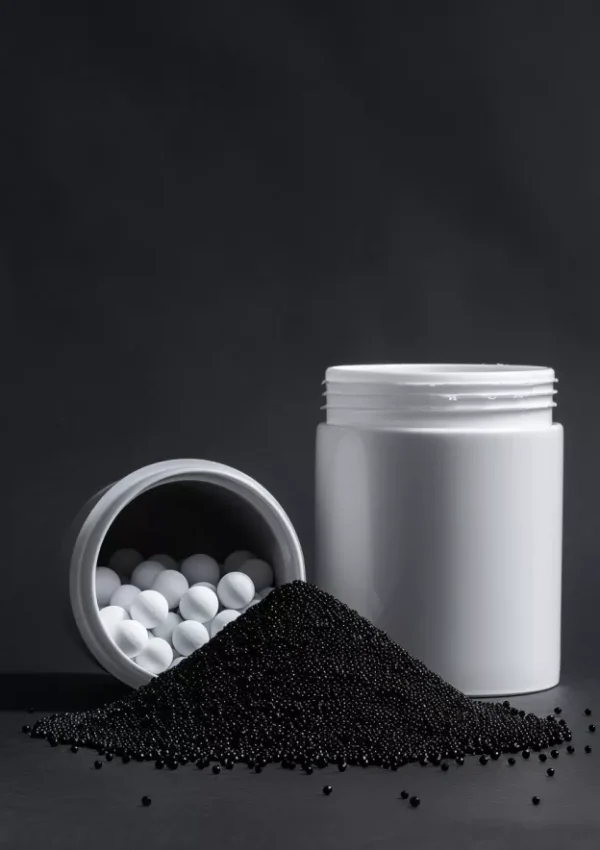
ADCERAX Material Properties Enabling Stable Battery Manufacturing
Lithium battery production places long-term stress on materials through heat, corrosion, electrical isolation, and mechanical motion, which makes Lithium Battery Processing Ceramics a reliability-driven choice rather than a structural one.
Thermal Properties
| Material | Maximum Continuous Service Temperature | Thermal Conductivity | Coefficient of Thermal Expansion | Test Conditions |
|---|---|---|---|---|
| Alumina (Al₂O₃, ≥99.5%) | 1600 °C | 25–30 W/m·K | 7.8 × 10⁻⁶ /K (20–1000 °C) | Air atmosphere, steady state |
| Zirconia (Y-TZP) | 1000 °C | 2.0–2.5 W/m·K | 10.3 × 10⁻⁶ /K (20–800 °C) | Air atmosphere |
| Silicon Carbide (SSiC) | 1600 °C | 120–180 W/m·K | 4.0 × 10⁻⁶ /K (20–1000 °C) | Inert atmosphere |
| Silicon Nitride (Si₃N₄) | 1200 °C | 25–35 W/m·K | 3.2 × 10⁻⁶ /K (20–1000 °C) | Air atmosphere |
| Fused Quartz | 1100 °C | 1.3–1.5 W/m·K | 0.55 × 10⁻⁶ /K (20–1000 °C) | Air atmosphere |
Electrical Properties
| Material | Volume Resistivity | Dielectric Strength | Relative Permittivity (1 MHz) | Test Conditions |
|---|---|---|---|---|
| Alumina (Al₂O₃) | ≥10¹⁴ Ω·cm | 12–15 kV/mm | 9.5–9.9 | Room temperature, dry |
| Zirconia (Y-TZP) | ≥10¹¹ Ω·cm | 8–10 kV/mm | 25–30 | Room temperature |
| Silicon Carbide (SSiC) | 10⁵–10⁷ Ω·cm | 3–5 kV/mm | 9–10 | Room temperature |
| Silicon Nitride (Si₃N₄) | ≥10¹⁴ Ω·cm | 15–20 kV/mm | 7–8 | Room temperature |
| Fused Quartz | ≥10¹⁶ Ω·cm | 25–40 kV/mm | 3.8 | Room temperature |
Chemical Resistance
| Material | Electrolyte Resistance | Acid Resistance | Alkali Resistance | Test Conditions |
|---|---|---|---|---|
| Alumina (Al₂O₃) | Stable in LiPF₆ systems | Resistant to H₂SO₄, HCl | Limited in strong NaOH | 25–80 °C immersion |
| Zirconia (Y-TZP) | Stable in organic electrolytes | Resistant to most acids | Moderate alkali resistance | 25–80 °C |
| Silicon Carbide (SSiC) | Fully inert | Resistant to acids | Resistant to alkalis | 25–120 °C |
| Silicon Nitride (Si₃N₄) | Stable in solvents | Moderate acid resistance | Limited strong alkali resistance | 25–80 °C |
| Fused Quartz | High purity compatibility | Excellent acid resistance | Poor in strong alkalis | 25–100 °C |
Mechanical Properties
| Material | Flexural Strength | Hardness | Fracture Toughness | Test Conditions |
|---|---|---|---|---|
| Alumina (Al₂O₃) | 300–380 MPa | 15–18 GPa | 3–4 MPa·m¹ᐟ² | Room temperature |
| Zirconia (Y-TZP) | 900–1200 MPa | 12–13 GPa | 7–10 MPa·m¹ᐟ² | Room temperature |
| Silicon Carbide (SSiC) | 400–450 MPa | 22–25 GPa | 3–4 MPa·m¹ᐟ² | Room temperature |
| Silicon Nitride (Si₃N₄) | 800–1000 MPa | 14–16 GPa | 6–7 MPa·m¹ᐟ² | Room temperature |
| Fused Quartz | 50–70 MPa | 5.5–6 GPa | 0.7–0.9 MPa·m¹ᐟ² | Room temperature |
Applications of ADCERAX Lithium Battery Processing Ceramics
In lithium battery manufacturing, ceramics are selected according to the role they play in stabilizing specific process steps rather than by material alone. Across fluid handling, slurry preparation, thermal treatment, and continuous rotation, Lithium Battery Processing Ceramics support production reliability by controlling corrosion, wear, contamination, and dimensional drift.
Electrolyte Filling And Dosing Control Systems
Electrolyte handling stages rely on ceramics to maintain accuracy and chemical stability under continuous exposure to aggressive battery electrolytes.
- Corrosion-resistant ceramic surfaces remain stable when exposed to LiPF₆-based electrolyte formulations.
- Dimensional stability supports consistent dosing accuracy during long production cycles.
- Electrical insulation reduces leakage risk inside automated filling equipment.
Precise electrolyte transfer under corrosive conditions
Stable volumetric control for electrolyte dosing
Repeatable stroke accuracy in continuous filling
Reliable flow control for electrolyte systems
Slurry Grinding And Mixing Operations
Slurry preparation processes depend on ceramic media to control particle size while limiting impurity introduction during high-energy milling.
- Wear-resistant ceramic grinding media reduces abrasion during continuous slurry processing.
- Low contamination performance protects cathode and anode material purity.
- Process consistency improves batch repeatability in mixing and dispersion stages.
Low wear grinding media for cathode slurry
Non-metallic grinding for contamination-sensitive slurries
High Load Rotating Equipment Assemblies
Rotating systems in battery production require ceramic bearings that withstand chemical exposure and continuous mechanical stress.
- Ceramic bearing materials resist corrosion in chemically aggressive environments.
- Mechanical durability supports long-term rotation under sustained load.
- Reduced maintenance lowers replacement frequency during equipment operation.
High-speed rotation with low contamination risk
Corrosion-tolerant bearing for harsh environments
High Temperature Battery Material Processing
Thermal processing stages rely on ceramic vessels that preserve material purity while maintaining dimensional integrity during heating cycles.
- Thermal stability prevents deformation under repeated temperature exposure.
- High purity ceramic contact surfaces limit material contamination.
- Low thermal expansion reduces stress during heating and cooling transitions.
Stable containment for battery material heating
High purity vessel for thermal processing
Ceramic Solutions Stabilizing Battery Production Processes
Lithium battery manufacturing requires materials that remain stable under corrosion, wear, and continuous operation.
ADCERAX provides application-matched ceramic components supporting long-term process consistency.
ADCERAX Ceramic Categories for Battery Production Systems
Lithium battery manufacturing relies on different ceramic material systems, each selected to stabilize specific processing stages across fluid handling, slurry preparation, rotation, and thermal treatment.

Alumina Ceramic
Alumina-based components support precise fluid control and corrosion resistance in battery manufacturing equipment.

Zirconia Ceramic
Zirconia ceramics are applied where wear resistance and low contamination are critical to material quality.
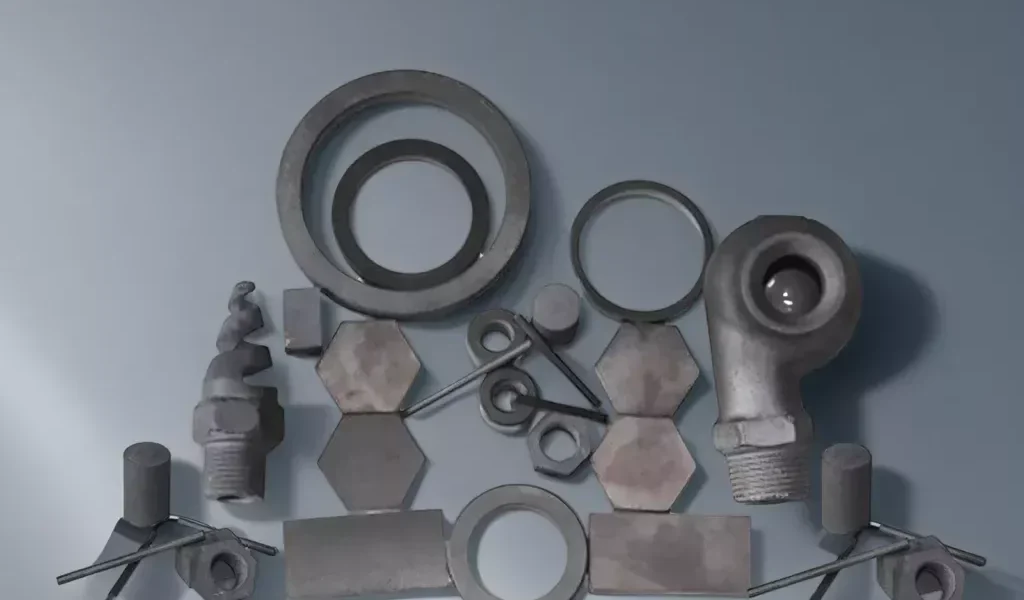
Silicon Carbide Ceramics
Silicon carbide ceramics address high-wear and corrosive environments in battery production lines.
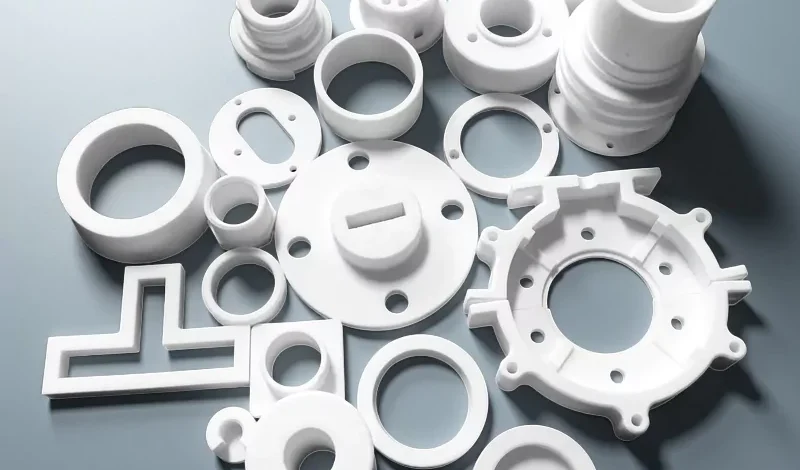
Fused Quartz Ceramics
Fused quartz ceramics are selected for purity-sensitive and thermally stable battery material processing.
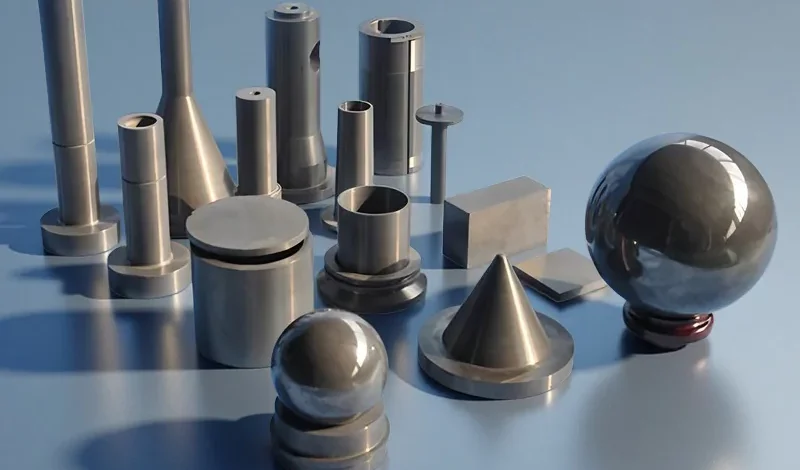
Silicon Nitride Ceramics
Silicon nitride ceramics provide clean, non-metallic grinding performance for sensitive battery materials.
ADCERAX Integrated Ceramic Manufacturing Services for Battery Production
ADCERAX delivers a vertically integrated manufacturing framework for ceramic components used in lithium battery production, aligning material science, precision machining, and process control within a single production system.
This one-stop approach reflects how global manufacturing leaders structure ceramic supply chains to reduce interface risk while maintaining engineering accountability across every fabrication stage.
As a technical ceramic manufacturer for battery equipment, ADCERAX supports engineers sourcing custom ceramic components for lithium battery production with manufacturing depth rather than fragmented subcontracting.
Tailored parts adjusted to electrolyte, slurry, or thermal exposure conditions
CNC and near-net forming achieving tolerances down to ±0.01 mm
Controlled sintering cycles up to 1,650 °C for dense microstructures
Grinding and polishing reaching Ra ≤0.2 µm on functional surfaces
Multi-axis machining supporting pumps, valves, bearings, and crucibles
Seamless transition from pilot samples to stable production volumes
ADCERAX Precision Ceramic Processing Capabilities for Battery Manufacturing Systems
High Precision Green Body Forming
Accurate green body forming establishes the dimensional baseline required for ceramic pump parts, valves, bearings, and crucibles before sintering.
Uniform density distribution above 99.2% theoretical
Dimensional control maintained within ±0.03 mm
Reduced internal stress prior to high-temp sintering
Controlled High Temperature Sintering
Sintering defines the final microstructure, density, and mechanical performance of ceramic components used in battery production equipment.
Programmable furnaces operating up to 1,650 °C
Achieved bulk density exceeding 99.5% theoretical
Grain growth controlled below 3–5 µm
Ultra-Fine Precision Finishing
Final-stage finishing ensures ceramic components meet functional surface and tolerance requirements for sealing, rotation, and fluid handling.
Final tolerances refined to ±0.01 mm
Functional surfaces finished to Ra ≤0.2 µm
Chamfered transitions reduce stress concentration
Tailored Ceramic Solutions for Battery Manufacturing
ADCERAX provides custom ceramic components for lithium battery production by translating equipment interfaces, process media, and operating conditions into manufacturable ceramic geometries.
Through material selection and precision machining, Custom Ceramic Parts for Battery applications are delivered to match corrosion exposure, wear intensity, thermal load, and dimensional constraints within real production environments.
Contact ADCERAX to evaluate custom ceramic solutions aligned with battery manufacturing requirements.
ADCERAX Technical FAQs for Lithium Battery Processing Ceramics
Ceramic grinding media generate lower wear debris than many metallic alternatives, which helps limit the introduction of unwanted metal ions into cathode and anode materials. For contamination-sensitive slurries, media grade, size and cleaning are reviewed for the specific process.
Discuss Your Lithium Battery Equipment Ceramic Needs
To review a ceramic component for lithium battery processing equipment, please share:
- The equipment and process position, such as slurry grinding or mixing, electrolyte filling or metering, rotating or sealing assemblies, thermal processing, or insulation
- The part name and function, together with any available drawing, sample, or photos
- The process medium or slurry, contamination or purity requirement, and cleaning chemistry where relevant
- The operating conditions, including temperature, wear or corrosion mode, speed, load, and mating materials where relevant
- The dimensions, tolerance, surface finish, quantity, and project stage
ADCERAX reviews the application, material route, and manufacturability before quotation. No drawing? Send photos, key dimensions, operating conditions, and the failure mode.
*Our team will answer your inquiries within 24 hours.
*Your information will be kept strictly confidential.
info@adcerax.com
Tel:+86-0731-84428843
WhatsApp:+86 19311583352
Within 24 hours
