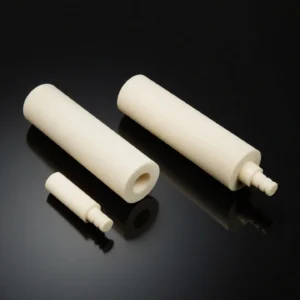
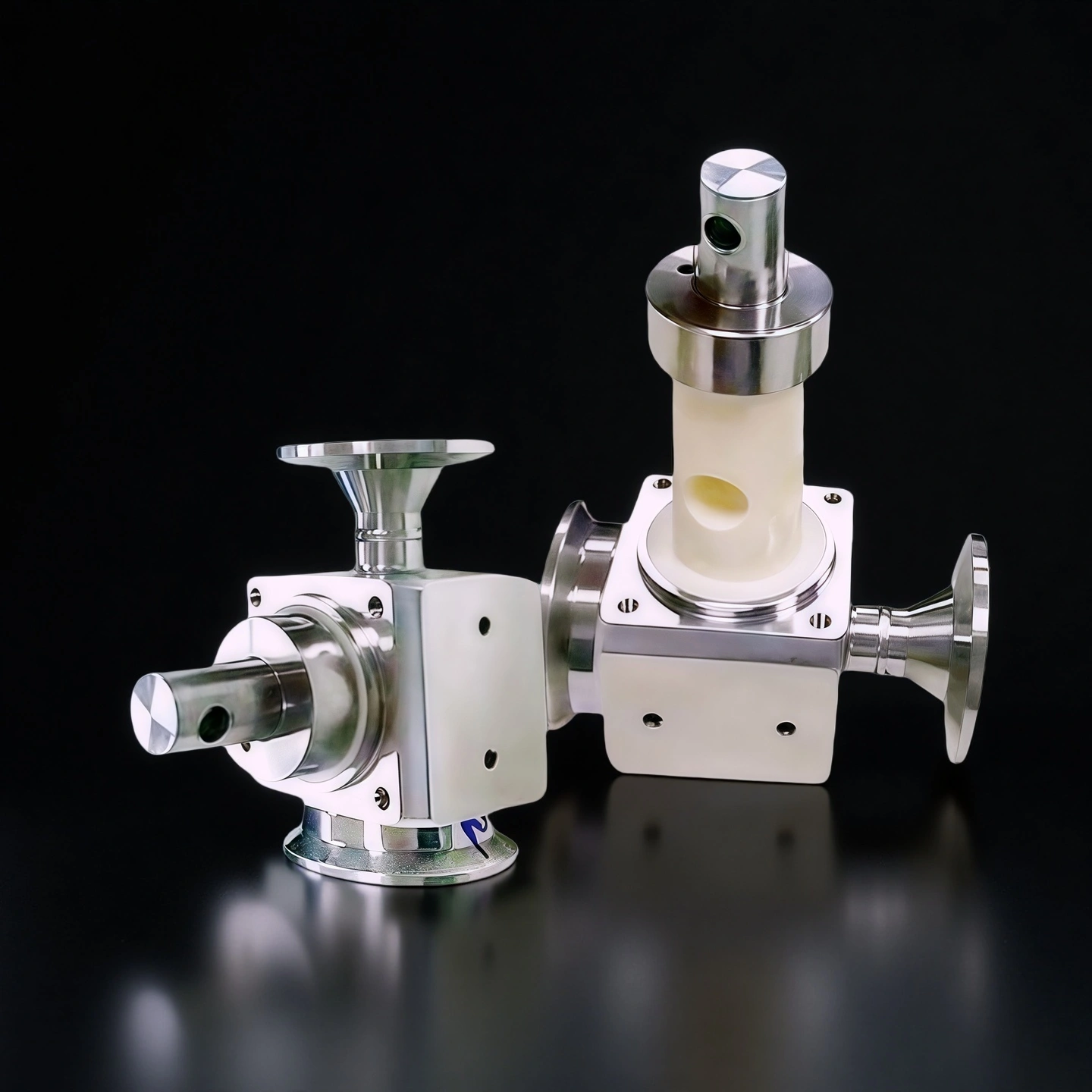
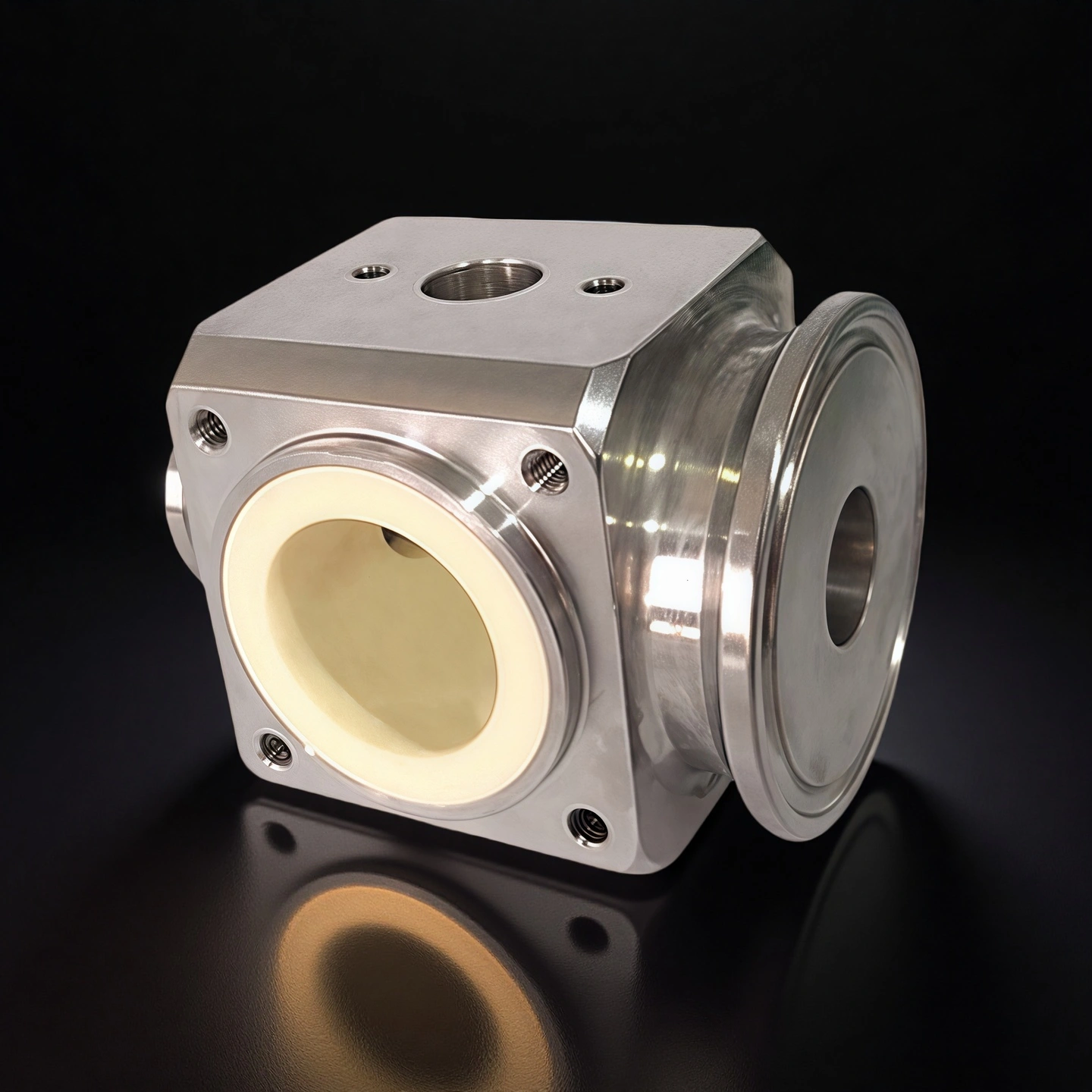
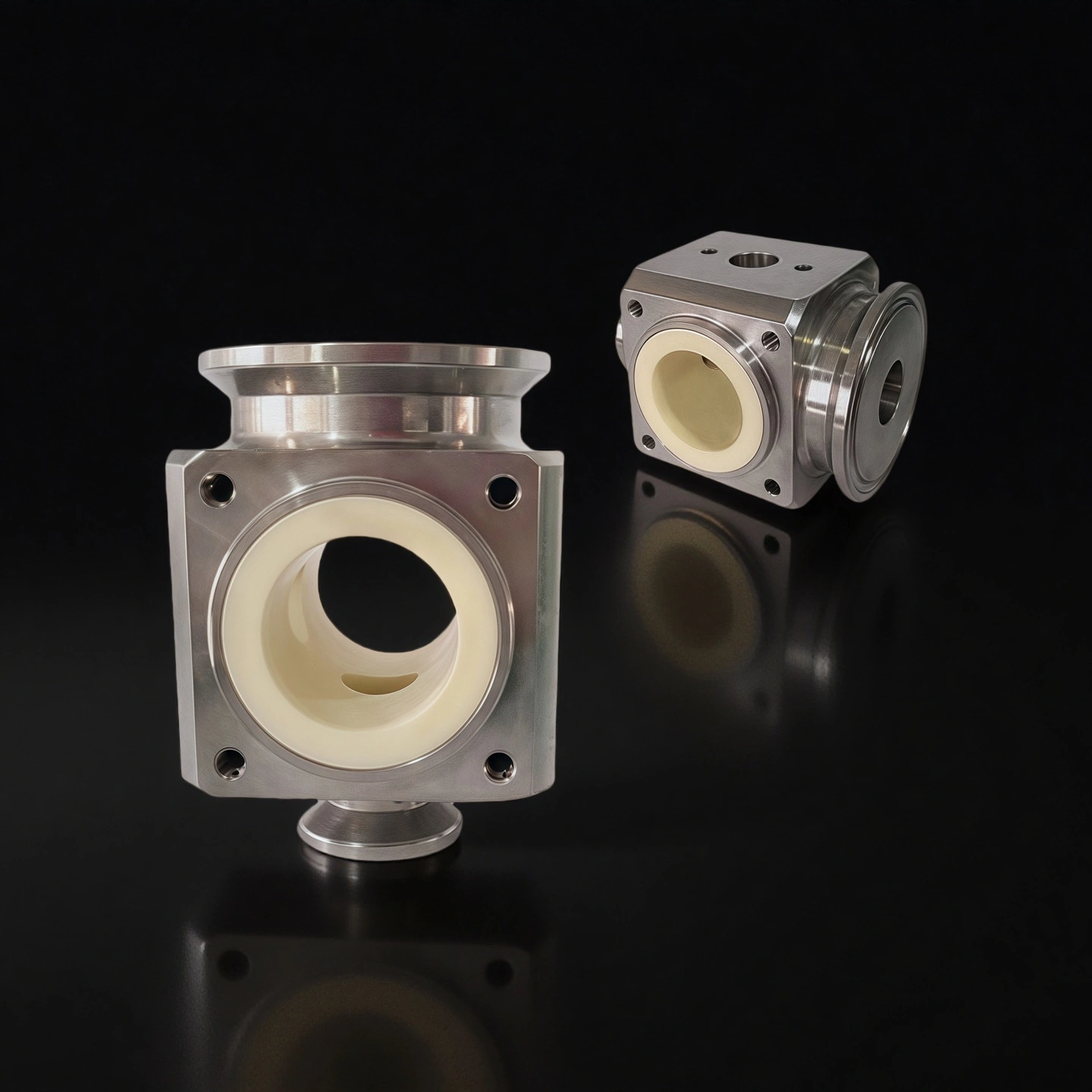
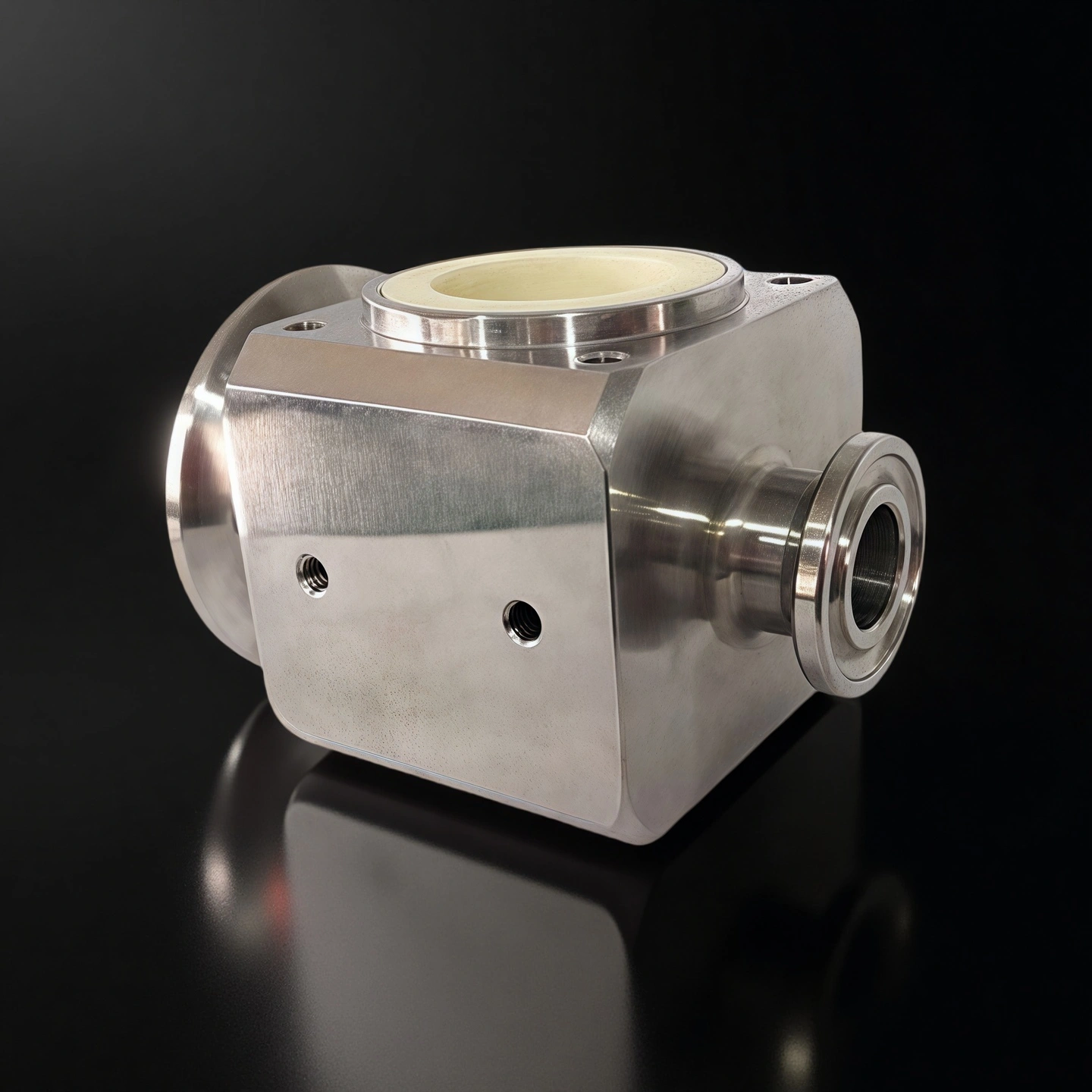
Custom Alumina Ceramic Filling Valve for Precision Dosing

An alumina ceramic filling valve is the wear-part set — valve core, seat, sleeve, and plunger — that meters liquids, creams, and slurries inside filling and dosing machines. ADCERAX machines these components to your print in six dense alumina grades (95–99.9% Al₂O₃), with lapped sealing faces and matched clearances confirmed at drawing review.

Catalog No. AT-CVC-01
Material ≥ 96% Al2O3
Dimensional Tolerance ±0.02 mm on OD
Supply Unit Ceramic parts, matched pairs or specified valve components
Dimensions/Sizes Download PDF
Engineering RFQ Review
Small-Batch Custom Support
Drawing-Based Production
Drawing & Process Review

The Alumina Ceramic Filling Valve from ADCERAX is a precision wear-part set for liquid dosing and filling systems. It controls the flow, sealing, and metering of viscous or corrosive media — creams, gels, flavor concentrates, chemical slurries, and battery electrolytes. Each set combines a ceramic valve core, seat, sleeve, and plunger machined from dense AD-ALU alumina (95–99.9% Al₂O₃) and lapped as a matched pair.

Alumina Ceramic Filling Valve Specifications

Item No. Diameter (mm) Thickness (mm) Purity
AT-CVC-01 Customize

Download Size Guide

Alumina Ceramic Filling Valve Properties

Property Unit / Condition AD-ALU-999 AD-ALU-997 AD-ALU-995 AD-ALU-990 AD-ALU-960 AD-ALU-950
Al₂O₃ content wt%, nominal 99.90 99.70 99.50 99.00 96 95
IEC 60672-3 group — C799 C799 C799 C795 C795 C795
Bulk density g/cm³, typical 3.94 3.94 3.90–3.92 3.80–3.91 3.70 3.75
Flexural strength MPa, 20 °C, typical 315–340 330 320–350 300–320 300 280
Compressive strength MPa, 20 °C, typical 2558–2900 2500 2400 2400 2000 2000
Young's modulus GPa, typical 359–375 370 365 355 275 (20 °C) 340
Fracture toughness KIC MPa·m½, method-dependent 3.8–4.2 3.6 3.5 3.3 3.5 (20 °C) 3.0
Thermal conductivity W/(m·K), typical 35–42 (25 °C) 35–40 (25 °C) 30–38 (25 °C) 24 (25 °C) 25 (20 °C) 18–25 (25 °C)
Mean CTE 10⁻⁶/K, stated range 7.6 (25–800 °C) 7.6 (25–800 °C) 7.6 (25–800 °C) 7.2 (25–800 °C) 8.2 (25–1000 °C) 7.6 (25–800 °C)
Color visual Ivory Ivory Ivory Ivory White Ivory / white
Water absorption %, selection limit unless stated ≤0.01 ≤0.05 ≤0.10 ≤0.10 ≈0 (typical, rounded) ≤0.20
Mohs hardness typical 9 9 9 9 — 9
Vickers hardness HV1, 1 kgf, typical — — — — 1600 —
Use temperature, guideline °C, application-dependent 1750 1700 1650 1600 1600 (max, in air) 1400


How to Specify Your Filling Valve Set

Confirm these five points to help us prepare an accurate quotation.

1. Define the Supply Scope

  • Complete valve internals or individual parts: Core, plunger, sleeve or seat.
  • Identification: Filling machine model, valve model and part number, if available.
  • Reference: A drawing, sample or photos of the existing part.

2. Define the Metering Geometry

Specify:

  • Core and plunger diameters
  • Stroke or rotation angle
  • Port shape and dead volume

For replacements, identify which features must stay unchanged and what you want improved.

3. Select the Alumina Grade

Review the grade against the process medium and contamination requirements:

  • AD-ALU-999 / 997: Formulation-sensitive media where ionic contamination matters.
  • AD-ALU-995 / 990: General dosing applications.
  • AD-ALU-960 / 950: Applications where cost is a priority.

Confirm the selected grade on the BOM and material certificate.

4. Describe the Media and Cleaning Conditions

Provide:

  • Viscosity and how it changes with temperature
  • Particle size and concentration
  • pH and chemical composition
  • CIP/SIP chemicals, temperatures, and heating or cooling rates

These conditions guide clearance and surface requirements.

5. Agree the Acceptance Plan

  • Ceramic parts: Dimensions, geometric tolerances and surface finish.
  • Machine performance: Dosing accuracy and leakage tested with your process medium.

A material certificate alone does not confirm filling performance.

Alumina Ceramic Filling Valve Packaging

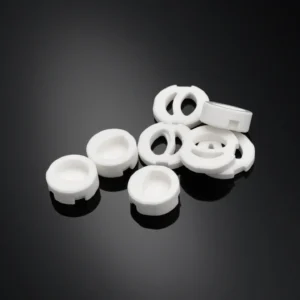
  • Matched valve core + seat sets in protective EPE foam
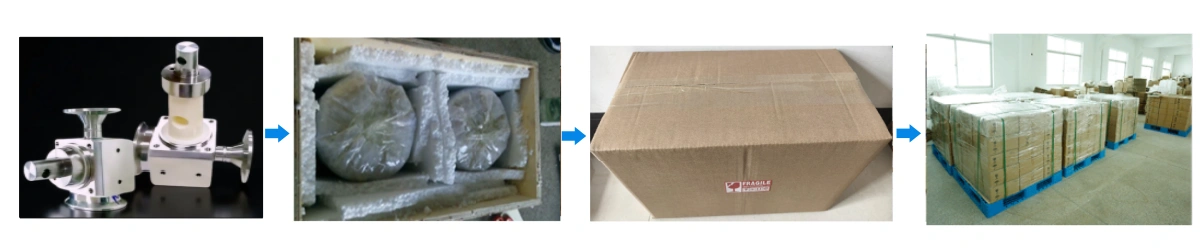
Alumina Ceramic Filling Valve Packaging

Alumina Ceramic Filling Valve Applications

ADCERAX supplies alumina ceramic filling valve sets for dosing and filling machines across the media groups below — and reviews every drawing against your media, particles, and cleaning regime before quoting.

  • Cosmetics & Personal Care Filling

    Creams, gels, serums, and exfoliant formulas carry micro-abrasives that scratch metal and polymer valve parts and send dosing weights drifting. ADCERAX supplies lapped core-and-sleeve sets sized for small stroke volumes, with polished wetted surfaces that reduce residue hold-up after CIP. The problem this solves: sealing lines and calibration points that no longer need constant re-trimming between maintenance windows.

  • Food & Beverage Additives

    Creams, gels, serums, and exfoliant formulas carry micro-abrasives that scratch metal and polymer valve parts and send dosing weights drifting. ADCERAX supplies lapped core-and-sleeve sets sized for small stroke volumes, with polished wetted surfaces that reduce residue hold-up after CIP. The problem this solves: sealing lines and calibration points that no longer need constant re-trimming between maintenance windows.

  • Battery Slurry & Fine Chemicals

    Electrode slurries, electrolytes, and solvent-based chemistries combine erosive solids with strict contamination limits. ADCERAX supplies wear-resistant seats and cores for solid-laden media — with anti-sedimentation grooves and flushing ports available on the drawing — and high-purity grades that avoid the galvanic and ionic-contamination issues metal parts introduce.

    Running a different medium? Send the drawing and a media sheet. Our engineers will tell you plainly whether alumina is the right route — or whether zirconia or silicon carbide fits your duty better.

Alumina Ceramic Filling Valve Usage Instructions

  • Installation

    1. Verify mating dimensions and the clearance target per your drawing; dry-fit the plunger and sleeve before wetting.
    2. Align the seat face; torque metal carriers in a cross pattern to avoid tilt; check runout and leak-tightness.
    3. Record baseline calibration points for your dosing algorithm.

  • Operation

    1. Prime slowly to avoid cavitation; purge air before the first calibration run.
    2. Match stroke speed to media viscosity to prevent bypass; monitor return-spring or actuator response.
    3. Log cycle counts and leak checks at planned intervals.

  • Storage

    1. Store polished parts in oil-free sealed bags with desiccant; never let sealing faces rest against hard surfaces.
    2. Keep spare sets labeled by lot for traceability.

  • Cleaning (CIP/SIP)

    1. Use a detergent compatible with your media, rinse to neutral pH, and keep abrasive tools away from sealing faces.
    2. If SIP is used, ramp temperature gradually and allow uniform cool-down before restart.

  • Cautions & Remedies

    1. Stick-slip at low stroke: verify clearance and media temperature, reduce stroke speed, and re-lap if the surface is out of specification.
    2. Micro-leak at the seat: inspect the seat land for trapped particles, clean ultrasonically, and verify carrier torque and concentricity.
    3. Premature wear with slurry: consider an anti-sedimentation groove design or a flushing port, and confirm the particle size distribution with us.

Alumina Ceramic Filling Valve FAQ

  1. Q: What does an alumina ceramic filling valve set include?
    A: The ceramic wear parts — valve core, seat, sleeve, and plunger — supplied individually or as lapped, matched sets per your drawing. Metal bodies, stems, elastomer seals, actuators, and sensors are included only when your RFQ lists them in the supply scope.
  2. Q: Can the valve handle abrasive slurries?
    A: Dense alumina seats and cores are routinely used with solid-laden media. The honest answer depends on your particle size, hardness, and loading — send that data with the RFQ, and we will recommend the grade, anti-sedimentation grooves, flushing ports, and a wear allowance to match.
  3. Q: What pressure can the valve work at?
    A: Pressure capability is set by the geometry, wall sections, carrier design, and sealing concept of your specific valve — not by a blanket rating on a material page. State working, peak, and test pressures in the RFQ and we confirm the design against them at drawing review.
  4. Q: Can sealing surfaces be polished for clean media?
    A: Yes. Sealing and wetted zones can be precision-ground or lapped, with the finish specified zone by zone on the drawing and confirmed at engineering review — rather than promised as one number for every geometry.
  5. Q: How long does a ceramic filling valve set last?
    A: Service life depends on your media, particle load, duty cycle, and cleaning regime, so we do not quote a universal cycle count. Sets are supplied matched so wear parts replace as pairs, and a stated wear allowance makes replacement a planned maintenance item.
  6. Q: Should I choose alumina or zirconia for a filling valve?
    A: Alumina offers higher hardness and wear resistance at better economy — the default for stable, well-aligned dosing. Zirconia offers greater toughness and tolerates impact, side loads, and slight misalignment. Describe your duty and we will recommend one route, not sell you both.
  7. Q: What should my RFQ include?
    A: First round: a drawing, worn sample, or machine model, plus media name, quantity, and target date. For the engineering review: alumina grade or purity requirement, geometry with datums and fits, surface specs on sealing zones, particle data, cleaning regime, and your acceptance plan. Missing items come back as questions, not as assumptions.
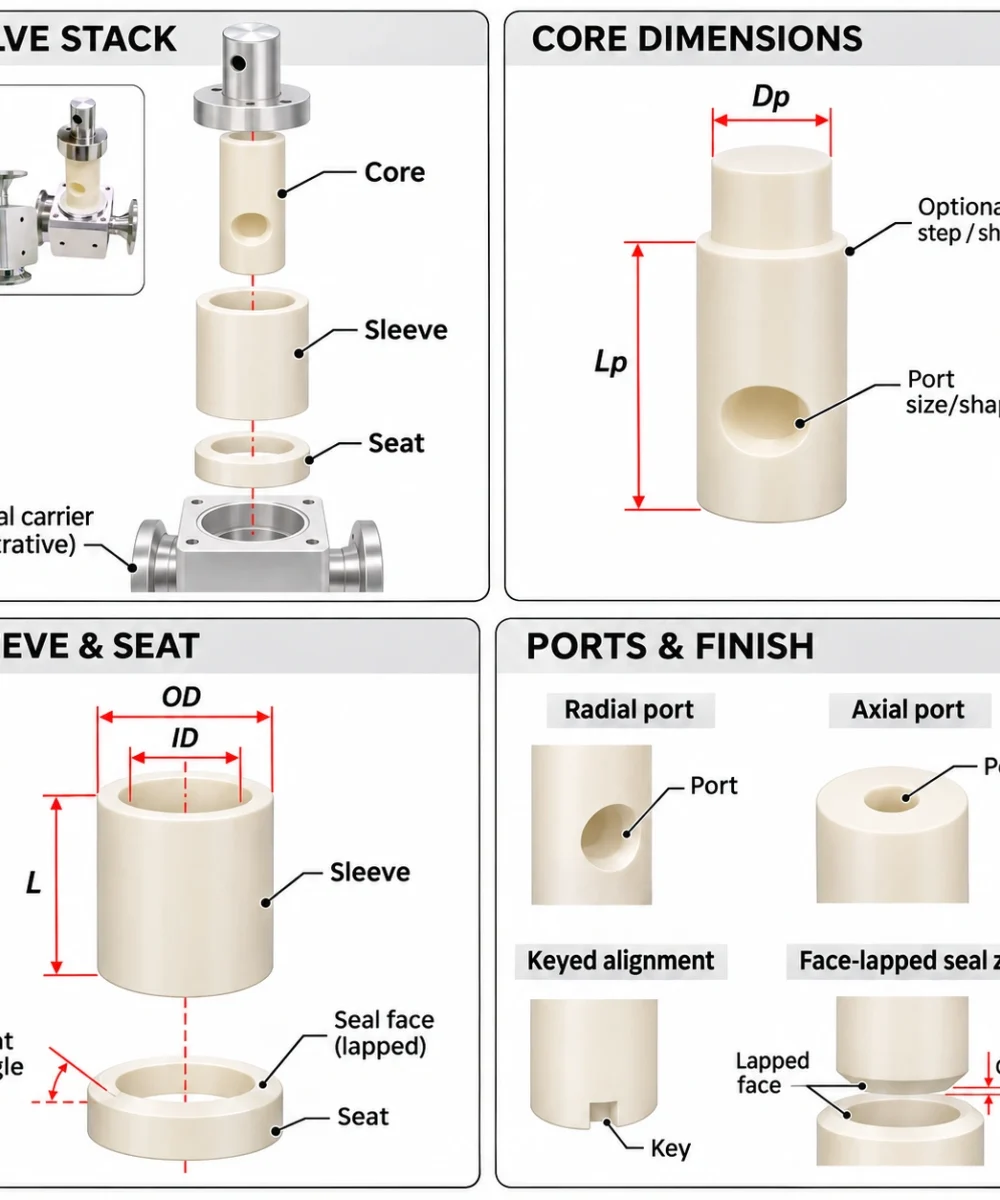
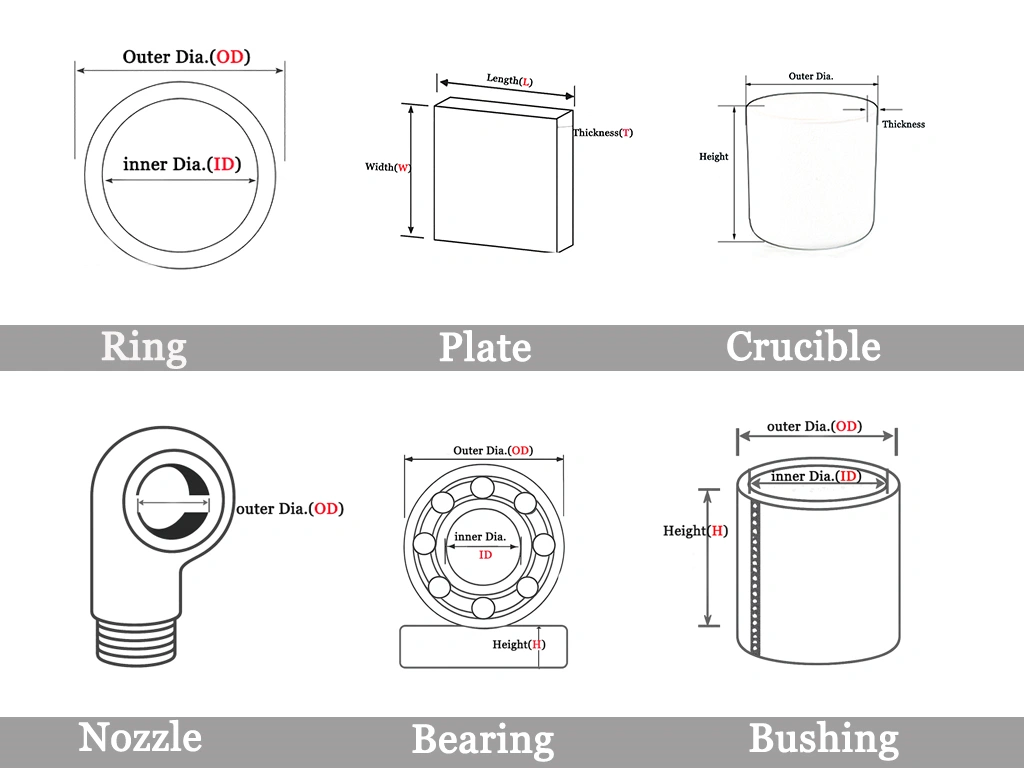
Custom alumina ceramic filling valve diagram showing core, sleeve and seat dimensions, fluid port options, keyed alignment and lapped sealing faces.

Customize Your Ceramic Filling Valve

ADCERAX manufactures valve cores, seats, sleeves, and plungers to print. What you specify:

  • Geometry: core and plunger diameters, seat angle, port size and shape, rotary or poppet style — defined by your drawing, not limited to a stock range.
  • Dimensions and tolerances: machined to drawing; the achievable tolerance is confirmed feature by feature at engineering review instead of promised as one blanket number.
  • Clearance strategy: running fits for low-viscosity liquids, tighter matched fits for gels and pastes — always stated with the temperature at which the clearance is measured.
  • Surface finish: as-fired, precision-ground, or lapped sealing zones, called out zone by zone with Ra values on the drawing.
  • Material: six dense AD-ALU grades (95–99.9% Al₂O₃); zirconia or silicon carbide alternatives quoted when your duty calls for them.
  • Ports and interfaces: metal carriers with threaded connections, tri-clamp adapters, or keyed alignment — supplied when listed in the agreed scope.
  • Seal interfaces: seat geometry matched to your elastomer stack (PTFE, FKM, EPDM, FFKM) and its gasket compression.
  • Media-driven options: slurry channels, anti-sedimentation grooves, and flushing ports for solid-laden or settling media.

Related Products

ADCERAX - Your Trusted Advanced Ceramics Manufacturing Partner

ADCERAX – Custom Ceramic Supply and Engineering Coordination
ADCERAX coordinates drawing review, production and inspection with manufacturing partners against agreed specifications.

China-Based Ceramic Supply Partner

ADCERAX coordinates custom ceramic supply for overseas OEMs, equipment builders, and labs.

Custom Drawing Support

We review drawings, dimensions, materials, and application conditions before quotation.

Ceramic Process Control

Forming, sintering, machining, grinding, and finishing are arranged by part requirements.

Pre-Shipment Inspection

Dimensional checks, visual inspection, and packaging review help reduce procurement risk.

Get in Touch with Us

Our team will be happy to respond to you in less than 24 hours.

Adcerax's factory

Quick Quotation

*Our team will review your inquiry and respond with the next steps.

*Your information will be kept strictly confidential.

Ready to Solve Your Engineering Challenge?

Partner with ADCERAX for reliable, high-performance advanced ceramic solutions. Our engineers are ready to discuss your project.

E-mail

info@adcerax.com

Phone

Tel: +86-0731-84428843 WhatsApp: +86 19311583352

Response Time

Within 24 hours

Quick Quote

The more details you provide, the faster we can quote.

*All inquiries are confidential.

Get Your Custom Solution

The more details you provide, the faster we can respond.

customize size

*We respond within 24 hours. All inquiries are confidential.

Download Catalog