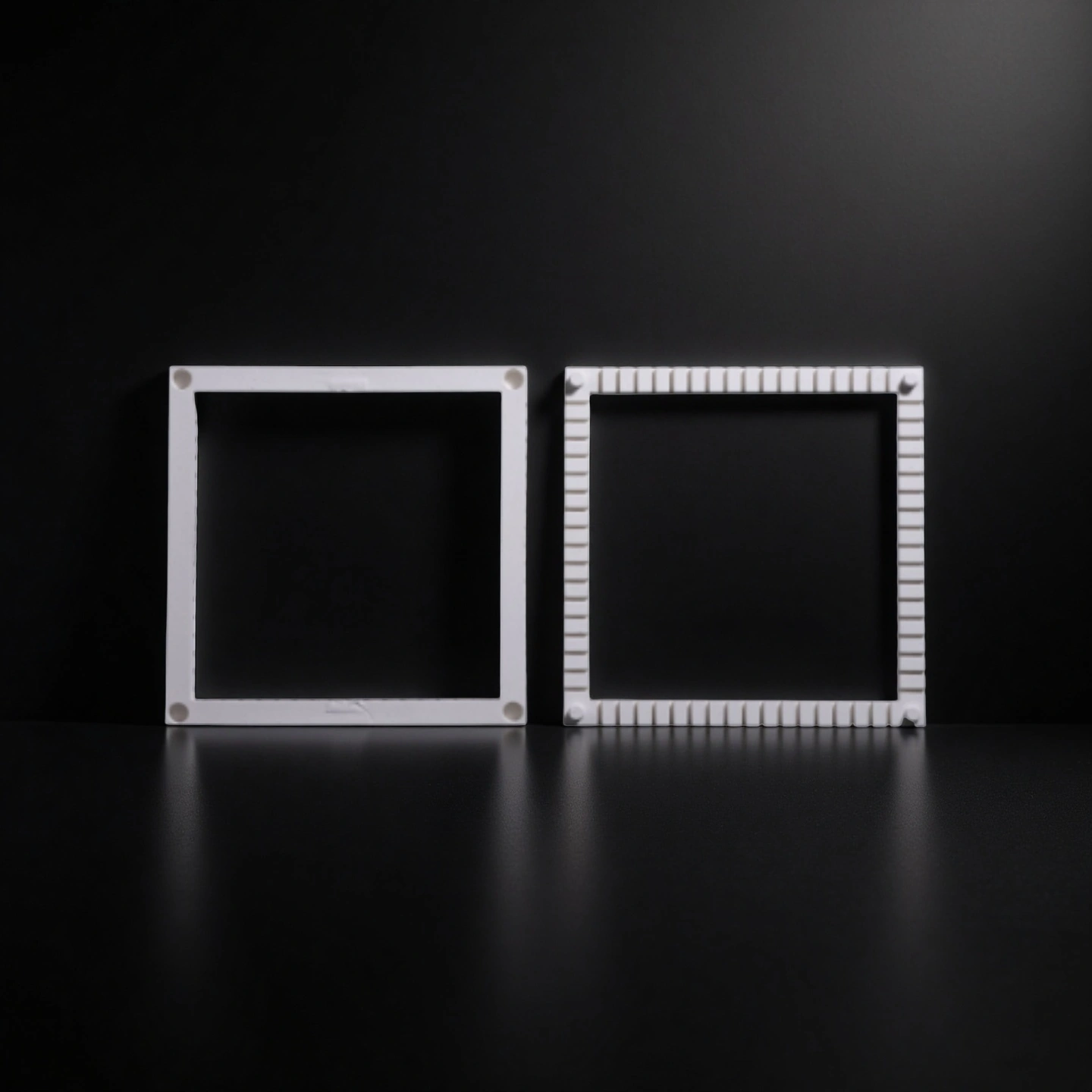
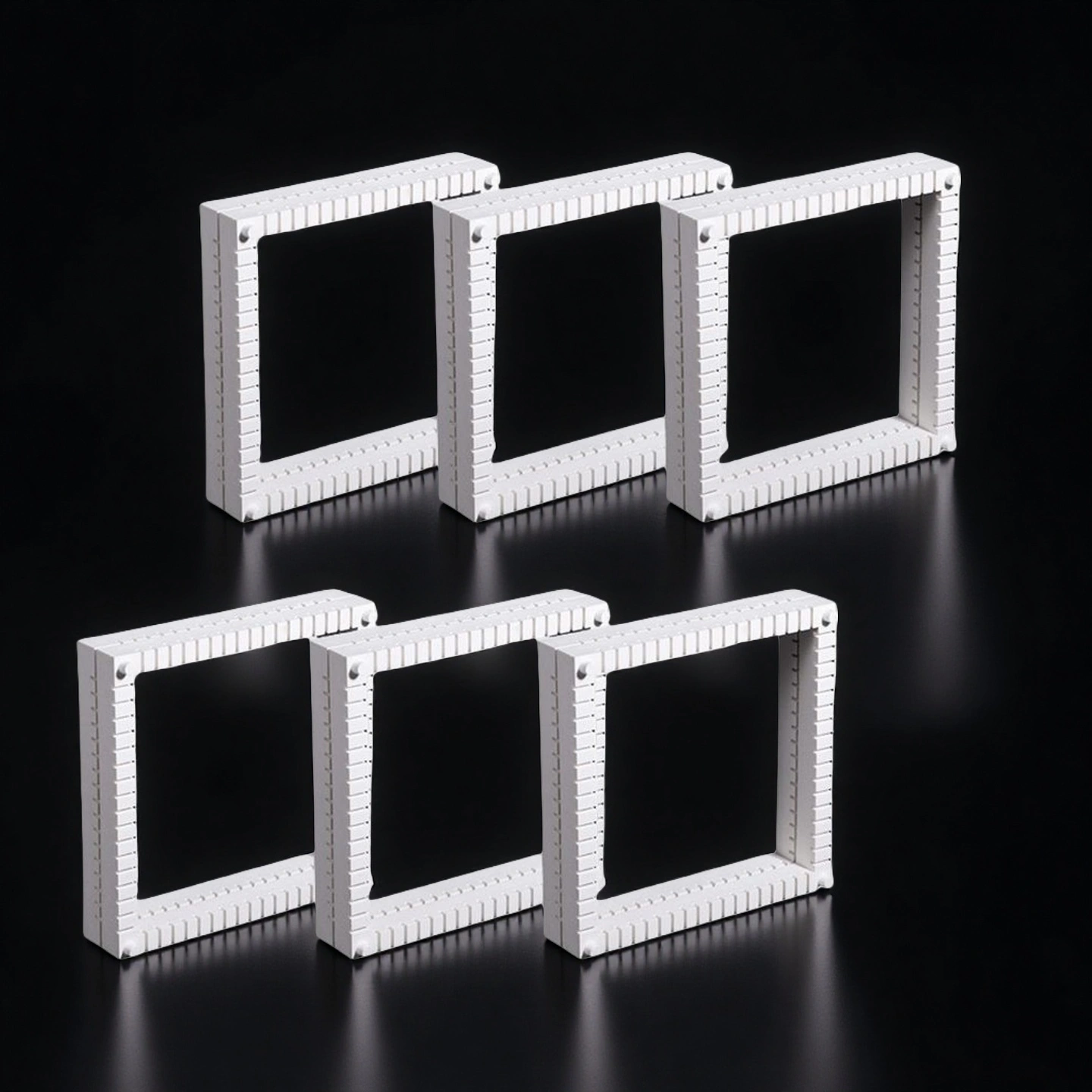
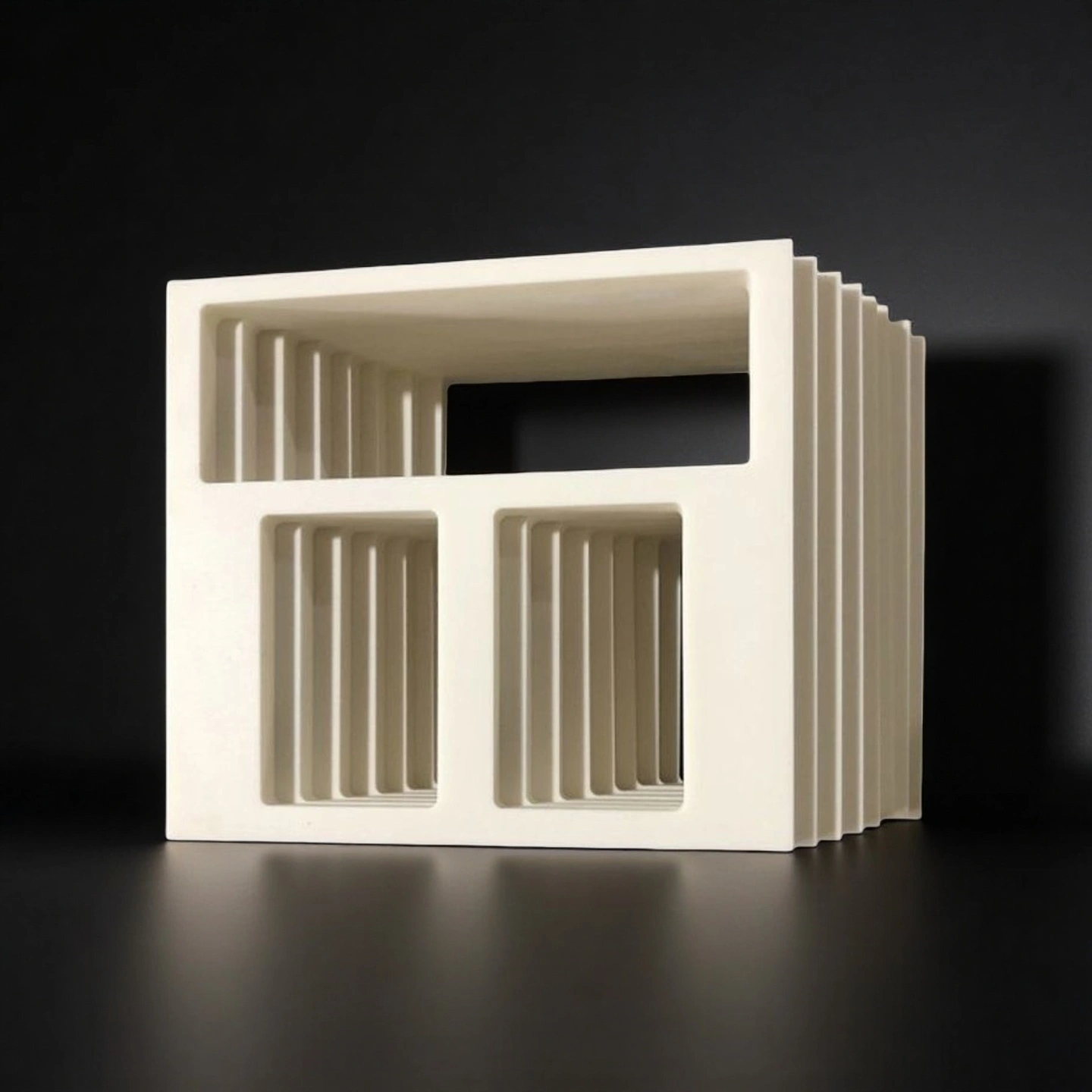
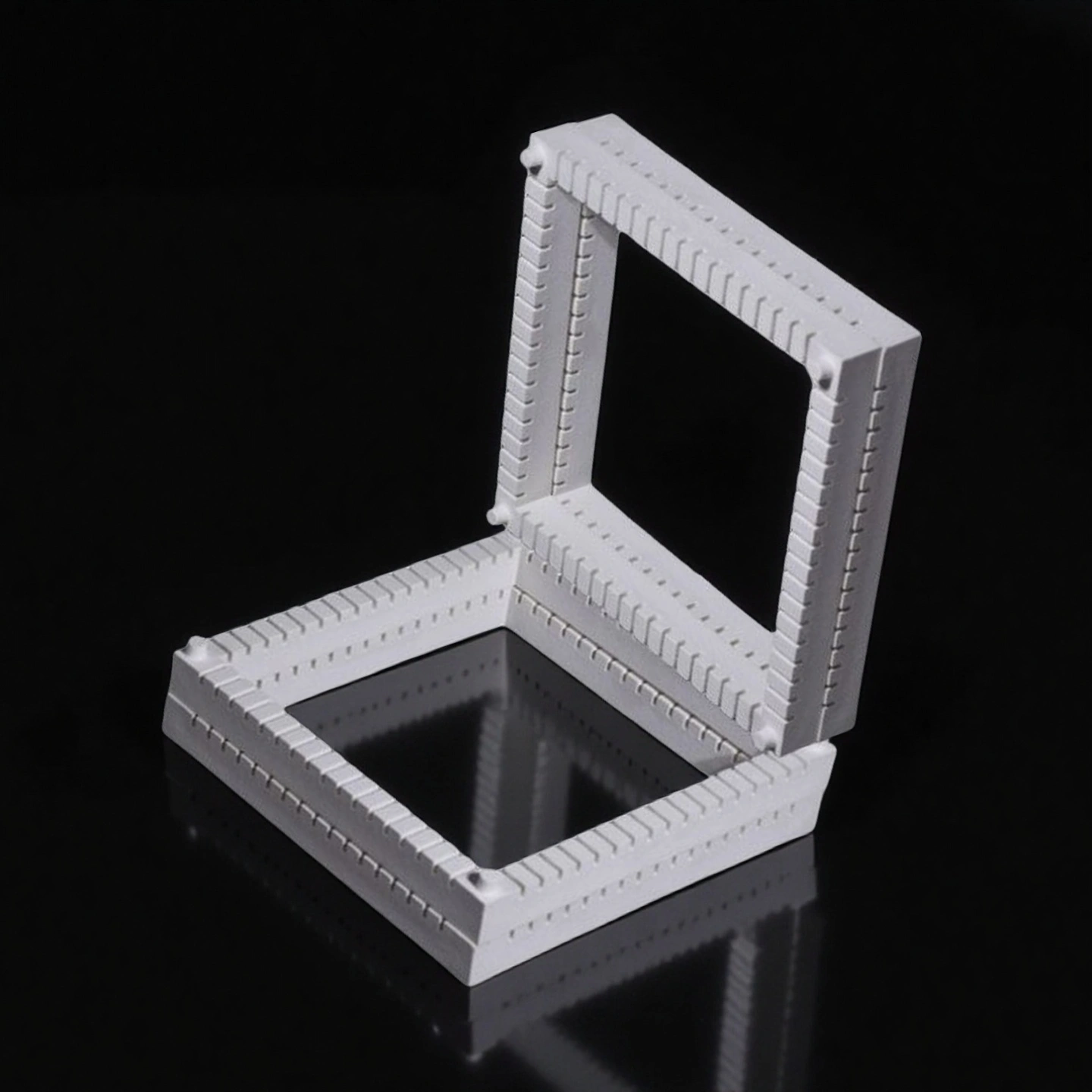
Alumina ceramic frames are square or rectangular structural borders made from approximately 95% Al₂O₃, used as insulating base parts and housings in industrial devices. They combine high mechanical strength, hardness, thermal stability and electrical insulation, so they can support and protect electronic components, sensors and actuators in harsh environments such as high temperature, high humidity or corrosive atmospheres.
What to Confirm Before Choosing an Alumina Ceramic Frame
Selecting an alumina ceramic frame is usually not only a material choice. Engineers also need to confirm whether the frame can hold the required clearance, mounting accuracy and insulation distance after machining, assembly and thermal exposure. ADCERAX reviews the drawing and working condition before quotation so that the ceramic frame can match the real housing, PCB, sensor or insulation structure.
| Design Requirement | Engineering Review Focus | Why It Matters |
|---|---|---|
| Window size and wall thickness | Outer size, inner opening, wall width and corner radius are checked against the drawing. | These dimensions control PCB position, component clearance and mechanical support. |
| Hole and slot layout | Mounting holes, through slots, countersinks and step features are reviewed before machining. | Poor hole design can create stress concentration or assembly mismatch. |
| Insulation distance | Voltage condition, metal housing clearance and contact position are reviewed. | The frame must maintain electrical separation under heat, humidity or vibration. |
| Edge and corner condition | Chamfer, radius, burr-free edges and handling risk are reviewed. | Sharp corners or thin bridges can increase chipping risk. |
| Operating condition | Temperature, humidity, cleaning method and chemical exposure are checked. | Material grade and surface finish should match the real service environment. |
Why Use Alumina Ceramic Frames in Insulation Assemblies
Alumina ceramic frames are selected when a plastic, metal or resin-based border cannot maintain stable shape, insulation clearance or surface condition during long-term operation. The dense Al₂O₃ body provides a rigid insulating structure around PCBs, sensor elements, contact pads and heating-zone components.
High Mechanical Stability for Frame Support
The alumina ceramic frame carries mechanical loads and resists surface wear, so it can act as a stable structural border or base in long-term industrial operation without deformation or rapid abrasion.
Electrical Insulation Around Conductive Parts
Alumina ceramic frames provide a rigid insulating barrier between conductive parts, PCB areas, electrodes and metal housings. This helps reduce leakage paths, short-circuit risk and unwanted electrical contact in compact industrial assemblies.
Dimensional Control for PCB and Sensor Positioning
The frame’s inner window size, wall thickness, hole position and flatness can be controlled according to the drawing, helping PCBs, substrates, sensor chips or contact areas sit in defined positions during assembly.
Better Heat Resistance Than Polymer Frames
Compared with many polymer support parts, 95% alumina maintains better shape stability near heaters, hot modules or furnace-adjacent equipment areas where softening, creep or thermal distortion may affect assembly reliability.
Inorganic and Chemically Stable Surface
The alumina ceramic frame is based on an inorganic ceramic body without volatile organic compounds, making it a stable, inert choice for devices where outgassing or contamination must be minimized.
Alumina Ceramic Frame Properties
| Property | Unit | 96% Al₂O₃ | 99% Al₂O₃ | 99.5% Al₂O₃ | 99.6% Al₂O₃ | 99.7% Al₂O₃ | 99.8% Al₂O₃ | 99.9% Al₂O₃ | 99.99% Al₂O₃ |
| Alumina content | % | 96 | 99 | 99.5 | 99.6 | 99.7 | 99.8 | 99.9 | 99.99 |
| Density | g/cm³ | 3.6-3.75 | 3.83 | 3.89 | 3.91 | 3.92 | 3.93 | 3.94 | 3.98 |
| Color | – | white | Ivory | Ivory | Ivory | Ivory | Ivory | Ivory | Ivory |
| Water absorption | % | 0 | 0 | – | 0 | 0 | 0 | 0 | 0 |
| Young’s modulus (Elastic modulus) | GPa | 300 | 350 | 375 | 356 | 357 | 358 | 359 | 362 |
| Shear modulus | GPa | – | – | 152 | – | – | – | – | – |
| Bulk modulus | GPa | – | – | 228 | – | – | – | – | – |
| Poisson’s ratio | – | – | – | 0.22 | – | – | – | – | – |
| Compressive strength | MPa | 1910 | 2210 | 2500 | 2552 | 2554 | 2556 | 2558 | 2570 |
| Flexural strength | MPa | 260 | 300 | 340 | 345 | 346 | 347 | 348 | 365 |
| Fracture toughness | MPa·m¹ᐟ² | – | – | 4 | – | – | – | – | – |
| Hardness | GPa | 14.5 | 17 | 17 | 23 | 24 | 25 | 26 | 30 |
| Thermal conductivity | W/m·K | 20 | 31 | 31 | 31-33 | 31-33 | 31-33 | 31-35 | 31-35 |
| Thermal shock resistance ΔT | °C | – | – | – | 222 | 223 | 224 | 225 | 228 |
| Maximum use temperature (no load) | °C | 1450 | 1680 | ≤1750 | 1755 | 1760 | 1765 | 1770 | 1800 |
| Coefficient of thermal expansion | 10⁻⁶/°C | 7.6 | 7.6 | 7.6 | 7.6 | 7.5 | 7.5 | 7.4 | 7.4 |
| Volume resistivity | Ω·cm | >1×10¹⁴ | >1×10¹⁴ | >1×10¹⁴ | >1×10¹⁴ | >1×10¹⁴ | >1×10¹⁴ | >1×10¹⁴ | >1×10¹⁴ |
| Dielectric constant (relative permittivity) | – | 9.2 | 9.5 | 9.8 | 9.83 | 9.84 | 9.85 | 9.86 | 9.92 |
| Dielectric strength | kV/mm | 15 | 19 | 16.9 | 23.2 | 23.4 | 23.6 | 23.8 | 24 |
| Dissipation factor (loss factor @ 1 kHz) | – | – | – | 0.0002 | – | – | – | – | – |
Alumina Ceramic Frame Specifications
Type 1: Rectangle Alumina Ceramic Frame
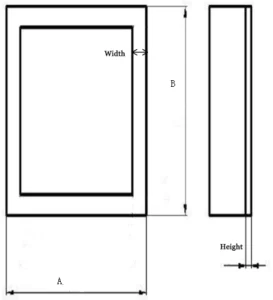
| Rectangle Alumina Ceramic Frame | |||||
| Item No. | A(mm) | B(mm) | Width (mm) | Height (mm) | Purity (%) |
| AT-CF-F001 | 20 | 30 | 3 | 4 | 96-99 |
| AT-CF-F002 | 45 | 62 | 5 | 5 | 96-99 |
| AT-CF-F003 | 70 | 80 | 4 | 6 | 96-99 |
| AT-CF-F004 | 106 | 120 | 5 | 12 | 96-99 |
| AT-CF-F005 | 160 | 100 | 10 | 8 | 96-99 |
| AT-CF-F006 | 200 | 180 | 20 | 35 | 96-99 |
Type 2: Square Alumina Ceramic Frame
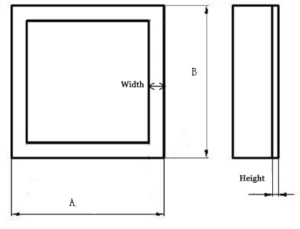
| Square Alumina Ceramic Frame | ||||
| Item No. | A = B (mm) | Width (mm) | Height (mm) | Purity (%) |
| AT-CF-Z001 | 20 | 5 | 5 | 96-99 |
| AT-CF-Z002 | 25 | 4 | 3 | 96-99 |
| AT-CF-Z003 | 30 | 3.5 | 8 | 96-99 |
| AT-CF-Z004 | 45 | 4.8 | 7.5 | 96-99 |
| AT-CF-Z005 | 60 | 12 | 16 | 96-99 |
| AT-CF-Z006 | 75 | 20 | 20 | 96-99 |
| AT-CF-Z007 | 86 | 15 | 15 | 96-99 |
| AT-CF-Z008 | 120 | 45 | 16 | 96-99 |
| AT-CF-Z009 | 130 | 30 | 18 | 96-99 |
Packaging for Alumina Ceramic Frames
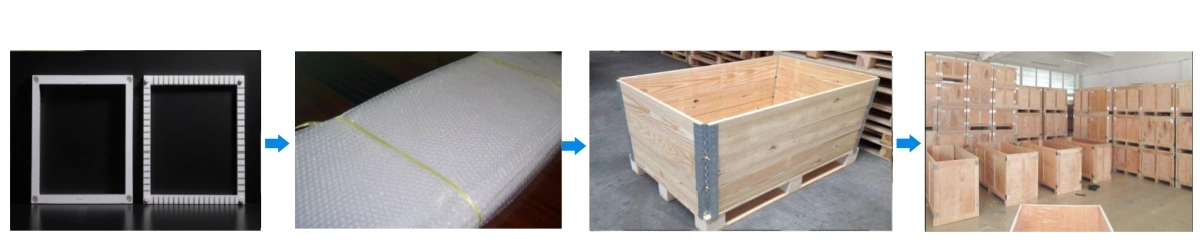
- Each alumina ceramic frame should be separated and protected to avoid edge impact, corner chipping and ceramic-to-ceramic contact during transport. Thin walls, machined windows, holes and polished surfaces can be packed with foam positioning, face protection and reinforced outer cartons according to order requirements.