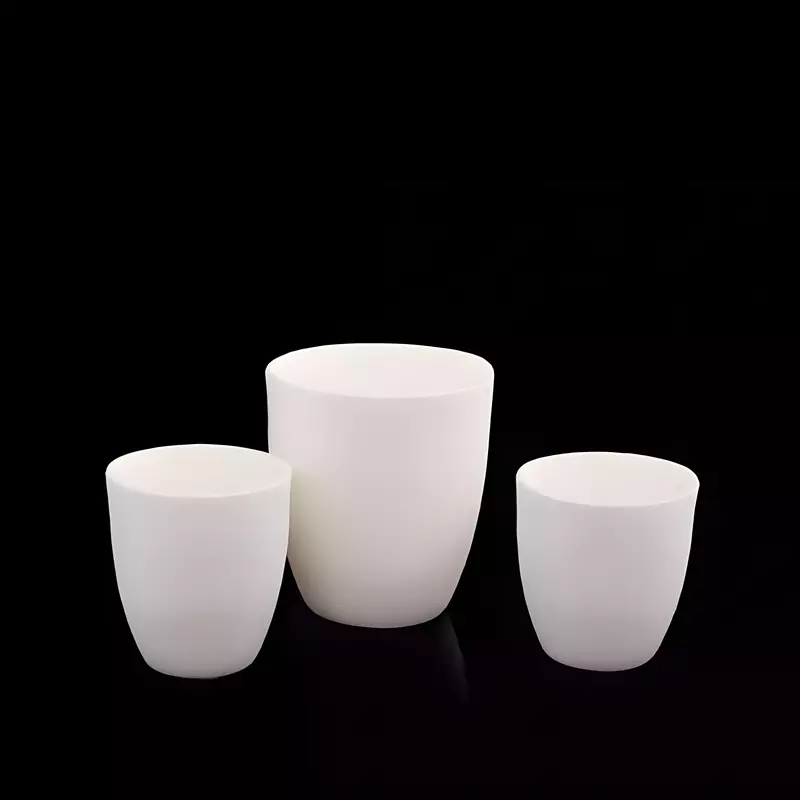
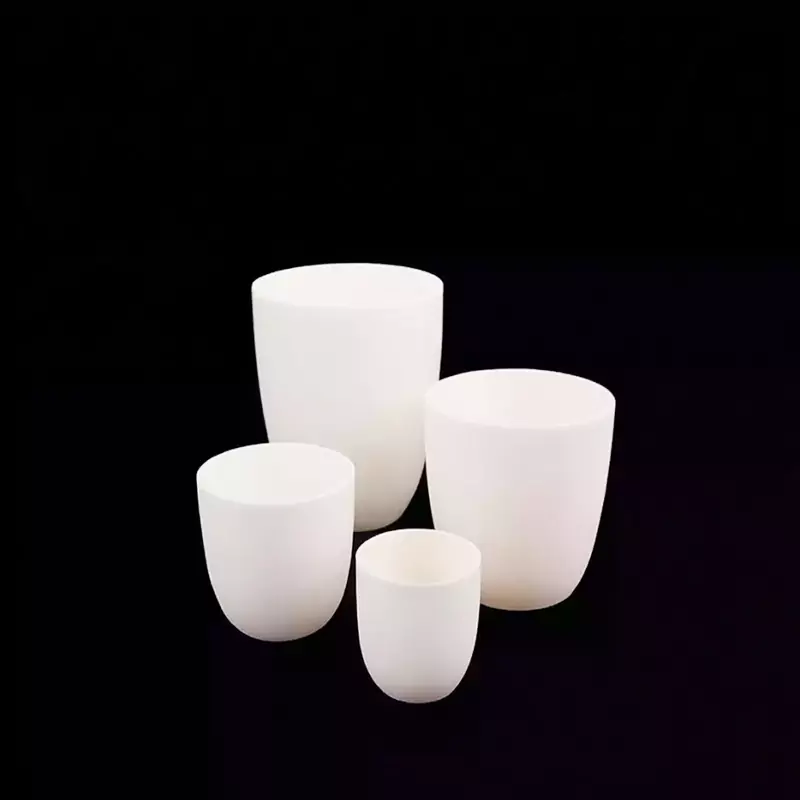
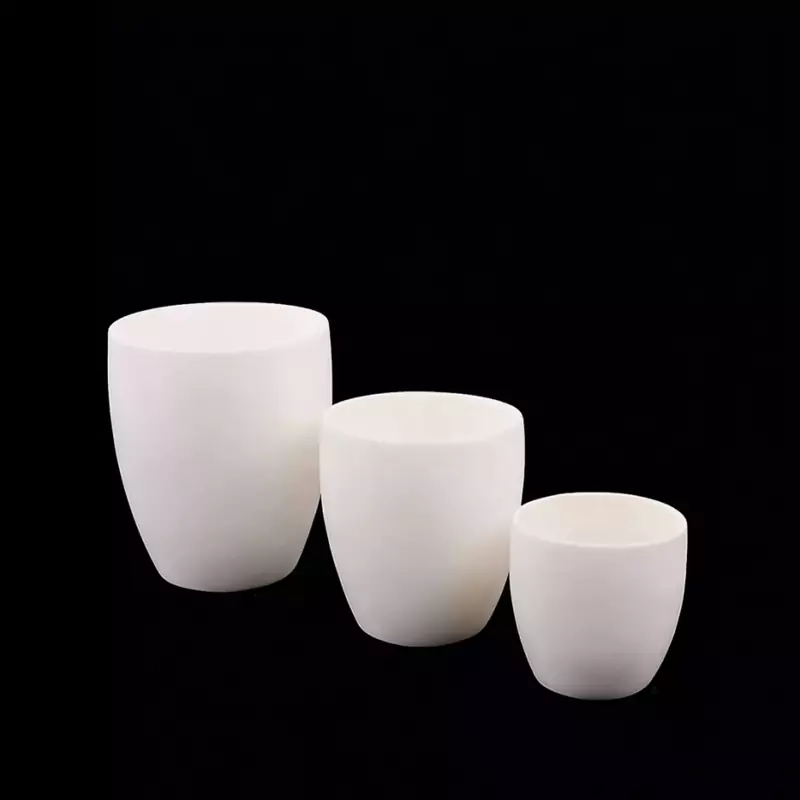
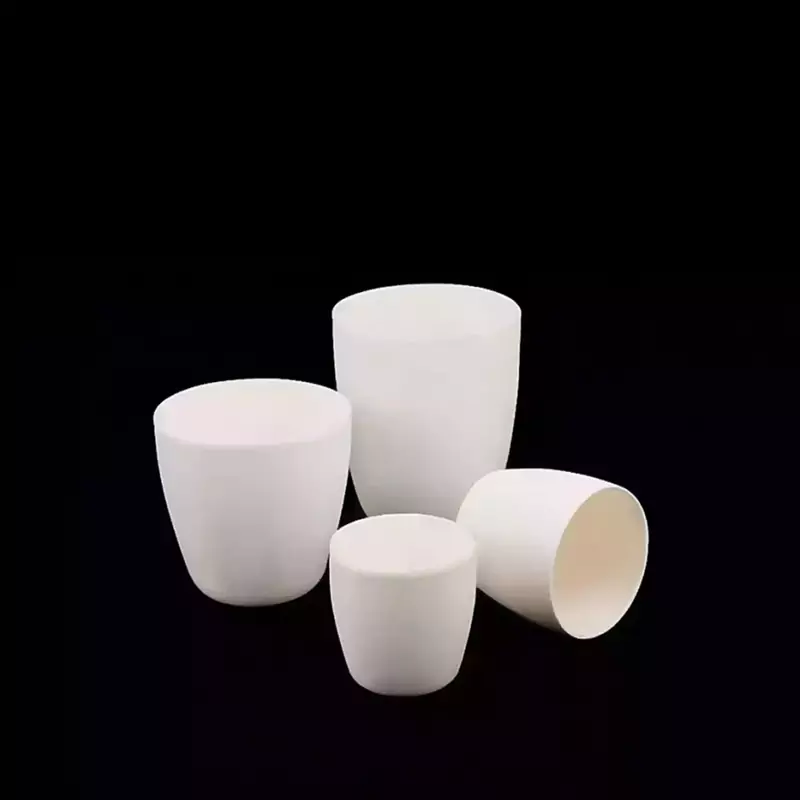
Conical Zirconia Crucible for High-Temperature Furnace and Reactor Use

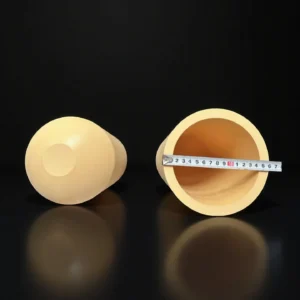
ADCERAX supplies conical zirconia crucibles for high-temperature furnaces, induction heating systems, vacuum melting and controlled-atmosphere reactor layouts. The conical geometry helps match chamber or coil space while dense stabilized zirconia supports clean melting, thermal stability and custom fit-up.

Each crucible can be reviewed according to operating temperature, atmosphere, charge material, top diameter, bottom diameter, height, wall thickness and required volume. Standard sizes are available, and drawing-based customization can be supported for furnace-matched projects.

Catalog No. AT-YHG-H001
Material Stabilized Zirconia (ZrO₂ ≥ 92%)
Operational Temperature up to 2200 °C
Apparent Porosity ≤ 0.5%
Thermal Shock Resistance ≤ 5 °C/min cycles
Engineering RFQ Review
Small-Batch Custom Support
Factory-Direct Manufacturing
Drawing & Process Review

What Is a Conical Zirconia Crucible?

A conical zirconia crucible is a high-temperature ceramic container made from stabilized zirconia and shaped with a tapered or arc-like profile. It is used when a standard cylindrical crucible does not match the furnace chamber, induction coil layout or reactor loading path.

Compared with common alumina crucibles, zirconia crucibles are often selected for higher temperature headroom, dense structure, low porosity and better chemical stability in demanding melting or material-processing conditions. The conical shape helps improve fit-up in compact heating zones and can support more controlled heat distribution when the furnace design requires a non-flat or tapered vessel.

Features of Conical Shaped Zirconia Crucible

  • Operational Temperature up to 2200 °C: The crucible maintains structure at continuous service above 2000 °C. This allows extended furnace runs without premature failure.
  • Thermal Shock Endurance: Proven resistance to heating/cooling cycles at rates below 5 °C/min. This prevents cracking during rapid transitions in controlled processes.
  • Stable Bulk Density ≥ 4.5 g/cm³: High density minimizes heat penetration losses. This ensures uniform distribution across curved furnace walls.
  • ZrO₂ Content ≥ 92%: High zirconia composition resists corrosion from molten alloys. This extends service life in metallurgical systems.
  • Low Impurity Index (Fe₂O₃ ≤ 0.5%): Reduced impurities protect melts from contamination. This supports clean outcomes in alloy development.
  • Apparent Porosity ≤ 0.5%: Dense microstructure limits gas or liquid infiltration. This maintains crucible integrity under reactive atmospheres.

Key Technical Parameters for Conical Zirconia Crucibles

The Arc Shaped Zirconia Crucible combines advanced ceramic engineering with high-purity stabilized zirconia to ensure consistent performance under extreme furnace and reactor conditions.

Parameter Typical Value Why It Matters for Buyers
ZrO₂ Content ≥92% Supports chemical stability and helps reduce contamination risk in high-temperature processing.
Bulk Density ≥4.5 g/cm³ A dense body improves structural integrity and reduces gas or melt penetration.
Apparent Porosity ≤0.5% Low porosity helps protect melt cleanliness and reduces infiltration during long holds.
Maximum Service Temperature Up to 2200 °C Suitable for high-temperature furnace, melting and synthesis applications.
Flexural Strength ≥350 MPa Helps the crucible resist handling stress and thermal-cycle-related mechanical load.
Thermal Expansion Coefficient 9–11 × 10⁻⁶ /K Helps engineers evaluate thermal fit and cycling behavior in furnace assemblies.
Thermal Conductivity 2.5–3.0 W/m·K at 1000 °C Supports controlled heat transfer without excessive lateral heat loss.
Electrical Resistivity ≥10¹² Ω·cm at room temperature Useful where electrical isolation is required near heating or reactor fixtures.

These values should be used as material-selection references, not as fixed performance guarantees for every furnace condition. Actual crucible performance depends on charge chemistry, heating rate, support method, atmosphere, thermal gradient and cleaning practice.

Standard Sizes of Conical Zirconia Crucibles

The listed models cover common laboratory and furnace-use capacities. If your furnace uses a special coil profile, limited chamber clearance or a non-standard loading fixture, ADCERAX can review a custom conical zirconia crucible based on drawings, samples or process dimensions.
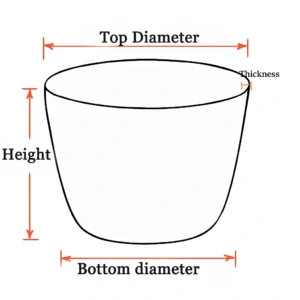
Size for Arc-shaped Y2O3 crucibles

Cylindrical ZrO2 Crucible
Item No. Top Diamete(mm) Bottom Diameter(mm) Height(mm) Wall Thickness(mm) Volume(ml) Purity(%)
AT-YHG-H001 27 14 22 1.5 5 95
AT-YHG-H002 36 20 42 3 60 95
AT-YHG-H003 57 30 45 3 60 95
AT-YHG-H004 59 45 52 2.5 80 95
AT-YHG-H005 62 34 50 3 80 95
AT-YHG-H006 82 58 80 4.2 300 95
AT-YHG-H007 80 70 115 4.8 400 95
AT-YHG-H008 100 65 110 5.5 500 95
AT-YHG-H009 25 15 28 1.3 5 95
AT-YHG-H010 29 18 34 1.5 10 95
AT-YHG-H011 32 23 33 1.5 15 95
AT-YHG-H012 36 23 41 1.7 20 95
AT-YHG-H013 36 25 42 1.7 25 95
AT-YHG-H014 38 25 45 1.7 30 95
AT-YHG-H015 45 30 46 2 40 95
AT-YHG-H016 48 30 52 2 50 95
AT-YHG-H017 58 33 66 2 70 95
AT-YHG-H018 58 35 68 2 100 95
AT-YHG-H019 67 42 78 2.5 150 95
AT-YHG-H020 73 44 86 2.5 200 95
AT-YHG-H021 79 46 96 2.5 250 95
AT-YHG-H022 83 50 106 2.5 300 95
AT-YHG-H023 91 56 108 2.5 400 95
AT-YHG-H024 100 60 118 3 500 95
AT-YHG-H025 59 35 71 2.8 100 95
AT-YHG-H026 49 30 54 2.7 50 95
AT-YHG-H027 38 25 45 2.7 30 95
AT-YHG-H028 75 46 78 3.5 250 95
AT-YHG-H029 100 60 70 4 375 95

Packaging for Conical Zirconia Crucibles

Each conical zirconia crucible is wrapped to reduce surface contact during transport, then packed in reinforced cartons or wooden crates according to order quantity and size. For custom or fragile geometries, packaging can be adjusted to protect the rim, tapered wall and base during international shipping.
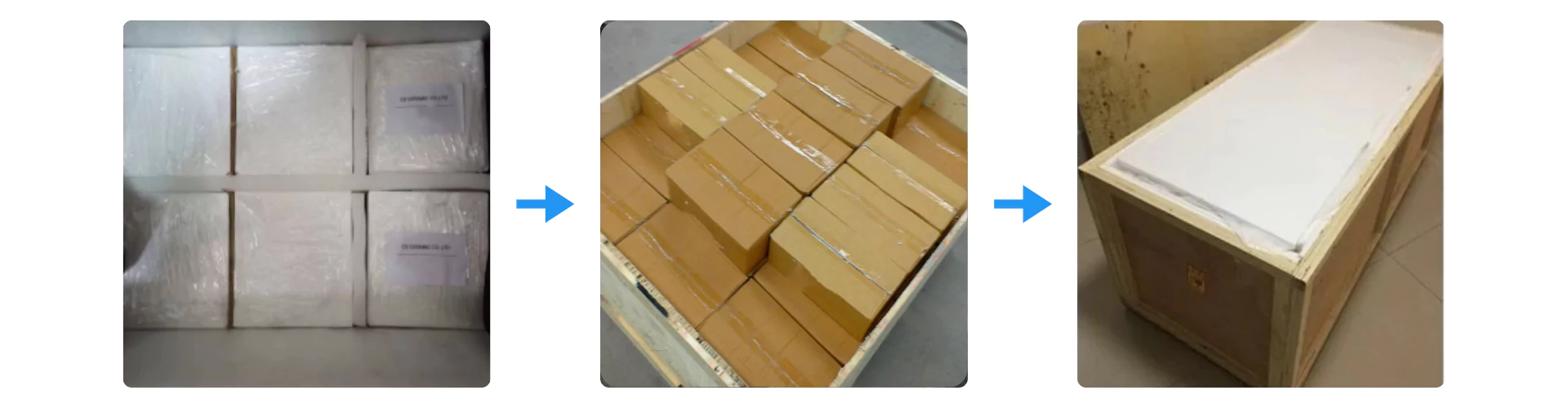

ADCERAX® Packaging Arc-Shaped Zirconia Crucible

Where Conical Zirconia Crucibles Are Used?

  • Vacuum Melting and Clean Alloy Processing

    Conical zirconia crucibles are suitable for vacuum melting and clean alloy processing when the vessel must provide high-temperature stability and low contamination risk. The dense zirconia body helps reduce melt infiltration, while the tapered shape can improve fit inside compact furnace spaces or custom holders. This makes the crucible useful for precious metals, specialty alloys and small-batch material development where chemistry control is important.

  • Induction Heating Systems

    In induction heating equipment, the conical shape can help match curved or tapered heating zones more effectively than a straight cylindrical crucible. A better geometric fit can support more even heat exposure around the crucible wall. For buyers, the main value is not only temperature resistance, but also whether the crucible shape works with the coil layout, support fixture and loading method.

  • Controlled-Atmosphere Reactors

    Conical zirconia crucibles can be used in controlled-atmosphere reactors where high temperature, gas exposure and repeatable test conditions must be considered together. The low-porosity zirconia structure helps reduce gas pathways through the ceramic wall, while the conical profile can support stable placement in reactor fixtures. Before quotation, the atmosphere, temperature cycle and processed material should be reviewed together.

  • High-Temperature Synthesis and Material Research

    For laboratory synthesis, ceramic powder processing and experimental melting, conical zirconia crucibles offer a useful balance of heat resistance, dense structure and custom geometry. They are especially helpful when the sample shape, furnace cavity or heating field does not match a standard round or rectangular crucible.

Usage Guidelines for Conical Zirconia Crucibles

Conical zirconia crucibles should be handled as high-temperature ceramic components. Correct setup, gradual heating and proper support are important for reducing cracking risk and maintaining stable performance during furnace or reactor use.

  • Before First Use

    Inspect the crucible for chips, cracks or surface damage before loading. If the crucible has been stored in a humid environment, use a controlled drying step before high-temperature operation. Confirm that the crucible fits the chamber, support fixture and heating zone without direct wall contact.

  • During Heating

    Use gradual heating and cooling whenever possible. Avoid sudden thermal gradients, uneven bottom support or direct flame contact. Do not overpack the crucible, because thermal expansion of the charge material may create local stress on the tapered wall.

  • Handling and Removal

    Use suitable ceramic or heat-resistant tools and avoid point loading on the rim. If molten material must be removed, avoid forcing tools against the inner wall. Always follow the furnace operator’s safety rules for high-temperature handling.

  • Cleaning and Storage

    Allow the crucible to cool under controlled conditions before cleaning. Remove residues with non-aggressive tools and avoid impact, sandblasting or harsh mechanical scraping. Store the crucible in a dry, separated location to prevent chipping and surface scratches.

FAQs About Conical Zirconia Crucibles

  1. Q: What is a conical zirconia crucible used for?A: A conical zirconia crucible is used for high-temperature furnace, induction heating, vacuum melting, controlled-atmosphere reactor and material synthesis applications. It is selected when a tapered or arc-like shape fits the heating zone better than a standard cylindrical or rectangular crucible.
  2. Q: Why choose a conical zirconia crucible instead of a cylindrical zirconia crucible?A: A cylindrical zirconia crucible is usually suitable for general melting and laboratory heating. A conical zirconia crucible is more useful when the furnace chamber, induction coil, fixture or pouring direction requires a tapered geometry. The final choice should be based on chamber space, loading method and heat distribution needs.
  3. Q: What temperature can a conical zirconia crucible handle?A: ADCERAX conical zirconia crucibles are listed for high-temperature use up to 2200 °C under suitable conditions. Actual performance depends on heating rate, atmosphere, charge chemistry, support method and thermal cycling. Process details should be reviewed before quotation.
  4. Q: Can conical zirconia crucibles be used for induction heating?A: Yes. Conical zirconia crucibles can be used in induction heating systems when the geometry matches the coil layout and furnace support structure. The tapered shape may help improve fit-up in curved or compact heating zones, but the final design should be confirmed with furnace dimensions.
  5. Q: Can ADCERAX customize the size of a conical zirconia crucible?A: Yes. ADCERAX can review custom top diameter, bottom diameter, height, wall thickness, volume, rim profile, base geometry and surface finish. Buyers can provide drawings, samples, furnace layout photos or process dimensions for faster evaluation.
customize size

Customization Services for ConicalZrO2 Crucible

ADCERAX® tailors the Conical Zirconia Crucible to match furnace geometry, thermal profiles, and process chemistry. Options focus on geometry, material system, surface behavior, integration, and validation to reduce commissioning risk.

Curvature & Arc Geometry Tuning

One-piece curvature is engineered to align with coil paths and chambers.

  • Arc Profile — Match chamber sweep for uniform wall heat flux distribution.
  • Chord Alignment — Orient arc apex to stabilize melt pool dynamics.
  • End Geometry — Shape lips and ends for predictable fill and pour.
  • Clearance Fit — Set radial gaps to minimize hot spots at peaks.

Wall Structure & Thermal Mass Design

Wall architecture balances stability, heat flow, and cycle durability.

  • Section Strategy — Distribute thickness for symmetric heating under load.
  • Mass Balance — Tune thermal inertia to smooth transient temperature swings.
  • Rib Support — Add discreet stiffening where bending stresses concentrate.
  • Base Isolation — Configure seating features to limit hearth heat sinks.

Stabilizer System & Material Grade Control

Ceramic chemistry is selected for atmosphere, melt, and cycling requirements.

  • Stabilizer Choice — Specify composition to resist phase change at temperature.
  • Purity Target — Control impurity indices to protect melt cleanliness.
  • Density Goal — Achieve dense matrix for reduced permeability and erosion.
  • Grain Management — Govern microstructure for crack resistance during ramps.

Related Products

ADCERAX - Your Trusted Advanced Ceramics Manufacturing Partner

Direct factory manufacturing with comprehensive ceramic materials expertise and global supply capabilities

China-Based Manufacturer

ADCERAX supplies ceramic components for overseas OEMs, equipment builders, and labs.

Custom Drawing Support

We review drawings, dimensions, materials, and application conditions before quotation.

Ceramic Process Control

Forming, sintering, machining, grinding, and finishing are arranged by part requirements.

Pre-Shipment Inspection

Dimensional checks, visual inspection, and packaging review help reduce procurement risk.

Get in Touch with Us

Our team will be happy to respond to you in less than 24 hours.

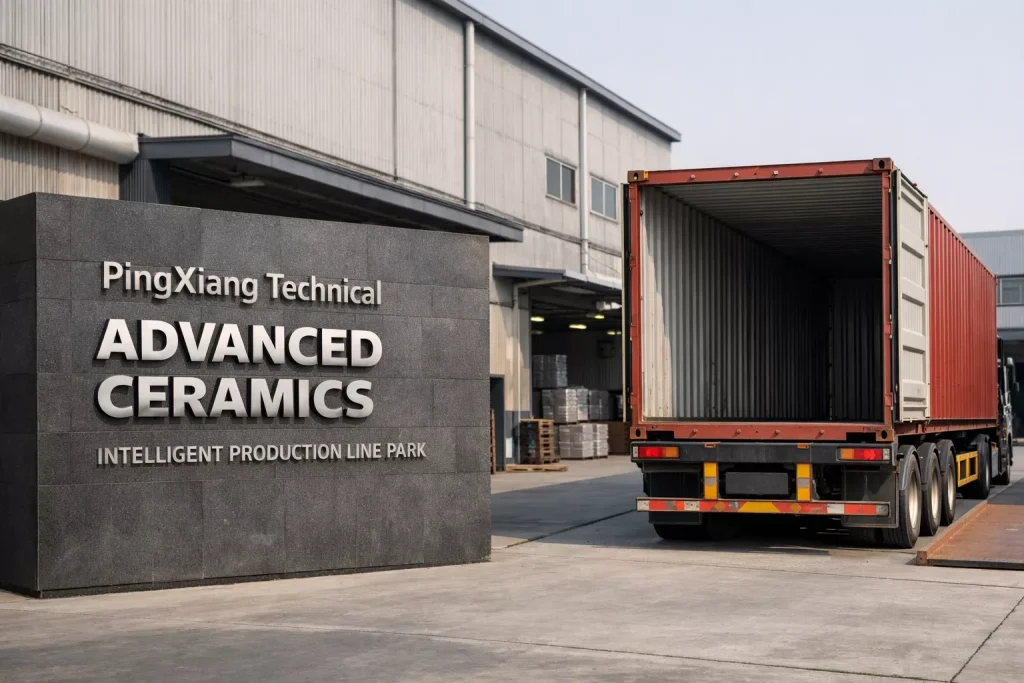
Pingxiang Factory — Silicon carbide, silicon nitride, high-temperature ceramics

Quick Quotation

*Our team will answer your inquiries within 24 hours.

*Your information will be kept strictly confidential.

Ready to Solve Your Engineering Challenge?

Partner with ADCERAX for reliable, high-performance advanced ceramic solutions. Our engineers are ready to discuss your project.

E-mail

info@adcerax.com

Phone

+(86) 0731-74427743 | WhatsApp: +(86) 19311583352

Response Time

Within 24 hours

Quick Quote

The more details you provide, the faster we can quote.

*We respond within 24 hours. All inquiries are confidential.

Get Your Custom Solution

The more details you provide, the faster we can respond.

customize size

*We respond within 24 hours. All inquiries are confidential.

Download Catalog