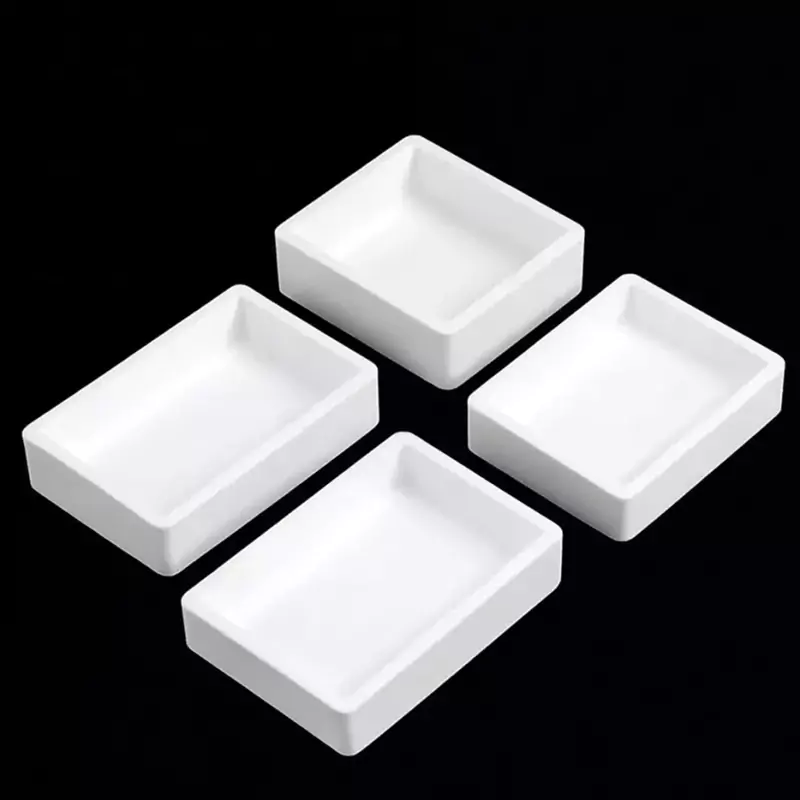
What Is a Rectangular Zirconia Crucible?
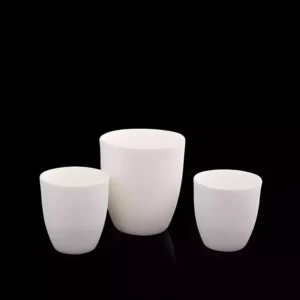
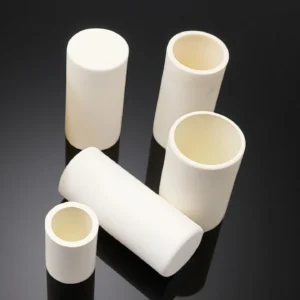
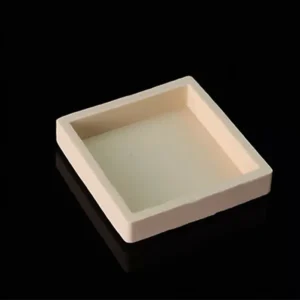
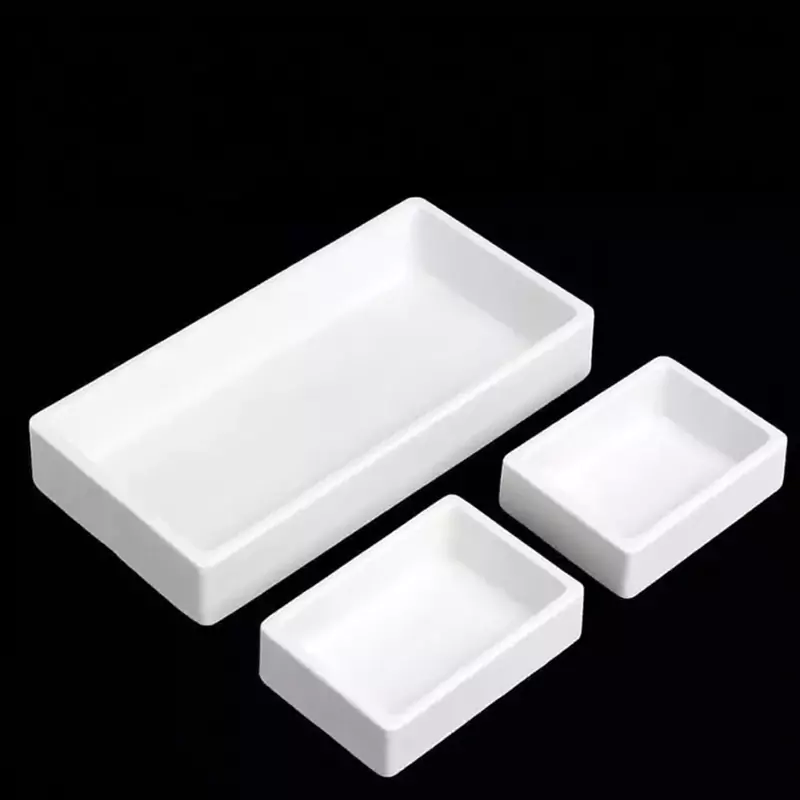
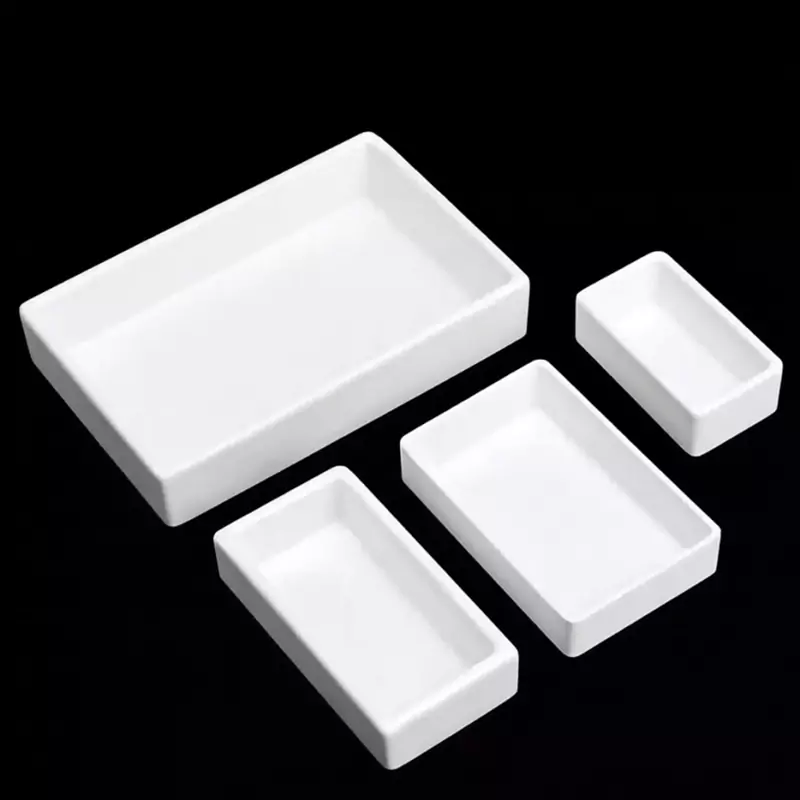
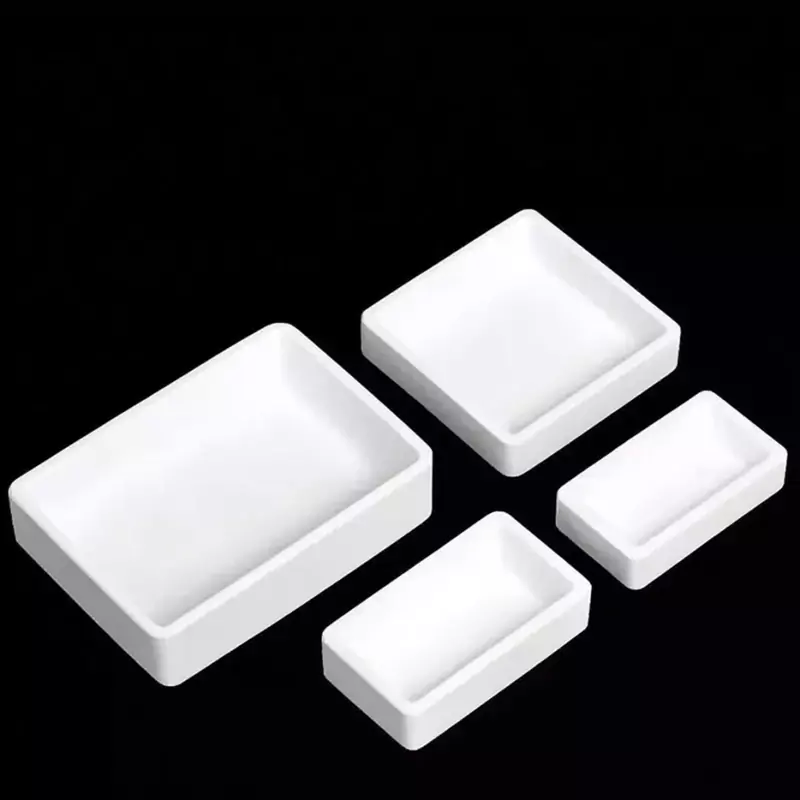
A rectangular zirconia crucible is a high-temperature ceramic container made from stabilized zirconium oxide for holding powders, pellets, glaze samples, catalyst materials and ceramic test pieces during calcination, sintering or material analysis. Compared with many standard ceramic containers, zirconia offers higher thermal capability, strong chemical resistance and better contamination control in demanding laboratory and pilot-scale furnace processes.
The rectangular shape provides a flat contact area for samples and furnace trays, making it suitable for shallow powder beds, small batch trials and tests that require stable sample distribution.
Key Features of Rectangular Zirconia Crucibles
- High-temperature stability: Suitable for furnace applications up to 2200 °C, depending on grade, size and heating profile. The crucible helps maintain structural integrity during high-temperature calcination, sintering and material testing.
- Dense zirconia ceramic body: Made from zirconia ceramic with ZrO₂ content of 92% or above, the crucible provides good chemical stability and helps reduce container-related contamination in sensitive laboratory processes.
- Low impurity level: Controlled Fe₂O₃ and SiO₂ content helps reduce unwanted sample interaction, making the crucible suitable for material research, ceramic powder testing, glaze trials and high-purity experimental work.
- High hardness and wear resistance: With density above 4.5 g/cm³ and strong ceramic hardness, the crucible resists surface wear, residue damage and repeated handling in laboratory and pilot-scale furnace use.
- Low porosity for cleaner testing: Apparent porosity of 0.5% or lower helps reduce liquid absorption, vapor penetration and residue retention, supporting more consistent test results and easier post-firing inspection.
Technical Data for Rectangular Zirconia Crucibles
Rectangular zirconia crucibles are selected when the process requires a combination of high-temperature stability, chemical resistance and low sample contamination. The dense ZrO₂ ceramic body helps reduce liquid or vapor absorption, while the flat geometry supports more consistent sample placement during furnace heating.
| Property | Specification | Engineering Significance |
|---|---|---|
| ZrO2 Purity | ≥ 92% stabilized zirconia | Higher zirconia content helps improve chemical stability and reduces the risk of container-related contamination during material testing and high-temperature sample preparation. |
| Bulk Density | ≥ 4.50 g/cm³ | High density indicates a compact ceramic body, which supports better mechanical strength, lower absorption and more stable performance during repeated furnace handling. |
| Apparent Porosity | ≤ 0.50% | Low porosity helps reduce liquid absorption, vapor penetration and residue retention, which is important for cleaner testing and easier post-firing inspection. |
| Maximum Service Temperature | 2200 °C | The crucible can support demanding high-temperature processes such as calcination, sintering and thermal material research when used with proper heating and cooling control. |
| Flexural Strength | ≥ 350 MPa | Good flexural strength helps the crucible resist bending stress, edge damage and handling loads during laboratory and pilot-scale furnace use. |
| Compressive Strength | ≥ 2000 MPa | High compressive strength helps the crucible maintain shape under sample weight, stacking pressure or fixture contact in high-temperature test environments. |
| Thermal Conductivity | 2.2–2.5 W/m·K at 1000 °C | Moderate thermal conductivity supports controlled heat transfer through the crucible body, which helps reduce sudden thermal gradients during furnace operation. |
| Thermal Expansion Coefficient | 10.5 × 10⁻⁶ /K, RT–1000 °C | The expansion behavior helps engineers evaluate dimensional change during heating and cooling, especially when the crucible is used with trays, supports or close furnace clearances. |
| Acid and Alkali Resistance | Stable in HCl, H2SO4 and NaOH | Chemical resistance helps reduce reaction between the crucible and many acidic or alkaline samples, but actual compatibility should still be checked by concentration, temperature and exposure time. |
| Electrical Resistivity | > 1012 Ω·cm at 25 °C | High electrical resistivity makes zirconia suitable for applications where electrical insulation and stable ceramic behavior are required during material testing or furnace processing. |
The values below are typical reference data for rectangular zirconia crucibles. Final material grade, purity, size tolerance and surface finish should be confirmed according to the sample chemistry, working temperature, furnace atmosphere and drawing requirements.
Dimensions of Rectangular Zirconia Crucible
ADCERAX offers standard rectangular zirconia crucibles in multiple volumes, lengths, widths, heights and wall thicknesses. These sizes are suitable for laboratory testing, small-batch sintering, powder calcination and material research.
If the standard list does not match your furnace chamber, sample volume or fixture layout, custom rectangular ZrO₂ crucibles can be produced according to drawings or sample requirements.
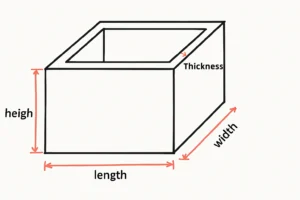
| Rectangular Zirconia Crucible | ||||||
| Item No. | Volume(ml) | Length(mm) | Width(mm) | Height(mm) | Wall Thickness(mm) | Purity(%) |
| AT-YHG-F001 | 19 | 50 | 50 | 15 | 3 | 95 |
| AT-YHG-F002 | 25 | 60 | 30 | 20 | 3 | 95 |
| AT-YHG-F003 | 34 | 64 | 53 | 17 | 3 | 92 |
| AT-YHG-F004 | 36 | 66 | 55 | 16.8 | 3 | 92 |
| AT-YHG-F005 | 39 | 70 | 45 | 20 | 3 | 95 |
| AT-YHG-F006 | 62 | 70 | 70 | 20 | 3.5 | 95 |
| AT-YHG-F007 | 48 | 75 | 50 | 20 | 3 | 95 |
| AT-YHG-F008 | 72 | 98 | 39 | 29 | 3.5 | 92 |
| AT-YHG-F009 | 43 | 100 | 49 | 16 | 4 | 92 |
| AT-YHG-F010 | 55 | 100 | 40 | 20 | 3 | 95 |
| AT-YHG-F011 | 20 | 100 | 35 | 10 | 3.5 | 95 |
| AT-YHG-F012 | 138 | 110 | 110 | 18 | 4 | 95 |
| AT-YHG-F013 | 19 | 120 | 22 | 16 | 4 | 92 |
| AT-YHG-F014 | 236 | 135 | 135 | 20 | 5 | 95 |
| AT-YHG-F015 | 96 | 160 | 80 | 14 | 5 | 92 |
| AT-YHG-F016 | 475 | 164 | 164 | 25 | 5 | 95 |
| AT-YHG-F017 | 105 | 84 | 84 | 23 | 4 | 95 |
| AT-YHG-F018 | 152 | 67 | 67 | 48 | 4 | 95 |
| AT-YHG-F019 | 98 | 88 | 62 | 27 | 4 | 95 |
| AT-YHG-F020 | 35 | 64 | 53 | 17 | 3 | 92 |
| AT-YHG-F021 | 37 | 66 | 55 | 16.8 | 3 | 92 |
| AT-YHG-F022 | 72 | 98 | 39 | 29 | 3.5 | 92 |
| AT-YHG-F023 | 43 | 100 | 49 | 16 | 4 | 92 |
| AT-YHG-F024 | 19 | 120 | 22 | 16 | 4 | 92 |
Packaging for Rectangular Zirconia Crucibles
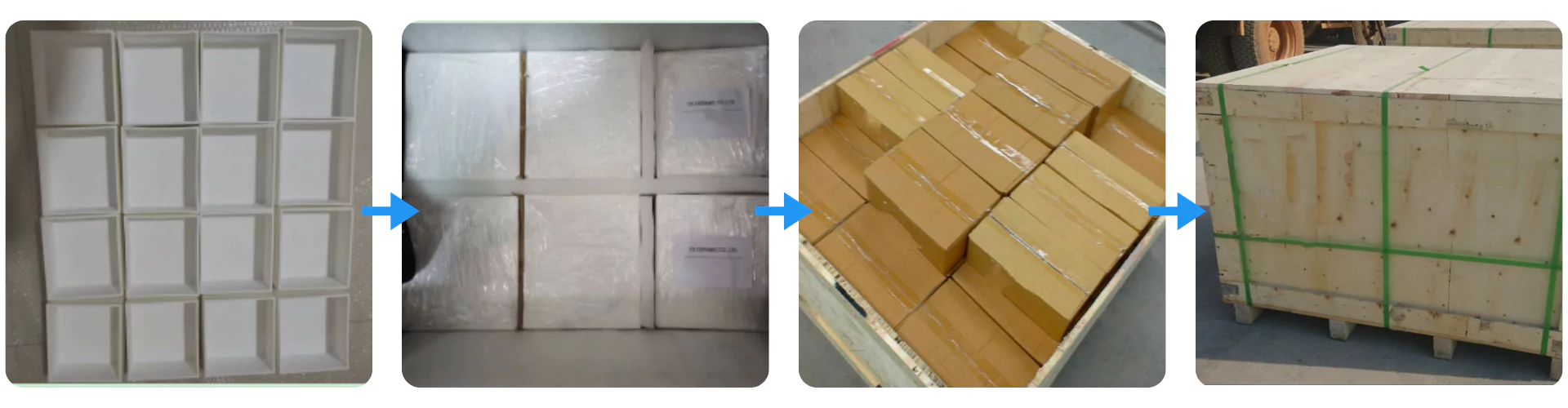
Each rectangular zirconia crucible is protected with individual wrapping to reduce surface damage during transport. Standard export cartons and reinforced wooden cases are used according to order quantity, crucible size and shipping method.
For fragile or high-value custom crucibles, ADCERAX can review additional separation, cushioning and labeling requirements before shipment.