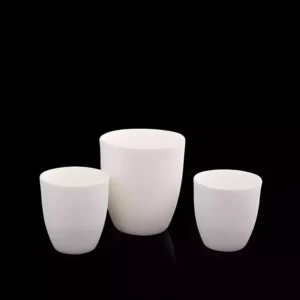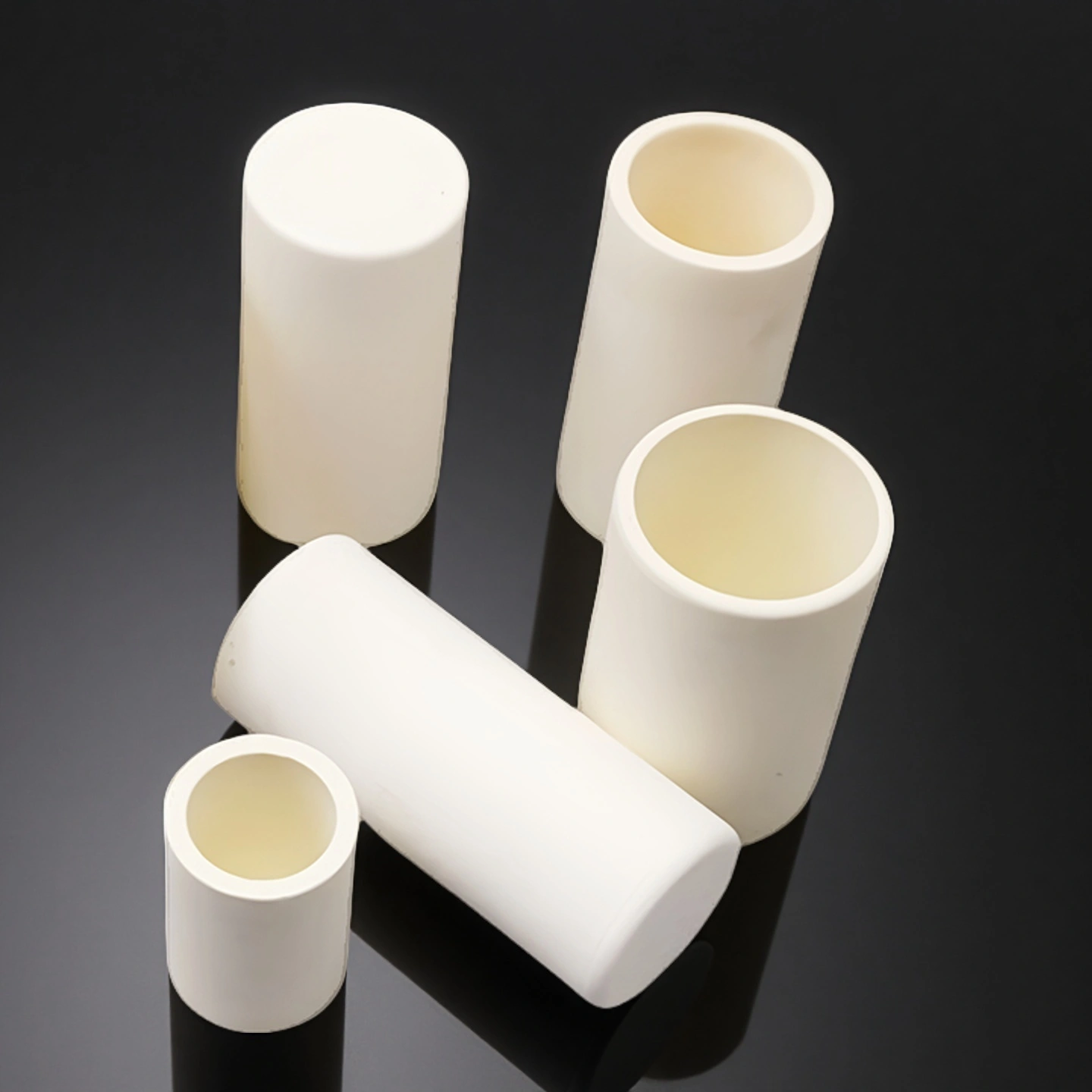
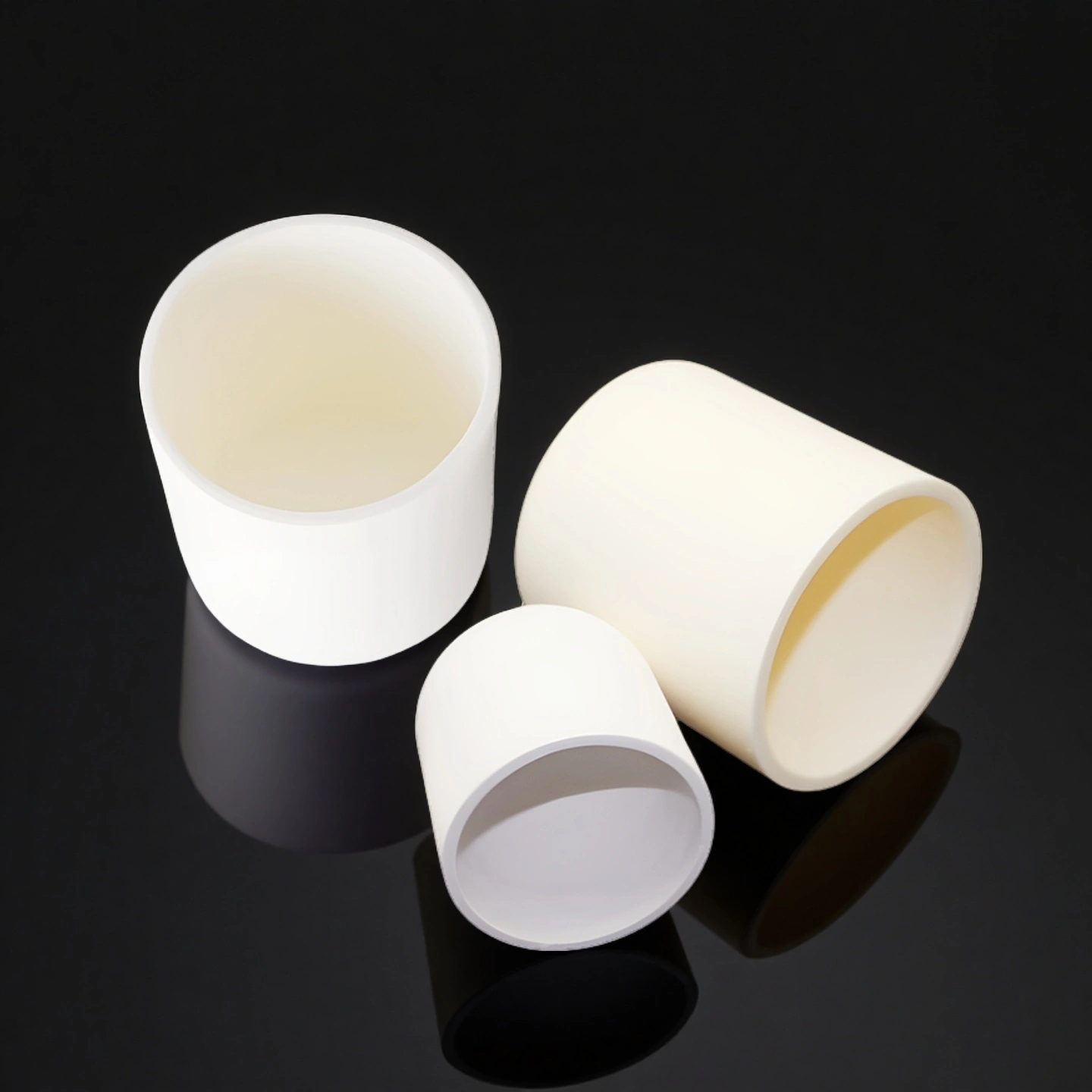
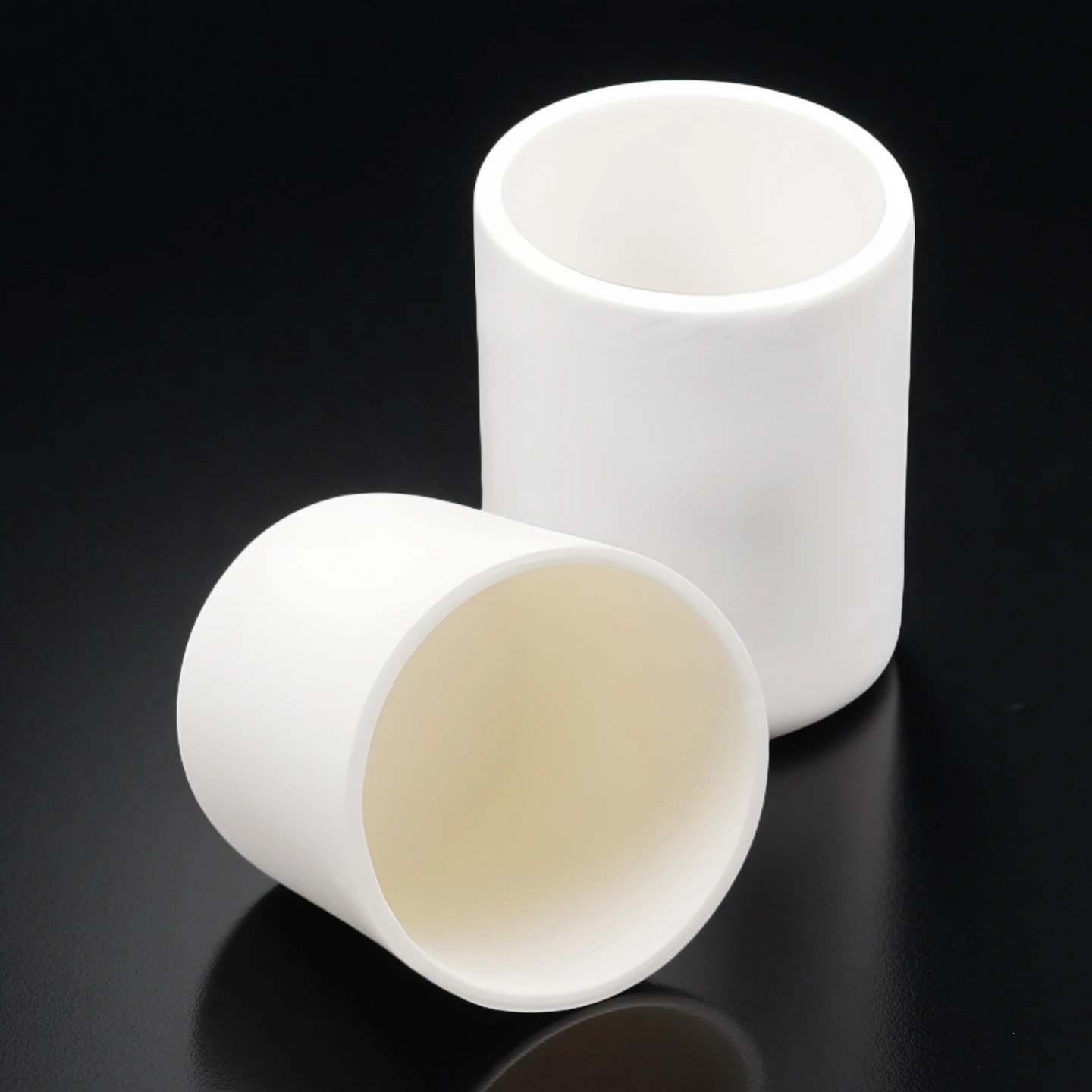
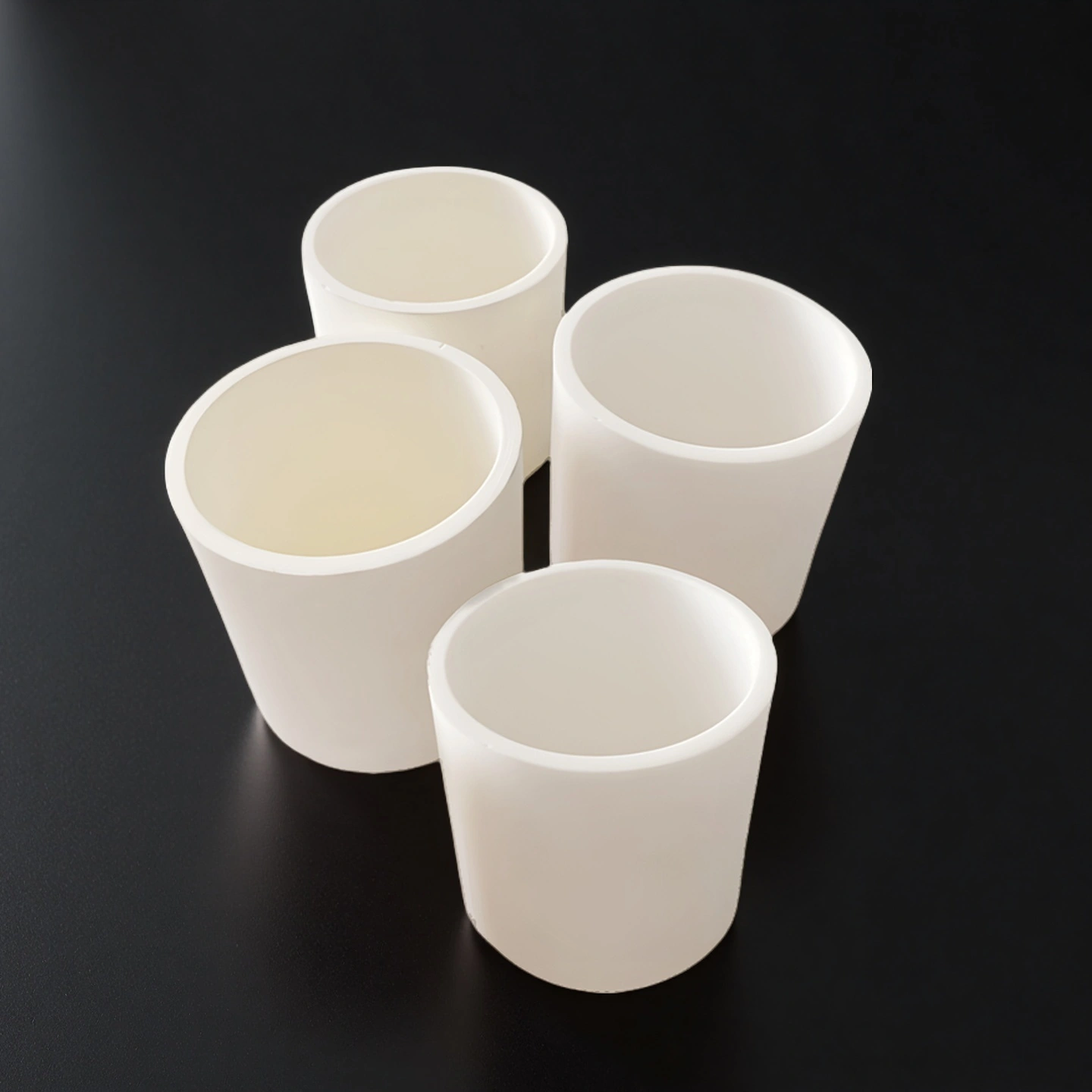
Cylindrical Zirconia Crucible for High-Temperature Melting & Sintering

The Cylindrical Zirconia Crucible offers high-temperature stability, low contamination potential, and a straight-wall, flat-bottom design for melting and laboratory use. ADCERAX customizes each crucible from your drawing or old part and reviews its size, YSZ or Mg-PSZ/MSZ grade, and melt compatibility before quotation.

Catalogue No. AT-YHG-Y001
Material Zirconia (≥92% ZrO₂)
Max Working Temperature Up to 2200 °C
Bulk Density ≥5.5 g/cm³
Apparent Porosity ≤0.5%


Engineering RFQ Review
Small-Batch Custom Support
Factory-Direct Manufacturing
Drawing & Process Review

What it is: a cylindrical (straight-walled, flat-bottomed) crucible made from stabilized zirconia (ZrO₂). It is the high-capacity, most general crucible form and the easiest to build to a custom drawing.
What it’s for: holding charges at high temperature for melting, sintering, calcining, ashing, and thermal-analysis or materials-research sample work — typically where the process runs above the safe range of quartz, or where alumina, graphite or metal crucibles react with the melt or contaminate the sample.

Key Features of Cylindrical Zirconia Crucibles

  • Straight-wall cylindrical geometry provides a defined working volume and straightforward dimensional matching with furnace and laboratory setups.
  • Flat-bottom construction supports stable positioning when the crucible is used with an appropriate, level support surface.
  • Stabilized zirconia construction supports high-temperature containment, subject to the selected grade, atmosphere, load, holding time, and thermal cycle.
  • YSZ and Mg-PSZ/MSZ options allow the material grade to be reviewed according to phase stability, melt cleanliness, toughness, and repeated heating requirements.
  • Drawing-based dimensions can be reviewed for OD, ID, height, wall thickness, base thickness, capacity, lid, spout, and replacement geometry.

Choose the Right Zirconia Grade for Your Crucible

YSZ and Mg-PSZ/MSZ serve different operating priorities. ADCERAX selects the appropriate grade according to the melt or sample, atmosphere, peak temperature, holding time, crucible dimensions, and heating cycle.

YSZ vs. Mg-PSZ/MSZ Grade Selection

Zirconia Grade Typical Selection Direction Key Review Factors
YSZ — yttria-stabilized zirconia Commonly evaluated when phase stability and clean high-temperature containment are priorities. Melt composition, contamination limits, atmosphere, temperature profile, and required documentation.
Mg-PSZ/MSZ — magnesia-stabilized zirconia May be evaluated when toughness and repeated heating and cooling are important considerations. Thermal cycle, crucible geometry, wall thickness, support method, atmosphere, and previous failure mode.

The final grade is confirmed through engineering review before quotation. ADCERAX does not apply one zirconia grade to every operating condition.

Typical Zirconia Material Properties

The following values are typical references for preliminary material selection. Final specifications depend on the selected zirconia grade, product geometry, test method, and operating conditions.

Property Typical Reference Value Selection Note
Material Stabilized zirconia—YSZ or Mg-PSZ/MSZ Grade confirmed for the application
ZrO₂ content Approximately 92–99% Depends on the stabilizer system and selected grade
Density YSZ: approximately 5.8–6.05 g/cm³; Mg-PSZ/MSZ: approximately 5.5–5.8 g/cm³ Confirm the required value in the quotation or COA
Reference high-temperature range Approximately 2000–2200°C Actual suitability depends on atmosphere, load, geometry, hold time, and thermal cycle
Coefficient of thermal expansion Approximately 9–11 × 10⁻⁶/K Consider furnace fit and surrounding materials
Thermal conductivity Approximately 2–3 W/m·K Heating strategy should account for temperature gradients

*These values are typical material-selection references, not guaranteed ADCERAX batch specifications. 

Dimensions of Cylindrical Zirconia Crucible
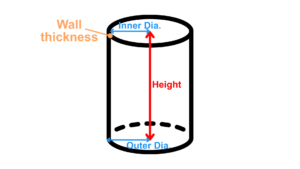
Dimensions of Cylindrical Zirconia Crucible
Cylindrical ZrO2 Crucible
Item No. Outer Diamete(mm) Inner Diameter(mm) Height(mm) Wall Thickness(mm) Volume(ml) Purity(%)
AT-YHG-Y001 20.0  16.0  19.0  2.0  95
AT-YHG-Y002 24.0  20.0  50.0  2.0  15  95
AT-YHG-Y003 29.5  22.7  29.6  3.4  11  95
AT-YHG-Y004 32.0  24.0  26.0  4.0  11  95
AT-YHG-Y005 32.0  23.0  30.0  4.5  12  95
AT-YHG-Y006 33.5  27.0  59.0  3.3  33  95
AT-YHG-Y007 33.5  27.5  69.5  3.0  40  95
AT-YHG-Y008 35.0  28.0  31.0  3.5  18  95
AT-YHG-Y009 39.0  34.0  62.0  2.5  55  95
AT-YHG-Y010 40.0  31.0  55.0  4.5  40  95 
AT-YHG-Y011 42.5  34.0  59.0  4.3  52  95
AT-YHG-Y012 29.5  23.0  100.0  3.3  41  95 
AT-YHG-Y013 44.8  36.0  30.0  4.4  28  95
AT-YHG-Y014 45.0  37.0  103.0  4.0  109  95
AT-YHG-Y015 50.0  40.0  106.0  5.0  130  95
AT-YHG-Y016 50.5  42.0  71.0  4.3  95  95 
AT-YHG-Y017 51.0  42.0  84.3  4.5  114  95
AT-YHG-Y018 51.0  42.0  84.0  4.5  113  95 
AT-YHG-Y019 51.0  44.0  102.0  3.5  152  95 
AT-YHG-Y020 59.0  51.0  91.0  4.0  182  95 
AT-YHG-Y021 62.0  55.0  97.0  3.5  226  95
AT-YHG-Y022 69.0  50.0  118.0  9.5  222  95
AT-YHG-Y023 70.0  50.0  200.0  10.0  383  95 
AT-YHG-Y024 70.0  60.0  12.0  5.0  27  95
AT-YHG-Y025 72.5  50.0  135.0  11.3  254  95 
AT-YHG-Y026 77.0  69.0  85.0  4.0  310  95
AT-YHG-Y027 78.0  57.0  89.0  10.5  214  95 
AT-YHG-Y028 80.0  59.0  143.0  10.5  377  95
AT-YHG-Y029 85.0  75.0  109.0  5.0  471  95 
AT-YHG-Y030 86.0  69.0  160.0  8.5  582  95 
AT-YHG-Y031 87.0  69.0  165.0  9.0  600  95 
AT-YHG-Y032 107.0  82.0  128.0  12.5  643  95 
AT-YHG-Y033 118.0  83.0  133.0  17.5  672  95
AT-YHG-Y034 59.0  51.0  92.0  4.0  184  95 
AT-YHG-Y035 23.0  18.0  94.0  2.5  24  95 
AT-YHG-Y036 11.5  8.8  55.6  1.4  95
AT-YHG-Y037 11.5  8.8  45.8  1.4  95
AT-YHG-Y038 16.8  9.2  9.2  3.8  95
AT-YHG-Y039 15.0  12.0  13.0  1.5  95 
AT-YHG-Y040 51.0  43.0  85.0  4.0  121  95 
AT-YHG-Y041 40.0  35.0  32.0  2.5  30  95 
AT-YHG-Y042 43.0  34.0  102.0  4.5  91  95 
AT-YHG-Y043 29.0  25.0  30.0  2.0  14  95
AT-YHG-Y044 42.0  35.0  102.0  3.5  96  95 
AT-YHG-Y045 50.0  40.0  118.0  5.0  145  95 
AT-YHG-Y046 26.0  21.0  85.0  2.5  29  95 
AT-YHG-Y047 41.0  35.0  58.0  3.0  54  95
AT-YHG-Y048 29.0  25.0  42.0  2.0  20  95 
AT-YHG-Y049 31.0  26.0  76.0  2.5  40  95
AT-YHG-Y050 32.0  23.0  30.0  4.5  12  95
AT-YHG-Y051 37.0  28.0  33.0  4.5  19  95
AT-YHG-Y052 62.0  55.0  97.0  3.5  226  95
AT-YHG-Y053 85.0  76.0  110.0  4.5  489  95
AT-YHG-Y054 10.5  7.7  25.0  1.4  95
AT-YHG-Y055 13.0  10.2  25.0  1.4  95
AT-YHG-Y056 18.0  16.0  26.0  1.0  95
AT-YHG-Y057 22.0  18.8  33.0  1.6  95
AT-YHG-Y058 15.0  11.0  100.0  2.0  95
AT-YHG-Y059 50.0  44.0  80.0  3.0  120  95
AT-YHG-Y060 30.0  26.0  60.0  2.0  35  95
AT-YHG-Y061 42.0  38.0  53.0  2.0  37  95
AT-YHG-Y062 57.0  53.0  65.0  2.0  100  95
AT-YHG-Y063 48.0  44.0  52.0  2.0  50  95
AT-YHG-Y064 38.0  34.0  45.0  2.0  30  95
AT-YHG-Y065 9.0  6 15.0  1.5 2 95
AT-YHG-Y066 16.0  11.0  12.0  2.5  95
AT-YHG-Y067 16.0  11.0  95.0  2.5  10  95 
AT-YHG-Y068 32.0  26.0  80.0  3.0  40  95 
AT-YHG-Y069 34.0  28.0  80.0  3.0  50  95
AT-YHG-Y070 36.0  30.0  80.0  3.0  60  95
AT-YHG-Y071 40.0  34.2  50.0  2.9  50  95
AT-YHG-Y072 40.0  34.2  80.0  2.9  70  95
AT-YHG-Y073 45.0  39.2  50.0  2.9  50  95
AT-YHG-Y074 50.0  42.0  80.0  4.0  100  95 
AT-YHG-Y075 57.0  49.0  75.0  4.0  120  95
AT-YHG-Y076 66.0  59.4  66.0  3.3  120  95
AT-YHG-Y077 80.0  73.0  80.0  3.5  300  95

Compare Crucible Shapes and Forms

Crucible geometry affects working volume, loading, pouring, furnace fit, and part handling. Select the form according to the process and equipment rather than appearance alone.

Form Geometry Common Selection Direction
Cylindrical Crucible Straight walls with a flat bottom Suitable when the process requires a defined vertical working volume, stable support, and straightforward dimensional matching.
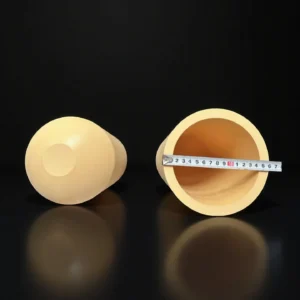
Conical Crucible Tapered walls with a narrower bottom Consider when the setup benefits from easier pouring, smaller sample volumes, or tapered charge geometry.
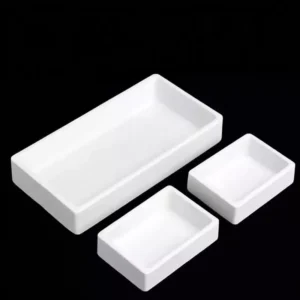
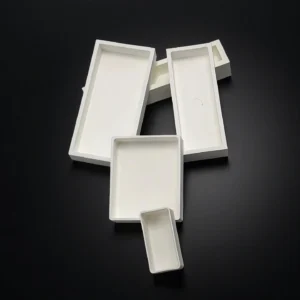
Boat Shallow, elongated, and open at the top Used for shallow loading, powder treatment, calcination, or exposing samples to the furnace atmosphere.
Saggar or Tray Broad, shallow carrier or protective container Used for batch sintering, supporting multiple parts, or separating products from the furnace surface.

Packaging of Cylindrical Zirconia Crucible

Each Cylindrical Zirconia Crucible is carefully wrapped with protective film and cushioned by foam partitions to avoid surface damage during transit. The packed Cylindrical ZrO2 Crucible units are then secured in reinforced wooden cases with clear fragile labels. This packaging method ensures that every Cylindrical Zirconia Ceramic Crucible arrives intact and ready for immediate industrial use.
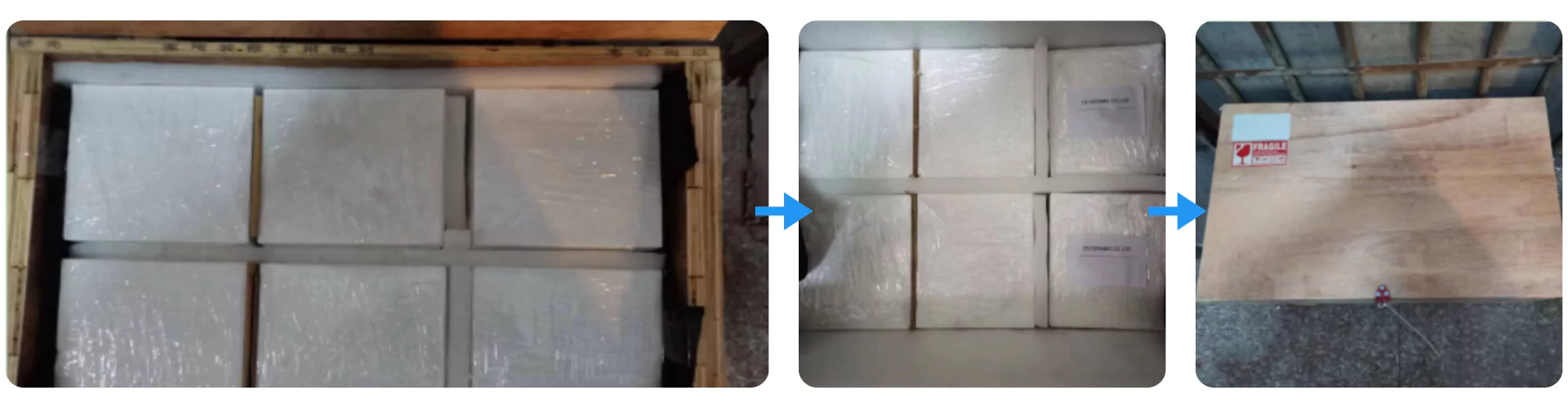

ADCERAX® Packaging Cylindrical Zirconia Crucible

Cylindrical Zirconia Crucibles for High-Value Melting Applications

When melt value, contamination control, and furnace uptime matter, crucible selection cannot rely on temperature alone. ADCERAX reviews the alloy chemistry, atmosphere, thermal cycle, crucible grade, and dimensions before quotation—helping buyers identify a suitable zirconia route before committing to production.

  • Precious-Metal and PGM Melting

    Platinum, palladium, gold, and related precious-metal systems are commonly evaluated for zirconia crucibles when clean high-temperature containment and repeatable geometry are important.

    Why consider this product:

    1. Support melt-quality control — The stabilized zirconia grade is reviewed against the alloy, flux, atmosphere, holding time, and permitted contamination level.
    2. Match existing furnace equipment — OD, ID, height, wall thickness, base thickness, and capacity can be reviewed from a drawing or old part.
    3. Plan for repeated heating — Crucible geometry, support method, loading, and heating cycle are considered together before quotation.

  • Nickel-Based Superalloy Melting and Development

    Nickel-based superalloy projects often require close control of alloy chemistry, inclusions, furnace fit, and thermal cycling. A cylindrical zirconia crucible may be considered for laboratory trials, alloy development, pilot production, and selected industrial melting processes.

    What ADCERAX reviews:

    1. Nickel alloy composition and active alloying elements
    2. Vacuum, inert-gas, reducing, or other operating atmosphere
    3. Slag, flux, coating, and other contacting materials
    4. Peak temperature, superheat, holding time, and heating cycle
    5. Crucible support, loading method, pouring method, and required capacity
    6. Required dimensional, composition, or inspection documentation

  • Cobalt and Specialty Alloy Processing

    Cobalt-based and specialty alloys can expose crucibles to demanding combinations of temperature, slag chemistry, atmosphere, and repeated heating. ADCERAX evaluates these applications individually to determine whether YSZ, Mg-PSZ/MSZ, or another crucible material should be considered.

    Suitable projects for review include:

    1. Alloy development and materials-research melts
    2. Small-batch production and process qualification
    3. Replacement of discontinued or poorly fitting crucibles
    4. Applications experiencing cracking, residue buildup, contamination, erosion, or frequent crucible replacement

User Guide for Cylindrical Zirconia Crucible

Follow these preparation, heating, handling, and storage guidelines to reduce thermal stress, surface damage, contamination, and premature crucible failure.

  • Preparation Before First Use

    1. Drying — Use a project-approved drying or preheating procedure to remove moisture before high-temperature operation.
    2. Inspection — Check the rim, walls, and base for cracks, chips, or surface damage. Do not use a damaged crucible.
    3. Placement — Position the crucible evenly on a clean, stable support. Avoid point loading and direct contact with heating elements.

  • Heating and Cooling Practices

    1. Controlled Heating — Set the heating rate according to crucible size, wall thickness, load, furnace, atmosphere, and thermal cycle. Do not apply a universal heating schedule.
    2. Uniform Heat — Avoid direct flame contact, localized heating, and sudden temperature changes unless the setup has been reviewed.
    3. Gradual Cooling — Allow the crucible to cool naturally in the furnace. Avoid forced-air cooling, quenching, and contact with cold or wet surfaces.

  • Handling During Operations

    1. Safe Loading — Load materials gently, avoid impact, and leave sufficient space for thermal expansion.
    2. Proper Handling — Use pouring, lifting, or clamping tools that match the crucible profile and do not create concentrated pressure points.
    3. Personal Protection — Wear suitable heat-resistant gloves, eye and face protection, and protective clothing according to site safety procedures.

  • Storage and Maintenance

    1. Dry Storage — Store the crucible in a clean, dry, and ventilated location.
    2. Surface Protection — Keep crucibles separated and protect them from impact, scratching, and abrasive tools.
    3. Regular Inspection — Inspect before reuse and stop using crucibles showing cracks, spalling, severe erosion, deformation, or unusual residue buildup.

FAQs about Cylindrical Zirconia Crucible

  1. Q: Why choose a cylindrical zirconia crucible for precious-metal and PGM work?
    A: Zirconia gives cleaner, non-wetting melts and low porosity, which helps keep precious-metal and PGM melts clean. We confirm alloy chemistry, temperature and atmosphere before quoting rather than promise a fixed recovery.
  2. Q: How does it handle thermal shock in repeated cycles?
    A: Thermal-shock margin depends on grade (YSZ vs Mg-PSZ/MSZ), wall thickness and the heat/cool cycle. For repeated cycling we review the schedule and may suggest a magnesia-stabilized grade.
  3. Q: What does it offer for nickel-based superalloy work?
    A: A dense body (typical bulk density ≥ 5.5 g/cm³) and low porosity help reduce inclusions and spalling. We confirm temperature, atmosphere and alloy elements first.
  4. Q: Does it resist slag and molten-salt erosion?
    A: Stabilized zirconia is stable against many slags and oxides at high temperature, which can extend crucible life. Actual behavior depends on the slag/salt system, so we review your case.
  5. Q: Why is purity important?
    A: Typical ZrO₂ content is ≥ 92% with low leachable oxides, which helps limit pickup into the melt. Exact grade and impurity limits are confirmed with the factory per order.
  6. Q: YSZ or Mg-PSZ/MSZ — which grade?
    A: YSZ (3Y-TZP) favors phase stability and cleaner melts; Mg-PSZ/MSZ favors thermal-shock resistance for repeated cycling. We pick the grade from your melt, temperature and cycle.
  7. Q: Can zirconia crucibles be used in induction melting?
    A: Zirconia itself is not electrically conductive; it is used as the container or liner holding the metal that the induction field heats.
  8. Q: Is zirconia better than an alumina crucible?
    A: Zirconia suits higher temperatures, non-wetting and cleaner melts; alumina is often more economical for lower-temperature or budget work. We recommend the material that fits your process.
  9. Q: Which metals should not use a zirconia crucible?
    A: Active metals such as Ti, Zr, Si, Na, K, Be and Li can reduce or attack ZrO₂ and contaminate the melt. Tell us the metal and atmosphere and we'll check compatibility before quoting.
  10. Q: What should I send for a custom crucible?
    A: OD, ID, height, wall thickness and capacity (or a drawing / old-part photo), plus the metal or sample, peak temperature, furnace type, atmosphere and heating cycle. We confirm size, grade and compatibility, then quote.

What to send for a fast quote

For the fastest, most accurate quote, tell us:

  •  OD / ID/height/wall thickness/capacity — or send a drawing or a photo of your old part
  • Metal or sample you melt/heat, and peak temperature
  • Furnace type and atmosphere (air / inert / vacuum)
  • Heating cycle (single hold or repeated heat/cool) and quantity
  • Bottom form and whether you need a lid/spout/lip

The more you share, the faster our engineers can confirm size, grade and compatibility.

customize size

Customization Services for Cylindrical ZrO2 Crucible

ADCERAX provides tailored solutions for the Cylindrical Zirconia Crucible, addressing unique industrial and research requirements. Our customization services ensure precise alignment with client processes, from furnace integration to material-specific applications.

Material Formulations

Select stabilized zirconia types suitable for different alloys and melts.

  • Stabilizer Choice — Options tailored for thermal and chemical resistance.
  • Purity Levels — Material grades aligned with contamination control.
  • Microstructure — Dense body engineered for durability under stress.

Geometry Adjustments

Adapt crucible dimensions to fit specialized furnace systems.

  • Outer Shape — Modified profiles for seamless furnace placement.
  • Wall Design — Balanced thickness to optimize thermal performance.
  • Capacity Options — Flexible volumes to match material batch sizes.

Surface Treatments

Enhance crucible performance with specialized finishing techniques.

  • Polished Walls — Reduced slag adhesion for easier cleaning cycles.
  • Textured Base — Improved stability during repeated heating processes.
  • Protective Layer — Added resistance to corrosive slag interaction.

Related Products

ADCERAX - Your Trusted Advanced Ceramics Manufacturing Partner

Direct factory manufacturing with comprehensive ceramic materials expertise and global supply capabilities

China-Based Manufacturer

ADCERAX supplies ceramic components for overseas OEMs, equipment builders, and labs.

Custom Drawing Support

We review drawings, dimensions, materials, and application conditions before quotation.

Ceramic Process Control

Forming, sintering, machining, grinding, and finishing are arranged by part requirements.

Pre-Shipment Inspection

Dimensional checks, visual inspection, and packaging review help reduce procurement risk.

Get in Touch with Us

Our team will be happy to respond to you in less than 24 hours.

Pingxiang Factory — Silicon carbide, silicon nitride, high-temperature ceramics

Quick Quotation

*Our team will answer your inquiries within 24 hours.

*Your information will be kept strictly confidential.

Ready to Solve Your Engineering Challenge?

Partner with ADCERAX for reliable, high-performance advanced ceramic solutions. Our engineers are ready to discuss your project.

E-mail

info@adcerax.com

Phone

Tel: +86-0731-84428843 WhatsApp: +86 19311583352

Response Time

Within 24 hours

Quick Quote

The more details you provide, the faster we can quote.

*We respond within 24 hours. All inquiries are confidential.

Get Your Custom Solution

The more details you provide, the faster we can respond.

customize size

*We respond within 24 hours. All inquiries are confidential.

Download Catalog