What a SiC Column Membrane Module Contains
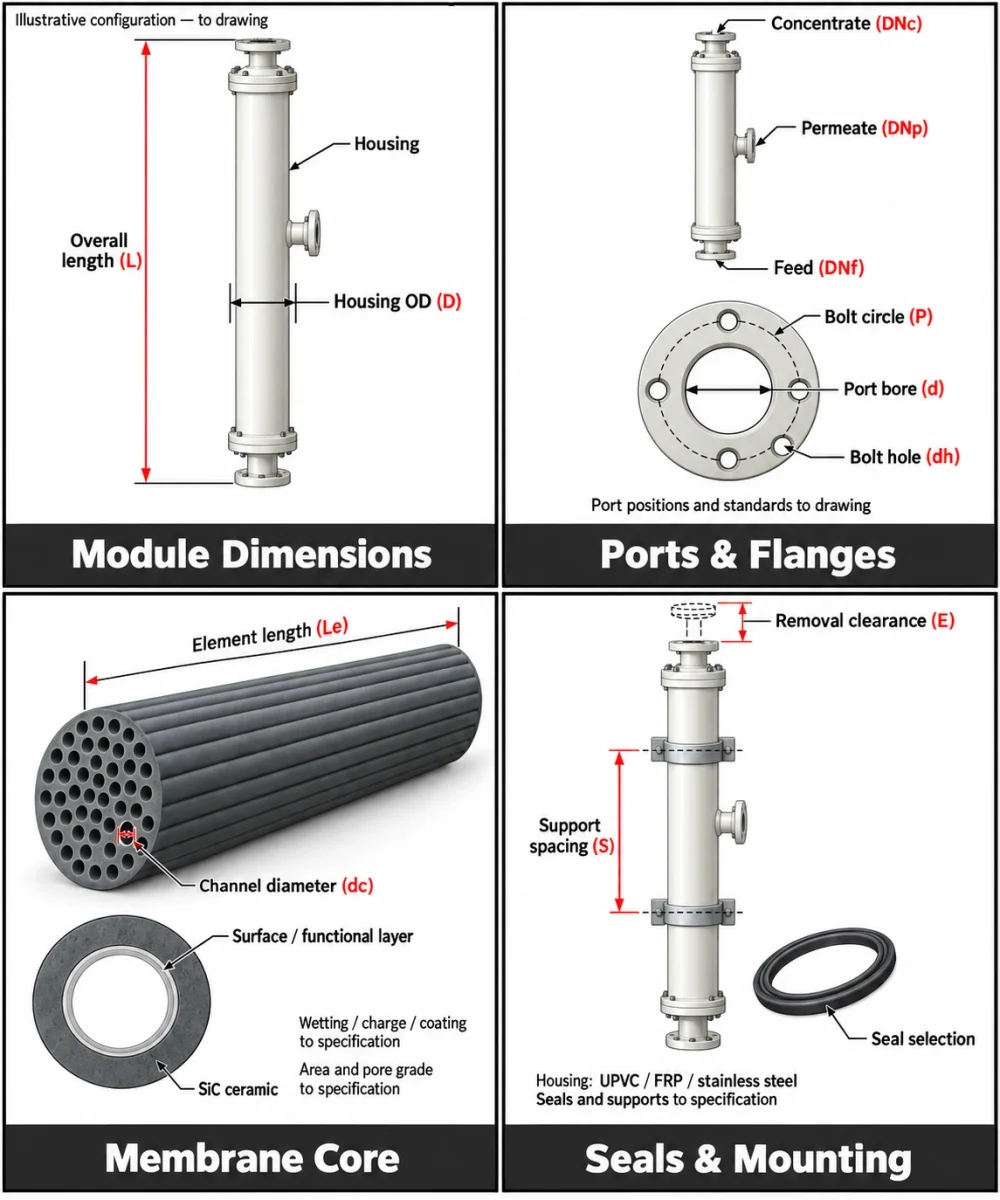
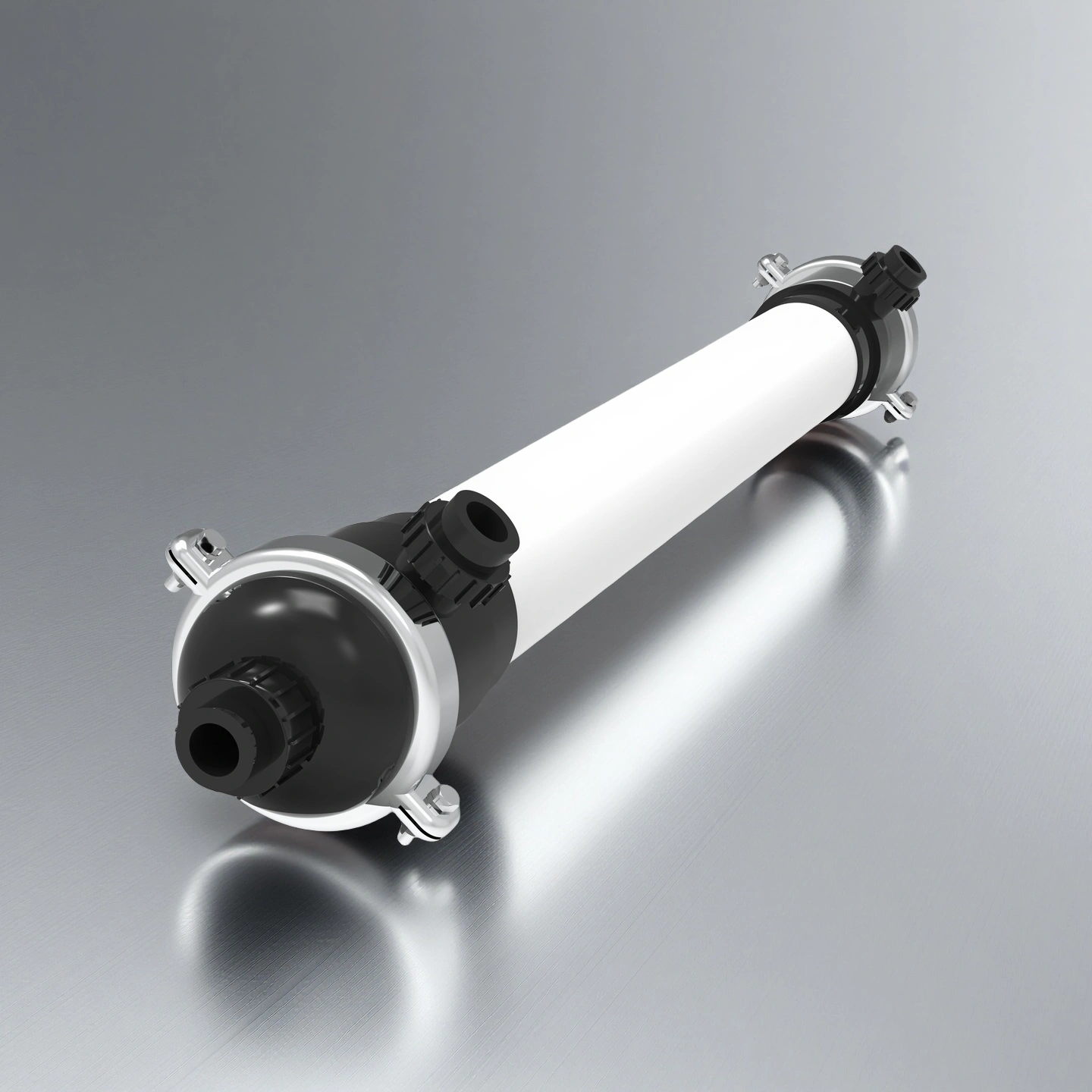
A column membrane module packages four things into one pressure assembly. Each is confirmed separately, and a change to any one of them changes the quotation.
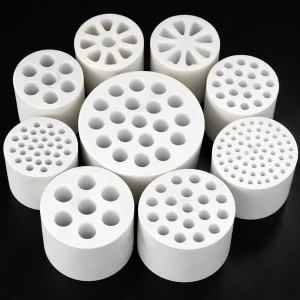
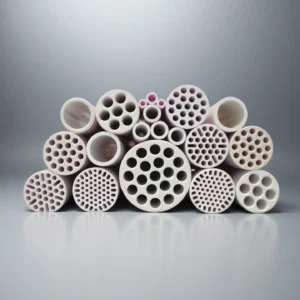
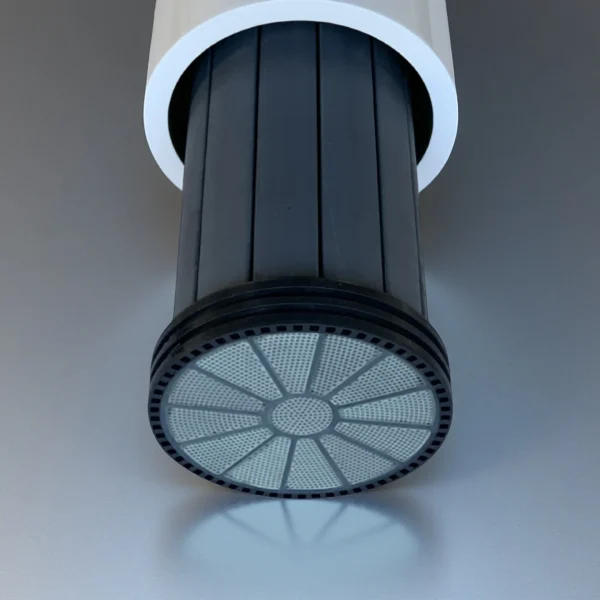
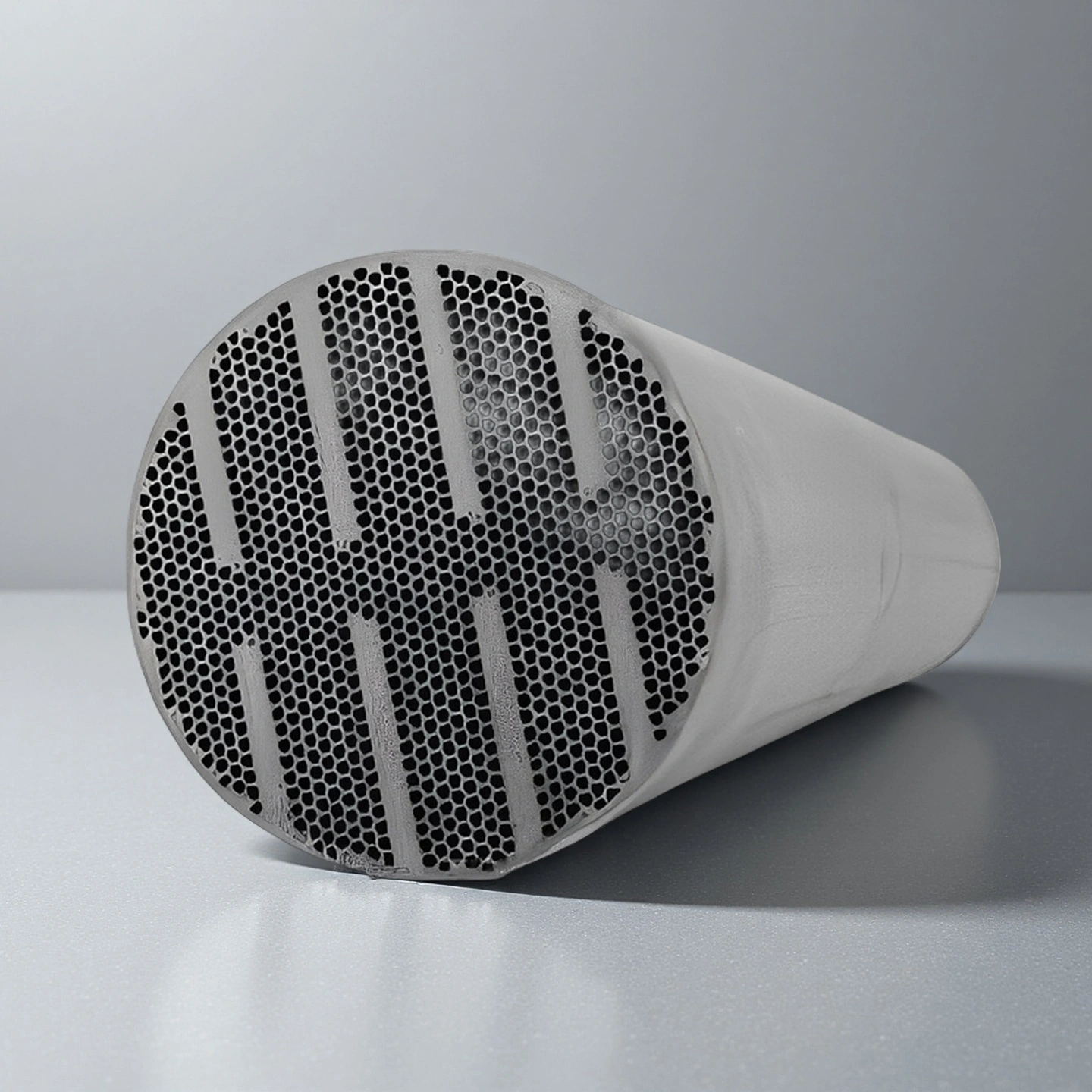
Membrane elements. The SiC ceramic membrane elements carry the separation. Their material grade, pore designation and effective area determine what the module can separate and how much area you are paying for.
Housing. The pressure housing holds the elements and carries the feed and concentrate. Its material and pressure rating must suit the feed, the cleaning chemistry and the installation.
Seals and end connections. O-rings, end plates and couplings keep feed and permeate apart. They are the first parts to suffer from chemical attack, so their material is agreed with the cleaning plan.
Fluid connections. Feed, concentrate and permeate each have a size, a standard and a position. The drawing fixes all three, plus supports and removal clearance.
Available SiC Ceramic Membrane Module Models for Project Review
| Specifications Parameters | |
|---|---|
| Effective Filtration Area | 11m² |
| Total Length | 2195mm |
| Center Distance | 1613mm |
| Diameter | 200mm |
| Flow Channel Diameter | 4.5mm |
| Inlet/Concentrate Port Size | DN150 |
| Permeate Port Size | DN50 |
| Membrane Housing Material | UPVC |
| Ceramic Membrane Core Material | Silicon Carbide |
| Filtration Precision | 0.02/0.04μm |
| Installation Method | Vertical |
| Operating pH Range | 2-12 |
| Chemical Cleaning pH Range | 1-13 |
| Max Operating Pressure | 6bar |
| Max Transmembrane Pressure Difference | 3bar |
| Operating Temperature Range | 1-45℃ |
| Design Flux | 150-400 LMH |
| Filtration Method | Dead-end/Cross-flow, Inside-out Operation |
| Backwash Flux | 200-600 LMH |
| Forward Flush | 1-2 times the permeate capacity |
| Tubular Silicon Carbide Membrane | |||||||
| Model | Effective Filtration Area | Total Length | Membrane Shell Diameter | Membrane Shell Material | Ceramic Membrane Core Material | Filtration Precision | Installation Method |
| AT-SICZ-1 | 11m² | 1702mm | 250mm | UPVC | Silicon Carbide | 0.1/0.04 μm | Vertical |
| AT-SICZ-2 | 13.5m² | 1702mm | 250mm | UPVC | Silicon Carbide | 0.1/0.04 μm | Vertical |
| AT-SICZ-3 | 14.5m² | 2102mm | 250mm | UPVC | Silicon Carbide | 0.1/0.04 μm | Vertical |
| AT-SICZ-4 | 17.5m² | 2102mm | 250mm | UPVC | Silicon Carbide | 0.1/0.04 μm | Vertical |
| AT-SICZ-5 | 21.0m² | 2102mm | 250mm | UPVC/Stainless Steel/Fiberglass | Silicon Carbide | 0.1/0.04 μm | Vertical |
| AT-SICZ-6 | 25m² | 1885mm | 245mm | Fiberglass | Silicon Carbide | 0.1/0.04 μm | Vertical |
| AT-SICZ-7 | 11m² | 2195mm | 250mm | UPVC | Silicon Carbide | 0.02/0.04um | Vertical |
| AT-SICZ-8 | 11.5m² | 1960mm | 250mm | UPVC | Silicon Carbide | 0.02/0.04um | Vertical |
| AT-SICZ-9 | 25.6m² | 1885mm | 245mm | Fiberglass | Silicon Carbide | 0.02/0.04um | Vertical |
| AT-SICZ-10 | 21m² | 1885mm | 245mm | Fiberglass | Silicon Carbide | 0.02/0.04um | Vertical |
How to Choose a SiC Column Membrane Module
1. Check Application Suitability
Consider SiC for abrasive, oily or chemically aggressive feeds, or applications requiring frequent cleaning. For clean, low-fouling water, a polymeric module may be more economical.
2. Define the Feed and Target
Review suspended solids, turbidity, oil, COD, salinity, pH and temperature, including seasonal variations. These conditions and the required permeate quality guide pore selection, flow configuration and cleaning.
3. Determine the Membrane Area
Size the effective area using the target permeate flow and design flux:
Area (m²) = Permeate flow (m³/h) × 1,000 ÷ Design flux [L/(m²·h)]
Account for operating hours, cleaning downtime and standby capacity when selecting the number of modules.
4. Check Housing and Connections
Confirm module length, housing diameter, connection standard, orientation, supports and maintenance clearance. Select the required membrane area first, then check installation fit.
5. Define Acceptance Criteria
Agree on retention performance, baseline flux, integrity testing and cleaning recovery. Specify test conditions and acceptance limits so results can be compared consistently.
SiC Compared with Other Membrane Routes
| Membrane route | Typical applications | Main considerations |
|---|---|---|
| Silicon carbide (SiC) | Abrasive or oily feeds and frequent chemical cleaning | Higher initial cost. Impact and thermal shock can damage the ceramic; seals and housing must suit the process chemistry. |
| Alumina ceramic | Chemical and thermal duties, or projects specifying alumina | Assess abrasion resistance and cleaning compatibility for the actual feed. Requires careful handling and mounting. |
| Polymeric—PVDF, PES, PTFE | Cost-sensitive applications with compatible feed and cleaning conditions | Chemical resistance, temperature tolerance, fouling behaviour and pressure limits vary by polymer and module design. |
| Stainless steel / sintered metal | Applications prioritizing mechanical strength, cleanability or coarse filtration | Confirm the required filtration rating and corrosion resistance. Metal modules are generally heavier. |
Choose based on feed conditions, separation requirements, cleaning methods and total operating cost. Check the compatibility of the complete module, including seals and housing.
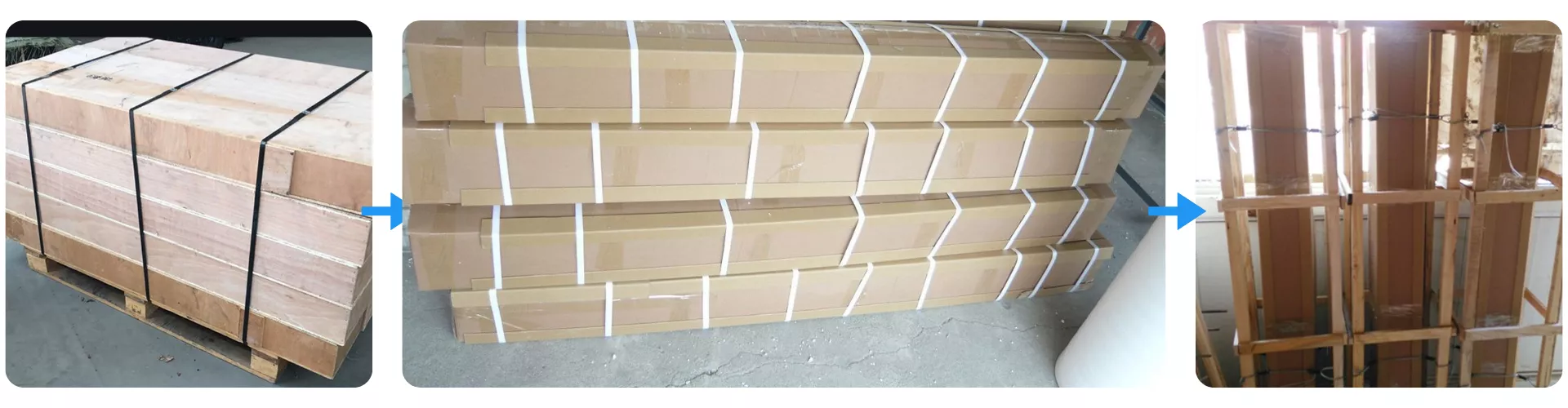
Packaging and Protection for Silicon Carbide Ceramic Column Membrane Module
- Tailored packing: Sized to the module and shipping destination.
- Key protection: Connections, sealing faces, housing and module ends.
- Packing details: Supports, cushioning, moisture protection, labels and any pre-packing inspection.
- Consistent delivery: Packing arrangements are recorded for repeat orders.