
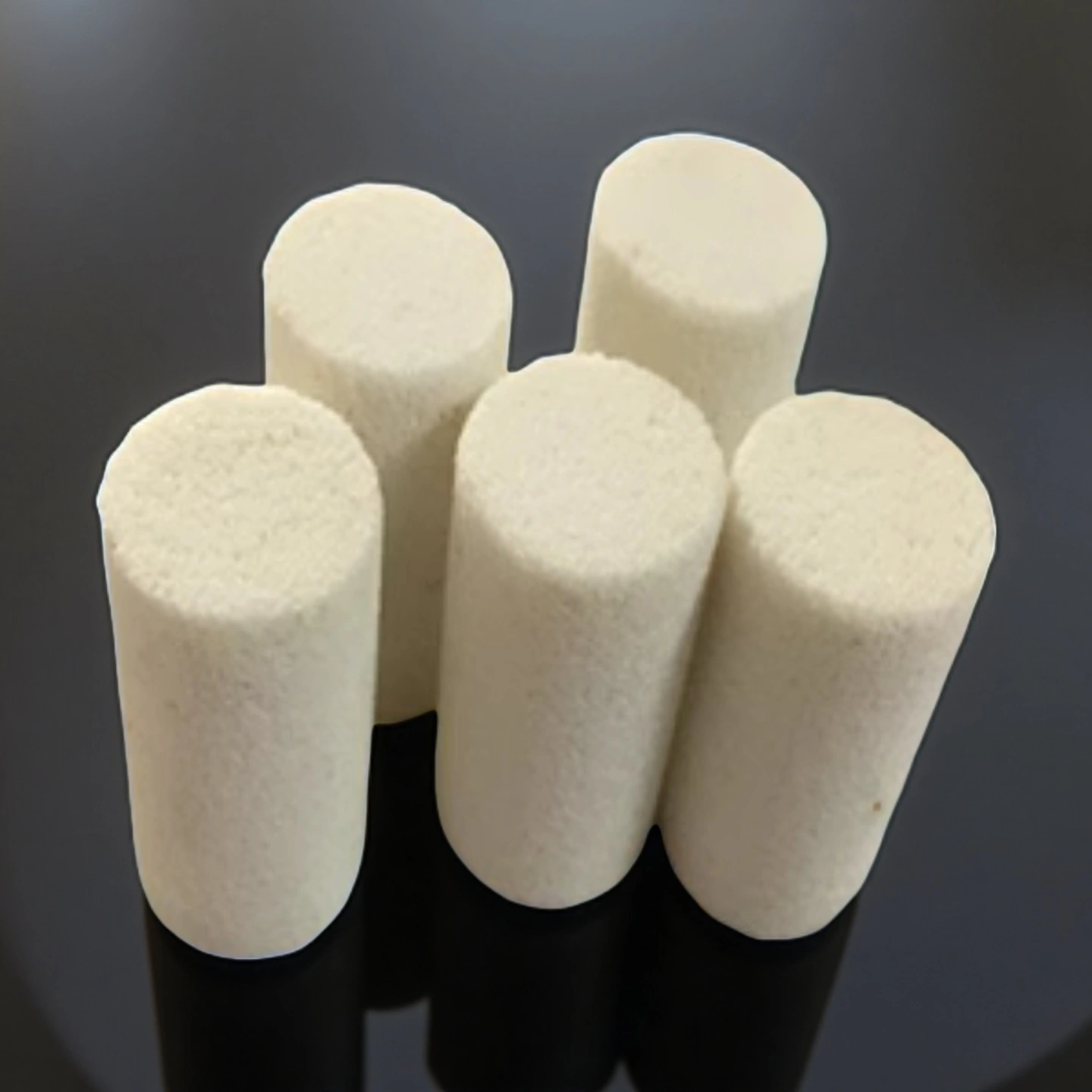
Porous Alumina Rods for Filtration, Diffusion and Wicking

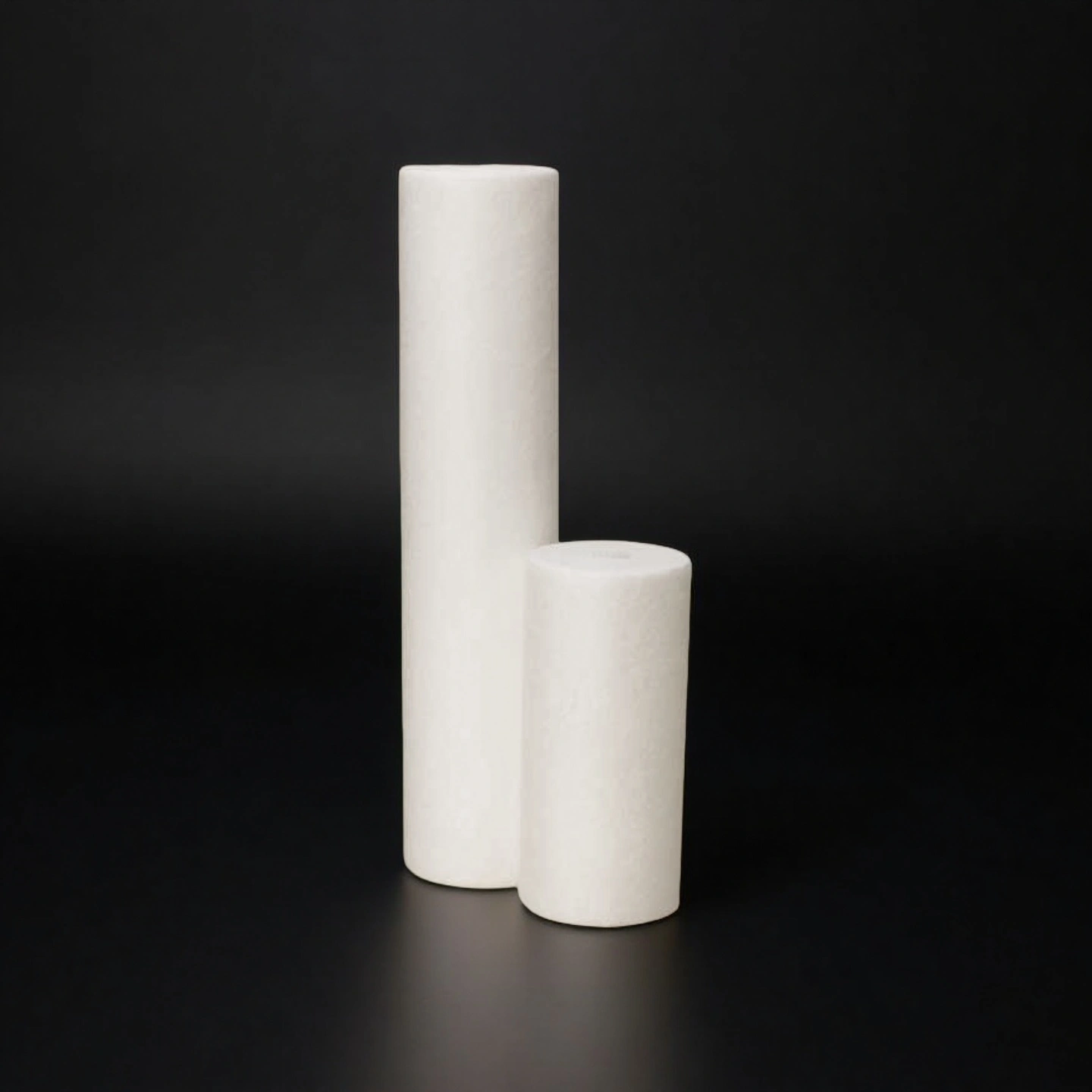
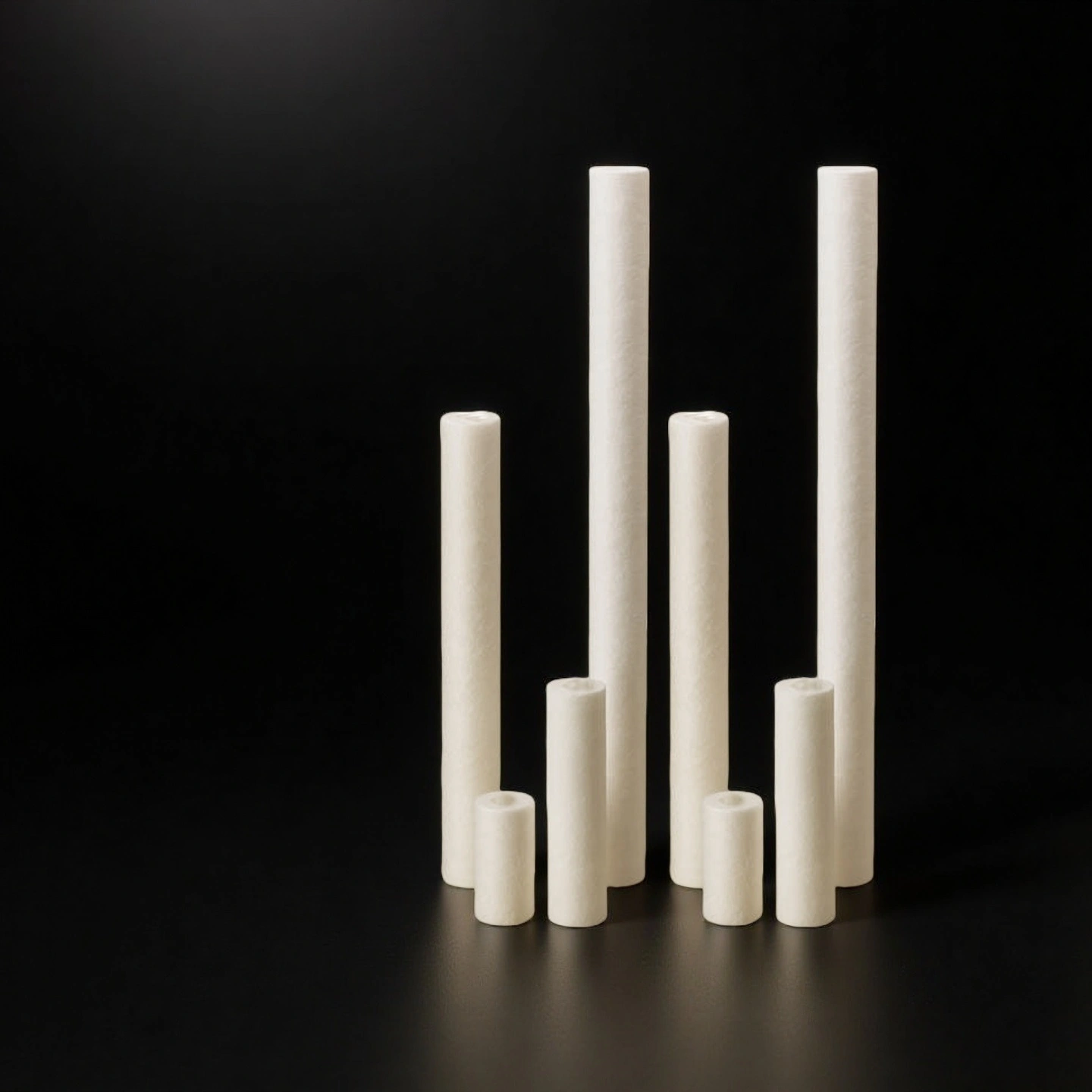
Porous alumina rods are Al₂O₃-based ceramic components with a controlled open-pore structure, supplied for three jobs: filtering a liquid or gas, spreading a gas evenly through a vessel, and moving liquid by capillary action. Each rod is defined by its outside diameter, length, pore structure, end details and working flow path. Standard sizes are listed below; drawing-based and long-form geometries are quoted separately.

Catalogue No. AT-FT-7001
Material Al₂O₃
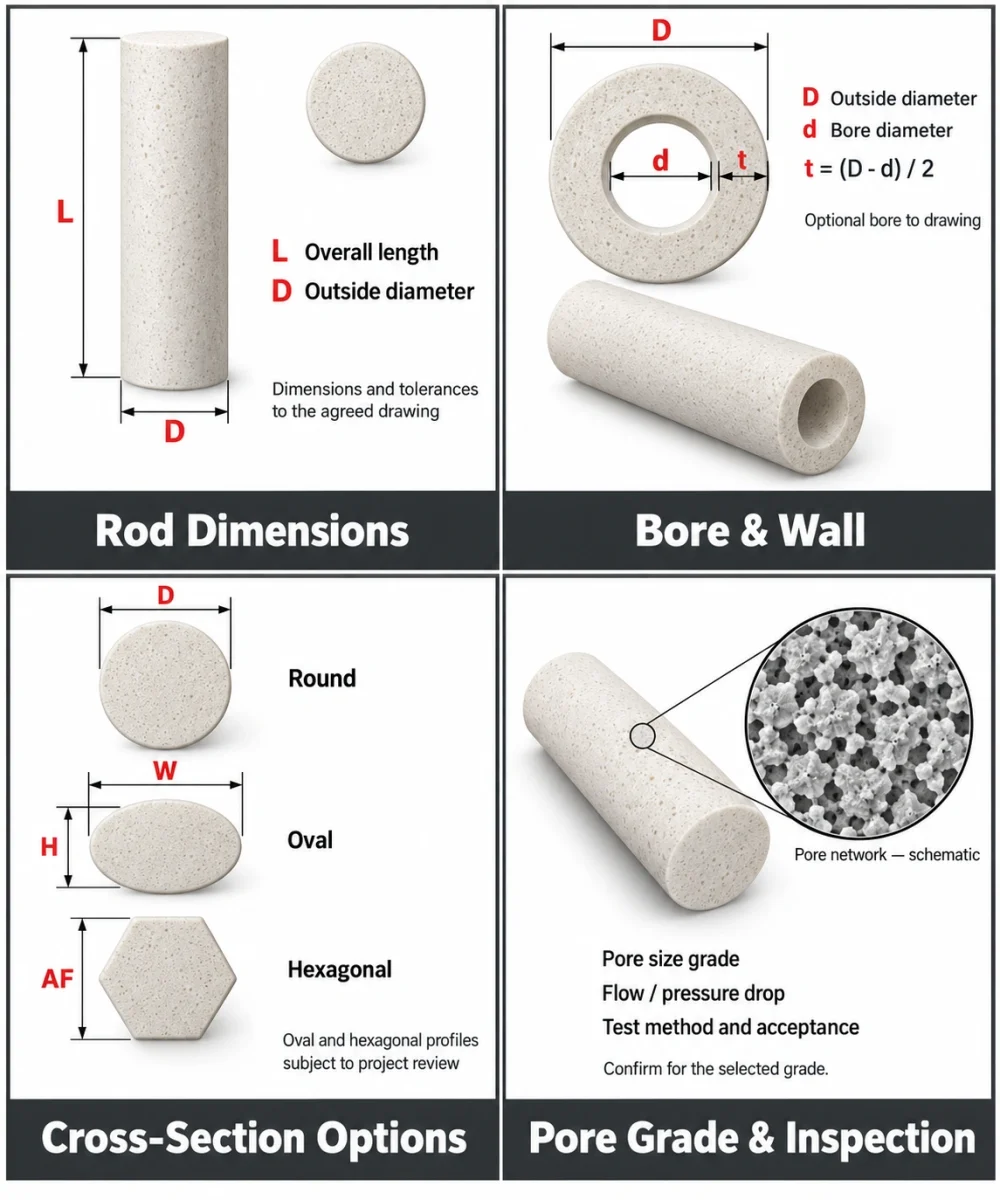
Drawing-based options Lengths up to 1,000 mm · OD/ID 3–80 mm · round, oval or hexagonal sections
Functional selection Filtration · gas diffusion · wicking — evaluate against your working medium
Dimensions/Sizes Download Porous Alumina Rod PDF
Engineering RFQ Review
Small-Batch Custom Support
Drawing-Based Production
Drawing & Process Review

Match the Geometry to the Function

A porous alumina rod is an Al₂O₃-based ceramic component whose pore structure is selected around the intended fluid or capillary task. The drawing brings together the external shape, any axial channel, end details, supported surfaces and the working flow path. Purity, pore metric and porosity are agreed for the selected component — they are not a single specification shared by every rod we supply.

Specifications of Porous Alumina Ceramic Rod

Item Diameter(mm) Length(mm) Bore Diameter(μm) Purity(%) MOQ (pcs)
AT-FT-7001 20 10 0.8 98 10
AT-FT-7002 25 15 0.8 98 10
AT-FT-7003 36 15 0.8 98 10
AT-FT-7004 30 48 0.8 98 10
AT-FT-7005 35 10 1 98 10
AT-FT-7006 40 20 0.8 98 10
AT-FT-7007 60 35 0.8 98 10
AT-FT-7008 80 48 0.8 98 10

Download Size Guide

How to Choose a Porous Alumina Rod

If you are specifying a process duty

Start with the job the rod does: filtering a stream, spreading gas through a vessel, or moving liquid by capillary action. Then fix the pore metric and the flow you need at your working pressure difference. We will confirm the pore definition and the test method before quoting, so the number on the drawing matches the number you measure.

If you are building a test or sampling setup

Cleanliness and repeatability usually decide the choice before pore size does. Tell us the fluid, the sample volume, the fixture and whether autoclaving or solvent cleaning is involved. We will agree the extractables check and the dimensional tolerance that keep your runs comparable.

If you are integrating the rod into equipment

Fit comes first. Send the mating bore, seal type, support points and the direction of flow. We will review the end details, the sealing faces and the tolerance on the features that actually locate the part — not a blanket tolerance across the whole rod.

If you are buying for a project or a repeat order

A trial quantity and an approved drawing revision are the two things that make a repeat order safe. Start with the model or the drawing you have; the detailed specification can be completed during review. Your accepted drawing stays the reference for every later batch.

Porous Alumina Compared with Other Ceramic Options

Material Typical applications Key selection points
Porous alumina Filtration, gas diffusion and wicking Suitable when gas or liquid must pass through the part. Balance flow, chemical compatibility, temperature and cost.
Dense alumina Structural support, component positioning and electrical insulation Suitable when through-flow is not required. Use the specifications for dense alumina.
Porous zirconia Applications prioritizing toughness, sealing-face wear resistance and frequent handling Review zirconia-specific pore and strength data, together with chemical compatibility and cost.
Porous silicon carbide Chemically demanding or high-temperature applications Confirm compatibility with the actual medium and operating conditions. Molten-metal contact requires specific review.

Choose according to the medium, temperature, cleaning conditions, flow requirements and mechanical loads. Pore and strength data should be checked separately for each material and grade.

Porous Alumina Rod Packing

  • Individually wrapped in plastic film to prevent contamination
  • Protected with foam and packed in export-grade cartons
  • Bulk shipments secured in wooden crates
  • Optional accessories: alumina plates, porous filters, ceramic wicks
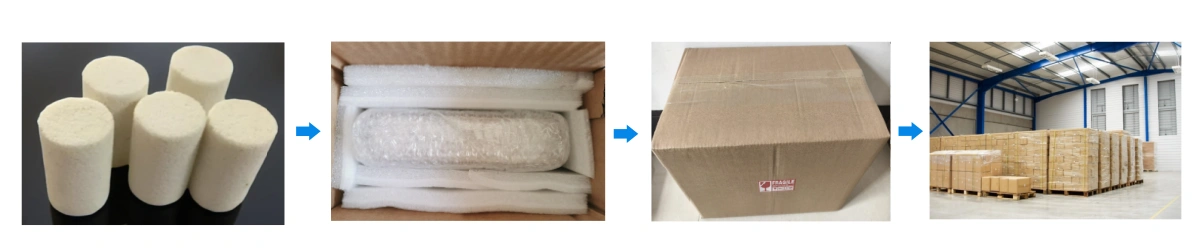
Porous Alumina Rod Packing

Choose the Evaluation Around Your Process

Every porous alumina rod enquiry is really a question about a process: what has to pass through the part, under what conditions, and how you will know it works. Send the points below with your drawing and we will confirm the rest during review.

  • Process Filtration or Sampling

    Tell us whether the stream is liquid or gas, what particles or solids it carries, the flow and pressure difference you need, the temperature, and the seals already installed in the housing. For the trial, agree the flow curve, the outlet target, how bypass around the sealing face will be checked, and how the rod will be cleaned between runs. A rod that filters correctly but leaks past its seal is the most common reason a filtration project stalls.

  • Gas Diffusion or Aeration

    Send the gas and liquid involved, the immersion depth, the target gas flow, the operating pressure, the active surface you can fit, and the connection type. For the trial, agree how distribution will be judged, which pressure points you will record, and what maintenance criteria will tell you the diffuser is fouling. Distribution depends on the whole plenum and mounting, not on the rod alone, so the assembly drawing matters as much as the rod drawing.

  • Laboratory or Wicking Component

    Give us the fluid, the uptake or flow target, the cleanliness level the application needs, the fixture the rod sits in, and the sample quantity. For the trial, agree the repeatability check, whether extractables need to be measured, and the method used to measure them. In laboratory work the pore figure is rarely the deciding number — batch-to-batch consistency and a clean part usually are.

  • Hot-Gas or Chemical-Exposure Project

    Send the atmosphere or chemistry with concentrations, the temperature profile including cycles, the pressure, and the materials used for seals and supports. For the trial, agree the selected formulation and the test conditions for the whole assembly, because a material that survives the gas may still fail at the seal or the support.

Usage Instructions for Alumina Porous Ceramic

Follow the instructions for the selected component and complete assembly.

  • Receiving and handling: Check part identity, quantity, dimensions and visible condition. Support the ceramic and protect edges, ends and functional surfaces from impact and contamination.
  • Installation: Confirm mounting dimensions, supports, seals and flow direction against the drawing. Check inlet, outlet and sealing paths before testing.
  • Start-up and monitoring: Record baseline performance at the specified fluid, temperature and pressure. Monitor flow, pressure difference and output; reassess when operating conditions change.
  • Cleaning and maintenance: Match cleaning to the deposits, ceramic material and seals. Confirm the cleaning agent, concentration, temperature, contact time and any physical cleaning method.
  • Return to service: Inspect dimensions, surfaces and seals. Verify flow and function under the agreed operating conditions before restarting normal service.
  • Storage and thermal use: Keep protective packaging sealed until use. Complete specified drying before heating, start gradually and follow the assembly’s temperature-cycle and load limits.

Porous Alumina Rod FAQs

  1. What is a porous alumina rod used for?
    A porous alumina rod is an alumina ceramic part with a controlled open-pore structure, used to filter a liquid or gas, spread gas evenly through a vessel, or move liquid by capillary action. It is chosen when the part must pass flow rather than carry load.
  2. What pore sizes are available?
    The pore structure is agreed for the selected rod rather than picked from a fixed grade list. Tell us the task — the particle you need to hold back, the gas flow you need to spread, or the liquid you need to move — and we will confirm the pore metric, the measurement method and the sample that demonstrates it.
  3. Is the pore size the same as the particle size it removes?
    No. A nominal pore size is a named metric measured by a named method; it is not a maximum through-pore size and not an absolute retention rating. If you have a hard particle cut-off, tell us the challenge particle and the outlet target so the right test is agreed.
  4. How do porous and dense alumina rods differ?
    Porous alumina passes gas or liquid through interconnected pores and is used for filtration, diffusion and wicking. Dense alumina carries load, locates other components and insulates electrically. They serve different functions, are not interchangeable, and are specified from separate data sheets.
  5. Is alumina suitable for corrosive environments?
    It depends on the chemical, its concentration, the temperature and the exposure time — not on pH alone. Strong hot alkalis, hydrofluoric acid and some fluoride-bearing streams attack alumina. Send the full chemistry and we will confirm whether alumina, zirconia or silicon carbide should be quoted.
  6. Can you supply a size that is not in the table, and what do you need to quote it?
    Yes. The listed models are paired sizes; anything else is quoted from a drawing, with lengths up to 1,000 mm and outer/inner diameters from 3 to 80 mm. Send the drawing or sketch, the function, the medium, flow and pressure difference, temperature, the seals and mating parts, and the trial or repeat quantity. A photograph of the part being replaced helps when no drawing exists.
  7. Are porous alumina rods reusable?
    Yes, provided cleaning restores the required performance and the rod is undamaged. Back-flushing, chemical cleaning and ultrasonic cleaning must suit the porous formulation, the foulant and the complete assembly. Monitor flow and pressure drop against the clean baseline to judge fouling and cleaning recovery.
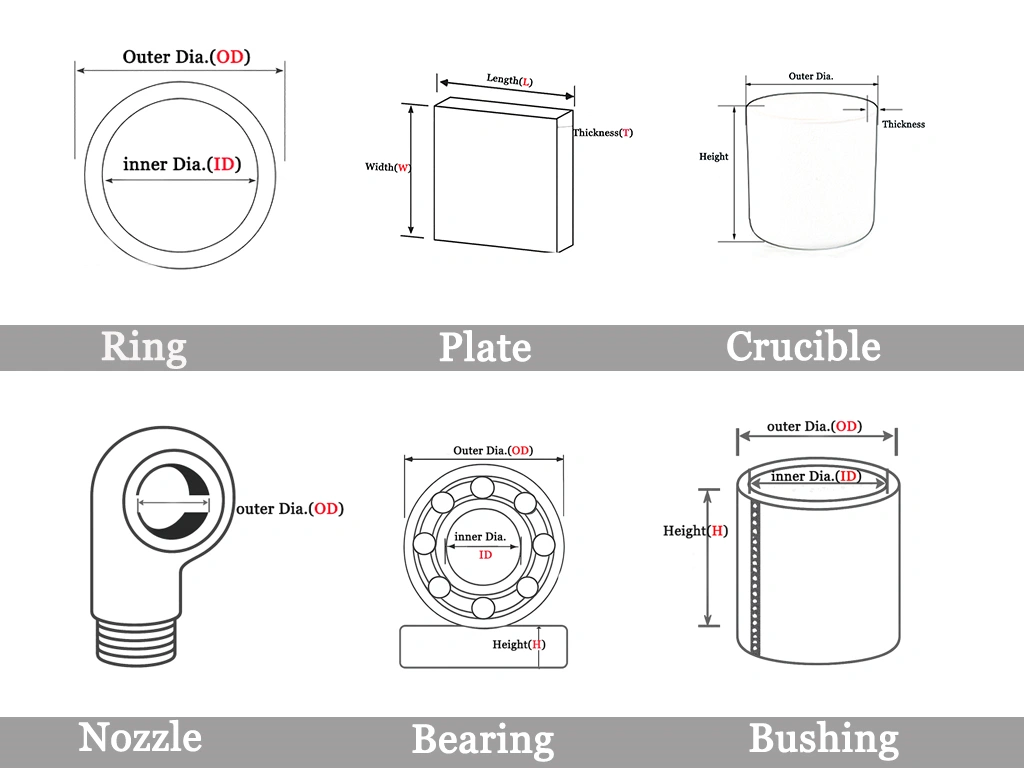
Porous alumina rod diagrams showing length, outer and inner diameters, wall thickness, round, oval and hexagonal cross-sections, and pore structure.

Drawing-Based Plate and Module Configuration

Customization here means matching the plate and module to your drawing and your process — not changing the membrane material into something it is not. The four areas below are where a project-specific configuration usually differs from the standard entry.

1. Plate and end details. Outline, supported areas, end sealing and collection connection matched to your frame. Provide: the mating drawing or a photograph and dimensions of the existing frame.

2. Module integration. Assembly scope, plate arrangement, supports, collection and cleaning routes for the module envelope you need. Provide: tank or skid drawing, connection positions and removal clearance.

3. Wet-end selection. Frame, seal, adhesive and piping materials chosen for your feed and cleaning duty, not just for the ceramic. Provide: feed analysis and the cleaning agents you intend to use.

4. Sample and repeat supply. An accepted drawing revision, dimensional and functional evaluation, then quantity and change review for repeat orders. Provide: trial quantity, acceptance criteria and the target delivery window.

Related Products

ADCERAX - Your Trusted Advanced Ceramics Manufacturing Partner

ADCERAX – Custom Ceramic Supply and Engineering Coordination
ADCERAX coordinates drawing review, production and inspection with manufacturing partners against agreed specifications.

China-Based Ceramic Supply Partner

ADCERAX coordinates custom ceramic supply for overseas OEMs, equipment builders, and labs.

Custom Drawing Support

We review drawings, dimensions, materials, and application conditions before quotation.

Ceramic Process Control

Forming, sintering, machining, grinding, and finishing are arranged by part requirements.

Pre-Shipment Inspection

Dimensional checks, visual inspection, and packaging review help reduce procurement risk.

Get in Touch with Us

Our team will be happy to respond to you in less than 24 hours.

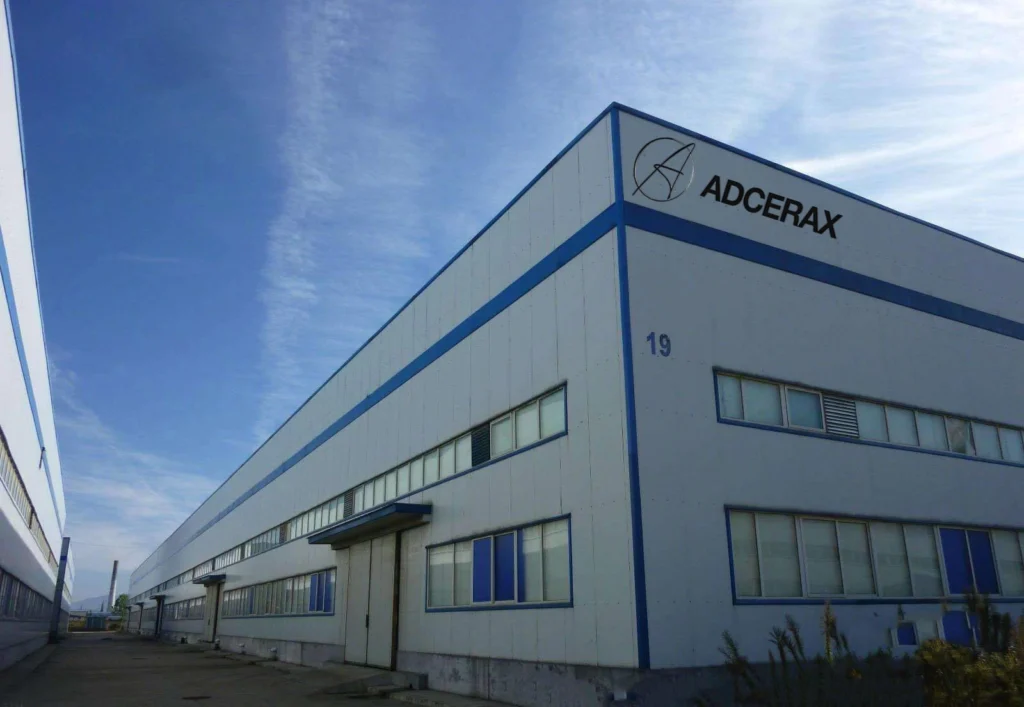
Adcerax's factory

Quick Quotation

*Our team will review your inquiry and respond with the next steps.

*Your information will be kept strictly confidential.

Ready to Solve Your Engineering Challenge?

Partner with ADCERAX for reliable, high-performance advanced ceramic solutions. Our engineers are ready to discuss your project.

E-mail

info@adcerax.com

Phone

Tel: +86-0731-84428843 WhatsApp: +86 19311583352

Response Time

Within 24 hours

Quick Quote

The more details you provide, the faster we can quote.

*All inquiries are confidential.

Get Your Custom Solution

The more details you provide, the faster we can respond.

customize size

*We respond within 24 hours. All inquiries are confidential.

Download Catalog