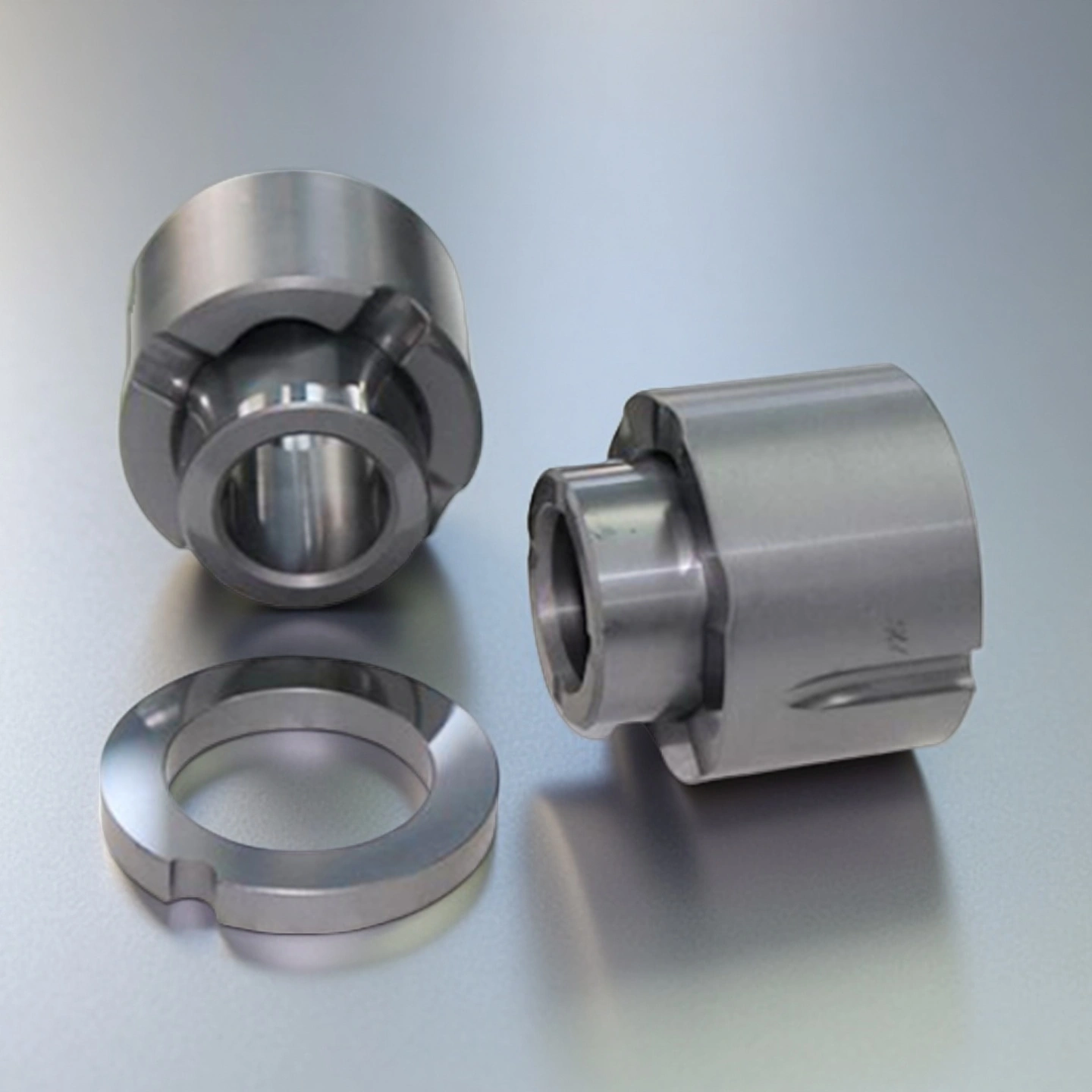
Continuity‑Focused Silicon Carbide Thrust Ring for Industrial Motion Systems

For axial support in pump and mechanical assemblies, SiC thrust rings provide a hard ceramic working face against a mating part. Match the ring profile, face features and material route to your operating duty.

Catalogue No. AT-SIC-TH1001
Material RBSC (Reaction Bonded Silicon Carbide) / SSiC (Sintered Silicon Carbide)
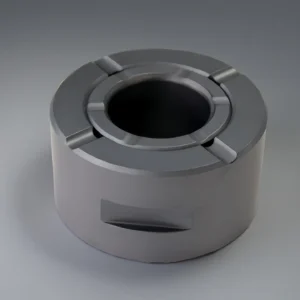
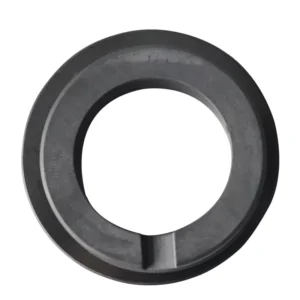
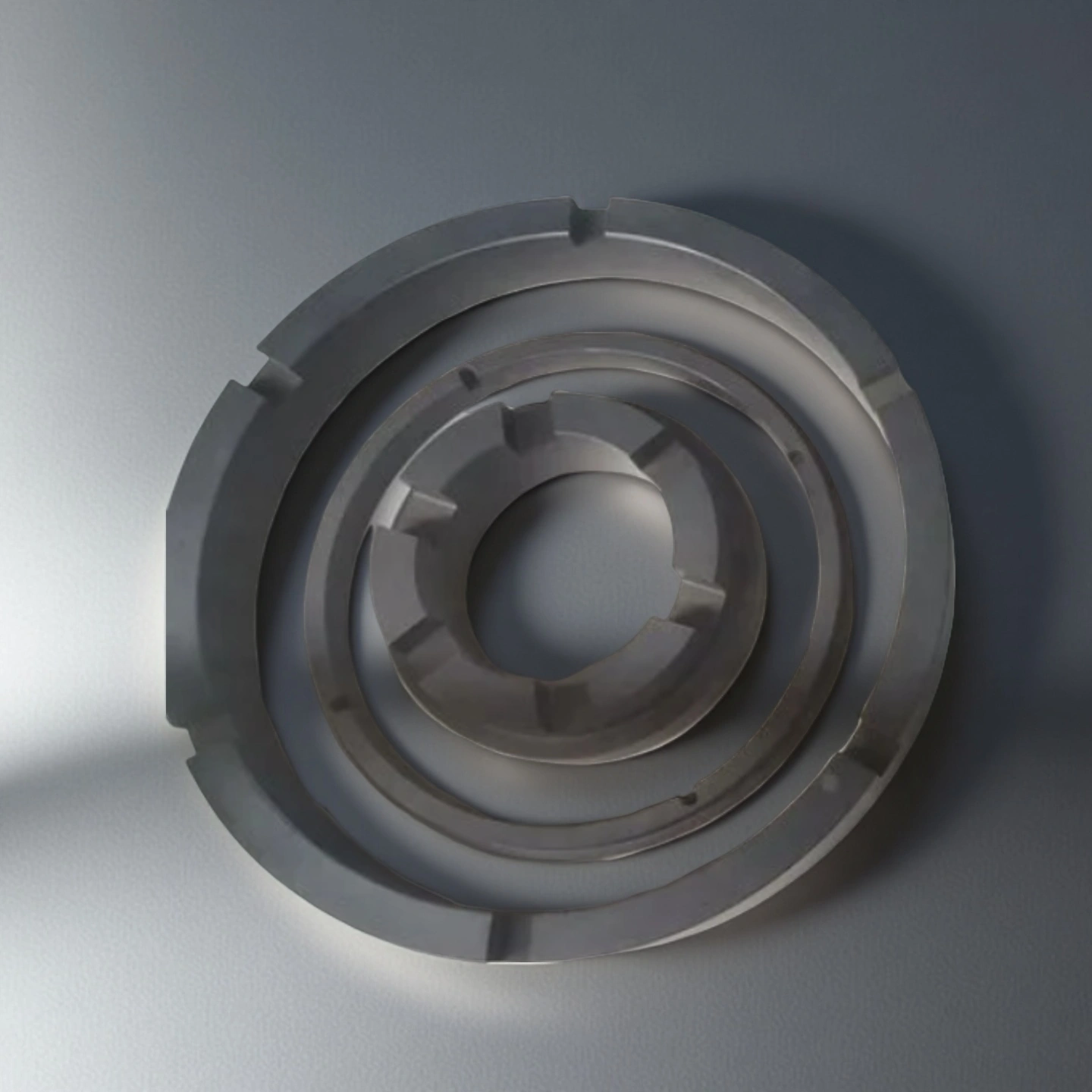
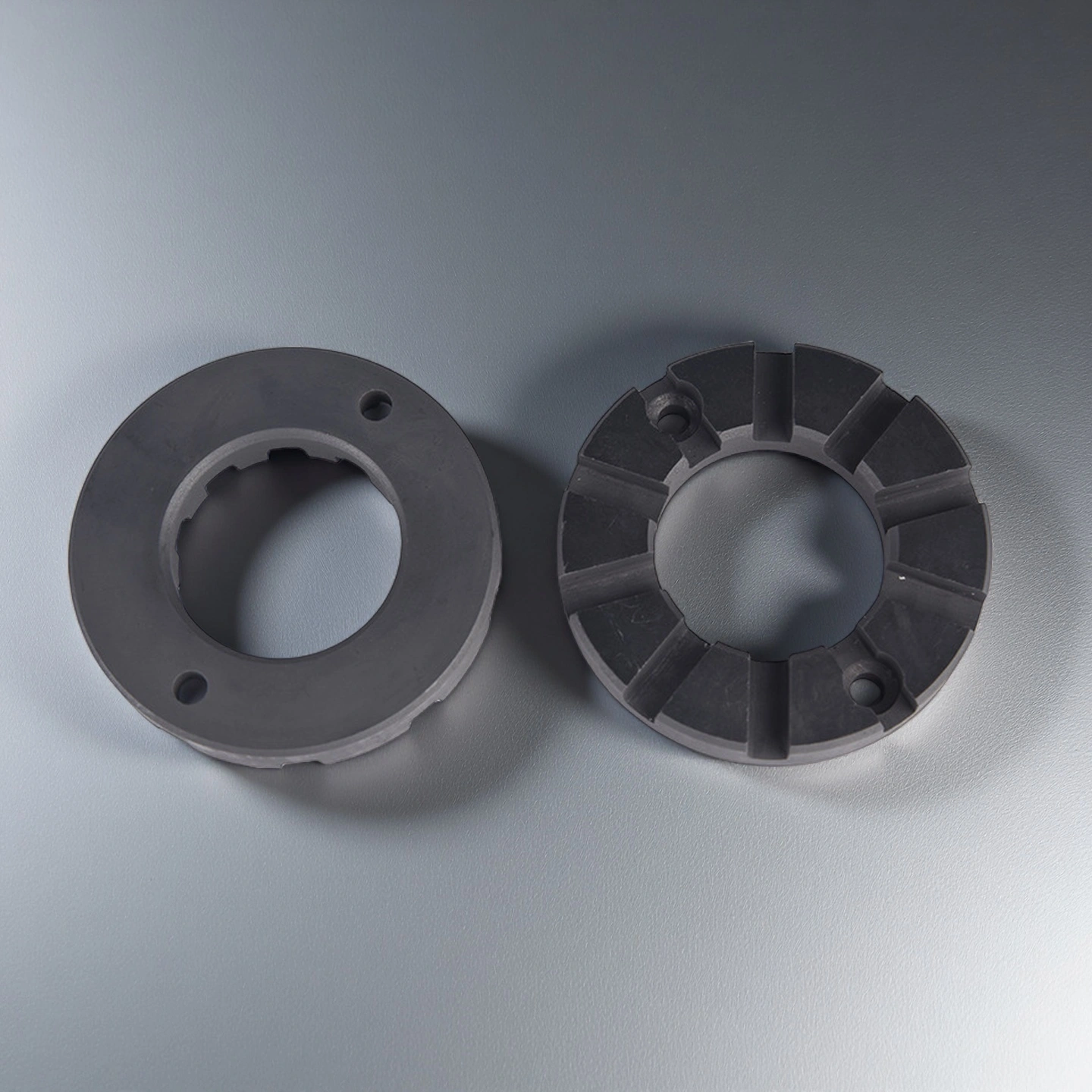
Profile options Stepped faces, grooves, holes and locating notches
Axial interface Stationary or rotating ring, matched to the mating face
Dimensions/Sizes Download PDF
Engineering RFQ Review
Small-Batch Custom Support
Drawing-Based Production
Drawing & Process Review

Silicon Carbide Thrust Rings for Axial Bearing Interfaces

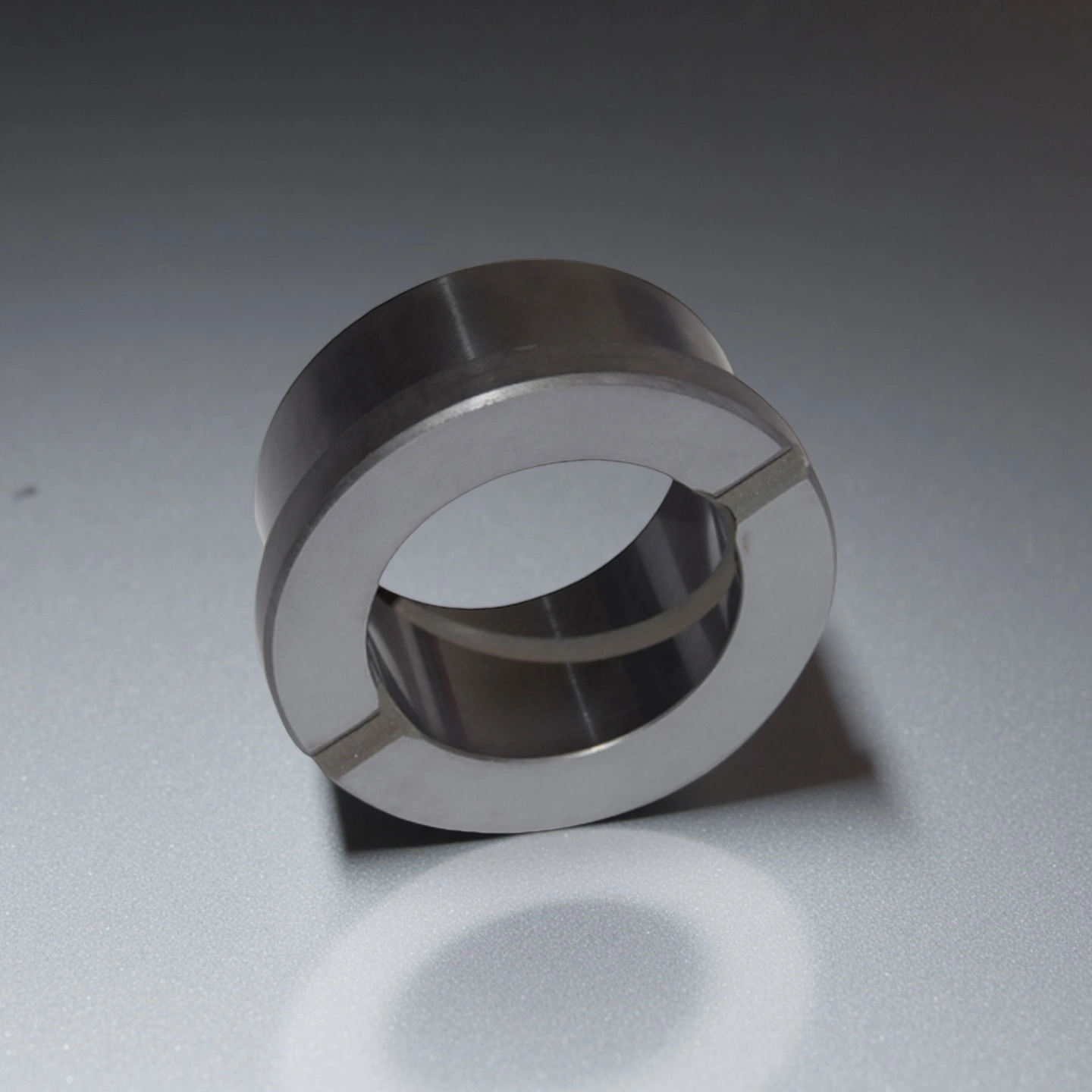
A silicon carbide thrust ring is an annular ceramic component that carries axial load against a mating face in pumps, mechanical seals and rotating equipment. It is also specified as a silicon carbide thrust washer. ADCERAX supplies both SiC routes — RBSiC and SSiC — machined to drawing, with stepped faces, grooves, holes and locating notches confirmed at drawing review.

Dimensions of Silicon Carbide Thrust Ring

SiC Thrust Ring
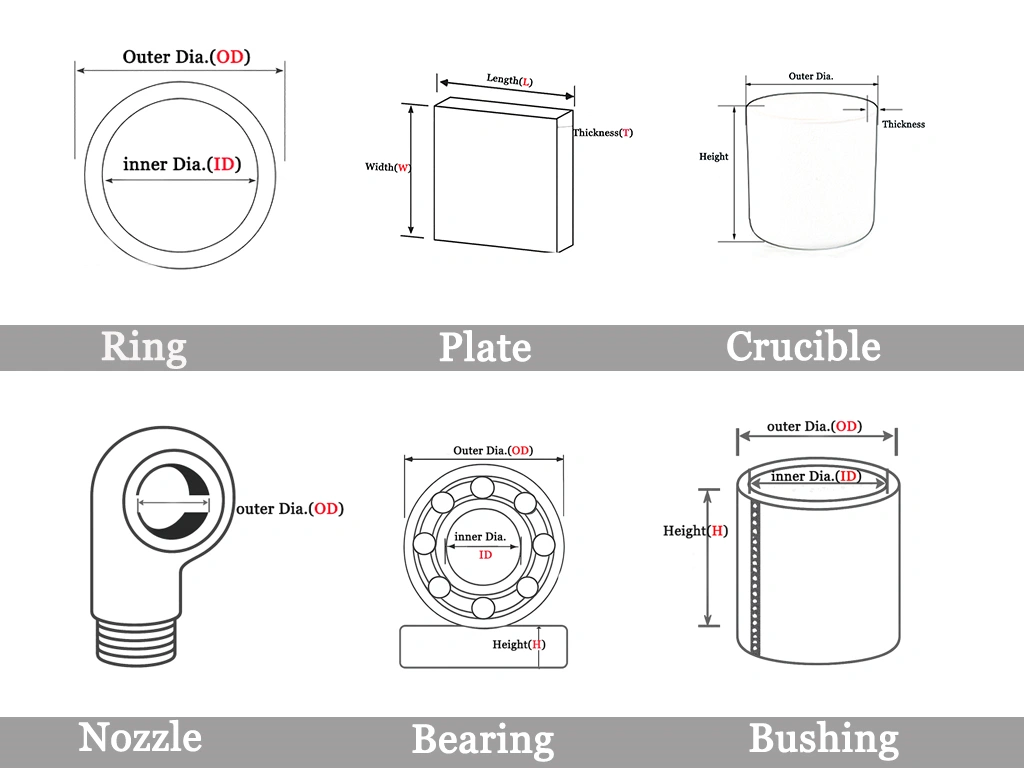
Item No. Diameter(mm) Height (mm)
AT-SIC-TH1001 Customize

Download Size Guide

Technical Specifications of Silicon Carbide Thrust Ring

ADCERAX Silicon Carbide Thrust Ring demonstrates stable mechanical, thermal, and chemical behavior under demanding industrial conditions, supported by RBSC and SSiC ceramic structures that deliver consistent performance across varied load, temperature, and fluid environments.

Value AD-SIC-RB AD-SIC-SS
SiC content (wt%) 85 nominal ≥99
Residual free silicon 15 wt% nominal None
Bulk density (g/cm³) ≥3.02 3.10 typical
Apparent open porosity (vol%) ≤0.1 <0.1
Flexural strength (MPa, 20 °C) 250 380
Young’s modulus (GPa, 20 °C) 330 420
Compressive strength (MPa) / ≥2600
Thermal conductivity (W/(m·K)) / 100–120
Application-temperature ceiling (°C) 1380 1600

How to Select a Silicon Carbide Thrust Ring

Start with your drawing or existing part. Material, geometry and inspection requirements are reviewed together—you do not need to select the grade beforehand.

1. Match the Material to the Duty

  • Review RBSiC and SSiC against the liquid chemistry, temperature range and mating-part material.
  • The quotation includes the recommended material route for your application.

2. Define the Geometry & Fit

  • Confirm ID, OD, axial thickness and critical tolerances against the shaft, housing and available space.
  • Specify stepped faces, grooves, holes and locating notches. For replacements, provide the existing part and mating-assembly details.

3. Specify the Working Faces

  • Define the required flatness, parallelism and surface roughness.
  • Record these values on the drawing as agreed production and inspection criteria.

4. Review the Mating Pair

  • Confirm the counterface material, finish and whether each part rotates or remains stationary.
  • Identify customer-supplied mating parts so fit and contact requirements can be checked before ordering.

5. Start with Available Information

  • Send a drawing, photographs with dimensions, or an existing part, together with the quantity.
  • Confirm critical tolerances, material certificates and inspection reports during order review.

Failure Modes We Design & Inspect Against

Drawing review, inspection and protective packing address the following risks. Service records help identify what may need to change in a replacement ring.

1. Chipped or Cracked Working Faces

  • Possible causes: Handling impact, uneven assembly forces or thermal shock.
  • Control measures: Protect faces and edges during packing, identify handling points and define allowable edge chipping in the visual acceptance criteria.

2. Grooving & Uneven Face Wear

  • Possible causes: Abrasive particles, misalignment or loss of the lubricating fluid film.
  • Design focus: Review alignment, fluid paths, grooves, flushing features and contact-band width to suit the actual operating conditions.

3. Chemical Attack on the Face or Bore

  • Possible causes: Incompatible chemistry may cause pitting or etching, including attack on the residual silicon phase in RBSiC.
  • Material review: Record fluid composition, concentration and temperature before selecting the grade. SSiC compatibility also requires confirmation.

4. Damage at Locating & Anti-Rotation Features

  • Possible causes: Micro-movement or concentrated loading at drive pins, notches and keyways.
  • Inspection focus: Define and check fit, clearance and contact conditions at these features against the drawing.

5. Loss of Flatness or Parallelism

  • Possible causes: Thermal gradients, deposits or incorrect preload can affect working-face geometry.
  • Inspection baseline: Record flatness, parallelism and roughness at supply for comparison during maintenance.

Packaging Method for Silicon Carbide Thrust Ring

Silicon Carbide Thrust Ring shipments are protected using layered cushioning inside a reinforced carton to prevent impact during transport. The sealed carton is then placed into a foam‑lined wooden crate for added structural support. This combination ensures stable handling and safe arrival of the ceramic components under long‑distance international shipping conditions.
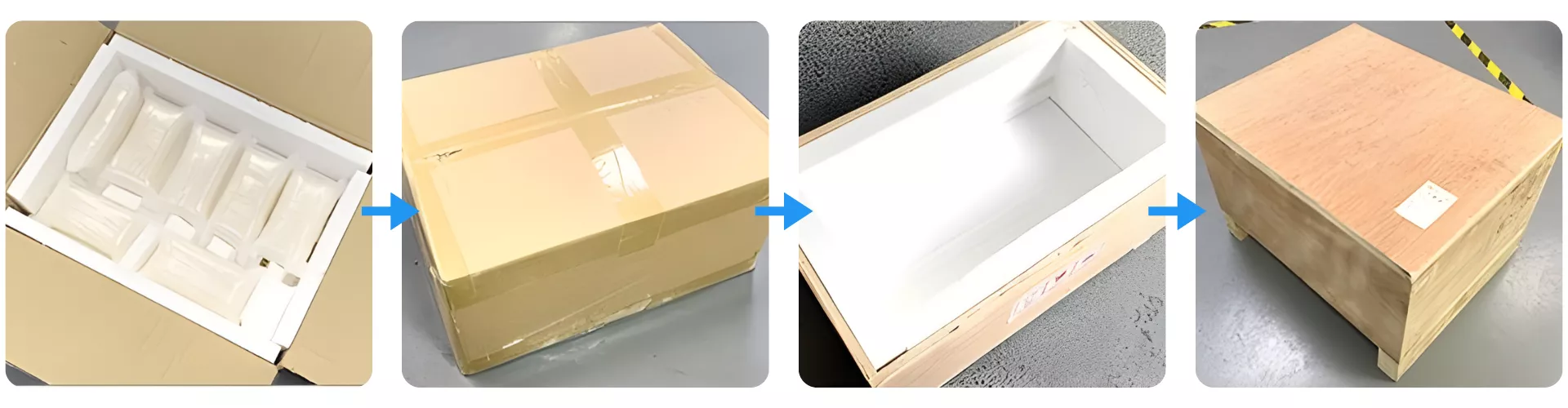
ADCERAX® Packaging of Silicon Carbide Thrust Ring

Where Silicon Carbide Thrust Rings Are Used

ADCERAX supplies RBSiC and SSiC thrust rings for pumps, seals and rotating equipment. Ring geometry, working faces and locating features are reviewed together with the mating components and operating conditions.

  • Slurry & Mineral-Processing Pumps

    Particles trapped between mating faces can cause grooves, uneven wear and changes in axial position.

    1. Design focus: Dense SiC working faces, flushing paths, groove layout and contact-band width.
    2. Material selection: Review RBSiC or SSiC against particle abrasion, fluid chemistry and the mating face.
    3. Key information: Particle size, solids concentration, pump duty and counterface material.

  • Desalination & Seawater Intake Pumps

    Chloride exposure can damage surrounding metal components and affect the ring’s contact conditions. The complete mating pair requires review.

    1. Material focus: SSiC is considered for these applications, with compatibility checked against the actual water chemistry.
    2. Assembly review: Include the counterface and surrounding wetted components, rather than assessing the ring alone.
    3. Key information: Chloride concentration, pH, temperature and the assembly drawing.

  • Chemical Process & Vacuum Systems

    These applications may require control of chemical reactions, particle generation and contamination from the ring.

    1. Material & finish: Dense SSiC, with open porosity below 0.1 vol%, and drawing-defined flatness and surface finish.
    2. Qualification: Finished-ring outgassing and vacuum acceptance are established through the specified chamber qualification.
    3. Key information: Process medium, operating pressure range, cleanliness limits and particle requirements.

  • Mechanical Seals & OEM Replacement Parts

    Replacement projects can begin with an existing ring, drawing or photographs showing dimensions and the mating assembly.
    1. Features to match: Overall geometry, working faces, grooves and locating details.
    2. Failure review: Photographs of wear or damage help assess particle exposure, alignment, chemical compatibility and locating fits.
    3. Supply basis: Confirm the replacement drawing and acceptance requirements before production.

Silicon Carbide Thrust Ring Installation and Maintenance Guide

Four stages cover the handling of a ceramic thrust ring: preparation, installation, inspection and storage. Each is short enough to hand to a maintenance team as a checklist.

  • Before Installation

    1. Confirm the shaft, housing and mating faces are clean, flat and free of particles.
    2. Check the ring against the drawing revision, orientation, working-face condition and locating features.
    3. Protect the working faces and edges — ceramic chips under impact, not under load.
    4. Allow the assembly area to reach the specified temperature before fitting.
    5. Use clean, non-abrasive gloves and tools throughout.

  • Installation and Startup

    1. Seat the ring with uniform pressure — never strike or tilt it.
    2. Verify engagement with the shaft or seal and confirm the locating feature is fully seated.
    3. Check axial clearance and that the mating part moves freely with no point contact.
    4. Run a controlled first startup, watching vibration, noise and temperature rise.
    5. Record the baseline face condition and running parameters for later comparison.

  • Periodic Inspection

    1. Examine the working face for grooves, polish bands, chipping and deposits.
    2. Compare flatness and roughness against the supplied inspection record.
    3. Check the mating part and locating features for wear or micro-movement.
    4. Track vibration and temperature trends — changes usually appear here first.
    5. Send face photographs with your inquiry when ordering a replacement; the wear pattern identifies the cause.

  • Cleaning and Storage

    1. Clean with neutral agents compatible with SiC; rinse residue fully.
    2. Avoid abrasive scrubbing that alters the working-face finish.
    3. Store separately from metal parts and tools to prevent impact damage.
    4. Keep dry, dust-free and away from sudden temperature change.
    5. Retain drawing and model identification with each stored ring.

Silicon Carbide Thrust Ring FAQs

  1. Q1: How does a SiC thrust ring perform in abrasive slurry?
    SiC provides wear resistance, but particles can still damage the contact surfaces. Groove layout, flushing paths and contact width should be matched to particle size, solids concentration and pump duty.
  2. Q2: Is SiC suitable for corrosive chemicals?
    Suitability depends on the grade, chemistry, concentration, temperature and exposure time. RBSiC contains residual free silicon that requires compatibility checks. SSiC has no residual free silicon, but neither grade resists every chemical.
  3. Q3: How does the ring handle thermal cycling?
    Performance depends on the material grade, temperature changes, mounting and axial clearance. The material ceilings—1380 °C for RBSiC and 1600 °C for SSiC—are selection references, not continuous operating ratings.
  4. Q4: What axial load can the ring carry?
    There is no universal load rating. Capacity depends on contact area, preload, mating material, lubrication, speed and temperature. Provide the axial force, duty cycle and assembly drawing for review.
  5. Q5: How does the ring affect vibration?
    Alignment, contact uniformity, counterface wear and locating fits can influence vibration at the thrust interface. Review these features together and record startup vibration as a baseline for future checks.
  6. Q6: Do I need a thrust ring or a seal ring?
    A thrust ring supports axial loads. A seal ring forms part of an interface that controls fluid leakage. Select by the component’s function, installation position and mating arrangement.
  7. Q7: What information is needed for a quotation?
    Send a drawing or photographs with dimensions, plus quantity and application. Include the medium, temperature, axial load and mating-part material where available. Remaining details can be confirmed during order review.
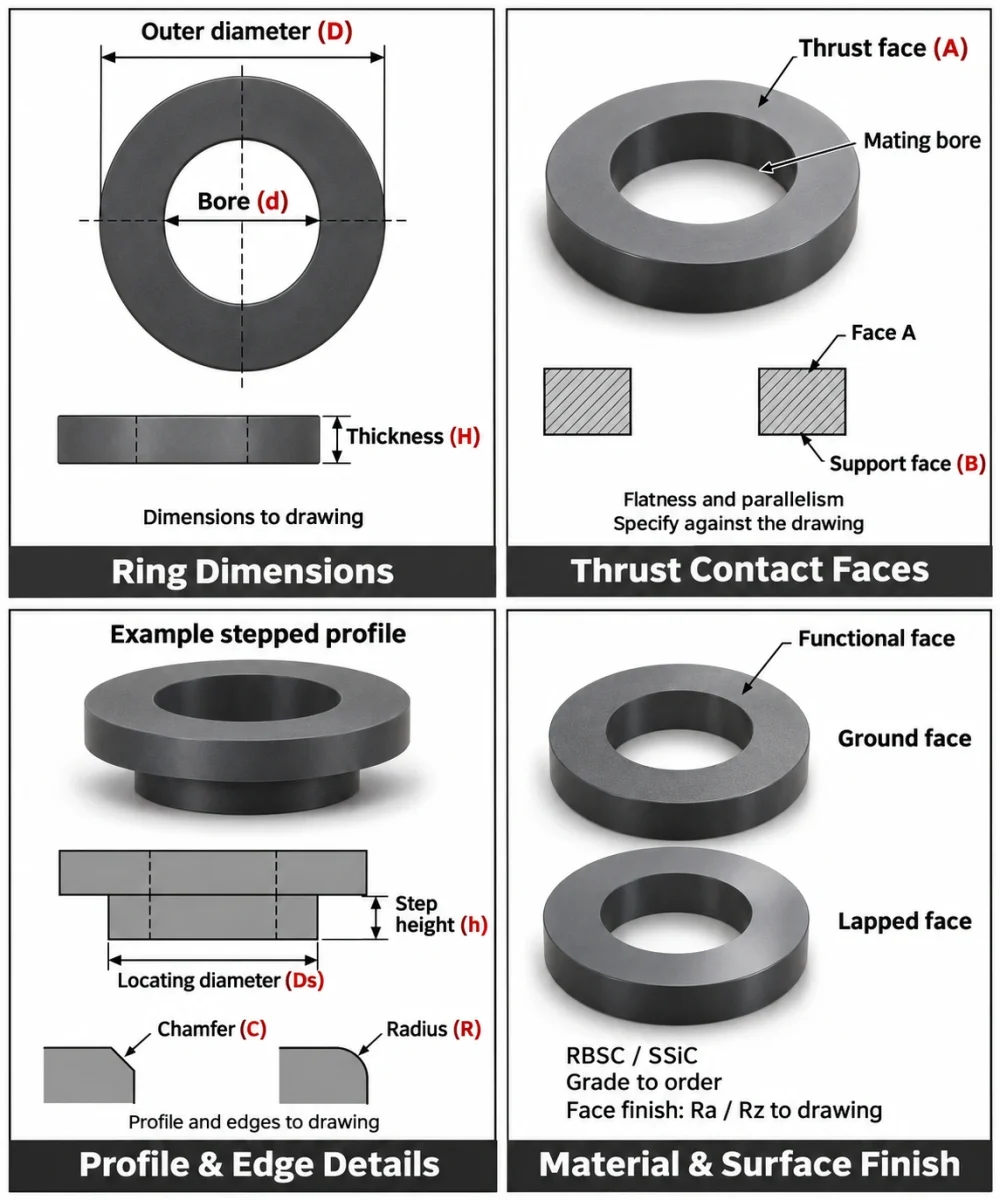
Silicon carbide thrust ring diagram showing outer and bore diameters, thickness, thrust and support faces, stepped profile, edge details and surface finish options.

Custom SiC Thrust Rings, Made to Your Drawing

Customize ring geometry, working faces, locating features and material grade to suit your assembly. Production follows the approved drawing and acceptance requirements.

Geometry & Interfaces

  • Dimensions: Bore, outside diameter, axial thickness and shoulder steps matched to the shaft, housing and available space.
  • Contact band: Inner and outer contact diameters, with defined datums and inspection references.
  • Custom features: Radial grooves, flushing paths, drive-pin holes and anti-rotation notches.
  • Surface finish: Drawing-specified flatness, parallelism and Ra/Rz values.

Material & Duty

  • Material options: RBSiC or SSiC selected for the medium and contact conditions.
  • Chemical compatibility: Review composition, concentration, pH and temperature, including potential attack on residual silicon in RBSiC.
  • Thermal conditions: Confirm operating and shutdown temperatures when defining expansion clearance.
  • Mechanical duty: Specify axial force, speed and start-stop cycles. Agree any wear or service-life acceptance requirements.

Related Products

ADCERAX - Your Trusted Advanced Ceramics Manufacturing Partner

ADCERAX – Custom Ceramic Supply and Engineering Coordination
ADCERAX coordinates drawing review, production and inspection with manufacturing partners against agreed specifications.

China-Based Ceramic Supply Partner

ADCERAX coordinates custom ceramic supply for overseas OEMs, equipment builders, and labs.

Custom Drawing Support

We review drawings, dimensions, materials, and application conditions before quotation.

Ceramic Process Control

Forming, sintering, machining, grinding, and finishing are arranged by part requirements.

Pre-Shipment Inspection

Dimensional checks, visual inspection, and packaging review help reduce procurement risk.

Get in Touch with Us

Our team will be happy to respond to you in less than 24 hours.

Adcerax's factory

Quick Quotation

*Our team will review your inquiry and respond with the next steps.

*Your information will be kept strictly confidential.

Ready to Solve Your Engineering Challenge?

Partner with ADCERAX for reliable, high-performance advanced ceramic solutions. Our engineers are ready to discuss your project.

E-mail

info@adcerax.com

Phone

Tel: +86-0731-84428843 WhatsApp: +86 19311583352

Response Time

Within 24 hours

Quick Quote

The more details you provide, the faster we can quote.

*All inquiries are confidential.

Get Your Custom Solution

The more details you provide, the faster we can respond.

customize size

*We respond within 24 hours. All inquiries are confidential.

Download Catalog