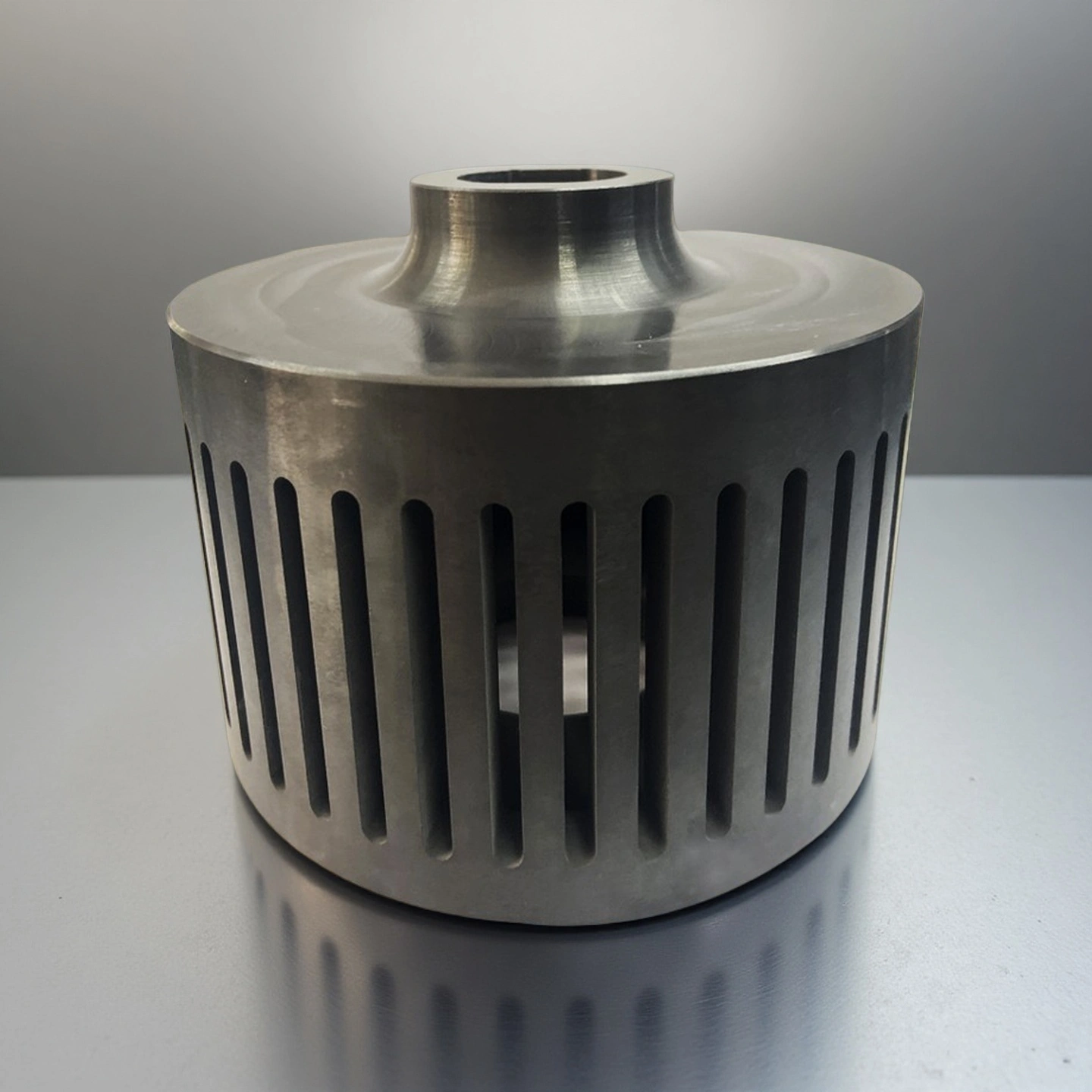
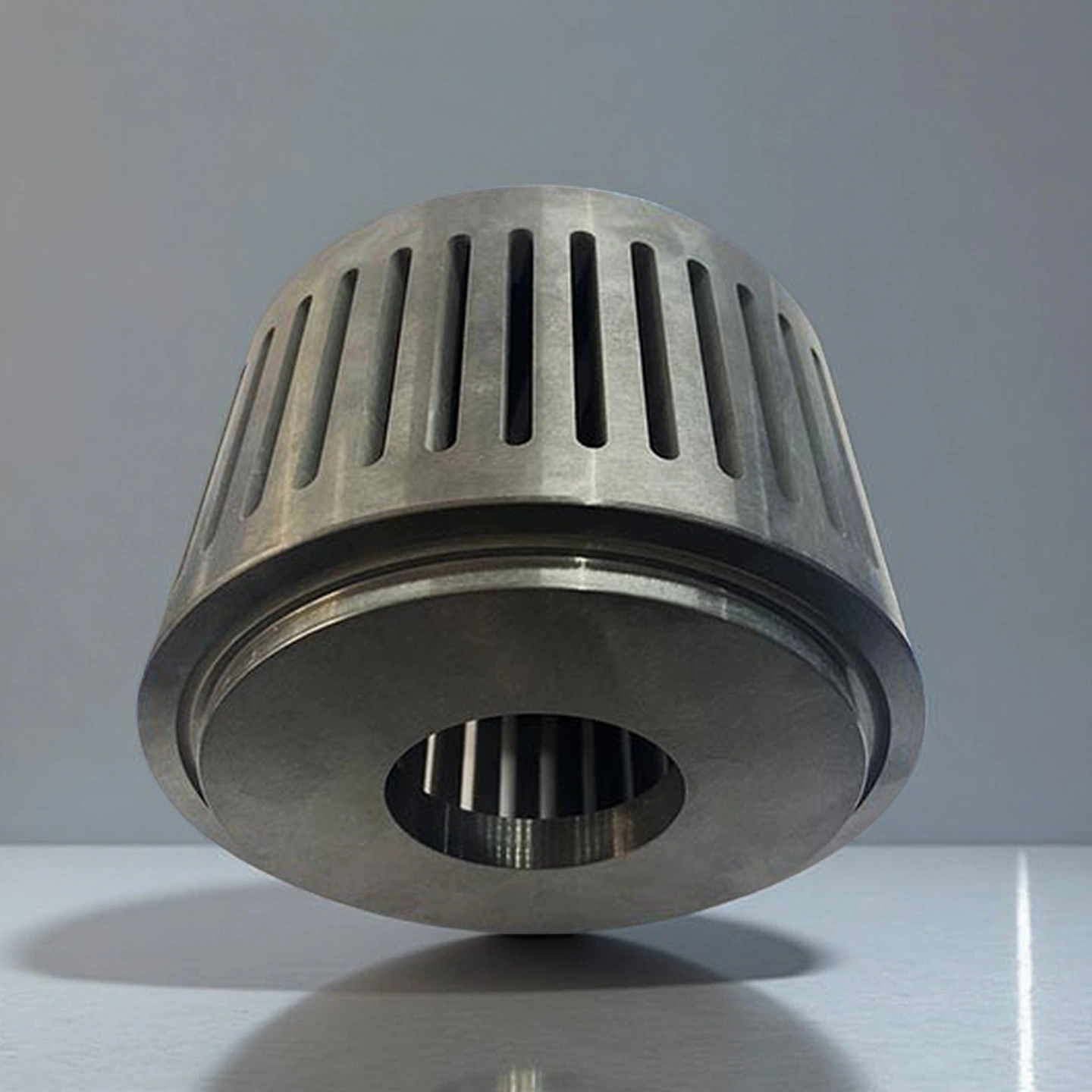
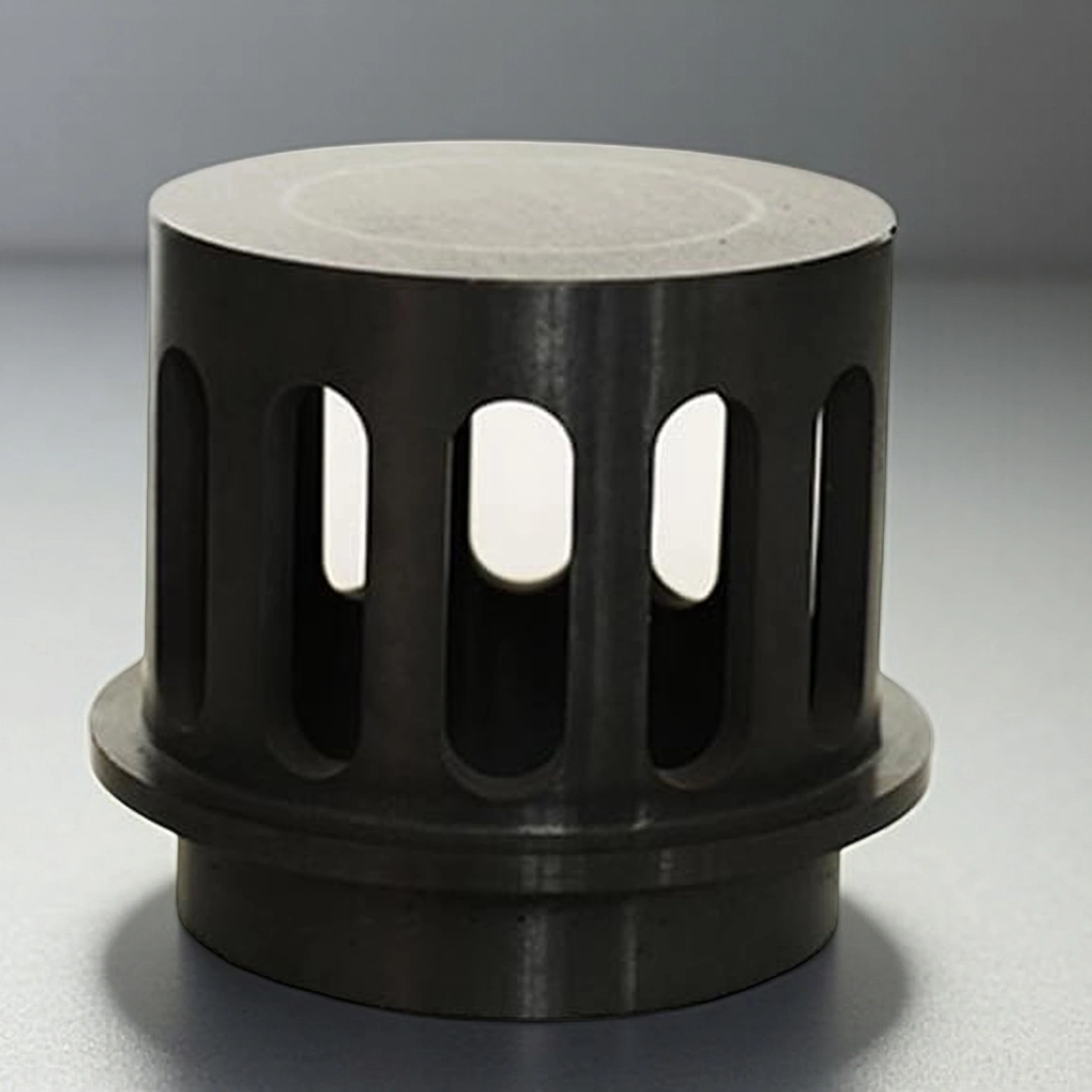
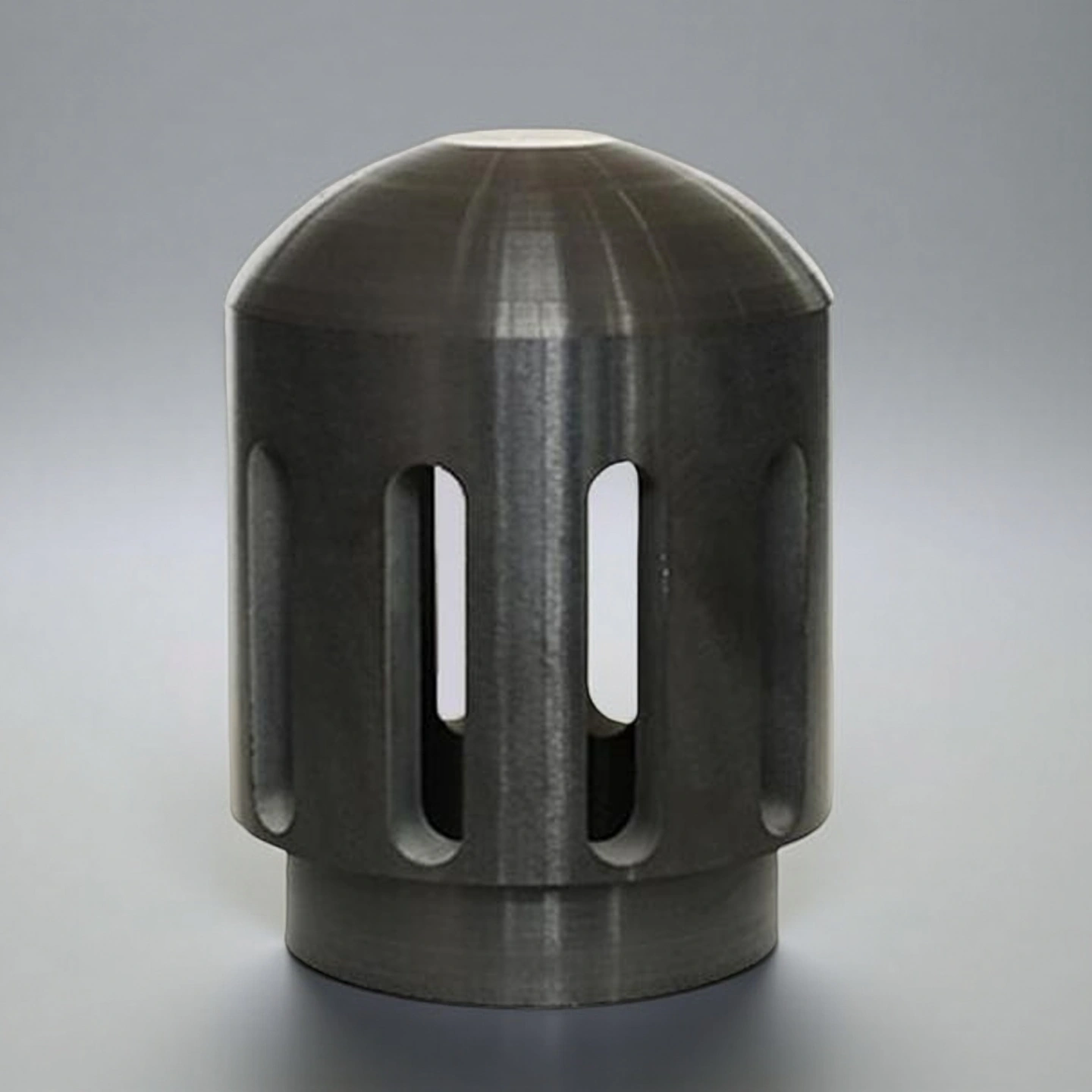
What Is a Silicon Nitride Ceramic Grading Wheel?
A silicon nitride ceramic grading wheel, also called a Si3N4 ceramic classifier wheel or classifying wheel, is a rotating ceramic rotor used inside air classifiers, jet mills and ACM mills to separate fine powder fractions by particle size.
Compared with metal classifier wheels, silicon nitride offers high hardness, low density, good wear resistance and reduced metallic contamination. This makes it suitable for battery materials, advanced ceramic powders, electronic ceramic powders and selected metal powder classification processes where particle size control and material cleanliness are important.
Why Use Si3N4 for Ceramic Classifier Wheels?
| Classification Process Requirement |
Why Si₃N₄ Helps |
| Metallic contamination |
The ceramic flow-contact surface helps reduce direct metal contact with sensitive powders. |
| Rotor wear |
Silicon nitride offers high hardness and wear resistance for abrasive powder classification. |
| High-speed operation |
Its lower density compared with many metals helps reduce rotor inertia. |
| Dimensional stability |
Properly machined Si₃N₄ supports stable blade geometry during repeated operation. |
| Custom installation |
Bore, hub, blade, keyway and mounting interfaces can be designed according to the classifier structure. |
Silicon Nitride Ceramic Grading Wheel Benefits
- High wear resistance: Extends service life in abrasive powder environments.
- Non-metallic: Prevents contamination in high-purity powder processing.
- Thermal shock resistance: Suitable for rapid temperature changes in jet milling.
- Dimensional precision: Ensures consistent classification performance.
- Corrosion resistance: Withstands chemical exposure in fine powder systems.
Si3N4 Ceramic Grading Wheel Properties
The values below are typical reference data for material and preliminary selection. Final specifications, tolerance and balance requirements should be confirmed according to the drawing, rotor size, classifier model and operating speed.
|
Si3N4 Type |
Gas pressure sintering Si3N4 |
Hot pressing sintering Si3N4 |
High thermal conductivity Si3N4 |
|
Density (g/cm3) |
3.2 |
3.3 |
3.25 |
|
Flexural Strength (MPa) |
700 |
900 |
600~800 |
|
Young Modulus (GPa) |
300 |
300 |
300~320 |
|
Poisson's ratio |
0.25 |
0.28 |
0.25 |
|
Compressive strength (MPa) |
2500 |
3000 |
2500 |
|
Hardness (GPa) |
15 |
16 |
15 |
|
Fracture toughness (MPa*m1/2) |
5~7 |
6~8 |
6~7 |
|
Maximum working temperature (℃) |
1100 |
1300 |
1100 |
|
Thermal conductivity (W/m*K) |
20 |
25 |
80~100 |
|
Thermal expansion coefficient (/℃) |
3*10-6 |
3.1*10-6 |
3*10-6 |
|
Thermal shock resistance (ΔT ℃) |
550 |
800 |
/ |
Si3N4 Ceramic Grading Wheel Specifications
|
Si3N4 Ceramic Grading Wheel |
|
Item No. |
Outer Diameter(mm) |
Inner Diameter(mm) |
Height(mm) |
Upper limit of linear speed m/s |
|
AT-SIN-FJ001 |
100 |
75 |
80 |
70 |
|
AT-SIN-FJ002 |
155 |
135 |
95 |
70 |
|
AT-SIN-FJ003 |
250 |
220 |
100 |
70 |
|
AT-SIN-FJ004 |
260 |
240 |
120 |
70 |
|
AT-SIN-FJ005 |
315 |
265 |
120 |
70 |
Si3N4 Classifier Wheel Packaging
- Each silicon nitride ceramic grading wheel is wrapped with foam or soft cushioning material to protect blades and edges.
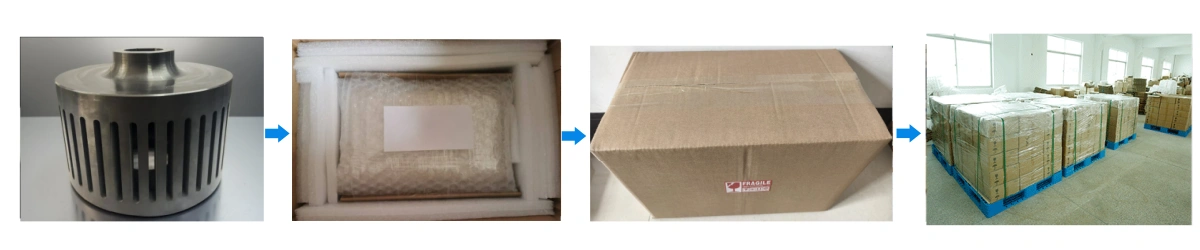
Installation and Handling Guidelines for Si3N4 Ceramic Classifier Wheels
Because a silicon nitride ceramic grading wheel is a precision rotating ceramic component, installation and operation should follow both the rotor drawing and the air classifier manufacturer’s safety limits. Proper alignment, controlled fitting, clean contact surfaces and speed verification help reduce stress concentration and vibration risk during operation.
-
Installation
1. Inspect the silicon nitride ceramic grading wheel for visible chips or cracks before installing.
2. Clean the classifier shaft and bore surfaces to remove dust, oil, and burrs.
3. Align the bore and shaft keys carefully to avoid point loading on the ceramic bore.
4. Use controlled fitting methods (such as gentle heating of the hub or precise pressing) to avoid impact.
5. After installation, check axial run-out and balance according to your classifier manufacturer’s limits.
-
Operation
1. Start the classifier at low speed to confirm vibration levels and noise are within normal operating ranges.
2. Increase rotor speed gradually to the target set-point while monitoring current, vibration, and throughput.
3. Operate within the recommended maximum rotational speed or peripheral velocity defined for the rotor design.
4. Avoid running with strong unbalanced powder loads for extended periods, as this increases bending stress in the rotor.
-
Storage
1. Store spare Si3N4 ceramic grading wheels in dry, clean areas away from impact and vibration sources.
2. Keep rotors upright or in dedicated cradles so blades and outer edges are not loaded or pressed against hard surfaces.
3. Avoid stacking heavy objects on top of the packed rotor boxes.
-
Cleaning and inspection
1. Use soft brushes or compressed clean air to remove dust from the blades and hub.
2. Do not use steel tools or aggressive mechanical scraping directly on ceramic surfaces.
3. Inspect rotor blades for local chipping, cracks, or severe erosion during planned shutdowns.
4. Replace the rotor if any critical cracks are observed or if the blade profile is significantly reduced.
-
Common misuse points and how to avoid them
1. Over-speeding the rotor
Risk: Exceeding design speed raises stress and may initiate cracks.
Action: Always confirm the rated maximum speed for your silicon nitride ceramic grading wheel and set safety limits in your control system.
2. Impact during installation
Risk: Hammer blows on the hub or shaft can create micro-cracks that grow during operation.
Action: Use controlled fitting tools and follow a step-by-step installation procedure without direct impact.
3. Running with severe imbalance
Risk: Accumulated coarse powder on one side of the rotor can create high bending loads.
Action: Keep the system clean, check balance indicators, and schedule cleaning if vibration trends increase over time.
RFQ Checklist for a Custom Silicon Nitride Classifier Wheel
To quote a custom Si3N4 ceramic grading wheel accurately, please provide as much application information as possible. Drawings, photos and existing rotor dimensions are especially useful for confirming manufacturability and installation fit.
| RFQ Information |
Why It Matters |
| Drawing or sample photos |
Confirms overall rotor structure and mounting interface. |
| Classifier or jet mill model |
Helps review chamber space, speed and installation method. |
| Outer diameter, bore and height |
Defines the basic machining and forming requirements. |
| Blade number and blade geometry |
Affects airflow, cut size and classification stability. |
| Powder material |
Determines wear, contamination and cleaning requirements. |
| Target D50 / D97 |
Helps match the grading wheel to process goals. |
| Operating speed |
Needed for mechanical safety review and balance discussion. |
| Quantity and replacement cycle |
Helps confirm production method and cost structure. |