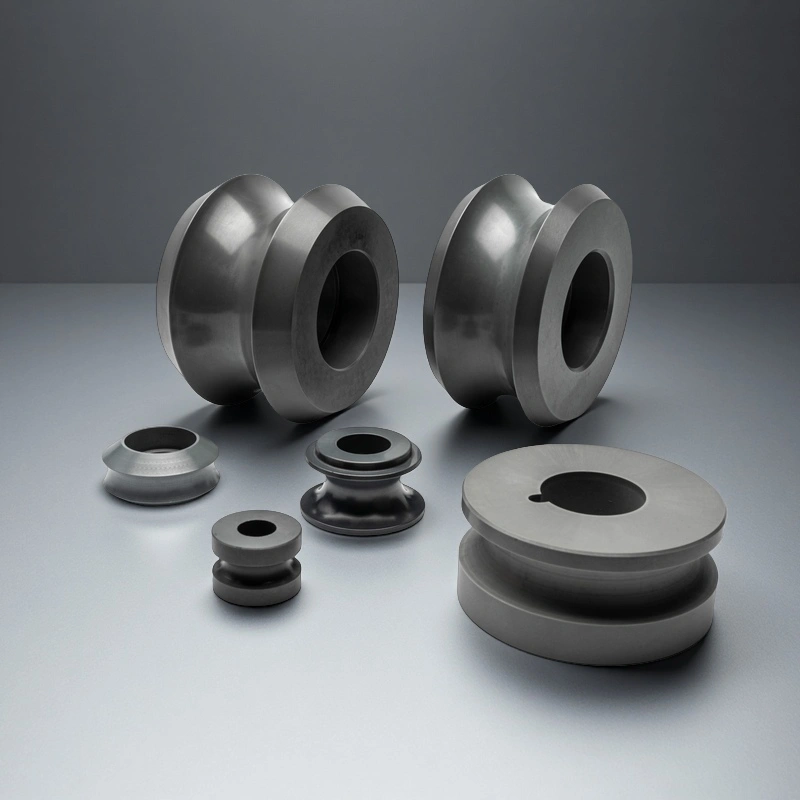
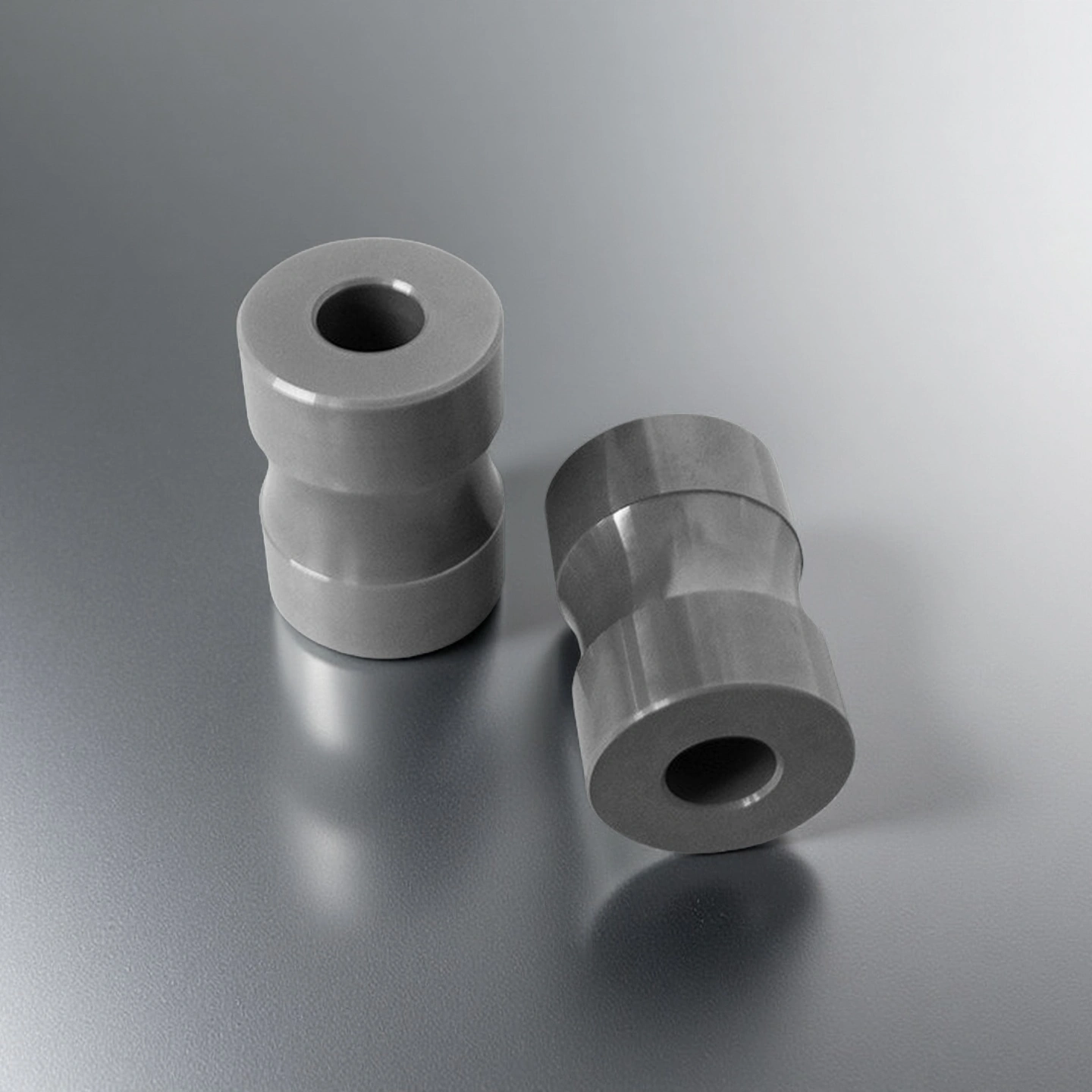
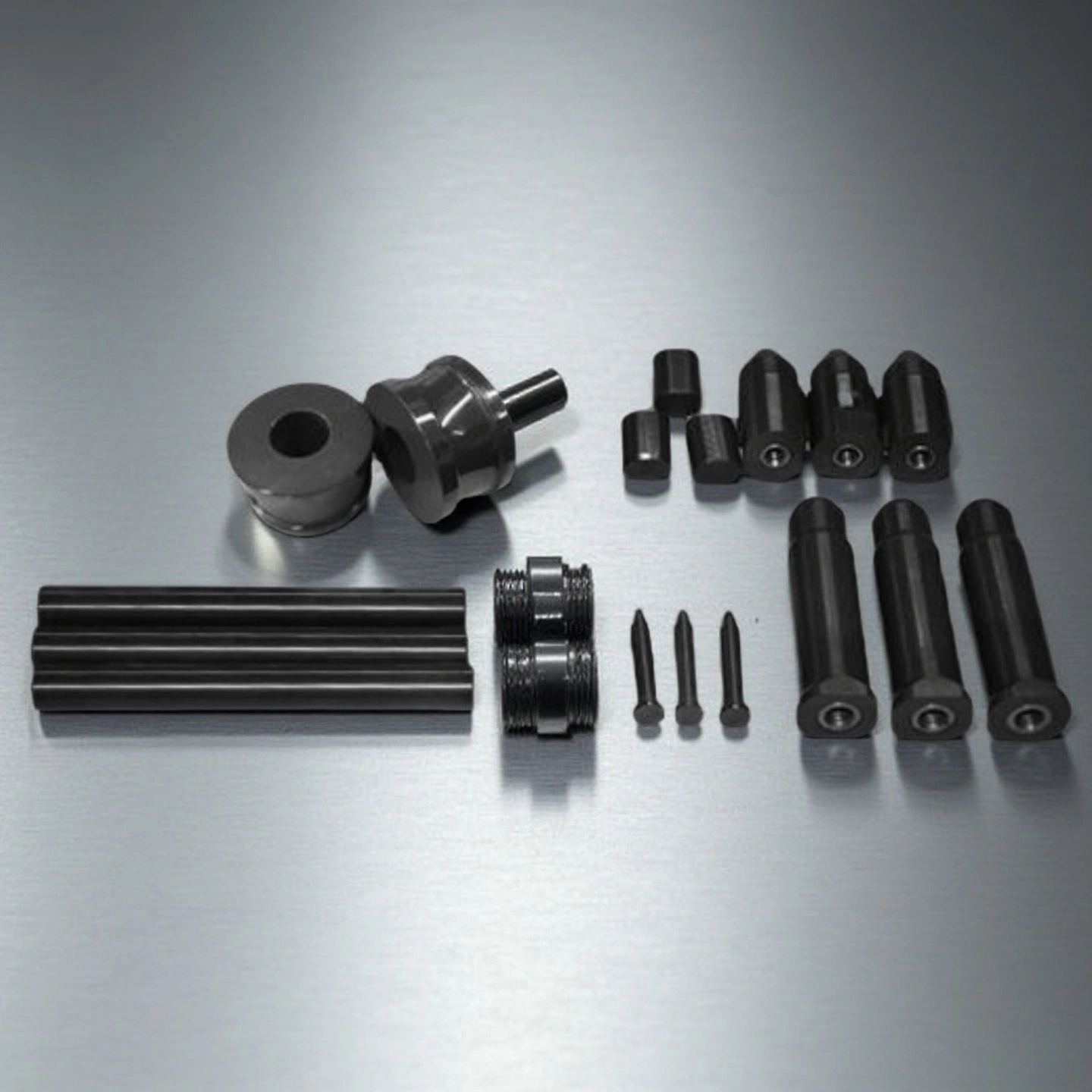
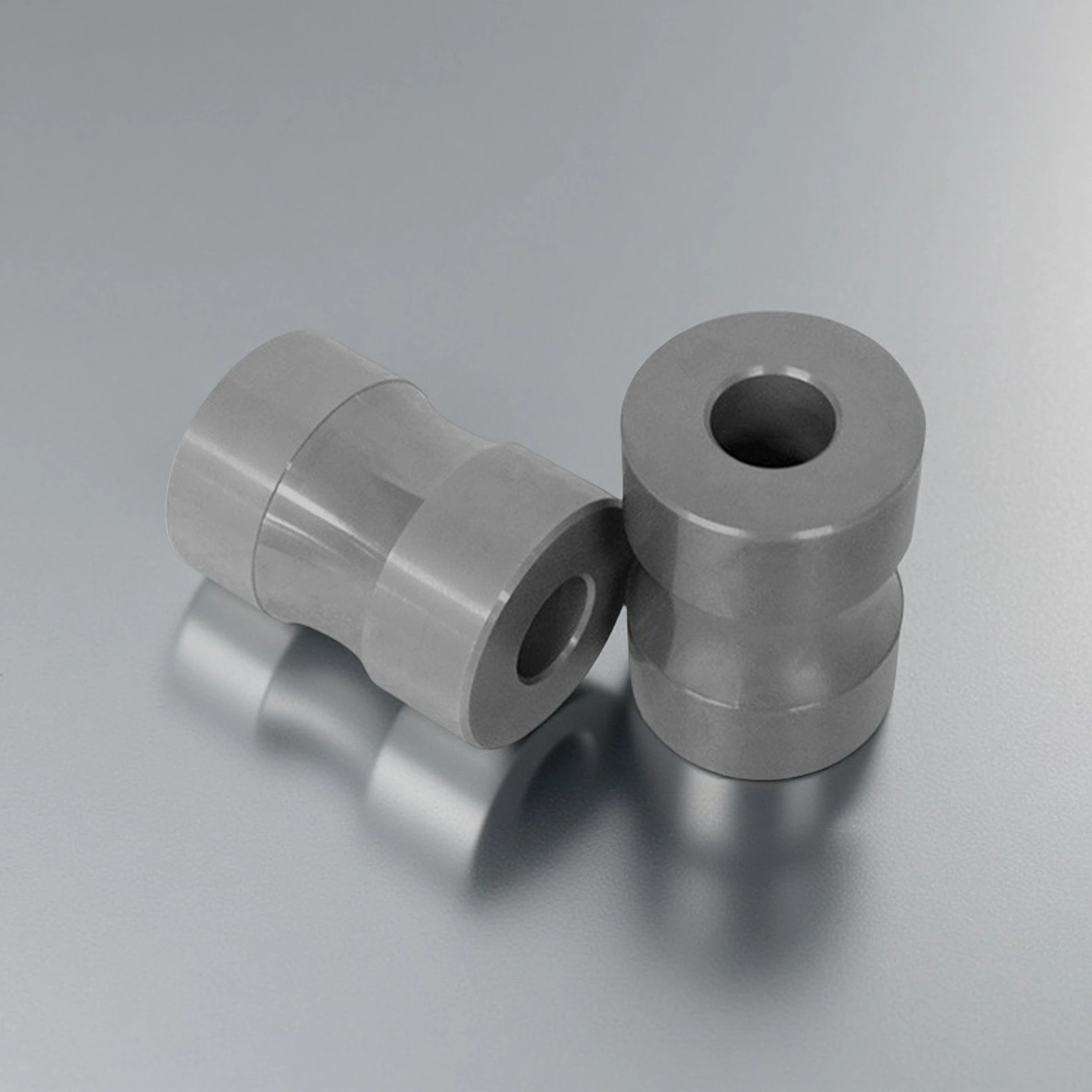
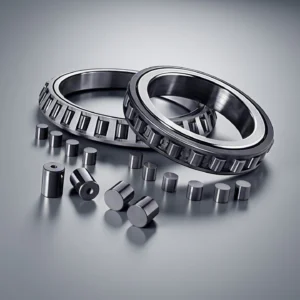
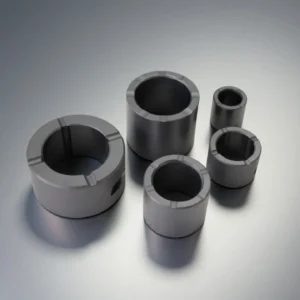
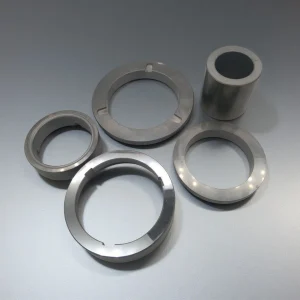
Silicon nitride welding rollers are ceramic rolls used in high-frequency electric resistance welding and forming stands to support, guide, and squeeze the tube during welding. Their low thermal expansion, high strength, and electrical insulation help stabilise the weld seam and extend roll life compared with tool steel rolls.
Silicon Nitride Welding Roller Benefits
- Longer roll life on hard-running stands — public sources and ceramic-roll suppliers describe Si₃N₄ weld rolls lasting several times longer than tool-steel rolls when alignment, cooling, and stand conditions are controlled; actual life is application-dependent, so we recommend a trial in your stand.
- Non-conductive in HF fields — Si₃N₄ is electrically insulating (resistivity >10¹² Ω·cm), so the roll does not draw HF current, which can reduce weld-zone power loss and keep the stand cooler.
- Less metal pick-up, better tube surface — the low-adhesion ceramic groove helps limit build-up and can support tube surface finish and seam stability versus worn steel rolls.
- Stable geometry under heat and load — high strength plus low thermal expansion help hold groove shape and run-out through the campaign.
- Lighter than steel — Si₃N₄ is roughly 60% the density of steel, lowering rotating mass on the stand.
Si₃N₄ Welding Roller Properties
|
Si3N4 Type |
Gas pressure sintering Si3N4 |
Hot pressing sintering Si3N4 |
High thermal conductivity Si3N4 |
|
Density (g/cm3) |
3.2 |
3.3 |
3.25 |
|
Flexural Strength (MPa) |
700 |
900 |
600~800 |
|
Young Modulus (GPa) |
300 |
300 |
300~320 |
|
Poisson's ratio |
0.25 |
0.28 |
0.25 |
|
Compressive strength (MPa) |
2500 |
3000 |
2500 |
|
Hardness (GPa) |
15 |
16 |
15 |
|
Fracture toughness (MPa*m1/2) |
5~7 |
6~8 |
6~7 |
|
Maximum working temperature (℃) |
1100 |
1300 |
1100 |
|
Thermal conductivity (W/m*K) |
20 |
25 |
80~100 |
|
Thermal expansion coefficient (/℃) |
3*10-6 |
3.1*10-6 |
3*10-6 |
|
Thermal shock resistance (ΔT ℃) |
550 |
800 |
/ |
Si3N4 Welding Roller Specifications
|
Silicon Nitride Welding Roller |
|
Item No. |
Diameter (mm) |
Thickness (mm) |
|
AT-SN-HG1001 |
Customize |
Note: Si₃N₄ is strong but brittle — clamp on the steel hub where possible, control alignment and cooling, and warm the line up gradually.
Si₃N₄ Weld Roll vs. Tool Steel Roll vs. Sialon
Roll selection should consider HF current behavior, metal pick-up, wear conditions, alignment, cooling, line speed, and drawing requirements.
| Option |
HF Current Behavior |
Metal Pick-Up |
Wear Life on Demanding Stands |
Best Fit |
| Silicon Nitride (Si₃N₄) |
Non-conductive (>10¹² Ω·cm) |
Low |
Public sources describe several-fold longer life than tool steel under controlled conditions |
HF-ERW weld and squeeze positions where HF power loss, metal pick-up, and roll wear matter |
| Tool Steel Roll |
Conductive; may carry HF current |
Higher |
Baseline option; can be reground on-site |
Lower-cost setups, less demanding surface requirements, and facilities with on-site regrinding |
| Sialon / Specified Si₃N₄-Based Grade |
Non-conductive |
Low |
Similar ceramic wear route with established application references |
Projects requiring a specific ceramic grade or drawing-specified material |
Note: Wear-life comparisons are based on public manufacturer sources. Results are typical, application-dependent, and not ADCERAX guarantees. Final selection should be confirmed against the stand design, tube material, line speed, alignment, cooling, and load conditions.
Silicon Nitride Weld Roll Packaging
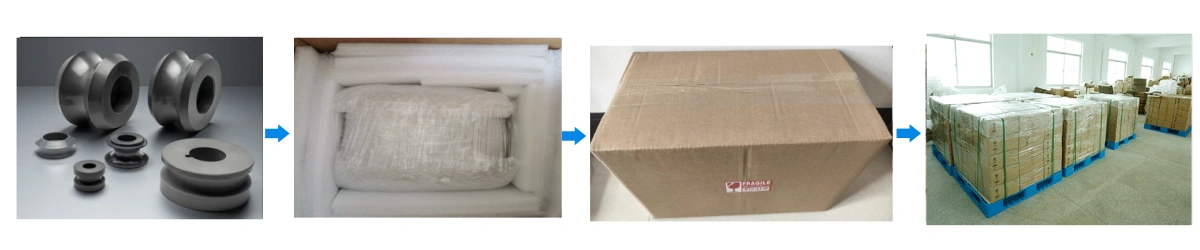
- Each roller is individually packed in shock-resistant foam and sealed in moisture-proof bags.
Si₃N₄ Welding Roller Applications
Silicon nitride welding rollers are commonly used in HF-ERW and precision tube mills where electrical insulation, reduced metal pick-up, stable groove geometry, and controlled run-out are important. Final roller design should be reviewed against the tube material, tube dimensions, mill speed, stand position, cooling, load, and shaft interface.
-
HF-ERW Steel Tube Mills
Suitable for weld, squeeze, guide, and support positions around the high-frequency welding zone.
1. Electrical insulation: Si₃N₄ does not conduct HF current, helping reduce unintended current paths and heat generation around the weld stand.
2. Stable groove geometry: Low thermal expansion helps maintain the running profile under changing temperature and load.
3. Wear-resistant surface: Hard ceramic grooves can reduce wear and metal pick-up when alignment and cooling are properly controlled.
Typical Challenge Addressed
Helps reduce groove wear, metal build-up, frequent roll changes, and weld-seam variation associated with worn steel rolls.
Recommended Configuration
Select the groove profile, face width, bore fit, keyway, run-out, and surface finish according to the tube OD, wall thickness, line speed, squeeze force, and stand drawing.
-
Aluminum Tube and Heat Exchanger Manufacturing
Suitable for thin-wall aluminum and copper-alloy tubes where surface marking and metal adhesion must be controlled.
1. Reduced metal pick-up: The ceramic groove helps limit aluminum adhesion and surface build-up.
2. Thin-wall tube protection: Smooth running surfaces and controlled edges help reduce streaks, dents, and local marking.
3. Thermal stability: Low expansion and good thermal-shock resistance support stable geometry during repeated heating and cooling.
Typical Challenge Addressed
Helps reduce groove cleaning, surface defects, and process interruptions caused by metal build-up on conventional rolls.
Recommended Configuration
Use a polished U-groove, radius groove, or drawing-specific tube profile with controlled run-out, softened edges, and surface finish matched to the tube material and wall thickness.
-
Stainless Steel and Precision Tube Lines
Suitable for small-diameter, stainless steel, and precision tubes requiring consistent geometry and surface quality.
1. Controlled running profile: High stiffness and low thermal expansion help maintain groove shape during extended production.
2. Surface consistency: Ground or polished ceramic surfaces help limit marking caused by roll wear or groove deformation.
3. Precision customization: Bore fit, concentricity, run-out, groove radius, and face width can be matched to the mill stand and tube specification.
Typical Challenge Addressed
Helps control edge wear, pitting, dimensional drift, and surface marking on precision tube lines.
Recommended Configuration
Specify the roller from the stand drawing and confirm the tube OD, wall thickness, material grade, mill speed, shaft interface, cooling method, run-out limit, and required surface finish.
RFQ Checklist — what to send for a fast, accurate review
1. Stand drawing or old-roll photos
2. OD, face width, bore + keyway/hub interface
3. Groove profile & tube OD/wall thickness
4. Run-out / concentricity requirement
5. Tube material (stainless / aluminium / copper / carbon steel)
6. Line speed & weld method (HF-ERW), cooling condition
7. Full-ceramic or hybrid ceramic-on-steel-hub
8. Current roll material, change interval & failure mode
9. Quantity & annual usage