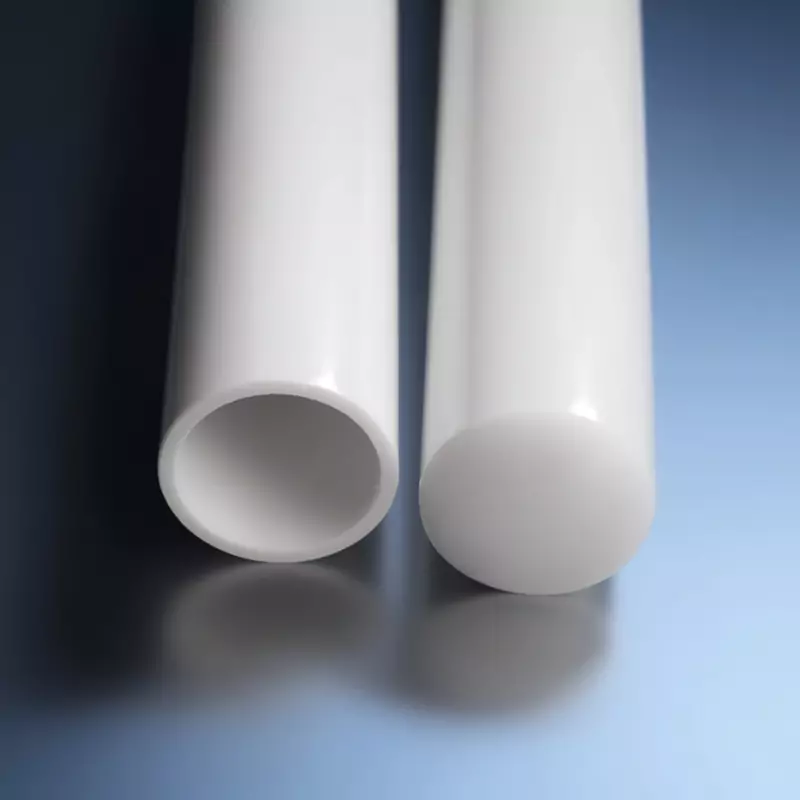
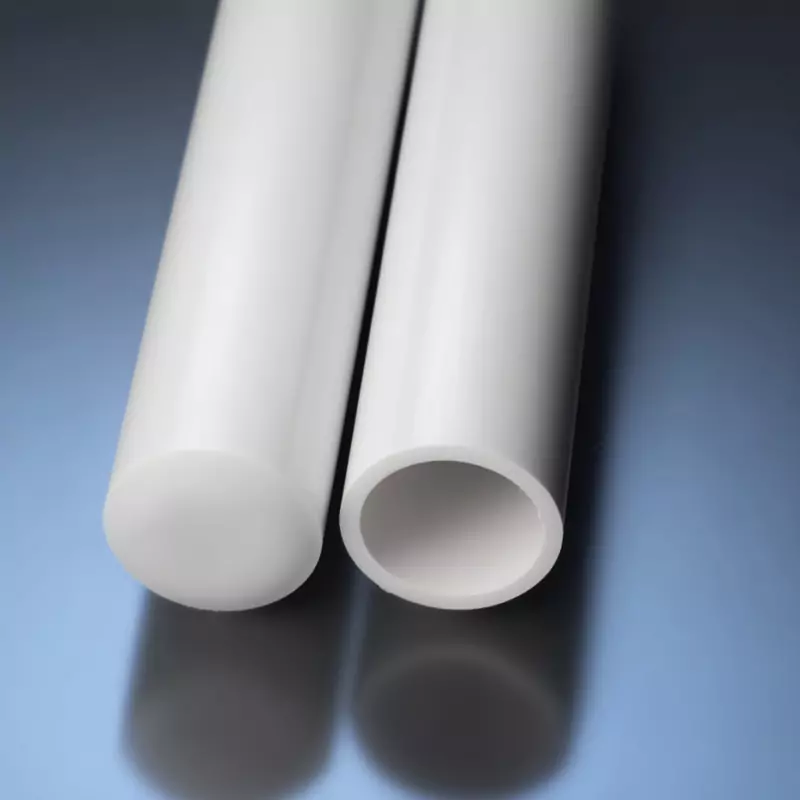
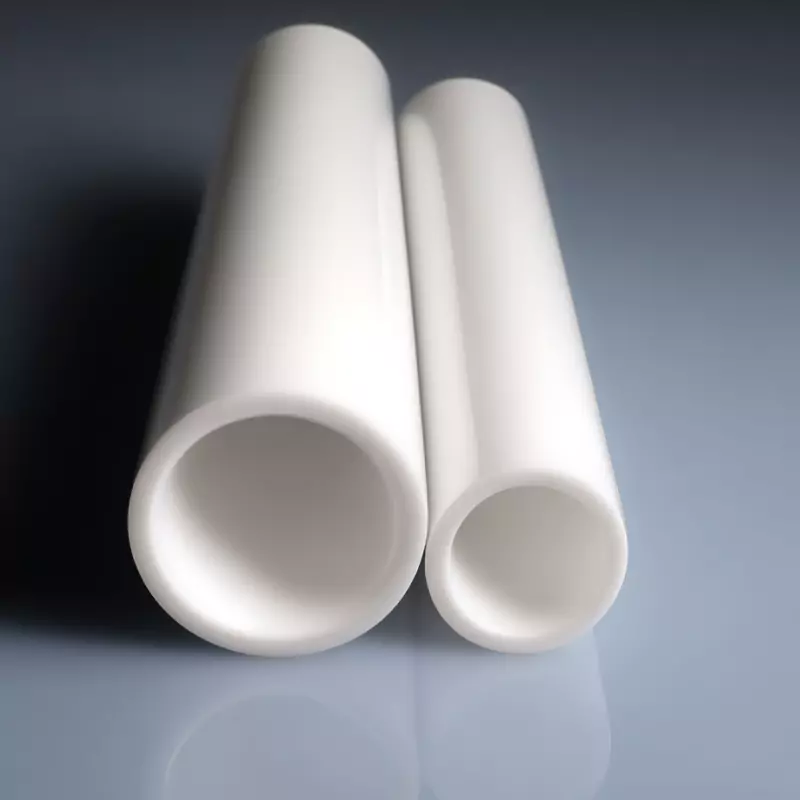
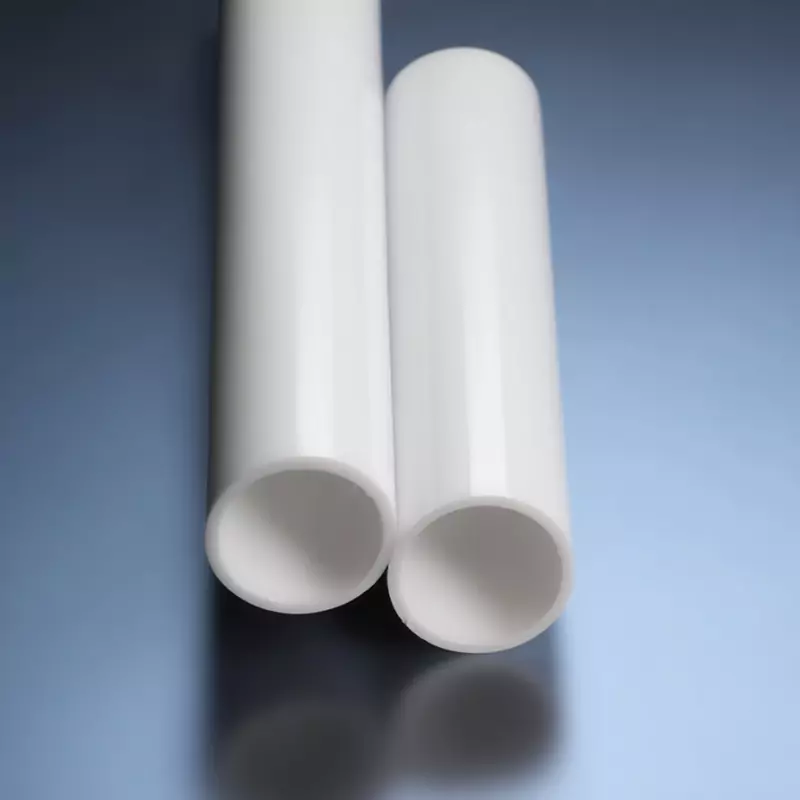
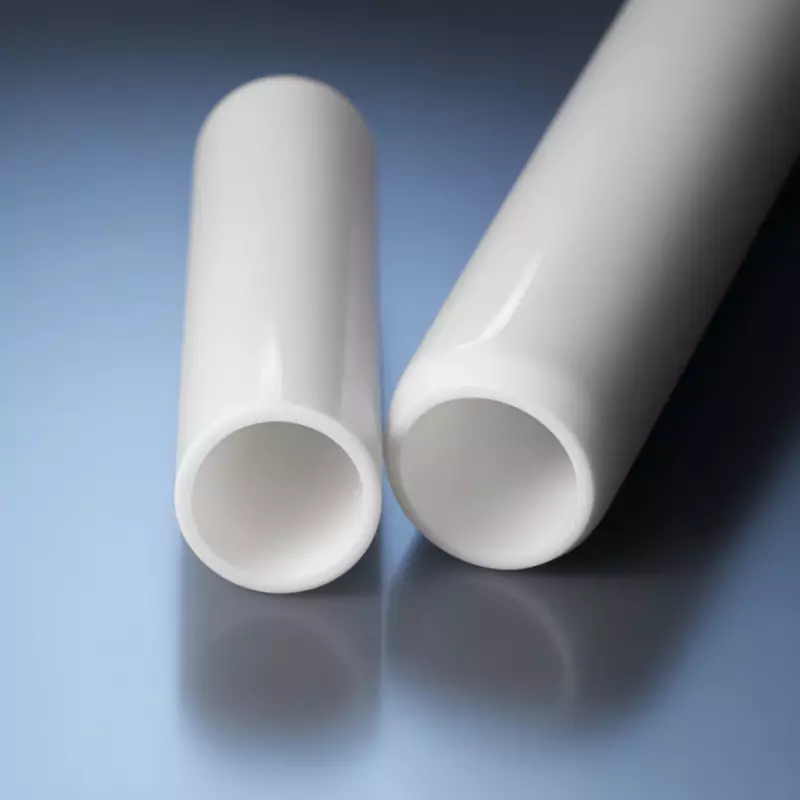
Start with the Closed-End YSZ Zirconia Ceramic Tube
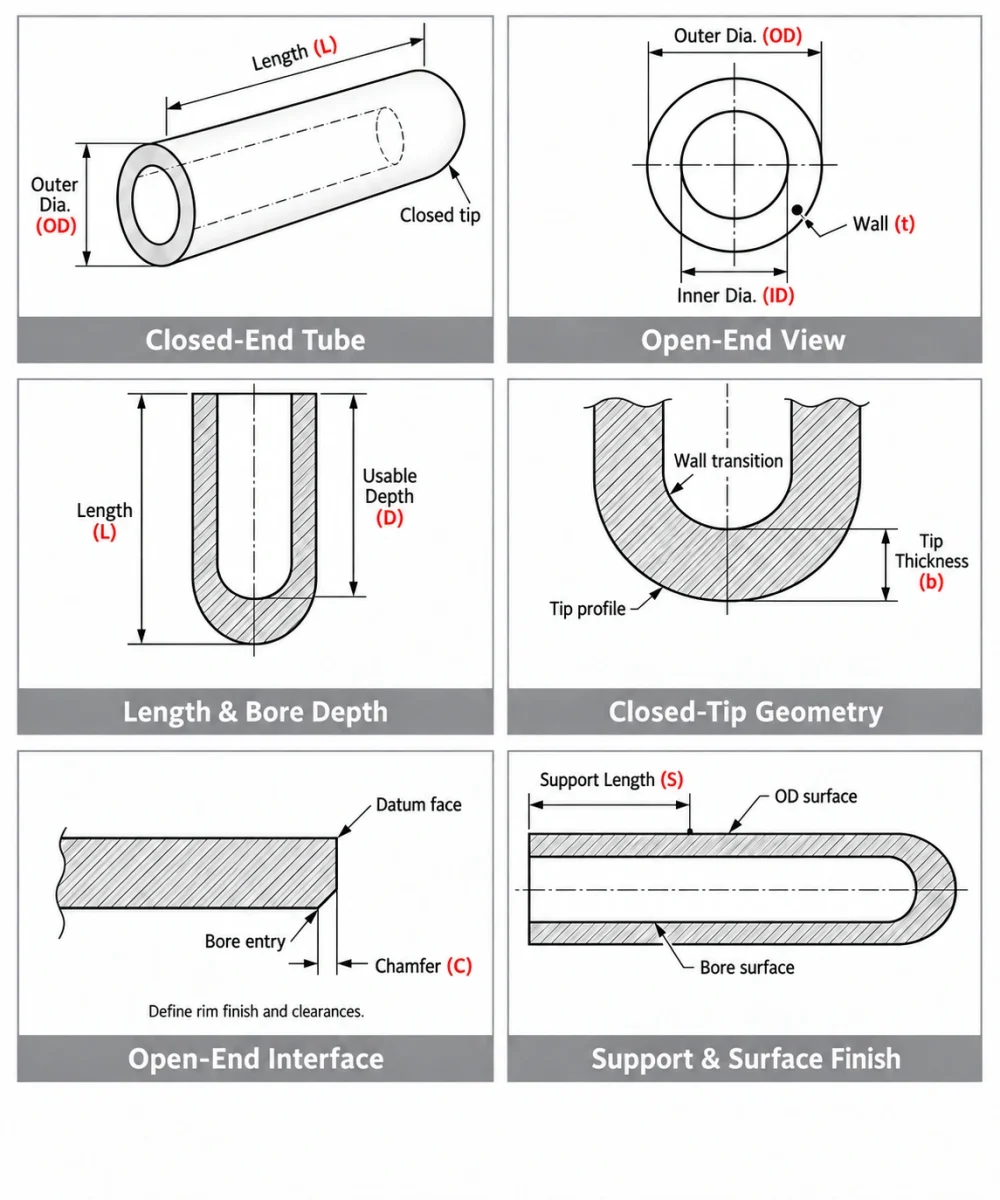
The closed ceramic tip forms the end of the probe cavity. Bore clearance, usable depth and tip thickness determine how an internal element fits. For gas-tight, pressure or immersion duty, assess the ceramic body and the open-end joint together under the specified operating and test conditions.
Match the closed-end tube to the assembly
- Probe clearance: ID and usable bore depth govern the space available for the sensor and its insertion.
- Closed tip: tip contour, minimum thickness and the transition to the side wall affect the end geometry.
- Mounting: locating faces, supported length and expansion allowance govern the fit within the assembly.
- Material duty: structural probe protection and oxygen-ion conduction follow different grade and validation requirements.
Reference Sizes for Closed-End YSZ Zirconia Tubes
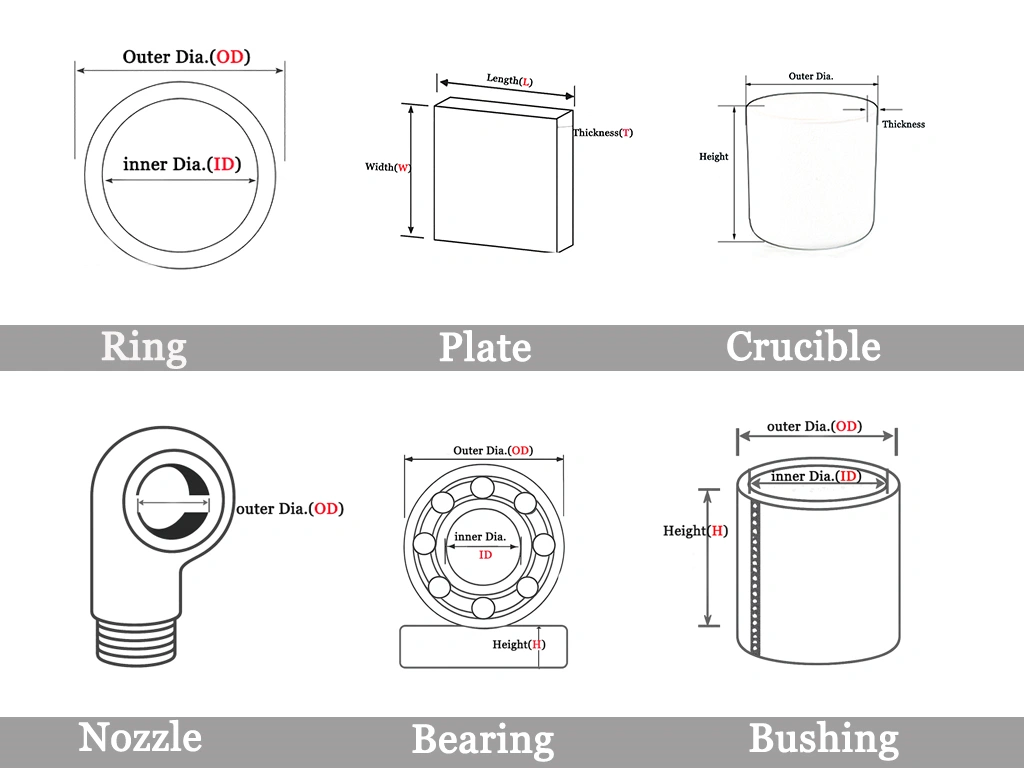
OD is outside diameter, ID is bore diameter and L is overall length. Usable bore depth and minimum closed-end thickness are separate drawing dimensions. Use the listed OD, ID and length together for each model.
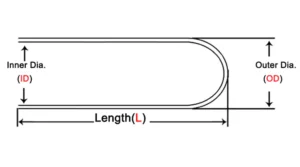
| Model | Outer Diameter (mm) | Inner Diameter (mm) | Length (mm) |
| AT-YHG-G1001 | 2.0 | 1.00 | ≤100 |
| AT-YHG-G1002 | 3.0 | 3.00 | |
| AT-YHG-G1003 | 4.0 | 2.50 | |
| AT-YHG-G1004 | 5.0 | 3.00 | |
| AT-YHG-G1005 | 6.0 | 3.50 | |
| AT-YHG-G1006 | 6.35 | 3.96 | |
| AT-YHG-G1007 | 7.95 | 4.78 | |
| AT-YHG-G1008 | 8.0 | 5.50 | ≤300 |
| AT-YHG-G1009 | 9.53 | 6.35 | |
| AT-YHG-G1010 | 10.0 | 6.00 | ≤500 |
| AT-YHG-G1011 | 10.0 | 7.00 | |
| AT-YHG-G1012 | 11.13 | 7.95 | |
| AT-YHG-G1013 | 12.0 | 8.00 | |
| AT-YHG-G1014 | 12.7 | 8.90 | |
| AT-YHG-G1015 | 14.0 | 10.00 | ≤600 |
| AT-YHG-G1016 | 15.0 | 10.00 | |
| AT-YHG-G1017 | 15.0 | 11.00 | |
| AT-YHG-G1018 | 16.0 | 12.00 | |
| AT-YHG-G1019 | 17.48 | 12.70 | |
| AT-YHG-G1020 | 19.05 | 14.30 | |
| AT-YHG-G1021 | 20.0 | 15.00 | |
| AT-YHG-G1022 | 22.23 | 15.80 | |
| AT-YHG-G1023 | 23.83 | 17.40 | |
| AT-YHG-G1024 | 25.0 | 18.80 | |
| AT-YHG-G1025 | 25.4 | 19.05 | |
| AT-YHG-G1026 | 26.0 | 20.00 | |
| AT-YHG-G1027 | 28.0 | 22.00 | |
| AT-YHG-G1028 | 30.0 | 23.00 |
Download the Product Catalogue
YSZ Grade References for Material Discussion
Compare AD-ZRO-3Y and AD-ZRO-8Y as separate material-grade references. The table gives composition and typical material properties under the stated conditions; select the actual grade together with the tube geometry and operating duty.
| Property and condition | AD-ZRO-3Y | AD-ZRO-8Y |
|---|---|---|
| Nominal yttria stabilizer level | approx. 3 mol% | approx. 8 mol% |
| Y₂O₃ content, composition table (wt%) | 5.0–5.5 | 13.3 ± 0.6 |
| Bulk density, typical material value (g/cm³) | 6.00–6.08 | 5.90 |
| Flexural strength, 20°C, typical (MPa) | 800–1000 | 300 |
| Fracture toughness, 20°C, typical (MPa·m½) | 7.2–9.0 | 3.5–4.0 |
| Linear thermal expansion, 40–80°C (×10⁻⁶/K) | 11 | / |
| Thermal conductivity, 20°C, typical (W/(m·K)) | 3 | / |
How to Choose a Closed-end YSZ Tube
Choose the material route by function, then check the dimensions and operating conditions. The reference grades support different design priorities.
| Your task | Material route | Decision to make |
|---|---|---|
| Structural protection of an internal probe | Discuss AD-ZRO-3Y where the higher room-temperature strength and toughness are relevant. | Match bore, tip and support geometry to the sensor and thermal cycle. |
| Oxygen-ion-conducting component | Discuss the required YSZ composition and functional grade, including an 8Y route where appropriate. | Define conductivity at operating temperature, atmosphere, electrodes, sealing and functional acceptance. |
| Replacement with an unspecified YSZ grade | Identify the required function and available original material information. | Resolve grade and critical fit before confirming the replacement specification. |
Failure modes to design against
| Possible contributors | Typical origin | Field that controls it |
|---|---|---|
| Tip fracture | Thin or uneven closed end, sharp transition at the tip, or point loading from a probe pressed against the end | Minimum tip thickness, transition radius, usable bore depth and probe insertion depth |
| Thermal-shock cracking | Fast heating or cooling across the tip and wall, or local heating at one position | Heating and cooling rates, hold times, insertion position and wall thickness |
| Cracking during thermal cycling | Repeated temperature changes combined with constrained expansion at the mount or seal. | Cycle count, mounting method, differential expansion allowance and seal design |
| Mechanical break at the mount | Forced alignment, over-clamping, unsupported overhang or vibration | Supported length, locating faces, clamping arrangement and straightness or concentricity tolerances |
| Chipped open rim | Impact during handling, assembly or cleaning | Open-end finish and chamfer, packaging and handling requirements, visual acceptance criteria |
| Attack or deposit build-up on the surface | Contact with a specific medium, immersion, or residue that is then cleaned aggressively | Medium composition, immersion depth and duration, cleaning method and the failure criterion you apply |
| Leakage through the part or its joint | Defects in the body or tip, or the open-end connection rather than the ceramic itself | Test medium, temperature, pressure difference, leak-rate limit and whether the mounting seal is inside the test boundary |
| Hydrothermal ageing of 3Y | Exposure to water or steam over time | Exposure temperature, pressure, duration and the evaluation conditions agreed for the grade |
| Slow or unexpected temperature reading | Junction position relative to the closed end, tip and wall thickness, air gap in the bore, mounting and medium flow | Junction position, usable bore depth, tip thickness, fit around the sensor and your definition of response |
| Loss of electrochemical function | Wrong composition or phase for the duty, electrode or sealing problems, or operation outside the intended window | Composition and unit, phase, electrodes, sealing scheme, operating window and functional acceptance limits |
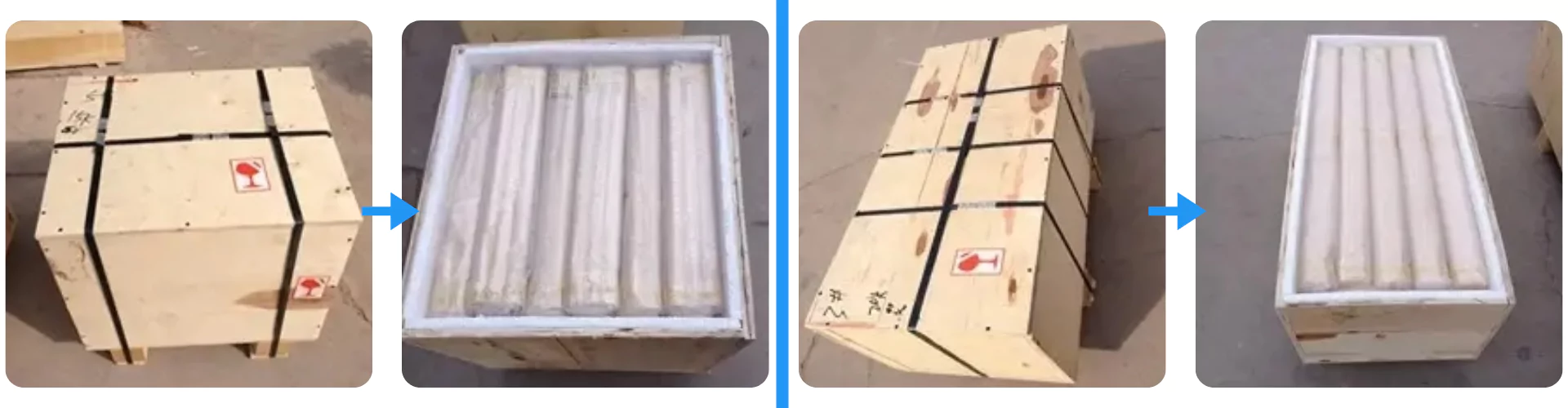
Packaging of Yttria Stabilized Zirconia Ceramic Tube with One End Closed
Closed-end YSZ zirconia tubes are packed with separation, cushioning and reinforced protection. Long or thin-wall tubes can use individual spacing and end protection to reduce transport damage.