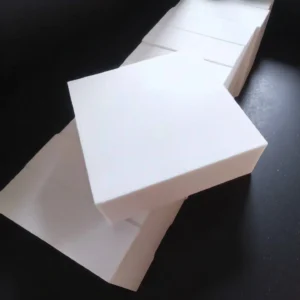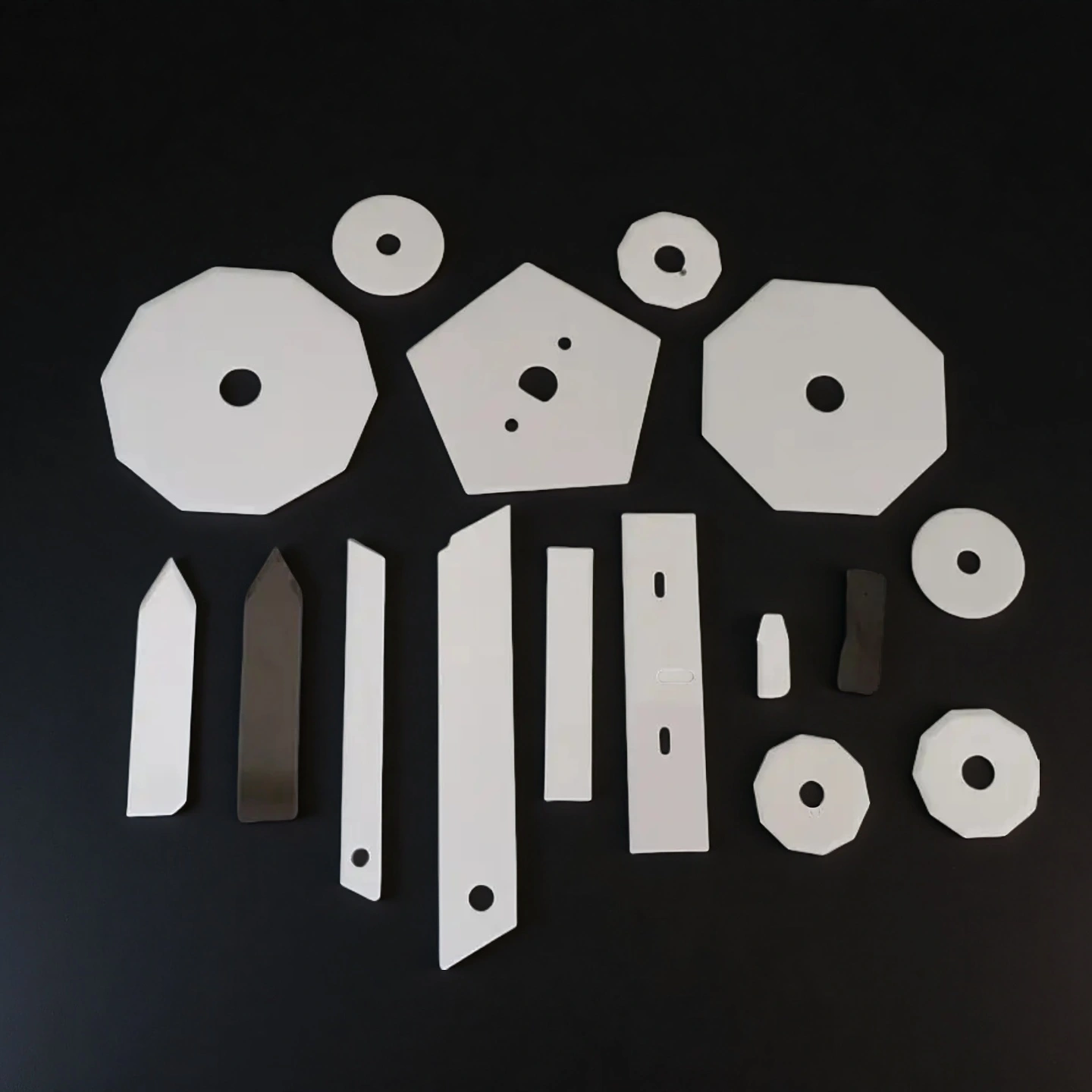
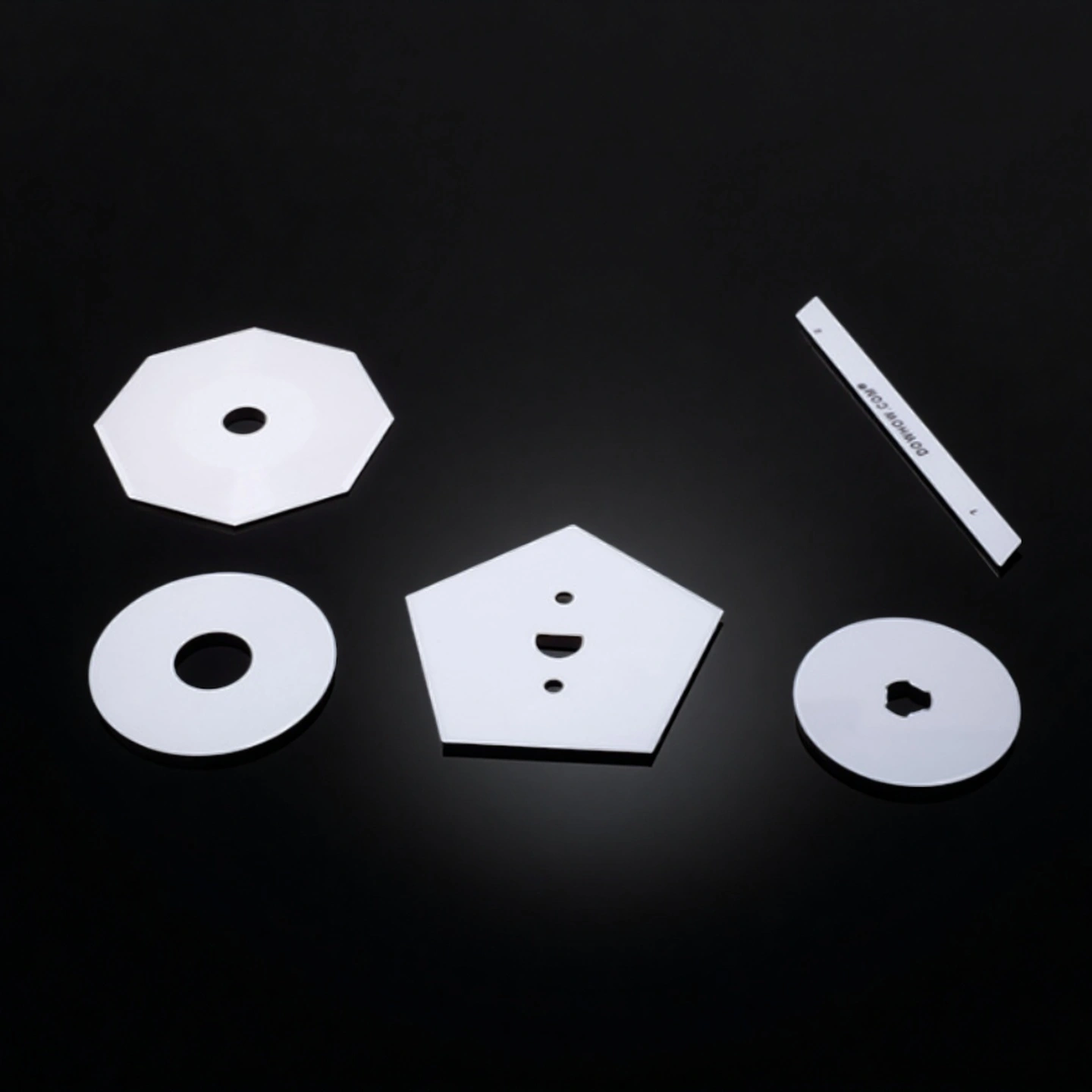
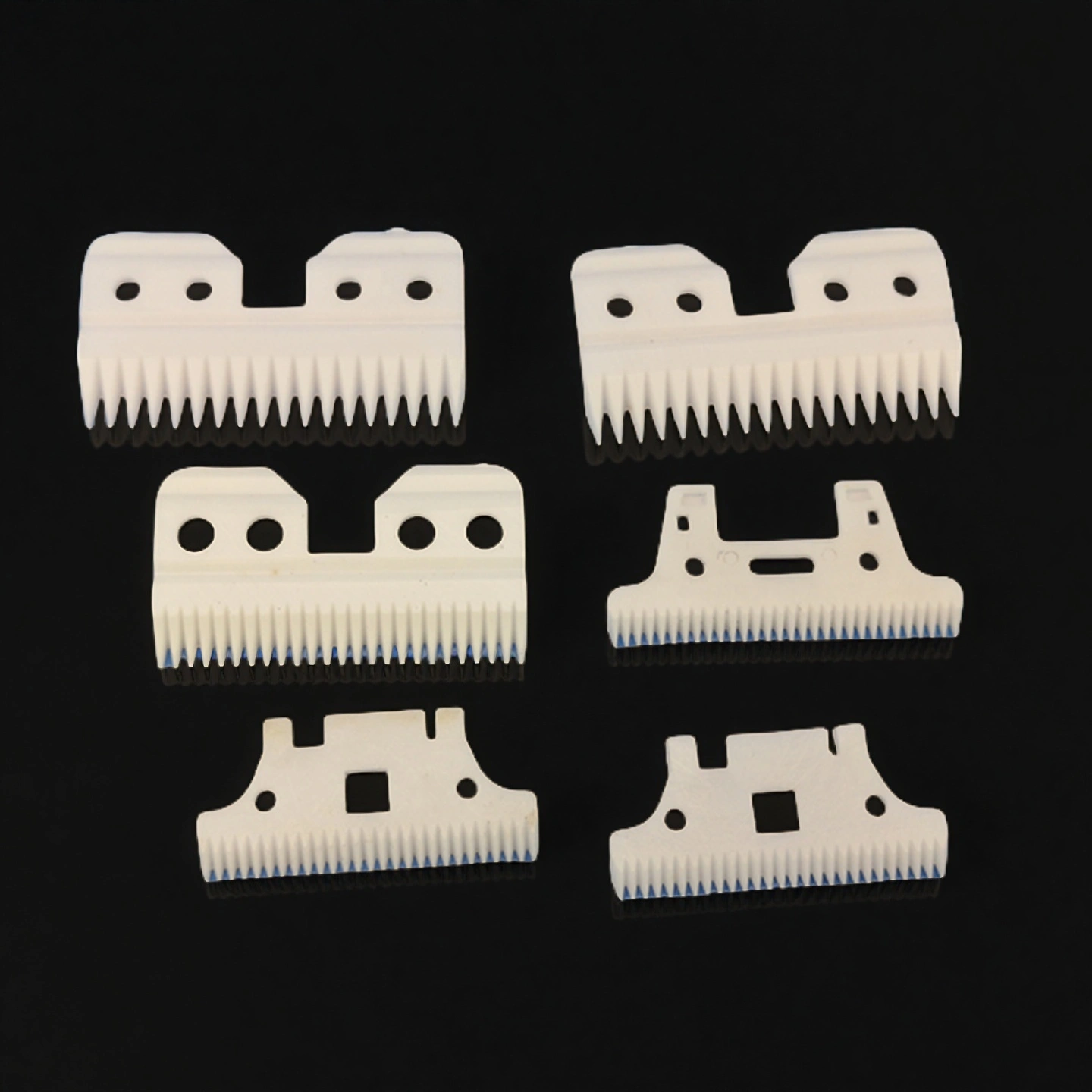
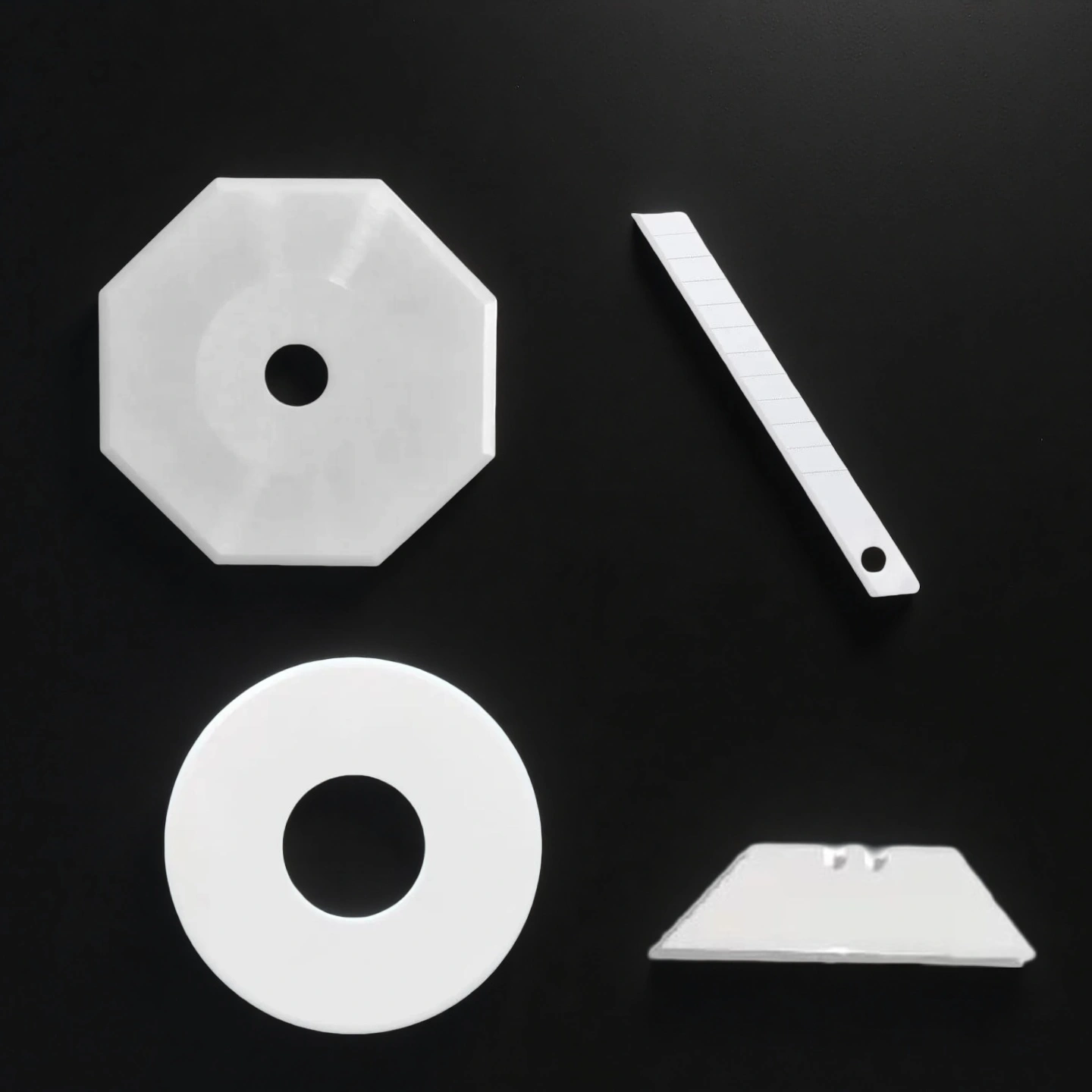
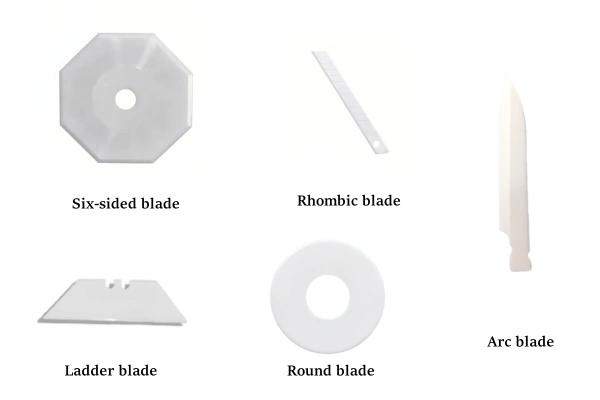
Zirconia ceramic blades are ZrO₂ cutting components used when industrial cutting systems require wear resistance, rust-free operation, electrical insulation, non-magnetic behavior and clean edge control. They are commonly considered for film slitting, gasket cutting, packaging conversion, electronics assembly and equipment-mounted cutting heads where steel or carbide blades may create burrs, corrosion, frequent replacement or contamination risk.
Technical Features of Zirconia Ceramic Blades
Zirconia ceramic blades are selected for industrial cutting systems where edge stability, wear resistance, rust-free performance and clean material contact are important. The final cutting result depends on blade geometry, edge finish, holder alignment, substrate material and working speed.
High Surface Hardness for Longer Edge Retention
Yttria-stabilized zirconia provides a hard ceramic cutting edge that helps reduce wear in repeated slitting, trimming and non-metal cutting applications. It is suitable for processes where steel blades become dull quickly or require frequent replacement.
Fine Edge Finish for Cleaner Cutting Contact
Zirconia blades can be ground and polished to a fine edge finish according to the drawing requirement. A controlled edge profile helps reduce burrs, dragging marks and particle generation when the blade is properly mounted and matched with the target material.
Higher Toughness Than Many Oxide Ceramics
Compared with many conventional oxide ceramics, zirconia offers better fracture toughness and stronger resistance to edge damage. It is still a ceramic material, so holder alignment, clamping force and impact control remain important during installation and use.
Rust-Free and Non-Magnetic Cutting Surface
Zirconia does not rust like steel and is non-magnetic, making it useful for equipment where corrosion marks, magnetic attraction or metal contamination may affect the cutting process. This is especially helpful in film, gasket, electronics assembly and precision equipment applications.
Stable Performance in Warm Cutting Conditions
Zirconia ceramic maintains good dimensional stability in many warm or heated cutting environments. For applications involving adhesive film, polymer sheet or thermal exposure, ADCERAX can review the working temperature, cleaning method and holder material before quotation.
Suitable for Equipment-Mounted Cutting Heads
Custom zirconia blades can be designed with mounting holes, slots, chamfers, stepped profiles or special edge shapes. The blade thickness, hole position and edge angle should be reviewed together to reduce vibration, uneven loading and edge chipping risk.
Technical Properties of Zirconia Ceramic Blades
The following values are typical reference properties for yttria-stabilized zirconia used in precision ceramic blade applications. Final performance should be reviewed according to blade geometry, edge profile, holder design, cutting pressure, material being cut, cleaning method and operating environment.
| Property | Specification | Engineering Relevance |
|---|---|---|
| Material Composition | Yttria-Stabilized ZrO₂, ≥ 94% | This material provides a balanced combination of hardness, toughness and wear resistance for precision ceramic blade applications. |
| Density | 6.0 g/cm³ | High density helps improve structural stability and edge consistency during repeated cutting cycles. |
| Vickers Hardness | ≥ 12.5 GPa | High surface hardness helps the blade resist edge wear when cutting films, tapes, gasket sheets and selected non-metal materials. |
| Flexural Strength | ≥ 1,000 MPa | Strong flexural strength supports blade stability when the part is properly mounted in a rigid holder. |
| Compressive Strength | > 2,000 MPa | High compressive strength helps the blade withstand clamping and contact pressure when the mounting surface is well aligned. |
| Fracture Toughness | 8–10 MPa·m¹/² | Higher toughness than many oxide ceramics helps reduce edge damage risk, but impact and excessive torque should still be avoided. |
| Thermal Conductivity | 2.2 W/m·K at 20°C | Low thermal conductivity helps reduce heat transfer through the blade in selected warm cutting or trimming conditions. |
| Thermal Expansion | 10.3 × 10⁻⁶ /K at 25–600°C | Thermal expansion should be reviewed together with the holder material to reduce stress during temperature changes. |
| Electrical Resistivity | > 10¹² Ω·cm | High electrical insulation is useful for equipment where electrical conduction or static-sensitive handling must be considered. |
| Surface Roughness (Ra) | ≤ 0.02 μm | A fine polished surface helps support cleaner cutting contact and may reduce material dragging or residue build-up. |
| Magnetic Permeability | ≈ 0 μr, non-magnetic | Non-magnetic behavior is helpful in precision equipment where magnetic attraction or metal particle transfer should be reduced. |
| Chemical Stability | Acid and alkali resistant | Zirconia is suitable for many industrial environments, but the actual chemical medium, concentration and temperature should be reviewed before use. |
| Maximum Service Temperature | ≥ 1,000°C in air atmosphere | High temperature stability supports selected heated or warm cutting environments, but final use should be checked by blade geometry and mounting design. |
Specifications of Zirconia Ceramic Blades
| Square Zirconia Ceramic Blades | |||||
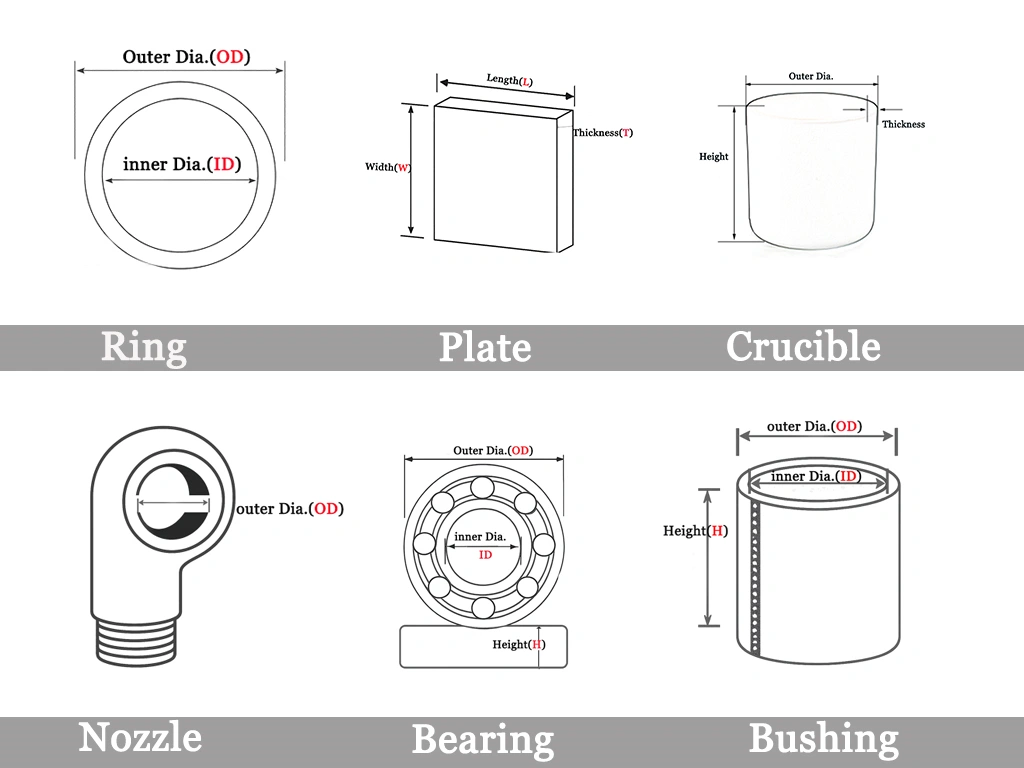
| Item No. | Length(mm) | Width (mm) | Thickness(mm) | Purity(%) | Blade |
| AT-YHG-D001 | 43 | 22 | 0.2 | 95 | Single-sided edge |
| AT-YHG-D002 | 22 | 10 | 0.7 | 95 | Single-sided edge |
| AT-YHG-D003 | 38 | 8 | 0.3 | 95 | Single-sided edge |
| AT-YHG-D004 | 47 | 10 | 0.5 | 95 | Single-sided edge |
| AT-YHG-D005 | 75 | 10 | 0.5 | 95 | Single-sided edge |
| AT-YHG-D006 | 85 | 10 | 0.9 | 95 | Single-sided edge |
| AT-YHG-D007 | 90 | 15 | 0.9 | 95 | Single-sided edge |
| AT-YHG-D008 | 125 | 10 | 0.5 | 95 | Single-sided edge |
| AT-YHG-D009 | 131 | 10 | 0.5 | 95 | Single-sided edge |
| AT-YHG-D010 | 135 | 8 | 0.3 | 95 | Single-sided edge |
| AT-YHG-D011 | 151 | 10 | 0.13 | 95 | Single-sided edge |
| AT-YHG-D012 | 152.8 | 10 | 0.5 | 95 | Single-sided edge |
| AT-YHG-D013 | 152.8 | 8 | 0.9 | 95 | Single-sided edge |
| AT-YHG-D014 | 190 | 10 | 0.5 | 95 | Single-sided edge |
| AT-YHG-D015 | 210 | 10 | 0.5 | 95 | Single-sided edge |
| AT-YHG-D016 | 244 | 10 | 0.5 | 95 | Single-sided edge |
| AT-YHG-D017 | 310 | 10 | 0.5 | 95 | Single-sided edge |
| AT-YHG-D018 | 311 | 10 | 0.5 | 95 | Single-sided edge |
| AT-YHG-D019 | 38.5 | 19 | 0.25 | 95 | Single-sided edge |
| AT-YHG-D020 | 38.5 | 19 | 0.35 | 95 | Single-sided edge |
| AT-YHG-D021 | 43 | 22 | 0.25 | 95 | Single-sided edge |
| AT-YHG-D022 | 100 | 18 | 0.5 | 95 | Single-sided edge |
| AT-YHG-D023 | 80 | 9.2 | 0.4 | 95 | Single-sided edge |
| AT-YHG-D024 | 60 | 12 | 0.5 | 95 | Single-sided edge |
| AT-YHG-D025 | 57 | 18 | 0.2-0.6 | 95 | Single-sided edge |
| AT-YHG-D026 | 58 | 13 | 0.2 | 95 | Single-sided edge |
| AT-YHG-D027 | 100 | 22 | 0.2 | 95 | Single-sided edge |
| AT-YHG-D028 | 100 | 22 | 0.4 | 95 | Single-sided edge |
| AT-YHG-D029 | 51 | 10 | 0.6 | 95 | Single-sided edge |
| AT-YHG-D030 | 60 | 33 | 0.5 | 95 | Single-sided edge |
| AT-YHG-D031 | 56 | 8 | 0.2-0.6 | 95 | Single-sided edge |
| AT-YHG-D032 | 46 | 13 | 0.9 | 95 | Single-sided edge |
| AT-YHG-D033 | 45 | 31 | 0.7 | 95 | Single-sided edge |
| AT-YHG-D034 | 25 | 7.1 | 0.25 | 95 | Single-sided edge |
| AT-YHG-D035 | 122 | 19 | 0.5 | 95 | Single-sided edge |
| AT-YHG-D036 | 39 | 25 | 0.4 | 95 | Single-sided edge |
| AT-YHG-D037 | 44 | 13 | 0.8 | 95 | Single-sided edge |
| AT-YHG-D038 | 48 | 26 | 0.9 | 95 | Single-sided edge |
| AT-YHG-D039 | 50 | 19 | 0.6 | 95 | Single-sided edge |
| AT-YHG-D040 | 60 | 22 | 0.2-0.6 | 95 | Double-sided edge |
| AT-YHG-D041 | 43 | 22 | 0.2-0.6 | 95 | Double-sided edge |
| AT-YHG-D042 | 43 | 22 | 0.3 | 95 | Double-sided edge |
| AT-YHG-D043 | 43 | 22 | 0.15-0.5 | 95 | Double-sided edge |
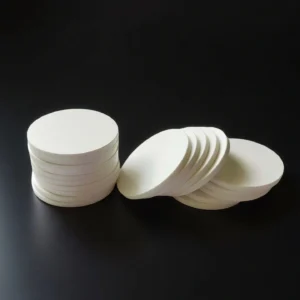
| Zirconia Ceramic Blades | |||||
| Item No. | Length(mm) | Width (mm) | Thickness(mm) | Purity(%) | Blade |
| AT-YHG-D1001 | 65 | 10 | 0.5 | 95 | Round |
| AT-YHG-D1002 | 45 | 8 | 0.3 | 95 | Round |
| AT-YHG-D1003 | 50 | 15 | 0.6 | 95 | Round |
| AT-YHG-D1004 | 52 | 10 | 1 | 95 | Round |
| AT-YHG-D1005 | 60 | 12 | 0.5 | 95 | Round |
| AT-YHG-D1006 | 60 | 12 | 1 | 95 | Round |
| AT-YHG-D1007 | 63 | 8 | 0.5 | 95 | Round |
| AT-YHG-D1008 | 63 | 8 | 1 | 95 | Round |
| AT-YHG-D1009 | 65 | 20 | 0.8 | 95 | Round |
| AT-YHG-D1010 | 25 | 8 | 0.63 | 95 | Round |
| AT-YHG-D1011 | 28 | 8 | 0.6 | 95 | Round |
| AT-YHG-D1012 | 32 | 8 | 0.6 | 95 | Round |
| AT-YHG-D1013 | 34 | 8 | 0.63 | 95 | Round |
| AT-YHG-D1014 | 36 | 8 | 0.63 | 95 | Round |
| AT-YHG-D1015 | 38 | 8 | 0.63 | 95 | Round |
| AT-YHG-D1016 | 40 | 8 | 0.63 | 95 | Round |
| AT-YHG-D1017 | 45 | 8 | 0.63 | 95 | Round |
| AT-YHG-D1018 | 20 | 12 | 0.6 | 95 | Round |
| AT-YHG-D1019 | 28 | 8 | 0.5 | 95 | Round |
| AT-YHG-D1020 | 65 | 8 | 0.63 | 95 | Round |
| AT-YHG-D1021 | 28 | 8 | 0.63 | 95 | Round |
| AT-YHG-D1022 | 32 | 8 | 0.63 | 95 | Round |
| AT-YHG-D1023 | 65 | 10 | 0.4 | 95 | Round |
| AT-YHG-D1024 | 45 | 8 | 0.5 | 95 | Round |
| AT-YHG-D1025 | 68 | 10 | 0.5 | 95 | Octagon |
| AT-YHG-D1026 | 68 | 10 | 1 | 95 | Octagon |
| AT-YHG-D1027 | 70 | 16.5 | 0.5 | 95 | Octagon |
| AT-YHG-D1028 | 28 | 8 | 0.63 | 95 | Decagon |
| AT-YHG-D1029 | 25 | 8 | 0.63 | 95 | Sixteen-sided shape |
Zirconia Ceramic Blades vs Steel and Carbide Blades
| Comparison Point | Zirconia Ceramic Blades | Steel Blades | Carbide Blades |
|---|---|---|---|
| Wear behavior | Strong wear resistance in many non-metal cutting tasks. | Easy to dull in abrasive or adhesive materials. | Good wear resistance, but may chip depending on grade and edge geometry. |
| Corrosion behavior | Rust-free and chemically stable in many industrial environments. | May rust or pit in humid or chemical conditions. | More stable than steel, but binder phase may be affected in some media. |
| Magnetic behavior | Non-magnetic. | Usually magnetic. | Usually affected by metallic binder composition. |
| Electrical behavior | Electrically insulating. | Conductive. | Conductive or semi-conductive depending on composition. |
| Edge risk | Hard but brittle; poor mounting may cause chipping. | Tougher but wears faster. | Hard and strong, but edge damage may still occur under impact. |
| Best use | Clean slitting, film trimming, gasket cutting and precision equipment blades. | General low-cost cutting. | Heavy-duty cutting where impact and toughness are required. |
When to Choose Zirconia Ceramic Blades
Zirconia ceramic blades are not selected only because they are hard. They are usually considered when the cutting process has repeated wear, corrosion exposure, adhesive build-up, static-sensitive material handling or strict edge-quality requirements. The best result depends on blade geometry, holder design, cutting speed, substrate hardness and installation control.
For Film Slitting and Web Cutting
Choose zirconia blades when thin films, tapes, separator materials or packaging webs require clean edge control and low burr formation. The blade thickness, edge angle and mounting stability should be reviewed together because excessive vibration can still cause ceramic edge damage.
For Gasket and Composite Sheet Cutting
Zirconia can be considered for PTFE, graphite-filled, aramid or reinforced composite sheets where metal blades wear, rust or leave edge contamination. Final suitability should be checked according to sheet hardness, cutting pressure and tool-holder alignment.
For Electronics and Precision Assembly
ZrO₂ ceramic blades are useful when non-magnetic behavior, electrical insulation and cleaner cutting contact are important. They can be considered for selected electronics assembly, insulation film trimming and precision equipment cutting tasks. Semiconductor-grade or wafer-contact claims should only be used when the application and qualification requirements are confirmed.
For Hot or Adhesive Film Trimming
Zirconia blades may help reduce rusting and thermal softening compared with steel blades in selected warm trimming processes. The actual operating temperature, polymer behavior and cleaning method should be reviewed before use.
Packaging of Zirconia Ceramic Blades
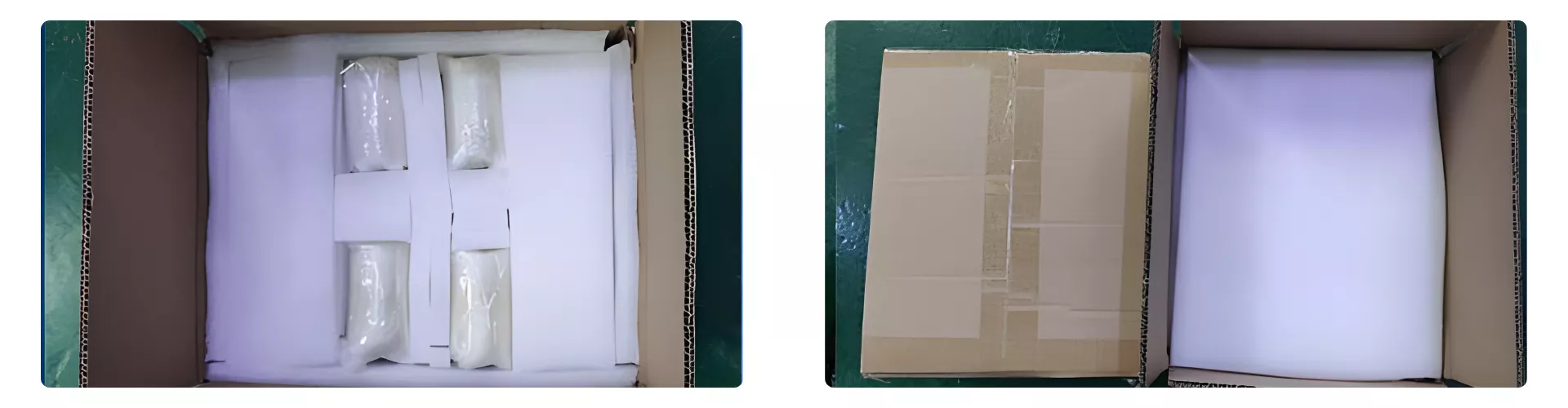
Zirconia ceramic blades are packed with individual separation, foam positioning and reinforced outer protection according to blade size, edge sharpness and order quantity. This helps reduce blade-to-blade contact, edge impact and vibration damage during international shipping.