Zirconia Ceramic Components for Drawing-Based Supply
Zirconia ceramic components are technical ceramic parts used where metal wears, corrodes or conducts where it should not. ADCERAX supplies published products — bearings, sleeves, positioning pins and blocks, sealing rings, nozzles, grinding jars, dispersion rotors and grading wheels — or custom parts machined to your drawing in 3Y-TZP, Mg-PSZ, Ca-PSZ or 8Y-FSZ.
Each part is specified by material grade, geometry and mating interfaces. Send a drawing, a worn part or an application brief with the medium, temperature and load; the review returns the material route and quotation steps.
What Are Zirconia Ceramic Components?
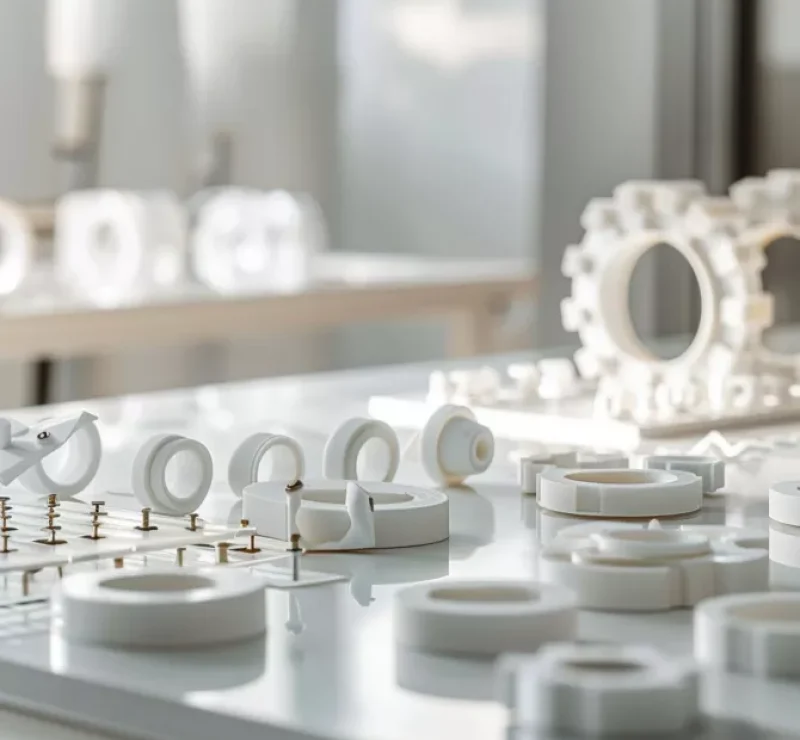
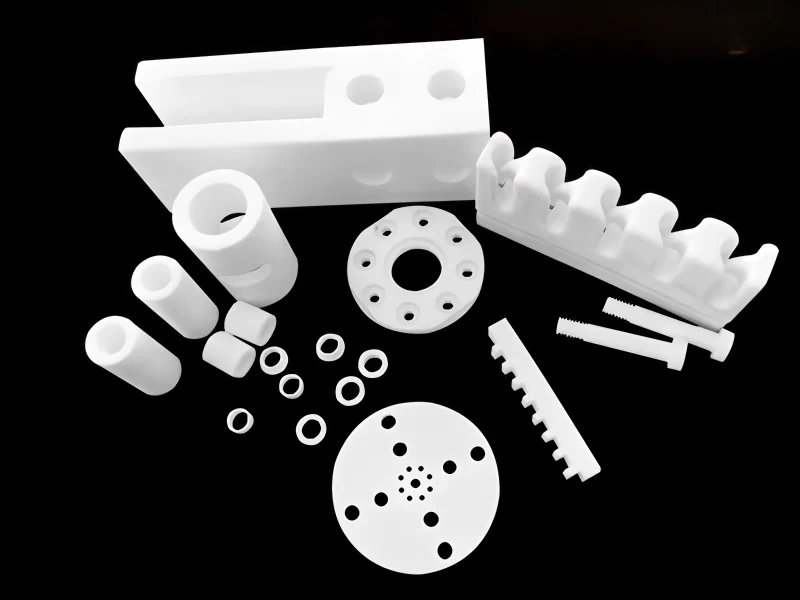
Zirconia ceramic components are technical ceramic parts made from zirconium dioxide stabilized with yttria, magnesia or calcia to hold a defined crystal structure. They are specified by function and interfaces — grade, dimensions, mating surfaces, acceptance — and supplied as catalog products or machined to drawing.
Find the Zirconia Component Family
Choose by what the part does in the assembly. Each card opens the product page with dimensions, grade options and quotation detail for that family.
Motion, Structural and Fastening Parts
Choose the complete bearing or the individual wear and structural part by its assembly interface and duty.
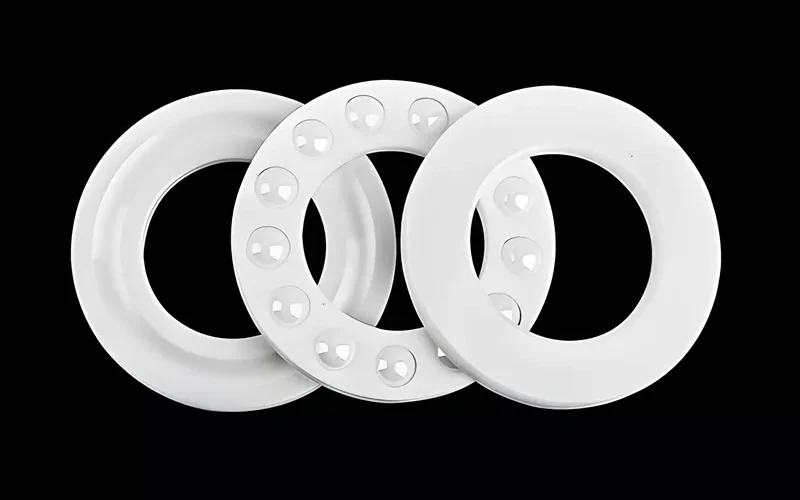
Bearing configuration, shaft and housing fit, cage, load, speed and operating medium
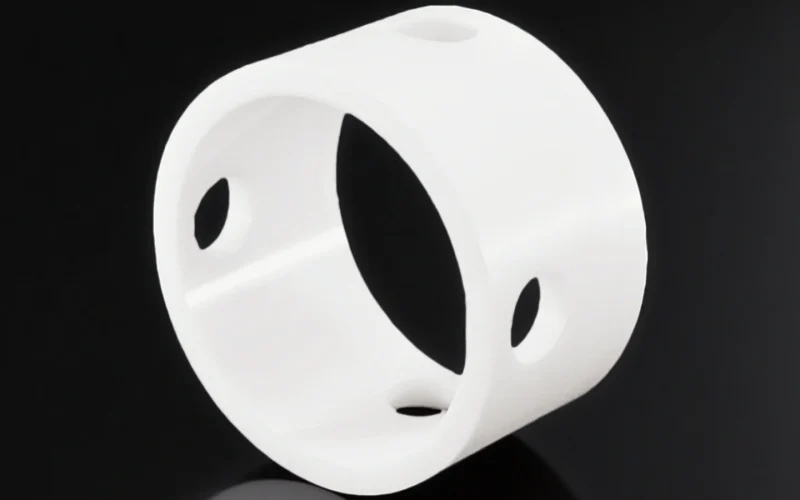
Bore and shaft fit, OD, length, shoulders, lubrication and contact wear
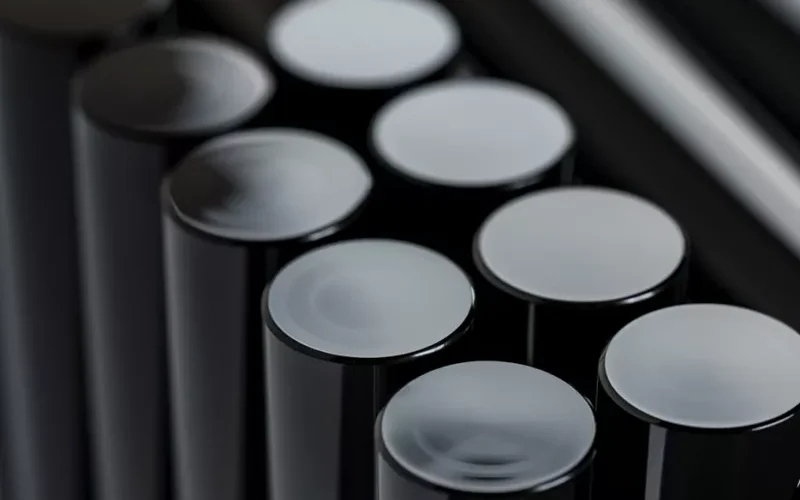
Material designation, diameter, length, straightness, ends and required surface
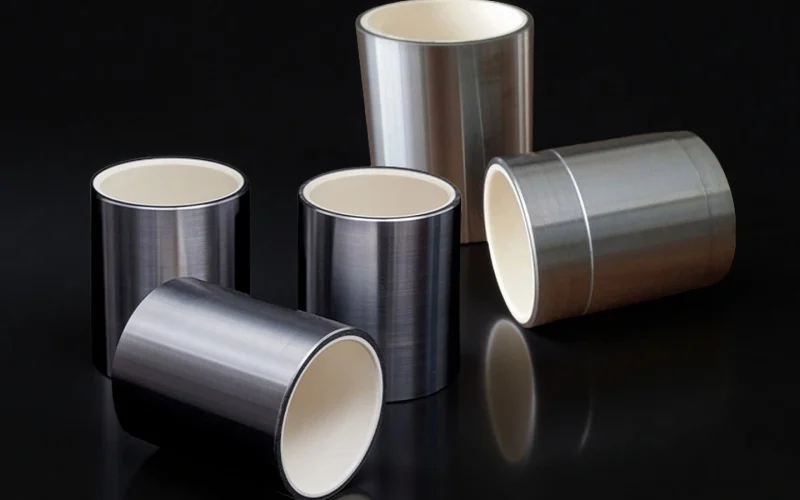
Working bore, housing interface, piston contact, end features and fluid duty
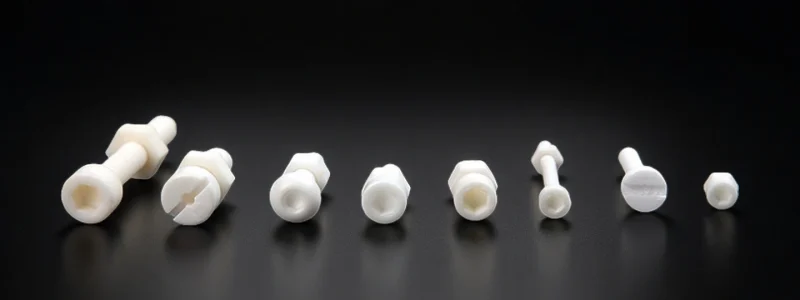
Thread, engagement length, head form, mating fasteners and tightening load requirement
Positioning and Alignment Parts
Specify the features that locate the workpiece or guide the moving item: pitch, profile, datum and mating fit.
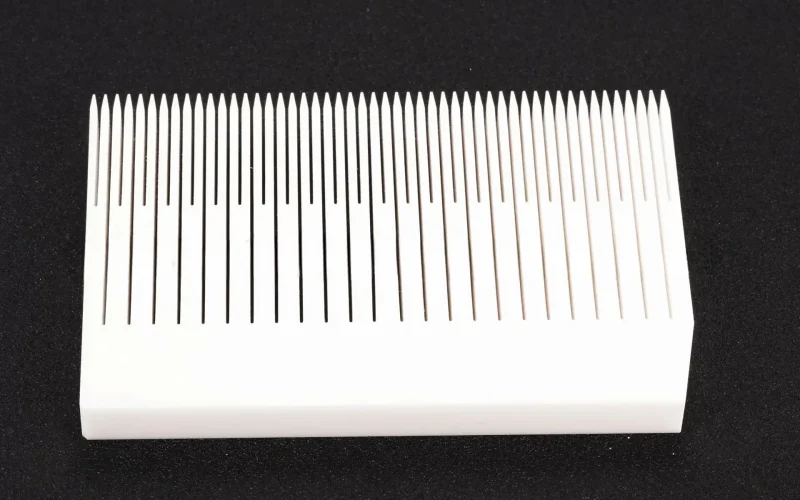
Tooth pitch, width, groove form, working contact and mounting dimensions
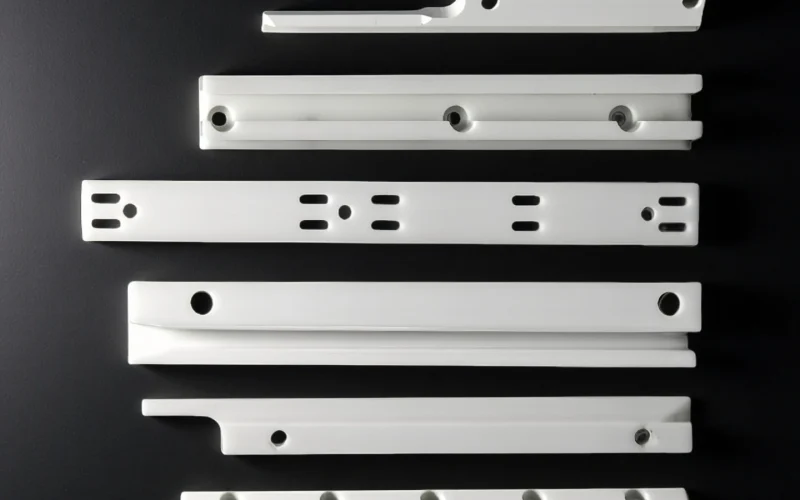
Guide profile, straightness, mounting holes, datum and sliding contact
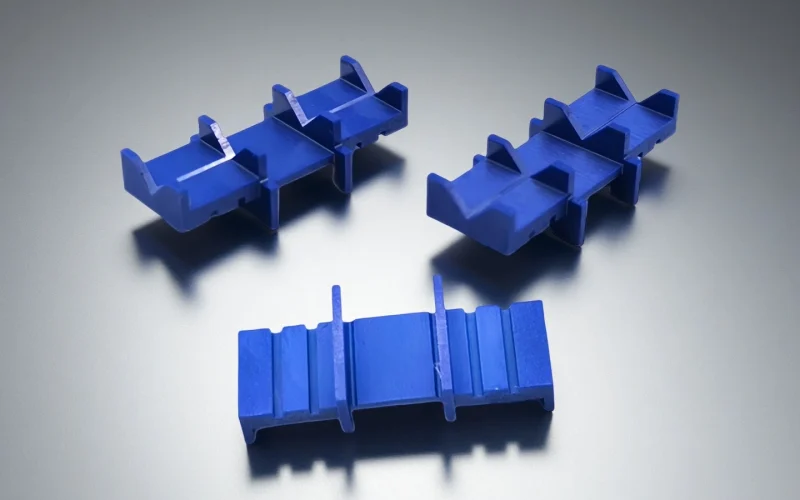
Groove angle or pitch, part diameter, position datum and alignment requirement
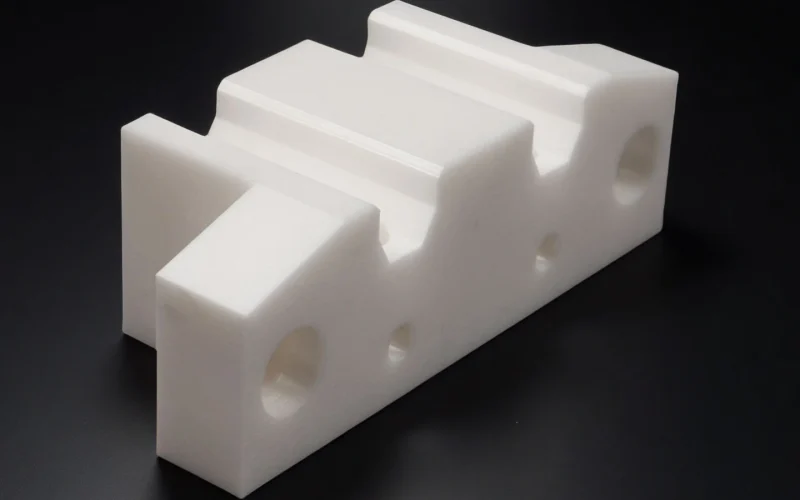
Working faces, mounting holes, datum relationship, flatness and locating accuracy
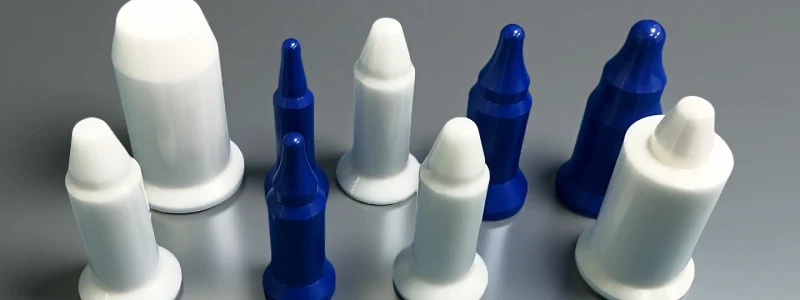
Locating diameter, shoulder, tip, mating hole and repeated contact or load cycle
Pump, Sealing and Flow-Contact Parts
Define the ceramic body and its connection to the pump, holder or sealing assembly, together with the contact medium.
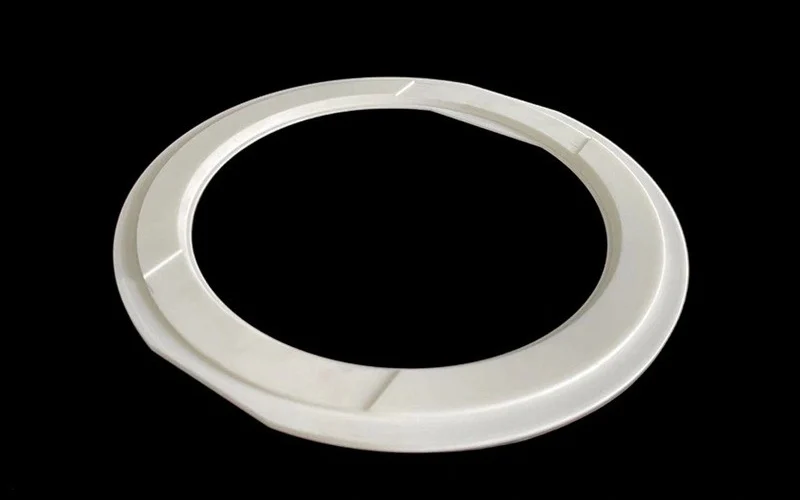
OD, ID, thickness, mating faces, flatness, finish, pressure and leakage criterion
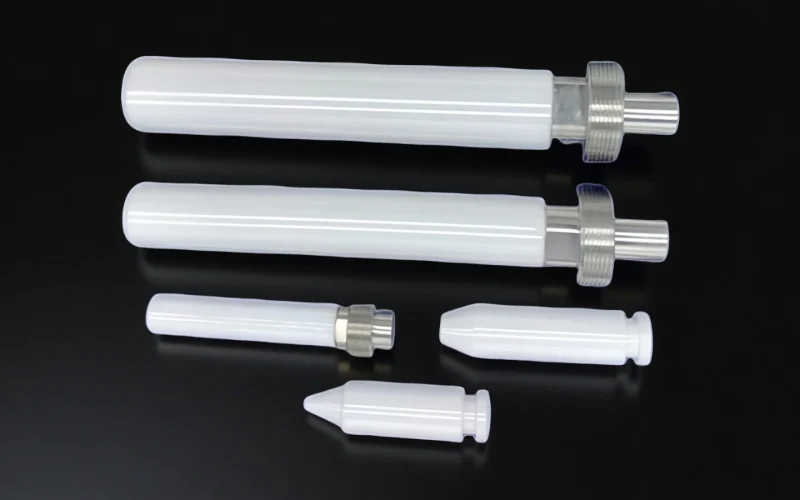
Ceramic working body, end connection, bore fit, stroke, pressure and fluid
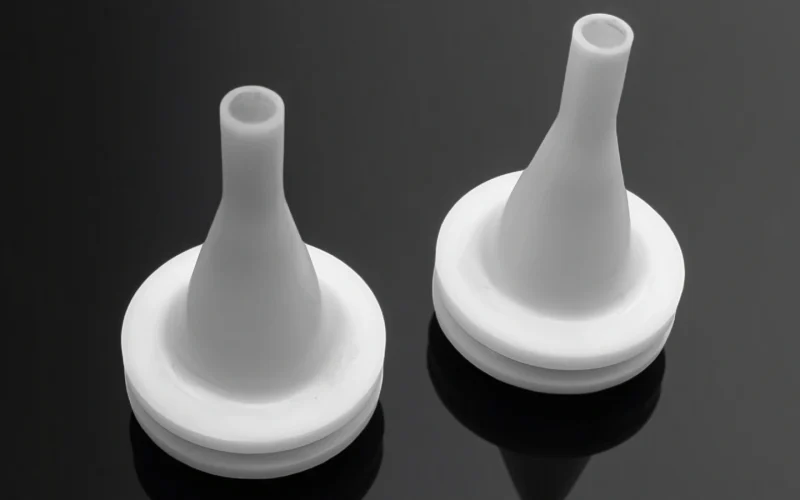
Flow passage, outlet, mounting or holder, medium, flow target and temperature
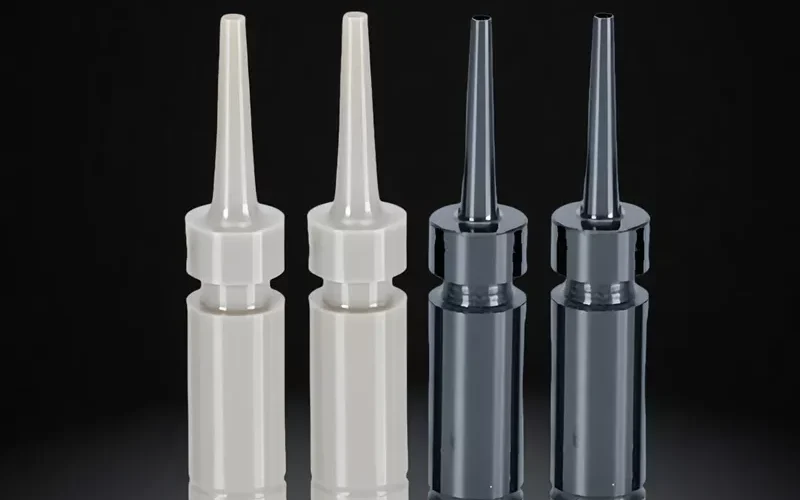
Outlet geometry, spray target, connection, fluid or solids and operating pressure
Ceramic body or lining, OD, ID, thickness, bolt pattern, sealing face and assembly scope
Grinding, Dispersion and Dry Classification Parts
Choose by the process: container grinding, wet dispersion or dry powder classification. Match the component to its drive and working space.
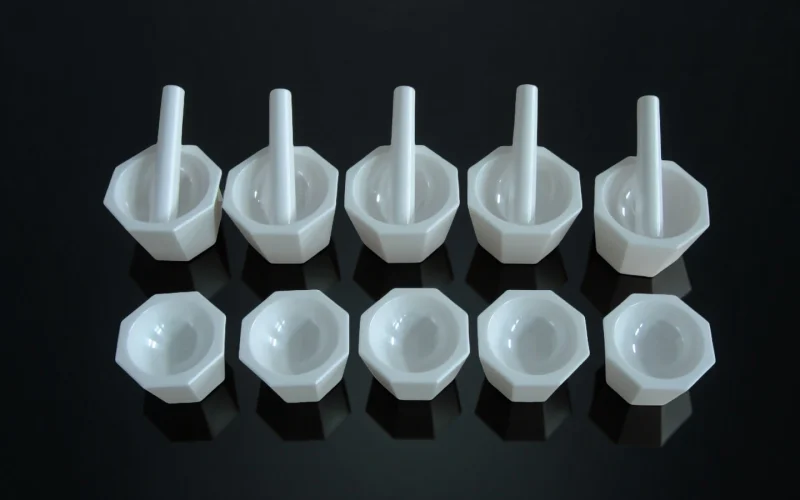
Usable bowl dimensions, pestle shape, sample chemistry and cleanliness criterion
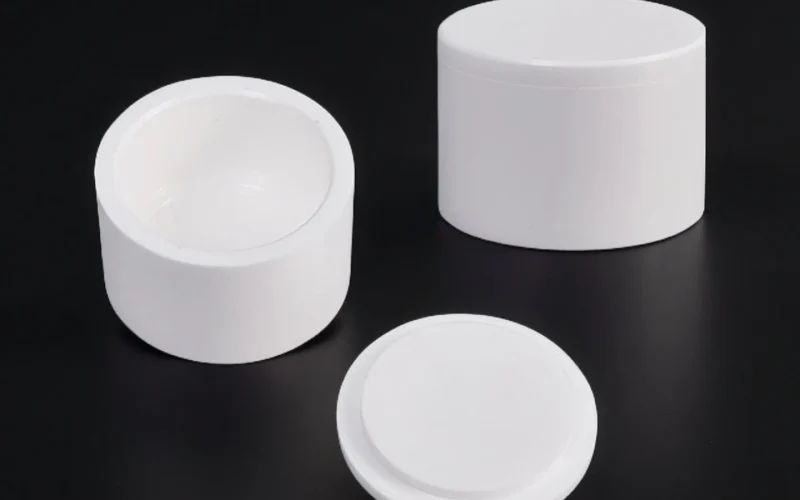
Usable volume, lid or seal, mill fixture, media and sample load
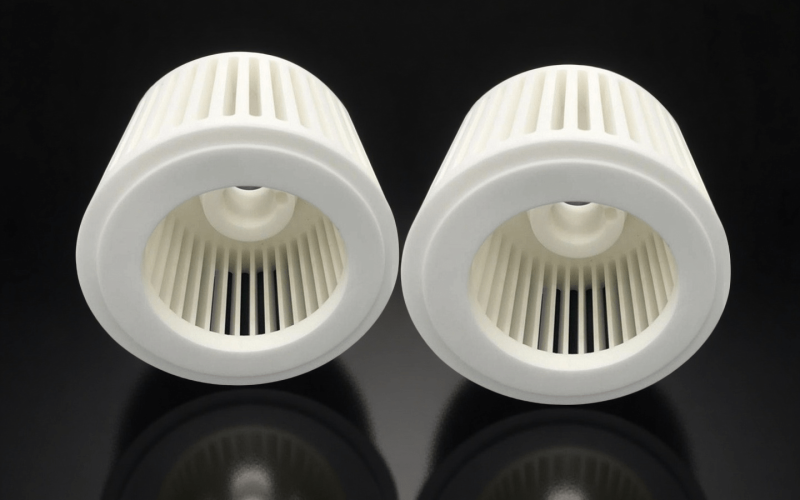
Dry classification: wheel geometry, shaft interface, powder, airflow, rpm and balance
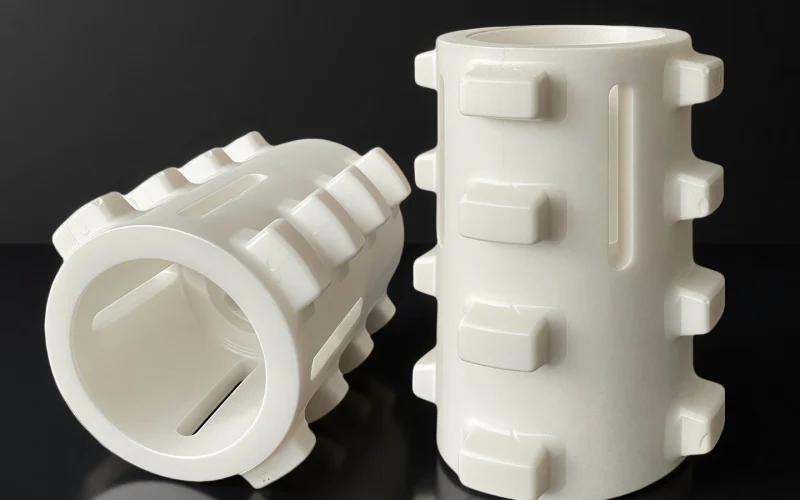
Wet dispersion: rotor geometry, shaft fit, chamber, slurry, rotation and wear criterion
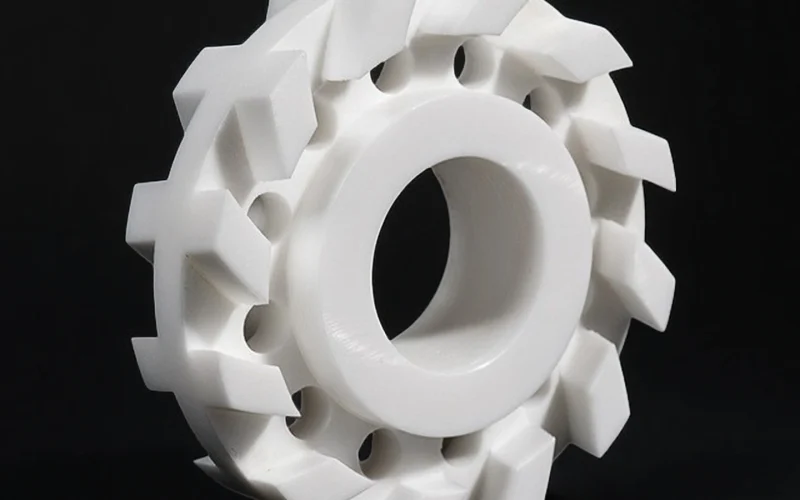
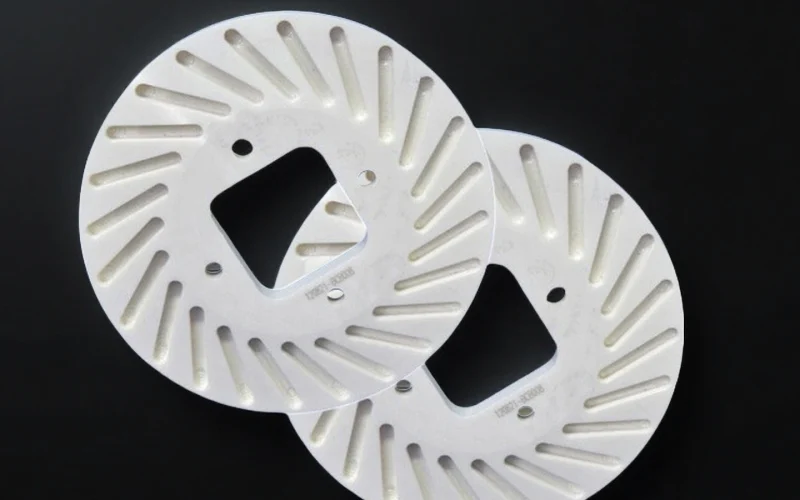
Disc diameter and thickness, bore, hub or bolt pattern, rotation direction and slurry duty
Not on the list?
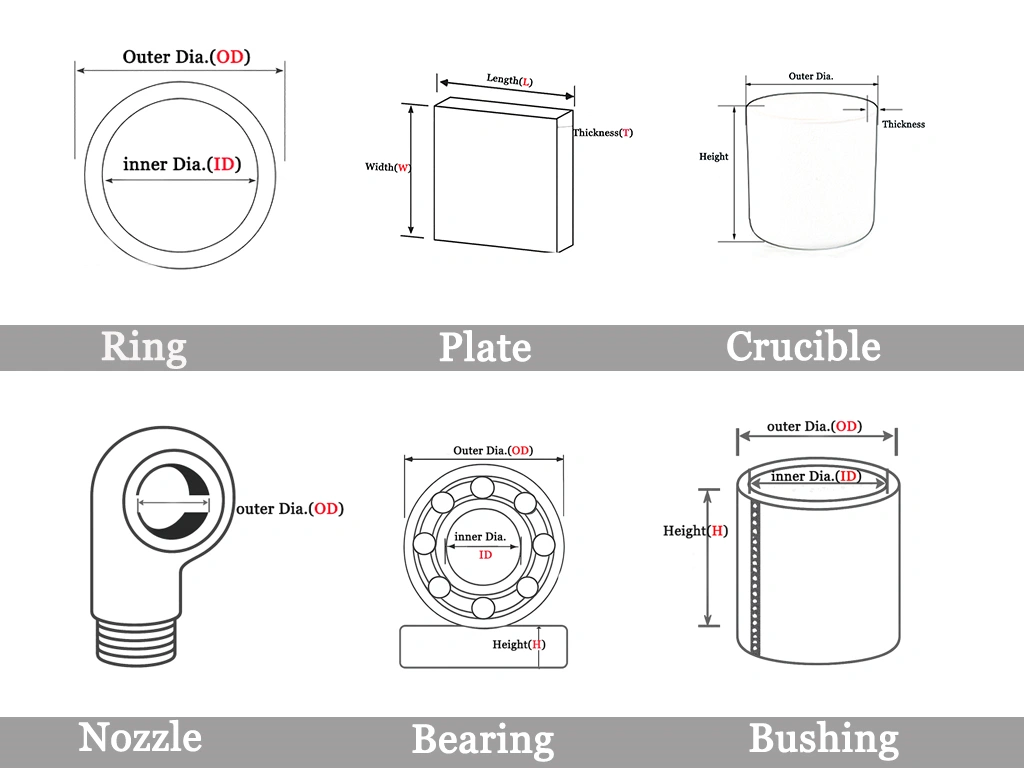
Shafts, tubes, bushings, liners, plates and other shapes are supplied to your drawing. Start an inquiry with what you have — a drawing, a sample or an application brief.
Typical Properties of ADCERAX Zirconia Grades
Zirconia Ceramic Components from ADCERAX are engineered to meet stringent industrial requirements in strength, stability, and chemical resistance.
| Property | AD-ZRO-3Y | AD-ZRO-8Y | AD-ZRO-MG | AD-ZRO-CA |
|---|---|---|---|---|
| System | 3Y-TZP | 8Y-FSZ | Mg-PSZ | Ca-PSZ |
| Density (g/cm³) | 6.00–6.08 | 5.90 | 5.70–5.80 | 5.60–5.75 |
| Flexural strength (MPa, 20°C) | 800–1000 | 300 | 500–755 | 400–600 |
| Hardness (GPa) | 12.5 | 12.3 | 11.5 | 10–11 |
| Fracture toughness KIC (MPa·m½) | 7.2–9.0 | 3.5–4.0 | 6–12 | 5–8 |
| Typical use | Structural / wear | Oxygen-ion / functional | Toughness / cycling | Dense ceramic, product-specific |
| Typical parts and applications | Bearings, shaft and cylinder sleeves, pistons and sealing rings | Oxygen-ion and solid-electrolyte components, rather than structural wear parts | Positioning pins subject to repeated impact or cycling | Nozzles, spray nozzles and flanges |
Not Sure Which Zirconia Part You Need?
Send a drawing, a worn sample or the working conditions. The review returns the grade, the open questions and a quotation scope.
Anything beyond our published families is machined to drawing in 3Y-TZP, Mg-PSZ, Ca-PSZ or 8Y-FSZ.
Zirconia Ceramic Components in Industrial Equipment
Zirconia ceramic components are widely adopted across sectors where mechanical reliability, chemical stability, and long-term dimensional control are essential. These four task groups cover most of what our parts are used for.
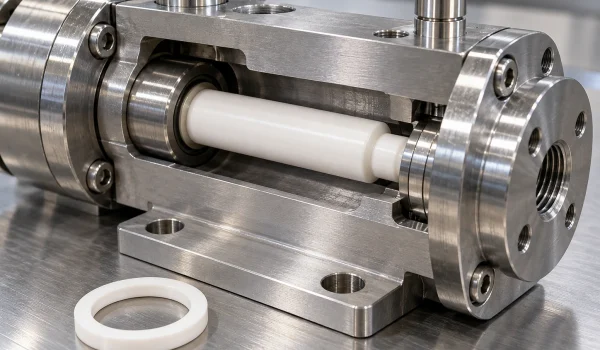
Mechanical motion and fluid handling
Bearings, shaft and cylinder sleeves, pistons and sealing rings
Load, speed or stroke, mating dimensions, fluid, pressure, temperature, lubrication and wear or leakage criteria
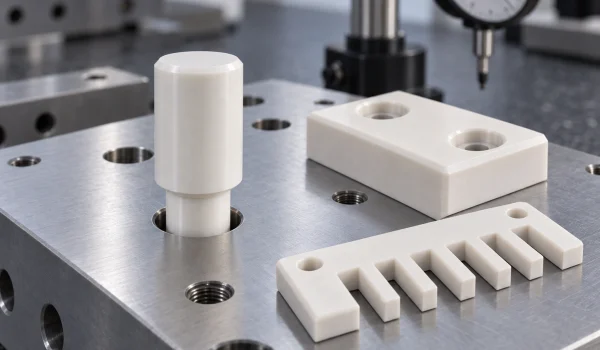
Positioning and alignment
Pins, blocks, guide rails, combs and V-groove forms
Working datum, pitch or profile, mating hole or workpiece, contact cycle, cleanliness and alignment target
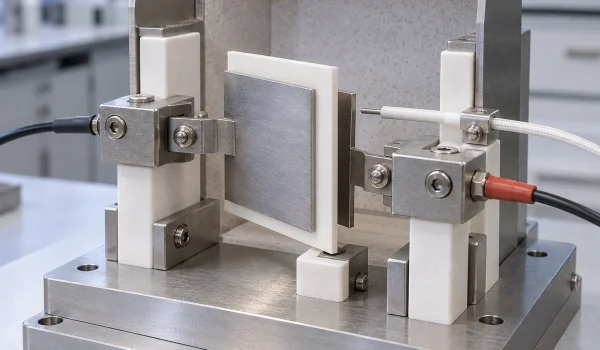
Energy and functional ceramic tasks
Structural parts or specified 8Y-FSZ components
Mechanical duty or ionic and electrical target; operating temperature, atmosphere, electrode arrangement and test method
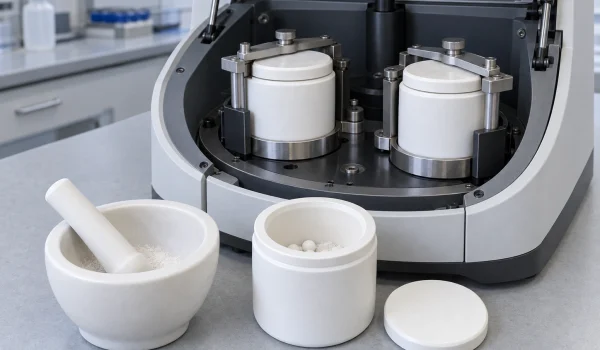
Laboratory and material processing
Mortar sets, grinding jars, dispersion parts and grading wheels
Wet or dry process, sample, slurry or powder, mill or shaft interface, media, cleaning and allowable wear-derived contamination
Custom Zirconia Ceramic Components Made to Your Drawing
ADCERAX is a China-based advanced ceramics manufacturer for custom precision ceramic components. Zirconia parts are machined to your drawing or sample after an engineering review, and the material route is confirmed with the quotation once geometry, grade and quantity are reviewed.
Customization Options
Rings, sleeves, pins, blocks, nozzles, discs and shaped wear parts machined from your drawing or sample.
Bore, locating diameter, sealing face, flatness, concentricity and surface finish reviewed feature by feature.
Chipping, wear, leakage, fit loss and thermal shock checked before the material route is fixed.
3Y-TZP, Mg-PSZ, Ca-PSZ, 8Y-FSZ or black zirconia matched to temperature, medium, load and electrical function.
Drawing revision, critical features, quantity, inspection items and documents confirmed with the quotation.
From Part Requirement to Repeat Supply
establish the purchasing unit, working position and mating interfaces.
compare the stabilizer route against temperature, medium and load.
define the part, finishing, inspection and delivery scope.
check the sample against the agreed dimensions and application criteria.
use the approved drawing revision and order requirements.
FAQ about Zirconia Ceramic Components
Technical answers to help you specify, source, and use alumina ceramic parts effectively.
Yes, all parts are produced using fully stabilized zirconia, including YSZ and MSZ grades, ensuring long-term phase stability, high hardness, and superior chemical resistance.
Features such as blind bores, keyways, radial holes, multi-axis chamfers, internal threads, and complex cross-sections can be supported with 5-axis CNC machining.
All components are manufactured under contamination-controlled protocols, suitable for use in aggressive media and ultra-pure environments including battery slurry and catalyst applications.
Zirconia parts made from Yttria-Stabilized Zirconia can typically operate up to 1000 °C in air and up to 2200 °C under inert atmosphere, depending on part geometry.
ADCERAX® supplies components with typical dimensional tolerances of ±0.01 mm for precision shafts, sleeves, and alignment parts. For complex geometries, tighter limits may be achieved subject to review.
For structural and wear parts, start with 3Y-TZP. If the part sees repeated impact or fast thermal cycling, review Mg-PSZ. Ca-PSZ is selected for specific configurations and contact media after review. 8Y-FSZ is for oxygen-ion and solid-electrolyte functions, not structural wear. The grade is confirmed for the finished part during quotation.
Use the mating component, available original dimensions and surviving functional features to establish the intended fit. Confirm the replacement geometry and inspection points on a drawing before evaluating the trial part.
Sometimes, but not always. A ring, sleeve or plate can often drop into an existing design with small changes. Zirconia is hard and brittle with different thermal expansion and mounting needs, so many parts work better with adjusted edge radii, clearances, support faces or fixing method. Send the metal drawing and the operating conditions, and the review will say where a direct swap works and where the geometry has to change.
Request a Zirconia Part Engineering Review
Send a drawing, a worn part or an application brief. The review covers material route, critical dimensions and inspection scope before quotation.
- Drawing & Project — Drawing revision, reference photos and the current issue with the part.
- Mating Interface — Mating shaft, housing or fixture, working dimensions and locating datums.
- Operating Conditions — Medium, temperature, load and any electrical or cleanliness requirement.
- Quantity & Delivery — Trial quantity, expected repeat demand and delivery destination.
The review confirms the material route, critical features and inspection scope before a quotation is issued. Replacement projects may require a sample or fit check before the drawing is released.
*Our team will answer your inquiries within 24 hours.
*Your information will be kept strictly confidential.
info@adcerax.com
Tel:+86-0731-84428843
WhatsApp:+86 19311583352
Within 24 hours