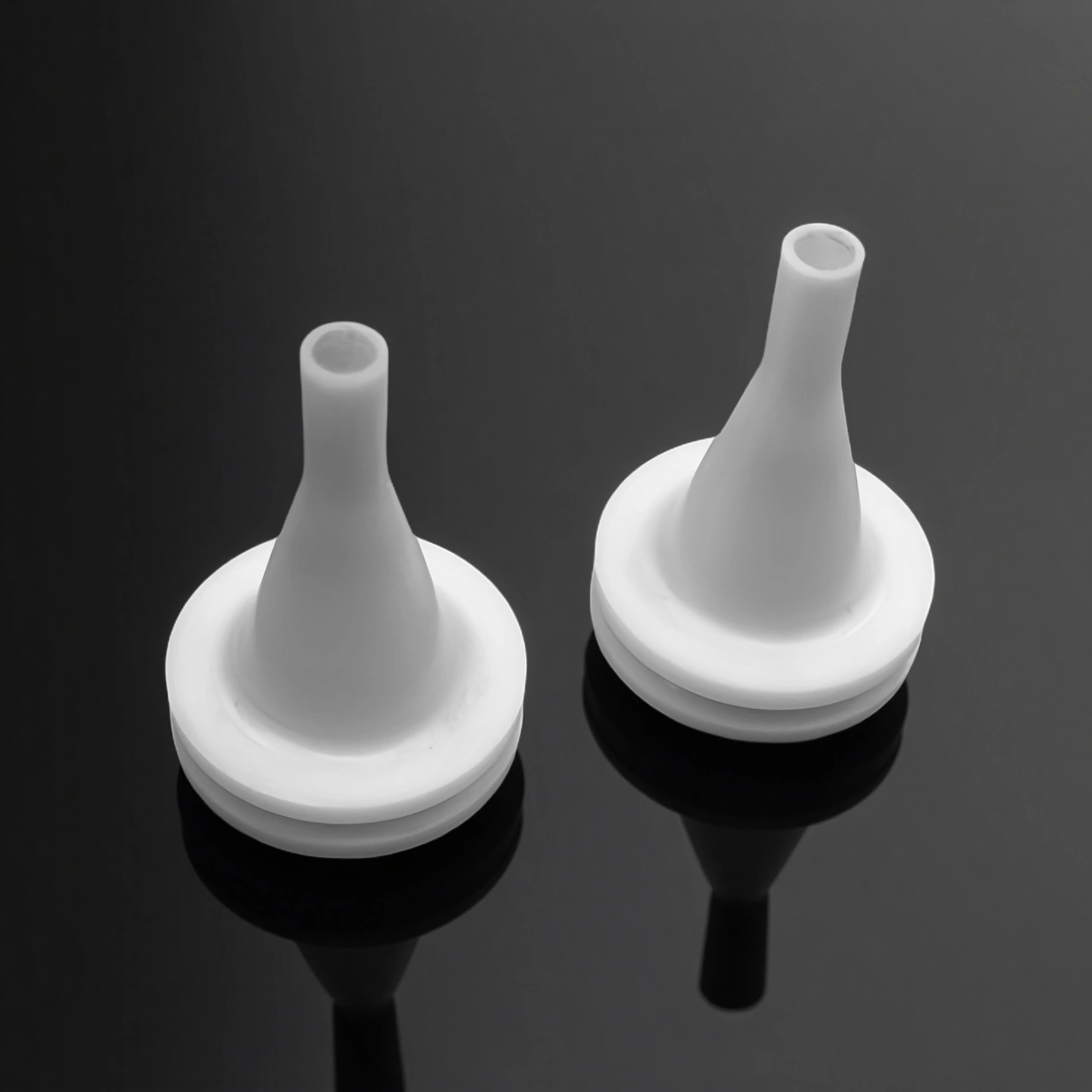
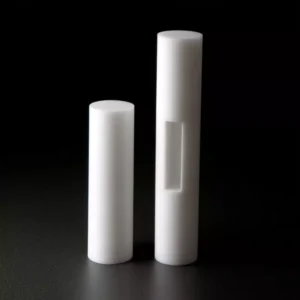
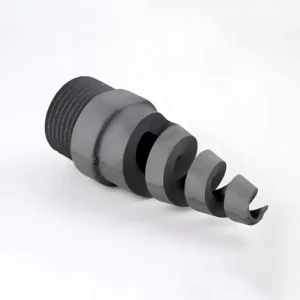
What Is a Zirconia Ceramic Nozzle?
A zirconia ceramic nozzle is a precision ceramic flow-control component made from zirconium oxide material, commonly YSZ or MSZ zirconia. It is used to guide, restrict, spray, dispense or atomize liquids, gases, slurries or process media in systems where wear resistance, corrosion resistance, thermal stability and dimensional control are important. Compared with many metal or polymer nozzles, zirconia offers higher hardness, better resistance to abrasive particles and stronger stability in chemically demanding environments.
In engineering applications, zirconia nozzles are selected when the nozzle orifice must hold its shape under abrasive flow, chemical exposure, thermal cycling or repeated cleaning.
Why Zirconia Is Selected for Nozzle Components
Zirconia is selected for nozzle components when the flow path must resist wear, corrosion, thermal exposure and repeated cleaning while maintaining stable bore and outlet geometry. Compared with many metal or polymer nozzles, zirconia offers higher hardness, better dimensional stability and stronger resistance to abrasive contact in selected operating environments.
Wear Resistance for Orifice Stability
The nozzle bore and outlet edge are often the first areas affected by abrasive particles, slurry flow or repeated spray contact. Zirconia helps reduce orifice enlargement and supports more stable flow geometry when the nozzle is exposed to particle-loaded media.
Chemical Compatibility for Process Fluids
In chemical spraying, cleaning systems and corrosive liquid handling, the nozzle material must be reviewed according to the actual fluid, concentration, temperature and cleaning cycle. Zirconia can be considered for chemically demanding environments where metal corrosion or polymer swelling may affect spray consistency.
Dimensional Control for Precision Flow
For dispensing, metering, coating and atomizing fixtures, small changes in bore diameter, taper or outlet edge can affect repeatability. Machined zirconia nozzles can support controlled geometry for applications that require stable flow output and repeatable installation.
Thermal Stability for Elevated-Temperature Systems
Zirconia can be reviewed for selected high-temperature flow-control environments where polymer nozzles may deform or metal nozzles may lose surface stability. Final suitability should be checked according to wall thickness, mounting stress, thermal cycling and contact medium.
Toughness Advantage Over Lower-Toughness Ceramics
Zirconia has better fracture toughness than many oxide ceramic materials, which can be useful for nozzle designs exposed to assembly stress, vibration or repeated handling. The final design still needs proper edge protection, seating alignment and controlled tightening during installation.
Technical Properties of Zirconia Nozzles
The following values are typical reference properties for zirconia ceramic materials used in nozzle components. Final material suitability should be reviewed according to zirconia grade, nozzle geometry, operating medium, pressure, temperature, cleaning method and mounting conditions.
| Property |
Specification |
Engineering Relevance |
| Density |
6.05 g/cm³ |
The high density supports a compact ceramic structure and helps the nozzle maintain stable geometry under flow and wear-contact conditions. |
| Hardness |
HRA 88–90 |
High hardness helps reduce orifice wear when the nozzle is exposed to abrasive particles, slurry flow or repeated spray contact. |
| Flexural Strength |
900–1200 MPa |
Strong flexural performance helps the nozzle resist bending-related stress during installation, operation and pressure fluctuation. |
| Compressive Strength |
>2000 MPa |
High compressive strength supports ceramic stability when the nozzle is mounted, sealed or pressed into a fixture. |
| Fracture Toughness |
7–10 MPa·m¹/² |
Higher toughness than many oxide ceramics helps reduce cracking risk in selected designs with impact, vibration or assembly stress. |
| Thermal Conductivity |
2.5 W/m·K @ 25°C |
Low thermal conductivity can provide useful thermal insulation where the nozzle is exposed to heated media or temperature gradients. |
| Maximum Operating Temperature |
1000°C continuous |
This reference temperature helps evaluate whether the nozzle is suitable for selected elevated-temperature flow-control environments. |
| Thermal Expansion Coefficient |
10.5 × 10⁻⁶/K |
Thermal expansion behavior should be considered when zirconia is assembled with metal housings, seals or other ceramic components. |
| Dielectric Strength |
>12 kV/mm |
Electrical insulation behavior can be useful when the nozzle is used near sensors, charged media or electrically sensitive equipment. |
| Chemical Stability Range |
pH 1–14, inert to acids/alkalis |
Broad chemical stability helps zirconia nozzles work in many corrosive spray, cleaning and process-fluid environments after compatibility review. |
| Surface Roughness (Ra) |
<0.2 μm |
A smoother surface can help reduce residue buildup, improve cleaning behavior and support more stable flow through the nozzle bore. |
| Corrosion Rate (acid test) |
<0.1% mass loss (72h) |
Low mass loss indicates good resistance to selected acidic environments, but actual compatibility should be checked by chemical type and concentration. |
| Wear Resistance (slurry test) |
<0.03 mm³/1000 rev |
Strong wear resistance helps the nozzle retain bore shape and outlet edge geometry in abrasive or particle-loaded flow systems. |
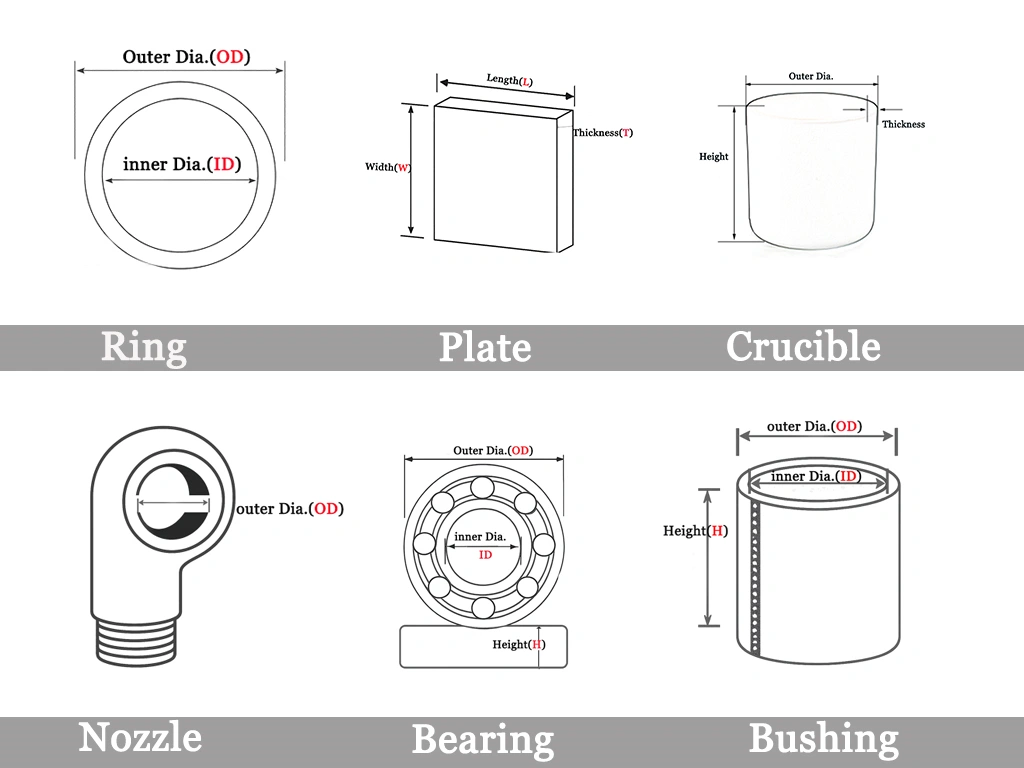
Specifications of Zirconia Nozzles
|
Zirconia Nozzles |
|
Item No. |
Diameter(mm) |
Height (mm) |
|
AT-YHG-ZZ1001 |
Customize |
Packaging of Zirconia Nozzles
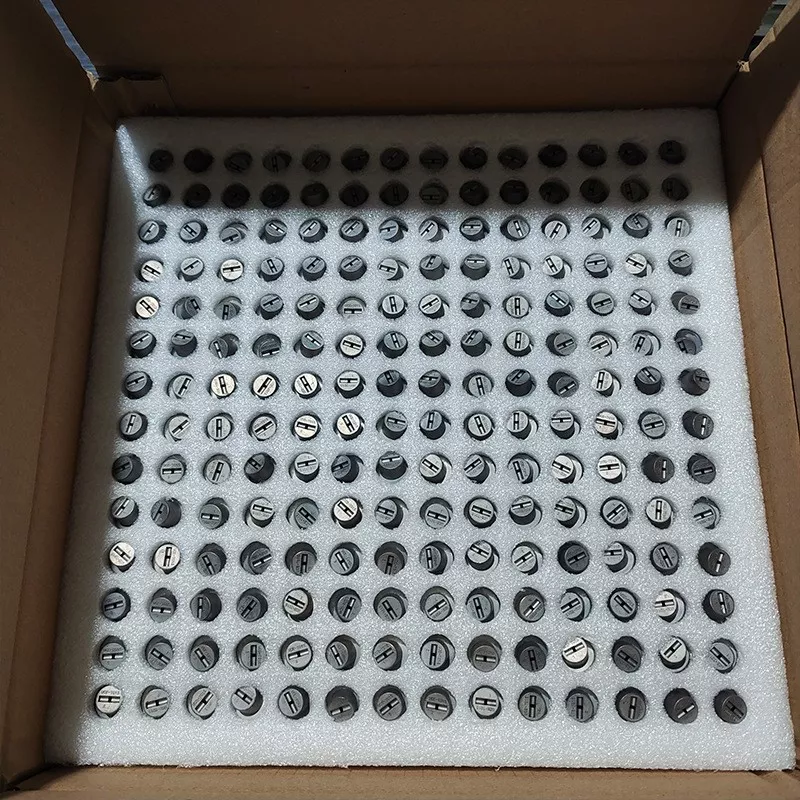
Zirconia Nozzles are individually secured in precision-cut foam trays to prevent movement and impact during transport. Each nozzle is aligned with orientation stability to maintain surface integrity and dimensional accuracy. The inner box is shock-resistant and moisture-buffered for international logistics.
Where Zirconia Ceramic Nozzles Are Used
Zirconia nozzles are suitable for systems where the flow path is exposed to abrasive particles, corrosive liquid, elevated temperature or repeated mechanical wear. Final material and geometry should be reviewed according to the medium, pressure, temperature, particle size, required spray pattern and mounting method.
-
Abrasive Slurry and Particle-Loaded Flow
In slurry handling, powder suspension, abrasive liquid transfer and particle-loaded spraying, the nozzle orifice can gradually enlarge as solid particles pass through the bore. This may change the flow rate, spray direction or jet stability over time. Zirconia helps maintain a more stable flow path because of its high hardness, wear resistance and stronger edge retention. It is often considered when the nozzle needs to resist erosion while keeping a controlled bore size and outlet profile.
-
Chemical Spraying and Process Cleaning
Chemical spray systems, cleaning lines and process washdown equipment may expose nozzle surfaces to acids, alkaline solutions, solvents or repeated cleaning cycles. In these conditions, material compatibility becomes as important as mechanical strength. Zirconia nozzles can be reviewed for chemically demanding environments where metal corrosion, surface pitting or polymer swelling may affect spray consistency. The final material selection should be checked according to chemical concentration, temperature and cleaning frequency.
-
Precision Dispensing and Metering
For dispensing, metering and controlled liquid delivery, small changes in the bore, taper or outlet edge can affect repeatability. Zirconia is useful when a nozzle must keep its geometry after repeated flow contact, cleaning or assembly handling. Machined zirconia nozzles can support controlled bore diameter, inlet shape, outlet angle and sealing surfaces, making them suitable for systems where stable flow output and dimensional control are more important than simple low-cost replacement.
-
Coating and Atomizing Fixtures
In coating, atomizing and spray fixture applications, unstable flow can affect coverage, droplet behavior, material usage and surface uniformity. Zirconia nozzles are selected when repeated spray cycles may wear the outlet edge or change the internal flow path. By maintaining better dimensional stability in wear-contact areas, zirconia can help support more consistent spray behavior in systems that process abrasive, corrosive or high-value coating media.
-
High-Temperature Gas or Liquid Flow
Some gas, liquid or mixed-flow systems operate under elevated temperature or thermal cycling. Polymer nozzles may deform, and certain metal nozzles may oxidize, scale or lose dimensional stability depending on the medium. Zirconia can be considered for selected high-temperature flow-control applications where ceramic insulation, thermal stability and wear resistance are required together. The nozzle design should be reviewed carefully because bore size, wall thickness, mounting stress and thermal shock exposure can affect suitability.
-
Metallurgical and Refractory Flow-Control Parts
For molten metal, tundish-related flow control and other refractory service conditions, zirconia nozzle designs require a separate application review. These parts may face high temperature, thermal shock, slag exposure, erosion and strict installation requirements. ADCERAX can review zirconia or stabilized zirconia nozzle designs based on drawings, working temperature, medium contact, flow path geometry and mounting structure, especially when the application requires a ceramic part that combines refractory behavior with controlled flow geometry.
Zirconia Nozzle Installation, Cleaning and Handling Guidelines
Proper installation and routine handling help zirconia ceramic nozzles maintain stable flow geometry, reduce edge damage and support consistent system performance. Because zirconia is a hard ceramic material, the nozzle should be installed with correct alignment, controlled mounting force and suitable sealing components. Final operating and maintenance procedures should be reviewed according to the system design, working medium, pressure, temperature and cleaning method.
-
Installation and Assembly
Zirconia nozzles should be seated evenly in the fixture and aligned with the required flow or spray direction. Misalignment may cause uneven flow output, side loading or local stress around the nozzle body. During assembly, avoid direct metal impact on the orifice, outlet edge or sealing surface.
Use controlled tightening based on the fixture design instead of excessive force. Over-tightening may create concentrated stress and increase the risk of ceramic fracture. If the nozzle is installed with a gasket, O-ring or sealing sleeve, confirm that the sealing material is compatible with the process fluid, cleaning solution and operating temperature.
-
Cleaning and Clogging Prevention
For particle-loaded liquids, slurry flow or coating media, filtration before the nozzle is recommended to reduce clogging and internal abrasion. The filter level should be selected according to the orifice diameter, particle size and required flow stability.
Clean the nozzle with non-abrasive tools and chemically compatible solutions. Avoid hard metal probes, sharp tools or aggressive mechanical scraping inside the bore. If ultrasonic cleaning is considered, the nozzle geometry, wall thickness and existing micro-damage risk should be reviewed first, especially for small-bore or thin-edge designs.
-
Flow Stability During Operation
Nozzle performance is closely related to pressure stability, medium consistency, bore geometry and outlet condition. Sudden pressure fluctuation, particle buildup or partial blockage may affect spray angle, jet direction or flow repeatability.
For precision dispensing, coating or metering applications, inspect the orifice and outlet edge at scheduled intervals. If flow output changes, check for particle blockage, edge wear, sealing leakage, installation shift or changes in medium viscosity before replacing the nozzle.
-
Safe Handling and Storage
Zirconia ceramic nozzles should be handled with clean gloves or soft-tipped tools. Avoid dropping, stacking or allowing the orifice to contact hard metal surfaces. Small-bore nozzles, sharp outlet edges and polished sealing faces require extra protection during unpacking, inspection and assembly.
Store nozzles in a clean, dry and separated condition. Individual separation, soft cushioning and clear orientation marking are recommended for small or precision nozzle parts. During transport or storage, avoid vibration, impact and direct load on the orifice area.
-
Recommended Maintenance Checkpoints
Regular inspection should focus on the parts of the nozzle that directly affect flow performance. Check the orifice, bore, outlet edge, sealing surface and mounting area for blockage, chipping, surface buildup or abnormal wear. For systems using abrasive or corrosive media, inspection frequency should be adjusted according to actual operating conditions rather than fixed time intervals.