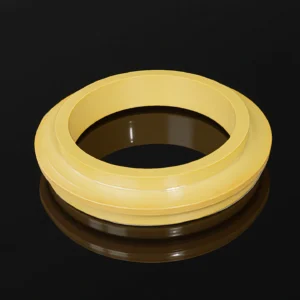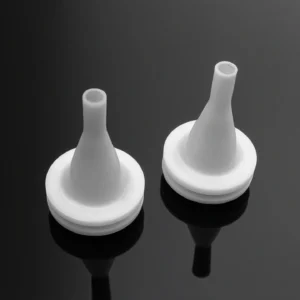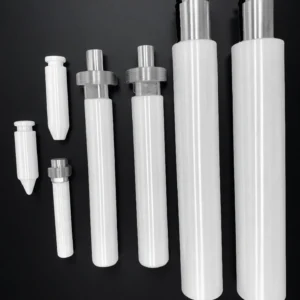
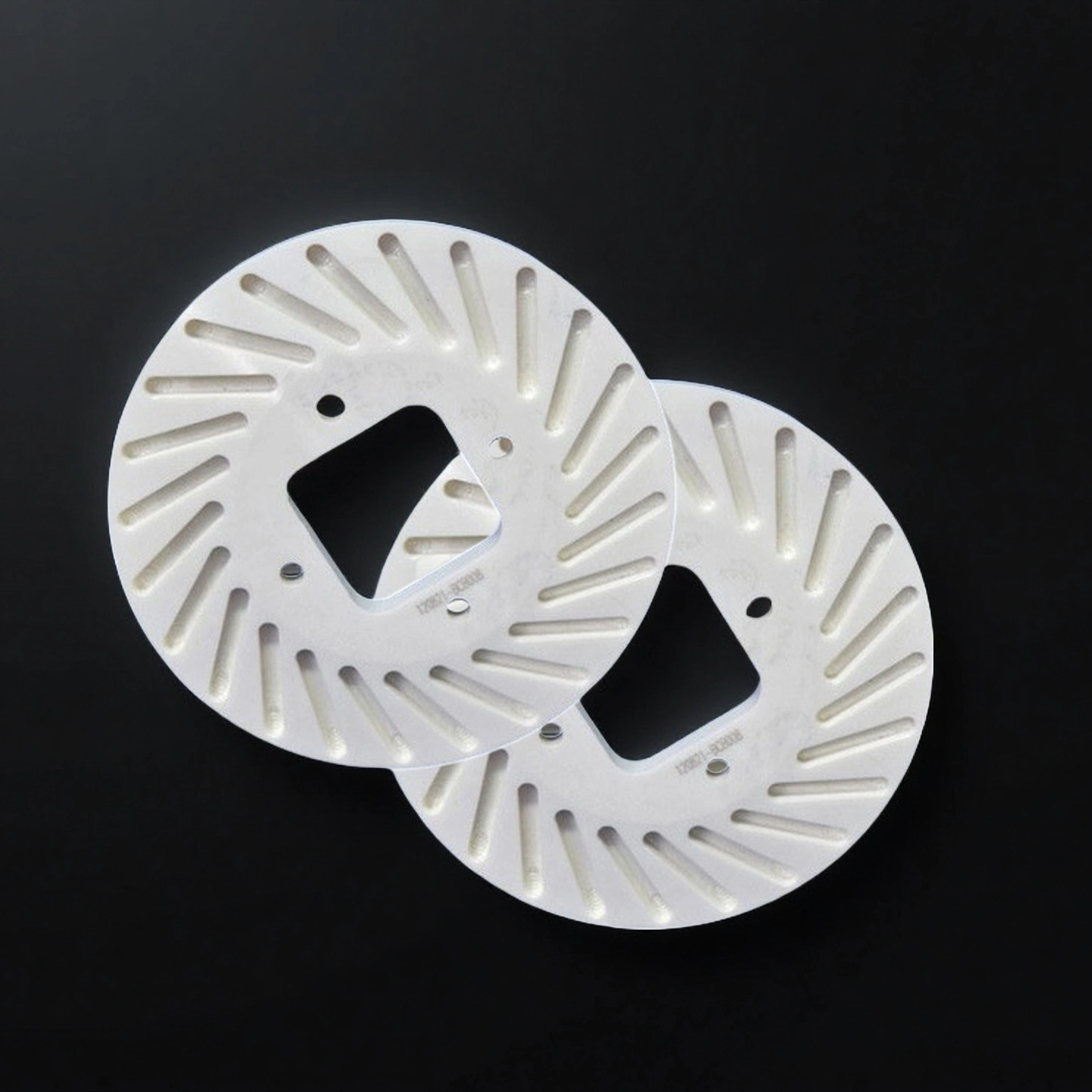
Custom Zirconia Ceramic Flange for Pipe and Sealing Interfaces

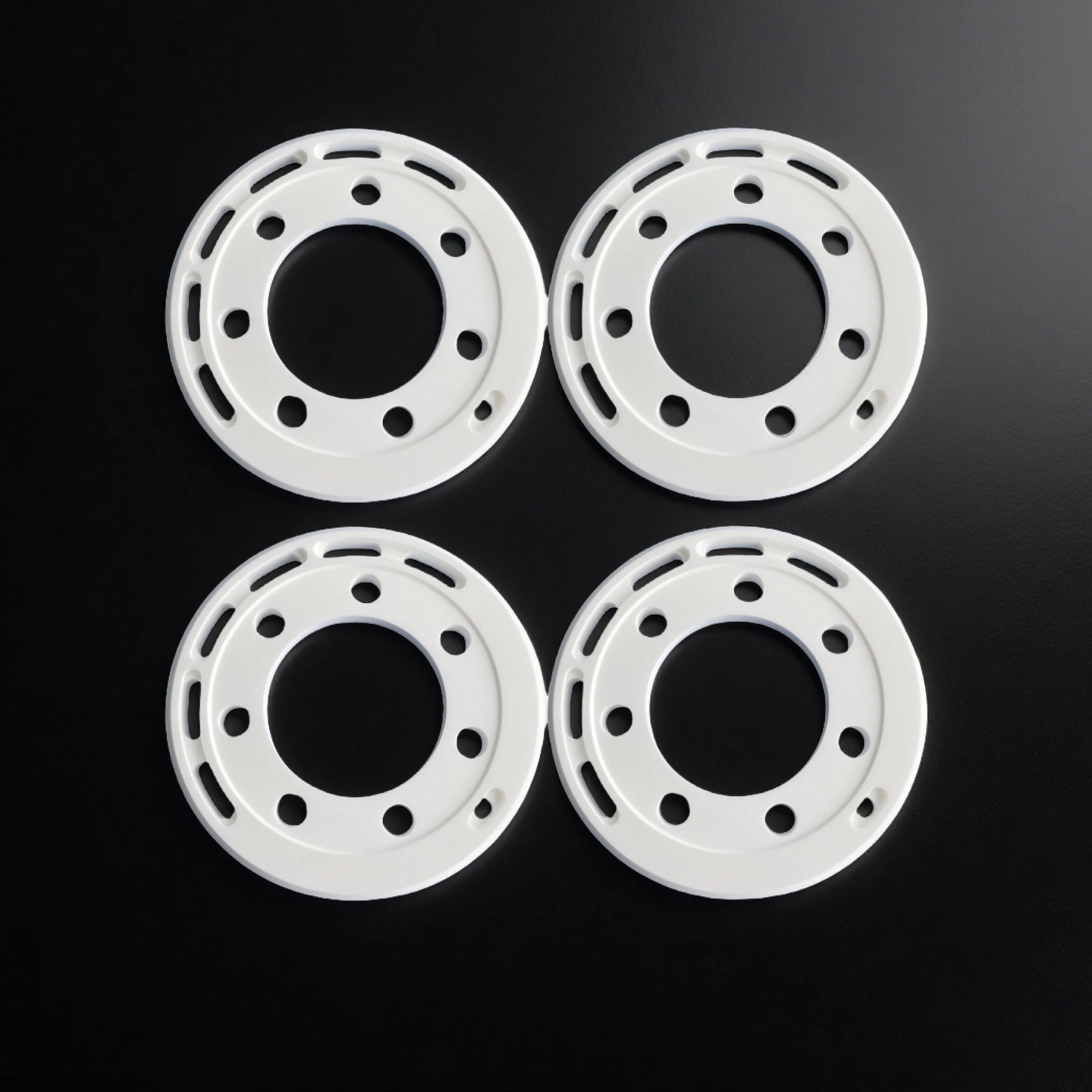
ADCERAX supplies custom zirconia ceramic flanges for pipe interfaces, sealing assemblies and harsh industrial systems where metal or polymer flanges may corrode, deform or contaminate the process. Each flange can be reviewed according to drawing geometry, bolt hole layout, sealing face, gasket contact area, surface finish, material grade, operating temperature, pressure condition and chemical medium before quotation.

Catalogue No. AT-YHG-FL1001
Material Yttria-Stabilized Zirconia (3Y-TZP)
Max Working Temp. ≥ 1000 °C continuous, peak 1200 °C
Acid/Alkali Rating Stable in pH 1–14, <0.05 mg/cm² loss
Thermal Conductivity 2.5 W/m·K, low heat transfer
Engineering RFQ Review
Small-Batch Custom Support
Factory-Direct Manufacturing
Drawing & Process Review

What Is a Zirconia Ceramic Flange?

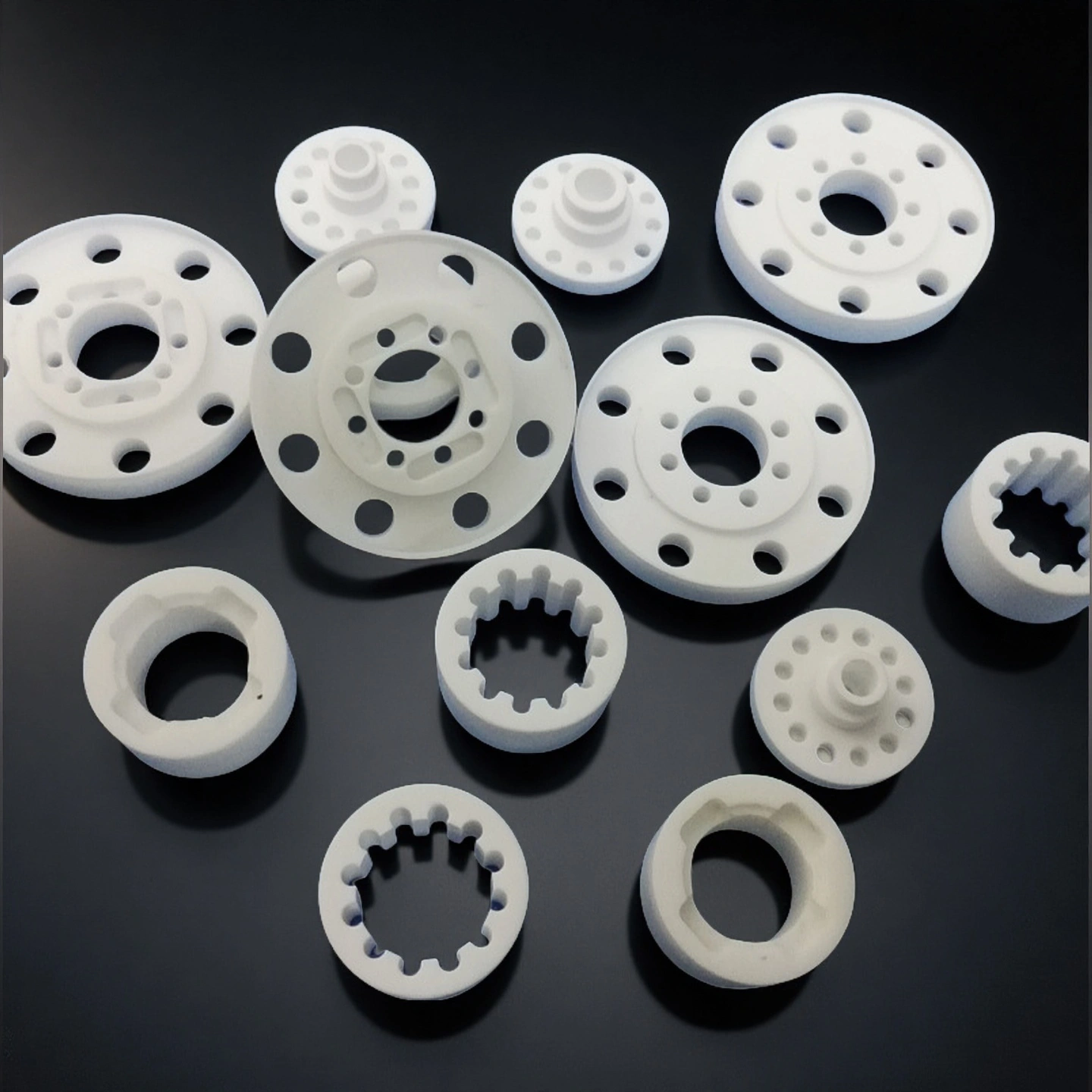
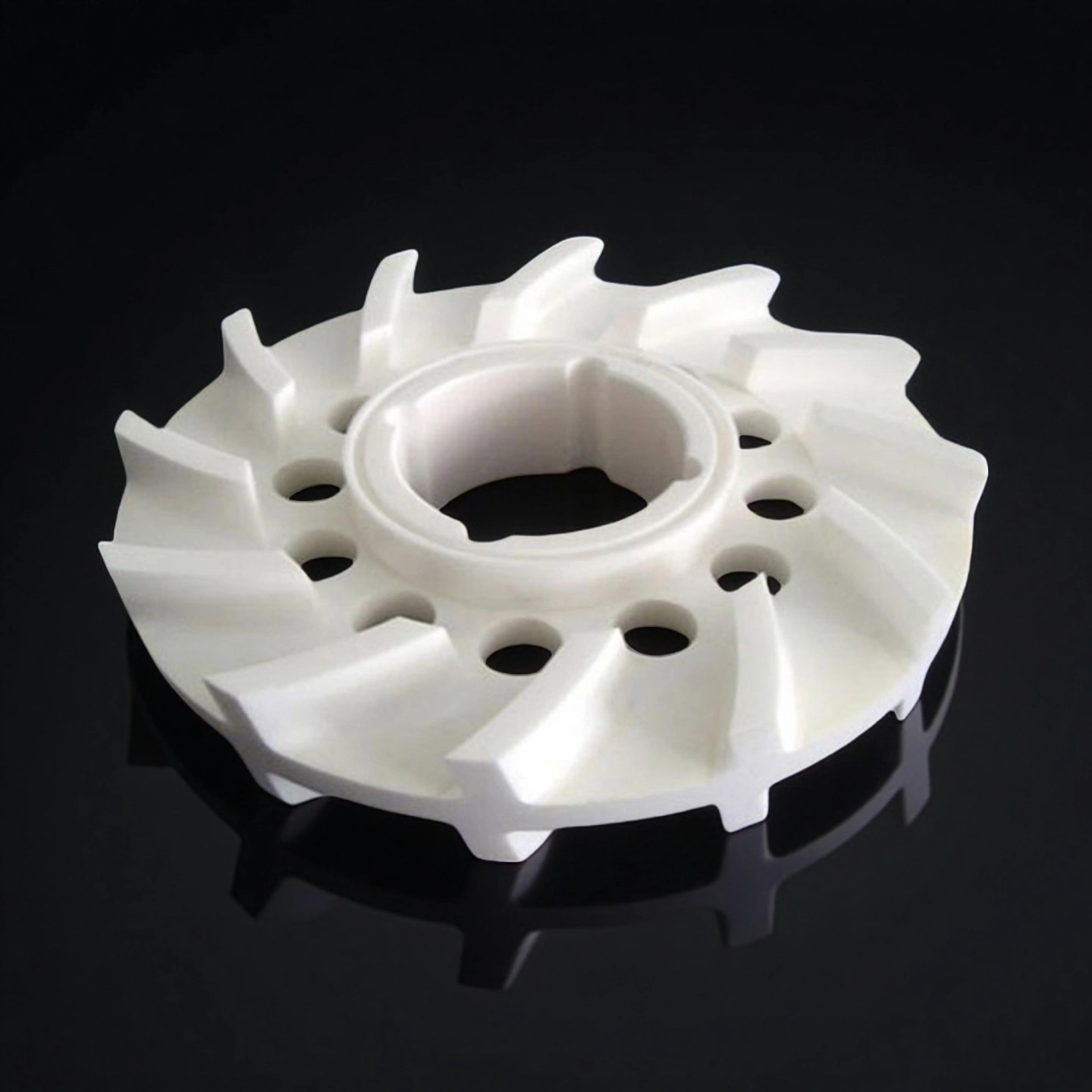
A zirconia ceramic flange is a precision ceramic interface component used to connect, seal or support pipe assemblies, pump systems, valve structures and high-temperature process equipment. It is selected when metal, plastic or standard ceramic parts may suffer from corrosion, wear, deformation, contamination or edge damage under demanding operating conditions.

Key Advantages of Zirconia Ceramic Flange

Corrosion Resistance in Selected Chemical Media

Zirconia ceramic can be considered for flange interfaces exposed to acids, alkalis, brine, cleaning fluids or chemically aggressive process media. Final compatibility should be reviewed according to concentration, temperature, exposure time and sealing design.

Higher Toughness Than Many Brittle Ceramic Options

Yttria-stabilised zirconia offers higher fracture toughness than many conventional oxide ceramics, helping to reduce the risk of edge chipping during assembly when the flange geometry and bolt load are properly controlled.

Stable Sealing Face for Wear and Contamination Control

A dense zirconia surface helps reduce wear, corrosion scale and metal ion contamination risk in selected fluid-contact or process-contact assemblies.

Custom Geometry for Existing Pipe or Equipment Interfaces

The flange can be manufactured according to drawings with custom OD, ID, thickness, bolt hole layout, groove, step, chamfer and sealing face requirements.

Suitable for Engineering Review Projects

ADCERAX can review drawings, working medium, mating parts, gasket type and installation conditions before confirming the manufacturing route.

Technical Properties of Zirconia Ceramic Flange

Zirconia ceramic flanges are made from yttria-stabilized zirconia and provide high hardness, fracture toughness, chemical stability and electrical insulation for selected pipe, sealing and equipment interface applications. The values below are typical material reference data and should be reviewed together with drawing geometry, operating medium, temperature, pressure and gasket design.

Property Specification Engineering Meaning
Material Composition Y₂O₃-stabilized zirconia, ZrO₂ ≥ 94% This material system provides improved toughness, wear resistance and dimensional stability compared with many standard oxide ceramics.
Density 6.0 g/cm³ High density helps support low porosity, stable sealing surfaces and reduced fluid penetration risk.
Flexural Strength ≥ 900 MPa High bending strength helps the flange resist mechanical stress when the geometry and bolt load are properly controlled.
Compressive Strength ≥ 2000 MPa Strong compressive resistance helps support sealing contact and fixture loading in rigid assemblies.
Fracture Toughness 8–10 MPa·m¹/² Higher toughness helps reduce edge chipping and fracture risk during assembly compared with more brittle ceramic materials.
Hardness 1250 HV 0.5 High hardness improves wear resistance in abrasive, sliding or fluid-contact interface conditions.
Thermal Conductivity 2.5 W/m·K Relatively low thermal conductivity helps reduce heat transfer through the flange interface in selected thermal systems.
Coefficient of Thermal Expansion 10.5 × 10⁻⁶/K This value should be reviewed against metal housings, gaskets and mating ceramic parts to reduce thermal mismatch stress.
Electrical Resistivity >10¹² Ω·cm at room temperature High resistivity allows the flange to provide electrical insulation in selected equipment interfaces.
Chemical Stability Stable in pH 1–14 Zirconia can be considered for many acidic or alkaline media, but final compatibility should still be checked by concentration, temperature and exposure time.
Mass Loss in H₂SO₄, 72h, 80°C <0.05 mg/cm² Low mass loss indicates good acid resistance under the stated test condition and supports use in selected corrosive environments.
Thermal Shock Resistance ΔT ≥ 250°C This helps the flange tolerate moderate temperature changes, but rapid thermal cycling should still be reviewed with the full assembly design.

Specifications of Zirconia Ceramic Flange

Zirconia Ceramic Flange
Item No. Outer Diameter(mm) Length(mm)
AT-YHG-FL1001 Customize

Packaging of Zirconia Ceramic Flange

Zirconia Ceramic Flange is carefully packed using molded foam inserts to prevent vibration and impact during international transit. Each unit is double-boxed and sealed in moisture-resistant outer cartons before being secured in reinforced plywood crates. This multi-layer protection ensures product integrity from factory to end-user site.
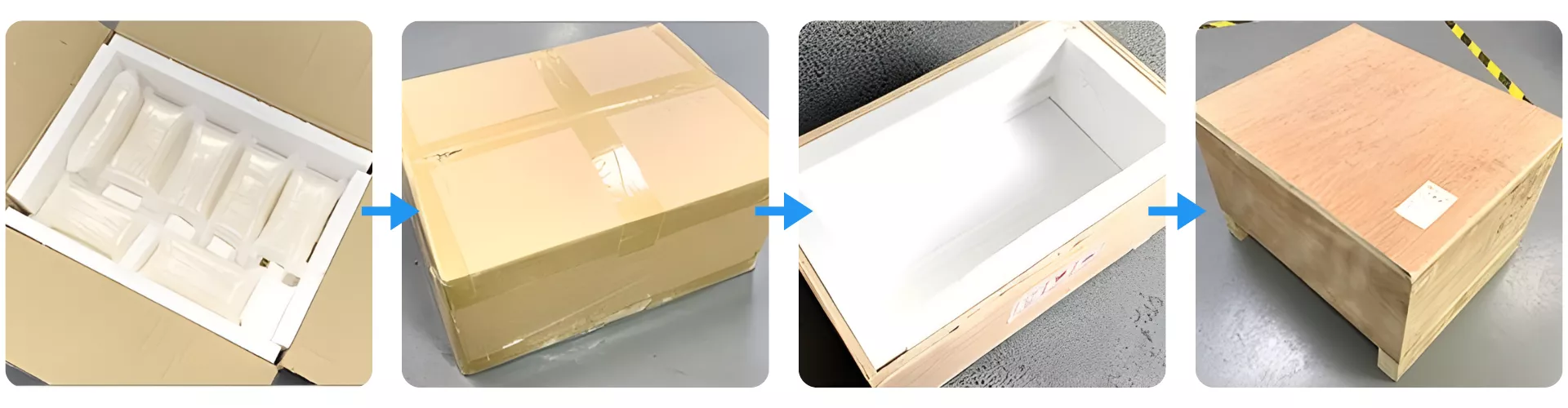

ADCERAX® Packaging of Zirconia Ceramic Flange

Zirconia Ceramic Flange Applications

Zirconia ceramic flanges are used in pipe connections, sealing interfaces, pumps, valves and high-temperature equipment where metal or polymer parts may corrode, wear or deform. They provide a hard, tough and chemically stable ceramic interface for selected harsh-service applications.

  • Chemical Pipeline and Fluid Interface Assemblies

    Zirconia ceramic flanges can be used in selected chemical pipeline interfaces where metal corrosion, coating failure or process contamination is a concern. Engineers usually review chemical medium, concentration, temperature, gasket material, bolt load and sealing face design before selecting zirconia for this type of assembly.

  • Pump, Valve and Sealing Structures

    In pump and valve systems, zirconia ceramic flanges may be used as wear-resistant or corrosion-resistant interface parts around sealing rings, sleeves, pistons, seats or flow-control components. The main review points include pressure condition, mating material, vibration, impact during assembly and surface finish.

  • High-Temperature Process Equipment

    For furnace, burner, exhaust or thermal-processing interfaces, zirconia ceramic flanges may help reduce deformation, oxidation and thermal damage compared with selected metal or polymer parts. Final suitability should be checked according to thermal cycling speed, temperature gradient, mounting design and adjacent material expansion.

  • Clean Fluid or Low-Contamination Systems

    Dense zirconia ceramic surfaces can support selected low-contamination fluid paths where metal ion release, corrosion scale or particle generation should be reduced. The complete system design, cleaning method and fluid chemistry should be reviewed before replacement.

Zirconia Ceramic Flange Handling and Installation Guidelines

Proper handling and controlled installation help zirconia ceramic flanges maintain stable sealing performance and reduce edge damage, surface scratches or stress concentration during assembly. Because zirconia is a hard ceramic material, the flange should be installed with correct alignment, suitable gasket selection and even bolt loading rather than impact force or forced positioning.

  • Pre-Installation Inspection

    1. Check the sealing face, bolt holes and edges before assembly to confirm there are no visible chips, cracks, scratches or contamination.
    2. Confirm that the flange OD, ID, bolt circle, face type and gasket contact area match the mating component.
    3. Clean the contact surfaces with lint-free cloths and compatible cleaning agents. Avoid metallic scrapers or abrasive cleaning methods on the sealing face.

  • Mounting and Fastening

    1. Align the ceramic flange with the mating part before tightening. Do not force the flange into position through bolt pressure.
    2. Apply bolt load evenly in a cross pattern to reduce point loading and uneven stress on the ceramic body.
    3. Use suitable soft gaskets, such as PTFE or graphite, when compatible with the operating medium and temperature. Hard metal gaskets should be reviewed before use.

  • Operating Environment Check

    1. Avoid sudden pressure or temperature changes that exceed the system design limit or thermal shock tolerance of the ceramic flange.
    2. Monitor sealing condition after initial operation, especially when the system involves thermal cycling, chemical exposure or vibration.
    3. Inspect for leakage, discoloration, loose fasteners or visible stress marks during routine maintenance.

  • Disassembly, Cleaning and Storage

    1. Use non-metallic tools during disassembly to avoid chipping the sealing face, edges or bolt holes.
    2. Do not reuse zirconia ceramic flanges with visible cracks, edge damage or suspected thermal fatigue.
    3. Store removed or spare flanges in clean, dry and foam-protected packaging to prevent impact damage and surface contamination.

Zirconia Ceramic Flange FAQs

  1. What is a zirconia ceramic flange?
    A zirconia ceramic flange is a precision ceramic interface component used in pipe, sealing, pump, valve or process equipment assemblies. It is selected when the design needs corrosion resistance, wear resistance, electrical insulation or dimensional stability beyond what metal or polymer parts can provide.
  2. Can zirconia ceramic flanges be made according to drawings?
    Yes. Zirconia ceramic flanges are usually supplied according to custom drawings. ADCERAX can review OD, ID, thickness, bolt hole pattern, groove design, sealing face, chamfer, flatness, surface finish and material grade before quotation.
  3. When should zirconia be selected instead of alumina for a ceramic flange?
    Zirconia is often preferred when the flange may experience impact during assembly, pressure cycling, vibration or higher fracture-risk geometry. Alumina can still be suitable for stable insulation or high-temperature applications, but zirconia generally provides better toughness for mechanical interface parts.
  4. Can zirconia ceramic flanges be used in acid or alkali systems?
    Zirconia ceramic can be suitable for selected acid, alkali, brine and chemically aggressive environments. Final material selection should be reviewed according to chemical concentration, temperature, exposure time, pressure condition and gasket material.
  5. What information is needed for a zirconia ceramic flange quotation?
    A quotation usually requires a drawing or sample, material grade, dimensions, tolerance requirements, hole layout, sealing face design, quantity, operating temperature, pressure condition, chemical medium and mating component material.
  6. What should be avoided during zirconia ceramic flange installation?
    Avoid hammering, forced alignment, uneven bolt tightening, hard metal gaskets without review and abrasive cleaning on the sealing face. Controlled bolt loading and proper gasket selection are important for reducing ceramic stress concentration.
customize size

Customization Services for ZrO2 Flange

ADCERAX Zirconia Ceramic Flange can be customized to match highly specific structural, thermal, and chemical compatibility requirements in aggressive industrial pipeline systems.

Mounting Geometry and Interface Adaptation

A wide range of flange-to-system integration demands is addressed through flexible dimensional design.

  • Bolt Hole Arrangement
    Adapted for legacy or non-standard interface layouts.
  • Face Type Selection
    Compatible with flat, raised or groove-sealed faces.
  • Mating Component Compatibility
    Optimized for ceramic-to-metal or all-ceramic couplings.

Surface Optimization and Machined Finishes

Function-critical surfaces are tailored to meet sealing, insulation, and chemical resistance targets.

  • Sealing Face Finish
    Controlled roughness helps improve gasket contact reliability.
  • Edge Chamfering and Deburring
    Helps reduce stress concentration and installation damage.
  • Flatness and Coaxiality Control
    Supports consistent load distribution during assembly and tightening.

Related Products

ADCERAX - Your Trusted Advanced Ceramics Manufacturing Partner

Direct factory manufacturing with comprehensive ceramic materials expertise and global supply capabilities

China-Based Manufacturer

ADCERAX supplies ceramic components for overseas OEMs, equipment builders, and labs.

Custom Drawing Support

We review drawings, dimensions, materials, and application conditions before quotation.

Ceramic Process Control

Forming, sintering, machining, grinding, and finishing are arranged by part requirements.

Pre-Shipment Inspection

Dimensional checks, visual inspection, and packaging review help reduce procurement risk.

Get in Touch with Us

Our team will be happy to respond to you in less than 24 hours.

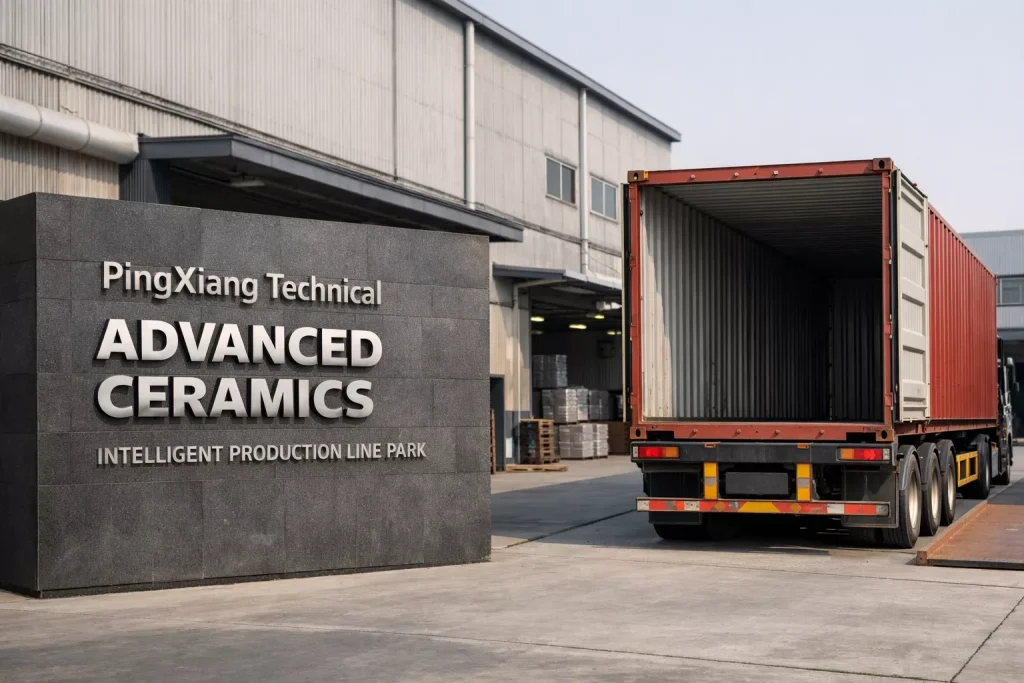
Pingxiang Factory — Silicon carbide, silicon nitride, high-temperature ceramics

Quick Quotation

*Our team will answer your inquiries within 24 hours.

*Your information will be kept strictly confidential.

Ready to Solve Your Engineering Challenge?

Partner with ADCERAX for reliable, high-performance advanced ceramic solutions. Our engineers are ready to discuss your project.

E-mail

info@adcerax.com

Phone

+(86) 0731-74427743 | WhatsApp: +(86) 19311583352

Response Time

Within 24 hours

Quick Quote

The more details you provide, the faster we can quote.

*We respond within 24 hours. All inquiries are confidential.

Get Your Custom Solution

The more details you provide, the faster we can respond.

customize size

*We respond within 24 hours. All inquiries are confidential.

Download Catalog