
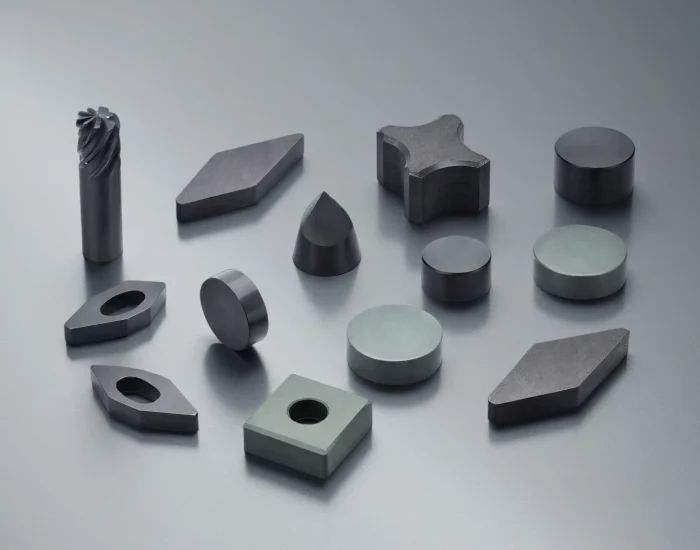
Ceramic Inserts & Blades | Zirconia Scraper, Slitting & Si3N4 Cutting Blades for Industrial Applications
ADCERAX is a factory-direct manufacturer of custom ceramic inserts and blades for industrial cutting, scraping, slitting, and wear-critical applications. With strong material selection support and flexible manufacturing capability, we help customers achieve better fit, better performance, and more stable production.
Custom geometry. Practical performance. Reliable production.
What Are Ceramic Inserts?
Ceramic inserts are precision-engineered components made from advanced ceramic materials and used in cutting, scraping, slitting, scribing, and other wear-related industrial operations. They are designed to maintain a defined shape and edge under demanding working conditions where conventional materials may wear more quickly.
Compared to traditional steel blades, ceramic inserts offer:
reduces replacement frequency and downtime
maintains sharp edge without frequent resharpening
ideal for food, pharma, and wet environments
safe for electronics and ESD-sensitive areas
Ceramic Inserts Material Properties
Ceramic insert performance depends strongly on the material system used. The table below compares zirconia, alumina, and silicon nitride across key mechanical and thermal properties to help you evaluate which material is better suited to your application requirements.
| Property | Zirconia (Y-TZP) | Alumina (Al₂O₃) | Silicon Nitride (Si₃N₄) |
|---|---|---|---|
| Hardness (HV) | 1200-1400 | 1800-2000 | 1400-1600 |
| Fracture Toughness | 8-10 MPa·m¹ᐟ² (highest) | 3-5 MPa·m¹ᐟ² | 5-7 MPa·m¹ᐟ² |
| Flexural Strength | 800-1200 MPa | 300-400 MPa | 700-900 MPa |
| Max Temp (°C) | 500-600 | 1500+ | 1200-1400 |
| Edge Retention | ⭐⭐⭐⭐⭐ | ⭐⭐⭐⭐ | ⭐⭐⭐⭐ |
| Chipping Resistance | ⭐⭐⭐⭐⭐ | ⭐⭐ | ⭐⭐⭐⭐ |
| Best For | Industrial scraping, slitting, cutting (room temp) | High-temp cutting, chemical resistance | High-speed metal machining |
| Typical Products | Scraper blades, slitting blades, utility blades | Wear parts, kiln furniture | CNC machining inserts |
ADCERAX Recommendation:
- Industrial scraper / cutting blades: Choose Y-TZP Zirconia — best toughness and edge retention
- High-temp or chemical environments: Choose Al₂O₃ Alumina
- Metal machining: Choose Si₃N₄ Silicon Nitride or SiAlON
Types of Ceramic Inserts
ADCERAX offers ceramic inserts in several material and application directions to help buyers select the right balance of hardness, thermal stability, wear behavior, and machining suitability.
Key Benefits: High hardness, good wear resistance, strong electrical insulation
Typical Applications: Precision cutting, wear parts, insulating inserts, dry-machining support.
Key Benefits: High toughness, crack resistance, thermal shock stability
Typical Applications: Precision cutting, high-load wear parts, slitting and fiber/film cutting.
Key Benefits: Excellent thermal shock resistance, high strength, reliable wear performance
Typical Applications: Cast-iron machining, high-speed cutting, heat-resistant alloy processing.
Ceramic Insert Material
Ceramic Insert Types
Key Benefits: Wear-resistant, rust-free cutting edge with customizable blade profile, mounting holes, slots, and edge finish.
Typical Applications: Film, tape, separator film, packaging web, gasket sheet, and selected non-metal material slitting or trimming.
Key Benefits: Stable, wear-resistant ceramic edge with good chemical resistance and customizable width, thickness, bevel, corner radius, and handle interface.
Typical Applications: Part and residue removal from PEI, glass, textured steel, and resin build plates.
Key Benefits: Sharp cutting edge, clean cutting performance, good wear resistance
Typical Applications: Fiber cutting, composite material trimming, film and sheet slitting, precision industrial cutting
Key Benefits: High hardness, wear resistance, stable cutting performance
Typical Applications: Precision cutting, machining operations, industrial trimming, high-wear processing tasks
How to Choose Ceramic Inserts?
Choosing the right ceramic insert depends on the workpiece material, machining condition, and production target. Instead of selecting by hardness alone, the insert material system and geometry should be matched to the actual cutting environment.
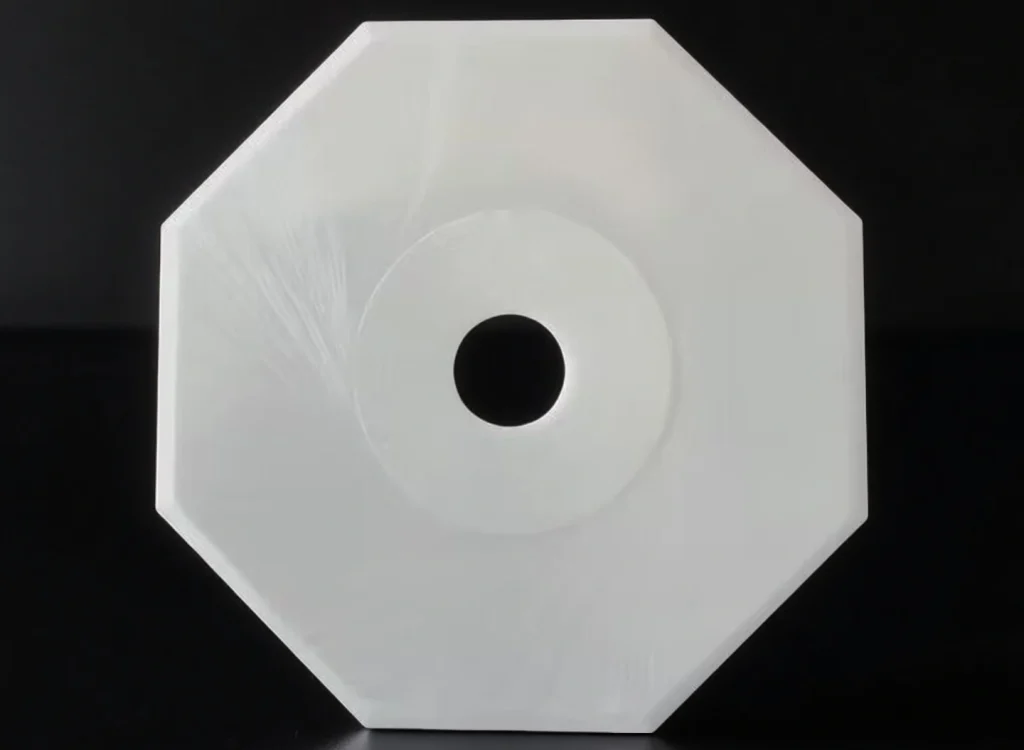
Identify the workpiece material first. Different materials require different ceramic systems and performance priorities.
Cutting speed, heat, machine rigidity, and interruption level all directly affect insert performance.
Clarify whether the priority is speed, wear life, edge stability, surface quality, or lower cost per part.
Insert shape, radius, thickness, and edge design should match the machining method and part requirement.
Ceramic Inserts vs Carbide vs CBN
Each insert material serves a different machining purpose, so selection should be based on the workpiece, cutting condition, and performance goal.
Ceramic Inserts
- Best for high-speed, high-heat machining
- Suitable for cast iron and selected superalloys
Carbide Inserts
- Best for general machining use
- More flexible in varied cutting conditions
CBN Inserts
- Best for hard turning and fine finishing
- Commonly used for hardened steel applications
Not sure which ceramic insert fits your process?
Explore the machining performance, insert options, and application support behind ADCERAX ceramic cutting tools for cast iron, hardened steel, superalloys, and other demanding wear-critical operations.
Ceramic Insert Typical Industrial Applications
Ceramic inserts are most relevant in industrial sectors where heat, wear, and productivity pressure are part of normal production.
Heavy Equipment and General Machinery
Large cast parts, wear-intensive machining tasks, and stable repeat operations can create good conditions for ceramic cutting inserts, especially where process efficiency matters across large production volumes.
Energy and Turbine Components
Heat-resistant alloys and difficult workpiece materials make ceramic inserts an attractive option for selected roughing and other productivity-driven machining operations.
Automotive and Cast Iron Component Machining
Brake discs, flywheels, housings, and repeat cast component production often benefit from ceramic inserts because high-speed dry machining and productivity improvement are strong commercial drivers in these programs.
Industrial Wear and Special Ceramic Components
Beyond cutting-tool style use, custom ceramic inserts may also be used in industrial wear assemblies, insert seats, support parts, and special application structures where advanced ceramics performance is required.
Custom Ceramic Inserts Built for Your Exact Application
Custom ceramic inserts provide a more practical solution when standard parts cannot meet the geometry, fit, or performance required by the application.
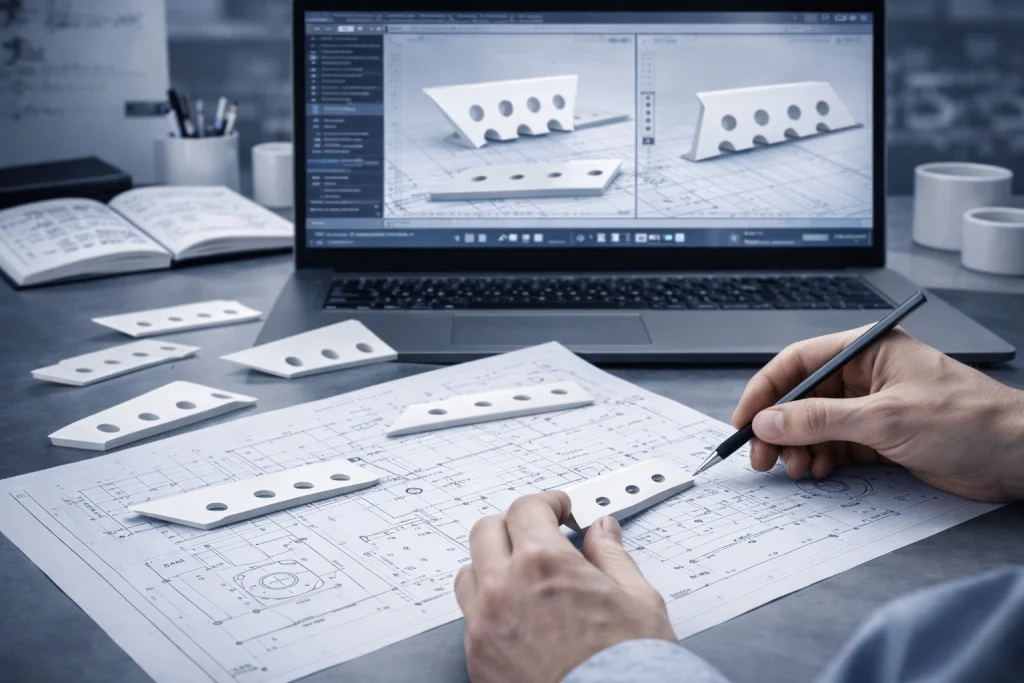
Send us your drawing, sample, or application requirement to discuss the most suitable ceramic insert customization options.
What Can Be Customized in Ceramic Inserts?
- Geometry and Dimensions: Custom outer shape, hole structure, thickness, corner detail, edge form, and other dimensional features can be produced according to drawings or approved samples.
- Material System: Different ceramic materials can be considered based on wear condition, thermal load, cutting environment, and mechanical demand. This helps ensure the insert is selected for actual operating conditions rather than geometry alone.
- Edge and Surface Condition: Edge sharpness, chamfer form, surface finish, and contact condition can be adjusted to better suit the function of the insert in cutting or wear-related applications.
- Prototype to Repeat Supply: Custom projects can begin with trial quantities for evaluation before moving into stable repeat production. This is useful for customers validating a new design or replacing an imported part.
What to Send for Evaluation
To review a custom ceramic insert project efficiently, the most useful information usually includes:
Frequently Asked Questions About Ceramic Inserts
What are ceramic inserts used for?
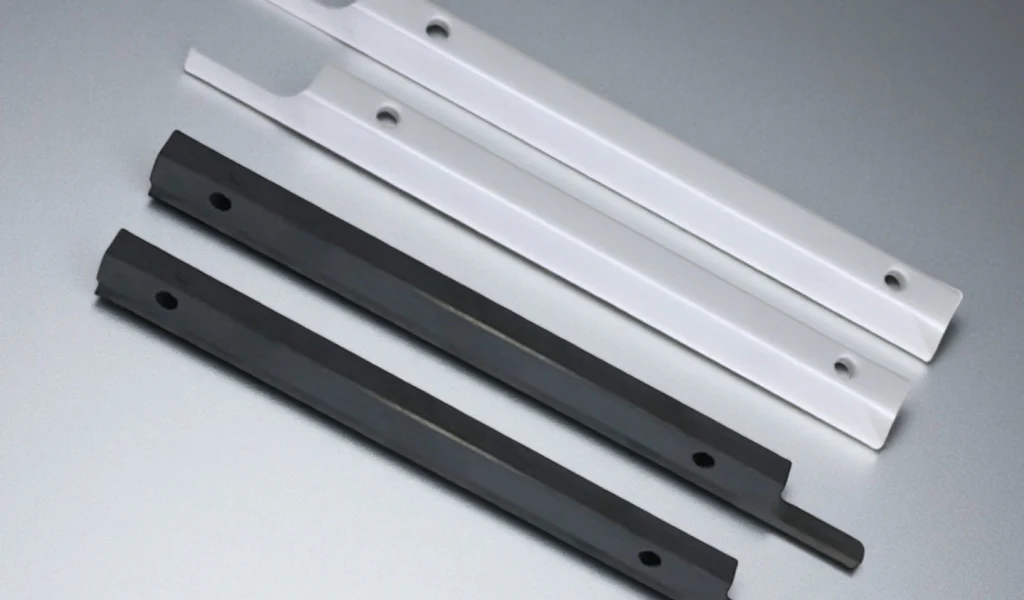
Industrial ceramic inserts are used in cutting, scraping, slitting, guiding and other wear-critical operations involving high heat, hard materials or demanding production.
Typical members include ceramic blades, slitting blades, scraper blades, wear inserts, guides and cutting inserts. This is an industrial technical-ceramics collection, not consumer kitchen or slow-cooker inserts.
How are ceramic inserts different from carbide inserts?
Ceramic inserts are typically used at higher cutting speeds and temperatures, while carbide inserts are more universal and more tolerant of unstable cutting conditions.
When should ceramic inserts be selected over conventional tools?
They should be selected when conventional tools cannot deliver enough speed, heat resistance, or wear performance in demanding machining conditions. Ceramic inserts are often the better choice for cast iron, hardened steel, nickel alloys, and selected superalloys where higher productivity, stable edge performance, and lower cost per part are more important than using a more general-purpose tool.
What ceramic materials do you offer for inserts and blades?
Common material families are zirconia (Y-TZP), alumina, silicon nitride, alumina-TiC black ceramic and whisker-toughened ceramics.
Each has very different hardness, toughness and temperature behavior, so material is selected per application by engineering review rather than by hardness alone.
Are ceramic inserts only used for metal cutting?
No, they can also be used in scraping, slitting, guiding, and other industrial wear applications depending on the design and working function.
What factors matter most when choosing ceramic inserts?
The key factors include workpiece material, machining method, cutting speed, thermal load, interruption level, insert geometry, and overall process stability. Buyers should also evaluate whether the application prioritizes wear life, edge reliability, surface quality, or productivity, because the best ceramic insert depends on how these requirements interact in the actual operating condition.
RFQ Checklist for Ceramic Inserts & Blades
Please provide as much of the following information as available:
- Part type and function: cutting insert, blade, scraper, wear insert, guide, or custom component
- Equipment, part position, holder, mounting method, and mating components
- Workpiece or contact material, including the material being cut or scraped
- Current part material, grade, supplier code, or sample, if known
- Drawing or photos with dimensions, holes, slots, edge geometry, tolerances, and surface requirements
- Operating conditions: load, speed, temperature, media, impact, interruption, or machining parameters
- Current failure and target result: wear, chipping, fracture, poor cut quality, adhesion, or unstable service life
- Trial quantity, expected repeat demand, and inspection or documentation requirements
ADCERAX reviews the application, material family, geometry, critical dimensions, edge condition, and manufacturability before quotation.
*Our team will answer your inquiries within 24 hours.
*Your information will be kept strictly confidential.
info@adcerax.com
Tel:+86-0731-84428843
WhatsApp:+86 19311583352
Within 24 hours
