Industrial Ceramic Rings for Sealing, Insulation & Wear Control
Industrial ceramic rings are ring-shaped technical ceramic parts selected by function, material, geometry and duty. ADCERAX covers six lines — mechanical seal rings, fiber-laser cutting-head ceramic rings, ceramic Raschig packing rings, process-chamber focus/edge/retaining rings, insulator/spacer/support rings, and custom rings to drawing. We select the ring by your application and material and review your drawing
Stop repeat failures—get a spec-based quote within 24 hours.
What Is an Industrial Ceramic Ring?
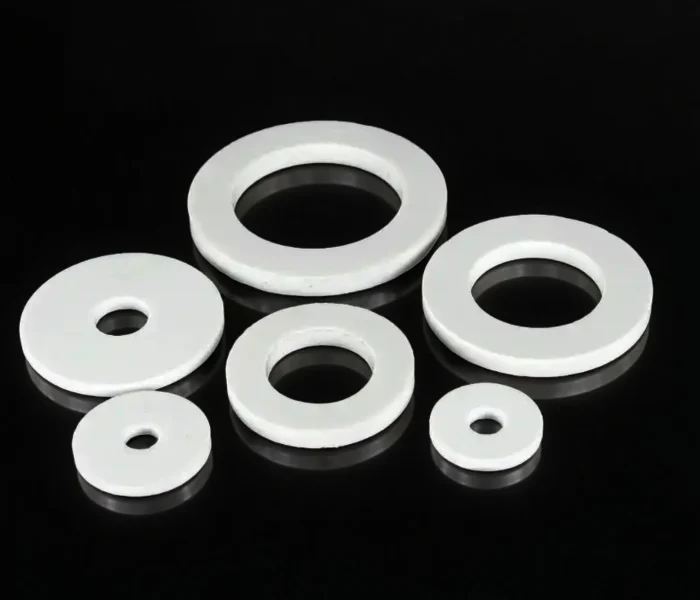
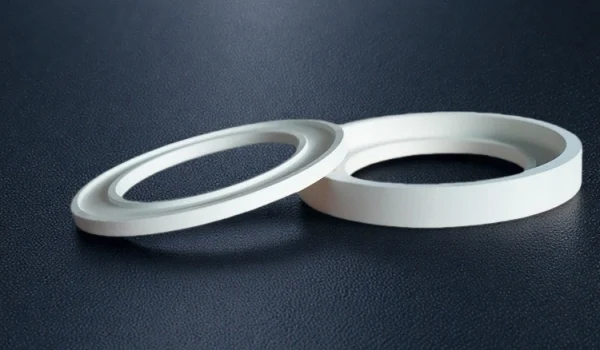
An industrial ceramic ring is a precision ring-shaped component made from engineering ceramics such as alumina, zirconia, or silicon carbide. It is used in industrial equipment to provide stable sealing surfaces, wear protection, mechanical support, or electrical isolation in conditions that can deform, corrode, or rapidly wear conventional materials.
Industrial Ceramic Ring Properties
| Ring-relevant property | Alumina | Zirconia / ZTA | Boron Nitride | Silicon Carbide |
|---|---|---|---|---|
| Grade or material route | 96–99.99% Al₂O₃ | Exact zirconia/ZTA grade to be confirmed | Pyrolytic BN / Hot-Pressed BN | RBSiC / SSiC |
| Density | 3.75–3.98 g/cm³ | 4.00–4.30 g/cm³ | 1.96–2.19 g/cm³ | 3.02 g/cm³ RBSiC / 3.10 g/cm³ SSiC |
| Flexural strength—handling and breakage | 312–379 MPa | 700–1,200 MPa | 173 MPa PBN, A-direction / 310 MPa HPBN | 250 MPa RBSiC / 380 MPa SSiC at 20°C |
| Fracture toughness—edge chipping | Not provided | 6–10 MPa·√m | Not provided | Not provided |
| Hardness—working-face wear | 11.5–30 GPa | 14–17 GPa | 651 HV0.5 PBN / 62 HV0.5 HPBN | 2,600–2,800 kg/mm² |
| Thermal conductivity—heat transfer | 20–42 W/m·K | 18–30 W/m·K | 60 W/m·K PBN, A-direction / 55 W/m·K HPBN | 45 W/m·K RBSiC / 74 W/m·K SSiC |
| Thermal expansion—fit during heating | Not provided | 8.0–9.5 ×10⁻⁶/K | 0.6 ×10⁻⁶/K PBN / 1.8 ×10⁻⁶/K HPBN | 4.1–4.5 ×10⁻⁶/K |
| Maximum reference temperature | Up to 1,600–1,800°C, no load, depending on grade | Not provided | PBN: 1,000°C in air / 2,300°C in vacuum; HPBN: 900°C in air / 1,850°C in vacuum | Up to 1,380°C RBSiC / 1,600°C SSiC |
| Dielectric strength—insulating rings | 8–18 kV/mm | 10–15 kV/mm | 55 kV/mm PBN / 76 kV/mm HPBN | Not provided |
| Volume resistivity at 25°C | ≥10¹³ to ≥10¹⁶ Ω·cm | 10¹²–10¹⁴ Ω·cm | 2×10¹⁴ Ω·cm PBN / 1.2×10¹⁴ Ω·cm HPBN | Not provided |
| Additional route-specific parameter | Grade-dependent purity and electrical performance | Exact YSZ, MSZ or ZTA route must be identified | Direction-dependent properties must be confirmed | Open porosity <0.1%; stated chemical range pH 2–12 |
Alumina
Balanced wear resistance, electrical insulation and high-temperature capability for general-purpose industrial rings.
Zirconia / ZTA
High strength and fracture toughness help prevent breakage and edge chipping during assembly and operation.
Boron Nitride
Strong electrical insulation, low thermal expansion and high vacuum-temperature capability for specialized insulating rings.
Silicon Carbide
Exceptional hardness, thermal conductivity and low porosity for demanding seal rings exposed to wear, heat or corrosive media.
Industrial Ceramic Rings for Harsh-Duty Reliability
Industrial ceramic rings are used in pumps, mixers, chemical equipment, slurry and wastewater systems, and general machinery assemblies. Typical roles include sealing interfaces, wear barriers, insulating spacers, and positioning rings.
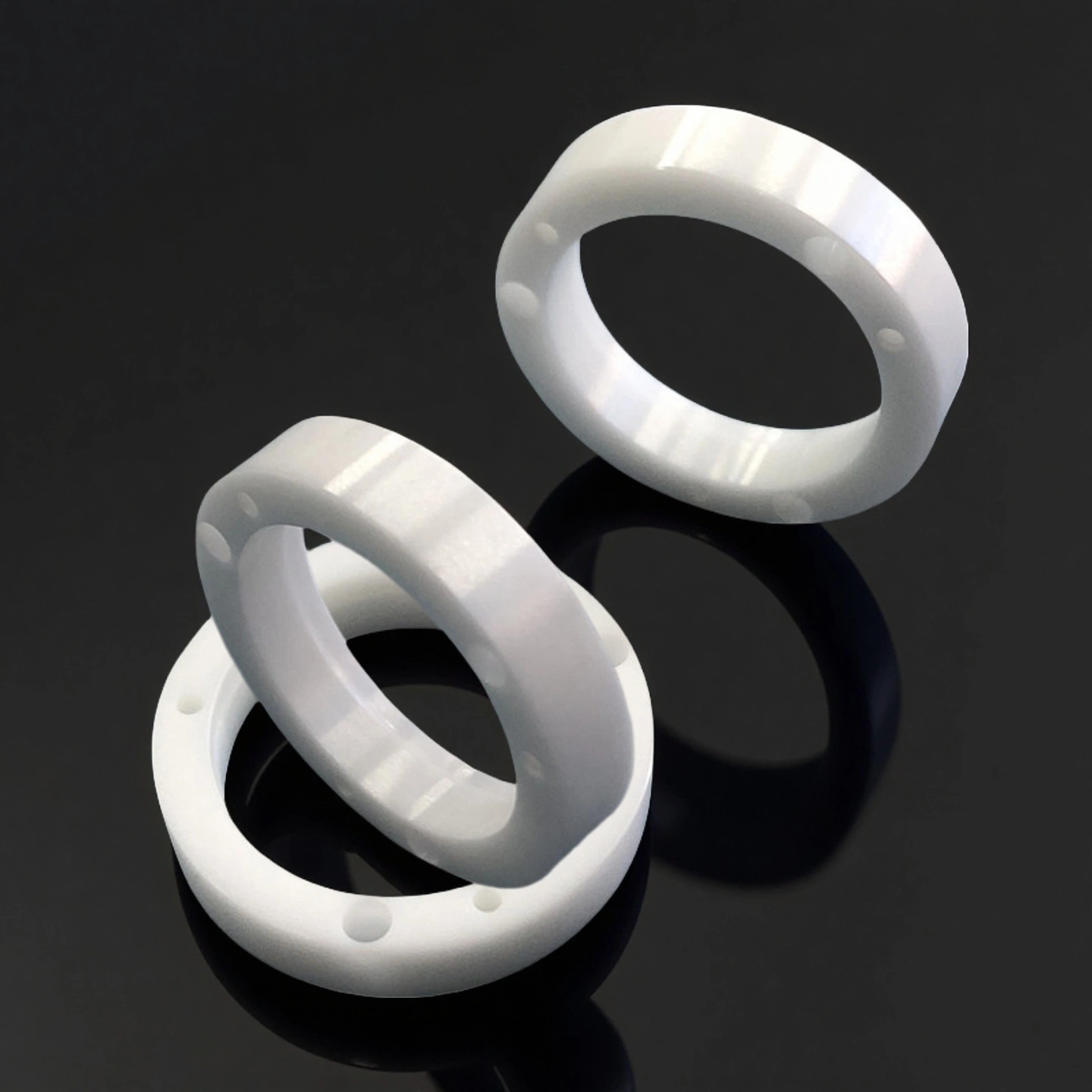
Alumina Ceramic Ring
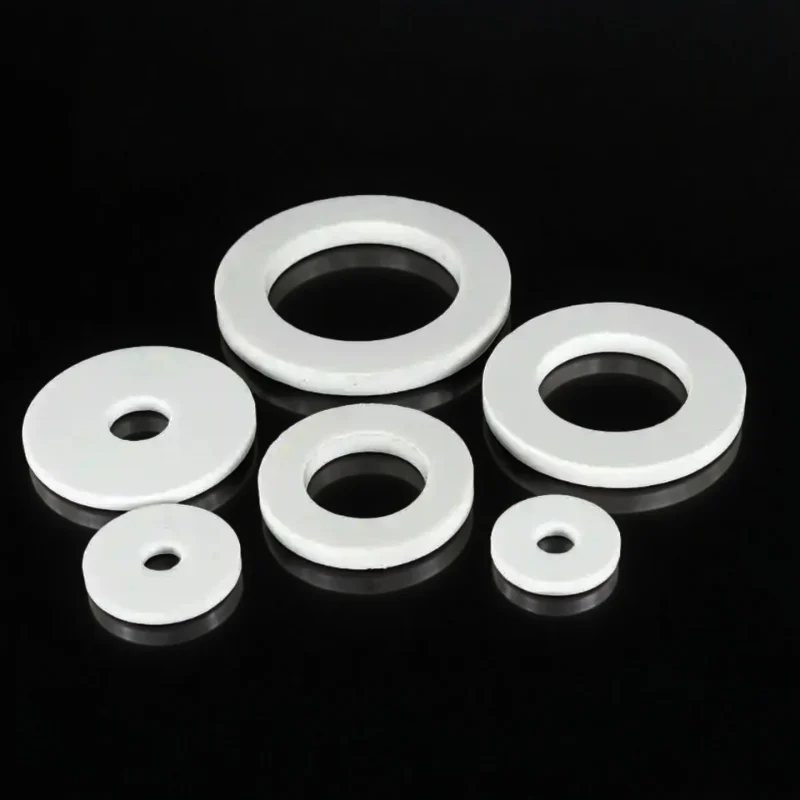
Wear resistance and electrical insulation for stable fit in high-temperature assemblies.
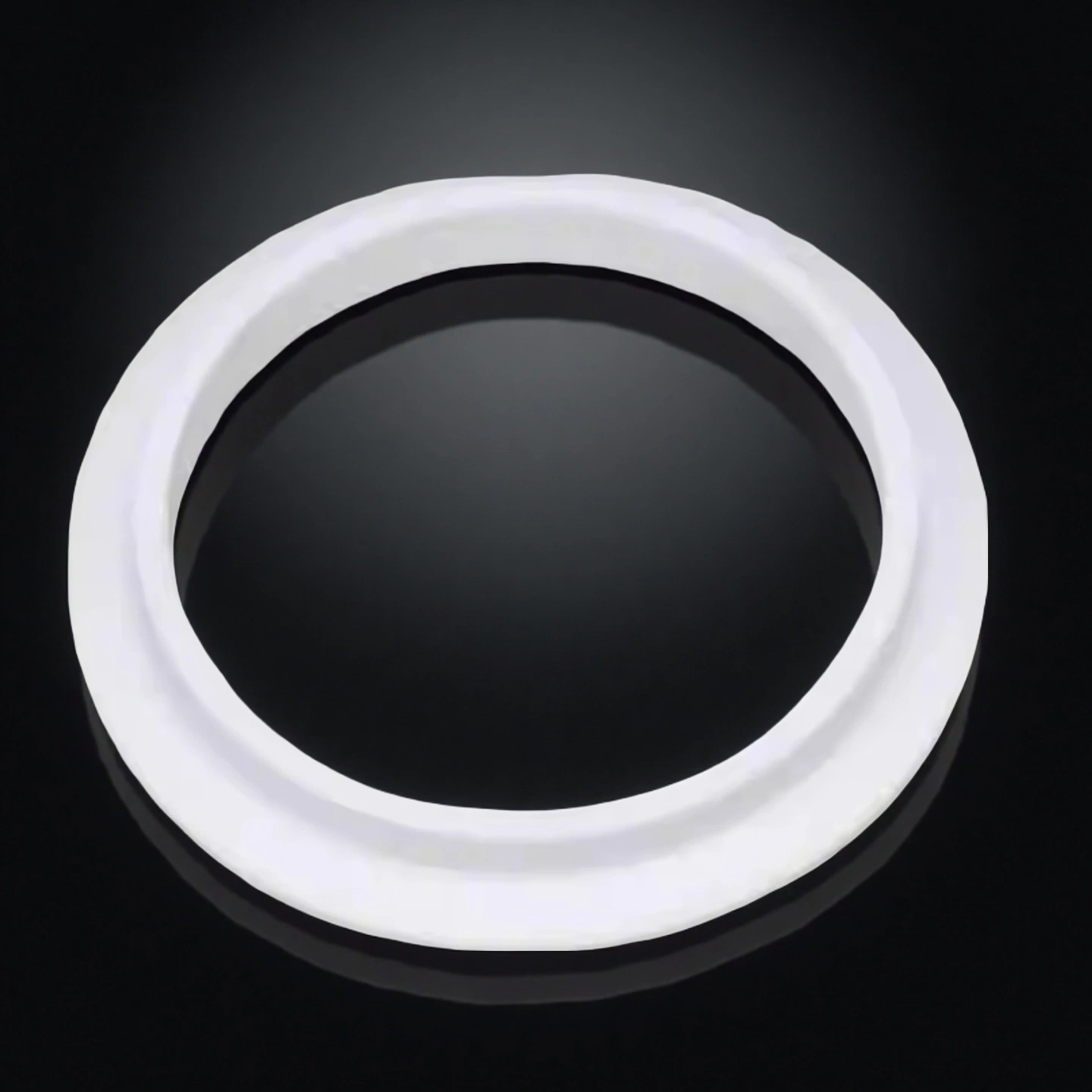
Zirconia Ceramic Ring
High toughness and edge integrity help reduce chipping under impact and vibration.
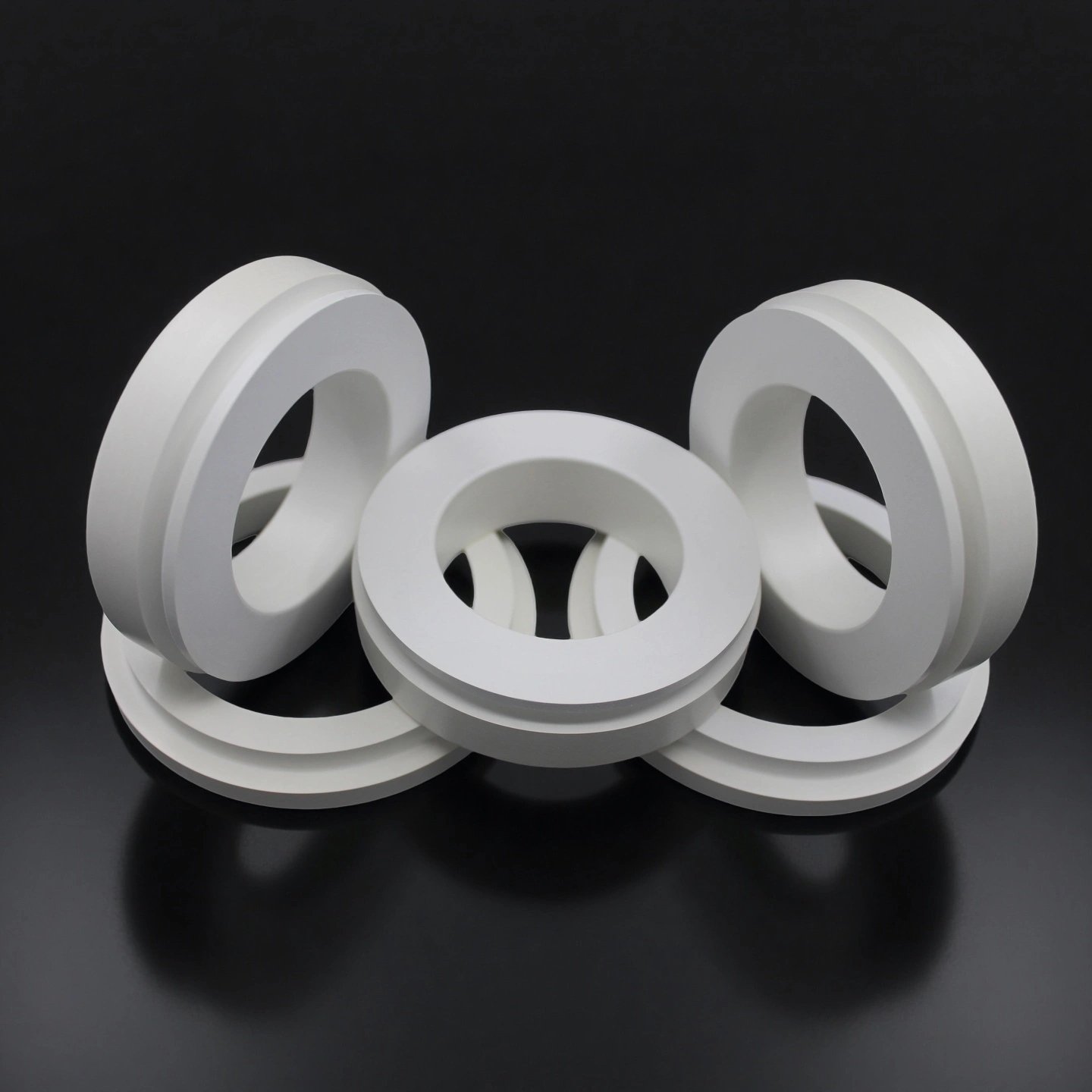
ZTA Ceramic Ring
Wear resistance plus added toughness helps resist abrasion, shock, and cracking.
Boron Nitride Ring
Low-friction, non-wetting surfaces reduce sticking in high-temperature fixtures.
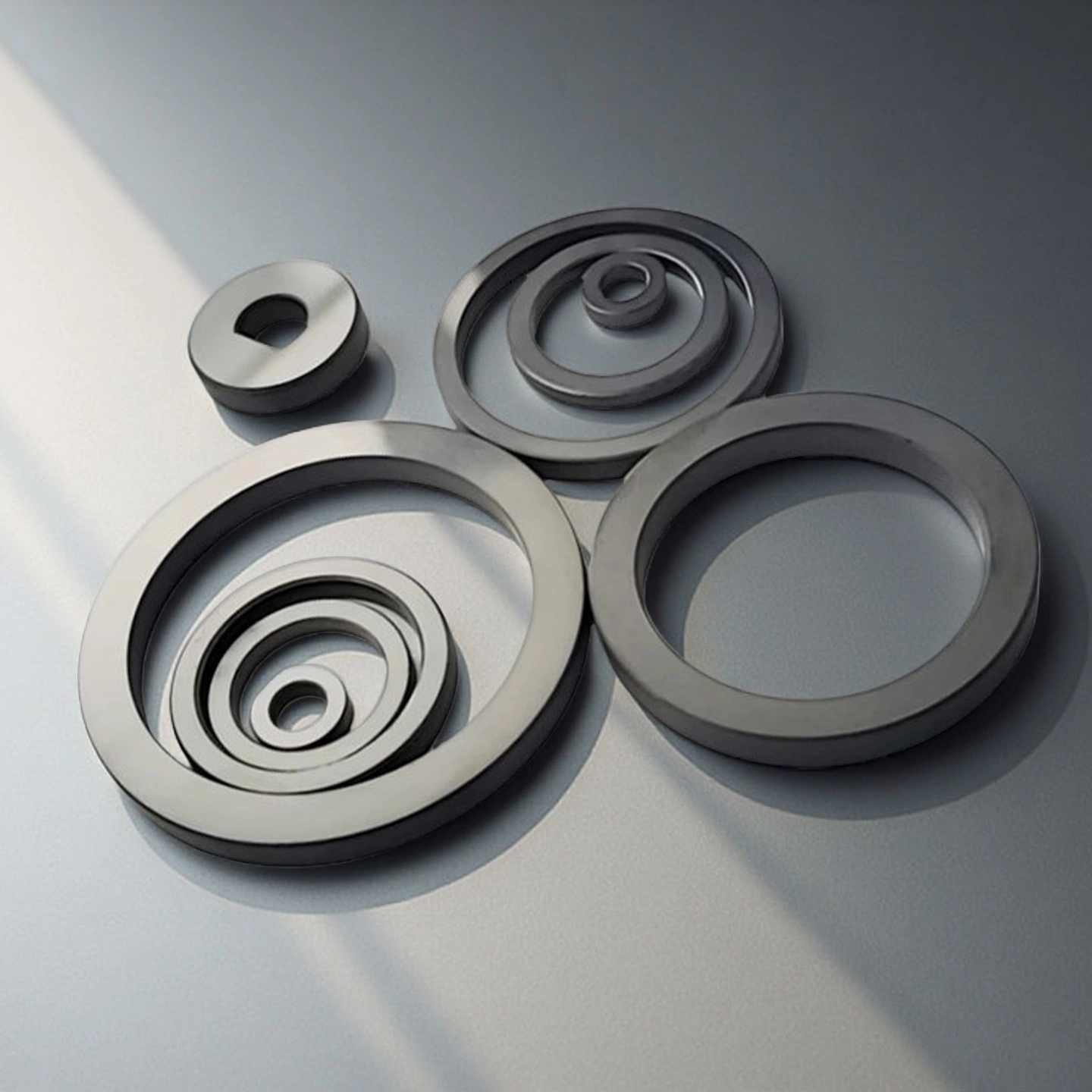
silicon carbide ceramic ring
High wear and chemical resistance for sealing in abrasive or corrosive media.
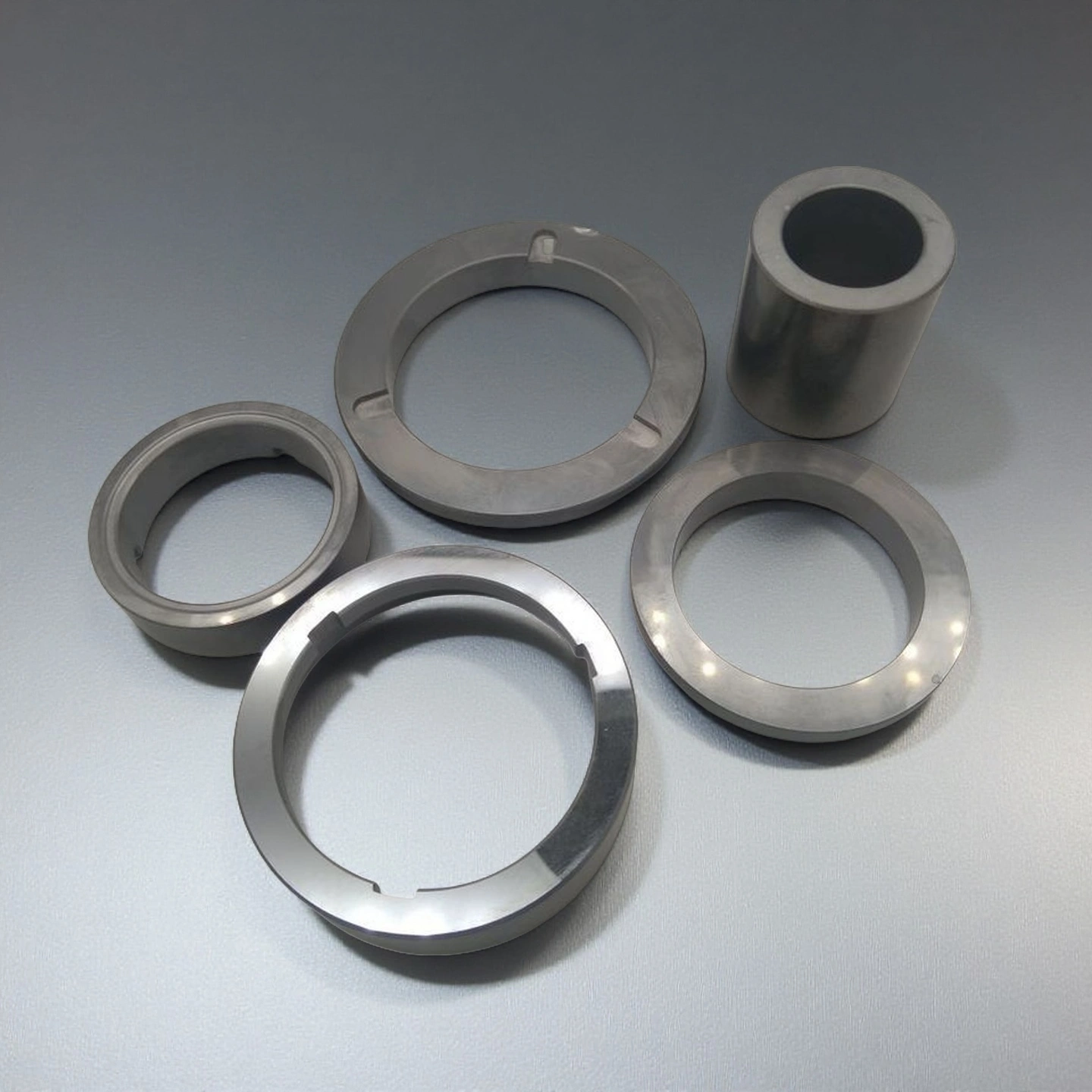
Silicon Nitride Ring
High strength and thermal-shock resistance maintain fit through vibration and heat cycling.
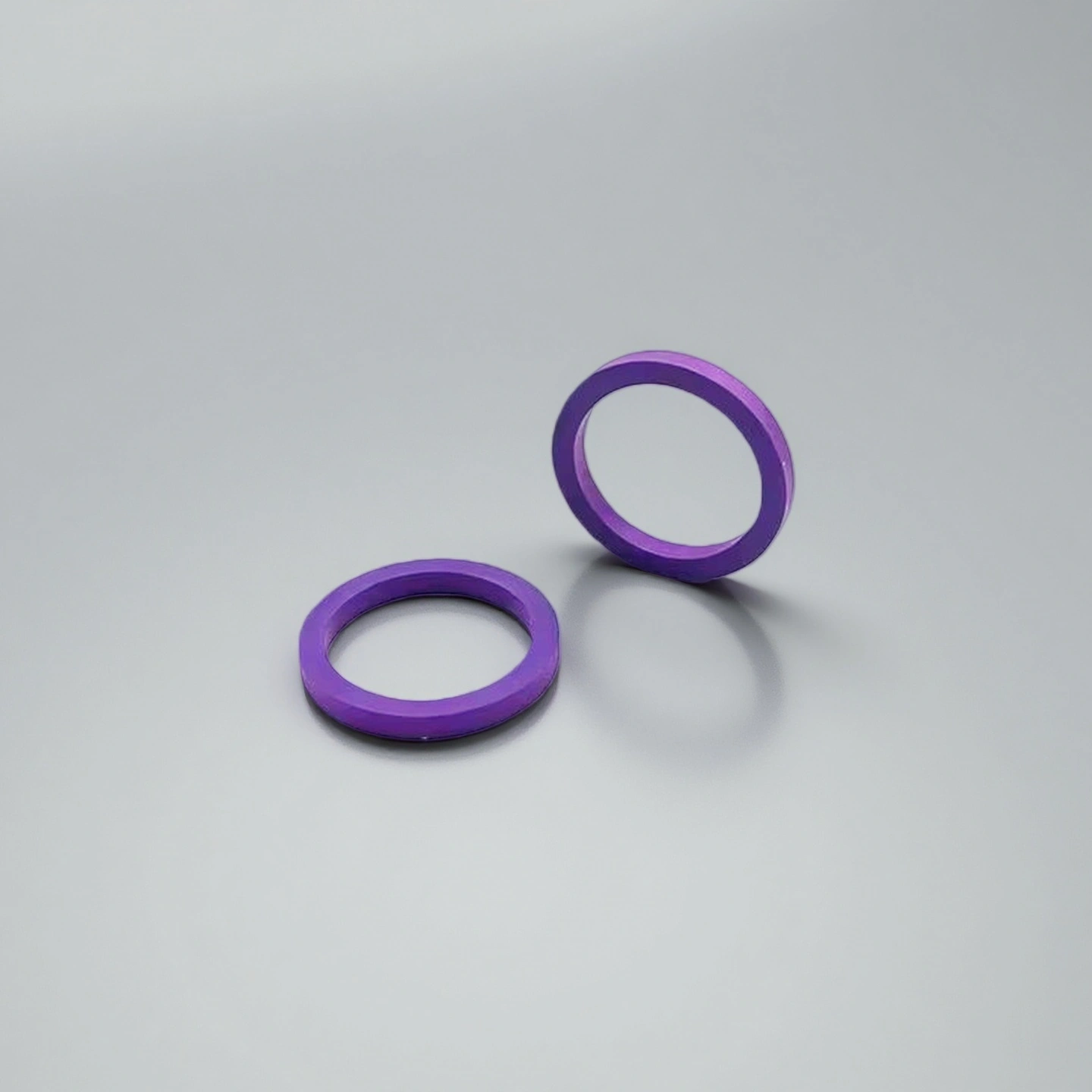
Lanthanum Hexaboride Ring
High-temperature stability and a hard surface help maintain geometry through severe heat cycles.
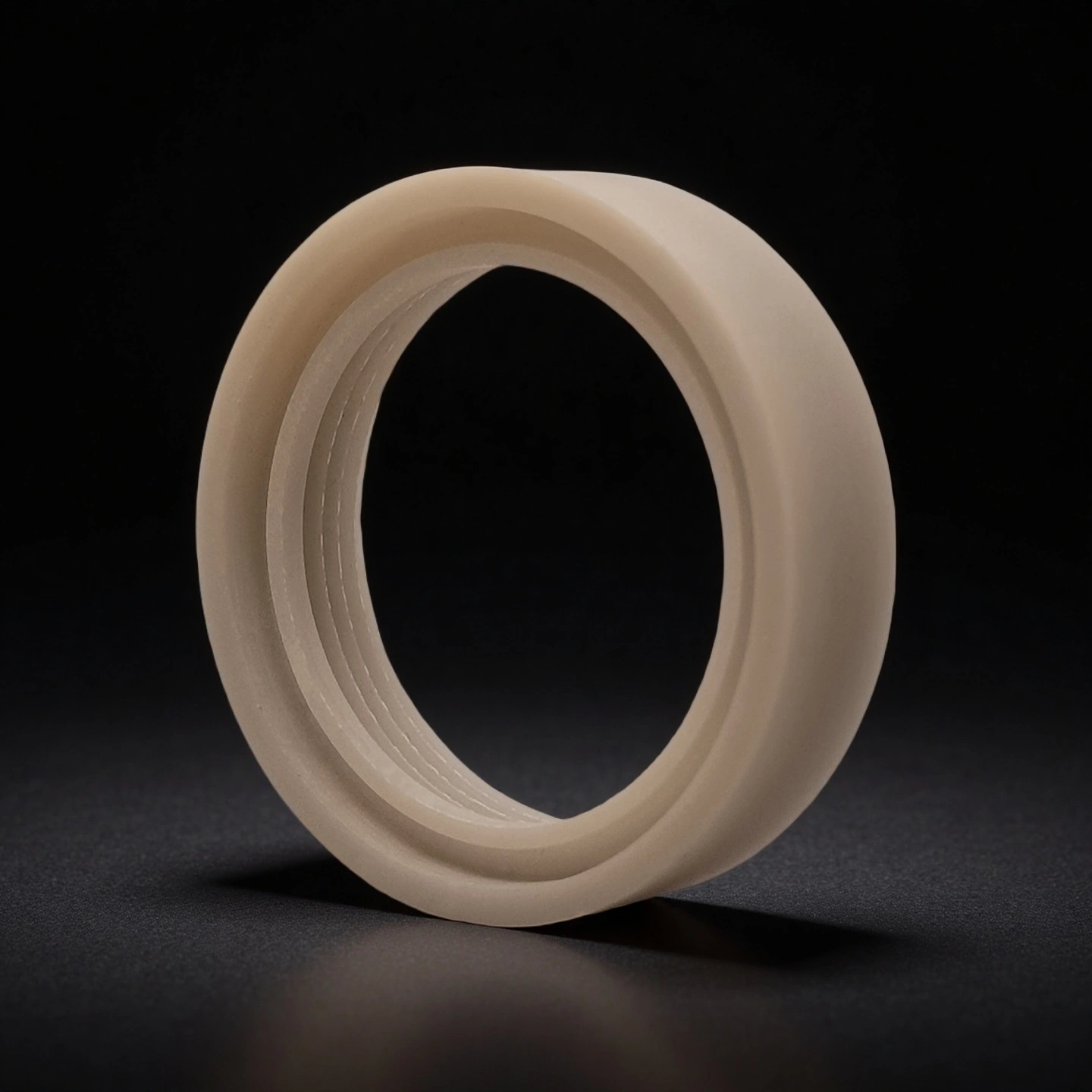
aluminum nitride ring
High thermal conductivity with electrical insulation helps spread heat and reduce hot spots.
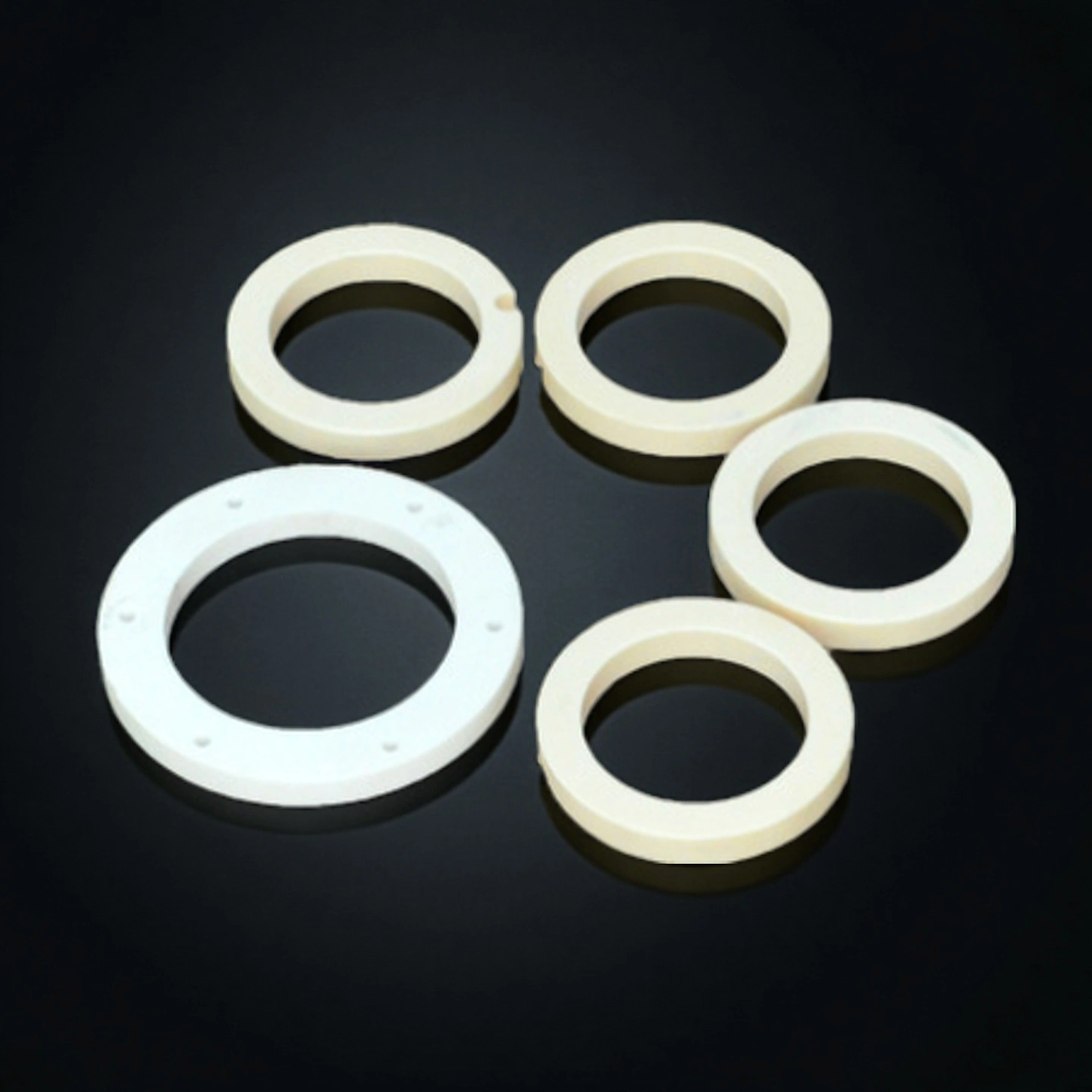
ceramic seal ring
Stable, wear-resistant sealing surfaces help control leakage in rotating equipment.
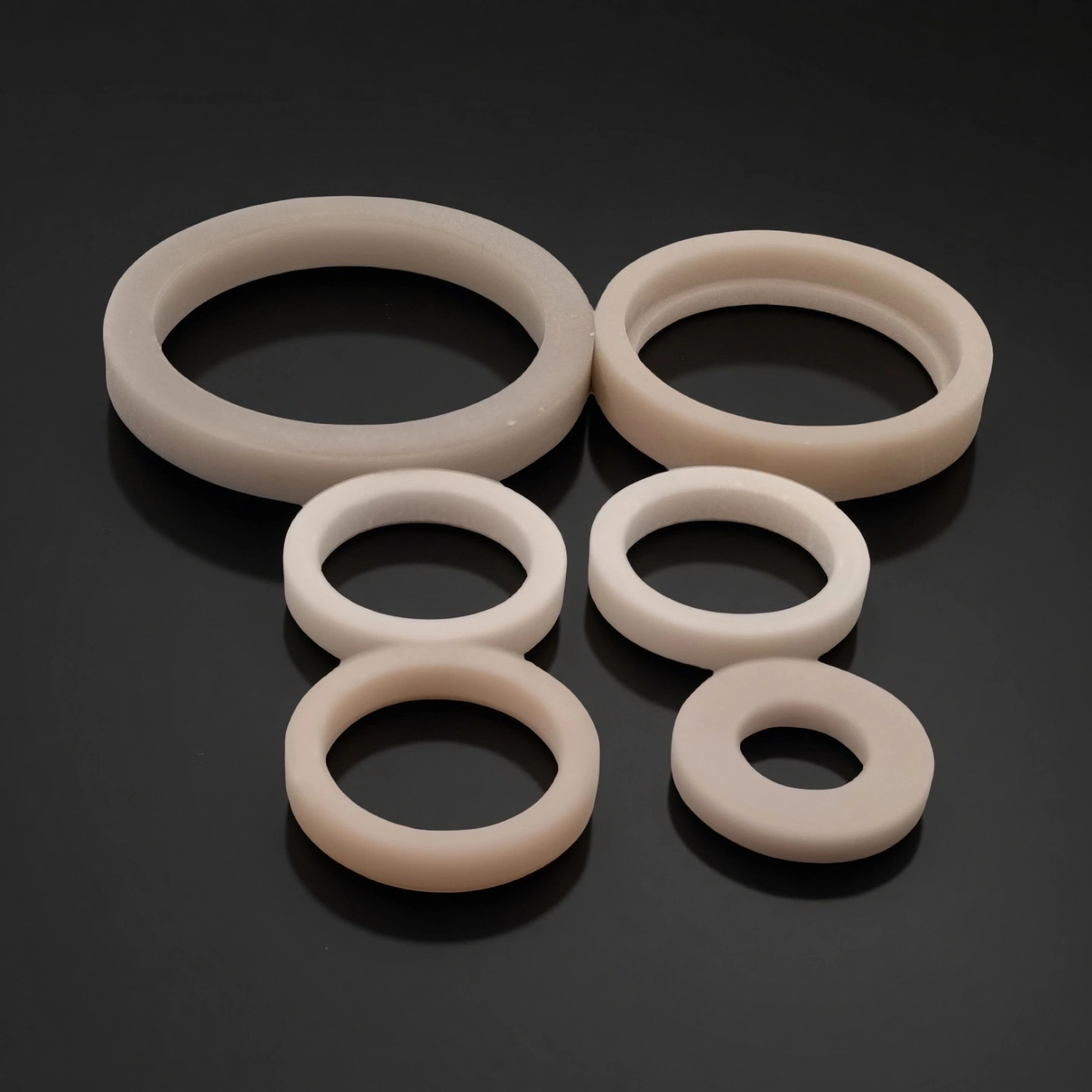
ceramic insulator ring
Reliable electrical isolation and spacing under heat, vibration, and contamination.
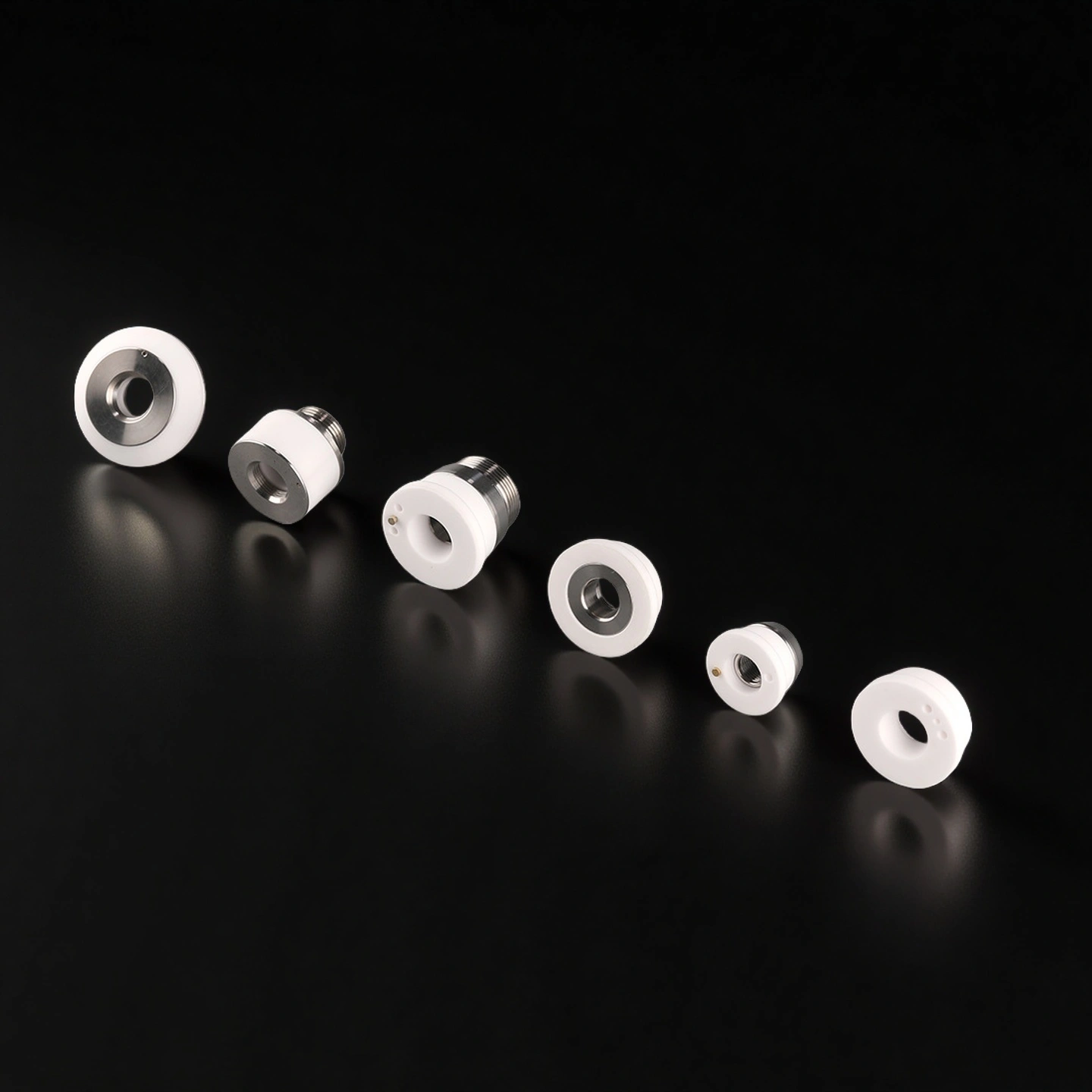
laser ceramic ring
Maintains nozzle alignment for stable, consistent laser cutting performance.
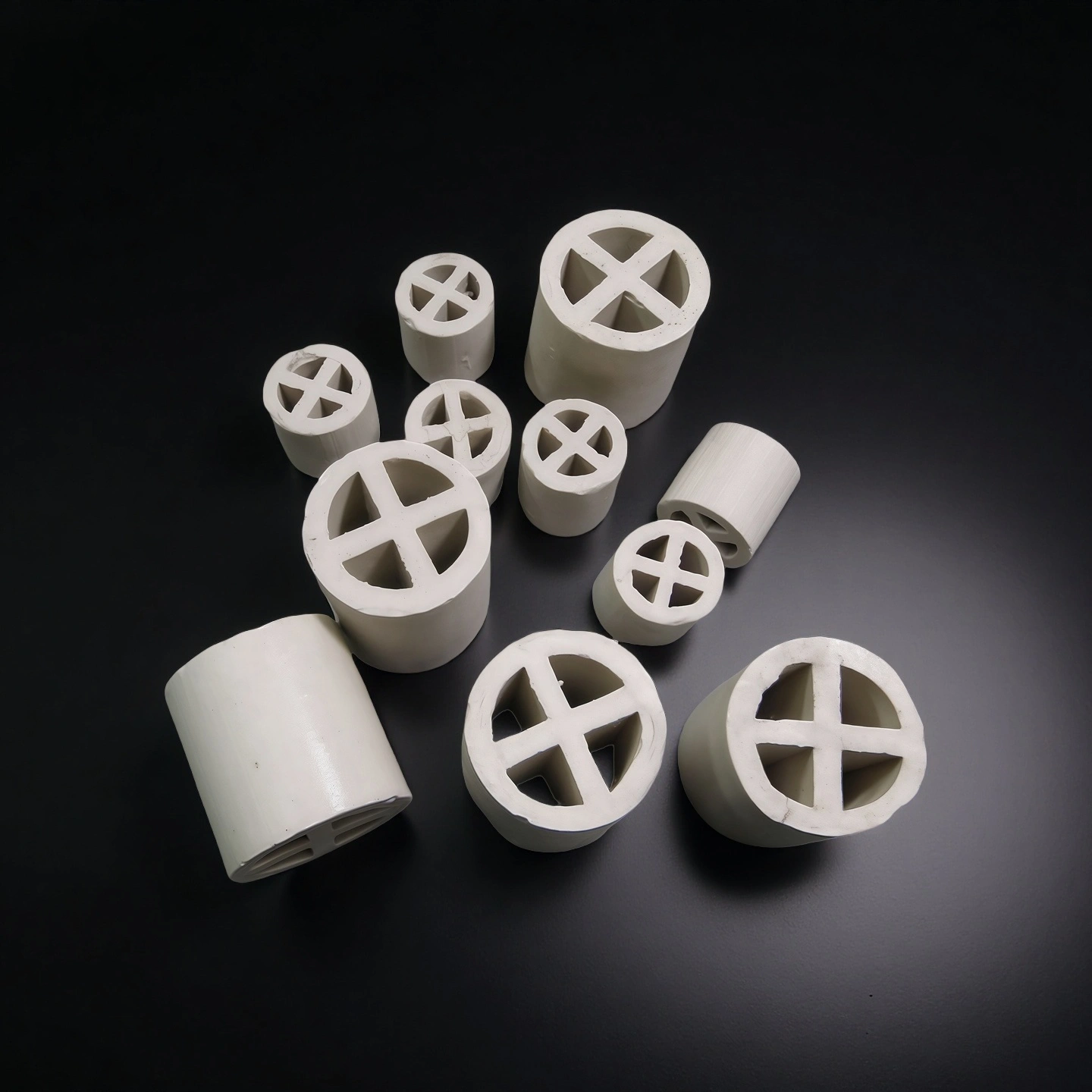
ceramic raschig rings
High-surface-area ceramic packing supports efficient mass transfer in processing towers.

ceramic support rings
Carry load and maintain alignment under heat, wear, or corrosive exposure.
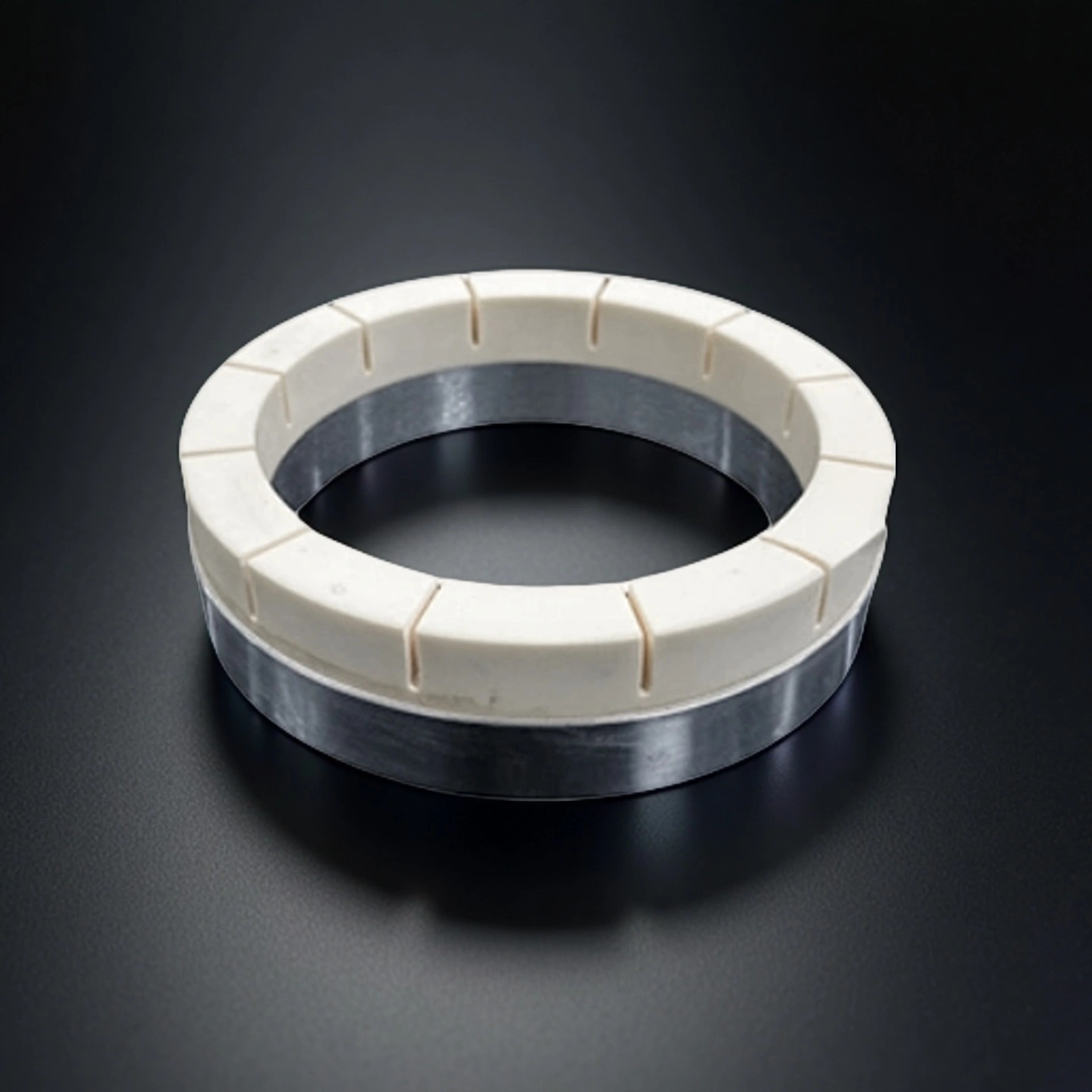
ceramic retaining ring
Keeps parts positioned for repeatable assembly through repeated service cycles.
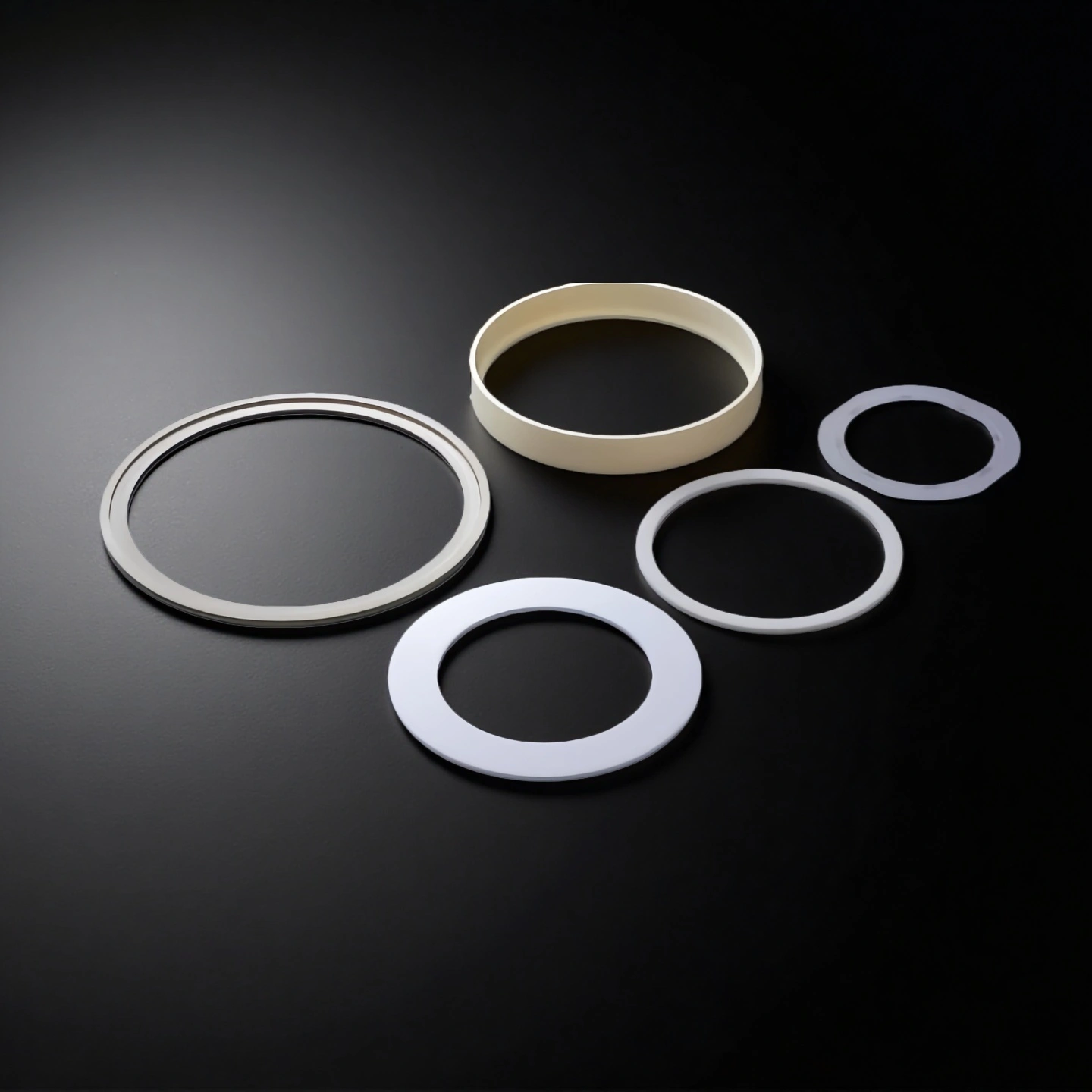
Ceramic Focus Ring
Maintains interface positioning to reduce drift from heat, wear, and contact.
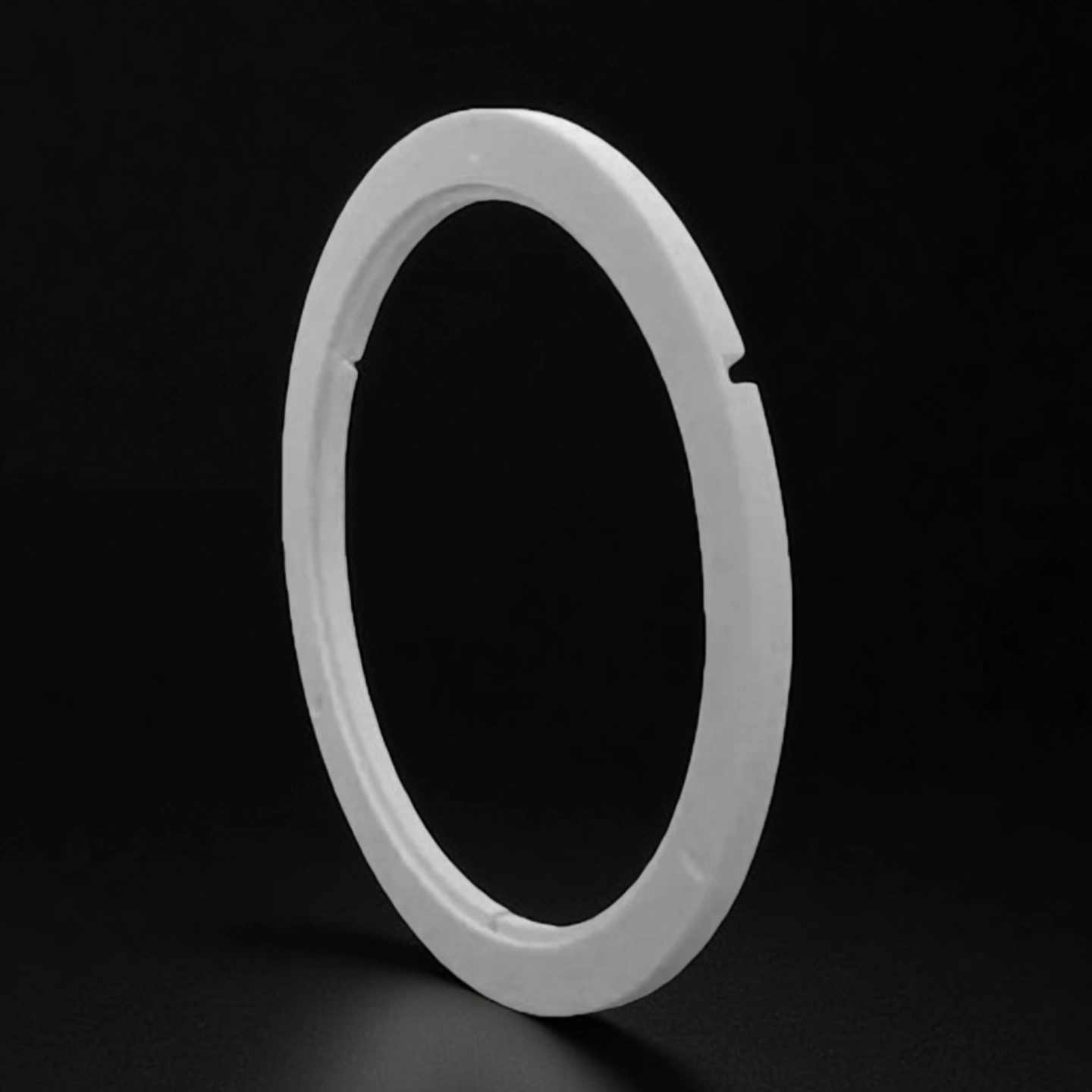
Ceramic Edge Ring
Protects edges and maintains stable positioning during loading and handling.
Where Industrial Ceramic Rings Work
Explore how ceramic rings support sealing, wear control, electrical insulation, positioning, and process equipment. Each application requires different dimensions, surfaces, and material properties.
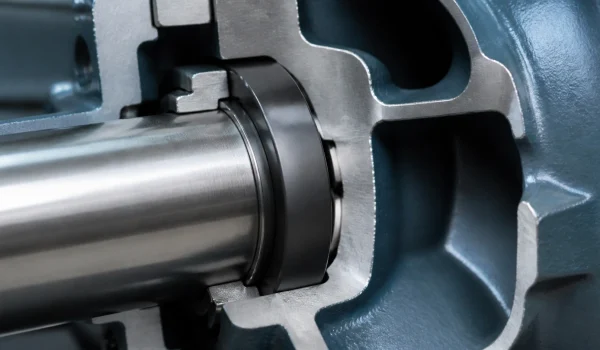
Pumps & Rotating Equipment
Ceramic seal and wear rings provide stable working interfaces in pumps, mixers, and rotating equipment exposed to abrasion, heat, or corrosive media.
- Types:Seal rings, stationary rings, mating rings, and support rings.
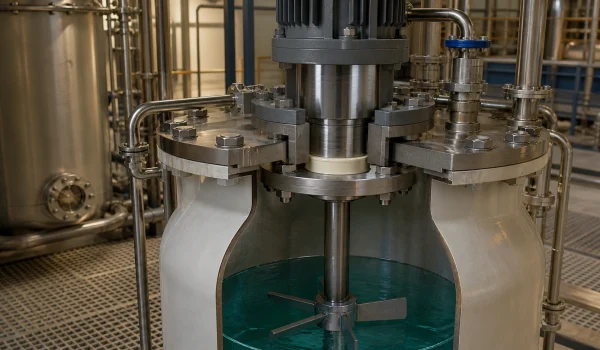
Chemical Process Assemblies
Ceramic rings provide durable barriers, spacers, and wear interfaces where chemical media can corrode metal or destabilize assembly fit.
- Types:Seal rings, spacer rings, support rings, and retaining rings.
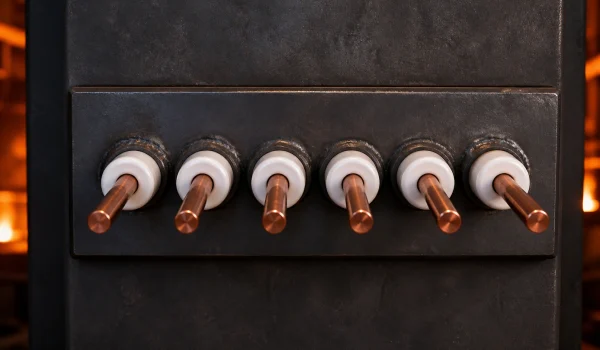
Electrical & Insulating Assemblies
Ceramic insulator rings maintain electrical separation and controlled spacing between conductive components exposed to heat, vibration, or contamination.
- Types:Insulator rings, spacer rings, support rings, and locating rings.
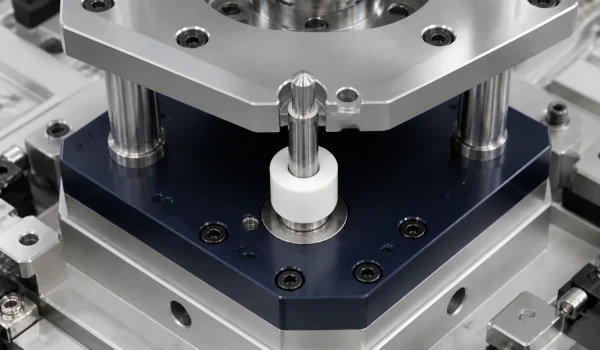
Mechanical Support, Spacing & Positioning
Ceramic support and locating rings maintain alignment, spacing, and contact separation where metal components face wear, heat, or corrosion.
- Types:Support rings, spacer rings, retaining rings, and wear rings.
Custom Ceramic Rings Designed Around Your Fit and Function
Every custom ceramic ring starts with your application. Share your drawing, sample, or project requirements for a focused engineering review.
What We Can Customize
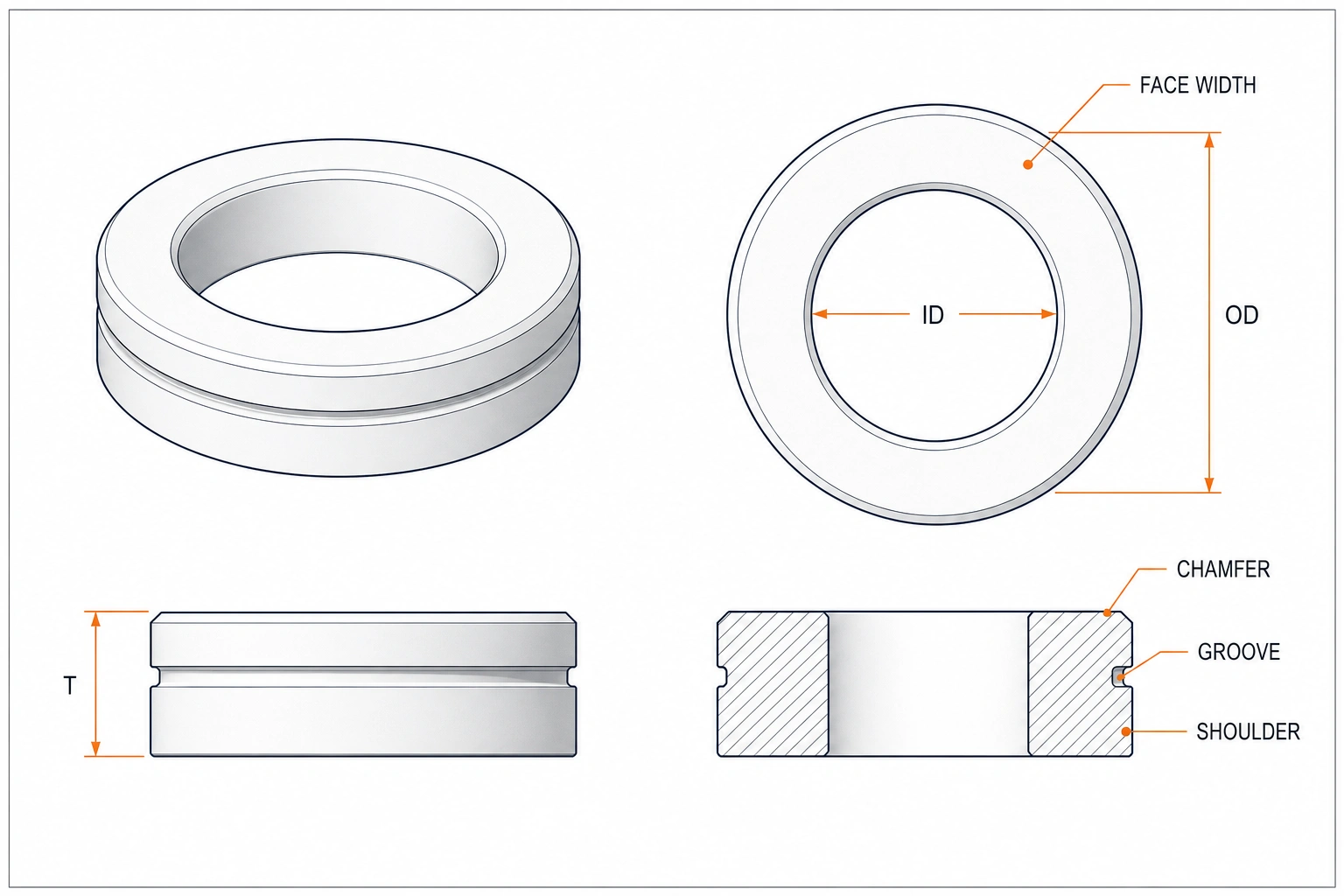
Ring function and profile:: Seal faces, insulators, spacers, support rings, retaining rings, and locating rings with plain, stepped, flanged, grooved, or shouldered profiles.
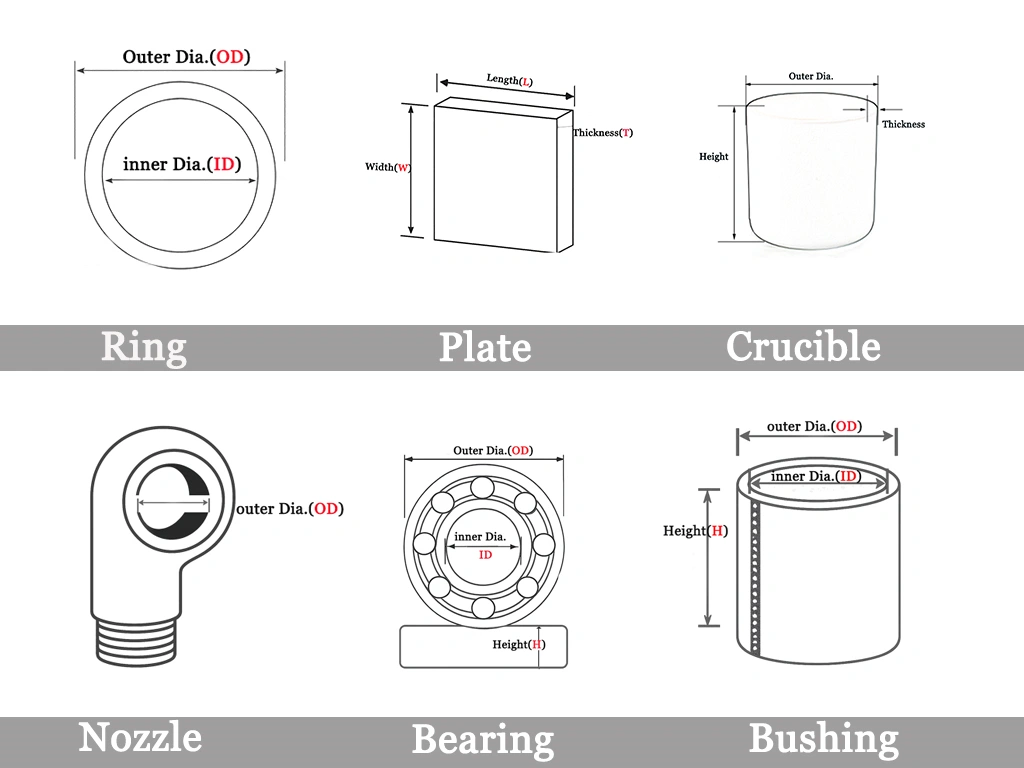
Dimensions and geometric tolerances: OD, ID, thickness, face width, wall thickness, roundness, concentricity, runout, flatness, and parallelism.
Working surfaces and edge details: Lapped or polished faces, specified surface finish, grooves, reliefs, holes, chamfers, radii, and controlled edge breaks.
Material and service requirements: Alumina, zirconia/ZTA, silicon carbide, silicon nitride, or boron nitride selected according to medium, temperature, load, speed, wear, and electrical requirements.
From Your Requirements to a Custom Ceramic Ring
Share Your Ring Requirements
Send a drawing, sample, or key dimensions together with the ring function, service conditions, quantity, and critical requirements.
Review the Ring Specification
We review the material route, geometry, working surfaces, tolerances, inspection needs, and manufacturing feasibility with you.
Confirm the Supply Plan
Review the proposed specification and quotation, then confirm the prototype, sample, trial batch, or production quantity.
Manufacturing Strength Behind ADCERAX Ceramic Rings
With more than 20 years of advanced ceramic manufacturing experience and over 2,000 precision component types developed, ADCERAX supports global customers with factory-direct production, controlled manufacturing, documented inspection, and export-ready supply.
Factory-direct control supports consistent quality and competitive pricing.
Forming, sintering, machining, finishing, inspection, and packaging follow one workflow.
Production supports small batches and larger repeat orders across different material routes.
Documented inspection and protective packing support repeat supply.

One-Stop Manufacturing Services for Industrial Ceramic Rings
ADCERAX provides an end-to-end manufacturing workflow for industrial ceramic rings, from drawing review to machining, finishing, and inspection. This process reduces lead-time risk and keeps dimensions, fit-critical features, and surface/edge requirements consistent across both standard sizes and custom parts.
confirms drawing, quantity, material choice, and critical features for fit and function
controls OD/ID, thickness, concentricity, and profile features such as steps or grooves
keeps parts clean and separated to prevent transit damage and mix-ups
builds a dense ceramic body ready for precision machining and stable performance
sets contact-face finish and edge-break rules to reduce chipping during handling
verifies critical dimensions and provides inspection records before shipment
FAQs About Industrial Ceramic Rings
Industrial ceramic rings serve as seal faces, wear rings, insulators, spacers, supports, retainers, laser nozzle holders, and tower-packing media. The correct ring type depends on its position in the equipment and the interface or process duty it must control.
Choose ceramic when wear, corrosion, electrical insulation, heat resistance, or dimensional stability is more important than ductility. Ceramic is not a universal metal replacement; load, impact risk, mating components, edge design, and operating conditions must still be reviewed.
Alumina offers balanced wear resistance and electrical insulation. Zirconia/ZTA provides greater toughness and edge integrity. Boron nitride suits specialized high-temperature insulating or non-wetting applications with limited structural load. Silicon carbide suits demanding seal and wear interfaces exposed to abrasion or corrosive media.
Yes. ADCERAX can review a drawing, existing sample, or clear photographs before confirming a manufacturing route. Provide the ring’s function, critical dimensions, material if known, quantity, and service conditions. Existing parts are reviewed for fit and duty rather than treated as automatic replacements.
Provide the OD, ID, thickness, face width or wall thickness, material preference, quantity, and drawing or photograph. For seal rings, also include flatness, surface finish, mating material, medium, pressure, speed, and temperature. For insulating rings, include the electrical, thermal, and load requirements.
These requirements are confirmed according to the material, ring size, geometry, functional surfaces, and inspection method. Identify which surfaces control sealing, spacing, rotation, or assembly fit so the critical dimensions and finishing requirements can be reviewed correctly.
Standard items can be dispatched within 24 hours. Custom orders typically require 3–7 weeks, depending on the material, production route, machining, finishing, inspection, and quantity. ADCERAX responds to enquiries within 24 hours to confirm the next step.
Request a Ceramic Ring Quote
Send us your drawing, sample, or key requirements. Our engineers will review your application and respond within 24 hours.
- Drawing, sketch, sample, or part photos
- OD, ID, thickness, and critical tolerances
- Ring function and mating surfaces
- Temperature, medium, pressure, and speed
- Material preference or performance requirements
- Quantity and target delivery date
A complete drawing is helpful but not required—we can start with the information you have.
*Our team will answer your inquiries within 24 hours.
*Your information will be kept strictly confidential.
info@adcerax.com
Tel:+86-0731-84428843
WhatsApp:+86 19311583352
Within 24 hours