Ceramic Membrane Filters, Elements & Modules
ADCERAX supplies ceramic membrane tubes, elements and modules for crossflow MF/UF filtration. Choose from alumina, zirconia and silicon carbide across tubular, flat-sheet and module formats, with engineering support for material, membrane grade and system fit.
Explore the options below to compare formats and application fit.
What is ceramic membrane?
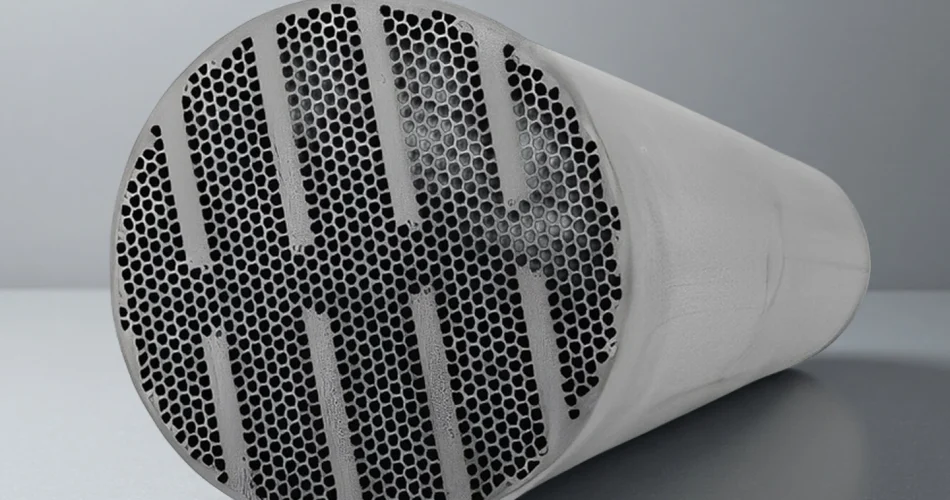
A ceramic membrane is a type of inorganic, porous filtration membrane used in ceramic membrane filtration and crossflow operation to remove suspended solids, emulsified oil, bacteria, and fine colloids from liquids.
It is typically built as a two-layer structure—a robust porous support with a finer separation layer—so it can handle abrasive or chemically aggressive feeds and recover performance through repeated cleaning.
Why Choose Ceramic Membranes?🔍
The rigid inorganic structure helps resist chemical, thermal and mechanical stress.
Ceramic membranes support repeated cleaning cycles, reducing dependence on disposable filtration media.
Defined membrane grades make it easier to match pore size or MWCO to MF/UF separation requirements.
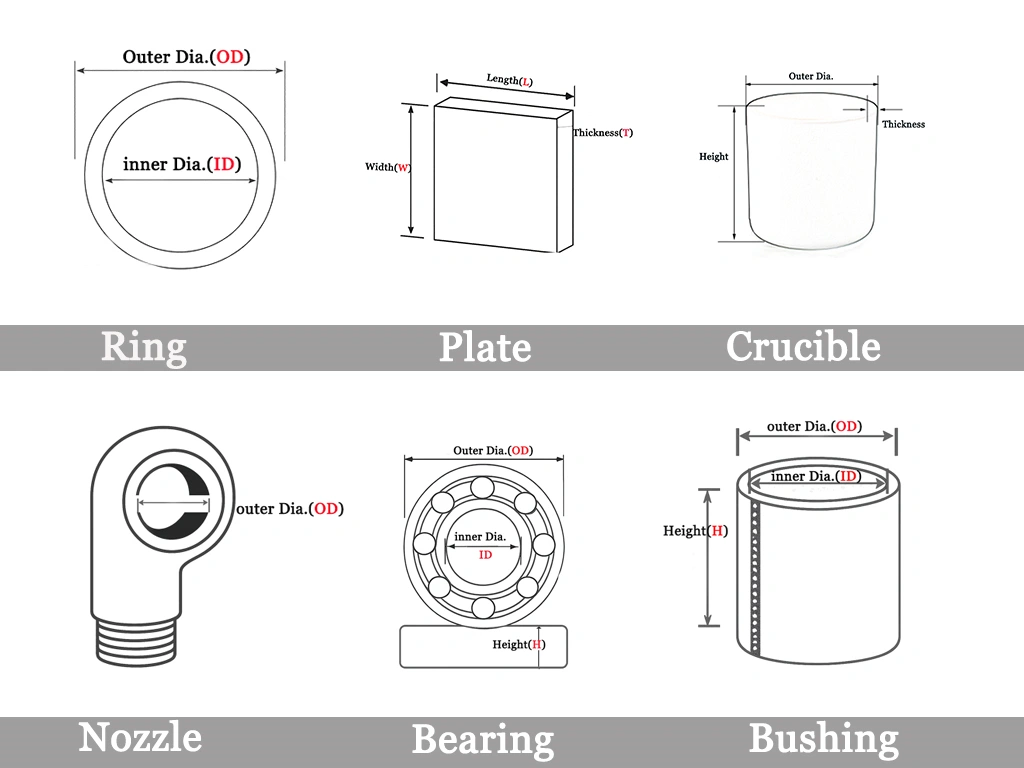
Ceramic Membrane Properties and Size
Ceramic membranes help maintain stable separation and predictable flux in abrasive, chemically aggressive, or fast-fouling feeds by enabling strong cleaning-based regeneration and repeatable recovery. Use the table below to compare membrane material options and select a configuration that fits your separation target, cleaning chemistry, and module integration needs.
⭐ Alumina Ceramic Membrane (Al₂O₃)
Alumina ceramic membranes deliver stable MF/UF separation with well-defined pores for suspended solids and colloids. They tolerate repeated CIP cleaning with reliable flux recovery, offering a cost-effective baseline for ceramic membrane filtration.
⭐ Zirconia Ceramic Membrane (ZrO₂)
Zirconia ceramic membranes deliver stable MF/UF separation with a tough, smooth layer that helps limit irreversible fouling. They tolerate repeated CIP cleaning with reliable recovery, ideal when surface integrity and consistent separation matter.
⭐ Silicon carbide ceramic membranes(SiC)
Silicon carbide ceramic membranes deliver stable MF/UF separation with high permeability for high-solids, abrasive feeds. They tolerate aggressive CIP cleaning with reliable recovery, ideal when uptime and durability matter.
| Material of support | α-Al2O3 |
| Material of membrane | ZrO₂ / TiO₂ /Sic/ α-Al₂O₃ |
| Pore size (mm) | 10 - 1200 |
| Length (mm) | 200 - 1200 |
| OD (mm) | 14.0 - 53.0 |
| ID (mm) | 3.3-8.0 |
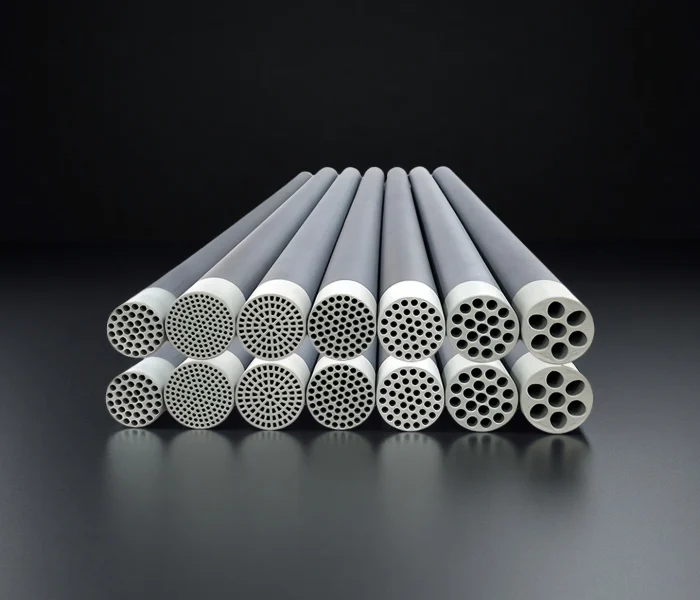
| Number of Channels | 1..37 |
| Membrane element per element(M2) | 0.025 - 0.075 |
| Max. Operation Pressure(bar) | 10 |
| PH value | 0-14 |
| Flux (m³/h·bar) | 7150 - 2500 |
Ceramic Membrane Products & Types
Not all ceramic membrane filters behave the same in real feeds. To help you choose fast, we organize ceramic membrane products & types by material, structure, and MF/UF grade—so you can match your duty first, then move to sizing and a quote with fewer back-and-forth steps.

Alumina membrane tube
Cost-effective alumina ceramic membrane tube with consistent pore uniformity and repeatable batches for general water/wastewater filtration.

zirconia membrane tube
Tough zirconia ceramic membrane filter tube with a smoother separation layer to reduce irreversible fouling in fine clarification duty.

silicon carbide membrane tube
High-permeability silicon carbide ceramic filtration membrane tube for high-solids, abrasive feeds where throughput is the priority.
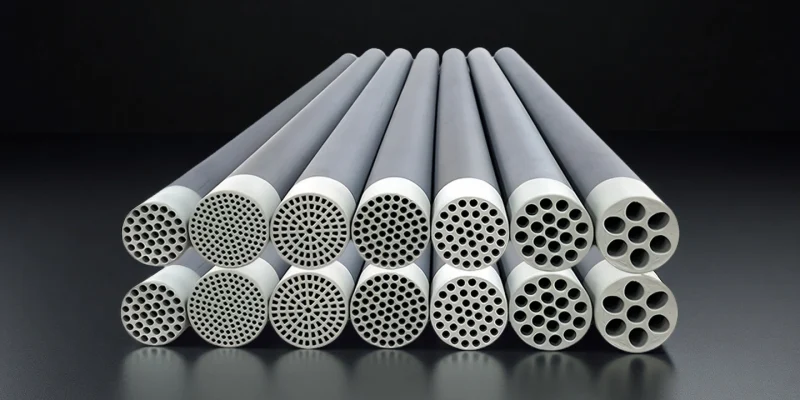
Tubular ceramic membrane
Wide flow channels handle high-solids feeds while supporting effective crossflow cleaning.
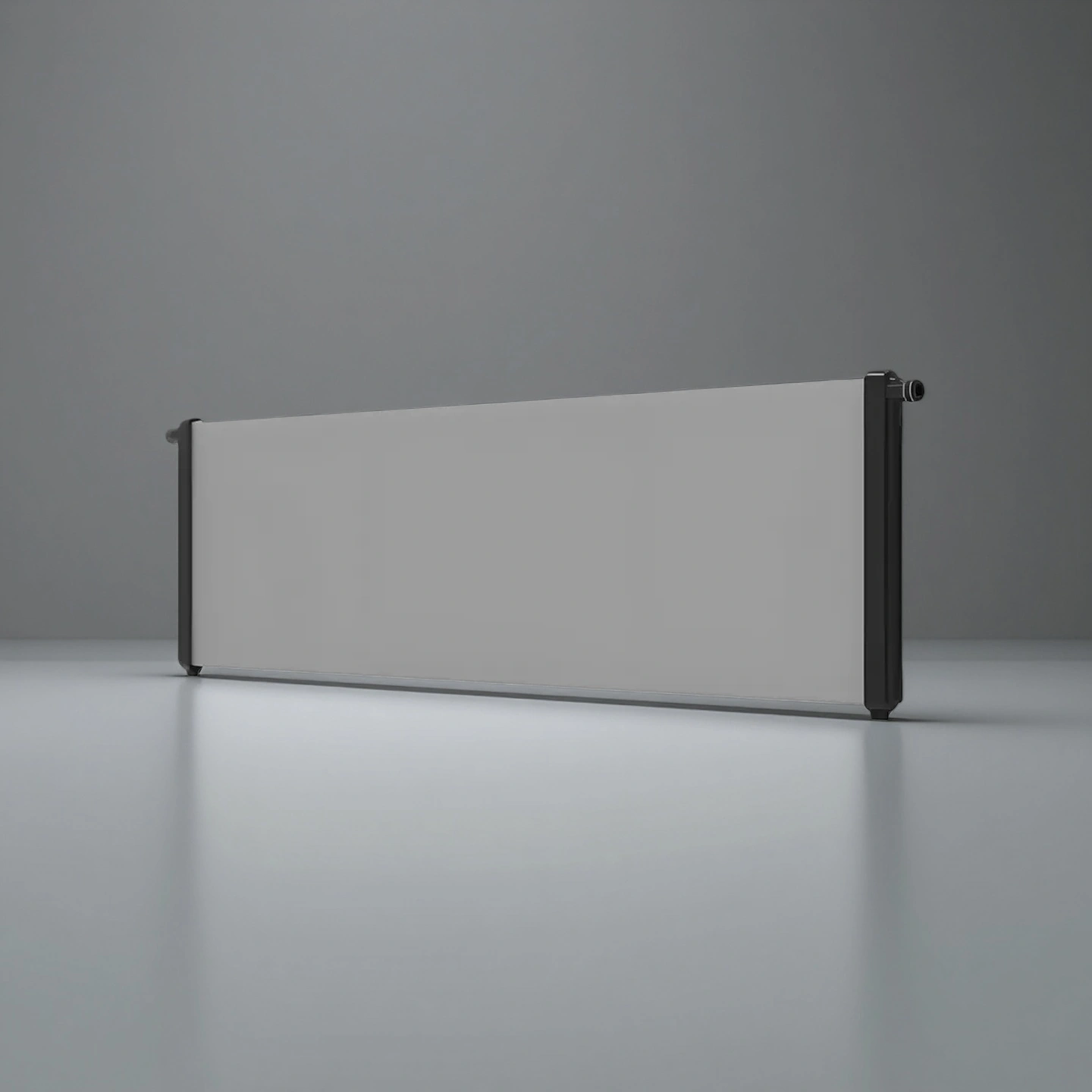
Flat sheet ceramic membrane
A compact, open-surface design that is easy to clean and integrate into filtration systems.
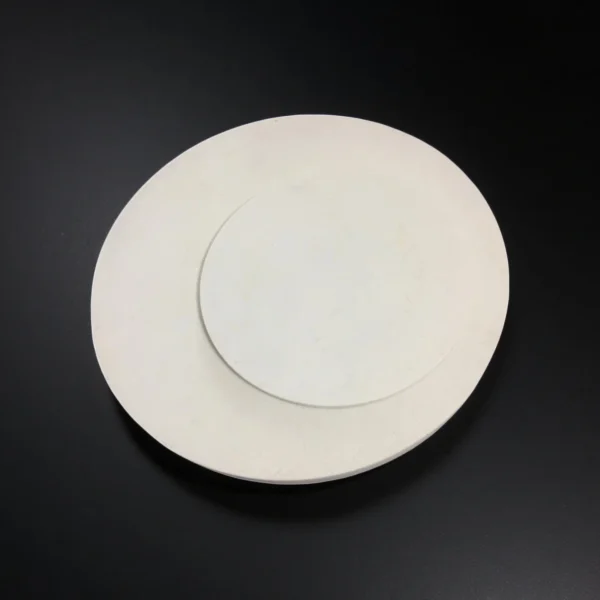
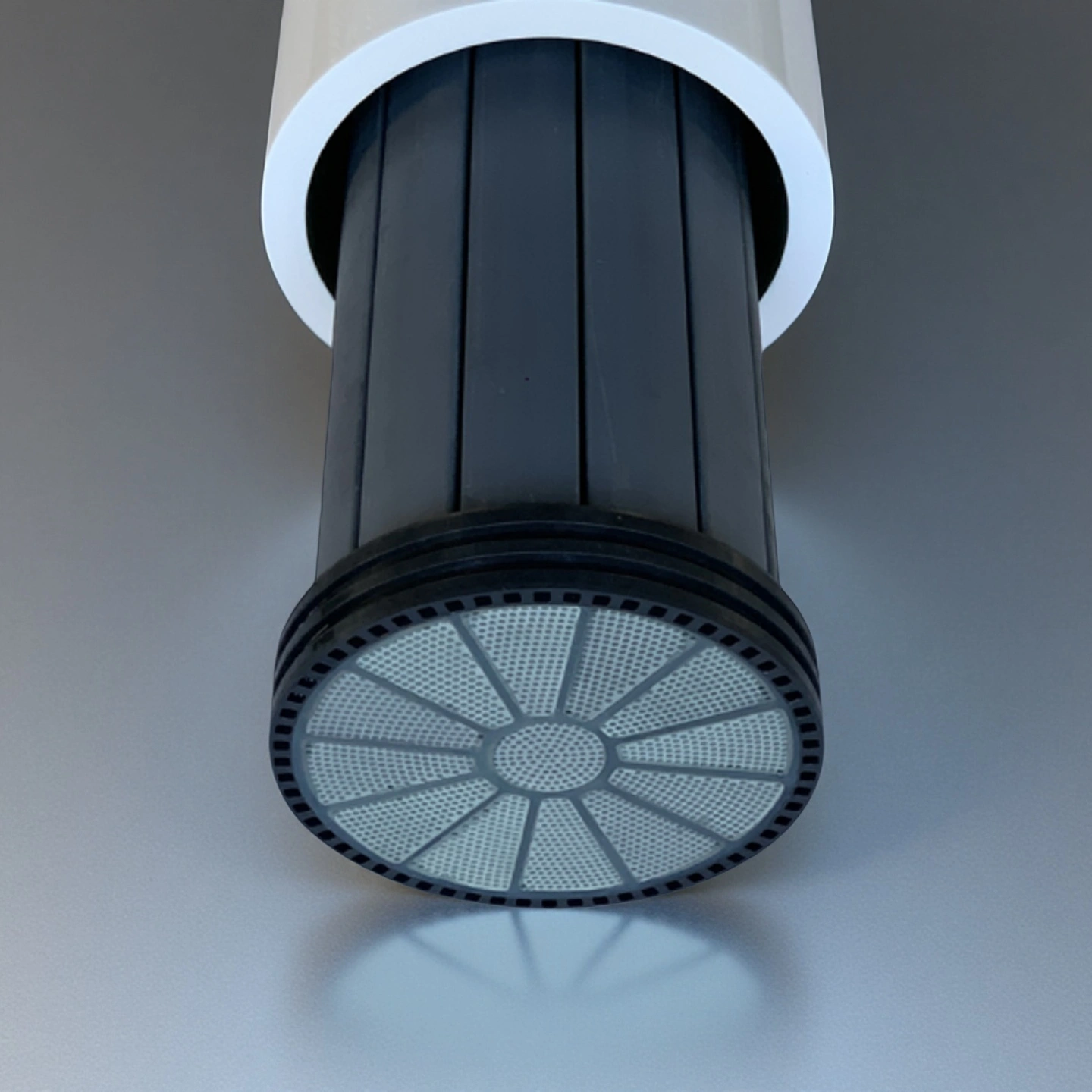
ceramic disc membrane
A robust, compact format for slurry and solids-rich filtration under demanding conditions.
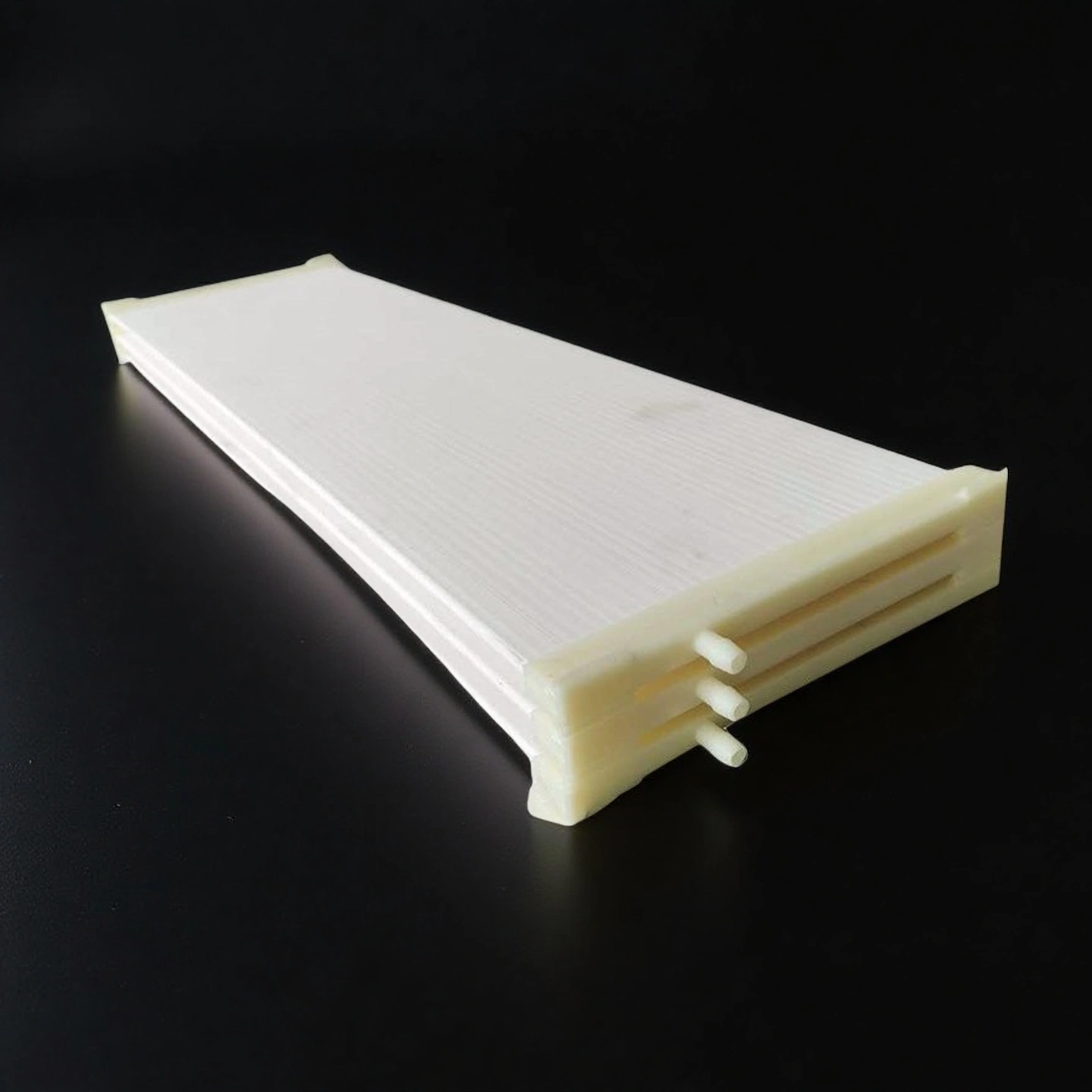
ceramic membrane module
Combines multiple membrane elements for easier installation and scalable filtration capacity.

Microfiltration ceramic membrane filter (MF)
Ceramic membrane microfiltration (MF) is best for suspended solids removal, turbidity control, bacteria reduction, and robust pretreatment duty.
Ultrafiltration ceramic membrane (UF)
Ceramic ultrafiltration membrane(UF) is best for removing finer colloids and emulsions where higher clarity and stable separation are required.
How to Select a Ceramic Membrane for MF or UF
Select the membrane from the separation task outward: define what must pass or be retained, then confirm the membrane grade, material system, geometry, cleaning window and module interface.
| Decision Question | Information to Consider | What It Determines | Selection Direction |
|---|---|---|---|
| What must pass through or be retained? | Target separation and required permeate or retentate quality | Microfiltration (MF) or ultrafiltration (UF) | Suitable membrane separation range |
| How is the target measured? | Particle-size distribution, molecular-weight data, turbidity or another defined criterion | Pore rating or MWCO | Required rating, unit and evaluation method |
| What conditions will the membrane face? | Solids, oil, viscosity, abrasives, chemistry and temperature | Material compatibility and cleaning approach | Suitable membrane material and operating range |
Less Fouling Downtime. More Controlled Separation.
Cleanable ceramic membrane elements and modules support stable crossflow filtration in demanding, high-solids feed conditions.
Ceramic Membrane Applications
Ceramic membranes support reliable liquid-solid separation in high-solids, chemically demanding and frequently cleaned processes. Their cleanable ceramic structure makes them suitable for continuous industrial filtration and repeated operating cycles.

Industrial Wastewater Treatment
Separates suspended solids and fine particles from demanding wastewater streams. Suitable for pretreatment, downstream process protection and water reuse systems.
- Typical Uses:Process wastewater · Pretreatment · Water reuse

Process Water Clarification
Helps reduce particles and turbidity in production and recirculating water. Supports cleaner process streams and more consistent downstream operation.
- Typical Uses:Process water · Cooling water · Equipment protection

Food & Beverage Clarification
Separates suspended solids, cells and fine particles from liquid product streams. Suitable for clarification, concentration and product recovery processes.
- Typical Uses:Beverage clarification · Fermentation broth · Product recovery

Chemical Process Filtration
Supports liquid-solid separation where chemical exposure and regular cleaning are required. Suitable for clarification, solids recovery and process stream recycling.
- Typical Uses:Catalyst recovery · Chemical clarification · Process stream recycling
Customize Ceramic Membrane
ADCERAX custom ceramic membranes and ceramic membrane modules are made to your drawing or process specs, including pore size/MWCO target, channel structure, tube length/OD/ID, end-face design, and module interface details for reliable crossflow performance. Typical customization lead time is 2–9 weeks, depending on material choice, separation grade, tolerances, and complexity.
Customization Options
Define the separation duty first—MF or UF, target removal, feed chemistry, solids load, and temperature. Clear duty matching keeps flux stable and avoids over-cleaning, oversizing, or premature fouling.
Share your drawing or interface specs for key fit points—tube OD/ID/length, channel count, end-face design, and housing connections. Controlled fit reduces bypass risk and simplifies replacement.
Match the design to your feed behavior—abrasive solids, emulsified oil, gels, or biofouling. Options like crossflow velocity, backwash strategy, and CIP approach help limit fouling and keep recovery repeatable.
Choose the ceramic membrane material based on corrosion, abrasion, and cleaning intensity (Al₂O₃ / ZrO₂ / SiC). The right surface and pore structure improves cleanability and extends service life.
Customization Process
Send feed details, MF/UF goal, pore size or MWCO, pH/Temp. range, and cleaning method. Include drawing/interface, quantity, lead time, destination.
We confirm material (Al₂O₃ /ZrO₂ /SiC), pore grade, channel structure, tube OD/ID/length, end-face design, and housing/connection standard.
We produce ceramic membrane tubes/modules to spec and inspect key dimensions and separation grade by batch. Traceable marking and records are available.
Membranes are protected, labeled, and packed to prevent chipping and contamination, then shipped with complete export-ready documents.
Ceramic Membrane Manufacturing & Quality Control
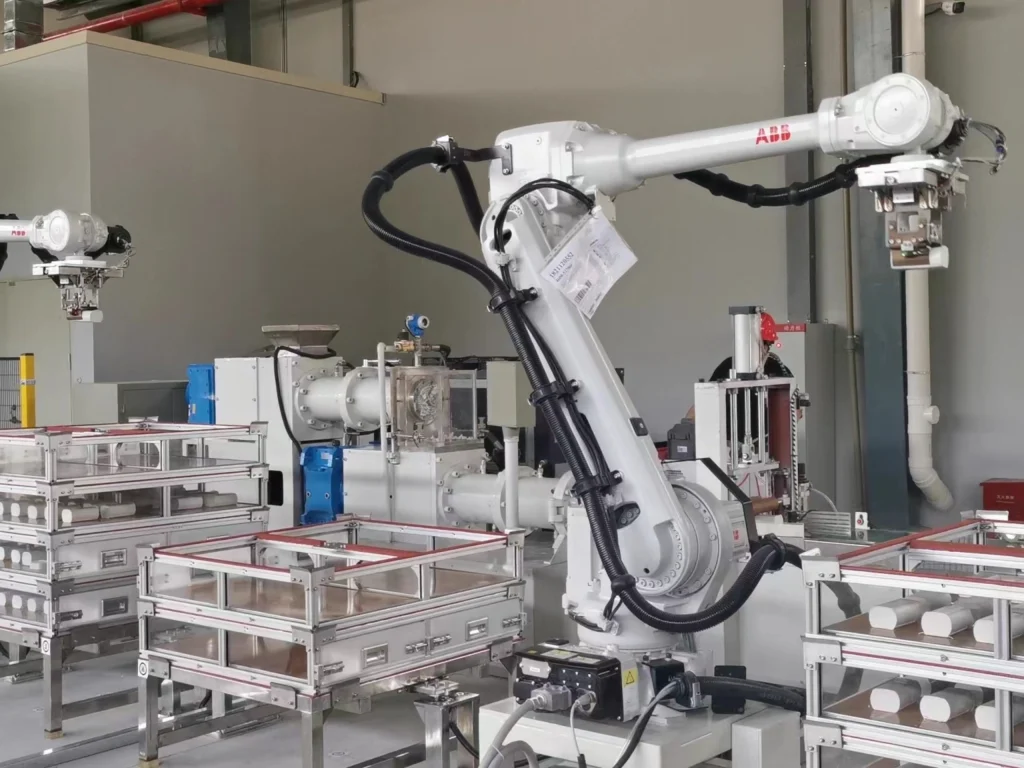
ADCERAX is a China-based advanced ceramics manufacturer supporting ceramic membrane elements and modules for international filtration projects. We combine specification review, controlled manufacturing, inspection and export supply support for standard and custom requirements.
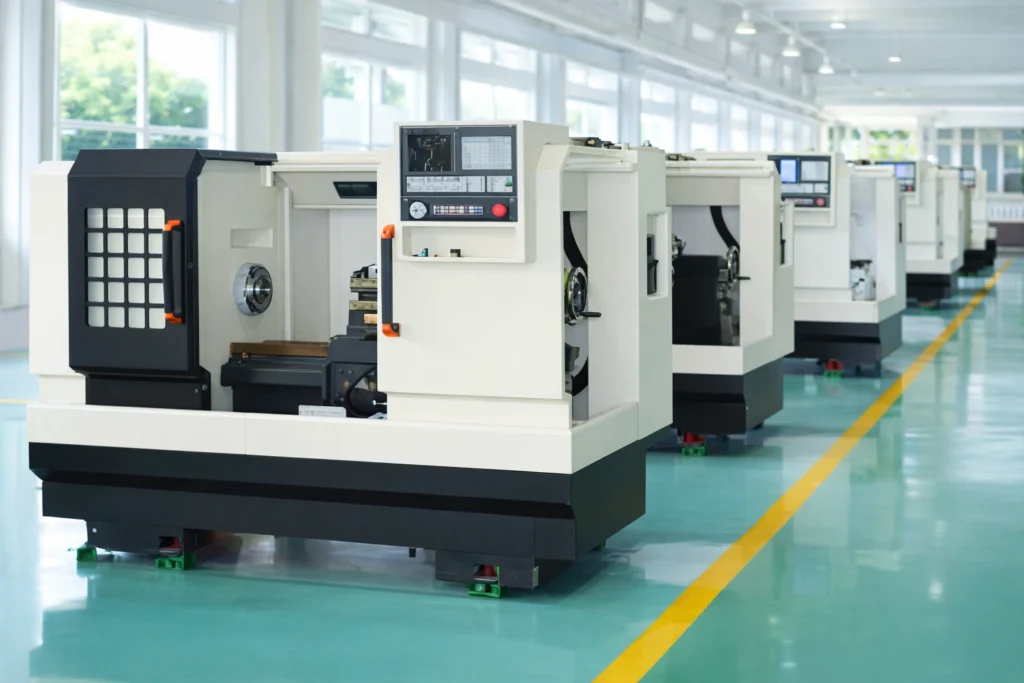
ADCERAX is one of the ceramic membrane suppliers with 20+ years of advanced ceramics experience, supplying ceramic membrane tubes and modules for crossflow filtration in abrasive, corrosive, and high-fouling duty.
We offer standard ceramic membranes for quick replacement and custom-to-spec builds to match pore size/MWCO, channel structure, and module interfaces. With documented inspection and protective packing, ADCERAX helps buyers keep separation performance stable and replacement cycles predictable.
2 Production Bases
Standard & Custom Configurations
Batch Inspection
International Supply Support
Membrane material, separation range, geometry and module interface are reviewed for the intended process.
Defined production requirements help maintain consistent element structure, dimensions and repeat-order specifications.
Order-specific dimensions, appearance and interface requirements are checked before protective packing.
Clear product identification, protective packaging and order records support international delivery and repeat purchasing.
Ceramic Membrane Preparation Methods
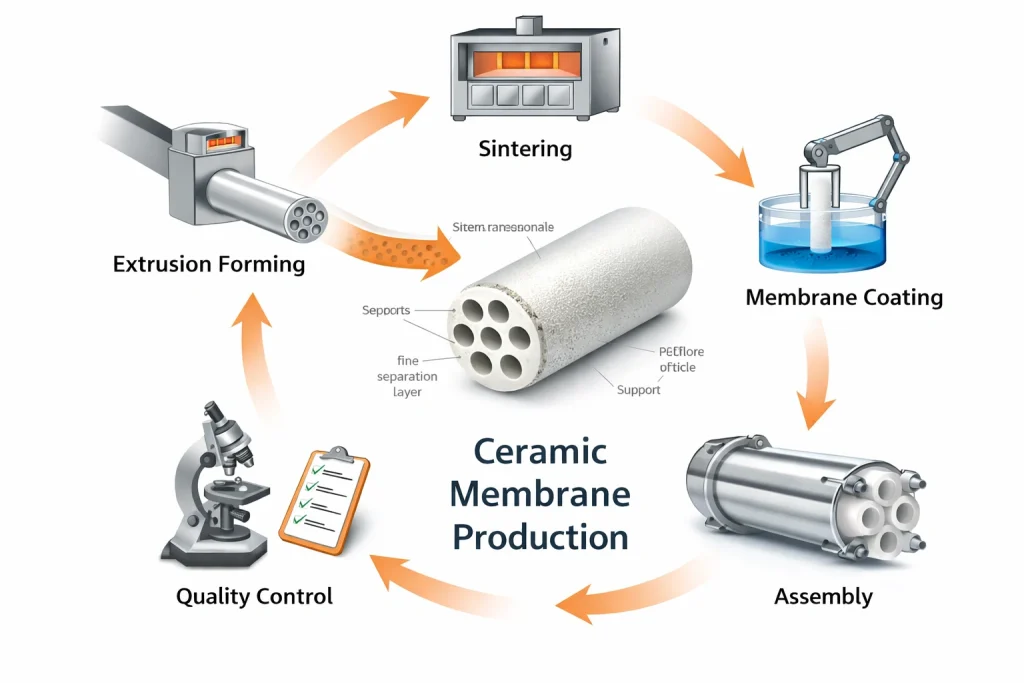
Used to form tubular and multichannel ceramic supports by pushing ceramic paste through a die, followed by drying and sintering.
A ceramic slurry is cast as a thin “green tape,” dried, cut/stacked if needed, then laminated and sintered for flat supports.
Ceramic feedstock is injected into a mold for complex geometries, then debinded and sintered.
The porous support is dipped into a coating slurry/sol, then dried and fired to form a separation layer.
A controlled ceramic slurry is applied to build a filtration layer, then fired to lock in pore structure.
A ceramic slurry is poured into a porous mold; liquid is absorbed by the mold and a solid layer builds up, then demolded, dried, and sintered.
Includes uniaxial pressing and cold isostatic pressing (CIP) to form plates/discs/support bodies, followed by debinding and sintering.
The shaped green body is densified or stabilized by controlled firing; co-sintering can bond multilayers or structures in one firing cycle.
Gas-phase deposition forms thin layers inside pores or on surfaces; used for specific inorganic membrane types.
A sol is applied (often by dip/spin), gelled, dried, and heat-treated to form fine-pore layers.
FAQs About Ceramic Membrane
Start with the separation target, not the material name. Use the particle or molecule size to be retained, required permeate quality, feed solids or oil content, viscosity, temperature and cleaning method to define an MF pore rating or UF cut-off. If the target is not yet quantified, send a feed analysis and desired result for engineering review.
Provide the target separation, particle-size or molecular-weight distribution when available, required permeate and retentate quality, feed composition, solids or oil load, viscosity, pH, temperature and cleaning chemistry. State the unit explicitly: pore ratings may be expressed in micrometres or nanometres, while UF grades may also use MWCO.
Tubular elements place the membrane surface inside one or more flow channels and are commonly integrated into crossflow housings. Flat-sheet elements suit system layouts designed around plates or submerged or pressure-driven assemblies. A module combines membrane elements with a housing and connections. Select by flow mode, available space, cleaning strategy, sealing method and interface dimensions.
Treat material selection as a project decision. Compare feed chemistry, abrasion, temperature, cleaning agents, required membrane grade, geometry and module compatibility. Do not select from a generic material ranking alone; request confirmation of the offered support, separation layer and operating window.
Cleaning depends on the foulant, element and module. A project may use flushing, backwash or backpulse, air assistance and chemical CIP, but every sequence must stay within the confirmed pH, temperature, pressure and material limits. Track permeability or flux recovery and pressure behaviour to judge whether the cleaning method is effective.
There is no responsible single lifespan for all ceramic membranes. Service life depends on feed severity, hydraulic loading, pressure and temperature cycling, cleaning chemistry and frequency, sealing design, handling and whether performance recovers after cleaning. Request an application review rather than selecting from a fixed-year estimate.
Send the application and feed composition, target separation, preferred pore size or MWCO if known, flow or flux target, solids or oil content, viscosity, pH, temperature, cleaning method, membrane format and geometry, module interface or housing connection, quantity, project stage, destination and any drawing or P&ID.
Not necessarily. A membrane normally includes a defined separation layer or cut-off, while a porous ceramic disc may be only a support or depth-filtration body. Confirm the layer structure, rating, flow direction and intended duty before linking or selling a porous disc as a ceramic membrane.
Discuss Your Ceramic Membrane Application
Send the available details below for engineering review and quotation:
- Application: wastewater, oil-water separation, food and beverage, or process filtration
- Separation target: solids, colloids, oil, bacteria, or macromolecules to retain
- Material system: alumina, zirconia, or silicon carbide, if specified
- Membrane grade: MF pore rating or UF MWCO, including the unit if known
- Feed conditions: solids, oil, viscosity, pH, temperature, and abrasives
- Format and interface: tubular, multichannel, flat sheet, disc, module, housing, and seals
- Operating needs: target flow, pressure, cleaning method, dimensions, and quantity
A drawing, existing element datasheet, module photo, or model number can help us review compatibility.
*Our team will answer your inquiries within 24 hours.
*Your information will be kept strictly confidential.
info@adcerax.com
Tel:+86-0731-84428843
WhatsApp:+86 19311583352
Within 24 hours