Custom Silicon Nitride Liquid Level Probe for Molten Aluminum Level Control

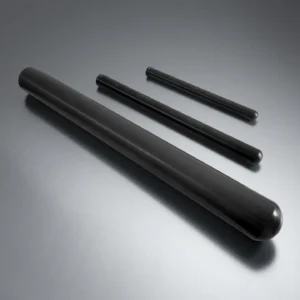
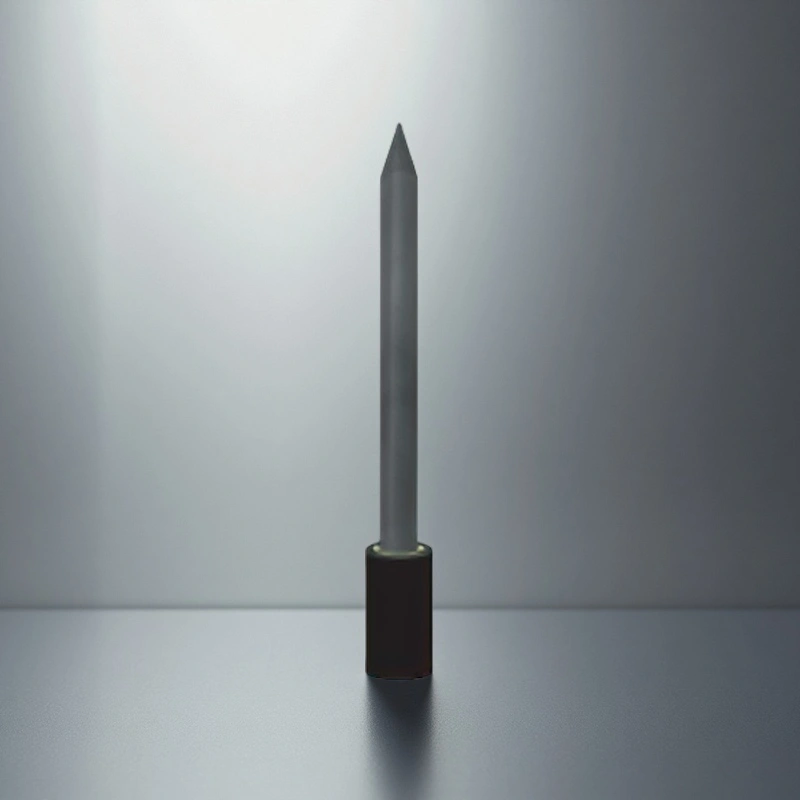
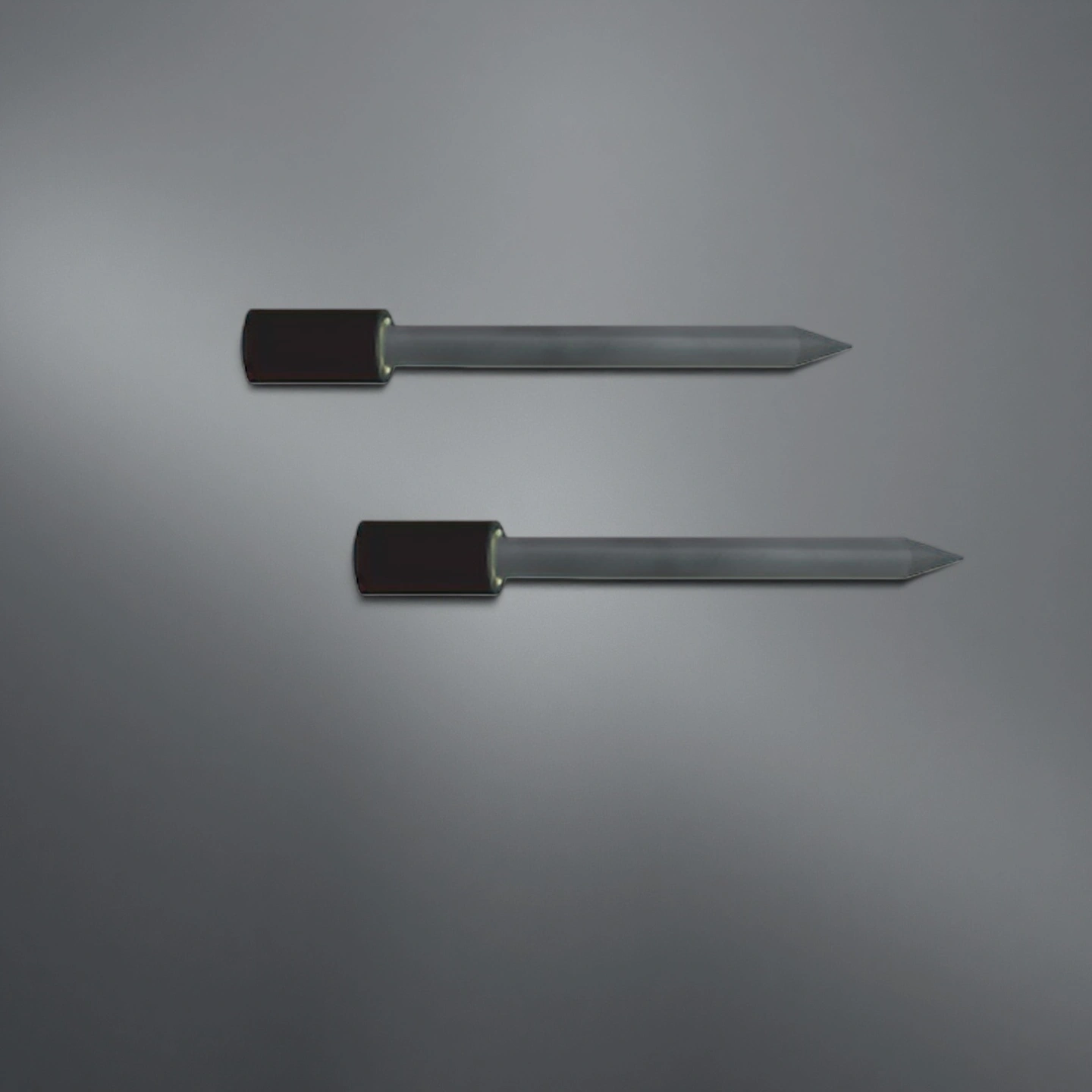
A silicon nitride liquid level probe is an immersion ceramic sensor used to detect and control molten aluminum level in holding furnaces, dosing furnaces, launders and casting lines. ADCERAX manufactures custom Si3N4 probes with matched length, immersion depth, mounting interface and electrical connection for stable automatic level control.

Catalogue No. AT-SNR-5001
Material Silicon Nitride
Thermal Shock Resistance ≥800°C quench
Dimensional Tolerance ±0.2mm
Operating temperature range: 650–800°C continuous
exposure in molten aluminium
Engineering RFQ Review
Small-Batch Custom Support
Factory-Direct Manufacturing
Drawing & Process Review

What Is a Silicon Nitride Liquid Level Probe?

A silicon nitride liquid level probe is a ceramic immersion sensor used to detect molten aluminum level in furnaces, launders and casting lines. The dense Si3N4 body resists aluminum wetting, dross build-up, thermal shock and corrosion, allowing the probe to maintain a stable switching point during continuous aluminum processing.

In a typical level control system, the probe is installed at a defined reference height. When molten aluminum reaches the active sensing zone, the controller receives a signal and adjusts feeding, dosing, alarm or interlock actions to keep the metal level within the required operating window.

Why Si3N4 Is Used for Molten Aluminum Level Control?

Buyer Concern How Silicon Nitride Helps
Aluminum build-up on the sensor Si3N4 has low wetting behavior against molten aluminum, helping reduce metal adhesion.
Signal drift during long campaigns A stable ceramic surface helps maintain repeatable level detection.
Cracking during immersion Silicon nitride provides strong thermal shock resistance during heating and cooling cycles.
Dross and alloy attack Dense Si3N4 resists corrosion and erosion in aluminum melt environments.
Retrofit difficulty Probe length, diameter, flange and electrical interface can be customized to match existing equipment.

Silicon Nitride Liquid Level Probe Benefits

  1. Non-wetting behaviour in molten aluminium
    The probe surface is engineered to resist aluminium wetting and build-up, which helps to keep the signal stable and reduces cleaning frequency during long production campaigns.

  2. Thermal shock resistance for repeated immersion cycles
    The dense Si3N4 microstructure, high fracture toughness and low thermal expansion help the probe withstand repeated heating and cooling during controlled immersion cycles.

  3. Service life reviewed by actual furnace conditions
    The dense Si3N4 body offers high resistance to corrosion and erosion from aluminium alloys and dross, helping reduce premature replacement when installation and alloy conditions are suitable under comparable operating conditions.

  4. Tight dimensional tolerance and repeatable switching height
    The probe diameter and active length can be machined to tight tolerances, supporting consistent installation depth and repeatable liquid level switching points across multiple furnaces or production lines.

  5. Flexible integration with existing level control systems
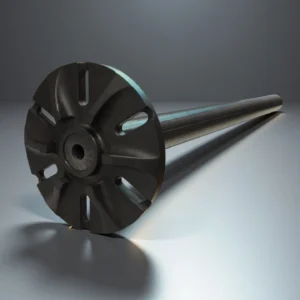
    The probe can be supplied as a conductive ceramic rod or combined with a protected conductive core and customised end connection, making it easier to retrofit existing molten metal level controllers and cabling layouts.

Si₃N₄ Liquid Level Probe Properties

Si3N4 Type Gas pressure sintering Si3N4 Hot pressing sintering Si3N4 High thermal conductivity Si3N4
Density (g/cm3) 3.2 3.3 3.25
Flexural Strength (MPa) 700 900 600~800
Young Modulus (GPa) 300 300 300~320
Poisson's ratio 0.25 0.28 0.25
Compressive strength (MPa) 2500 3000 2500
Hardness (GPa) 15 16 15
Fracture toughness (MPa*m1/2) 5~7 6~8 6~7
Maximum working temperature (℃) 1100 1300 1100
Thermal conductivity (W/m*K) 20 25 80~100
Thermal expansion coefficient (/℃) 3*10-6 3.1*10-6 3*10-6
Thermal shock resistance (ΔT ℃) 550 800 /


Si3N4 Liquid Level Probe Specifications

Si3N4 Liquid Level Probe
Item No. Diameter(mm) Height(mm)
AT-SNR-5001 Customize

How to Specify a Replacement Liquid Level Probe?

To specify a custom silicon nitride liquid level probe, please provide the existing probe drawing, furnace or launder layout, required overall length, active immersion depth, probe diameter, mounting interface and electrical connection method. If no drawing is available, a sample probe or clear installation photos can help our engineering team review the replacement design.

Information Needed Example
Furnace type Holding furnace, dosing furnace, launder or casting line.
Molten metal Aluminum alloy grade or non-ferrous alloy type.
Working temperature Normal operating temperature and peak exposure.
Probe length Overall length and active immersion depth.
Diameter Existing probe OD or available installation space.
Mounting Flange, thread, clamp or custom holder.
Electrical connection Cable, terminal stud, conductive core or controller interface.
Drawing or sample 2D drawing, 3D model, sample or installation photo.

Silicon Nitride Probe vs Metal Probe vs Non-Contact Sensor

Sensor Type Advantages Limitations Best Fit
Silicon Nitride Immersion Probe Resists aluminum wetting, thermal shock and corrosion; suitable for direct melt contact. Requires correct preheating, installation depth and handling. Molten aluminum level control in furnaces, launders and casting lines.
Metal Electrode Probe Lower initial cost and simple structure. May suffer from corrosion, adhesion, oxidation or signal drift in molten aluminum. Lower-demand or short-cycle systems.
Non-Contact Radar Sensor No direct melt contact and can work in harsh visual environments. Higher system cost and may require careful installation geometry. Large furnaces, long-range measurement or non-contact automation projects.
Float-Type Level Device Simple mechanical principle. Can be affected by dross, sticking and mechanical wear. Basic level indication where precision is not critical.

Silicon Nitride Liquid Level Probe Packaging

  • Each silicon nitride liquid level probe is placed in a dedicated foam or moulded support to protect the tip and body from impact during transport.
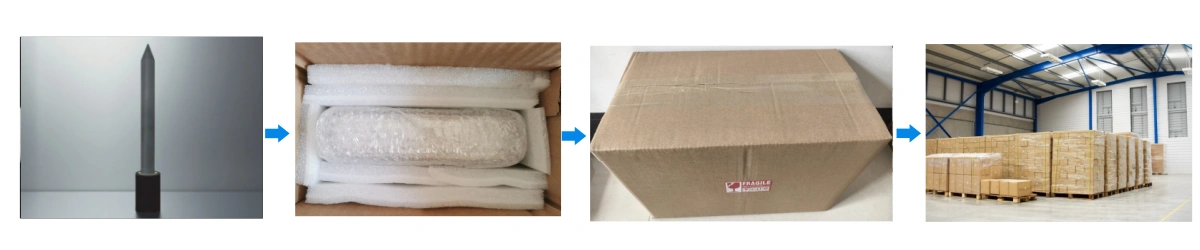

Silicon Nitride Liquid Level Probe Packaging

Application Scenarios in Aluminum Furnaces and Casting Lines

Silicon nitride liquid level probes are used in molten aluminum systems where stable metal height, reliable switching signals and reduced sensor maintenance are important for continuous production. Different furnace and casting positions require different probe lengths, immersion depths, mounting structures and electrical interfaces.

  • Aluminum dosing furnaces

    ✅Probe Function

    Detects the molten aluminum level near the dosing chamber or outlet area and provides a level signal for feeding, dosing, or alarm control.

    ✅Customer Value

    Helps maintain a more stable shot volume, reduces level-related casting variation, and supports repeatable dosing conditions during production cycles.

  • Aluminum holding furnaces

    ✅Probe Function

    Works as a fixed reference point inside the furnace to monitor whether the molten aluminum level reaches the required control position.

    ✅Customer Value

    Helps reduce overflow risk, avoid excessive low-level operation, and support safer automatic furnace level management.

  • Launders and troughs

    ✅Probe Function

    Monitors local molten metal height before the aluminum flows into downstream casting, transfer, or distribution equipment.

    ✅Customer Value

    Supports smoother metal flow, reduces interruption caused by unstable level changes, and helps maintain more consistent casting conditions.

  • Aluminum transfer and pouring stations

    ✅Probe Function

    Provides level reference in transfer points where molten aluminum height changes quickly during filling, holding, or pouring operations.

    ✅Customer Value

    Helps operators or control systems detect level changes earlier and reduces process instability caused by delayed manual observation.

  • Foundry retrofit projects

    ✅Probe Function

    Matches the existing sensor position, mounting interface, cable connection, and controller layout when replacing older metal or ceramic probes.

    ✅Customer Value

    Reduces redesign work, shortens replacement evaluation time, and helps upgrade level sensing reliability without changing the full furnace system.

Si3N4 Liquid Level Probe Usage Instructions

Before first use, keep the silicon nitride probe dry and preheat it gradually to reduce thermal shock. Install the probe at the specified height so that the active sensing zone corresponds to the required molten aluminum level. Avoid bending stress from uneven clamping, direct impact against furnace lining and rapid cooling with water or compressed air after removal.

  • Installation

    1. Verify that the probe length and mounting interface match the furnace or launder drawing before installation.
    2. Pre-dry and pre-heat the probe gradually in a warm area or preheating chamber to reduce thermal shock before first immersion.
    3. Insert the probe vertically or along the designed angle without striking furnace lining, metal flow channels or other ceramic parts.
    4. Tighten mounting flanges or clamps evenly so that no bending stress is applied to the ceramic body.

  • Operation

    1. Keep the probe immersion depth within the specified range so that the active sensing zone is fully surrounded by molten aluminium.
    2. Avoid rapid level swings or uncontrolled metal flow that repeatedly exposes the probe tip to air and metal in seconds.
    3. Monitor level signals after start-up and confirm the switching or measurement corresponds to the expected metal height.

  • Storage

    1. Store unused probes in a dry, clean area away from vibration, with support under the full length rather than only at the ends.
    2. Keep ceramic surfaces free from oil, grease and impact from metal tools to prevent micro-cracks before use.

  • Cleaning

    1. After removal from service, allow the probe to cool down slowly in still air or insulating material.
    2. Gently remove loose dross or metal residues with non-metallic tools if required; avoid aggressive mechanical grinding of the working surface.
    3. Do not cool the hot probe with water or compressed air, as rapid cooling can cause thermal shock damage.

  • Common Misuse Points and Handling

    Failure Mode Likely Cause Prevention
    Cracking after first immersion Probe was not dried or preheated correctly. Pre-dry and warm the probe before immersion.
    Incorrect switching level Probe immersion depth or mounting height is wrong. Confirm the drawing reference position before installation.
    Signal instability Dross build-up, poor electrical contact or wrong active zone. Check the tip condition, wiring and controller setting.
    Ceramic body fracture Side impact or uneven clamping force. Use aligned holders and avoid wrenching directly on the ceramic body.
    Surface damage after removal Aggressive scraping or forced cooling. Let the probe cool naturally and clean loose residue gently.

FAQ – Silicon Nitride Liquid Level Probe

  1. Q: What is a silicon nitride liquid level probe used for?
    A: A silicon nitride liquid level probe is used to detect and control molten aluminum level in holding furnaces, dosing furnaces, launders and casting lines, helping keep the metal height within a defined process window.
  2. Q: Why use silicon nitride instead of a metal probe?
    A: Silicon nitride offers low wetting behavior against molten aluminum, good thermal shock resistance and strong corrosion resistance. This helps reduce aluminum build-up, signal drift and premature probe replacement in continuous aluminum service.
  3. Q: Can this probe replace my existing molten metal level sensor?
    A: Yes. A custom Si3N4 probe can often replace an existing molten metal level sensor when the overall length, immersion depth, mounting interface and electrical connection are matched to the current control system.
  4. Q: What information is required for quotation?
    A: Please provide the furnace or launder drawing, overall length, immersion depth, diameter, flange or thread details, electrical connection type, working temperature and alloy information.
  5. Q: What temperature range is suitable for this probe?
    A: The probe is typically used in molten aluminum environments around 650–800°C. The exact design should be reviewed according to alloy type, immersion depth, heating rate and installation method.
  6. Q: Can the probe be used for non-aluminum metals?
    A: It may be considered for selected non-ferrous metals, but alloy composition, temperature, wetting behavior and corrosion conditions must be reviewed before material selection.
  7. Q: Can ADCERAX manufacture according to my drawing or sample?
    A: Yes. ADCERAX can manufacture custom silicon nitride liquid level probes based on drawings, samples, furnace layouts or replacement requirements.
customize size

Customize Silicon Nitride Level Probes

We manufacture silicon nitride liquid level probes to match existing designs or new furnace projects, covering customised geometries and interfaces for different level control systems. What You Can Specify:

  • Total length and active immersion length
    – Approx. 300–1200 mm overall length range
    – Defined immersion zone and switching height

  • Outer diameter and cross-section
    – Solid or tubular designs around 16–30 mm in diameter
    – Round cross-section as standard, with options for stepped or tapered sections

  • End configuration
    – Flat end, chamfered end or slightly domed tip
    – Optional recessed tip to reduce mechanical impact during installation

  • Mounting and sealing interface
    – Ceramic flange dimensions (OD, thickness, bolt circle)
    – Threaded or clamped mounting arrangements
    – Adapters for different furnace roof or cover openings

  • Electrical connection layout
    – Conductive ceramic body or ceramic-sheathed conductive core
    – Top-end terminal stud, threaded insert or cable clamp
    – Cable exit direction and strain-relief requirements

  • Material and performance options
    – Standard silicon nitride formulation for molten aluminium
    – Sialon variant on request for specific non-ferrous alloys
    – Target lifetime range under stated temperature and alloy conditions

  • Dimensional tolerance requirements
    – Diameter tolerance typically down to ±0.2 mm, tighter on request
    – Length tolerance defined according to your level of switching accuracy needs

Related Products

ADCERAX - Your Trusted Advanced Ceramics Manufacturing Partner

Direct factory manufacturing with comprehensive ceramic materials expertise and global supply capabilities

China-Based Manufacturer

ADCERAX supplies ceramic components for overseas OEMs, equipment builders, and labs.

Custom Drawing Support

We review drawings, dimensions, materials, and application conditions before quotation.

Ceramic Process Control

Forming, sintering, machining, grinding, and finishing are arranged by part requirements.

Pre-Shipment Inspection

Dimensional checks, visual inspection, and packaging review help reduce procurement risk.

Get in Touch with Us

Our team will be happy to respond to you in less than 24 hours.

Pingxiang Factory — Silicon carbide, silicon nitride, high-temperature ceramics

Quick Quotation

*Our team will answer your inquiries within 24 hours.

*Your information will be kept strictly confidential.

Ready to Solve Your Engineering Challenge?

Partner with ADCERAX for reliable, high-performance advanced ceramic solutions. Our engineers are ready to discuss your project.

E-mail

info@adcerax.com

Phone

+(86) 0731-74427743 | WhatsApp: +(86) 19311583352

Response Time

Within 24 hours

Quick Quote

The more details you provide, the faster we can quote.

*We respond within 24 hours. All inquiries are confidential.

Get Your Custom Solution

The more details you provide, the faster we can respond.

customize size

*We respond within 24 hours. All inquiries are confidential.

Download Catalog