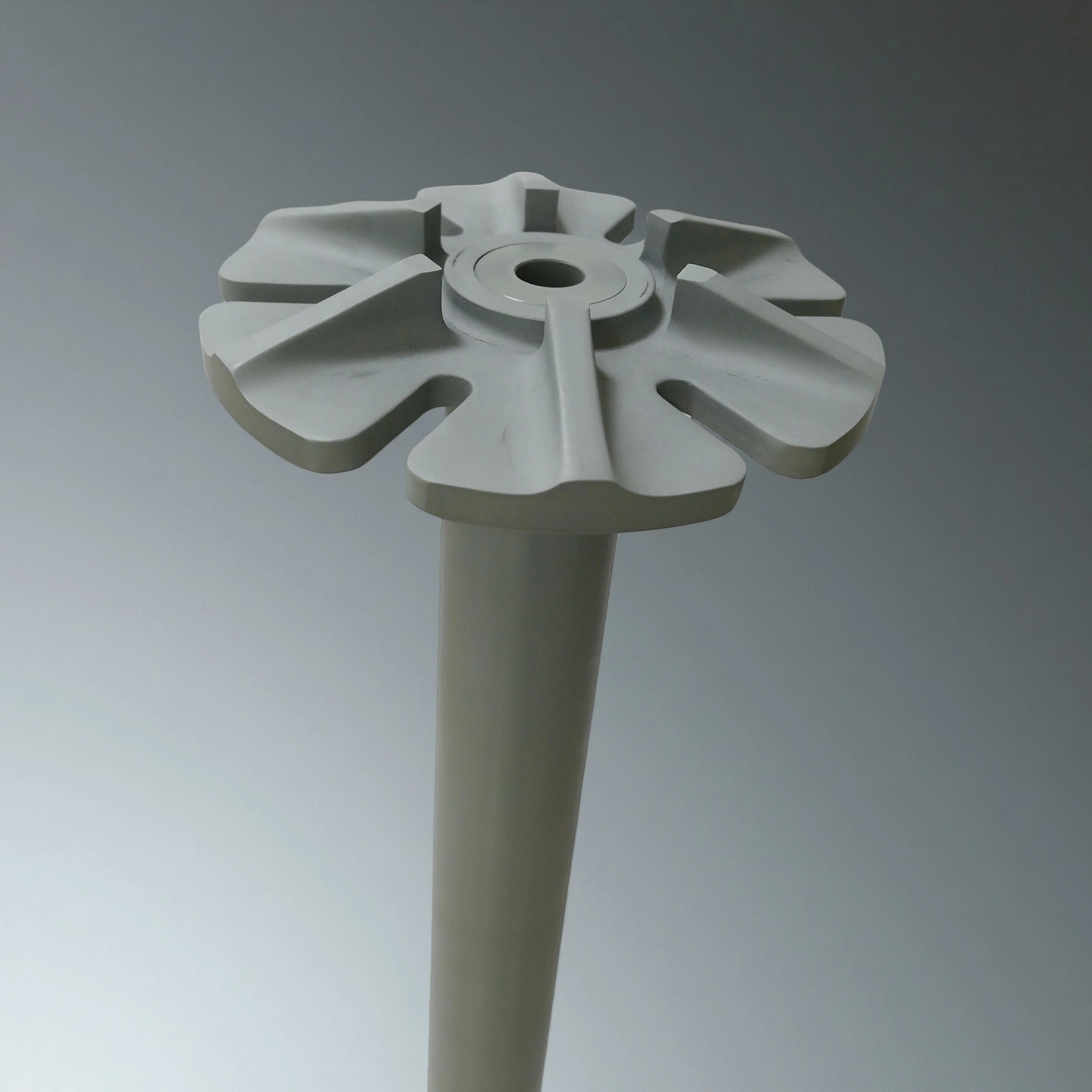
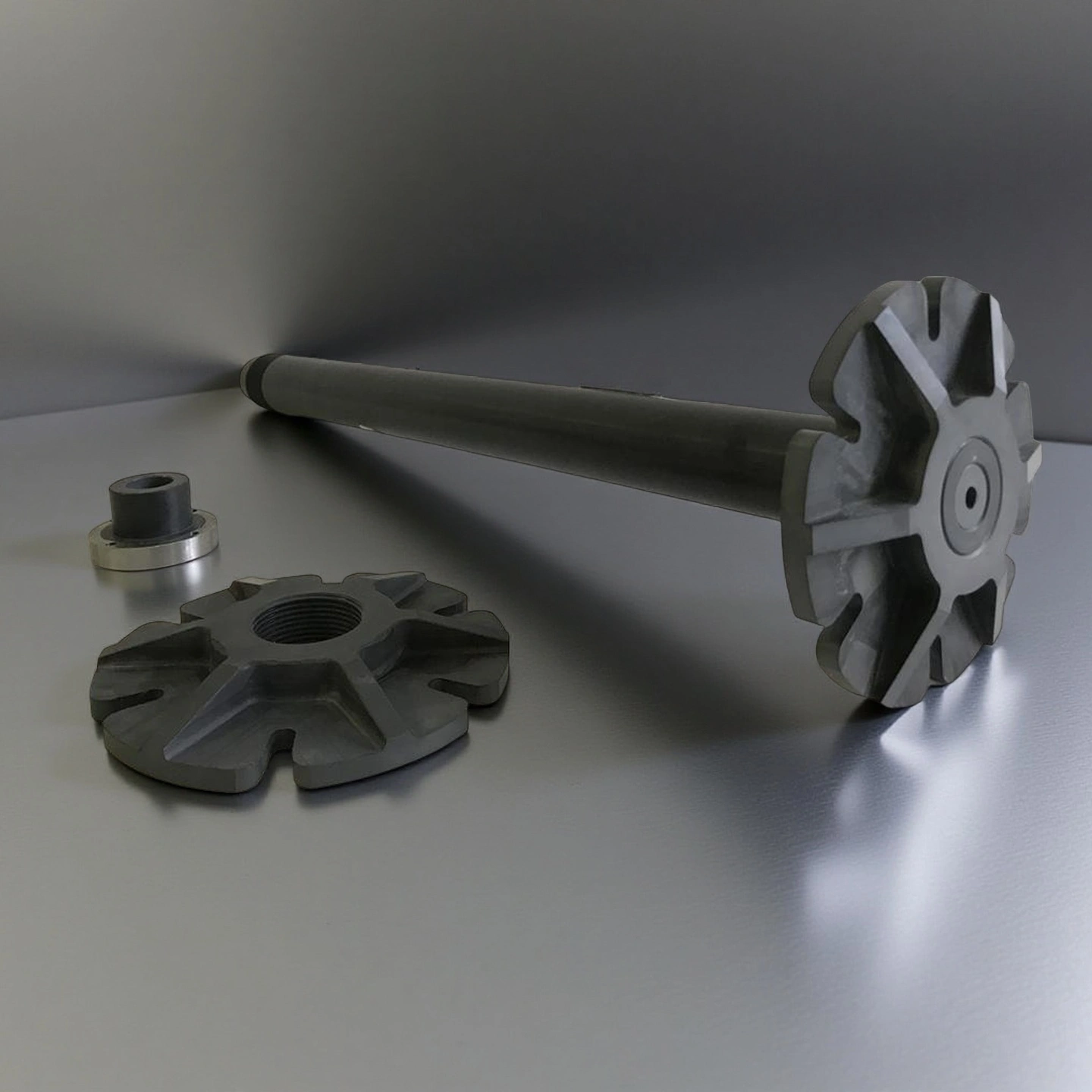
Silicon Nitride Degassing Rotor for Aluminum Melt Treatment

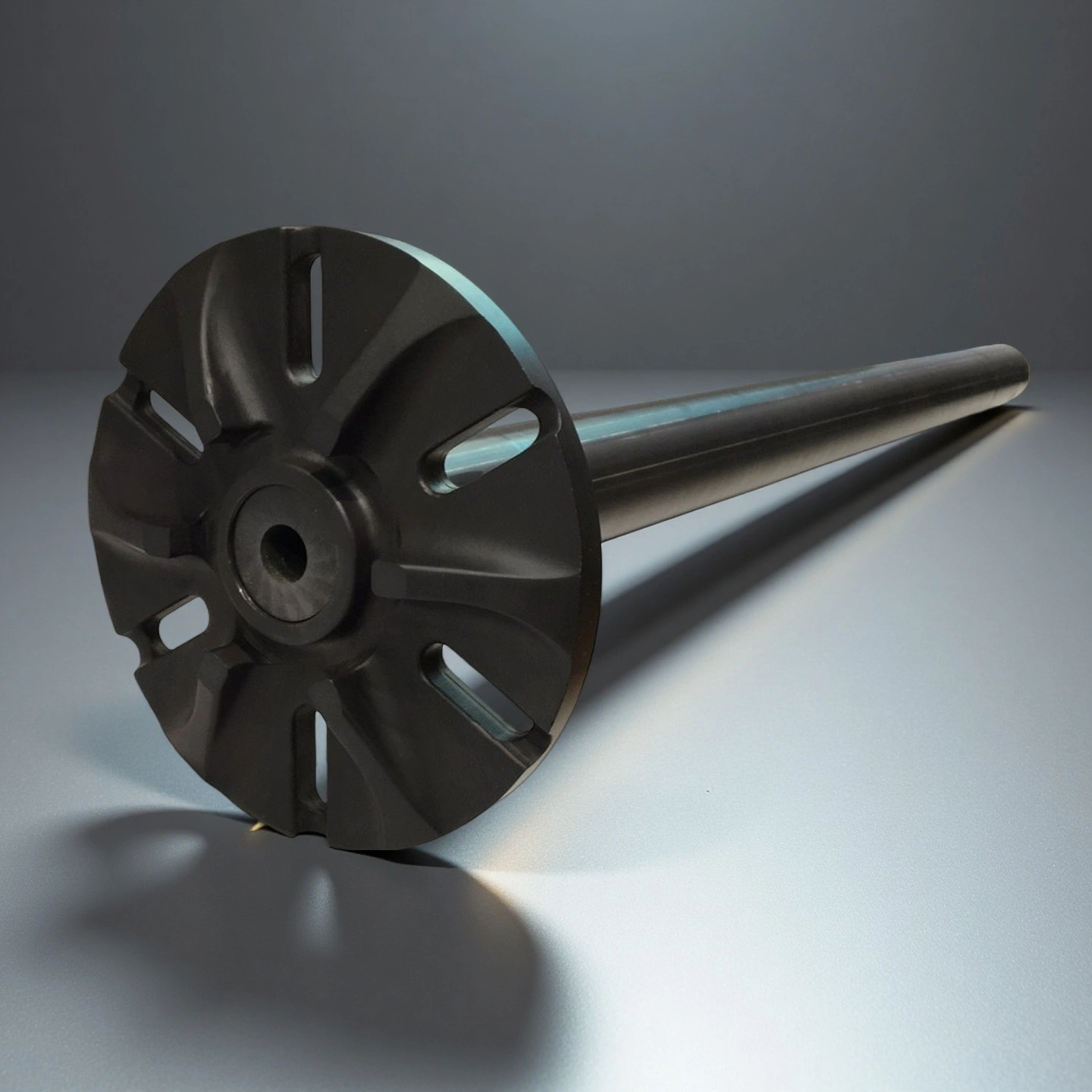
Silicon nitride degassing rotor disperses N₂/Ar into fine bubbles to remove hydrogen and oxides from molten aluminium, with Si₃N₄ ensuring wear resistance and stable operation. Standard rotor heads Ø150–250 mm and shafts up to 1000 mm for common degassing units; Its sets can be customized to machine interface, gas flow, and melt volume.

Catalogue No. AT-DHG-G3001
Material Silicon Nitride Ceramic, Si₃N₄
Flexural Strength ≥600 MPa
Thermal Expansion Coefficient ≤3.2×10⁻⁶/K
Gas Media N₂ or Ar
Engineering RFQ Review
Small-Batch Custom Support
Factory-Direct Manufacturing
Drawing & Process Review

What Is a Silicon Nitride Degassing Rotor?

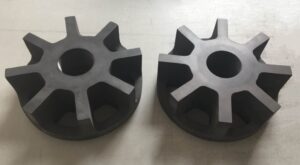
A silicon nitride degassing rotor is a Si₃N₄ ceramic impeller and shaft assembly used in aluminum melt treatment. During operation, nitrogen or argon flows through the shaft and exits through the rotor head, where rotation breaks the gas into fine bubbles. These bubbles help dissolved hydrogen escape from the melt and support oxide flotation before casting.

Silicon Nitride Ceramic Degassing Rotor Properties

Si3N4 Type Gas pressure sintering Si3N4 Hot pressing sintering Si3N4 High thermal conductivity Si3N4
Density (g/cm3) 3.2 3.3 3.25
Flexural Strength (MPa) 700 900 600~800
Young Modulus (GPa) 300 300 300~320
Poisson's ratio 0.25 0.28 0.25
Compressive strength (MPa) 2500 3000 2500
Hardness (GPa) 15 16 15
Fracture toughness (MPa*m1/2) 5~7 6~8 6~7
Maximum working temperature (℃) 1100 1300 1100
Thermal conductivity (W/m*K) 20 25 80~100
Thermal expansion coefficient (/℃) 3*10-6 3.1*10-6 3*10-6
Thermal shock resistance (ΔT ℃) 550 800 /

Why Use Si₃N₄ Instead of Graphite?

Silicon nitride is selected when a foundry needs a more dimensionally stable and low-wetting rotor material than graphite. Its ceramic structure helps resist aluminum adhesion, oxidation during preheating, abrasive wear from dross, and geometry change during repeated treatment cycles. This makes Si₃N₄ suitable for aluminum foundries that require stable gas dispersion, predictable rotor balance, and reduced cleaning interruption.

Silicon Nitride Degassing Rotor Benefits

  •  Stable Gas Dispersion
    The rotor head and vane geometry can be designed to match bath depth, gas flow, and melt volume. Stable gas dispersion helps improve gas–metal contact while reducing excessive surface turbulence.

  • Low-Wetting Ceramic Surface
    Si₃N₄ has low wettability against molten aluminum, which helps reduce aluminum adhesion and dross build-up on the rotor surface. This supports cleaner gas outlets and more predictable operation.

  • Improved Oxidation Resistance Compared with Graphite
    Silicon nitride is more resistant to oxidation during air preheating and standby conditions than graphite. This helps reduce dimensional loss before the rotor enters the melt.

  • Wear Resistance in Dross-Containing Melts
    The hard ceramic structure helps resist abrasive wear from oxide particles, dross, and mechanical cleaning. This is useful in secondary aluminum melting and remelt operations.

  • Drawing-Based Machine Fit
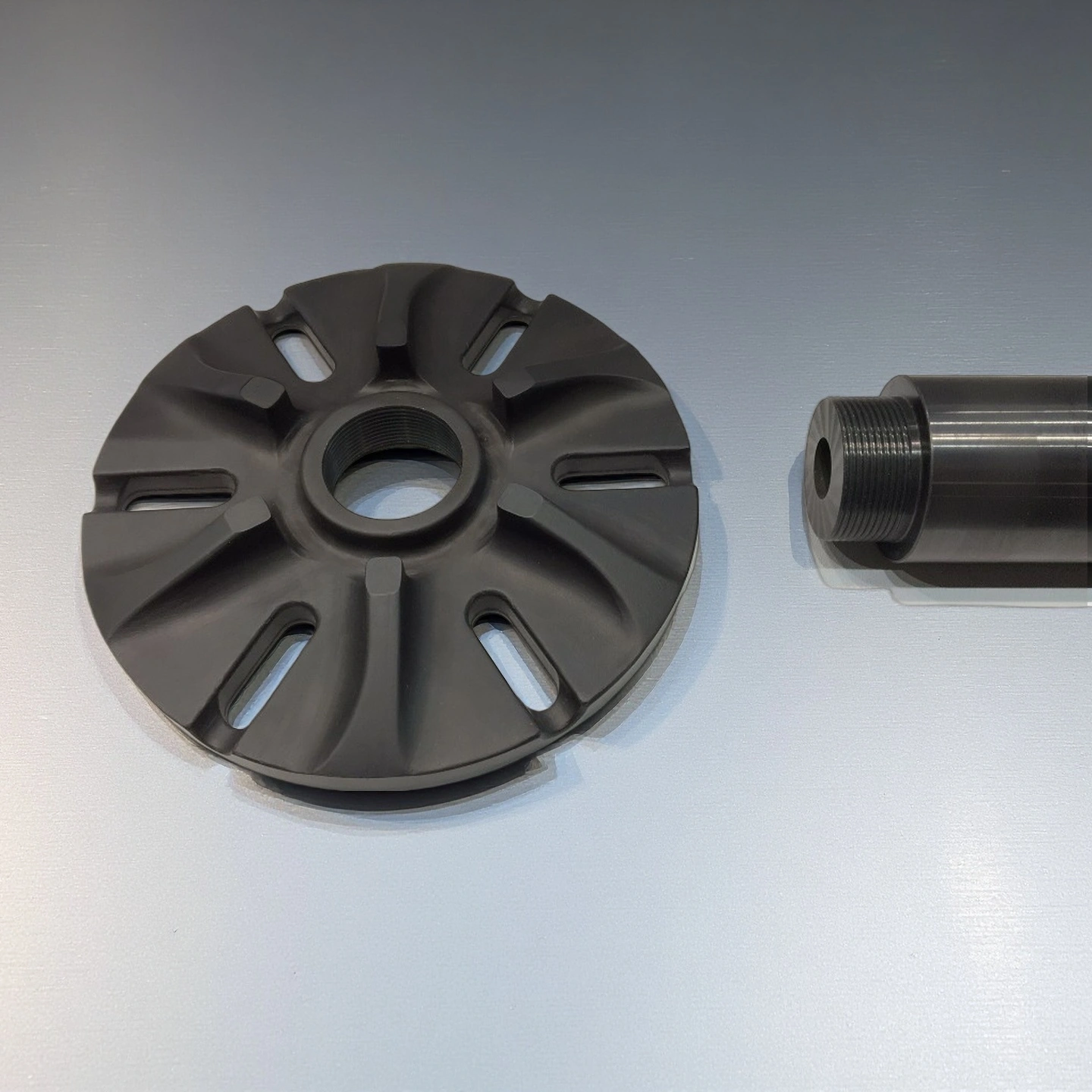
    Rotor head diameter, shaft length, gas inlet size, thread, taper, coupling interface, and vane slot layout can be customized according to existing degassing equipment.

Si₃N₄ vs Graphite Degassing Rotor

Comparison Item Silicon Nitride Rotor Graphite Rotor
Aluminum wetting Low wetting helps reduce metal adhesion. More likely to build up dross and metal residue.
Oxidation during preheating Better oxidation resistance in air. Oxidizes faster during repeated heating.
Dimensional stability Holds rotor geometry more consistently. Geometry may change as the rotor wears.
Cleaning frequency Usually easier to keep gas outlets clear. More frequent cleaning may be required.
Initial cost Higher initial cost. Lower initial cost.
Best fit Stable production, repeated use, custom equipment fit. Shorter campaigns, lower-cost replacement needs.

Si3N4 Degassing Rotor Specifications

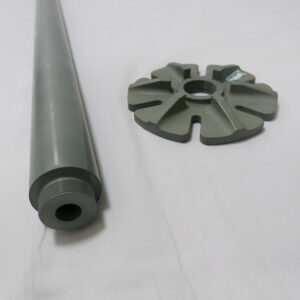
Type 1: Silicon Nitride Degassing Shaft

Silicon Nitride Degassing Shaft
Item No. Outer Diameter (mm) Inner Diameter (mm) Length (mm)
AT-DHG-G3001 50 30 400-1500
AT-DHG-G3002 68.5 38 400-1500
AT-DHG-G3003 75 55 400-1500
AT-DHG-G3004 85 64.5 400-1500
AT-DHG-G3005 105 84 400-1500
AT-DHG-G3006 135 110 400-1500
AT-DHG-G3007 150 136 400-1500
AT-DHG-G3008 200 174 400-1500


Type 2: Silicon Nitride Degassing Rotor Disc

Silicon Nitride Degassing Rotor Disc
Item No. Outer Diameter (mm) Inner Diameter (mm)
AT-DHG-G3009 180 35
AT-DHG-G3010 200 40
AT-DHG-G3011 210 40
AT-DHG-G3012 220 40

Si3N4 Degassing Rotor Packaging

  • Each rotor is individually packed in foam-padded wooden boxes to prevent damage during transit.
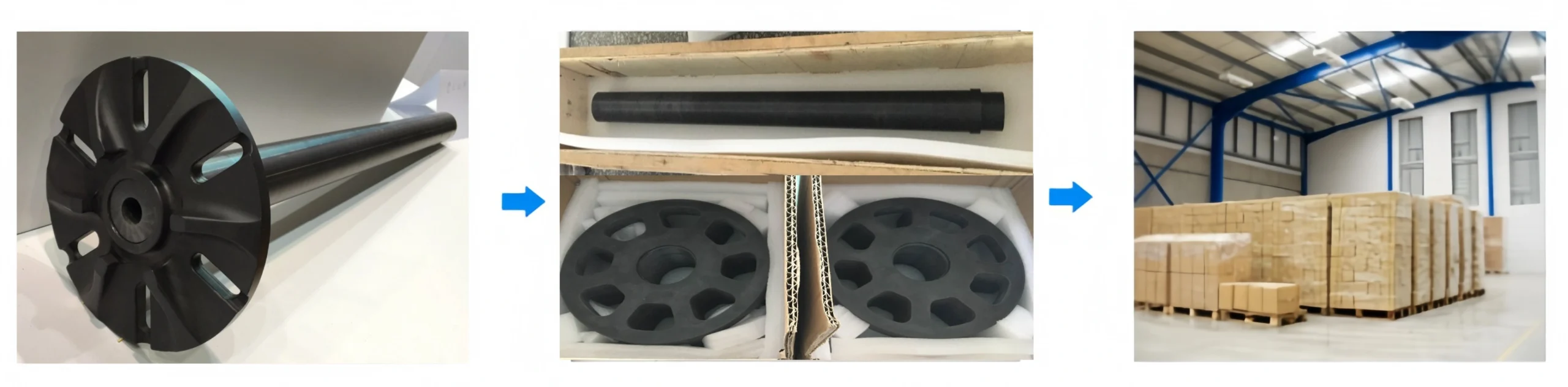
Si3N4 Degassing Rotor Packaging

Silicon Nitride Degassing Rotor Applications

Silicon nitride degassing rotors are widely used in aluminium melting, die casting, and continuous casting lines to control hydrogen content and melt cleanliness. Below are the main application scenarios where Si₃N₄ rotors show clear advantages over graphite in real production conditions.

Application Area Application Challenge Si₃N₄ Rotor Advantage
Aluminum die casting Hydrogen porosity and oxide inclusions can affect casting consistency. Stable bubble dispersion and low-wetting surface help support cleaner melt treatment before casting.
Secondary aluminum remelting Dross, oxide particles, and mixed returns increase rotor wear and cleaning frequency. Wear-resistant Si₃N₄ helps maintain rotor geometry and reduce adhesion during repeated treatment cycles.
Holding furnace treatment Long standby and repeated preheating can accelerate graphite oxidation. Silicon nitride provides better resistance to oxidation and dimensional change during heating cycles.
Continuous casting and inline treatment Rotor balance, shaft alignment, and gas channel stability are critical. Custom rotor-and-shaft assemblies can be matched to the machine interface and gas flow layout.
Degassing equipment OEMs Standard rotor dimensions may not fit proprietary machine designs. Drawing-based customization supports shaft length, coupling, vane layout, and gas inlet requirements.

Silicon Nitride Ceramic Degassing Rotor Usage Instructions

  • Installation

    1. Inspect the silicon nitride degassing rotor and shaft for cracks, edge chipping, or thread damage. Check that the rotor fits securely with the coupling, seal block, and degassing unit.
    2. Preheat the rotor as required by equipment manuals (typically 200–400 °C) to prevent thermal shock when entering molten aluminium. Ensure the rotor is completely dry before immersion.

  •  Operation

    1. Start N₂ or Ar gas flow before lowering the rotor into the melt. Gradually increase rotation speed until it reaches the required working range (around 1,200–3,000 rpm depending on alloy and furnace size).
    2. Monitor hydrogen content using RPT or an online hydrogen analyzer. Adjust dwell time, gas flow, or rotor speed until melt hydrogen reaches the target range (commonly ≤0.10 mL/100 g Al).

  •  Storage

    Store the rotor in a dry, cushioned container away from graphite dust, moisture, and corrosive gases. If stored after use, clean and dry it before packing to prevent surface oxidation or metal adherence.

  • Cleaning and Maintenance

    1. After the operation, allow the rotor to cool naturally in air or under controlled furnace cooling to avoid cracking.
    2. Remove aluminium oxide build-up using non-metallic scrapers or ceramic tools. Avoid hammering or hitting the vane area, as Si₃N₄ is strong but brittle to impact.

  • Common Misuse & Solutions

    Issue Cause Solution
    Thermal shock cracks Immersion without preheating or rotor absorbed moisture Follow the preheating curve, ensure rotor dryness
    High vibration during rotation Rotor imbalance, worn coupling, or incorrect shaft alignment Re-balance rotor, check shaft run-out, tighten fixture
    Hydrogen level rising after replacement Gas holes blocked or rotor depth incorrect Clean vane slots, check the gas flow meter and immersion depth
    Rapid dross accumulation Wetting or incorrect rotation speed Verify the Si₃N₄ surface is clean, adjust the rpm and gas flow
    Surface oxidation during idle Excessive air heating above 1000 °C Maintain proper furnace atmosphere or use a protective preheat cycle

Silicon Nitride Ceramic Degassing Rotor FAQ

  1. Q1: What is a silicon nitride degassing rotor used for?
    A: A silicon nitride degassing rotor is used in aluminum melt treatment to disperse nitrogen or argon into fine bubbles. The bubbles help remove dissolved hydrogen and support oxide flotation before casting.
  2. Q2: Why choose Si₃N₄ instead of graphite for a degassing rotor?
    A: Si₃N₄ offers better oxidation resistance, lower aluminum wetting, higher wear resistance, and better dimensional stability than graphite. It is often selected when the foundry needs more stable rotor geometry and reduced cleaning interruption.
  3. Q3: Can the rotor and shaft be customized for existing degassing equipment?
    A: Yes. ADCERAX can customize rotor head diameter, shaft length, gas inlet size, thread, taper, coupling interface, vane geometry, slot layout, and balance requirements according to drawings or equipment samples.
  4. Q4: Can the rotor work with both nitrogen and argon?
    A: Yes. Silicon nitride degassing rotors can be designed for N₂ or Ar gas flow. The final gas channel and outlet design should be matched to melt volume, bath depth, alloy type, and equipment layout.
  5. Q5: What information is needed for quotation?
    A: Useful RFQ information includes rotor drawing, shaft dimensions, machine model, rotor head OD and ID, shaft length, gas inlet size, connection type, operating temperature, gas type, melt volume, and order quantity.
  6. Q6: How should a silicon nitride rotor be preheated before use?
    A: The rotor should be kept dry and preheated according to the degassing equipment procedure before immersion into molten aluminum. A controlled preheat helps reduce thermal shock risk.
  7. Q7: When should the rotor be inspected or replaced?
    A: The rotor should be inspected when vibration increases, gas dispersion becomes uneven, gas outlets are blocked, vane edges are damaged, or melt treatment results become unstable. Replacement timing depends on operating cycle, alloy condition, cleaning method, and equipment alignment.
customize size

Custom Si3N4 Degassing Rotor & Shaft

In aluminium foundries, degassing equipment often differs in rotor head size, shaft design, coupling structure and gas flow requirements. To ensure proper fit and stable bubble dispersion, the silicon nitride degassing rotor and shaft can be manufactured according to customer drawings or specified process conditions.

1. Rotor Head Dimensions

  • Outer/inner diameter of rotor head
  • Head thickness, vane height, slot width
  • Typical head Ø 150–250 mm, other sizes available

2. Shaft Specifications

  • Shaft outer diameter and length (up to ~1000 mm)
  • Tapered, keyed or threaded connection to machine drive
  • One-piece or detachable silicon nitride rotor and shaft

3. End & Connection Details

  • Straight ends, chamfered edges, relief grooves
  • Gas inlet hole size, flow channel shape, sealing surface design

4. Impeller /Vane Geometry

  • 2-slot, 4-slot, or multi-vane rotors
  • Adjustable vane depth, angle and bubble-shear surface design
  • Slot layout tailored for N₂ or Ar flow rates

5. Surface Finish & Density Grade

  • As-sintered, fine-polished or grit-blasted non-wetting areas
  • Option to specify material density class (≥3.2 g/cm³)

6. Balance and Tolerances

  • Static/dynamic balance level required by the rotation speed
  • Shaft run-out tolerances based on equipment limits

Related Products

ADCERAX - Your Trusted Advanced Ceramics Manufacturing Partner

Direct factory manufacturing with comprehensive ceramic materials expertise and global supply capabilities

China-Based Manufacturer

ADCERAX supplies ceramic components for overseas OEMs, equipment builders, and labs.

Custom Drawing Support

We review drawings, dimensions, materials, and application conditions before quotation.

Ceramic Process Control

Forming, sintering, machining, grinding, and finishing are arranged by part requirements.

Pre-Shipment Inspection

Dimensional checks, visual inspection, and packaging review help reduce procurement risk.

Get in Touch with Us

Our team will be happy to respond to you in less than 24 hours.

Pingxiang Factory — Silicon carbide, silicon nitride, high-temperature ceramics

Quick Quotation

*Our team will answer your inquiries within 24 hours.

*Your information will be kept strictly confidential.

Ready to Solve Your Engineering Challenge?

Partner with ADCERAX for reliable, high-performance advanced ceramic solutions. Our engineers are ready to discuss your project.

E-mail

info@adcerax.com

Phone

+(86) 0731-74427743 | WhatsApp: +(86) 19311583352

Response Time

Within 24 hours

Quick Quote

The more details you provide, the faster we can quote.

*We respond within 24 hours. All inquiries are confidential.

Get Your Custom Solution

The more details you provide, the faster we can respond.

customize size

*We respond within 24 hours. All inquiries are confidential.

Download Catalog