
Across advanced industrial systems, industrial ceramic material is specified once thermal, chemical, electrical, and wear-related constraints exceed the stable operating range of metals and polymers.
In many engineered environments, industrial ceramic components are treated as functional materials rather than optional upgrades.
- Quick Navigation
If you already have drawings or a failing metal/polymer part, prepare: media details, temperature profile, voltage/insulation needs, and duty cycle. These inputs shorten feasibility review and reduce iteration loops.
Find Ceramic Solutions for Your Industry
Select your industry to explore relevant ceramic materials, components, and applications:
| Industry | Key Ceramic Applications | Common Materials |
|---|---|---|
| Semiconductor | Wafer chucks, heater plates, insulators, process tubes | Alumina, AlN, SiC |
| Metallurgy | Crucibles, thermocouple tubes, furnace fixtures | Alumina, Zirconia, BN |
| Petrochemical | Catalyst supports, reactor linings, valve components | Alumina, SiC, ZTA |
| Aerospace | Thermal shields, radomes, structural parts | Si₃N₄, SiC, |
| Automotive | Sensors, wear parts, pump components | Zirconia, Alumina, Si₃N₄ |
| Electric Vehicles (EV) | Battery insulators, thermal management, power modules | AlN, Alumina, Si₃N₄ |
| Lithium Battery | Saggers, coating rollers, furnace components | Alumina, SiC |
| Photovoltaics (Solar) | Diffusion tubes, boats, support fixtures | Quartz, Alumina, SiC |
| Glass Manufacturing | Rollers, nozzles, moulds, stirrers | Quartz, Alumina, Zirconia |
| Industrial Furnace | Tubes, supports, insulation, heater holders | Alumina, SiC |
| Laboratory | Crucibles, boats, combustion tubes, and sample holders | Alumina, Quartz, Zirconia |
| Electrical & Insulation | Insulators, substrates, bushings, spacers | Alumina, AlN |
| Food Processing | Wear parts, pump components, cutting tools | Zirconia, ZTA, Alumina |
| Communications | RF substrates, microwave components, antenna parts | Alumina, AlN, LTCC |
| Energy Equipment | Burner components, heat exchangers, seals | SiC, Si₃N₄, Alumina |
Don’t see your industry? Contact us with your application requirements — our engineers work across all industrial sectors.
Industrial Ceramics Are
Designated to Address Fundamental
Performance Constraints
In demanding industrial environments, industrial ceramic material is designated to address performance constraints that directly govern reliability, stability, and service continuity.
Selection decisions involving industrial ceramic components are typically driven by system-level limitations rather than individual part preference.
Industrial ceramic parts preserve structural integrity under continuous high-temperature and thermal cycling.
Industrial ceramic material maintains stability where acids alkalis and reactive media degrade metals.
Industrial ceramic parts ensure electrical insulation stability under combined voltage and thermal stress.
Industrial ceramic components resist wear maintaining dimensional stability during prolonged mechanical interaction.
Industrial Ceramics Are Integrated as Function-Critical Elements in Equipment Architecture
Within modern equipment architecture, industrial ceramic components are integrated as function-critical elements rather than passive supports.
The performance of industrial ceramic parts often determines overall system reliability.
Industrial ceramic parts provide load bearing stability under combined thermal mechanical chemical stress conditions.
Industrial ceramic material integrates thermal resistance electrical insulation chemical compatibility reducing interface complexity.
Industrial ceramic parts deliver calculable service life supporting maintenance planning and long term operational continuity.
Industrial Ceramics Are Deployed Across a Broad Range of Industrial Applications
Across multiple industrial sectors, industrial ceramic components are deployed where operating conditions share comparable performance constraints.
Application diversity does not alter the underlying selection logic for industrial ceramic material.
Industrial ceramic parts provide thermal stability and chemical inertness required for accurate laboratory testing environments.
Industrial ceramic material withstands sustained high temperatures and molten metal contact during metallurgical processing operations.
Industrial ceramic components maintain structural integrity under corrosive media and pressure-driven petrochemical process conditions.
Industrial ceramic parts ensure electrical insulation stability under combined thermal load and voltage stress conditions.
Industrial ceramic material supports dimensional accuracy and contamination control within semiconductor manufacturing equipment.
Industrial ceramic components enable continuous thermal processing stability in photovoltaic manufacturing systems.
Industrial ceramic parts resist abrasion and chemical exposure in hygienic food processing equipment environments.
Industrial ceramic material maintains stability under reactive chemistries and elevated temperatures in battery manufacturing lines.
Industrial ceramic components preserve dielectric performance and dimensional consistency in communication-related equipment systems.
Industrial ceramic material supports long-term operation under thermal cycling and chemical exposure in energy equipment.
Industrial ceramic parts operate under extreme thermal and mechanical loads in aerospace engineering applications.
Industrial ceramic components provide wear resistance and thermal stability in automotive engineering systems.
Industrial ceramic material withstands repeated heating and cooling cycles in industrial furnace environments.
Industrial ceramic parts maintain insulation performance and dimensional stability in electric vehicle systems.
Industrial ceramic material supports stable operation under continuous high-temperature exposure in glass manufacturing processes.
ADCERAX®
Industrial Ceramics Are Evaluated Through Shared Engineering Decision Criteria
Across industries, industrial ceramic material is evaluated using shared engineering decision criteria focused on system-level reliability.
Assessment of industrial ceramic components reflects real operating conditions rather than isolated laboratory metrics.
Coupled Thermal, Chemical, and Electrical Loads Considered Simultaneously
Material evaluation considers thermal, chemical, and electrical loads acting concurrently on industrial ceramic parts.
This approach aligns material selection with actual service environments.
Material Stability Used as a Primary Risk-Control Measure
Operational risk is controlled by prioritizing the stability of industrial ceramic material over compensatory design measures.
Stable performance reduces dependency on redundant protective solutions.
Lifecycle Cost and Operational Continuity Prioritized Over Unit Cost
Lower total cost of ownership is achieved through the durability of industrial ceramic components, minimizing downtime and replacement frequency.
Industrial Ceramics Are
Supplied as Standard Components and Application-Specific Designs
Industrial ceramic parts are supplied in standardized formats and application-specific designs to accommodate varying project requirements.
Supply flexibility allows industrial ceramic material to support both routine and specialized systems.
Standard Sizes Maintained for Rapid Deployment
Standardized industrial ceramic components enable rapid replacement and short lead times in established industrial applications.
Application-Specific Ceramic Components Developed from Drawings or Samples
When standard geometries fail to meet functional constraints, industrial ceramic parts are developed from customer drawings or reference samples.
Support for Both Small-Batch Custom Orders and High-Volume Production
Manufacturing capability supports both low-volume engineering projects and high-volume repeat procurement of industrial ceramic components.
Industrial Ceramics Customization Is
Supported by Engineering-Led Collaboration
at ADCERAX
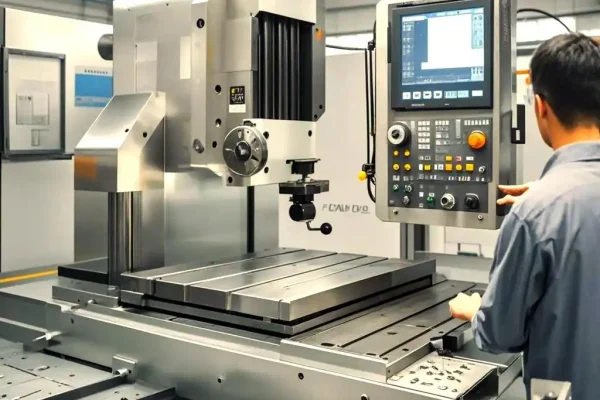
At ADCERAX, customization of industrial ceramic material is supported through engineering-led collaboration rather than catalog-driven selection.
Engineering input ensures industrial ceramic components align with real operating conditions.
Design adjustments for industrial ceramic parts are driven by temperature profiles, media exposure, electrical requirements, and mechanical loads.
Performance of industrial ceramic material is refined through controlled geometry, tolerance management, and surface condition.
Early technical communication ensures industrial ceramic components align with system constraints and reduces procurement risk.
Industrial Ceramic Projects Are Initiated Through Structured Technical Engagement
Project initiation involving industrial ceramic material follows structured technical engagement focused on feasibility and application alignment.
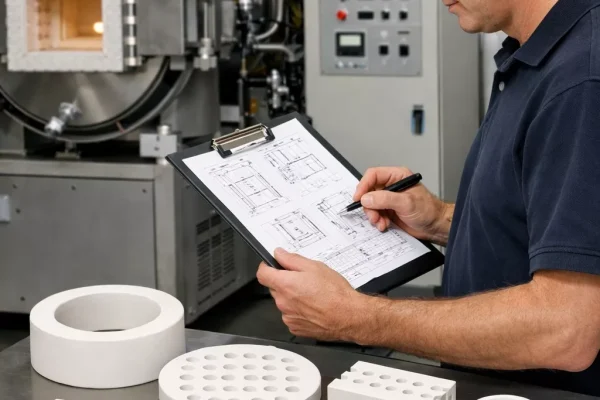
Ceramic Component Integration
Feasibility reviews identify suitable industrial ceramic parts before design commitment.
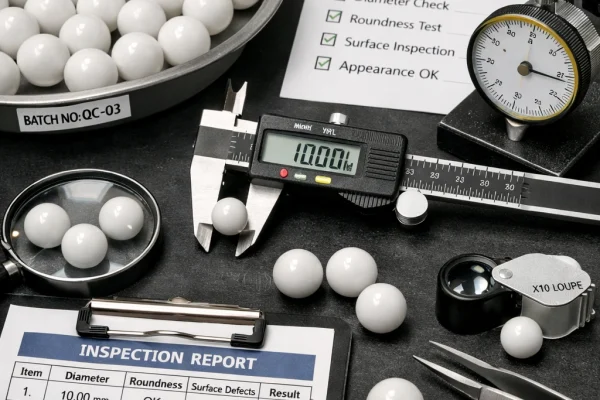
System-Level Requirements
Design of industrial ceramic components is aligned with equipment-level requirements to support long-term operational stability.