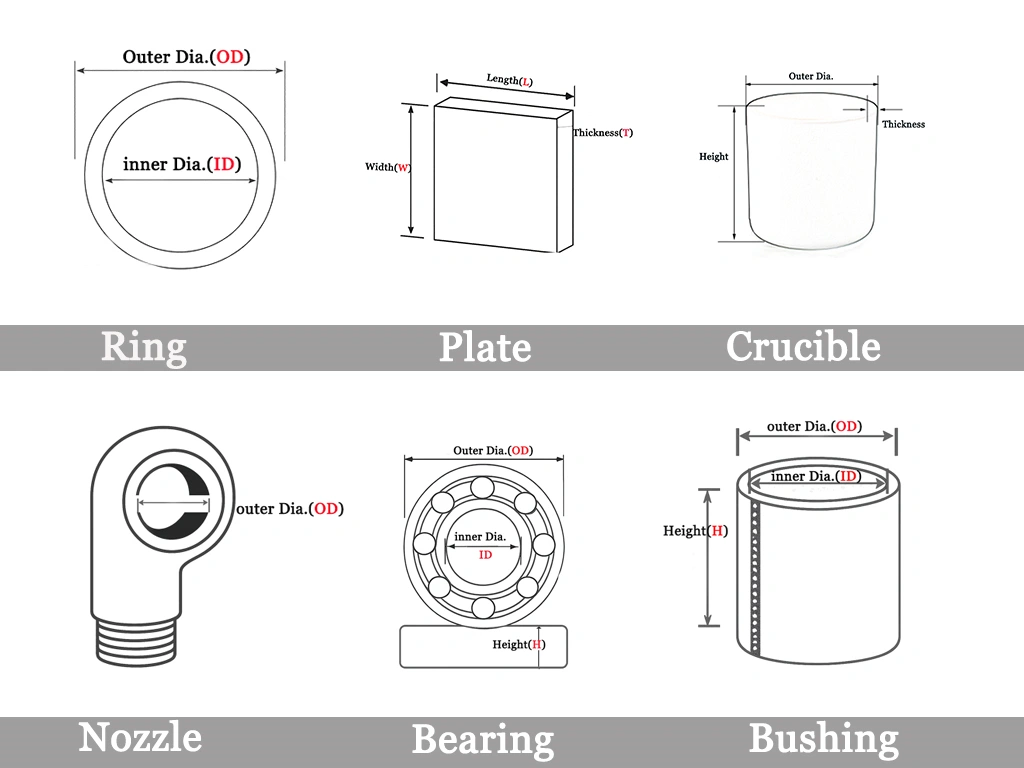
Ceramics Enabling Reliable Aerospace Systems
Aerospace ceramic components are ceramic sub-parts used inside aerospace, defense, satellite, thermal-vacuum, sensing and electronics systems, where metals, polymers, glass or coatings fall short on temperature, vacuum, insulation, RF, low contamination, thermal stability or precise geometry. Rather than a single material, this is a combination of aerospace operating conditions, ceramic material capability and made-to-drawing parts.
ADCERAX takes on the engineering review of these sub-components before quotation, folding temperature, vacuum and outgassing, insulation and RF, contamination and geometry into one part review. We work at the sub-component level: feedthroughs, insulators, windows, substrates, tubes, seal rings, sensor bodies, fixtures and structural parts.
resists continuous heat and rapid cycling
withstands corrosive aerospace environments
maintains dielectric safety under voltage
supports load wear and vibration
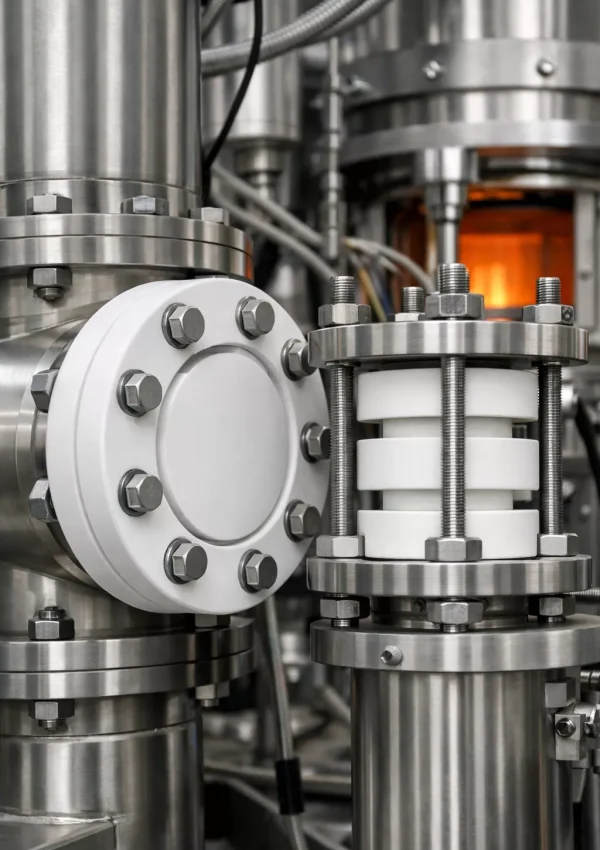
ADCERAX Material Properties of Aerospace Ceramic
Material performance in aerospace systems is determined by how Aerospace Ceramic components respond to heat, electricity, chemical exposure, and mechanical load under defined operating conditions.
Thermal Properties
| Material | Thermal Conductivity (W/m·K) | Max Service Temperature (°C) | CTE (×10⁻⁶/K, 20–1000°C) | Test Conditions |
|---|---|---|---|---|
| Alumina (Al₂O₃, 95–99.5%) | 24–30 | 1500–1700 | 7.5–8.2 | Air, continuous thermal exposure |
| ZTA | 20–25 | 1400–1500 | 7.0–7.8 | Air, cyclic heating |
| Zirconia (Y-TZP) | 2.5–3.0 | 1000–1200 | 10.0–10.5 | Air, thermal cycling |
| Silicon Carbide (SiC) | 120–180 | 1600–1700 | 4.0–4.5 | Inert/oxidizing atmosphere |
| Silicon Nitride (Si₃N₄) | 20–35 | 1200–1400 | 3.0–3.3 | Air, rotating components |
| Boron Nitride (h-BN) | 30–60 (in-plane) | 1800 (inert) | 1.0–2.0 | Inert atmosphere |
| Aluminum Nitride (AlN) | 170–230 | 1400–1600 | 4.5–5.3 | Air, power electronics |
| Boron Carbide (B₄C) | 30–42 | 1500–1600 | 4.5–5.0 | Air, abrasive environment |
| Glass Ceramic | 1.5–2.5 | 800–1000 | 0.0–2.0 | Air, thermal stability tests |
Electrical Properties
| Material | Volume Resistivity (Ω·cm) | Dielectric Strength (kV/mm) | Dielectric Constant (1 MHz) | Test Conditions |
|---|---|---|---|---|
| Alumina | ≥10¹⁴ | 9–13 | 9.5–10 | Room temperature, dry |
| ZTA | ≥10¹³ | 8–12 | 9–10 | Room temperature |
| Zirconia | ≥10¹² | 7–10 | 25–30 | Room temperature |
| Silicon Carbide | 10²–10⁵ (semiconductive) | 2–4 | 9–10 | Controlled doping |
| Silicon Nitride | ≥10¹⁴ | 12–15 | 7–8 | Room temperature |
| Boron Nitride | ≥10¹⁵ | 3–4 | 4–5 | Inert atmosphere |
| Aluminum Nitride | ≥10¹³ | 10–15 | 8.5–9 | Power module conditions |
| Boron Carbide | 10²–10⁴ | 2–3 | 8–9 | High-load structures |
| Glass Ceramic | ≥10¹⁵ | 6–10 | 5–7 | Insulation components |
Chemical Stability
| Material | Acid Resistance | Alkali Resistance | Oxidation Behavior | Test Conditions |
|---|---|---|---|---|
| Alumina | Stable to most acids | Limited in strong alkali | Stable up to 1000°C | Acid/alkali immersion |
| ZTA | Similar to alumina | Similar to alumina | Stable up to 1000°C | Chemical soak tests |
| Zirconia | Stable to acids | Moderate alkali attack | Stable up to 800°C | Aqueous corrosion |
| Silicon Carbide | Excellent | Excellent | Slow oxidation >1000°C | High-temp oxidation |
| Silicon Nitride | Good | Good | Oxidizes >1000°C | Moist air exposure |
| Boron Nitride | Inert to most chemicals | Alkali sensitive | Stable in inert gas | Chemical compatibility |
| Aluminum Nitride | Hydrolysis sensitive | Poor in water | Stable in dry air | Controlled humidity |
| Boron Carbide | Excellent | Excellent | Stable up to 1000°C | Abrasive slurry |
| Glass Ceramic | Good | Good | Stable below softening | Chemical durability |
Mechanical Properties
| Material | Flexural Strength (MPa) | Hardness (HV) | Fracture Toughness (MPa·m¹ᐟ²) | Test Conditions |
|---|---|---|---|---|
| Alumina | 300–400 | 1200–1800 | 3.5–4.5 | 3-point bending |
| ZTA | 700–1000 | 1300–1600 | 6–8 | Impact and wear |
| Zirconia | 900–1200 | 1200–1300 | 7–10 | Room temperature |
| Silicon Carbide | 350–450 | 2500–2800 | 3–4 | Abrasive wear |
| Silicon Nitride | 800–1000 | 1500–1700 | 6–7 | Rotational stress |
| Boron Nitride | 20–50 | 30–50 | <1 | Machinability tests |
| Aluminum Nitride | 300–350 | 1100–1200 | 2.5–3.5 | Substrate loading |
| Boron Carbide | 300–400 | 3000–3800 | 2–3 | High-hardness testing |
| Glass Ceramic | 100–200 | 500–700 | 1.5–2.5 | Structural support |
ADCERAX Ceramic Applications Across Aerospace Systems
Aerospace ceramic components are selected by application function first, with material behavior matched to mechanical load, thermal exposure, electrical demand, and environmental risk across flight and ground systems.
Power Electronics & Thermal Interfaces
Aerospace Ceramic materials enable reliable thermal transfer and electrical insulation within compact power assemblies.
- Alumina Aerospace Ceramic enables stable insulation while maintaining controlled heat transfer under continuous electrical load.
- Aluminum Nitride Aerospace Ceramic supports high thermal flux where power density and reliability must coexist.
- Aerospace Thermal Conductive Ceramic structures reduce thermal stress concentration at material interfaces.
Thermal transfer and electrical isolation maintained under cyclic power loading.
Provides rigid insulation interfaces for thermally stressed power assemblies.
High thermal conductivity substrate supporting compact aerospace power modules.
Rotating & Bearing Systems
Aerospace Ceramic solutions support high-speed rotation by combining low friction and structural stability.
- Silicon Nitride Bearing Ceramic reduces centrifugal stress through low density and high strength.
- Silicon Carbide Aerospace Ceramic resists abrasive wear and corrosion in aggressive operating media.
- Aerospace Wear Resistant Ceramic components extend maintenance intervals under continuous rotation.
Electrical insulation and dimensional stability ensured in auxiliary rotating systems.
Supports high rotational speed with reduced friction and thermal expansion.
Improves bearing life under high-speed aerospace operating conditions.
Maintains wear resistance under corrosive and particle-laden environments.
Protects rotating shafts from abrasion and chemical attack.
Structural Fastening & Positioning
Aerospace Ceramic components provide electrically insulated fastening and precise positioning under mechanical load.
- Zirconia Structural Ceramic delivers high fracture toughness for precision positioning.
- Alumina Structural Ceramic maintains stiffness and insulation under mechanical preload.
- Aerospace High Strength Ceramic fasteners reduce galvanic and thermal fatigue risks.
Enables rigid, insulated structural connections across aerospace systems.
Provides electrically insulating fastening under thermal cycling conditions.
High strength fastening suited for precision aerospace assemblies.
Maintains accurate alignment under temperature fluctuation and vibration.
Supports structural alignment within rotating or sliding interfaces.
Wear & Impact Protection Components
Aerospace Ceramic materials protect critical interfaces from abrasion, impact, and repetitive contact stress.
- ZTA Wear Resistant Ceramic absorbs impact while resisting abrasive degradation.
- Boron Carbide Structural Ceramic provides extreme hardness at reduced component weight.
- Aerospace Structural Ceramic solutions limit deformation under repetitive contact.
Wear-resistant interface supporting cyclic load and surface contact.
Lightweight wear surface for high-abrasion aerospace structures.
Maintains geometry under severe mechanical and abrasive stress.
High-Temperature Insulation & Protection
Aerospace Ceramic systems isolate heat and resist chemical attack in elevated temperature environments.
- Boron Nitride Insulation Ceramic offers thermal stability with non-wetting behavior.
- Glass Ceramic Insulation Ceramic maintains shape through repeated thermal cycling.
- Aerospace High Temperature Ceramic components reduce heat transfer to sensitive systems.
Provides high-temperature insulation and chemical inertness.
Machinable insulation component for controlled thermal environments.
Flat insulating structure maintaining stability under heat exposure.
Thermal isolation conduit for aerospace test and operating systems.
RF, Optical & Electronic Interfaces
Ceramic windows, discs and substrates support signal transmission, insulation and thermal control in aerospace modules.
- Ceramic Windows support RF or optical transmission across protected interfaces.
- Ceramic Discs provide insulation and stable spacing in compact assemblies.
- Ceramic Substrates support electronic circuits while managing heat and electrical isolation.
Dielectric interface reviewed for frequency, thickness and assembly conditions.
Protective window reviewed for transmission, surface and environmental requirements.
Compact insulating component for electrical isolation and structural spacing.
Circuit substrate supporting heat transfer and electrical insulation.
From Aerospace Application Conditions to Ceramic Solutions
share the condition (temperature, vacuum, insulation, RF, contamination, wear) and the part, and we review which material route and sub-component fit before quotation.
ADCERAX Engineered Ceramic Categories Across Aerospace Applications
Material selection in aerospace systems is driven by operating conditions, functional loads, and verification requirements, leading industrial ceramics to be grouped primarily by material behavior rather than component geometry.

Alumina Ceramic
Alumina-based components are widely used where insulation, thermal balance, and dimensional stability must coexist.

Zirconia Ceramic
Zirconia ceramics support precision positioning and strength-critical fastening tasks.
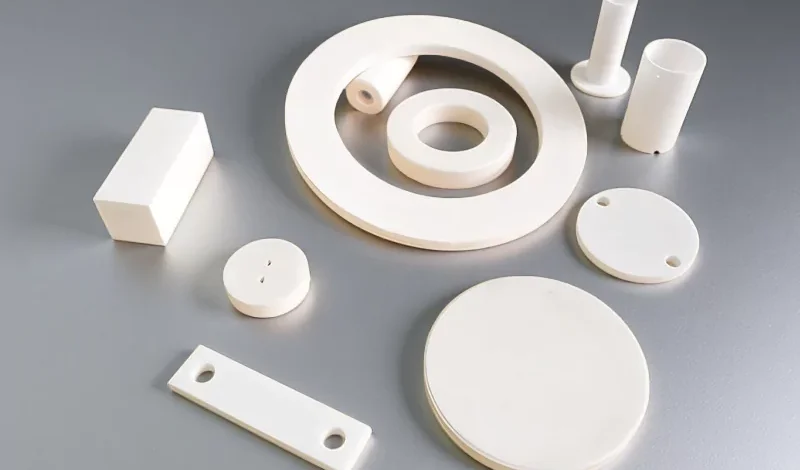
ZTA Ceramics
ZTA ceramics are selected for load-bearing and wear-prone interfaces requiring impact tolerance.
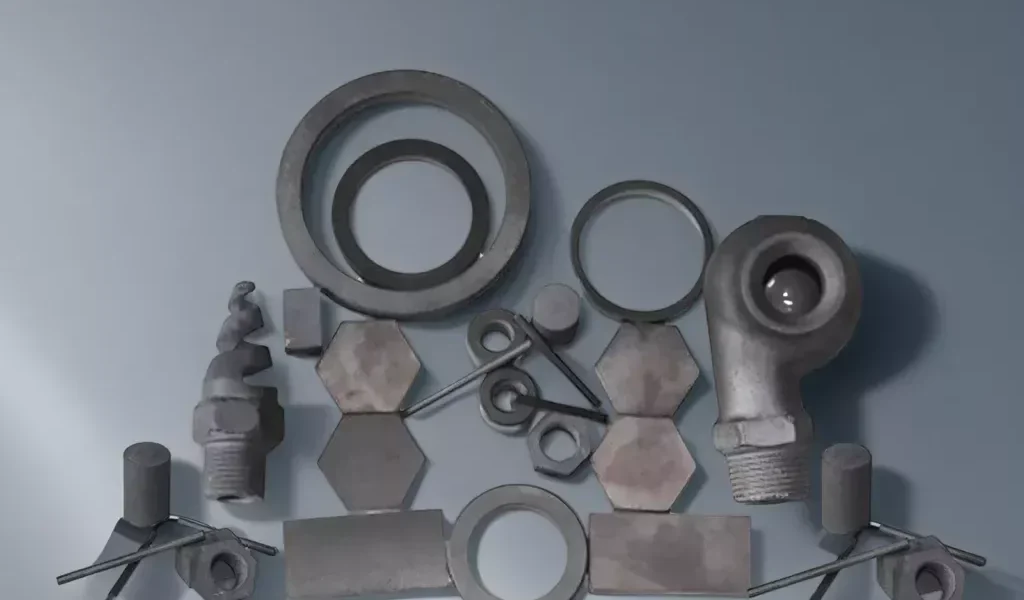
Silicon Carbide Ceramics
SiC components address extreme wear, corrosion, and high-temperature exposure.
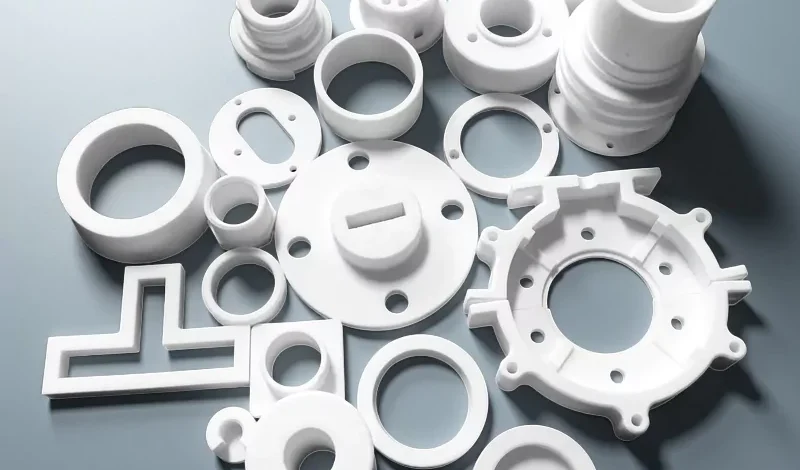
Boron Nitride Ceramics
Boron nitride ceramics serve as insulation and protection in thermal zones.
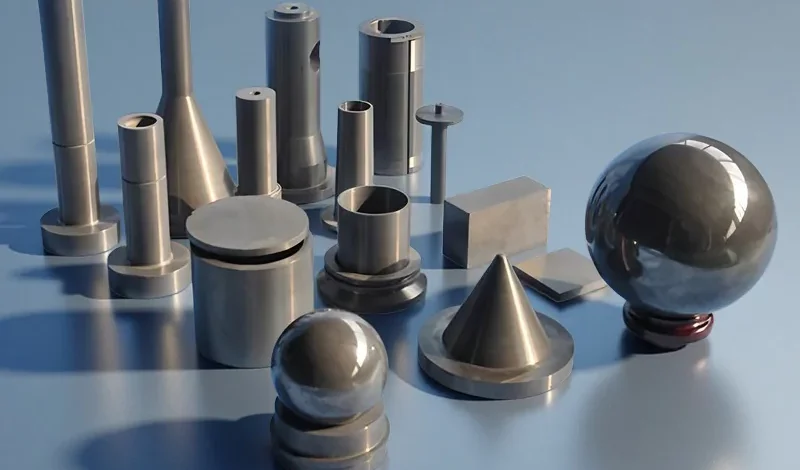
Silicon Nitride Ceramics
Silicon nitride ceramics are applied in high-speed and low-friction environments.

Aluminum Nitride Ceramics
AlN ceramics manage heat while insulating aerospace power modules.
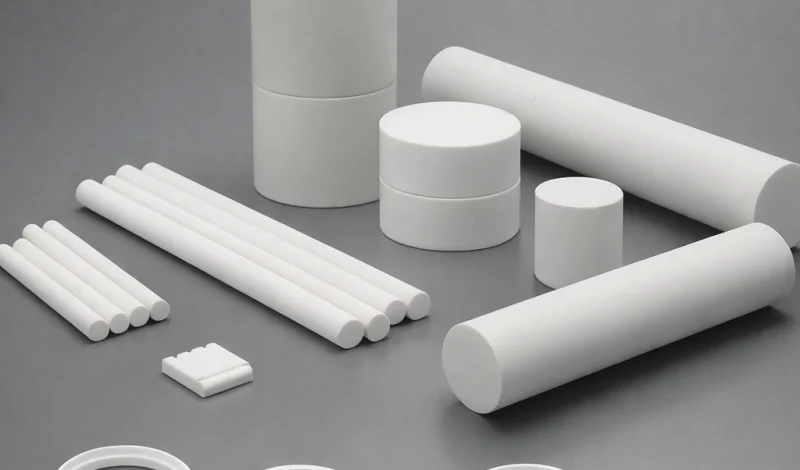
Glass Ceramic
Glass ceramics provide machinability and thermal stability in insulating structures.
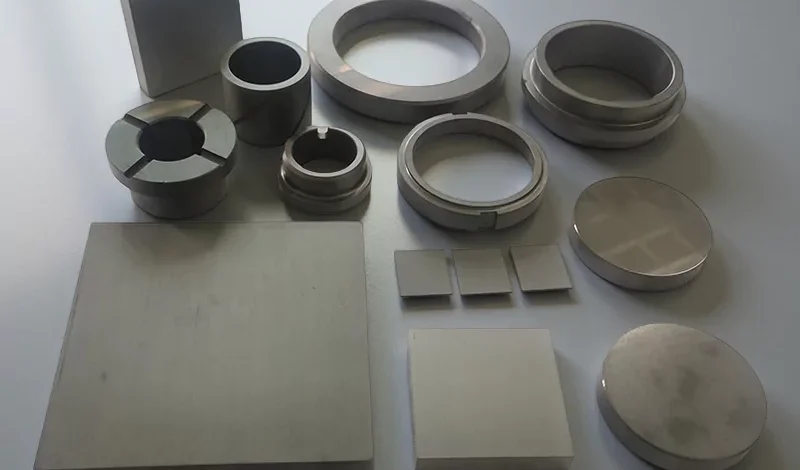
B₄C Ceramic
Boron carbide ceramics are chosen for lightweight, high-hardness structural parts.
Integrated Manufacturing Services for Aerospace Ceramic Components
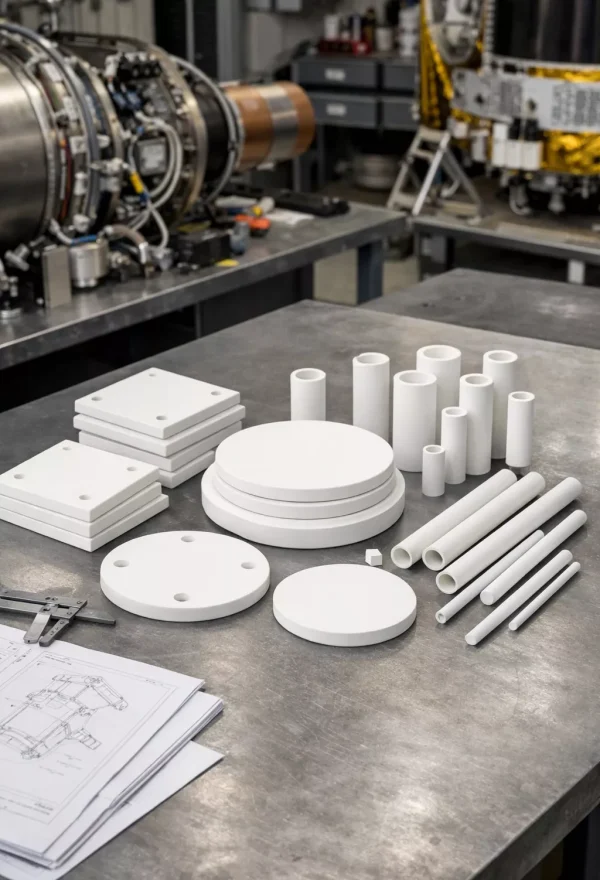
We support aerospace ceramic sub-components through forming, sintering, precision machining, metallization for ceramic-to-metal joints, and dimensional and visual inspection.
The process route is chosen for the material, geometry and condition of your part, and confirmed during engineering review before quotation. Low-MOQ small batches and non-standard parts are supported.
application conditions mapped to alumina, zirconia, SiC, Si₃N₄, AlN systems
dry pressing, isostatic pressing up to 300 MPa
high-temperature firing controlled to ±5 °C stability
precision machining achieving tolerances as tight as ±0.005 mm
grinding and lapping to Ra ≤0.4 µm surfaces
chamfering, interface control, fit-ready ceramic components
ADCERAX Advanced Ceramic Manufacturing Processes for Aerospace Ceramic
High-Pressure
Ceramic Forming
High-pressure forming establishes the internal density and geometric foundation required for Aerospace Industrial Ceramic reliability.
uniform compaction up to 300 MPa pressure
green body deviation limited within ±0.3 %
relative density of 50–85% before sintering
High-Temperature
Controlled Sintering
Sintering defines the final microstructure that governs Aerospace High Temperature Ceramic stability and strength.
sintering temperatures up to 1,800 °C controlled
temperature variation maintained within ±5 °C
relative density reaching 99% after sintering
Precision
Diamond Machining
Post-sinter machining transforms dense ceramic bodies into Aerospace Precision Ceramic components with functional accuracy.
finished-part tolerances as tight as ±0.005 mm after precision machining
surface roughness refined to Ra ≤ 0.4 µm
controlled chamfers reduce stress concentration
ADCERAX Custom Aerospace Ceramic Solutions Aligned With Real Operating Conditions
ADCERAX provides Aerospace Custom Ceramic solutions developed directly from drawings, interface constraints, and operating limits rather than catalog assumptions.
As an Aerospace Engineering Ceramic Manufacturer, customization focuses on precision geometry, material behavior, and manufacturability across non-standard aerospace applications.
AQs About Aerospace Ceramic Components
ADCERAX manufactures drawing-based ceramic subcomponents such as feedthroughs, insulators, RF and optical windows, substrates, tubes, seals, sensor bodies, fixtures and precision structural parts.
Please provide a drawing, sample or photos, along with the material, dimensions, tolerances, surface finish, assembly interfaces, operating conditions, quantity and documentation requirements.
Material selection is based on the required insulation, heat transfer, wear resistance, vacuum compatibility and dimensional stability. The final material and grade are confirmed after reviewing the operating conditions and component design.
Yes. Ceramic windows can be reviewed for frequency, transmission, thickness, surface and sealing conditions. Substrates can be reviewed for dielectric performance, thermal management, metallization and assembly requirements.
ADCERAX supports prototypes, small batches and non-standard ceramic parts. Feasibility depends on the material, geometry, tolerance, surface finish and manufacturing route.
Inspection records, material documentation, lot traceability and project-specific verification requirements are confirmed during quotation. ADCERAX supplies ceramic subcomponents to reviewed requirements; aerospace certification of the complete system is not implied.
Discuss Your Aerospace Ceramic Component Requirements
To review a ceramic subcomponent for an aerospace or test system, please share:
- The component type, installation location and function within the system
- A drawing, old-part sample or photos, including material and assembly interfaces
- Dimensions, tolerances, surface finish and any sealing or metallization details
- Temperature, thermal cycling, vacuum/outgassing, atmosphere, electrical/RF needs and mechanical load
- Quantity, project stage, inspection criteria and qualification or documentation requirements
ADCERAX reviews material selection, operating conditions and manufacturability before quotation. If no drawing is available, send clear photos, critical dimensions and the current failure or replacement issue.
*Our team will answer your inquiries within 24 hours.
*Your information will be kept strictly confidential.
info@adcerax.com
Tel:+86-0731-84428843
WhatsApp:+86 19311583352
Within 24 hours