
Energy Equipment Ceramic Components in Industrial Systems
In modern energy infrastructure, industrial ceramics are integrated into equipment zones where thermal load, chemical exposure, and electrical stress exceed the limits of metallic solutions. These ceramic components function directly within separation modules, insulation structures, and structural interfaces, forming part of the primary operating system rather than auxiliary assemblies.
Across high-throughput energy environments, Industrial Ceramic Parts for Energy Systems are commonly applied in battery recycling lines and fluid treatment processes, where dimensional stability and corrosion resistance govern process continuity. As energy equipment scales in capacity and operating intensity, Technical Ceramics for Energy Equipment are increasingly selected as system-level components supporting long-term operational reliability.
remains dimensionally stable under prolonged heat exposure
tolerates corrosive fluids and cleaning agents
preserves isolation in electrically active energy equipment
withstands abrasion and sustained mechanical load
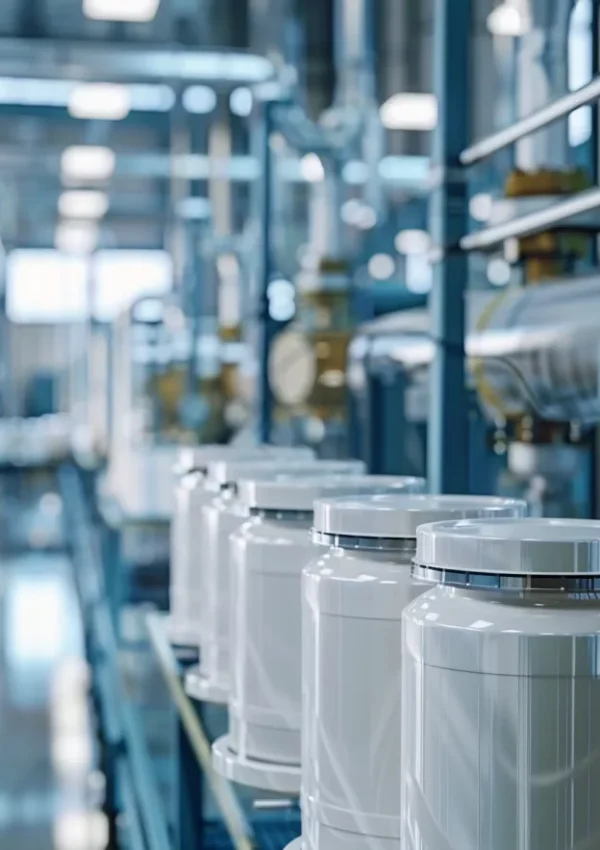
ADCERAX® Material Performance of Energy Equipment Ceramic Components
In energy equipment applications, material selection for industrial ceramic parts is governed by measurable thermal, electrical, chemical, and mechanical behavior under defined operating conditions.
Thermal Properties
| Material | Max Continuous Temperature (°C) | Thermal Conductivity (W/m·K) | Thermal Expansion (10⁻⁶/K) | Test Conditions |
|---|---|---|---|---|
| Silicon Carbide (SiC) | 1350 | 120–180 | 4.0–4.5 | Air atmosphere, steady-state |
| Boron Carbide (B₄C) | 1000 | 30–42 | 5.0–5.5 | Air atmosphere, steady-state |
| Sapphire (Al₂O₃ single crystal) | 1600 | 35–40 | 5.3 | Air atmosphere, steady-state |
| Glass Ceramic (Machinable) | 800 | 1.4–2.0 | 9.0 | Air atmosphere, steady-state |
Electrical Properties
| Material | Volume Resistivity (Ω·cm) | Dielectric Strength (kV/mm) | Relative Permittivity (1 MHz) | Test Conditions |
|---|---|---|---|---|
| Silicon Carbide (SiC) | 10⁴–10⁶ | 8–12 | 9.7 | Room temperature, dry |
| Boron Carbide (B₄C) | 10⁶–10⁸ | 9–12 | 8–9 | Room temperature, dry |
| Sapphire (Al₂O₃ single crystal) | ≥10¹⁴ | 13–15 | 9.4 | Room temperature, dry |
| Glass Ceramic (Machinable) | ≥10¹⁴ | 15–20 | 6.0–6.5 | Room temperature, dry |
Chemical Resistance
| Material | pH Resistance Range | Acid Resistance | Alkali Resistance | Test Conditions |
|---|---|---|---|---|
| Silicon Carbide (SiC) | 0–14 | Stable in H₂SO₄, HCl | Stable in NaOH, KOH | 25–90 °C immersion |
| Boron Carbide (B₄C) | 1–13 | Stable in most acids | Limited in strong alkali | 25–80 °C immersion |
| Sapphire (Al₂O₃ single crystal) | 2–12 | Stable in inorganic acids | Limited in hot alkali | 25–80 °C immersion |
| Glass Ceramic (Machinable) | 2–10 | Stable in weak acids | Limited in strong alkali | 25–60 °C immersion |
Mechanical Properties
| Material | Flexural Strength (MPa) | Hardness (HV) | Elastic Modulus (GPa) | Test Conditions |
|---|---|---|---|---|
| Silicon Carbide (SiC) | 350–450 | 2500–2800 | 410 | Room temperature |
| Boron Carbide (B₄C) | 300–380 | 3000–3500 | 460 | Room temperature |
| Sapphire (Al₂O₃ single crystal) | 400–500 | 2200 | 345 | Room temperature |
| Glass Ceramic (Machinable) | 90–120 | 250–300 | 65 | Room temperature |
ADCERAX® Energy Systems Ceramic Components Across Operating Environments
Energy systems applications are organized around typical operating scenarios, reflecting how industrial ceramic parts for energy systems are specified, integrated, and procured in real energy projects rather than grouped by product form alone.
High Throughput Fluid Processing Systems
In energy processing equipment, high-throughput fluid systems require industrial ceramic parts for energy systems that maintain dimensional stability, chemical resistance, and flow consistency under continuous operation and intensive cleaning cycles.
- Silicon carbide ceramics sustain separation efficiency in battery recycling and filtration lines operating under continuous high flow.
- Ceramic membranes for wastewater treatment tolerate alkaline and acidic cleaning cycles without pore structure collapse.
- Industrial Ceramics for Energy Processing Equipment reduce shutdown frequency in fluid-intensive energy system operations.
High-flux ceramic membrane elements for corrosive energy wastewater separation
Abrasive Surface Treatment Environments
In energy equipment operating environments, abrasive surface treatment and maintenance processes require industrial ceramic parts for energy systems that withstand sustained particle impact, surface erosion, and repeated mechanical loading without dimensional loss.
- Boron carbide wear resistant ceramics shield high-impact contact zones in blasting and surface conditioning stages within energy equipment.
- B4C ceramics for abrasive applications minimize material loss under repeated particle collision and sliding erosion.
- Industrial Energy Equipment Ceramics improve service life where metallic liners fail under extreme abrasion.
Ultra-hard ceramic tiles for abrasive protection in energy equipment
Long-life ceramic nozzles for industrial surface treatment operations
Abrasion-resistant ceramic rings for sealing and guiding systems
Optical Access and Monitoring Systems
In energy equipment operating under pressure, vacuum, or chemically aggressive atmospheres, technical ceramics for energy equipment are required to provide stable optical access while preserving mechanical integrity and sealing reliability.
- Sapphire tubes for chemical processing retain optical transparency under corrosive media and sustained pressure differentials.
- Transparent ceramic sapphire allows continuous visual monitoring without introducing leakage paths or mechanical weakness.
- Energy Equipment Ceramic Components enable safe inspection in sealed systems where polymers and glass fail.
High-strength sapphire tubes for chemical and energy processing observation
Precision sapphire substrates for optical sensing and monitoring platforms
High-pressure sapphire windows for industrial energy equipment observation
Electrical Insulation and Thermal Control Structures
Within energy conversion and storage equipment, industrial ceramic parts for energy systems are required to provide stable electrical insulation while controlling heat flow under prolonged thermal and electrical loading.
- Machinable glass ceramic for industrial insulation enables tight tolerances in insulating supports and spacing structures within energy equipment.
- Electrical insulating ceramics maintain dielectric performance under combined thermal cycling and sustained voltage stress.
- Energy Equipment Ceramic Components simplify integration where polymers deform and metals conduct unwanted heat.
Machinable glass ceramic rods for electrical insulation structures
Glass ceramic plates for high temperature energy system insulation
Industrial Ceramic Parts for Energy Systems Integration
As a custom industrial ceramics manufacturer, ADCERAX® delivers stable supply for both standard and non-standard ceramic components used across energy-related equipment. Production planning and quality verification are aligned with repeat orders and long-term deployment.
ADCERAX® Industrial Energy Equipment Ceramics by Material Category
ADCERAX® organizes industrial ceramic parts for energy systems by material behavior to align selection with real operating conditions rather than component form.
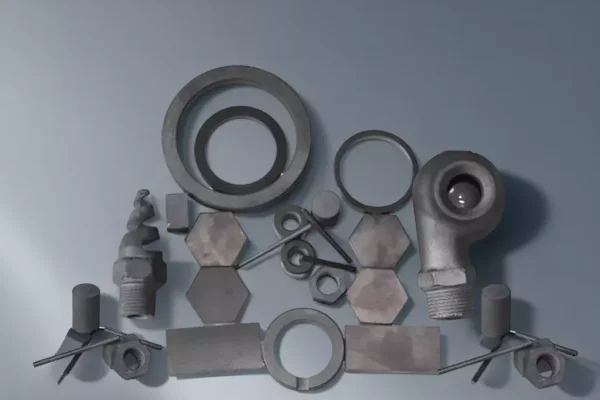
Silicon Carbide
Silicon carbide ceramics for filtration and corrosion control
- High flux separation under corrosive conditions
-Stable operation in chemical processing systems
- Preferred in SiC ceramics for battery recycling
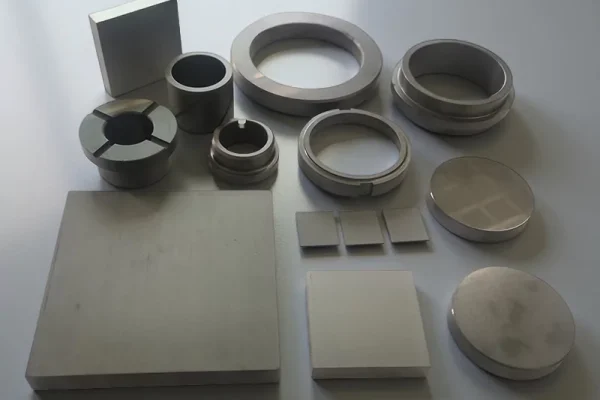
Boron Carbide
Boron carbide ceramics for extreme abrasive environments
- Exceptional wear resistance under abrasive media
- Extended replacement cycles in production lines
- Applied as boron carbide wear resistant ceramics
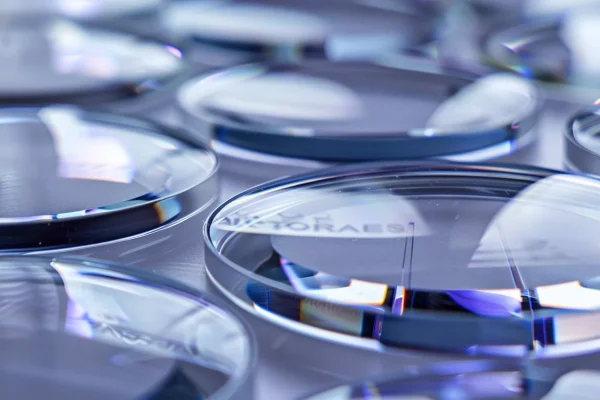
Transparent Ceramics
Transparent sapphire ceramics for harsh energy environments
- High pressure and vacuum compatibility
- Optical clarity under corrosive exposure
- Used as sapphire ceramic components for energy systems
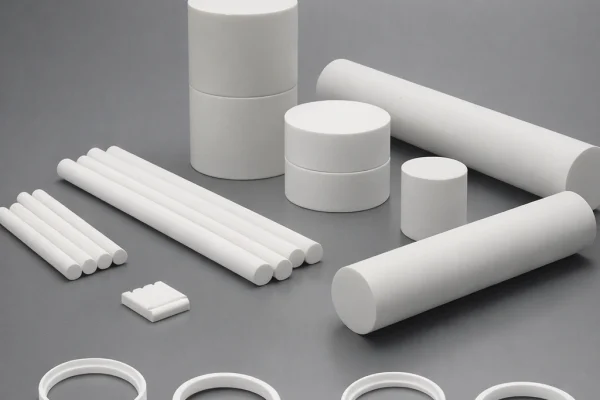
Glass Ceramic
Machinable glass ceramics for insulation and thermal stability
- Reliable electrical insulation at elevated temperatures
- Dimensional stability during thermal cycling
- Selected as glass ceramic materials for high temperature systems
Technical Ceramics for Energy Equipment Manufacturing Services
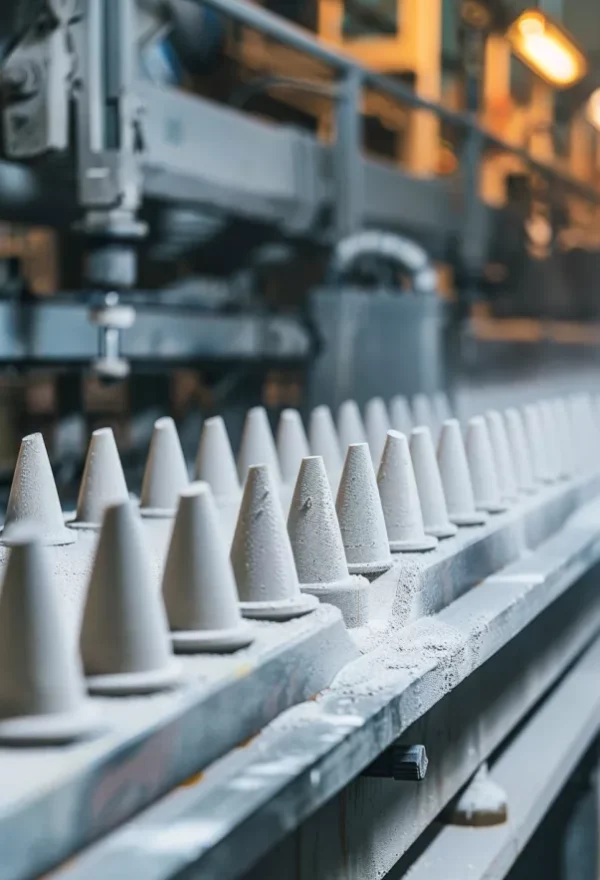
ADCERAX® delivers an integrated manufacturing framework for industrial ceramic parts for energy systems, where material behavior, geometry, and process control are managed as a unified engineering system.
As a custom industrial ceramics manufacturer, production decisions are driven by service conditions, drawing constraints, and scalability requirements rather than isolated fabrication steps.
Tailors ceramic compositions to temperature, corrosion, and electrical load profiles.
Applies extrusion, pressing, or isostatic forming based on geometry demands.
Achieves tolerances down to ±0.02 mm on functional interfaces.
Maintains thermal profiles up to 1,800 °C with controlled atmosphere.
Delivers Ra ≤ 0.4 µm for sealing and flow-contact surfaces.
Supports ceramic-to-metal or ceramic-to-ceramic structural interfaces.
ADCERAX® Fabrication of Industrial Ceramics for Energy Processing Equipment
Ceramic Forming and Shaping
Forming defines the internal structure and dimensional feasibility of Renewable Energy Ceramic components at the earliest stage.
Utilizes isostatic pressing up to 300 MPa pressure.
Enables uniform density across complex tubular sections.
Achieves green-body deviation within ±0.3 mm.
High-Temp Sintering Control
Sintering determines final density, phase stability, and high-temperature performance of Technical Renewable Energy Ceramic parts.
Operates high-temperature furnaces up to 1,800 °C.
Controls inert or reactive atmospheres during densification.
Delivers bulk density exceeding 98% theoretical value.
Precision Ceramic Machining
Machining converts sintered ceramic bodies into functional components with controlled interfaces and tolerances.
Uses CNC diamond grinding and multi-axis machining centers.
Maintains dimensional accuracy within ±0.02 mm.
Produces Ra ≤ 0.4 µm functional surfaces.
ADCERAX® Custom Energy Equipment Ceramic Components Engineering
ADCERAX® delivers industrial ceramic parts for energy systems by converting operating conditions and drawings into manufacturable solutions with controlled geometry and material performance.
Each project prioritizes functional fit, thermal and chemical suitability, and production readiness.
Contact ADCERAX® to initiate a specification-driven ceramic customization process.
Industrial Ceramics for Energy Equipment Engineering FAQs by ADCERAX®
Energy processing fluids often span wide pH ranges and contain aggressive ions. Industrial Energy Equipment Ceramics maintain chemical stability where metals corrode and polymers swell. This prevents structural degradation and media contamination during continuous operation.
Silicon carbide is selected for abrasion, slurry flow, and high heat flux conditions. Alumina is more suitable for static insulation and lower-wear environments. Technical Ceramics for Energy Equipment are specified based on mechanical load, thermal gradients, and media aggressiveness.
Wastewater streams in energy processing require high-temperature and aggressive chemical cleaning. Industrial Ceramics for Energy Processing Equipment tolerate repeated CIP cycles without pore collapse or swelling. Polymer membranes lose structural integrity under the same conditions.
Boron carbide is selected for zones exposed to extreme particle impact and erosion. In blasting or abrasive redirection areas, Industrial Ceramic Parts for Energy Systems using B4C slow wear progression more effectively than SiC. Geometry stability directly reduces unplanned maintenance.
Surface preparation and material handling involve continuous abrasive contact. Energy Equipment Ceramic Components made from boron carbide maintain dimensional accuracy under sustained erosion. This ensures process repeatability and predictable equipment behavior.
Observation windows face pressure, heat, and corrosive gases. Ceramic Components for Energy Equipment using sapphire withstand higher mechanical stress and chemical exposure than quartz. Optical clarity remains stable under harsh operating conditions.
Pressurized systems require materials with high fracture strength and low creep. Energy Systems Ceramic Components made from sapphire provide reliable optical access without compromising pressure containment. This reduces failure risk during long-term operation.
Glass ceramics are selected when controlled thermal expansion is required. Alumina offers strength but limited expansion matching. Technical Ceramics for Energy Equipment use glass ceramics to reduce thermal stress at sealing interfaces.
Rapid heating and cooling generate thermal gradients. Industrial Energy Equipment Ceramics combine low thermal expansion with high temperature stability. This minimizes crack initiation under repeated thermal shock.
Energy equipment depends on predictable thermal, chemical, and mechanical behavior. Energy Systems Ceramic Components with consistent microstructure deliver repeatable system performance. This reduces validation time and operational risk.
Get in touch with us
We believe that Adcerax will become your best partner!
Please fill in your contact information in the form or call us.
*Our team will answer your inquiries within 24 hours.
*Your information will be kept strictly confidential.
