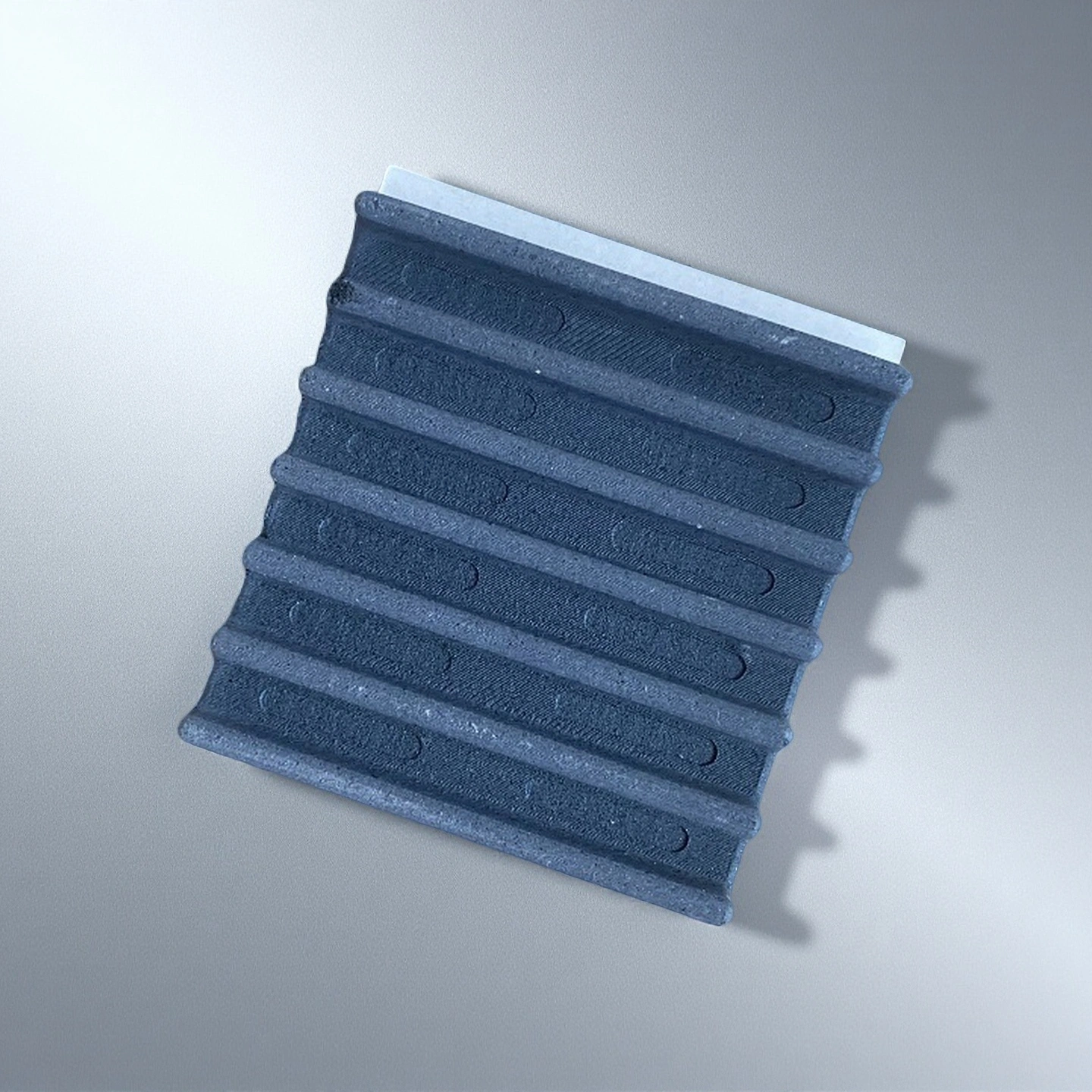
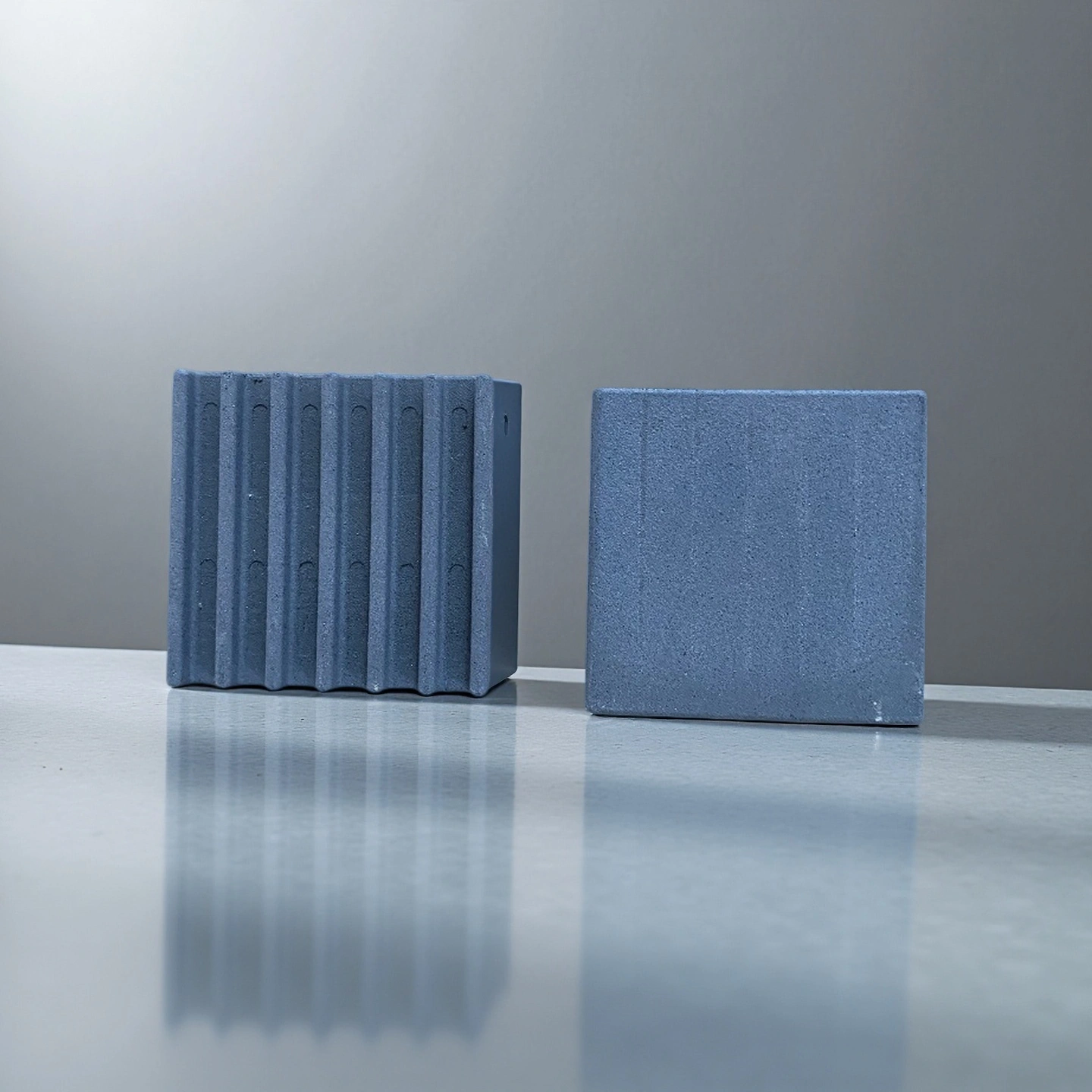
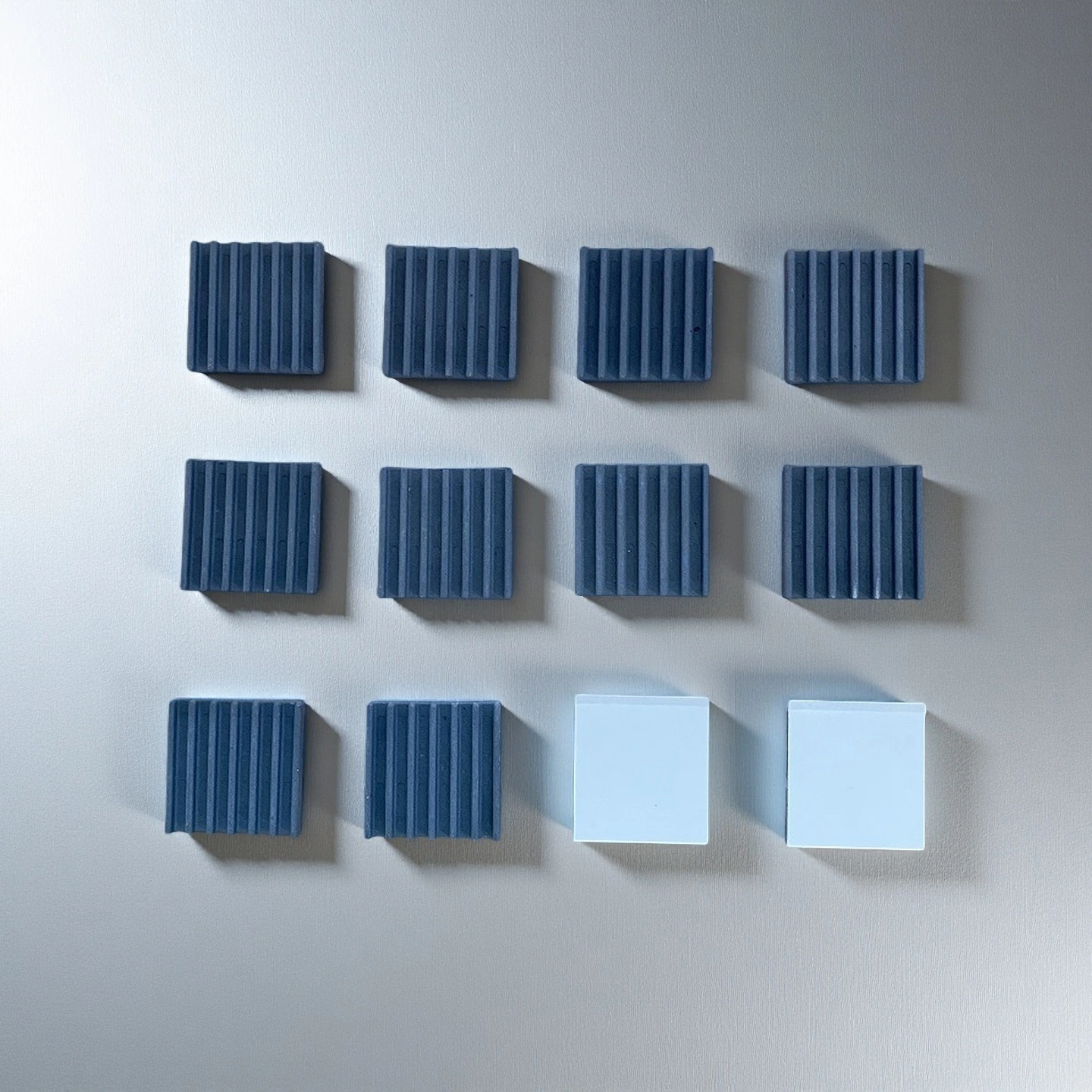
What Is a Silicon Carbide Ceramic Plate?
A silicon carbide ceramic plate is a high-performance SiC component used where heat, wear, corrosion and dimensional stability must be controlled at the same time. Compared with alumina ceramic plates, SiC plates offer higher thermal conductivity, stronger thermal shock resistance and better wear performance in harsh industrial environments.
ADCERAX supplies SiC ceramic plates and sheets for thermal management, furnace fixtures, equipment liners, wear plates and custom structural parts. Standard sizes are available for quick selection, while custom plates can be produced according to drawings, samples or assembly requirements.
Silicon Carbide Ceramic Plate Advantages
- High thermal conductivity helps improve heat spreading in thermal management assemblies.
- Strong thermal shock resistance supports repeated heating and cooling cycles.
- High hardness and wear resistance make SiC suitable for abrasive or sliding-contact applications.
- Good corrosion and oxidation resistance supports use in harsh industrial environments.
- Custom thickness, surface finish, holes and edge details can be reviewed according to drawings.
When to Choose SiC Ceramic Plate?
Silicon carbide ceramic plate is usually selected when metal, alumina or zirconia plates cannot provide enough heat transfer, wear resistance or thermal shock stability. It is suitable for working positions where the part may face high temperature, repeated heating and cooling, abrasive contact, corrosive media or high-power heat concentration.
For power electronics and laser systems, SiC plates help spread heat while maintaining electrical insulation. For furnace and industrial equipment, SiC plates help resist deformation, oxidation and mechanical wear during long operating cycles.
Silicon Carbide Ceramic Sheet Properties
|
Item |
Unit |
Reaction-Bonded SiC/SiSiC |
Nitride-Bonded SiC/NBSiC |
Pressureless Sintered SiC / SSiC |
| SiC Content |
% |
85 |
80 |
99 |
|
Free Silicon Content |
% |
15 |
0 |
0 |
|
Density |
g/cm³ |
3.02 |
2.72 |
3.1-3.15 |
|
Max. Service Temp. |
℃ |
≤1380 |
1550 |
≤1600 |
|
Vickers Hardness |
kg/mm2(HV) |
2500 |
2500 |
2800 |
|
Coefficient of Thermal Expansion |
×10⁻⁶/K |
4.5 |
5 |
4.1 |
|
Bending Strength |
MPa(20℃) |
250 |
160 |
380 |
|
MPa(1200℃) |
280 |
180 |
400 |
|
|
Modulus of Elasticity |
GPa(20℃) |
330 |
220 |
420 |
|
GPa(1200℃) |
300 |
/ |
/ |
|
|
Thermal Conductivity |
W/m.k(1200℃) |
45 |
15 |
74 |
|
Porosity |
% |
<0.1 |
12 |
<0.1 |
Standard Silicon Carbide Ceramic Plate Sizes
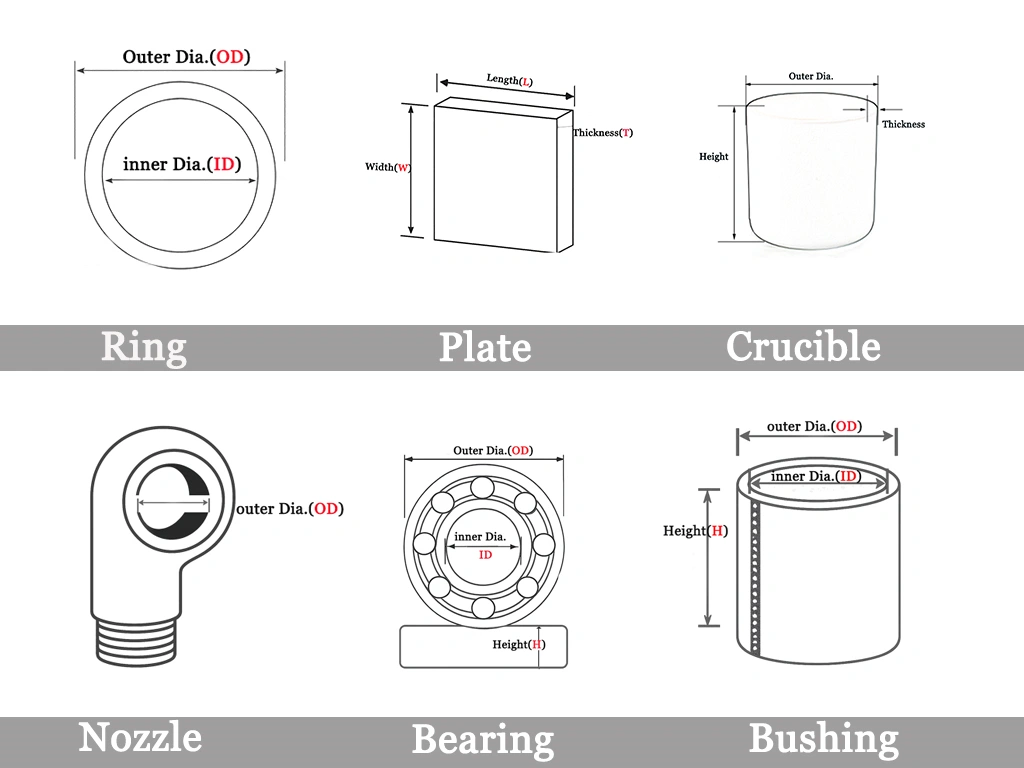
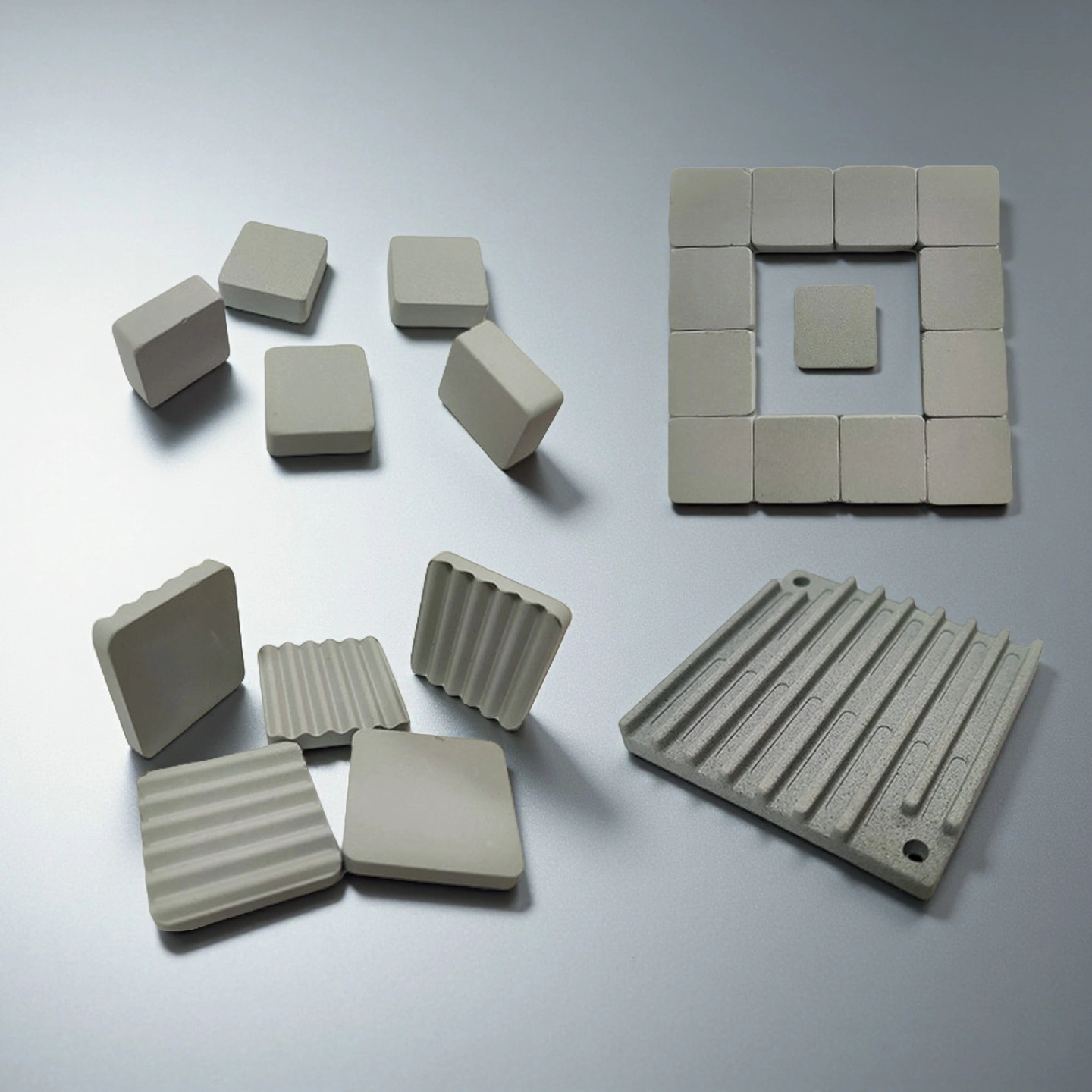
The listed sizes are reference options for quick selection. Custom length, width, thickness, holes, slots, grooves, bevels, chamfers and surface finishes can be reviewed according to drawings or samples. Final feasibility depends on material grade, plate geometry, machining allowance and application conditions.
| Silicon Carbide Tray for ICP | ||||
| Item No. | Length(mm) | Width(mm) | Thickness | Shape |
| AT-SIC-P1047 | 10 | 10 | 1.5 | Tablet |
| AT-SIC-P1048 | 10 | 10 | 2 | Tablet |
| AT-SIC-P1049 | 10 | 10 | 3 | Tablet |
| AT-SIC-P1050 | 10 | 10 | 5 | Tablet |
| AT-SIC-P1051 | 10 | 12 | 2.5 | Tablet |
| AT-SIC-P1052 | 10 | 15 | 2 | Tablet |
| AT-SIC-P1053 | 11 | 13 | 5 | Ripple |
| AT-SIC-P1054 | 15 | 15 | 2 | Tablet |
| AT-SIC-P1055 | 15 | 15 | 3 | Tablet |
| AT-SIC-P1056 | 15 | 15 | 4 | Tablet |
| AT-SIC-P1057 | 15 | 15 | 5 | Tablet |
| AT-SIC-P1058 | 20 | 20 | 10 | Tablet |
| AT-SIC-P1059 | 20 | 20 | 10 | Groove |
| AT-SIC-P1060 | 20 | 20 | 2.5 | Tablet |
| AT-SIC-P1061 | 20 | 20 | 2 | Tablet |
| AT-SIC-P1062 | 20 | 20 | 5 | Tablet |
| AT-SIC-P1063 | 20 | 20 | 5 | Ripple |
| AT-SIC-P1064 | 25 | 25 | 10 | Ripple |
| AT-SIC-P1065 | 25 | 25 | 2.5 | Tablet |
| AT-SIC-P1066 | 25 | 25 | 3 | Tablet |
| AT-SIC-P1067 | 25 | 25 | 5 | Tablet |
| AT-SIC-P1068 | 25 | 25 | 5 | Ripple |
| AT-SIC-P1069 | 25 | 25 | 8 | Ripple |
| AT-SIC-P1070 | 30 | 30 | 10 | Ripple |
| AT-SIC-P1071 | 30 | 30 | 2.5 | Tablet |
| AT-SIC-P1072 | 30 | 30 | 5 | Tablet |
| AT-SIC-P1073 | 30 | 30 | 5 | Ripple |
| AT-SIC-P1074 | 30 | 30 | 8 | Ripple |
| AT-SIC-P1075 | 35 | 35 | 10 | Ripple |
| AT-SIC-P1076 | 40 | 40 | 3 | Tablet |
| AT-SIC-P1077 | 40 | 40 | 4 | Tablet |
| AT-SIC-P1078 | 40 | 40 | 5 | Tablet |
| AT-SIC-P1079 | 40 | 40 | 5 | Ripple |
| AT-SIC-P1080 | 40 | 40 | 7 | Ripple |
| AT-SIC-P1081 | 40 | 40 | 8 | Ripple |
| AT-SIC-P1082 | 50 | 50 | 5 | Tablet |
| AT-SIC-P1083 | 50 | 50 | 5 | With hole |
| AT-SIC-P1084 | 60 | 60 | 5 | Tablet |
| AT-SIC-P1085 | 60 | 60 | 8 | Tablet |
SiC Ceramic Plate vs Alumina and Aluminum Nitride
| Material | Main Advantage | Limitation | Best Fit |
|---|---|---|---|
| Silicon Carbide | High thermal conductivity, wear resistance and thermal shock stability. | More difficult to machine than alumina. | Thermal management, furnace fixtures, wear plates and harsh equipment parts. |
| Alumina | Cost-effective insulation and general high-temperature use. | Lower thermal conductivity and weaker thermal shock resistance than SiC. | Insulators, standard plates and general ceramic structures. |
| Aluminum Nitride | High thermal conductivity and electrical insulation. | Usually selected for electronic substrate applications, not heavy wear positions. | Power electronics substrates and thermal interface components. |
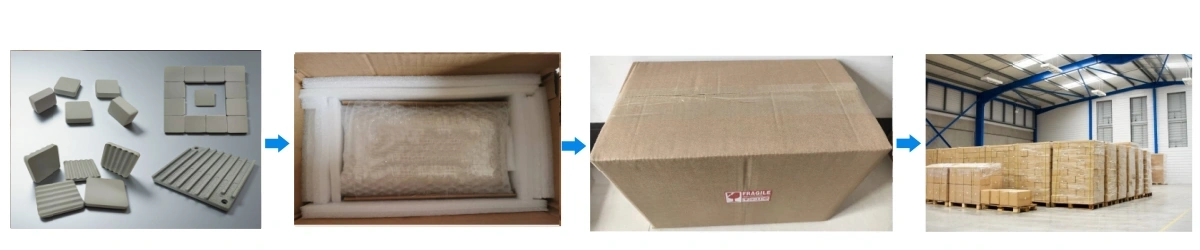
Silicon Carbide Ceramic Sheet Packing
- Each heat sink is individually packed in anti-static foam
- Sealed and moisture-proof packaging