
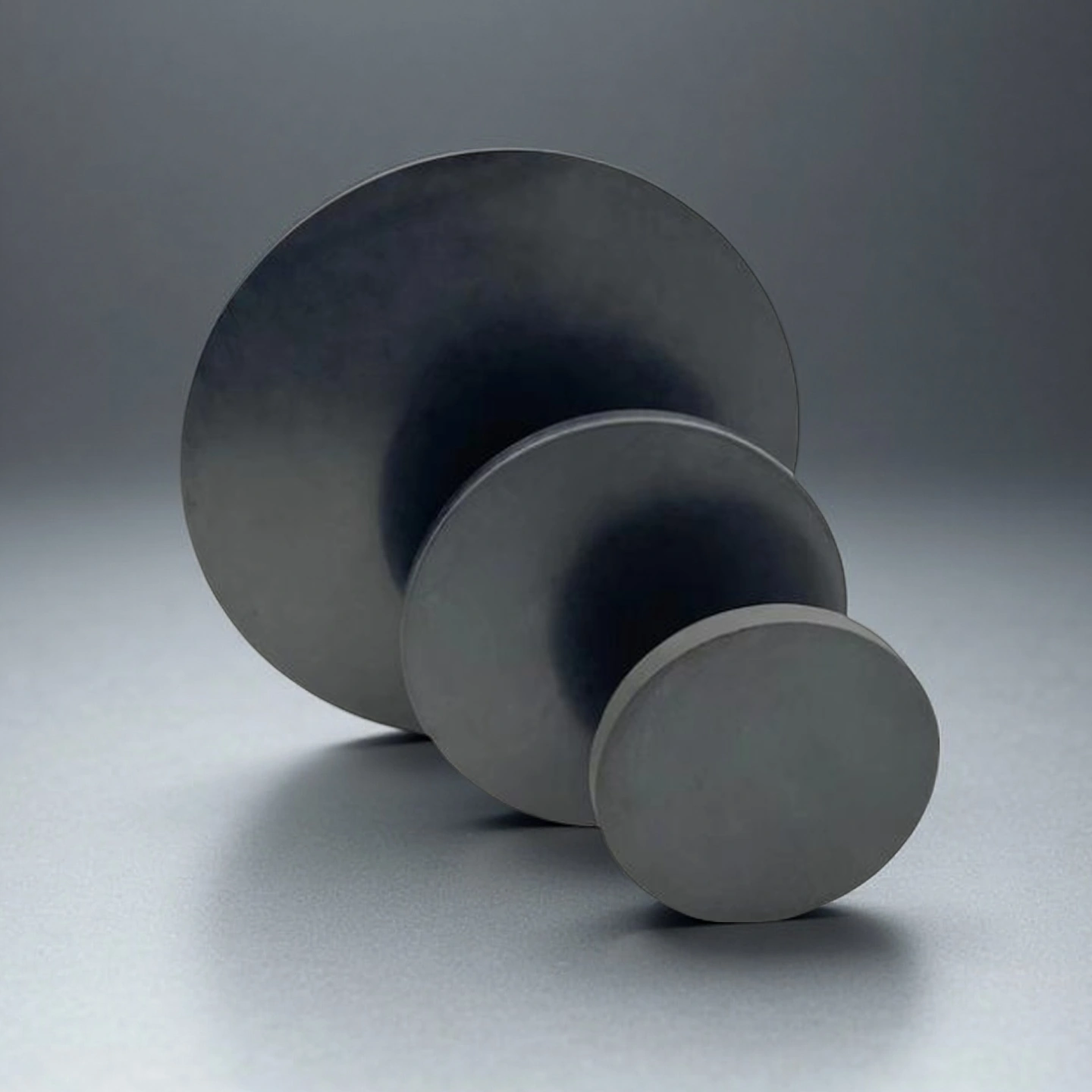
What Is a Silicon Carbide Susceptor?
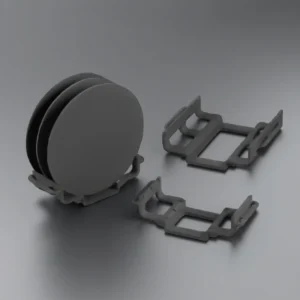
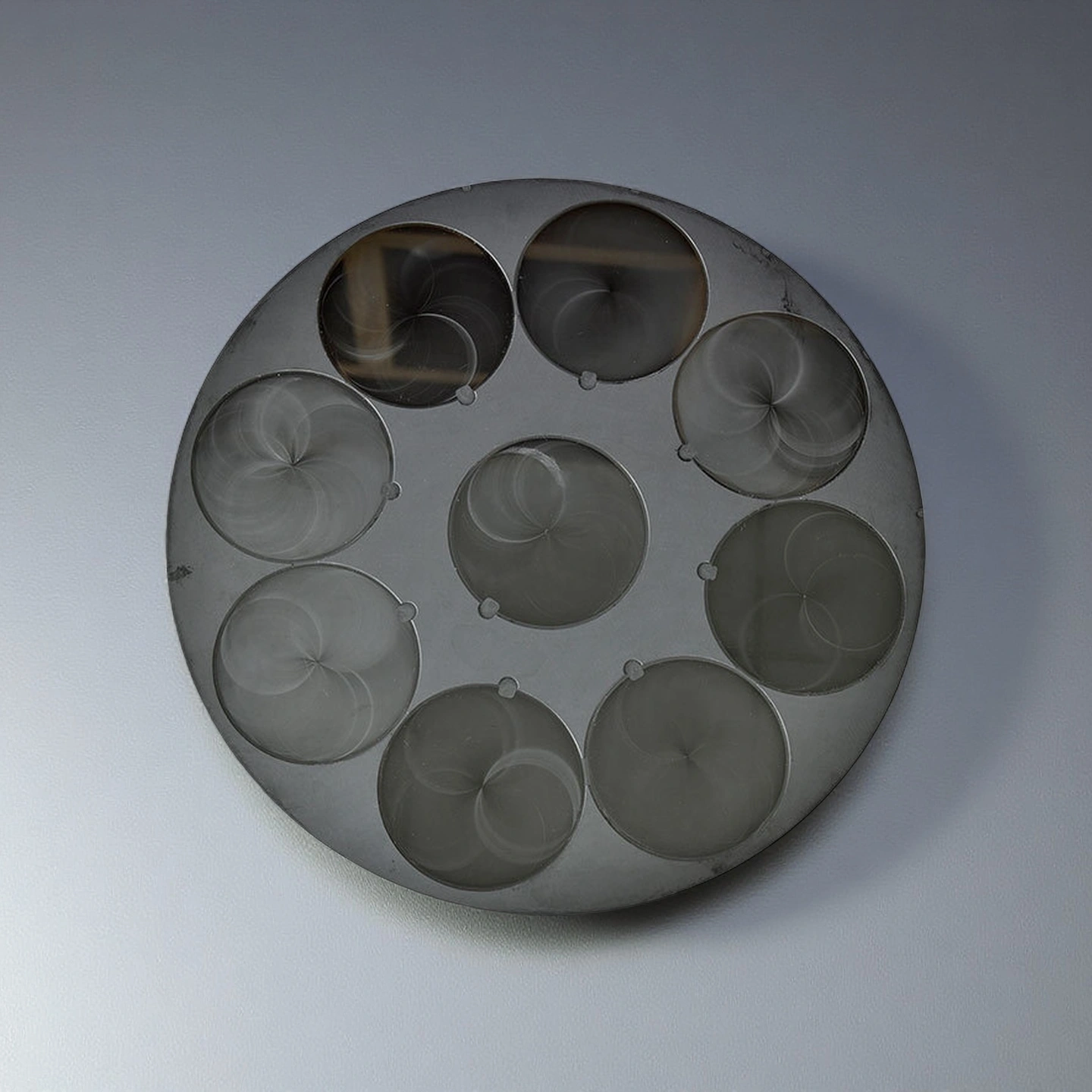
A silicon carbide susceptor is a high-temperature ceramic support component used to carry, heat or position wafers, substrates or workpieces inside thermal, deposition or plasma process equipment. In many systems, the susceptor helps transfer heat, maintain stable geometry and control the interaction between the workpiece, chamber atmosphere and process gas flow.
ADCERAX supplies drawing-based SiC susceptors for equipment builders, process engineers and industrial users who need custom diameter, thickness, pocket layout, mounting holes, grooves, surface finish or material selection. Before production, the operating temperature, atmosphere, plasma exposure, wafer size, loading method and dimensional tolerances should be reviewed together.
Engineering Design Factors for Custom SiC Susceptors
When selecting a custom silicon carbide susceptor, the most important question is not only the material name. The final design should match the heating method, chamber structure, wafer size, surface contact requirement and process atmosphere.
Thermal response affects how quickly the susceptor reaches a stable temperature and how evenly heat is transferred across the supported area. For multi-pocket or large-diameter designs, heat distribution and local thermal gradients should be reviewed together.
Geometry stability is critical when repeated heating and cooling cycles may cause stress around pockets, edges, holes or thin sections. Flatness, concentricity, pocket depth and edge profile should be defined according to the equipment interface.
Surface condition influences wafer seating, gas-flow behavior and particle control. Depending on the application, the surface may require grinding, polishing, controlled roughness or non-contact areas to reduce unwanted interaction.
Atmosphere and plasma exposure should be reviewed before material selection. Halogen, ammonia, oxygen, vacuum or reactive gas environments may require different SiC grades, surface preparation or design allowances.
Technical Specifications of Multi-Pocket Silicon Carbide Susceptor
The following specifications summarize key review points for custom silicon carbide susceptors. Final values should be confirmed according to material route, geometry, operating atmosphere, surface requirement and inspection method.
| Property | Specification |
|---|---|
| Material Route | RBSiC / SSiC, reviewed according to operating temperature, atmosphere, plasma exposure and geometry. |
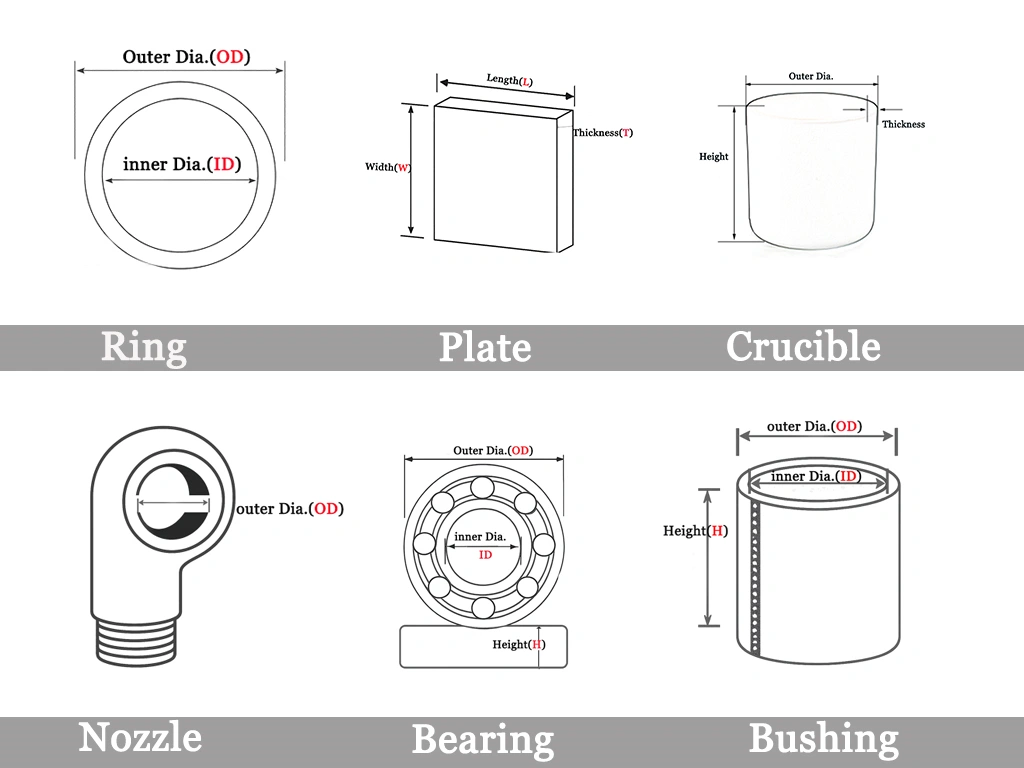
| Custom Geometry | Outer diameter, thickness, pocket layout, grooves, holes, steps and edge profile can be made according to drawing. |
| Pocket Layout | Single-pocket, multi-pocket, grooved or custom cavity design for wafer seating and heat distribution. |
| Surface Flatness | Defined according to wafer size, support method and machining feasibility. |
| Surface Roughness | Typical Ra 0.4–0.8 μm; ground, lapped or polished surface can be reviewed by application. |
| Density | Typical 3.05–3.15 g/cm³, depending on SiC material route and production process. |
| Hardness | HV > 2500, supporting wear resistance and long-term surface stability. |
| Thermal Conductivity | Typical 120–180 W/m·K, depending on material grade and structure. |
| Coefficient of Thermal Expansion | 4.0–4.5 × 10⁻⁶ /K, helping reduce thermal mismatch during heating cycles. |
| Maximum Service Temperature | Up to 1200°C, depending on atmosphere, loading condition and design structure. |
| Thermal Shock Resistance | Suitable for repeated heating and cooling cycles; exact performance should be reviewed by geometry and process condition. |
| Plasma / Chemical Resistance | Can be reviewed for halogen, ammonia, acid, alkali, vacuum or reactive gas environments. |
| Electrical Resistivity | Typical 10⁵–10⁶ Ω·cm, depending on material route and process condition. |
Dimensions of Multi-Pocket Silicon Carbide Susceptor
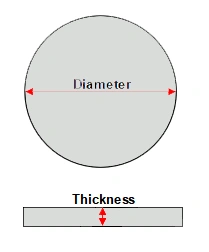
| Silicon Carbide Susceptor for PVD | |||
| Item No. | Outer Diameter(mm) | Thickness(mm) | Purity(%) |
| AT-THG-CZ1001 | 230 | 3 | 99 |
| AT-THG-CZ1002 | 300 | 1.4 | 99 |
| AT-THG-CZ1003 | 300 | 3 | 99 |
| AT-THG-CZ1004 | 330 | 1.4 | 99 |
| AT-THG-CZ1005 | 330 | 3 | 99 |
| Silicon Carbide Susceptor for ICP | |||
| Item No. | Outer Diameter(mm) | Thickness(mm) | Purity(%) |
| AT-THG-CZ2001 | 300 | 3 | 99 |
| AT-THG-CZ2002 | 300 | 4.4 | 99 |
| AT-THG-CZ2003 | 330 | 4.4 | 99 |
| AT-THG-CZ2004 | 330 | 3 | 99 |
| AT-THG-CZ2005 | 380 | 4.4 | 99 |
| AT-THG-CZ2006 | 380 | 3 | 99 |
RBSiC, SSiC and SiC-Coated Graphite Susceptor Selection
ADCERAX can review different silicon carbide susceptor material routes according to the process requirement. The right option depends on the chamber environment, dimensional design, thermal mass, surface requirement and budget.
| Material Route | When It May Fit | Buyer Should Confirm |
|---|---|---|
| RBSiC Susceptor | Suitable for larger structural ceramic parts where thermal shock resistance, shape stability and cost control are important. | Operating temperature, geometry size, load condition and atmosphere. |
| SSiC Susceptor | Suitable for dense, wear-resistant and corrosion-resistant applications requiring stronger surface stability. | Tolerance, surface finish, plasma exposure and cleaning method. |
| SiC-Coated Graphite Susceptor | Often used where graphite thermal response and SiC coating protection are required. | Coating thickness, purity, coating uniformity and reactor compatibility. |
Recommended note:
If the application involves wafer-contact semiconductor processing, coating purity, contamination control or equipment-specific qualification, ADCERAX should review the requirement before confirming the material route or public claim.
Packaging for Multi-Pocket Silicon Carbide Susceptor
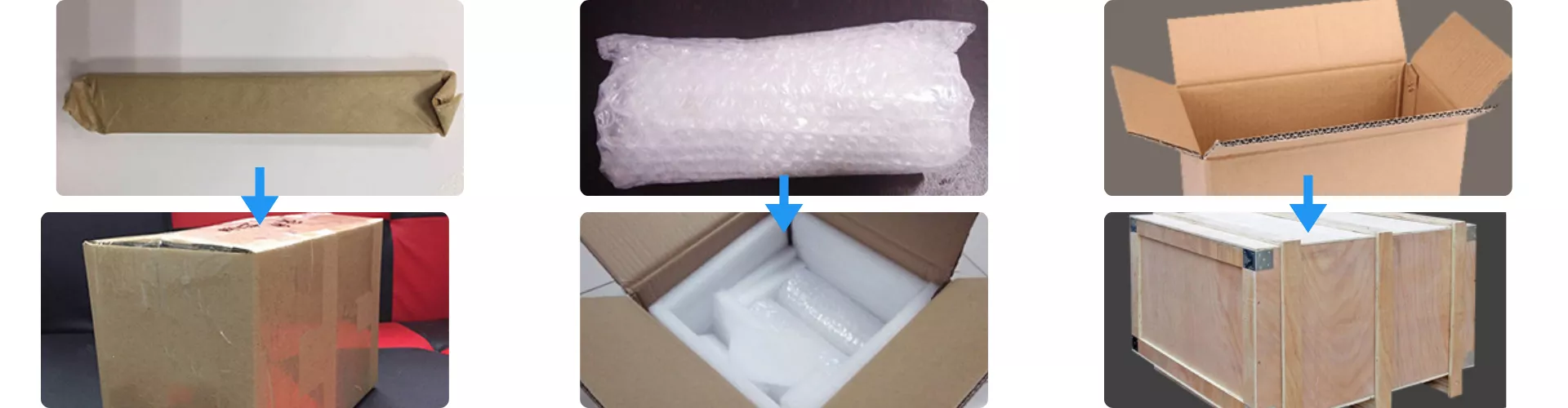
Multi-Pocket Silicon Carbide Susceptor is packaged using a multilayer protection system that prevents vibration, impact, and moisture intrusion during international transport. Each unit is first wrapped in anti-scratch paper and bubble film, then secured within a foam-lined carton to stabilize all cavity areas. For long-distance shipments, the carton is reinforced inside a wooden crate to ensure structural safety throughout handling and loading processes.