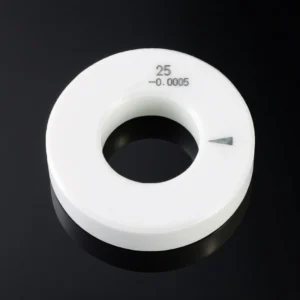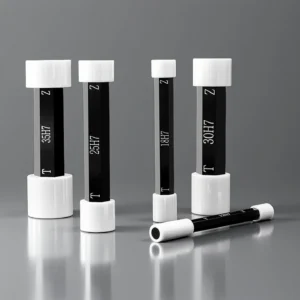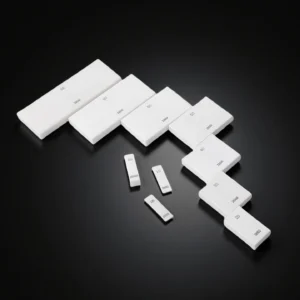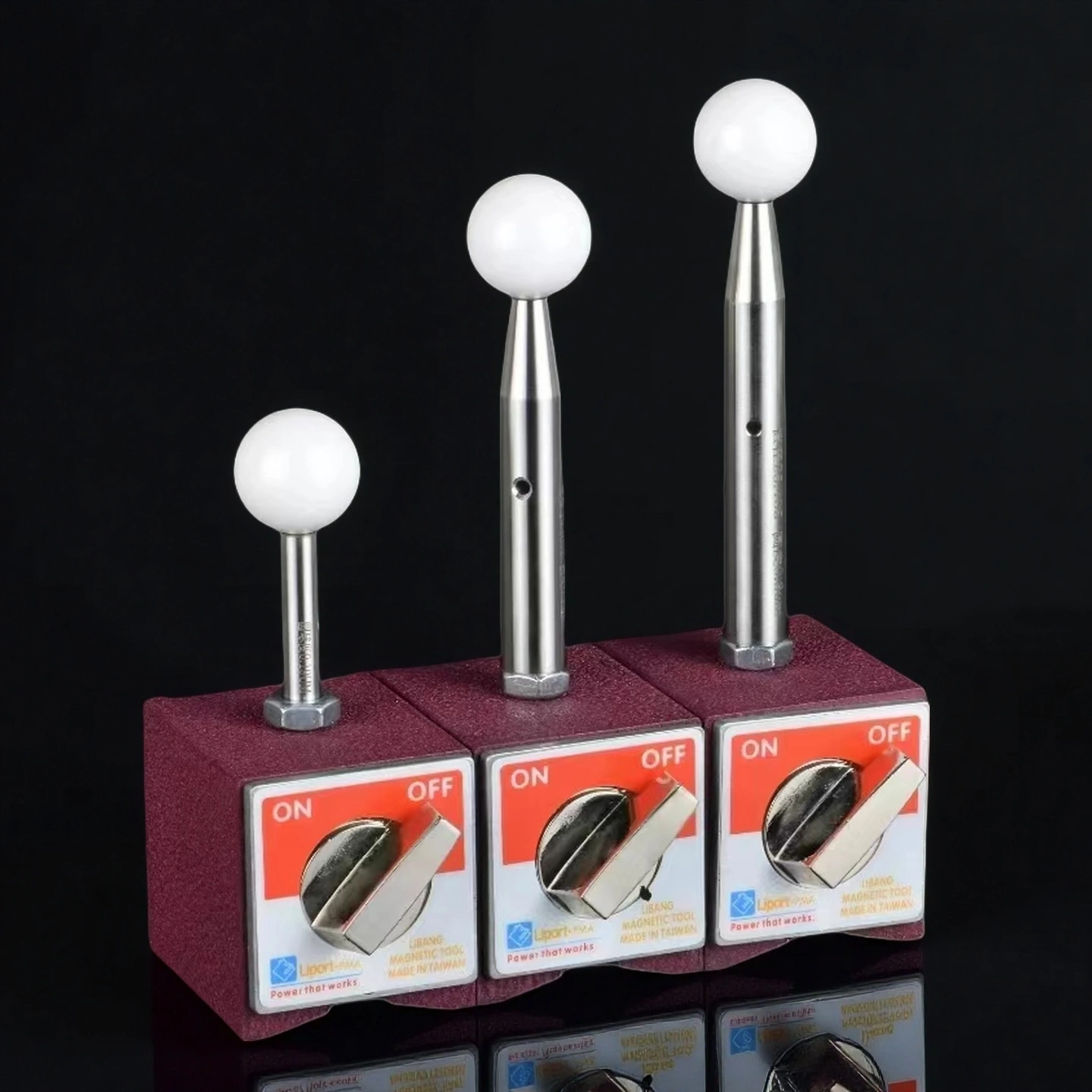
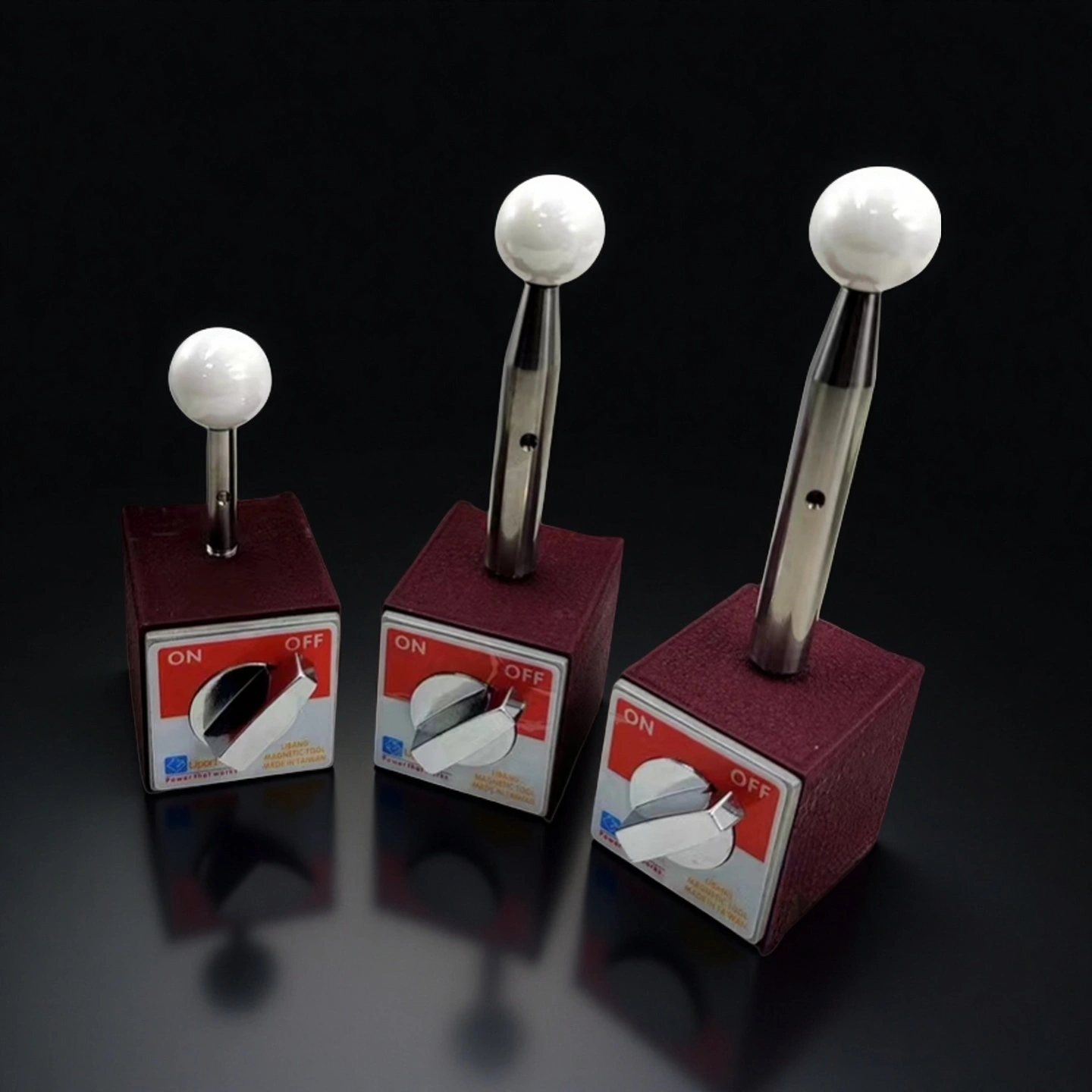
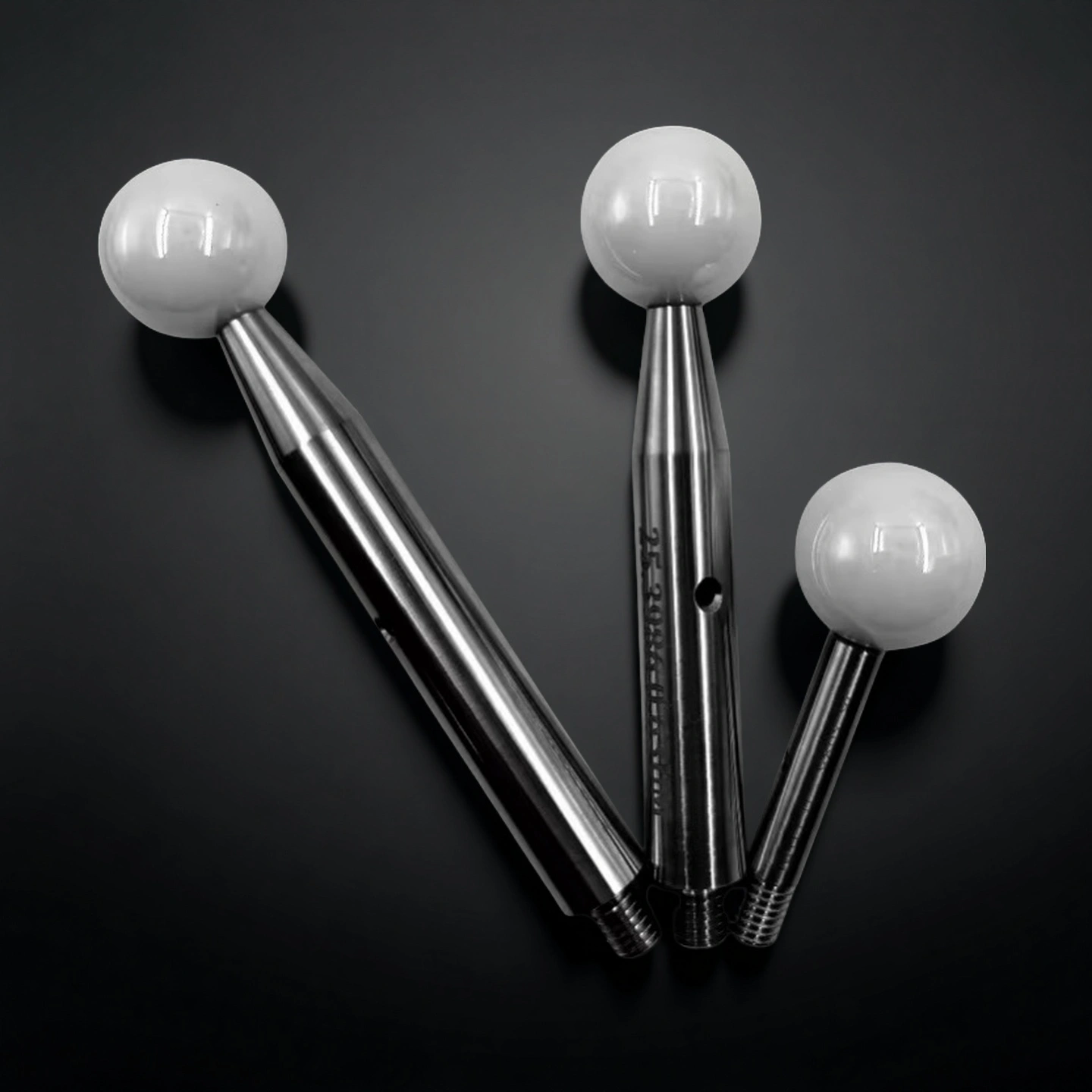
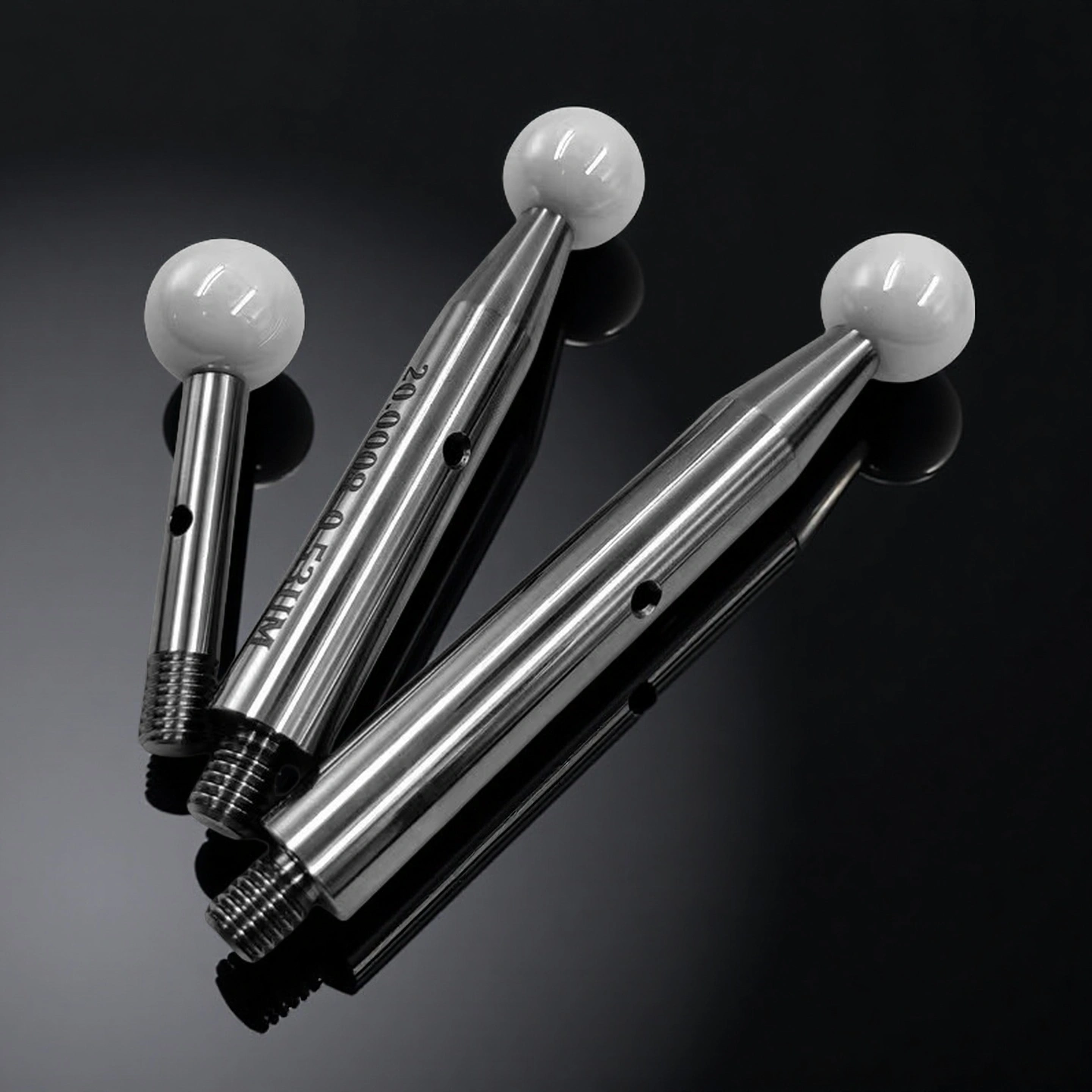
ADCERAX Zirconia Ceramic Gage Balls are engineered for dimensional measurement tasks that require long-term precision, chemical stability, and non-magnetic behavior. These spheres perform reliably in high-friction, corrosive, and thermally demanding environments. Commonly used in metrology equipment, aerospace tooling, and precision machining setups, they maintain shape and hardness far longer than conventional steel balls. Zirconia Ceramic Gage Balls are well-suited for manufacturers and calibration labs that demand consistent surface finish and material durability.
Features of Zirconia Ceramic Gage Balls
- Non-magnetic and electrically insulating: The Y-TZP body helps avoid magnetic or conductive reference-ball interference in CMMs and electronic inspection fixtures.
- Rust-free and chemically stable: Resists corrosion from coolants, cleaning agents and typical laboratory media between calibration cycles.
- High hardness—typically 1200 HV: Wear resistance helps the ball retain its form under repeated probe or fixture contact.
- Dimensional stability: The dense Y-TZP body supports repeatable reference geometry in daily metrology use.
- Three sphericity options: 1, 0.5 or 0.25 µm for 20 mm and 25.4 mm balls, with short, medium or long rods and bases.
- Engineering-reviewed customization: Custom diameters, grades and mounting interfaces are evaluated from drawings or existing-part photos before quotation.
Technical Properties for Zirconia Ceramic Gage Balls
Zirconia Ceramic Gage Balls are engineered to deliver stable performance across demanding metrology conditions, including high-temperature exposure, corrosive media, and mechanical loading. Their consistent composition and microstructural density allow them to meet stringent requirements in precision calibration, especially in aerospace, machining, and cleanroom environments.
| Property | Specification |
|---|---|
| Material Composition | Yttria-Stabilized Zirconia (Y-TZP) |
| Density | ≥ 6.0 g/cm³ |
| Vickers Hardness | ≥ 1200 HV |
| Fracture Toughness (K₁c) | ≥ 7 MPa·m¹ᐟ² |
| Compressive Strength | > 2000 MPa |
| Flexural Strength | 900–1200 MPa |
| Maximum Working Temperature | ≥ 1000°C |
| Thermal Conductivity (20°C) | 2.5 W/m·K |
| Coefficient of Thermal Expansion | 10.5 × 10⁻⁶ /K |
| Electrical Resistivity (RT) | > 10¹⁴ Ω·cm |
| Acid Resistance (10% HCl, 72 hrs) | < 0.01% mass loss |
| Alkali Resistance (10% NaOH, 72 hrs) | < 0.01% mass loss |
| Water Absorption | 0% |
| Magnetic Permeability | ≈ 1.00000 (non-magnetic) |
Specifications of Zirconia Ceramic Gage Balls
| Three-coordinate Zirconia Ceramic Gage Balls | ||||
| Model | Measurement Ball Specifications mm (Material: Zirconia)(±0.001mm) | Sphericity µm | Base | Remarks |
| AT-YHG-CLQ001 | 20 | 1µm | Short Rod with Base | 5-axis machine |
| AT-YHG-CLQ002 | 20 | 1µm | Medium Rod with Base | 5-axis machine |
| AT-YHG-CLQ003 | 20 | 1µm | Long Rod with Base | 5-axis machine |
| AT-YHG-CLQ004 | 20 | 0.5µm | Short Rod with Base | 5-axis machine |
| AT-YHG-CLQ005 | 20 | 0.5µm | Medium Rod with Base | 5-axis machine |
| AT-YHG-CLQ006 | 20 | 0.5µm | Long Rod with Base | 5-axis machine |
| AT-YHG-CLQ007 | 20 | 0.25µm | Short Rod with Base | 5-axis machine |
| AT-YHG-CLQ008 | 20 | 0.25µm | Medium Rod with Base | 5-axis machine |
| AT-YHG-CLQ009 | 20 | 0.25µm | Long Rod with Base | 5-axis machine |
| AT-YHG-CLQ010 | 25.4 | 1µm | Short Rod with Base | 5-axis machine |
| AT-YHG-CLQ011 | 25.4 | 1µm | Medium Rod with Base | 5-axis machine |
| AT-YHG-CLQ012 | 25.4 | 1µm | Long Rod with Base | 5-axis machine |
| AT-YHG-CLQ013 | 25.4 | 0.5µm | Short Rod with Base | 5-axis machine |
| AT-YHG-CLQ014 | 25.4 | 0.5µm | Medium Rod with Base | 5-axis machine |
| AT-YHG-CLQ015 | 25.4 | 0.5µm | Long Rod with Base | 5-axis machine |
| AT-YHG-CLQ016 | 25.4 | 0.25µm | Short Rod with Base | 5-axis machine |
| AT-YHG-CLQ017 | 25.4 | 0.25µm | Medium Rod with Base | 5-axis machine |
| AT-YHG-CLQ018 | 25.4 | 0.25µm | Long Rod with Base | 5-axis machine |
How to Choose the Right Reference Sphere Material
Reference sphere material should be selected according to the measuring environment, contact mode, mounting system and documentation requirements—not hardness alone.
| Material option | Choose it when | Check before ordering |
|---|---|---|
| Y-TZP Zirconia | Non-magnetic, electrically insulating, corrosion-resistant and wear-resistant performance is required. | Confirm ball diameter, sphericity, surface finish, mounting interface and traceability requirements. |
| Hardened Steel | Standard availability, lower initial cost and compatibility with an established steel-based setup are priorities. | Consider magnetism, electrical conductivity and corrosion control. |
| Silicon Nitride | Lower mass or greater resistance to impact and dynamic contact is important. | Verify contact behavior, mounting compatibility and the required calibration procedure. |
| Ruby or Sapphire | The existing probe or measurement system is designed around these materials. | Do not assume direct interchangeability; confirm the complete assembly and application requirements. |
| OEM-Certified Sphere | The equipment manufacturer or quality procedure requires an approved, traceable reference sphere. | Retain the OEM route unless an alternative supplier and requalification process have been formally approved. |
Packaging of Zirconia Ceramic Gage Balls
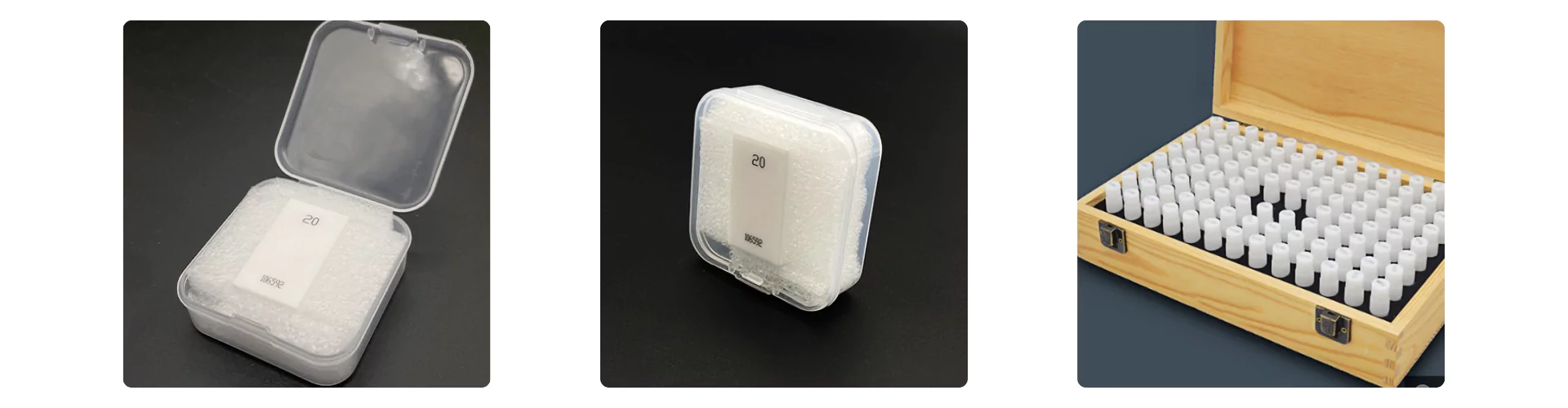
Zirconia Ceramic Gage Balls are securely packed in individual anti-static cases with foam inserts to prevent surface damage during transport. Each unit or set is labeled for traceability and arranged in compact storage boxes for easy handling. For bulk orders, They are organized in sealed wooden cases with protective inserts to ensure safe logistics and on-site calibration readiness.