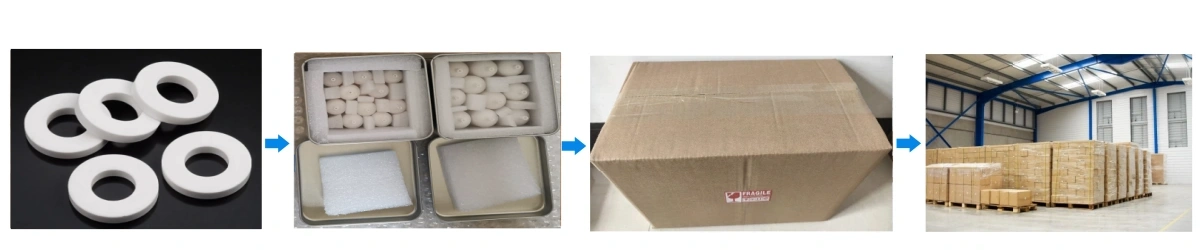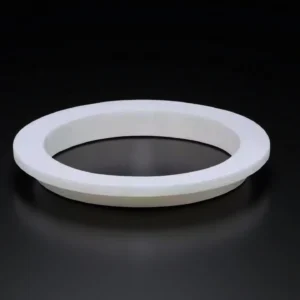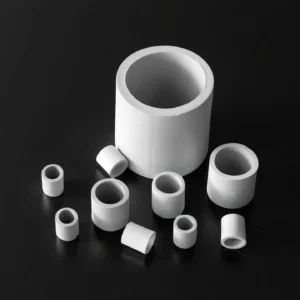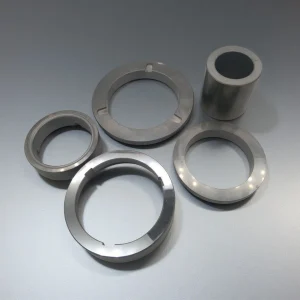
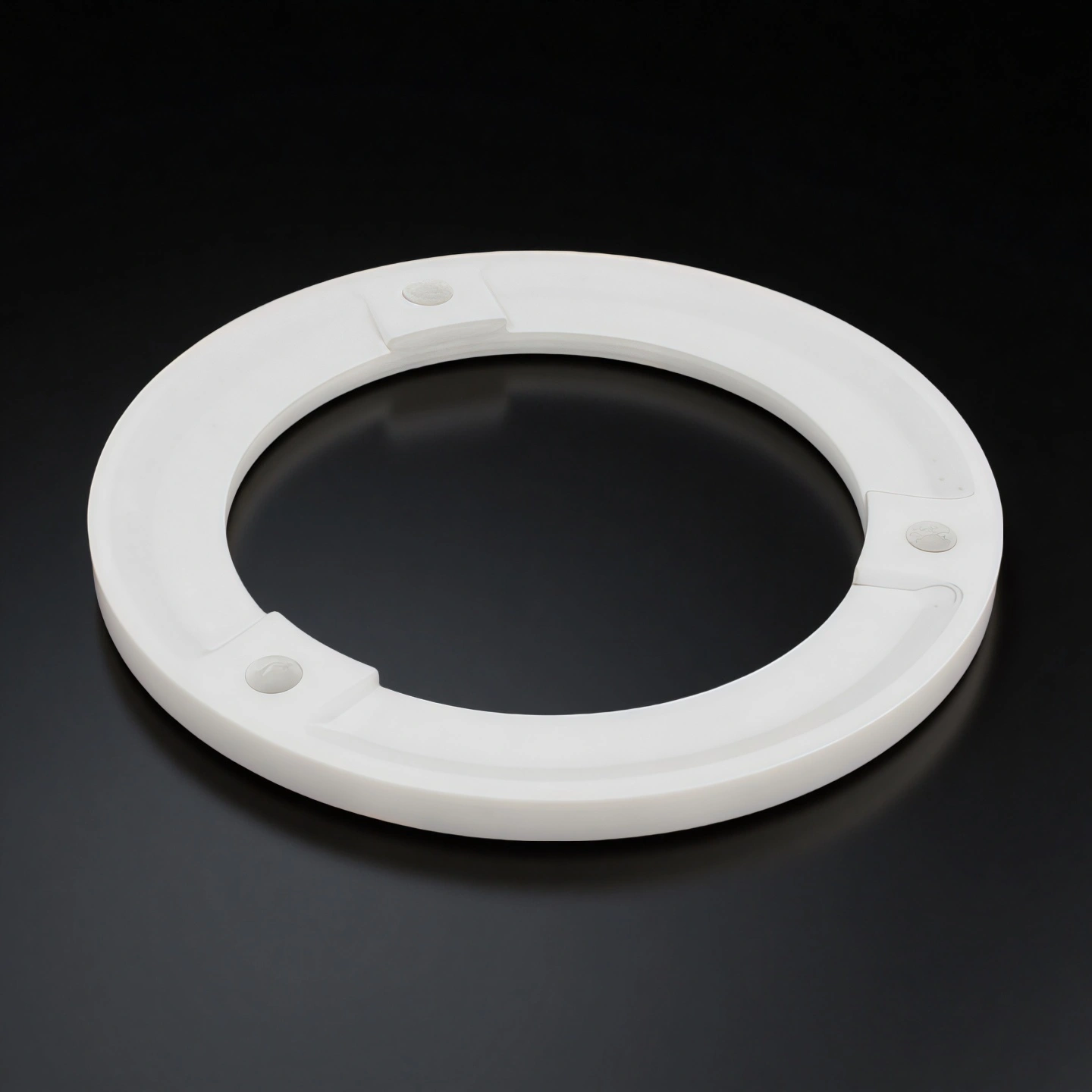
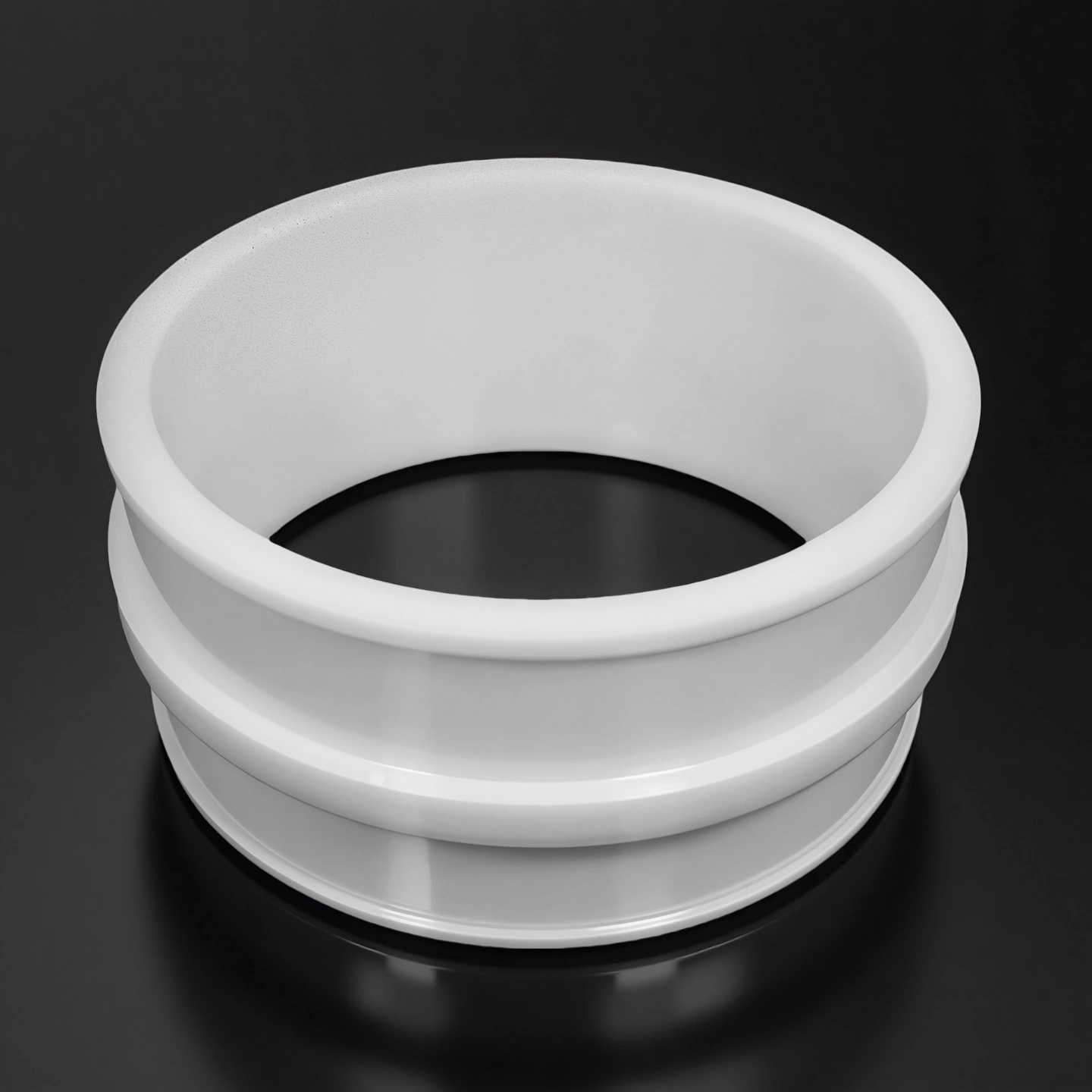
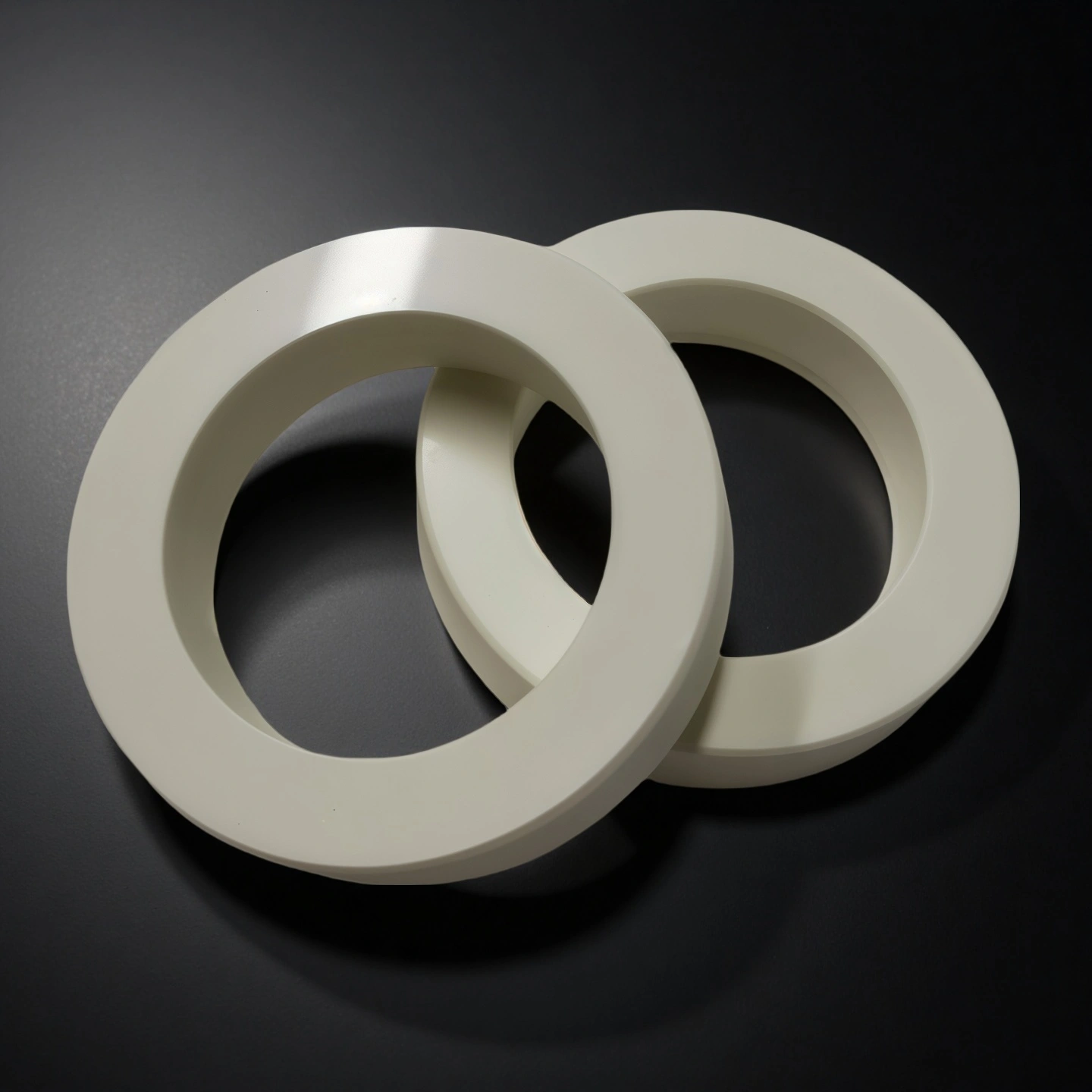
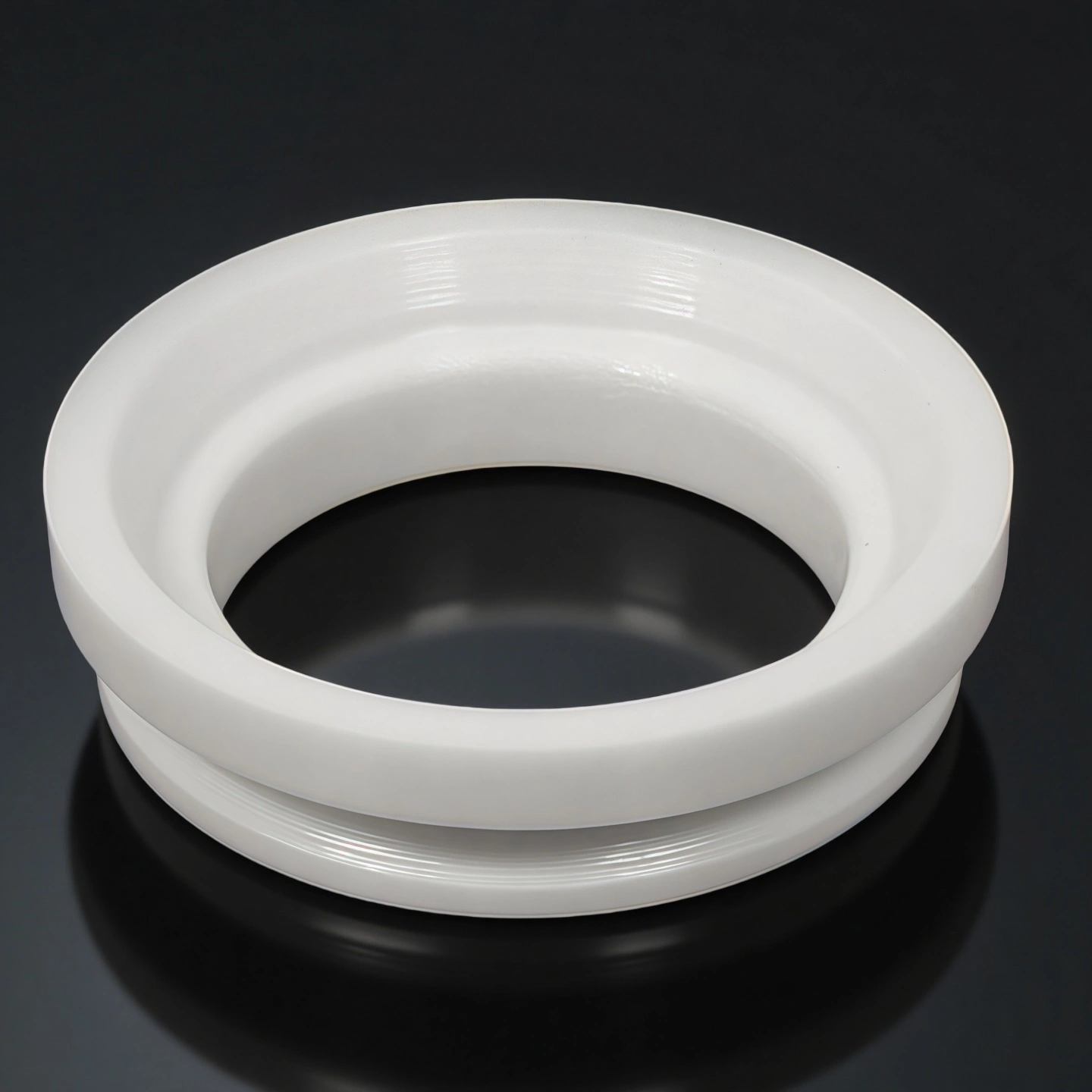
ZTA ceramic rings are ring-shaped parts made from zirconia toughened alumina — a composite where zirconia particles improve the fracture toughness of an alumina matrix. Compared to standard alumina rings, ZTA rings handle edge loads and assembly contact better without chipping as easily at thin walls, chamfers, or bore edges.
These rings are used as guide rings, seat rings, spacers, and custom annular components in pumps, valves, wire and fiber guides, and general industrial machinery. Each ring is machined to drawing, with OD, ID, height, face geometry, and surface finish defined for the specific assembly position and mating parts.
ZTA Ring Specifications
| ZTA Ring | |||
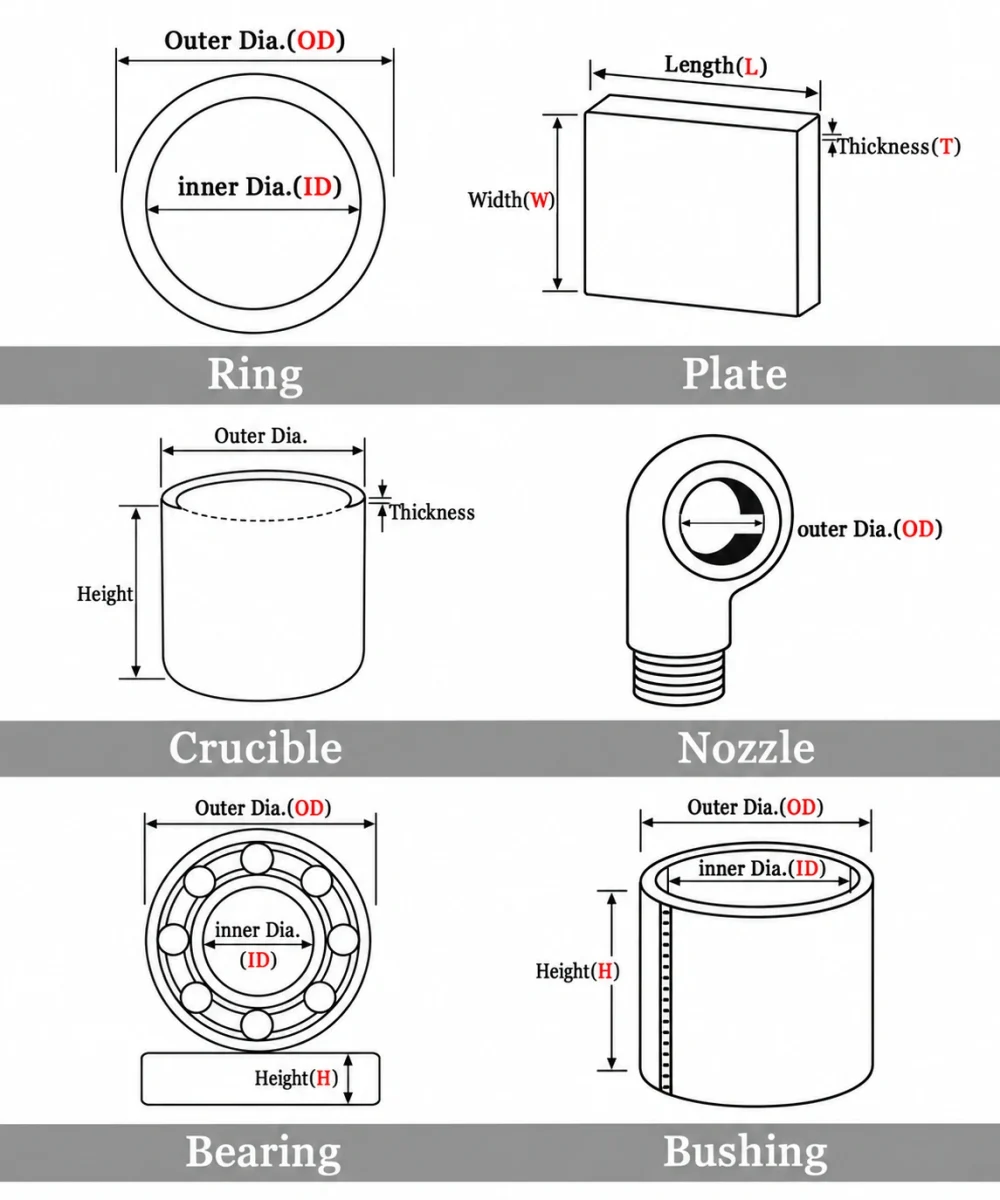
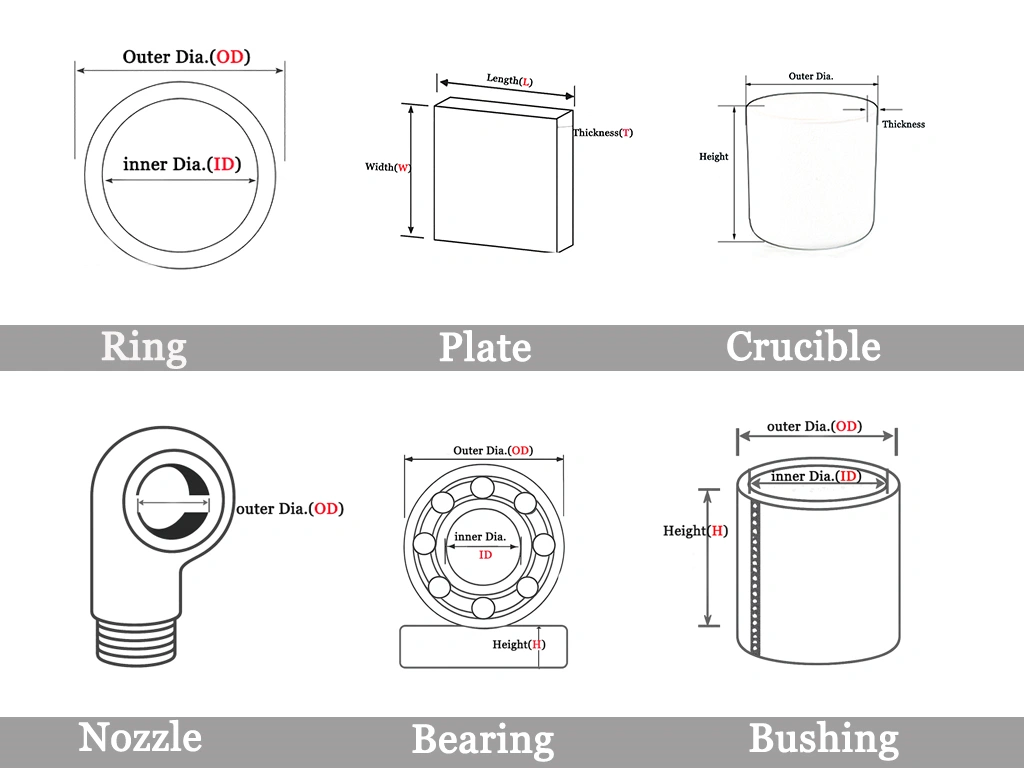
| Item No. | Outer Diameter(mm) | Inner Diameter (mm) | Height(mm) |
| AT-ZTA-H1001 | 30 | 20 | 15 |
Zirconia Toughened Alumina Rings Properties
ADCERAX produces ZTA ring parts in five grades. Select the grade by forming route and part geometry, then confirm fit, face, and performance requirements with engineering.
| Property | Unit/basis | AD-ZTA-10 | AD-ZTA-20-P | AD-ZTA-20-CIM | AD-ZTA-40 |
|---|---|---|---|---|---|
| Forming / part form | — | Injection molded parts | Dry-pressed / CIP plate | Injection molded parts | Injection molded parts |
| Bulk density | g/cm³, typical selection value | 4.25 | 4.20 | ≥4.25 | ≥4.80 |
| Flexural strength | MPa, typical selection value | ≥700 | 500 | ≥800 | 650 |
| Vickers hardness | HV, typical value | 2000 | 1650 | 1800 | 1500 |
| Color | Visual | White | White / off-white | White | White |
How to Select a ZTA Ceramic Ring
1. Define the Ring’s Function
Identify whether you need a guide ring, seat ring, spacer or custom annular part. State what it contacts: a shaft, housing, wire, fiber or mating ring.
2. Confirm Dimensions and Features
Reference size AT-ZTA-H1001: OD 30 × ID 20 × H 15 mm.
For custom rings, provide:
- OD, ID and height.
- Grooves, steps and bore features.
- Critical tolerances, thin walls and internal corners.
3. Select the Material Grade
- AD-ZTA-10 / AD-ZTA-20-CIM: Injection-moulded structural parts.
- AD-ZTA-20-P: Flat or near-flat parts machined from plate stock.
- AD-ZTA-40: A higher-density grade to review against the application.
Confirm the grade and forming route against the ring geometry and service requirements.
4. Specify the Working Surfaces
Mark the contact faces, bore and OD separately. Define roughness, flatness and finish where required; non-contact areas may use an as-ground finish.
For sealing applications, agree the surface requirements with the mating face and leakage target.
5. Describe the Operating Conditions
Provide the mating material, load, speed, temperature and lubrication. For slurry or dry-running service, include particle size, solids content and the expected duration of dry contact.
6. Send a Drawing or Sample
Start with a drawing, dimensioned sketch or sample, plus the quantity. Include OD × ID × H, critical contact faces and mating-part details. Final pricing follows confirmation of the geometry, material and inspection requirements.
ZTA vs. Alumina vs. Zirconia Rings
Alumina — For Cost-Sensitive, Low-Impact Applications
A practical choice for thick-walled rings under stable loads. It offers hardness and chemical resistance at a generally lower cost. Thin edges need careful design and handling.
ZTA — For Improved Resistance to Edge Chipping
Consider ZTA when alumina rings chip or crack during assembly or service. It combines wear resistance with improved toughness, making it an option for thin walls and detailed features.
Y-TZP Zirconia — For Higher Toughness Requirements
Consider Y-TZP for demanding contact loads, thin sections or finely polished faces. It generally costs more; suitability for hot water or steam requires a hydrothermal-aging review.
Confirm the material against the ring geometry, mating surface and operating conditions.
Zirconia Toughened Alumina Ring Packaging
Each Ring is encased in a polystyrene foam box and vacuum-sealed to prevent surface chipping during transit.