
Compact Ceramic Strips for Wear, Spacing and Support
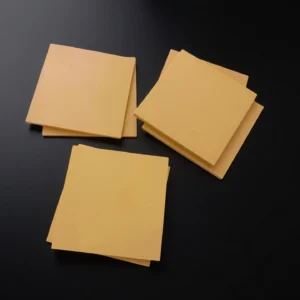
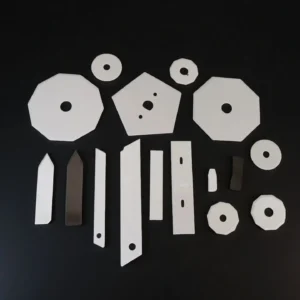
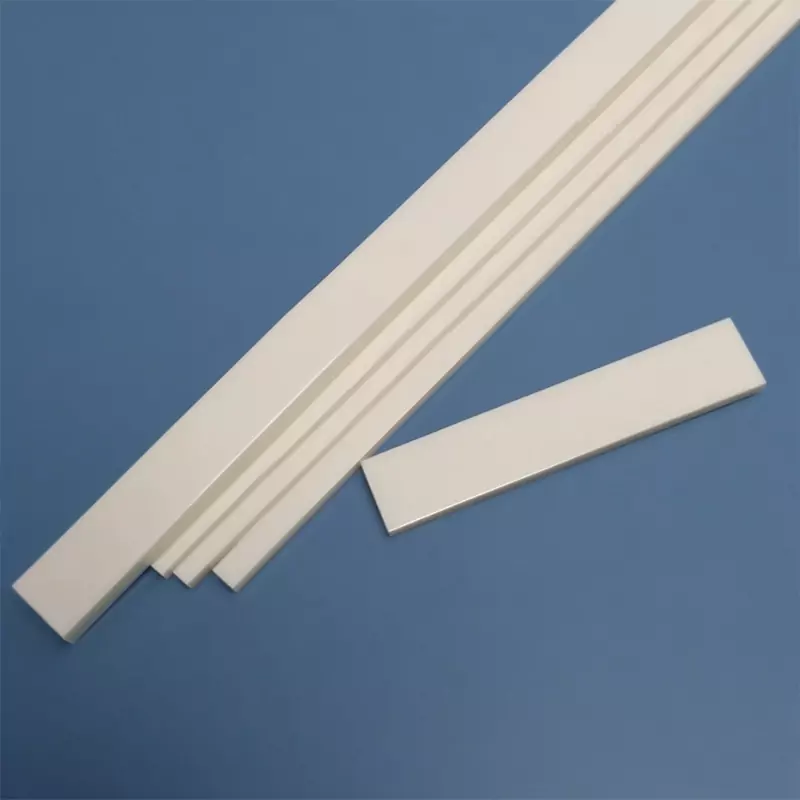
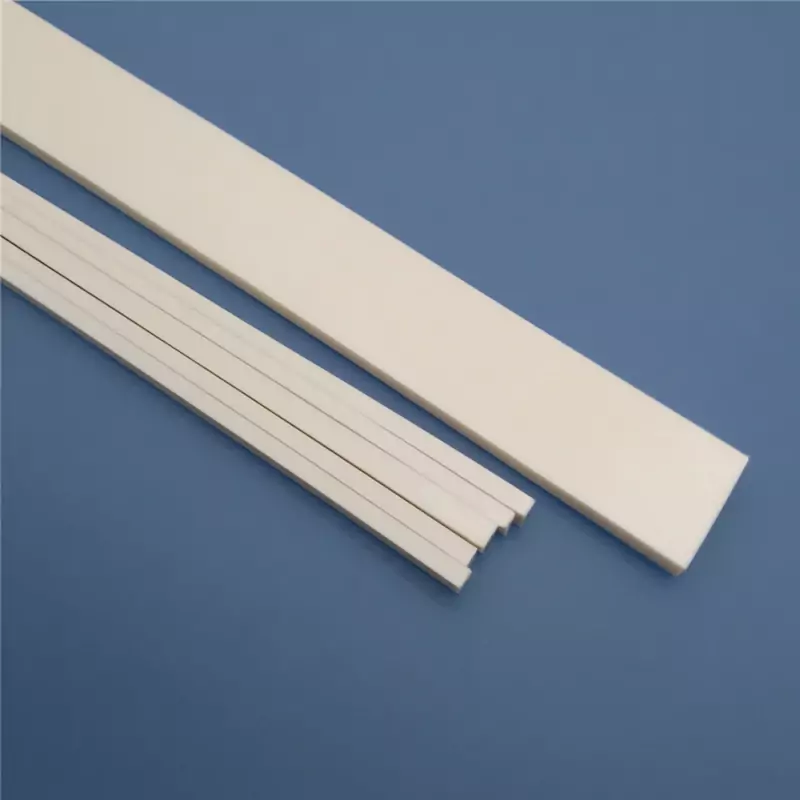
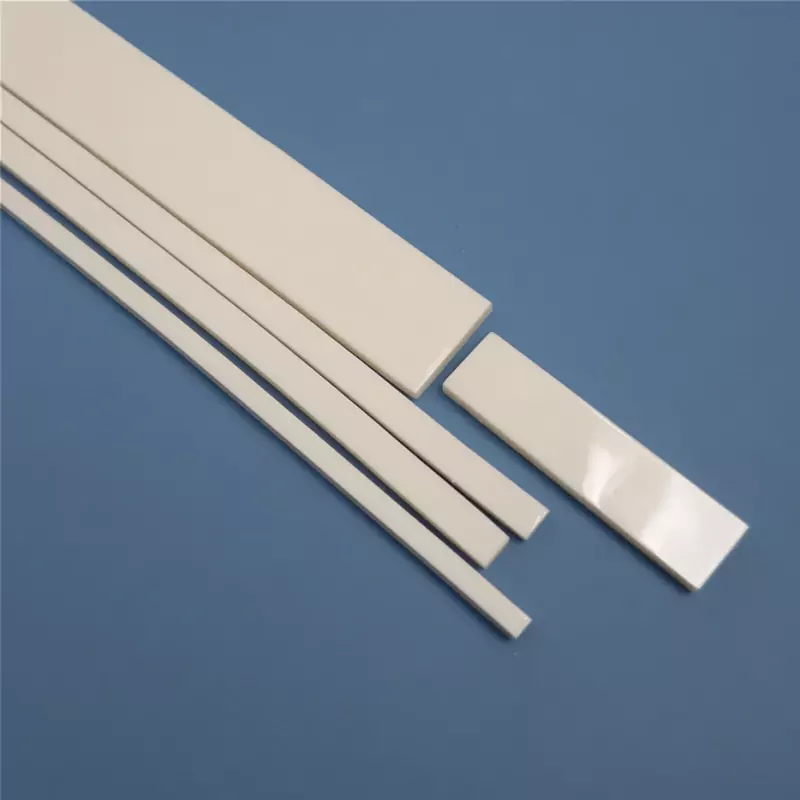
ADCERAX zirconia ceramic flat strips are used in industrial assemblies that require a thin, dense and wear-resistant ceramic component with stable dimensions. They can be used as guide strips, wear pads, spacer bars, insulation supports, positioning rails and custom mechanical inserts.
Compared with many metal strips, zirconia ceramic provides better resistance to wear, corrosion and electrical conduction. Compared with alumina ceramic, zirconia can offer higher fracture toughness, which is useful when the strip has thin sections, mounting holes, slots or edge-contact areas.
ADCERAX can review standard and drawing-based flat strips according to size, thickness, surface finish, edge profile, flatness, hole position, slot geometry, contact load, operating temperature and mating material. For replacement projects, an existing sample, drawing or failure description can help confirm whether zirconia ceramic is suitable.
Engineering Concerns Solved by Zirconia Ceramic Flat Strip
Wear Resistance Under Sliding Contact
Zirconia ceramic flat strips are suitable for sliding, guiding and positioning areas where metal parts may wear quickly or generate contamination. The dense ceramic surface helps reduce abrasive wear in selected mechanical and fluid-handling assemblies.
Better Toughness for Thin Strip Geometry
Flat strips often have thin sections, edges, holes or slots. Zirconia ceramic is selected when higher toughness is needed to reduce the risk of chipping compared with more brittle ceramic options.
Chemical Stability in Process Environments
ZrO2 ceramic can support chemical-processing and clean-fluid applications where corrosion resistance is important. Final suitability should be reviewed according to medium composition, temperature, concentration and cleaning method.
Electrical Insulation Support
Zirconia ceramic flat strips can be used as insulating spacers or support strips in selected electrical and equipment assemblies. Dielectric performance should be confirmed according to the complete design, voltage condition and surface requirement.
Custom Machining for Installation Fit
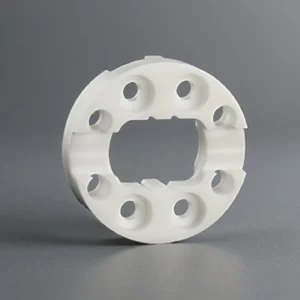
ADCERAX can review hole layout, slots, chamfers, grooves, edge rounding and surface finish according to the drawing. This helps the ceramic strip fit into the existing fixture, guide rail, holder or support structure.
Typical Properties of Zirconia Ceramic Flat Strip
The following values are typical reference data for zirconia ceramic flat strips. Final performance should be reviewed according to zirconia grade, strip size, surface finish, load condition, temperature and chemical environment.
| Property | Specification | Engineering Meaning |
|---|---|---|
| Density | > 6.0 g/cm³ | High density helps support a dense ceramic structure with low porosity and stable mechanical behavior. |
| Flexural Strength | > 600 MPa | High bending strength is important for flat strips used as supports, spacers or guide components under mechanical load. |
| Vickers Hardness | > 1200 HV | High hardness helps reduce surface wear when the strip contacts metal, plastic, powder or abrasive media. |
| Fracture Toughness | ~6–10 MPa·m¹/² | Higher toughness helps reduce chipping risk around thin edges, holes, slots and narrow strip sections. |
| Thermal Expansion | 10.5 × 10⁻⁶ /K | Thermal expansion should be reviewed when the strip is assembled with metal parts or exposed to heating and cooling cycles. |
| Maximum Working Temperature | 1000–1200 °C | This range supports selected high-temperature equipment use, but final suitability should be checked by grade, load and thermal cycling condition. |
| Dielectric Constant | 9–12 | This value supports selected insulation applications where the strip separates conductive parts or acts as a ceramic support. |
| Dielectric Loss at 1 MHz | < 0.002 | Low dielectric loss is useful for selected electrical or electronic assemblies that require stable insulation behavior. |
| Aging Resistance | >1000 h stable in corrosive atmosphere | Aging resistance helps the strip maintain stable performance in selected corrosive or chemically exposed environments. |
| Acid / Alkali Resistance | Stable in 10% HCl and NaOH solutions | Chemical resistance helps reduce corrosion risk in cleaning, fluid contact and chemical-processing applications. |
Standard and Custom Sizes for Zirconia Ceramic Flat Strip
The following sizes are reference options for zirconia ceramic flat strips. Drawing-based sizes can be reviewed when the application requires a specific width, thickness, length, hole layout, slot geometry, edge condition or surface finish.
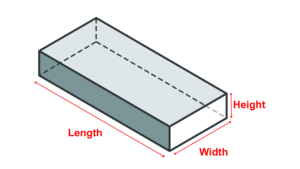
| Zirconia Bar | |||
| Item No. | Width(mm) | Height(mm) | Length(mm) |
| AT-YHG-T1001 | 5 | 1.5 | 25 |
| AT-YHG-T1002 | 7.7 | 1.5 | 63.5 |
| AT-YHG-T1003 | 10 | 2 | 30 |
| AT-YHG-T1004 | 10.5 | 3 | 191 |
| AT-YHG-T1005 | 12 | 6 | 85 |
| AT-YHG-T1006 | 12.8 | 3 | 204 |
| AT-YHG-T1007 | 14.5 | 2.5 | 67 |
| AT-YHG-T1008 | 15 | 3 | 75 |
| AT-YHG-T1009 | 20 | 6 | 180 |
| AT-YHG-T1010 | 25 | 6 | 225 |
| AT-YHG-T1011 | 50 | 5 | 200 |
| AT-YHG-T1012 | 1-50mm (Customize) | 1-20mm (Customize) | 10-600mm (Customize) |
Packaging of Zirconia Ceramic Flat Strip
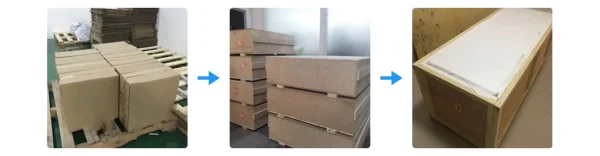
Each zirconia ceramic flat strip should be separated and protected to reduce edge impact, surface scratches and ceramic-to-ceramic contact during transport. Thin strips, polished surfaces, holes and sharp edges may require foam positioning, face protection or reinforced outer packaging according to order requirements.