
Match the Geometry to the Function
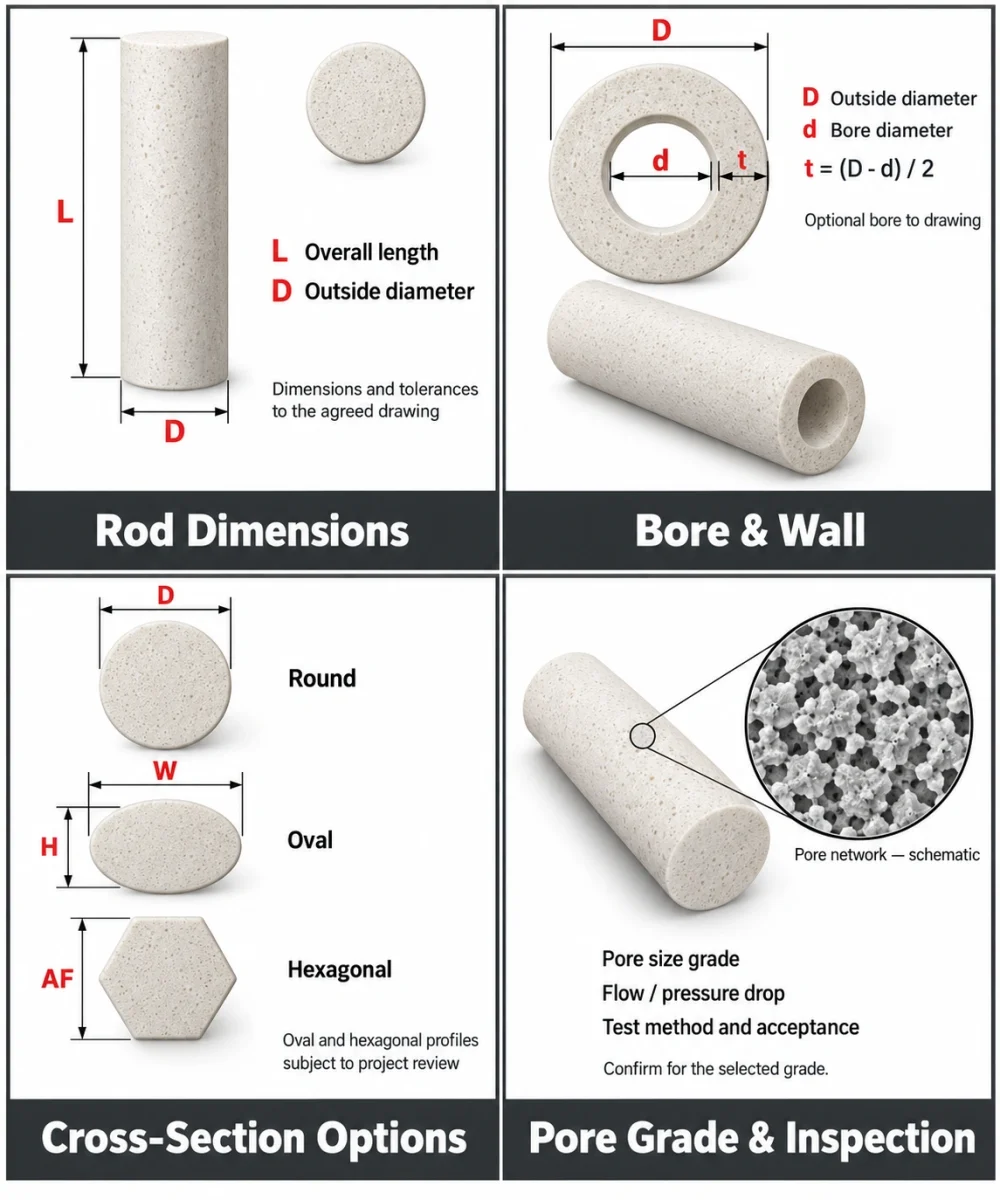
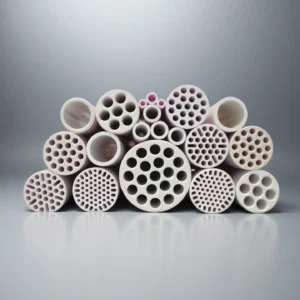
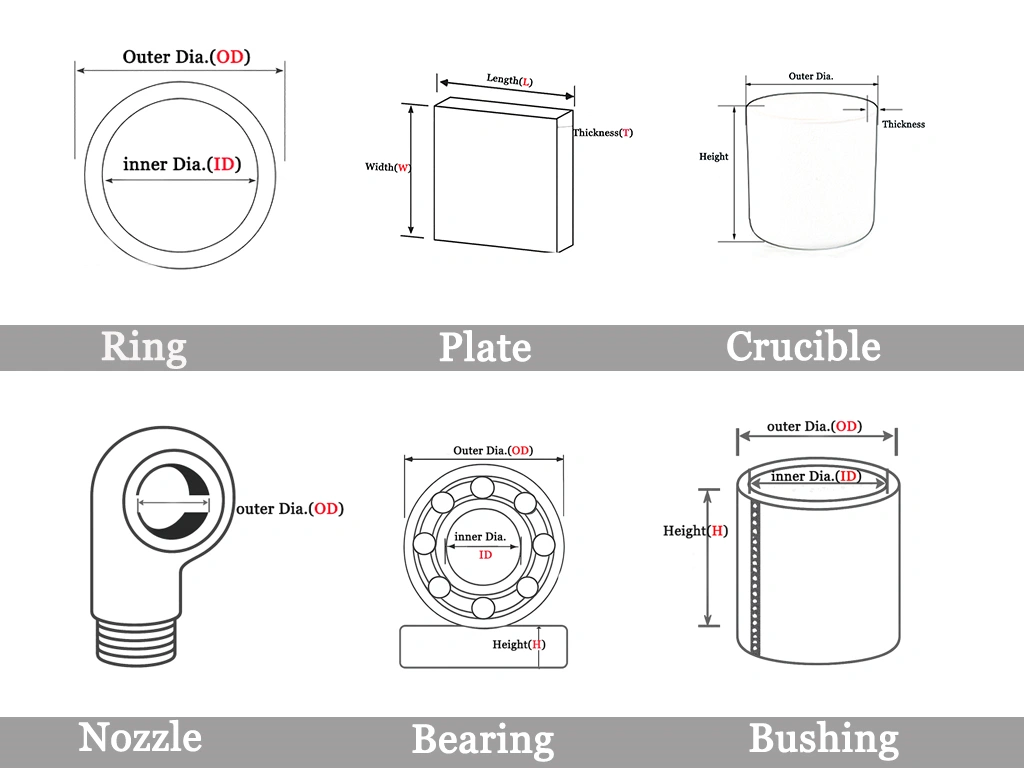
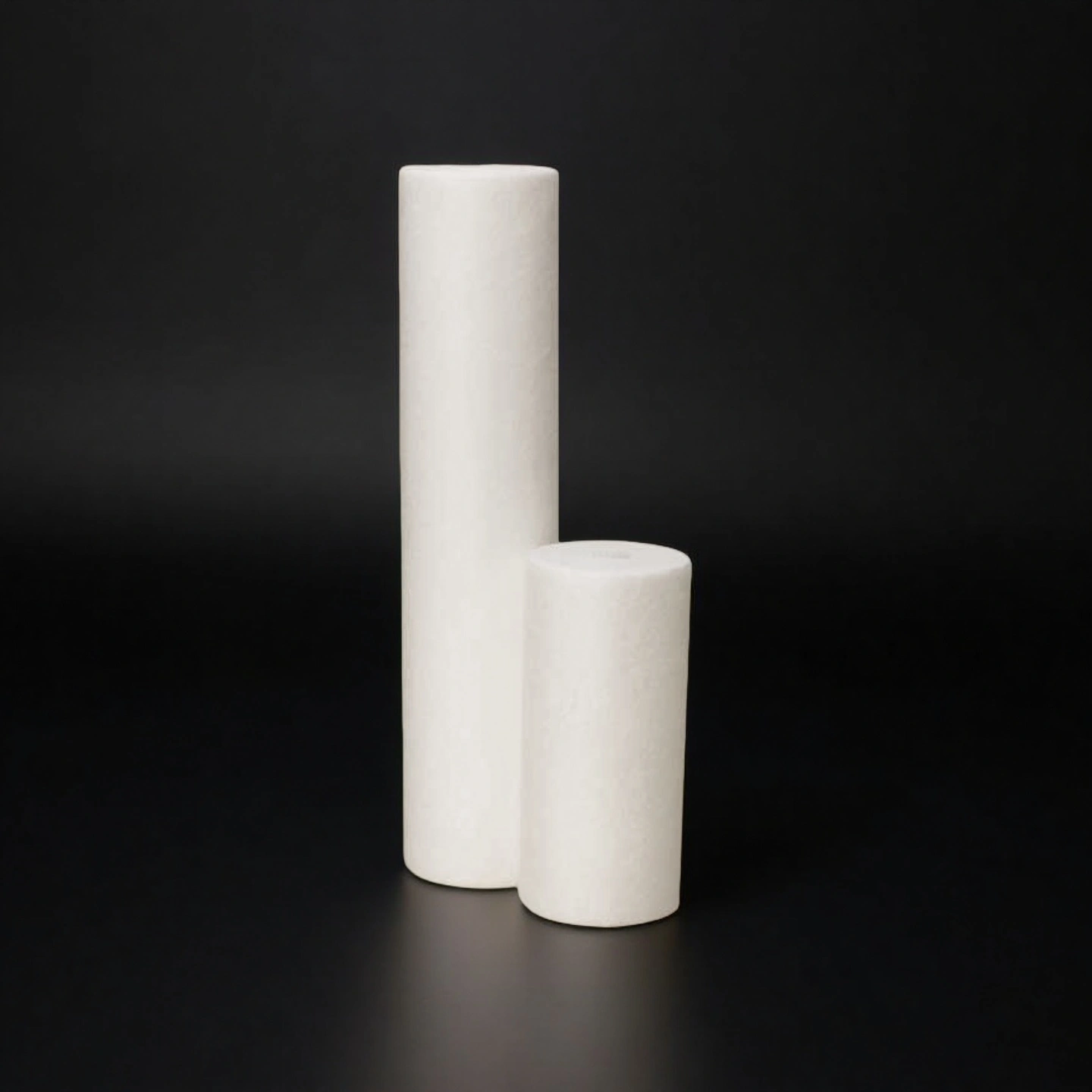
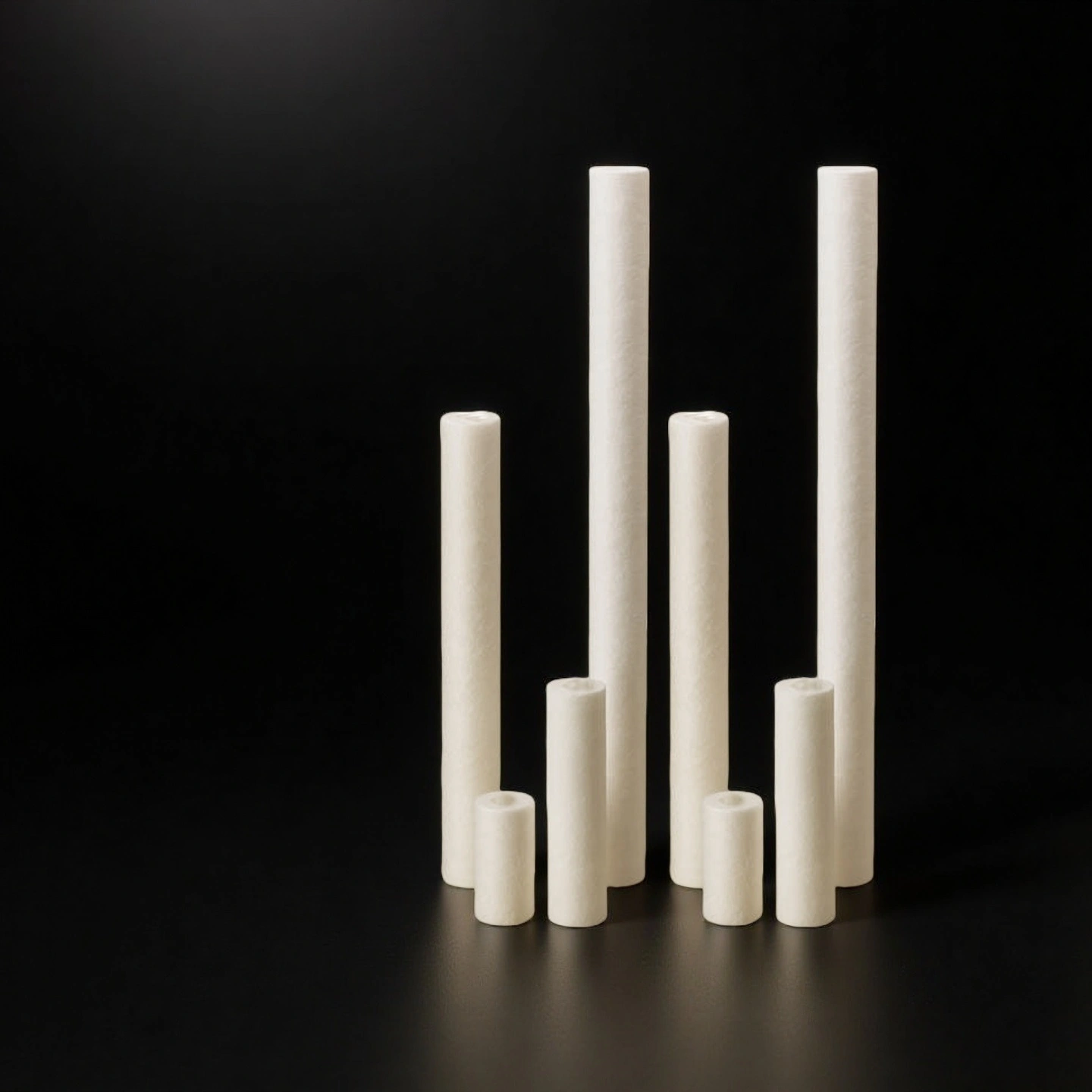
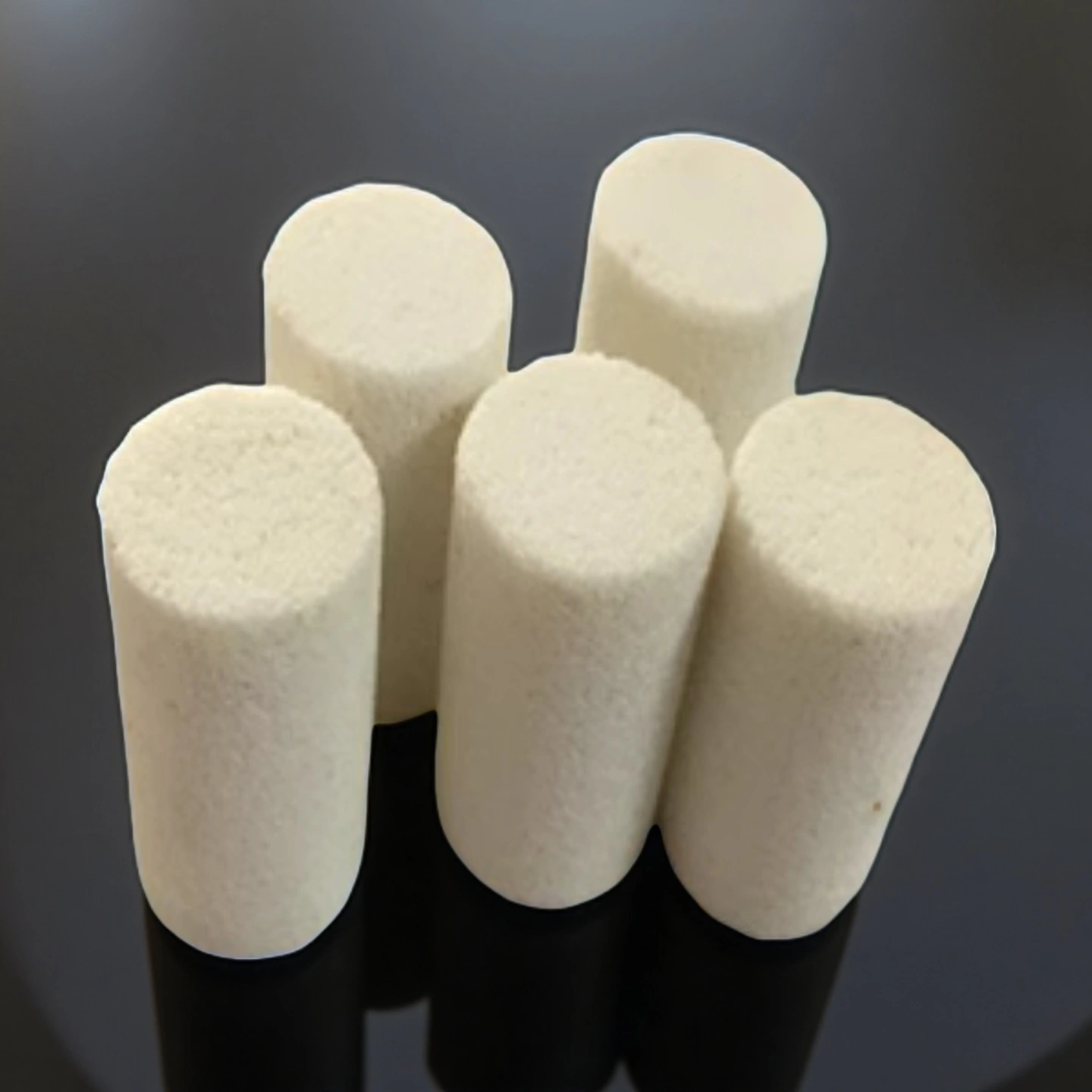
A porous alumina rod is an Al₂O₃-based ceramic component whose pore structure is selected around the intended fluid or capillary task. The drawing brings together the external shape, any axial channel, end details, supported surfaces and the working flow path. Purity, pore metric and porosity are agreed for the selected component — they are not a single specification shared by every rod we supply.
Specifications of Porous Alumina Ceramic Rod
| Item | Diameter(mm) | Length(mm) | Bore Diameter(μm) | Purity(%) | MOQ (pcs) |
| AT-FT-7001 | 20 | 10 | 0.8 | 98 | 10 |
| AT-FT-7002 | 25 | 15 | 0.8 | 98 | 10 |
| AT-FT-7003 | 36 | 15 | 0.8 | 98 | 10 |
| AT-FT-7004 | 30 | 48 | 0.8 | 98 | 10 |
| AT-FT-7005 | 35 | 10 | 1 | 98 | 10 |
| AT-FT-7006 | 40 | 20 | 0.8 | 98 | 10 |
| AT-FT-7007 | 60 | 35 | 0.8 | 98 | 10 |
| AT-FT-7008 | 80 | 48 | 0.8 | 98 | 10 |
How to Choose a Porous Alumina Rod
If you are specifying a process duty
Start with the job the rod does: filtering a stream, spreading gas through a vessel, or moving liquid by capillary action. Then fix the pore metric and the flow you need at your working pressure difference. We will confirm the pore definition and the test method before quoting, so the number on the drawing matches the number you measure.
If you are building a test or sampling setup
Cleanliness and repeatability usually decide the choice before pore size does. Tell us the fluid, the sample volume, the fixture and whether autoclaving or solvent cleaning is involved. We will agree the extractables check and the dimensional tolerance that keep your runs comparable.
If you are integrating the rod into equipment
Fit comes first. Send the mating bore, seal type, support points and the direction of flow. We will review the end details, the sealing faces and the tolerance on the features that actually locate the part — not a blanket tolerance across the whole rod.
If you are buying for a project or a repeat order
A trial quantity and an approved drawing revision are the two things that make a repeat order safe. Start with the model or the drawing you have; the detailed specification can be completed during review. Your accepted drawing stays the reference for every later batch.
Porous Alumina Compared with Other Ceramic Options
| Material | Typical applications | Key selection points |
|---|---|---|
| Porous alumina | Filtration, gas diffusion and wicking | Suitable when gas or liquid must pass through the part. Balance flow, chemical compatibility, temperature and cost. |
| Dense alumina | Structural support, component positioning and electrical insulation | Suitable when through-flow is not required. Use the specifications for dense alumina. |
| Porous zirconia | Applications prioritizing toughness, sealing-face wear resistance and frequent handling | Review zirconia-specific pore and strength data, together with chemical compatibility and cost. |
| Porous silicon carbide | Chemically demanding or high-temperature applications | Confirm compatibility with the actual medium and operating conditions. Molten-metal contact requires specific review. |
Choose according to the medium, temperature, cleaning conditions, flow requirements and mechanical loads. Pore and strength data should be checked separately for each material and grade.
Porous Alumina Rod Packing
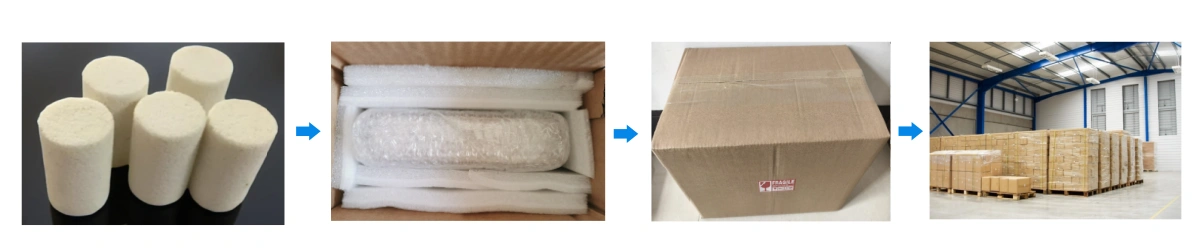
- Individually wrapped in plastic film to prevent contamination
- Protected with foam and packed in export-grade cartons
- Bulk shipments secured in wooden crates
- Optional accessories: alumina plates, porous filters, ceramic wicks