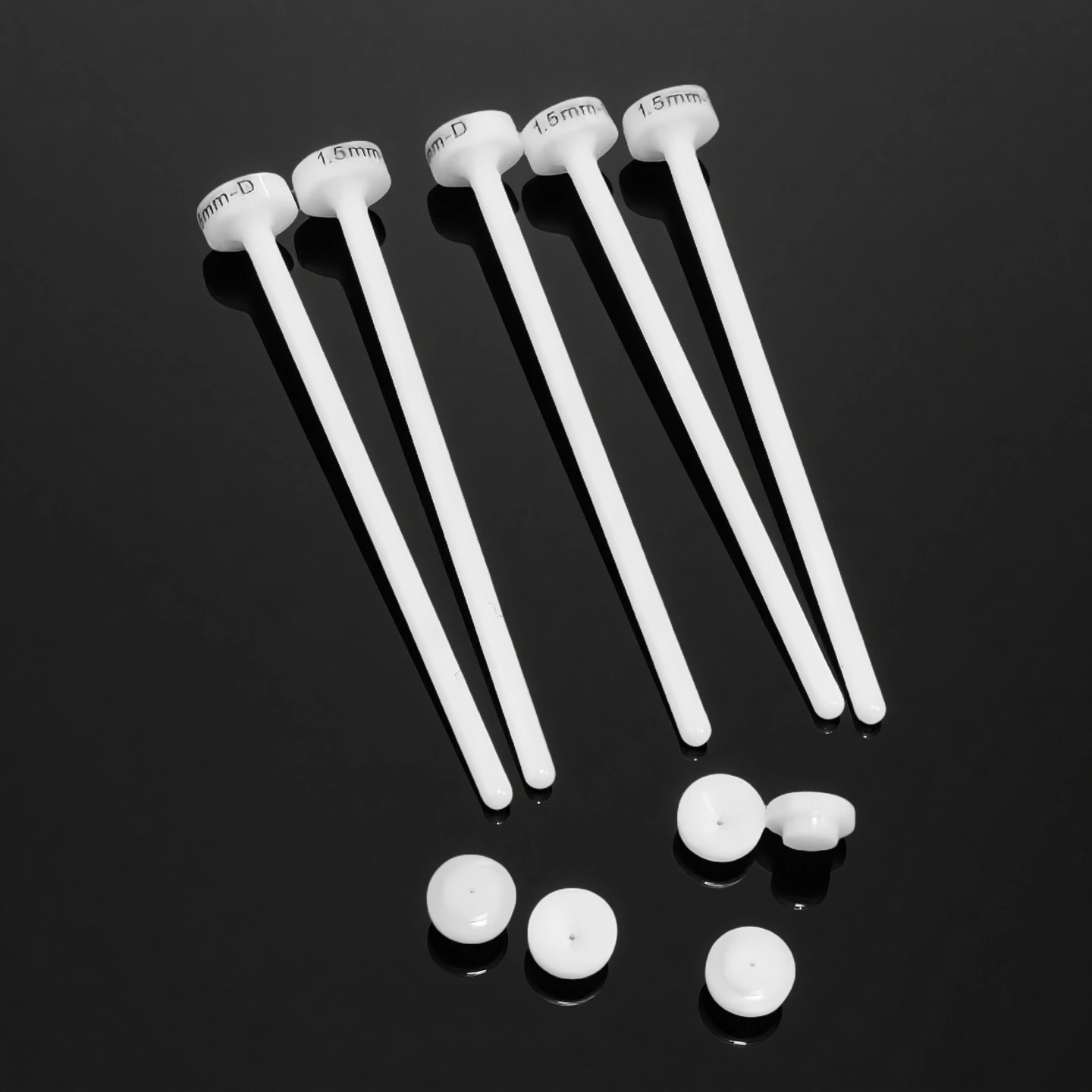
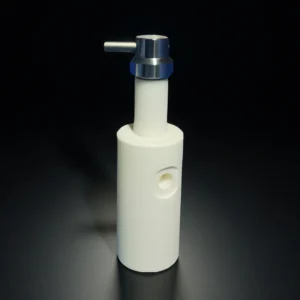
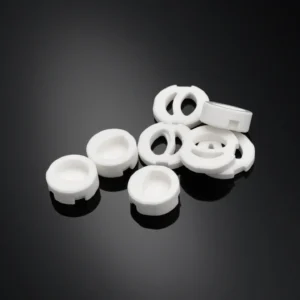
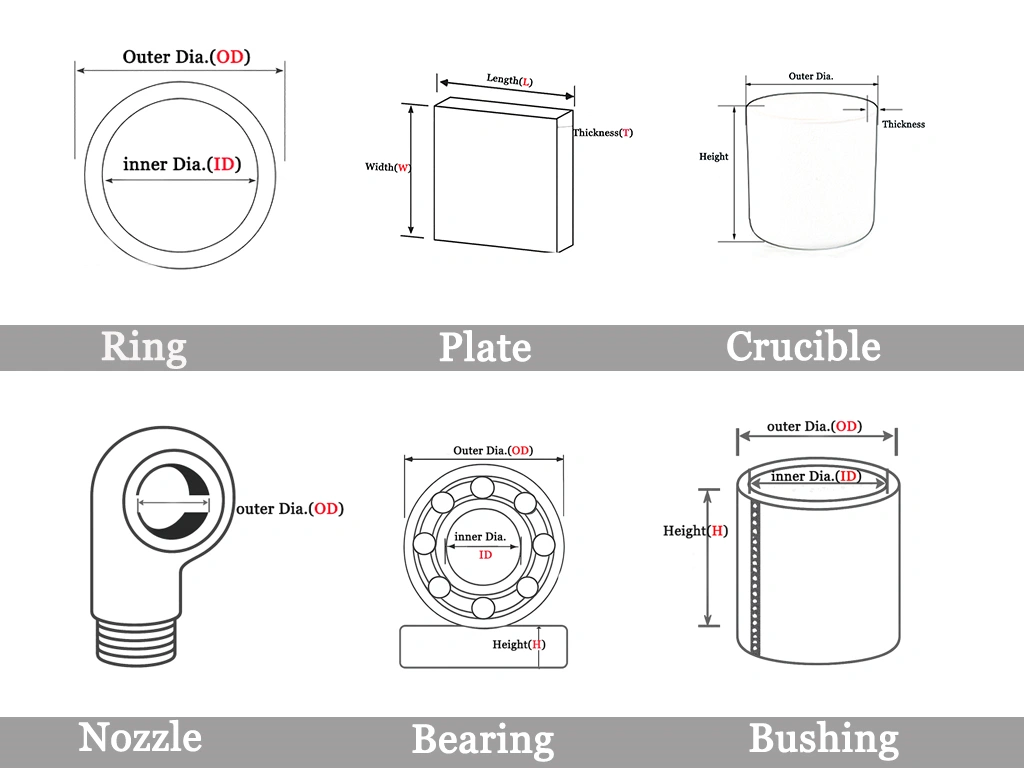
ADCERAX Zirconia Ceramic Piezoelectric Injector Pin is a drawing-based ZrO2 ceramic component used in selected piezo jet dispensing valves, adhesive dosing systems, conductive paste jetting and precision fluid-control assemblies. The dense zirconia ceramic body provides hardness, toughness and chemical stability for repeated contact inside compact valve structures.
Zirconia Jet Valve Tappet — Catalogue Reference and Custom Supply
|
Zirconia Ceramic Piezoelectric Injector Pin |
|
Item No. |
Length(mm) |
Width(mm) |
|
AT-YHG-YD1001 |
Customize |
↓Download Size Guide
Typical Properties of Zirconia Ceramic Piezoelectric Injector Pins
The zirconia ceramic piezoelectric injector pin combines high hardness, toughness and chemical stability to support precision dispensing in piezo jet valve systems.
| Property |
Unit / basis |
3Y-TZP (AD-ZRO-3Y) |
| ZrO₂ + HfO₂ content |
wt%, nominal |
94.4 |
| Stabilizer |
Y₂O₃, wt% |
5.0–5.5 (about 3 mol%) |
| Bulk density |
g/cm³, typical |
6.00–6.08 |
| Vickers hardness |
GPa, typical |
12.5 |
| Flexural strength (MOR) |
MPa, 20 °C, typical |
800–1000 |
| Compressive strength |
MPa, 20 °C, typical |
2000–3500 |
| Young's modulus |
GPa, 20 °C, typical |
200–220 |
| Fracture toughness, KIC |
MPa·m½, 20 °C, typical |
7.2–9.0 |
| Coefficient of linear thermal expansion |
10⁻⁶/K, 40–80 °C |
11 |
| Thermal conductivity |
W/(m·K), 20 °C, typical |
3 |
| Volume resistivity |
Ω·cm, 20 °C |
>10¹⁴ |
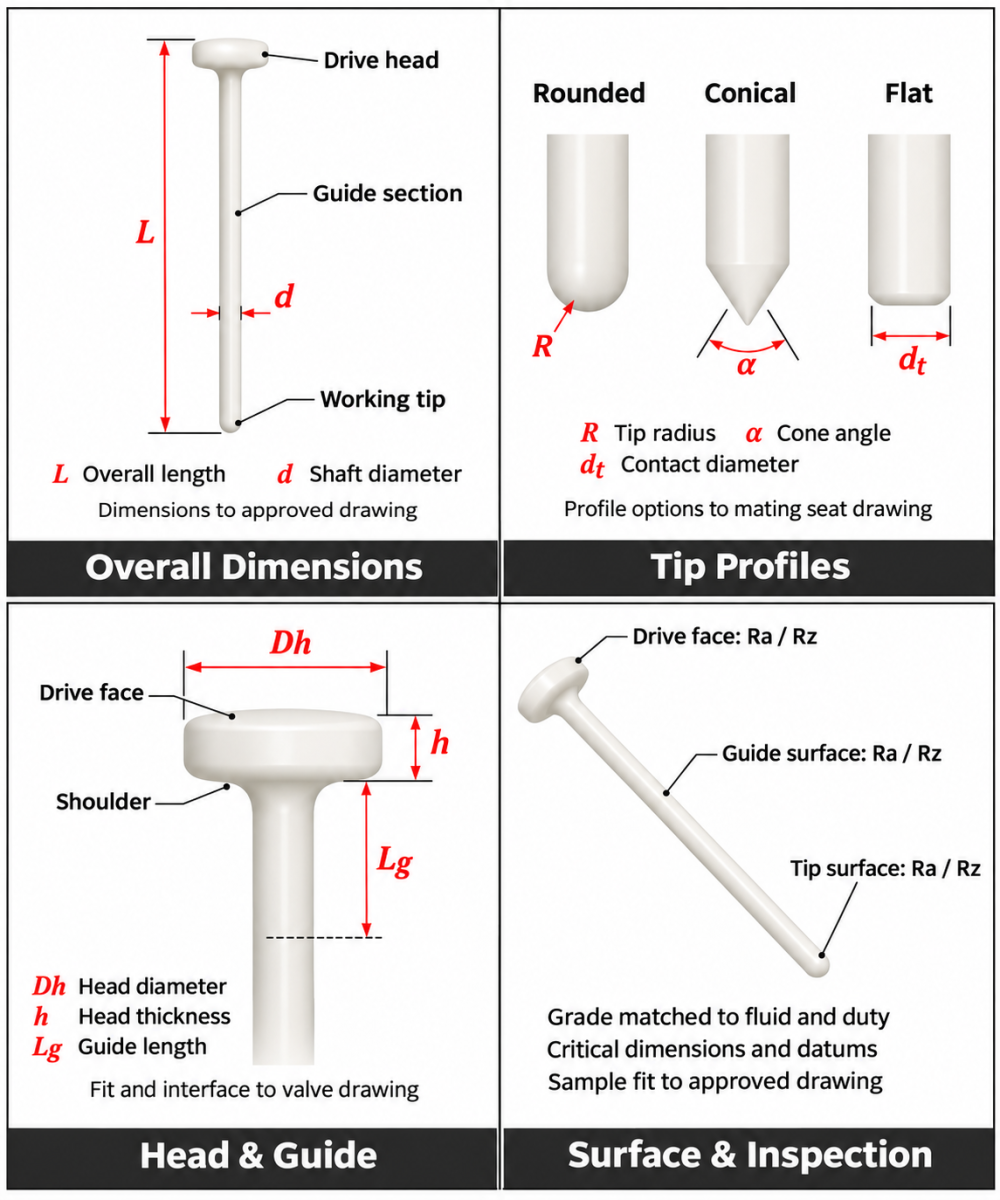
How to Select the Right Tappet for Your Valve
- Working Tip
Specify the profile, contact diameter, cone angle or radius, and sealing edges.
- Guide Section
Define diameter, length, fit, tolerances and surface roughness.
- Drive Interface
Provide the assembly drawing and joining method. Review load transfer and thermal expansion.
- Material Selection
State the fluid, cleaning media, filler type and size, temperature and contact frequency.
- Project Type
For new designs, provide drawings and inspection requirements. For replacements, provide the existing pin and valve version.
Zirconia vs. Other Pin Materials
Zirconia
- Best for: Abrasive or chemically active fluids, including silver paste and filled adhesives.
- Key point: Hard, smooth surfaces resist wear at the tip and guide contact.
- Check: Chemical compatibility with the specific fluid and zirconia grade.
Alumina
- Best for: Cost-sensitive applications with milder conditions or dry contact.
- Key point: An option when material cost is a priority.
- Check: Impact loads, thermal cycling and available tip geometries.
Metal Pins
- Best for: Standard valve designs using stainless steel or hardened metal.
- Key point: Retain metal when it meets the service requirements.
- Check: Fluid compatibility, abrasive wear and metal-contamination limits.
Selection checklist: Fluid chemistry, filler content, tip and guide contact conditions, and cleanliness requirements.
Packaging of Zirconia Ceramic Piezoelectric Injector Pin
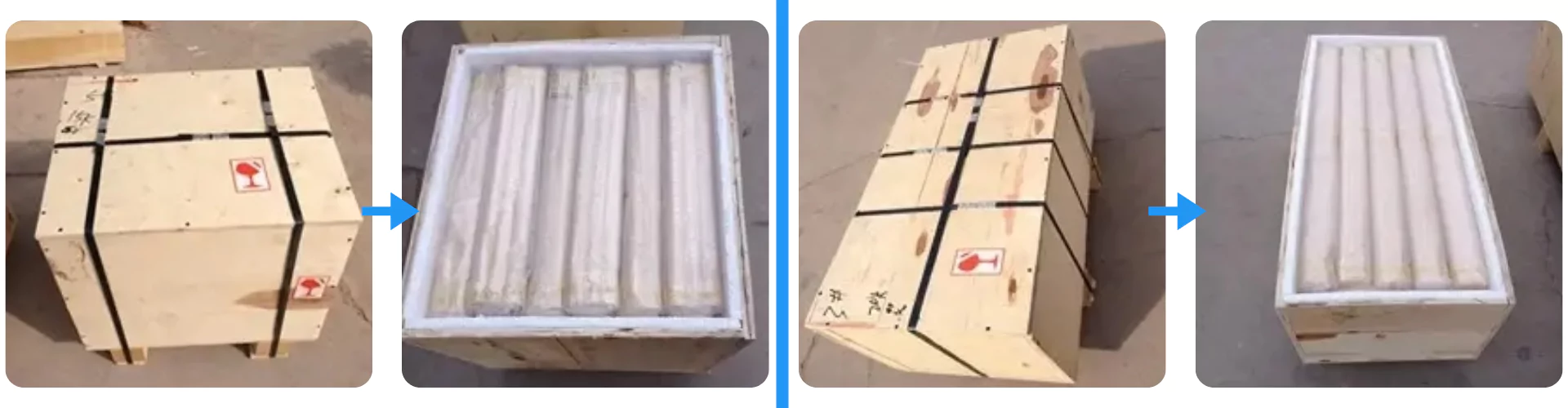
- Individual protection: Each tappet is packed separately to protect the polished tip, transition edges and small diameters during transit.
- Special requirements: Surface protection, orientation and labeling needs are agreed in the quotation.
Applications of Zirconia Ceramic Piezoelectric Injector Pins
Zirconia ceramic piezoelectric injector pins are used in precision dispensing systems where a small valve component must keep stable contact behavior under repeated motion. Typical applications include adhesive dosing, conductive paste jetting, resin dispensing and selective coating processes. Final suitability should be confirmed according to the valve design, fluid viscosity, filler content, cleaning method and expected service cycle.
-
Electronics Adhesive Dispensing
Compare: Adhesive type, viscosity at process temperature, tip and seat geometry, and cleaning medium.
Observe: Contact condition, dispensing output and residue after cleaning.
-
Conductive Paste / Filled Adhesive Jetting
Compare: Filler type, particle-size distribution, solids content and mating surfaces.
Observe: Tip and seat wear, particle trapping and output changes during the trial.
-
Resin / Encapsulation Projects
Compare: Fluid formulation, guide fit, temperature and valve operating settings.
Observe: Assembly fit, leakage and dispensing consistency under the specified conditions.
-
Selective Coating / Micro-dosing
Compare: Fluid and cleaning media, pin profile, drive interface and operating sequence.
Observe: Contact surfaces and output throughout operating and cleaning cycles.
For comparable trial results: Record valve stroke, preload and drive settings alongside the fluid data for each pin sample.
Usage Notes for Zirconia Jet Valve Tappets
These notes help reduce installation damage, contamination and early wear in service. The tappet (piezo injector pin) is a precision ceramic component — handling, installation and cleaning should follow the valve manufacturer's operating procedure.
-
Handling and Storage
1. Handle the pin individually and avoid impact with hard tools or other ceramic parts; the polished tip and transition edges are the most sensitive areas.
2. Keep the pin in its original packaging until installation to protect it from dust, oil and surface contamination.
3. Do not mix used and unused pins in the same tray — edge contact can damage polished surfaces and transfer residue.
-
Installation Check
1. Compare the pin with the drawing before assembly: overall length, tip profile, working diameter and guide section.
2. Inspect the mating nozzle, seat and guide for wear before replacing only the pin — replacing the pin alone against a worn seat rarely restores stable dispensing.
3. Never force the pin into position; misalignment can cause chipping, unstable jetting or uneven guide wear.
-
Operation Review
1. Confirm fluid compatibility before running aggressive solvents, high-filler pastes or new chemicals; resistance depends on the specific fluid and zirconia grade.
2. During early production runs, monitor dispensing output, clog frequency and tip condition, and record the valve settings used.
3. If leakage, abnormal noise or unstable jetting appears, stop the valve and inspect the pin, seat and nozzle together — single-part checks often miss the cause.
-
Cleaning and Replacement
1. Use the valve maker's approved cleaning media and avoid mechanical scraping on polished ceramic surfaces.
2. Replace the pin when visible chips, surface grooves or dimensional wear begin to affect dispensing stability.
3. Keep replacement records — fluid, filler content, operating settings and wear condition — to support service-life estimates and the next maintenance decision.