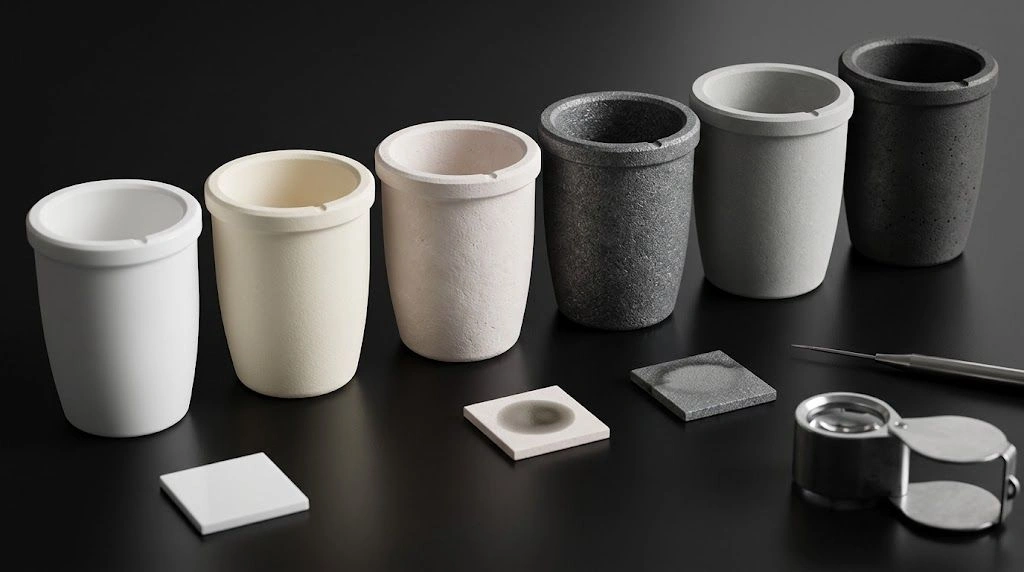
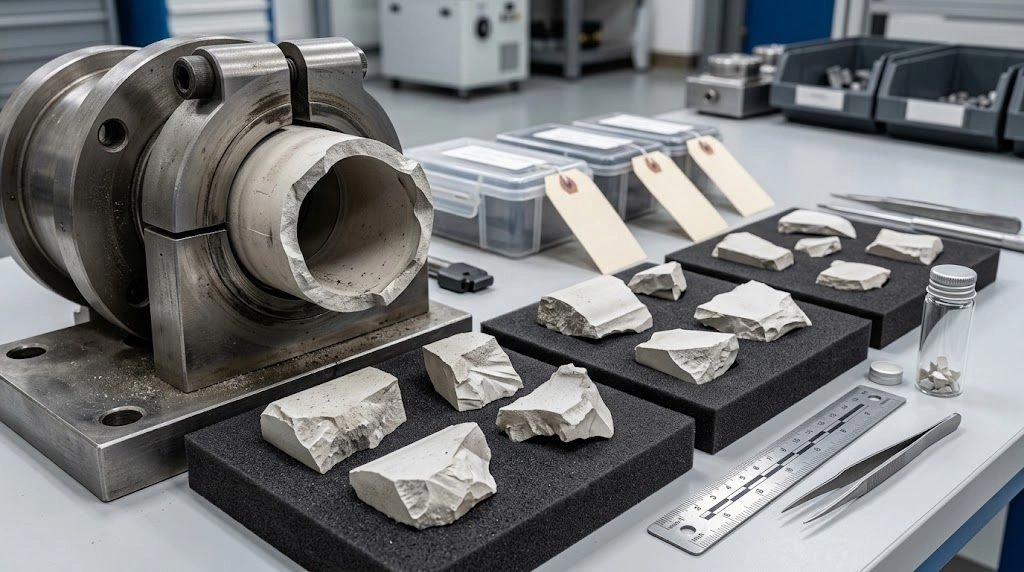
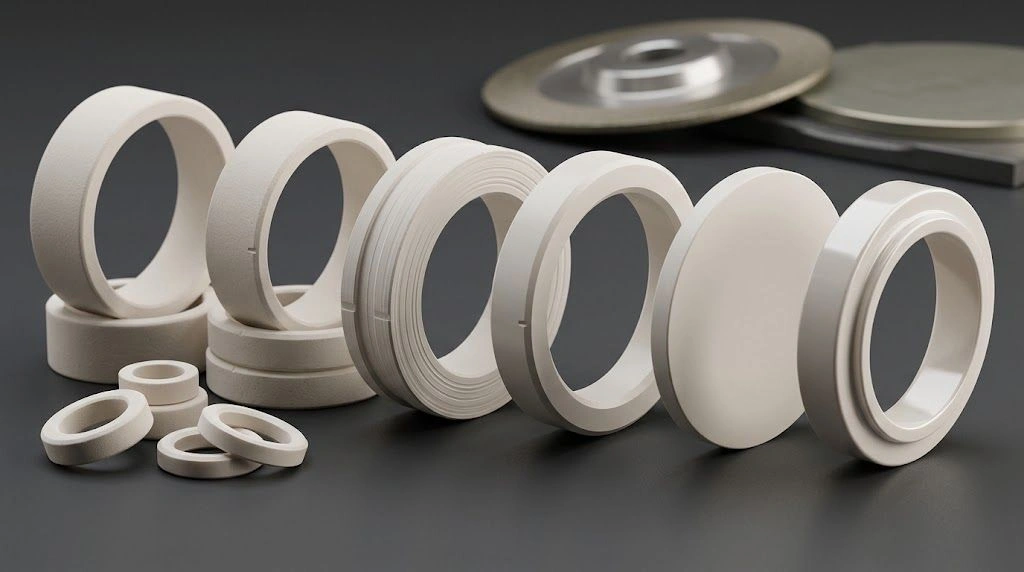
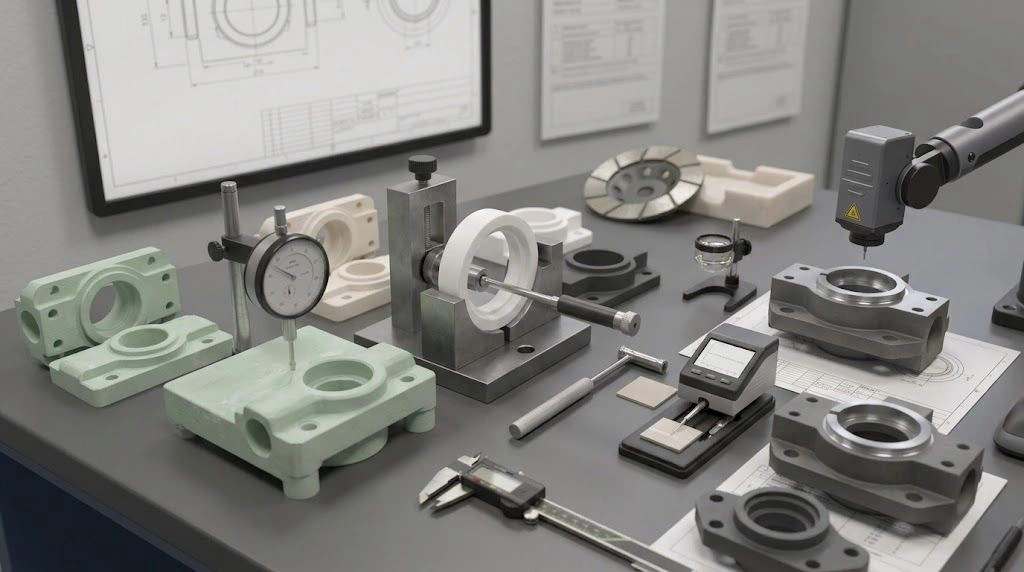
A Chinese advanced ceramic supplier should be qualified only after legal registration, manufacturing capability, ceramic process control, measurement capability, material traceability, sample validation, and corrective-action response are verified — in that sequence. Business licenses and ISO certificates are starting points, not final proof. For precision ceramic parts, buyers should also review drawings, tolerances, material grades, inspection methods, lot records, packaging controls, and whether sample results match production capability rather than prototype effort.
The qualification process described in this guide is not about country-of-origin skepticism. It is about making the evaluation structured, evidence-based, and specific to the demands of advanced ceramics — materials where powder selection, forming, sintering shrinkage, machining method, edge design, and measurement approach all affect whether the part works in service.
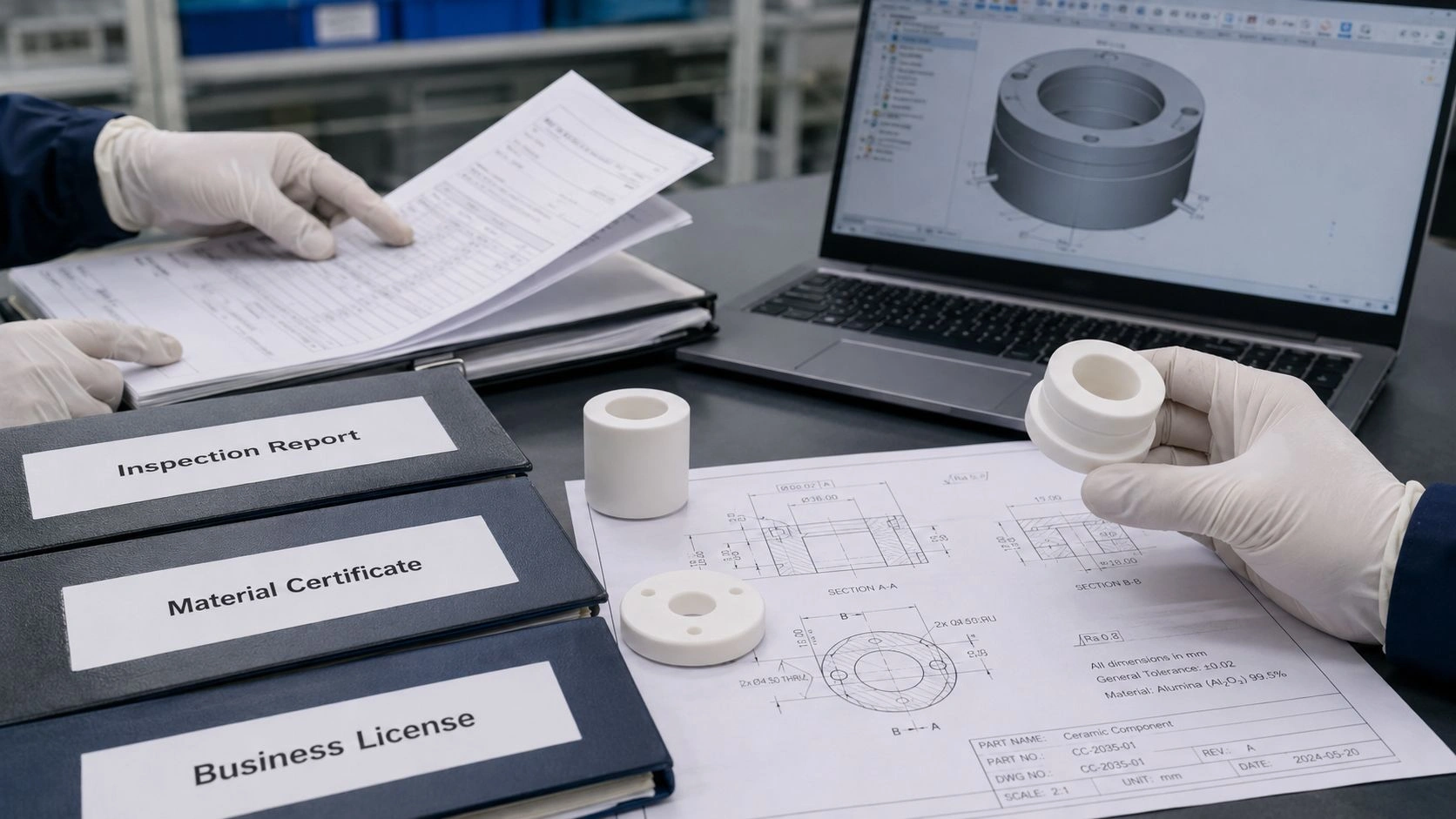
A structured advanced ceramic supplier qualification covers legal identity, manufacturing capability, process control, measurement systems, and sample validation — not just ISO certificates and price.
This guide is part of ADCERAX's broader custom ceramic manufacturing services framework, which covers precision ceramic production across alumina, zirconia, SiC, Si₃N₄, AlN, and BN for industrial and research applications.
What to check first before qualifying a Chinese advanced ceramic supplier
The first qualification step is identity and scope verification, not price comparison. Before evaluating technical capability, the buyer needs to confirm who the supplier actually is and what kind of manufacturing organization they represent.
The starting point is the supplier's Chinese legal name, business license, Unified Social Credit Code (USCC), registered address, export identity, and declared business scope. USCC verification confirms that the legal entity exists and is registered, but it does not prove production capacity, technical capability, or commercial reliability. Company-verification references are consistent on this point: a registered entity and a qualified manufacturing partner are not the same thing, and missing records, mismatched names, or inconsistent registration details justify deeper review before proceeding.
The second first-pass question is whether the supplier is a manufacturer, a trading company, a machining subcontractor, or an integrated ceramic producer. For advanced ceramic parts, this distinction matters substantially. A trading company may source from multiple factories with no control over powder grade, sintering process, or dimensional inspection. A machining subcontractor may produce accurate shapes but not select or control the sintered blank material. An integrated ceramic producer controls material selection, forming, sintering, machining, and inspection under one roof or with documented supply-chain control. All three may describe themselves as "ceramic manufacturers" — the buyer needs to ask specific questions to determine which one is actually on the other side of the conversation.
Business license, USCC, legal name, address, and bank match
The legal entity check should confirm that the name on the business license matches the name on the contract, invoice, and bank account. Discrepancies are not automatically disqualifying, but they require explanation. The declared business scope should include ceramic manufacturing or related production activities — a trading company business scope is a signal worth noting even if not a hard disqualifier.
Manufacturer, trader, machining shop, or integrated ceramic supplier
This question is best asked directly: "Which steps in the production process does your facility perform in-house, and which steps are outsourced or procured from outside?" A reliable supplier can answer this specifically. A supplier that cannot explain the boundary between in-house and outsourced work is a supplier that cannot fully control or explain production risk on your behalf.
How to verify real advanced ceramic manufacturing capability
After confirming legal identity, the buyer needs to determine whether the supplier can actually manufacture the required ceramic part to the drawing, tolerance, material specification, and service requirement. This is where advanced ceramic qualification diverges most sharply from general supplier verification.
A qualified advanced ceramic supplier should be able to explain the production route for your specific part: which raw material or blank, which forming process, what sintering profile, which post-sinter machining steps, what inspection points, and which packaging controls. For custom ceramic components, the key capability areas include material selection, forming or green machining, sintering process control, diamond grinding, CNC machining, lapping or polishing, drilling, slotting, edge chamfer or radius, cleaning, and final dimensional inspection.
When reviewing manufacturing capabilities, the relevant signals include equipment list (CNC lathe, milling, grinding, surface grinder, wire EDM, diamond wire saw), separate production areas for oxide and non-oxide ceramics, material portfolio, tolerance capability by part class, and examples of similar geometry. The buyer should request examples of parts with comparable wall thickness, bore-to-length ratio, edge features, flatness, surface finish, and tolerance class to the part being evaluated.
Process route: powder, blank, sintering, machining, finishing
A supplier that can describe the production sequence for your part specifically — rather than describing a generic ceramic production process — is demonstrating process ownership. The most useful question is: "Walk me through how you would produce this part, step by step, and where the main manufacturing risks are." A capable supplier will identify the risks. A supplier that responds with generic claims about high-quality materials and advanced equipment without engaging with the drawing is a risk signal.
Capability evidence: similar parts, tolerance class, geometry risk, and equipment list
The buyer should ask for photographs or samples of comparable parts, the tightest tolerances achieved in production (not prototypes), and the equipment used to hold those tolerances. An equipment list without inspection capability confirmation is incomplete — the buyer should ask which instruments are used to verify critical dimensions and whether those instruments are calibrated.
What quality documents and inspection records the supplier should provide
Having confirmed that the supplier can make the part, the next qualification step is confirming that the supplier can make the same part — consistently, across lots, with documented evidence.
For ISO quality management context, ISO 9001 provides a framework for consistent products and services, ISO 19011 gives guidance for auditing management systems, and ISO 10012 covers measurement management and metrological confirmation of measuring equipment. These standards provide the language for what the supplier's quality documentation should address, even if the buyer is not conducting a formal ISO audit.
At minimum, buyers should request the following quality evidence and review it against the criteria in the Qualification Checklist below:
| Qualification area | What to request | What it proves | Approval signal |
|---|---|---|---|
| Legal identity | Chinese legal name, business license, USCC, registered address | Supplier exists and declared business scope can be checked | Legal name matches contract, invoice, and bank account |
| Manufacturing identity | Factory photos, equipment list, process route, subcontracted steps | Supplier is manufacturer, trader, machining shop, or integrated producer | Supplier clearly explains in-house vs outsourced work |
| Material capability | Alumina, zirconia, SiC, Si₃N₄, AlN, BN, or other material records | Supplier understands material-specific processing limits | Material grade matches application and drawing |
| Process control | Forming, sintering, machining, polishing, cleaning, inspection flow | Supplier can control repeatability | Process route is specific to the part geometry |
| Measurement capability | CMM, micrometer, gauge, surface roughness, flatness, calibration records | Supplier can verify critical dimensions | Measurement method matches tolerance requirement |
| Traceability | Lot number, material certificate, COC, inspection report | Parts can be linked to material and production batch | Lot-level records are available |
| Sample validation | FAI report, sample photos, deviation list, packaging photos | Sample result can be reviewed before production | Deviations are disclosed before shipment |
| Corrective action | NCR/CAPA process, response time, root-cause format | Supplier can respond when issues occur | Corrective action is documented, not verbal only |
Checklist synthesized from ISO 9001, ISO 19011, ISO 10012, and advanced ceramic supplier qualification practice.
For advanced ceramic parts specifically, the quality assurance approach should cover ceramic-specific inspection: density or porosity testing where relevant, hardness verification, surface roughness, flatness, concentricity, bore accuracy, edge condition, and inspection photographs. Buyers should ask which of these tests are performed in-house and which require external testing.
ISO/QMS, traceability, COC, FAI, and corrective action
ISO 9001 certification is a useful signal but not a substitute for reviewing actual records. A certified supplier with good corrective-action discipline and lot traceability is more valuable than a certified supplier with no process for documenting nonconformances. Ask for a corrective-action example, not just the quality manual.
Ceramic-specific inspection: density, hardness, tolerance, surface finish, and photos
The combination of dimensional inspection data, material verification data, and inspection photographs is the minimum standard for advanced ceramic parts before first production approval. If the supplier provides a certificate of conformance without supporting measurement data, ask what measurement was performed and how it was recorded.
What red flags separate a weak supplier from a qualified engineering partner
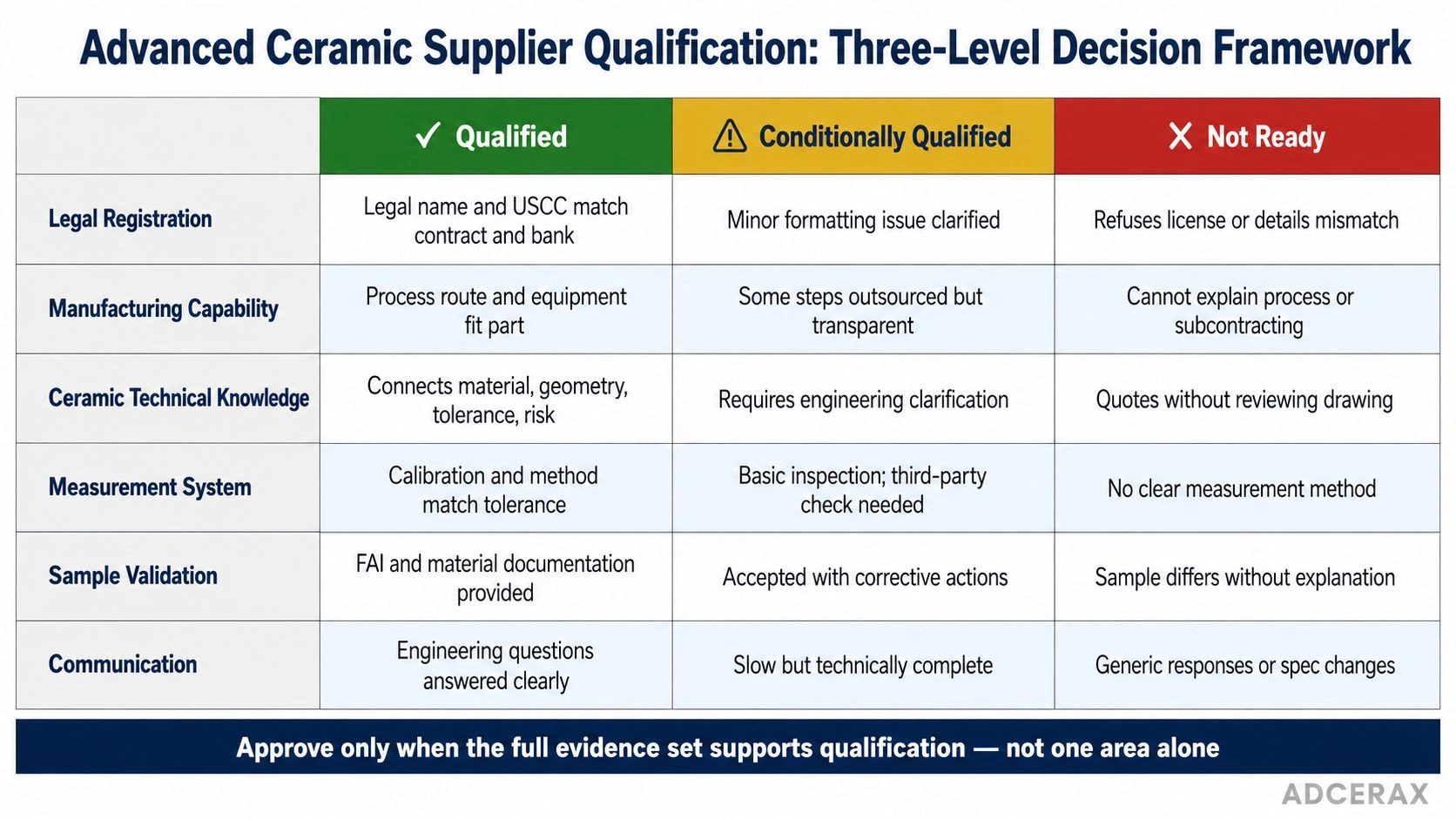
The supplier qualification decision has three outcomes — qualified, conditionally qualified, and not ready — and each area of supplier evidence maps to a different risk level.
After reviewing documents and capability, the buyer needs to classify supplier risk and decide whether to approve, conditionally approve, or exclude from the shortlist. The Qualification Decision Matrix below organizes that classification:
| Supplier evidence | Qualified | Conditionally qualified | Not ready |
|---|---|---|---|
| Legal registration | Legal name and USCC match contract and bank details | Minor translation or formatting issue clarified | Refuses to provide license or details mismatch |
| Manufacturing capability | Process route and equipment fit part requirements | Some steps outsourced but transparent | Cannot explain process or subcontracting |
| Ceramic technical knowledge | Connects material, geometry, tolerance, and application risk | Requires engineering clarification | Quotes without reviewing drawing details |
| Measurement system | Measurement method and calibration match tolerance | Basic inspection available; third-party check needed | No clear measurement method |
| Sample validation | FAI and material documentation provided | Sample accepted with corrective actions | Sample differs from drawing without explanation |
| Communication | Engineering questions answered clearly and specifically | Slow but technically complete | Generic responses or frequent specification changes |
Decision matrix provides classification logic; apply to the full evidence set before final approval or exclusion.
The most important commercial red flags are inconsistency, opacity, and mismatched information: a legal name that does not match the bank account or contract, refusal to provide registration details, vague business scope without explanation, unclear subcontracting, no inspection records, generic material certificates, and no calibration control.
The most important technical red flags are equally serious: a supplier that quotes tight tolerances without asking about drawing datum, edge chipping, surface finish, flatness, thermal shock, chemical exposure, or inspection standard is demonstrating that tolerance is a number it will quote, not a result it will guarantee. A supplier that changes material grade mid-quote or cannot explain sintering shrinkage is a supplier that does not own the process.
Commercial red flags: identity, payment, contract, and subcontracting
Practical red flags worth investigating: the supplier's website, business scope, and factory description are inconsistent with each other; the supplier cannot name specific ceramic grades or explain their properties; payment terms or bank details do not match the legal registration; the supplier changes the quoted material or delivery terms without explanation between rounds of communication.
Technical red flags: tolerance, material grade, inspection, and overpromising
Practical red flags in the engineering dimension: the supplier commits to tolerance without asking which datum is used or how the part is fixable for inspection; the quoted material does not match the operating temperature or chemical environment; the supplier describes inspection capability with equipment names but cannot show a measurement result; the supplier cannot explain what happens at a critical corner radius, thin wall, or blind hole.
What the RFQ and sample order should require before supplier approval
After completing the qualification sequence, the buyer is ready to issue a formal RFQ and sample order. The RFQ should be specific enough to let the supplier demonstrate capability — and to make the approval criteria concrete.
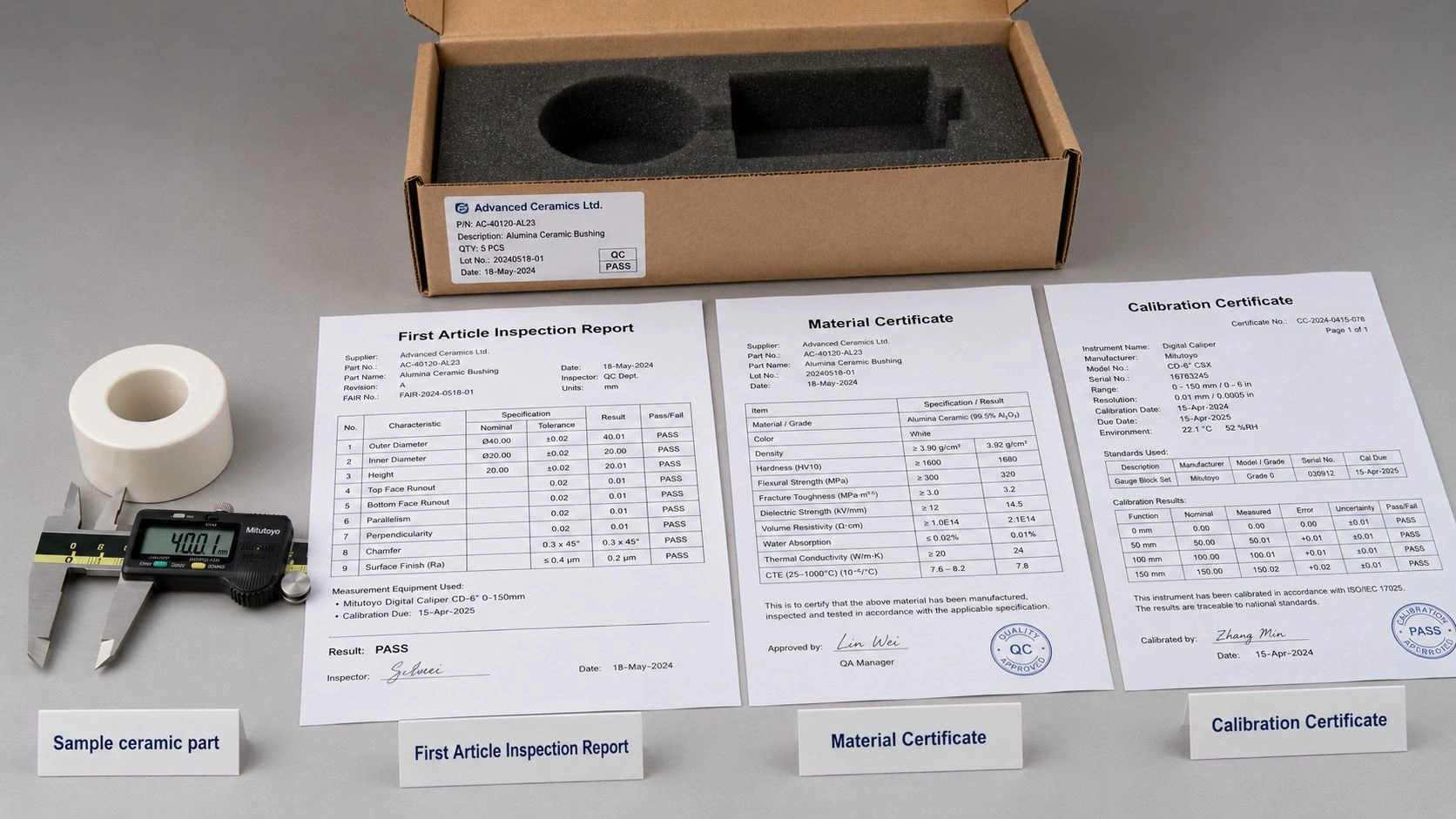
A complete sample validation package includes first-article inspection dimensions, material certificate, inspection photographs, packaging record, and deviation disclosure — not a certificate of conformance alone.
The RFQ Inputs table below summarizes what the buyer should include and why:
| RFQ input | Why it matters | Required format |
|---|---|---|
| 2D / 3D drawing | Defines geometry, datum, tolerance, and inspection scope | PDF + STEP where possible |
| Material grade | Avoids vague "ceramic" quotations | Exact material or application-based request |
| Operating conditions | Links material choice to real service risk | Temperature, media, mechanical load, wear, atmosphere |
| Critical dimensions | Prevents over-checking low-risk features and missing key features | Marked drawing or CTQ list |
| Surface finish / flatness | Controls sealing, wear, friction, or optical fit | Numeric value and measurement method |
| Sample quantity | Supports first-article validation | Sample count + inspection report requirement |
| Annual forecast | Helps supplier judge process route and capacity | Prototype / pilot / production quantity |
| Packaging requirement | Prevents chipping and transport damage | Packaging method and labeling requirement |
RFQ inputs are the minimum for an engineering-qualified ceramic part inquiry; add application-specific requirements as needed.
A qualification-ready sample order should require first-article inspection, dimensional report, material certificate or composition statement, inspection photographs, deviation list, packaging photographs, and a written note explaining any manufacturing risk the supplier identified. Approval should be conditional until sample performance, measurement repeatability, communication response quality, and corrective-action responsiveness are confirmed together — not after any one of them is acceptable in isolation.
If the supplier delivers a sample with unaddressed deviations, changes material grade without notification, cannot explain a dimensional result, or responds to a drawing question with a generic statement, the sample has not passed — regardless of whether the dimensions are within tolerance.
The full qualification process — from legal verification through sample approval — is also part of how ADCERAX approaches engineering review and engineering partnership with customers: transparency about process route, material selection logic, inspection method, and deviation disclosure at the sample stage, rather than after production.
Conclusion
Qualifying a Chinese advanced ceramic supplier is a sequential process, not a checklist item. Legal identity confirms who you are dealing with. Manufacturing capability review confirms whether the supplier can make the part. Quality documentation confirms whether the supplier can repeat the result. Red-flag assessment confirms whether the supplier is genuinely engaged with your drawing and application. Sample validation confirms whether the drawings, specifications, and communication have been translated correctly into a real part. RFQ discipline confirms whether the production environment will produce the same result at volume. Advanced ceramics are demanding materials where process control at every step — powder, forming, sintering, machining, inspection — affects functional performance. A supplier qualification process that skips any layer of this chain is a qualification process that will encounter a surprise at the worst possible time.
Working on a ceramic part qualification or supplier shortlist? Send your drawing, material requirements, operating conditions, tolerance table, and expected annual volume for engineering review. ADCERAX will return a capability assessment, sample plan recommendation, and qualification documentation list for the specific part and application; no commitment required at this stage.
Frequently Asked Questions
Is a Chinese business license enough to qualify an advanced ceramic supplier?
No. A business license confirms legal registration but does not prove ceramic manufacturing capability, process control, measurement accuracy, material traceability, or production reliability. Legal verification is the first step in the qualification sequence, not the final step.
What is the first thing to check when verifying a Chinese supplier?
Start with the Chinese legal name, business license, Unified Social Credit Code, registered address, declared business scope, contract name, invoice name, and bank-account consistency. Confirm that the entity is a manufacturer rather than a trading company or machining subcontractor before proceeding to capability review.
What certificates should an advanced ceramic supplier provide?
ISO 9001 or equivalent QMS evidence is useful, but buyers should also request material certificates, certificates of conformance, inspection reports with measurement data, calibration records, first-article inspection documentation, and lot traceability records. The certificate and the underlying measurement data must both be available for advanced ceramic parts.
How do I know if a ceramic supplier is a real manufacturer?
Ask for the process route for your specific part, the equipment list, factory photographs, similar-part examples, and a clear breakdown of in-house versus outsourced process steps. A real manufacturer can explain where the main manufacturing risks are for your geometry. A trading company or subcontractor typically cannot.
What should be included in a ceramic sample order?
A sample order should include the drawing revision, material grade, critical dimensions and inspection method, sample quantity, FAI report requirement, material certificate, inspection photographs, packaging method, and a deviation disclosure requirement. Approval should be conditional on the sample report and corrective-action response quality, not on whether the measured dimensions fall within tolerance alone.
What are the most common red flags in advanced ceramic supplier qualification?
Commercial red flags include unclear legal identity, mismatched payment information, vague business scope, undisclosed subcontracting, and generic material claims. Technical red flags include no inspection records, no calibration control, tolerance promises without measurement method explanation, inability to explain sintering shrinkage or machining risk for the specific drawing, and specification changes without explanation during quotation.
Should price be the main factor when selecting a Chinese ceramic supplier?
Not for advanced ceramic parts. Advanced ceramic sourcing should prioritize application fit, process repeatability, inspection control, communication quality, and supplier transparency before final commercial comparison. Price optimization on a supplier that cannot control process or inspection creates cost through rework, delayed qualification, and production nonconformances rather than savings.
When qualifying a partner for production parts—not just paperwork—map the RFQ against the families you will buy, such as alumina tubes and precision ceramic parts, and confirm process ownership on the supplier side before sample approval.