Home / Material Selection
TOPIC ARCHIVE
Ceramic material selection guides: matching alumina, zirconia, SiC, and BN grades to operating temperature, atmosphere, load, wear, and chemical exposure. For engineers making evidence-based ceramic material decisions before RFQ.
Materials, product forms, and capabilities in one PDF.
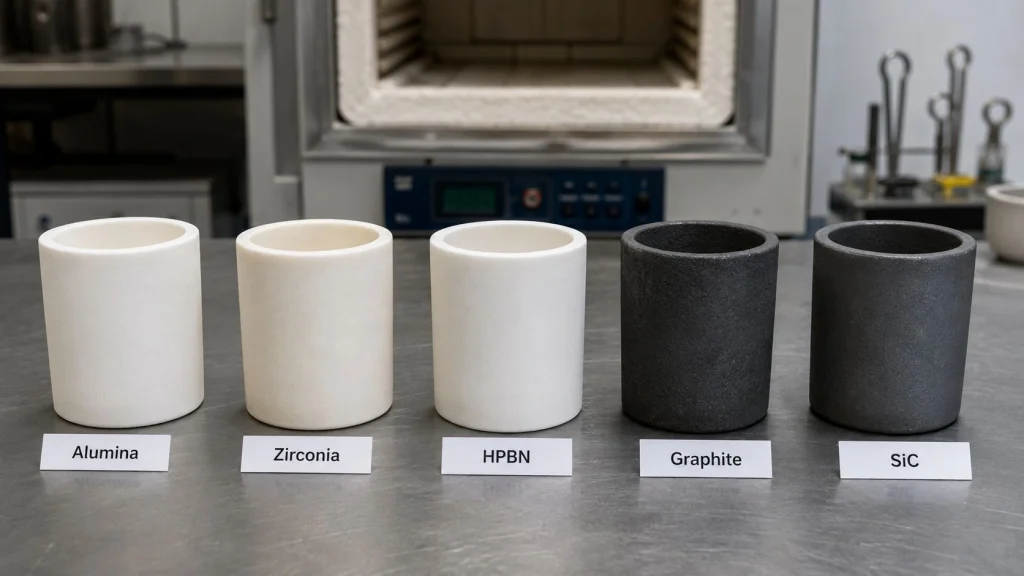
Crucible material should be selected first by metal chemistry, then by process type, atmosphere, purity requirement, and thermal cycle. Alumina
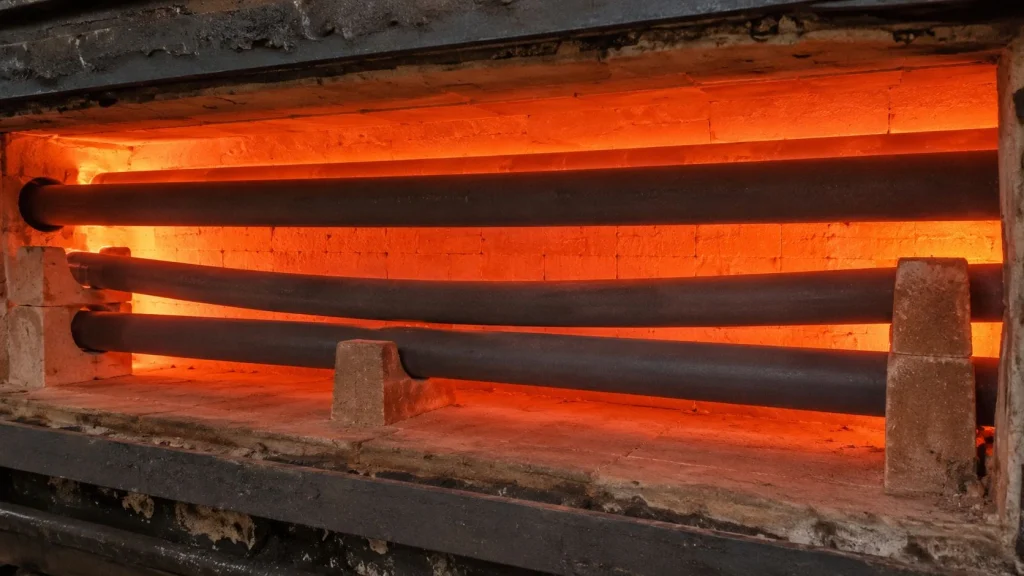
SiC tubes can resist creep well at 1400°C when the applied stress, support span, tube diameter, wall thickness, atmosphere, and
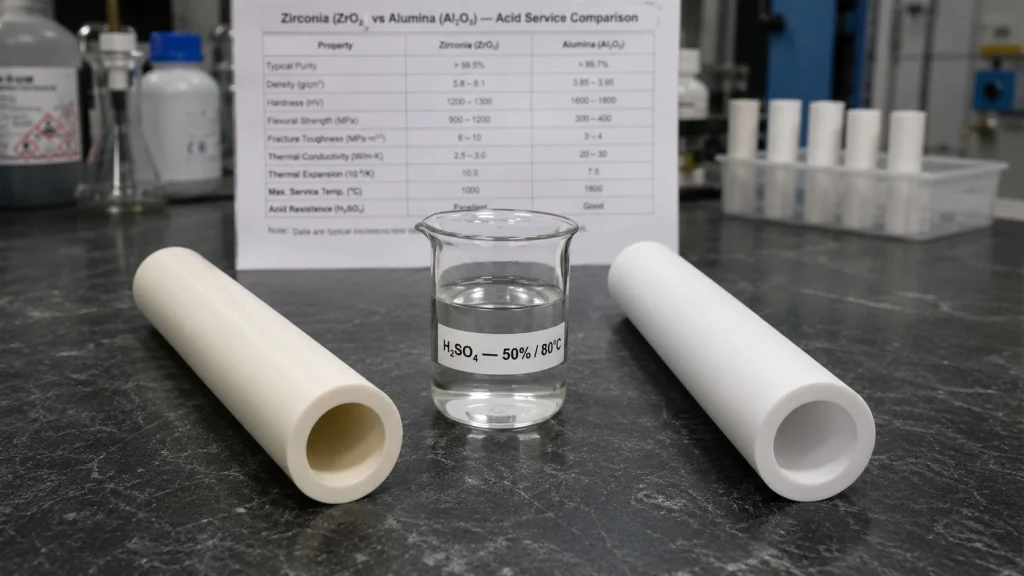
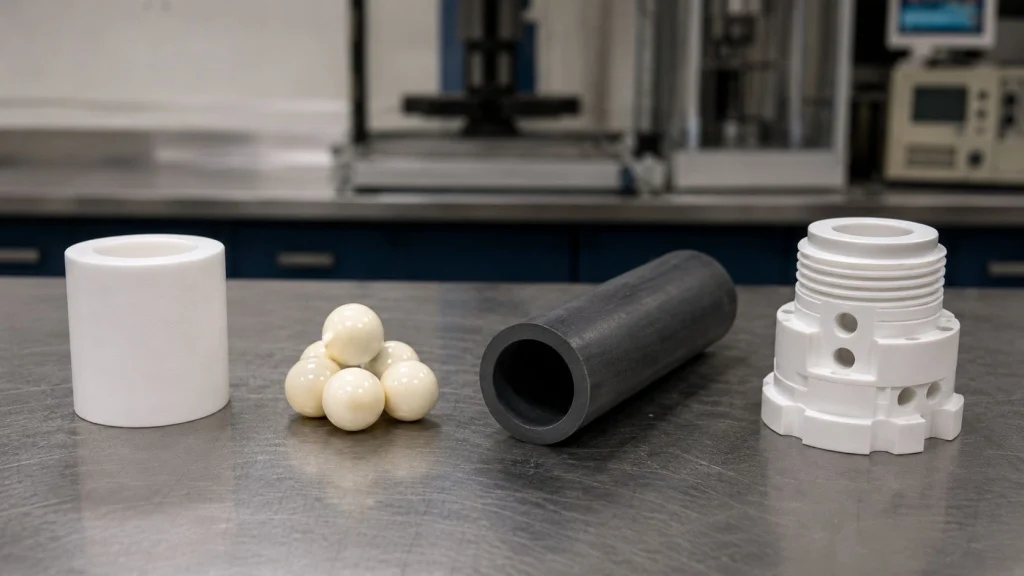
If you need one simple rule: start with Al₂O₃ for general-purpose ceramic parts, move to ZrO₂ when fracture toughness and
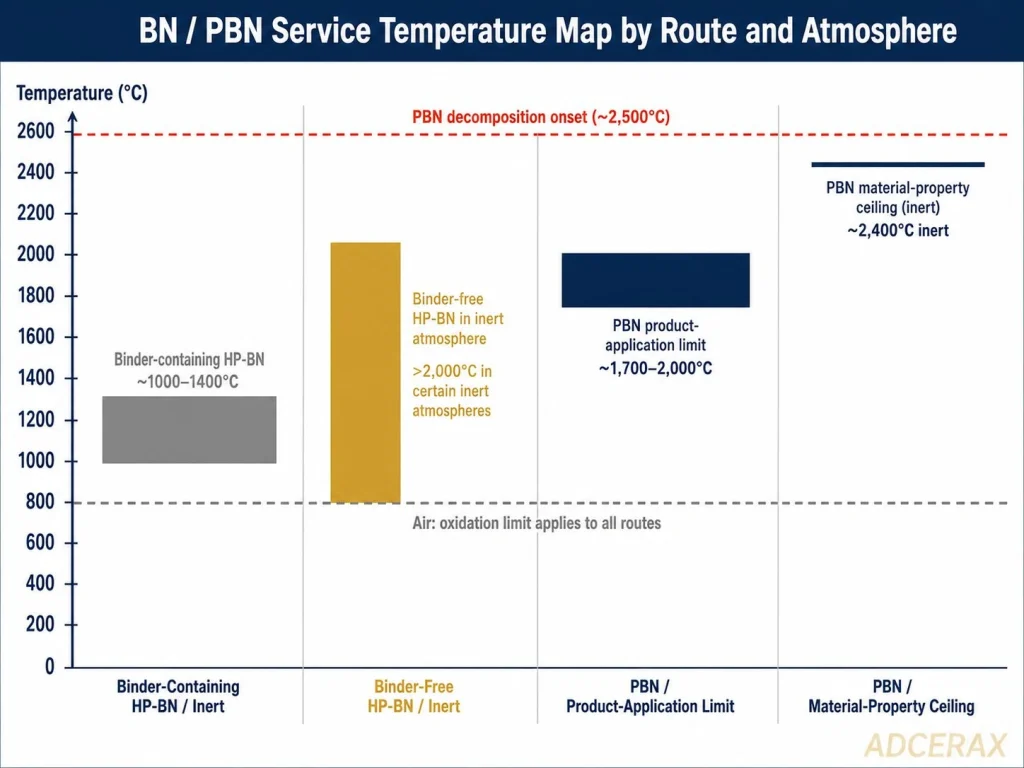
Atmosphere, grade, and qualification basis — not a single decomposition threshold — determine the practical ceiling for hot-pressed BN and
The maximum temperature of a BN crucible is not one number. For hot-pressed BN, sampled supplier data cluster around about
Specifying a SiC tube as a hydrogen barrier in high-temperature service requires answering a question that most SiC tube product
The conventional statement that PBN is a high-purity crucible material for MBE is correct but incomplete. It does not explain
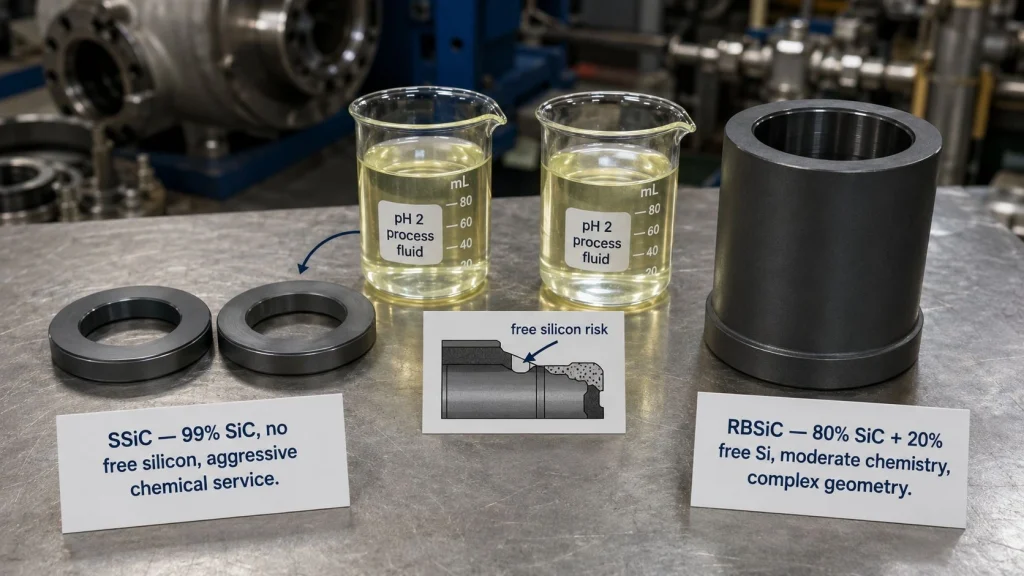
Specifying an RBSC tube for a chemically demanding service is not the same question as specifying a dense SiC tube.
High-temperature assemblies fail when a “safe” number hides time, cycling, and damage. Escalating thermal loads amplify risk. A usable limit
Unexpected fracture remains one of the most disruptive failure modes in oxide ceramic components, often occurring without visible warning and
Alumina Substrate thickness is often selected too late in design cycles; consequently, hidden electrical and mechanical risks emerge. Therefore, early
DSC alumina crucibles are often blamed only after data fails; consequently, engineers search for stability when experiments already risk repetition,
High strength alumina tube defines the performance foundation for modern industrial machinery operating under high thermal, mechanical, and vibrational stress.
An industrial alumina tube for corrosion resistance is defined by measurable purity, density, and chemical durability standards that ensure performance
A high-purity alumina tube for corrosion resistance is the preferred choice for industries facing harsh chemical environments. Its exceptional chemical
Hydrogen-resistant alumina tube selection hinges on purity, density, grain-boundary chemistry, validated permeation, and standards-based aging. Hydrogen-resistant alumina tube compatibility is
High purity alumina tube plays a critical role in industrial environments where temperature fluctuations cause structural stress. Its exceptional purity
Insulating alumina tube performance depends on its ability to endure rapid heating without cracking or losing dielectric strength. These ceramic
Electrical alumina tube is essential for high-voltage, high-temperature systems where insulation failure can cause significant process downtime. The electrical performance
High voltage alumina tube defines insulation reliability in electrical systems operating up to 1500°C. The material’s dielectric strength determines whether
Alumina tube purity is the single most decisive factor influencing catalytic reactor performance and longevity. It governs mechanical strength, corrosion
Recrystallized Alumina Tubes for Thermocouple provide the most reliable protection in rapid thermal cycling environments where standard ceramics often fail.
Alumina Thermocouple Protection Tubes are essential in high-temperature furnaces where thermocouples face corrosive, erosive, and chemically reactive atmospheres. Understanding how
An alumina furnace tube is engineered to perform reliably in continuous high-temperature environments exceeding 1600°C. Engineers must define operating temperature
Send your drawing, material requirement, dimensions, quantity, and working conditions — our engineering team reviews manufacturability before quotation.

WhatsApp us
The more details you provide, the faster we can quote.
*We respond within 24 hours. All inquiries are confidential.