Home / SiC tube
TOPIC ARCHIVE
A focused archive for silicon carbide tube grade selection, oxidation kinetics, thermal shock, heat exchanger and furnace applications, and specification guidance. For engineers who need tube performance beyond alumina in high-temperature, abrasive, or corrosive service.
Materials, product forms, and capabilities in one PDF.
SiC tubes can be used in semiconductor vertical diffusion furnaces when the component must provide high-temperature dimensional stability, chemical durability,
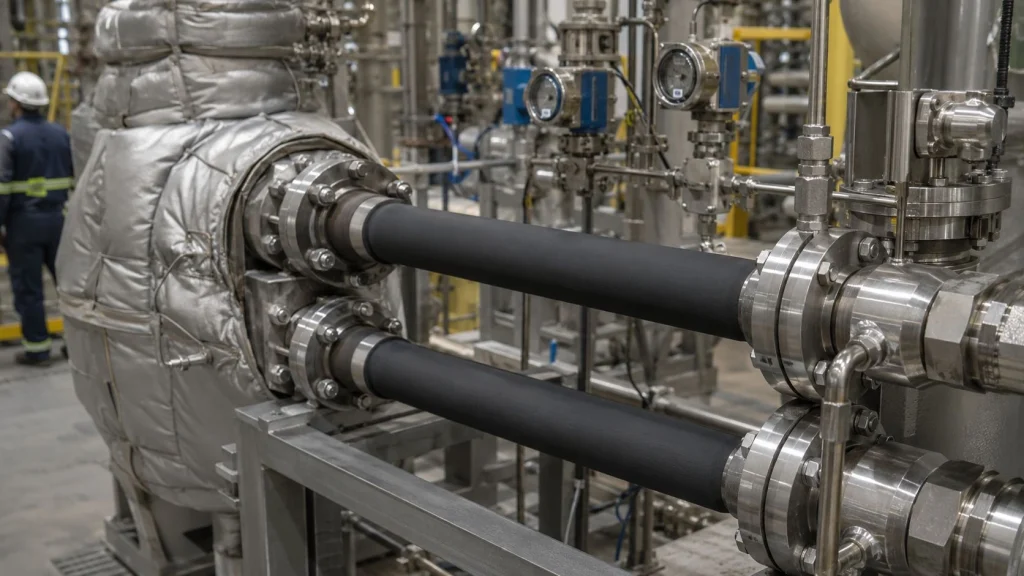
SiC radiant tubes are worth considering in galvanizing line furnaces when the heating section needs higher heat flux, stable indirect
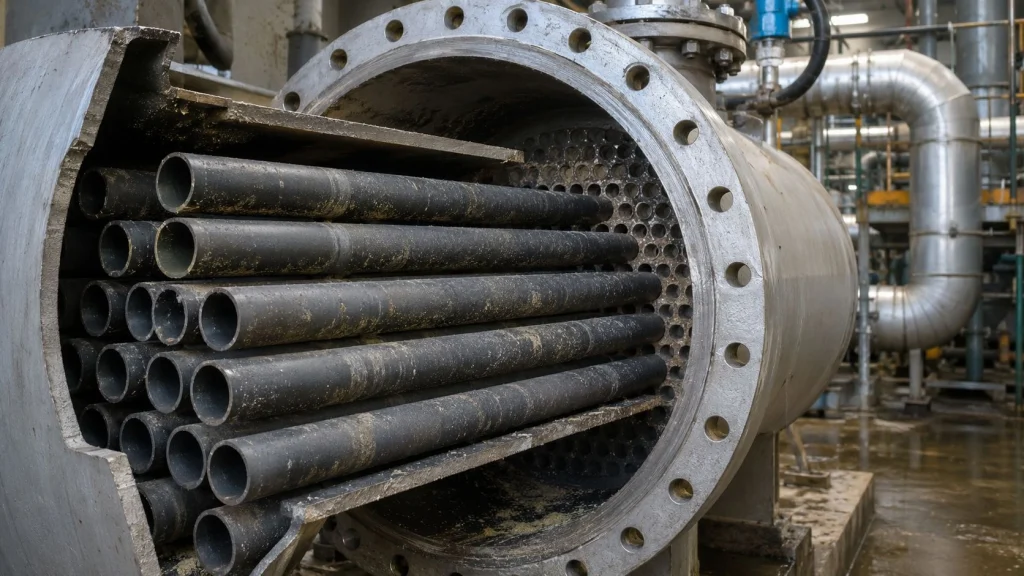
SiC heat exchanger tubes are used in sulfuric acid production when the exchanger must combine strong acid corrosion resistance, high
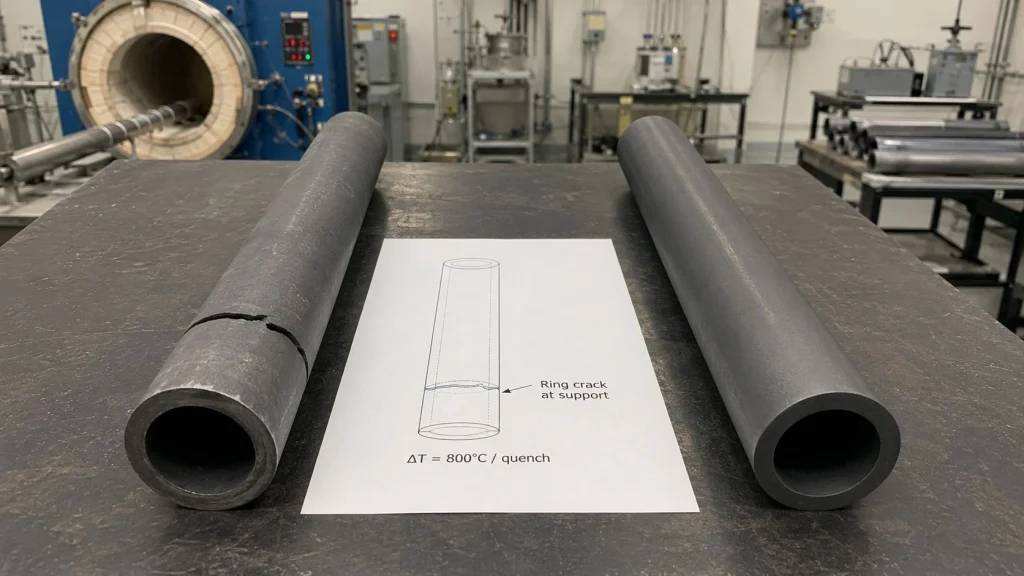
SiC tubes can crack under thermal shock because thermal shock resistance and fracture toughness are not the same property. Silicon
SiC tubes are suitable for high-temperature gas filtration when the component is designed as a porous filter tube or candle
Dense SSiC tubes become expensive to machine because fully sintered silicon carbide is already at near-final ceramic hardness after sintering
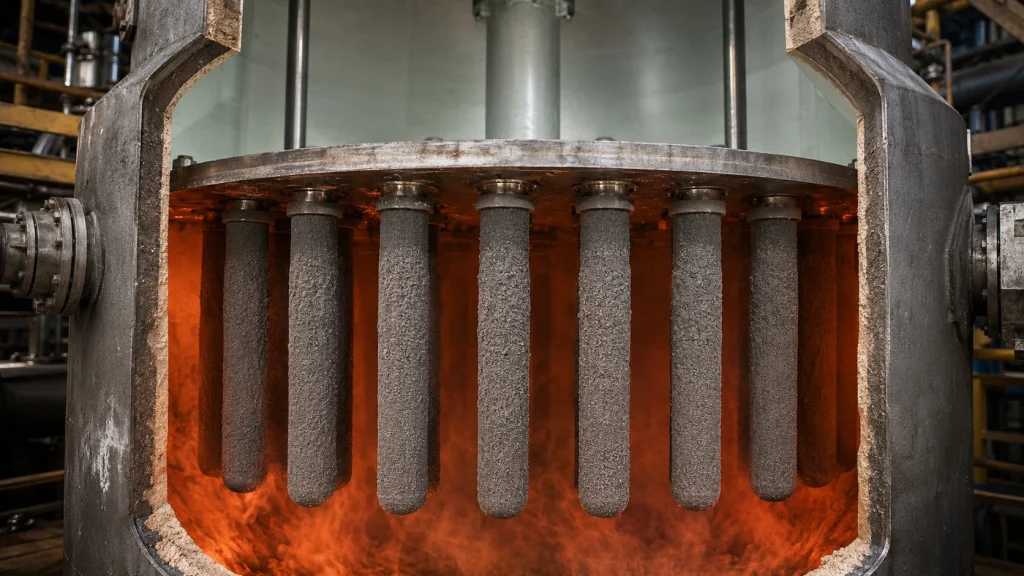
SiC tubes are suitable for coal gasification reactor internals when the component must resist high-temperature reducing gas, abrasive solids, thermal
SiC tubes and liners can be used in solar polysilicon CVD reactors when the component must withstand high temperature, hydrogen-and-chlorosilane
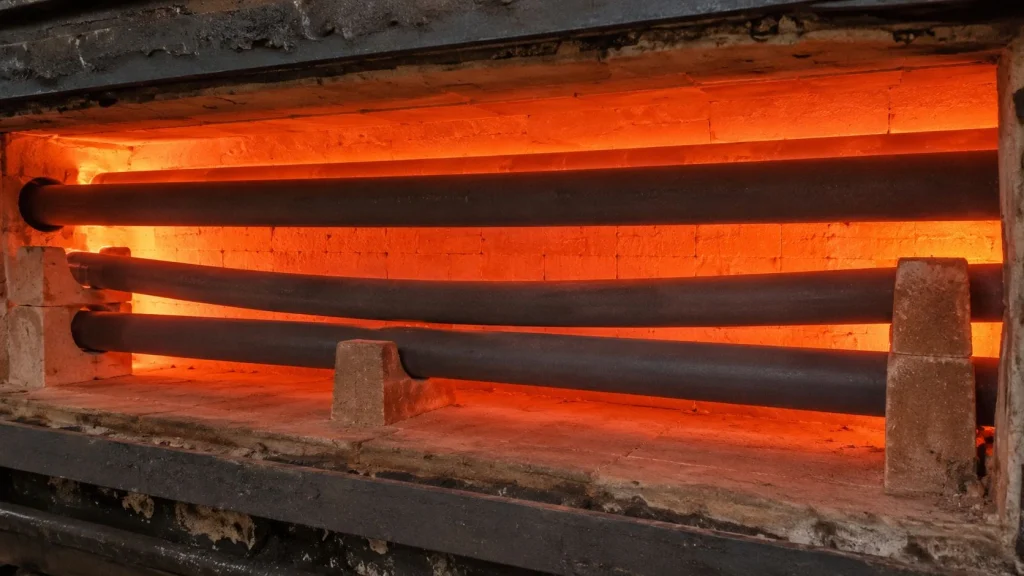
SiC tubes can resist creep well at 1400°C when the applied stress, support span, tube diameter, wall thickness, atmosphere, and
Recrystallized SiC tubes are suitable for ultra-high-temperature furnace service when the application needs high-purity SiC, thermal shock resistance, dimensional stability,
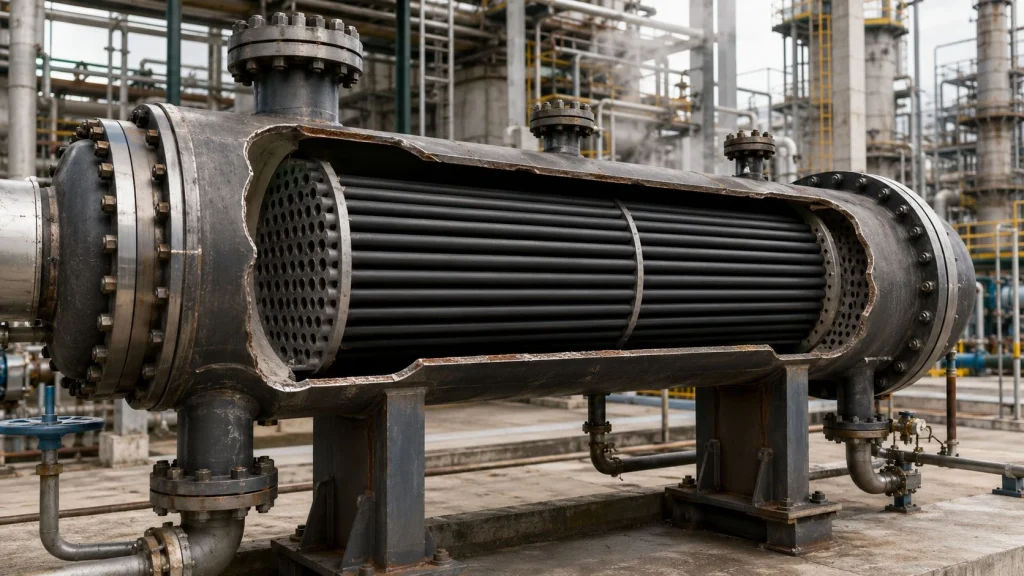
SiC tubes are a strong choice in FGD heat exchangers when the unit must transfer heat in a sulfuric-acid-dew-point-risk environment
Component role mapping, material selection boundary, and RFQ specification guidance for process engineers evaluating ceramic tube routes in degassing units
Specifying a SiC tube as a hydrogen barrier in high-temperature service requires answering a question that most SiC tube product
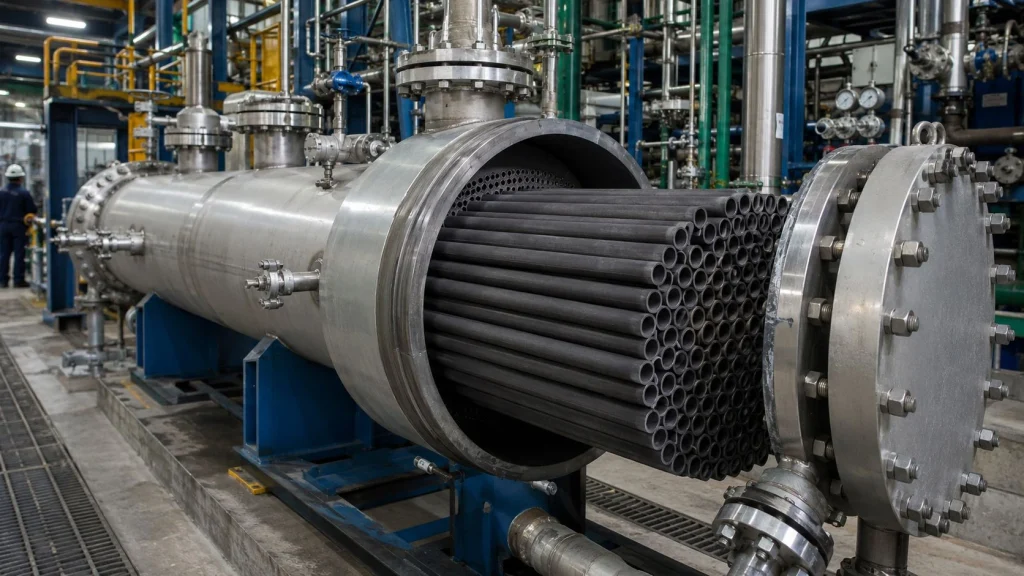
Choosing between SiC and alumina for ceramic heat exchanger tubes is a question that usually starts with a conductivity number
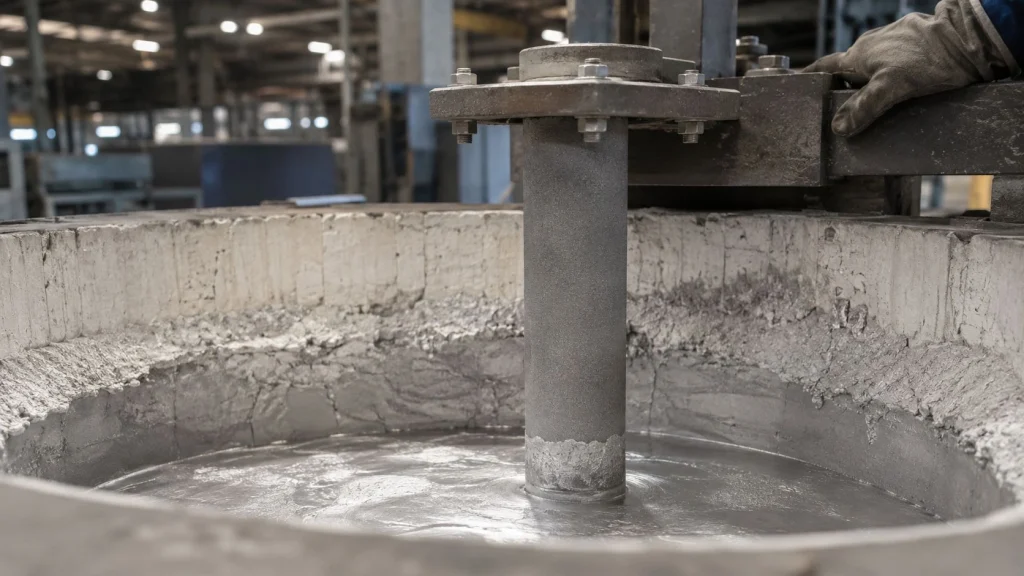
Choosing a protection tube for molten aluminum temperature measurement looks straightforward until the next tube fails before the expected replacement
The engineers who get SiC oxidation wrong usually do not make a chemistry mistake — they make a classification mistake.
The question engineers ask when a SiC tube is specified for 1400°C furnace service is usually framed as a temperature
Specifying an RBSC tube for a chemically demanding service is not the same question as specifying a dense SiC tube.
The grade decision for a silicon carbide tube — pressureless sintered (SSiC), reaction-bonded (RBSC, also written SiSiC), or nitride-bonded (NBSC)
Send your drawing, material requirement, dimensions, quantity, and working conditions — our engineering team reviews manufacturability before quotation.

WhatsApp us
The more details you provide, the faster we can quote.
*We respond within 24 hours. All inquiries are confidential.