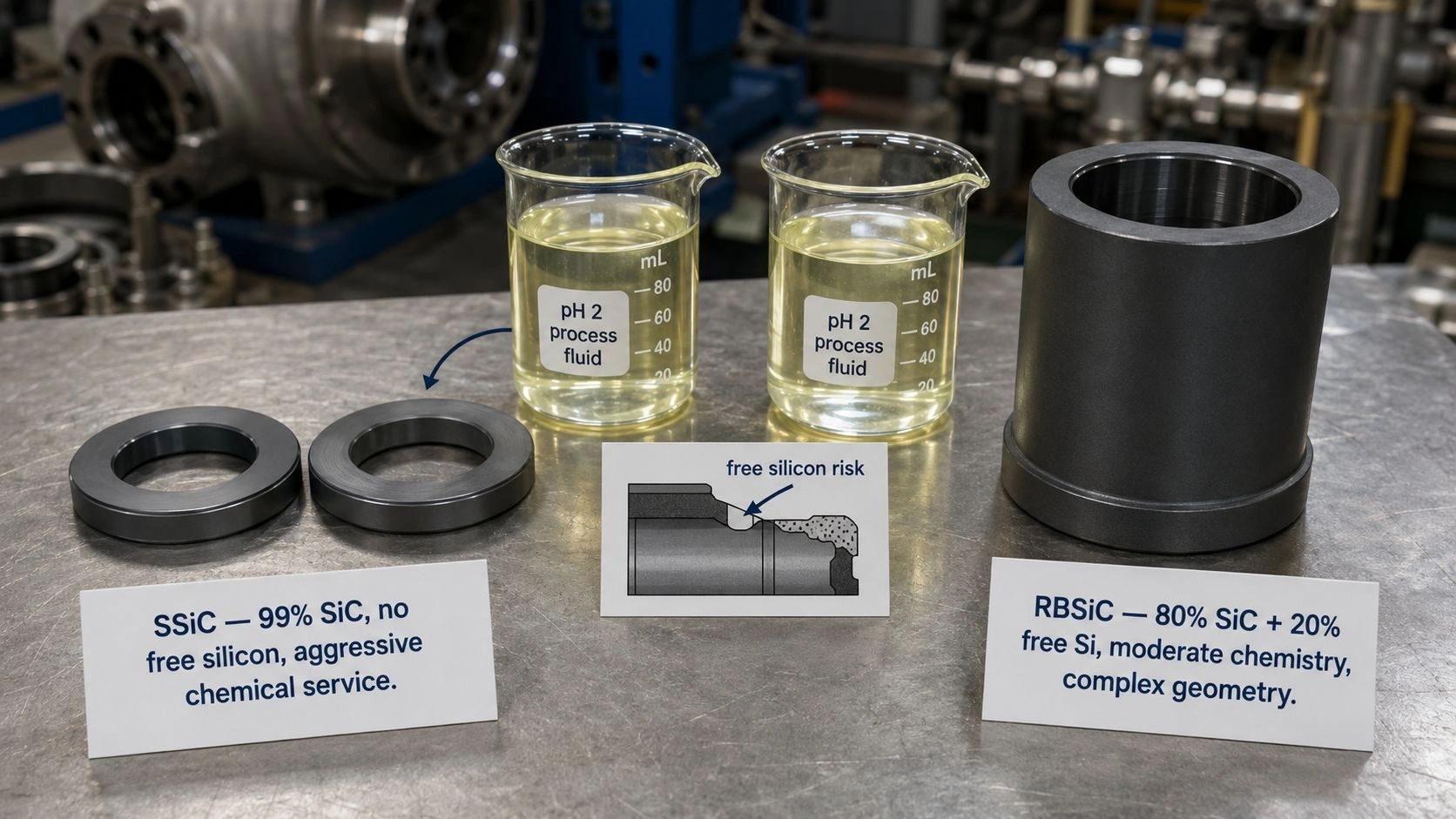
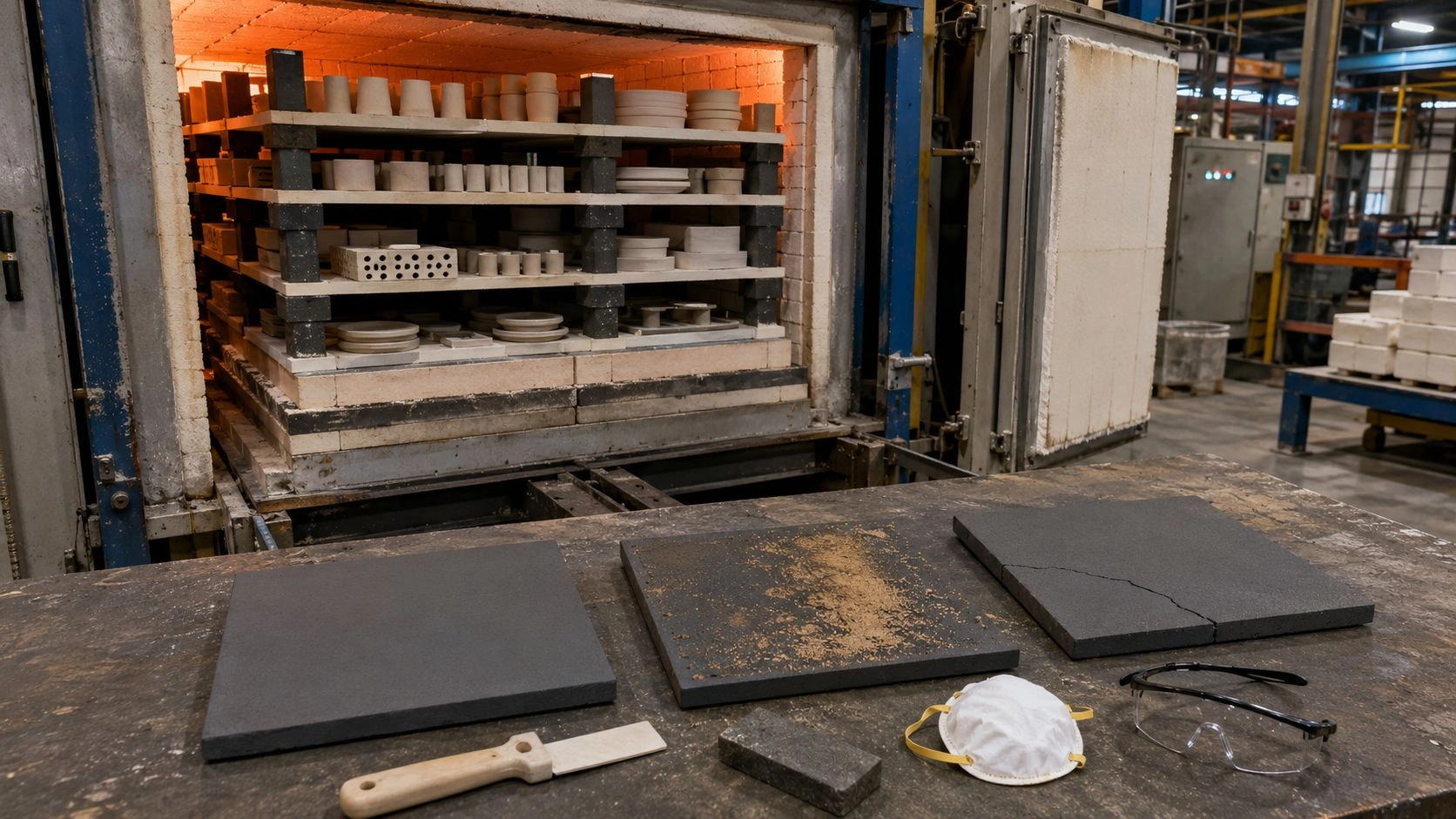
SiC pump components outperform most metals when the dominant failure mode is corrosion, abrasive wear, seal-face scoring, chemical attack, or dimensional clearance drift in aggressive fluids. Metal components remain better when the part must absorb impact, bending, shock, thread loads, complex assembly stress, or pressure-boundary loads. In most chemical pumps, magnetic-drive pumps, and high-purity fluid systems, the strongest design is hybrid: metal provides the structural body, while SiC is used for seal faces, sleeves, bushings, thrust plates, bearings, liners, and wear surfaces. Neither material wins universally — failure mode determines the correct choice.
That failure-mode-first framing — not a materials ranking — is the engineering principle this guide is built around.
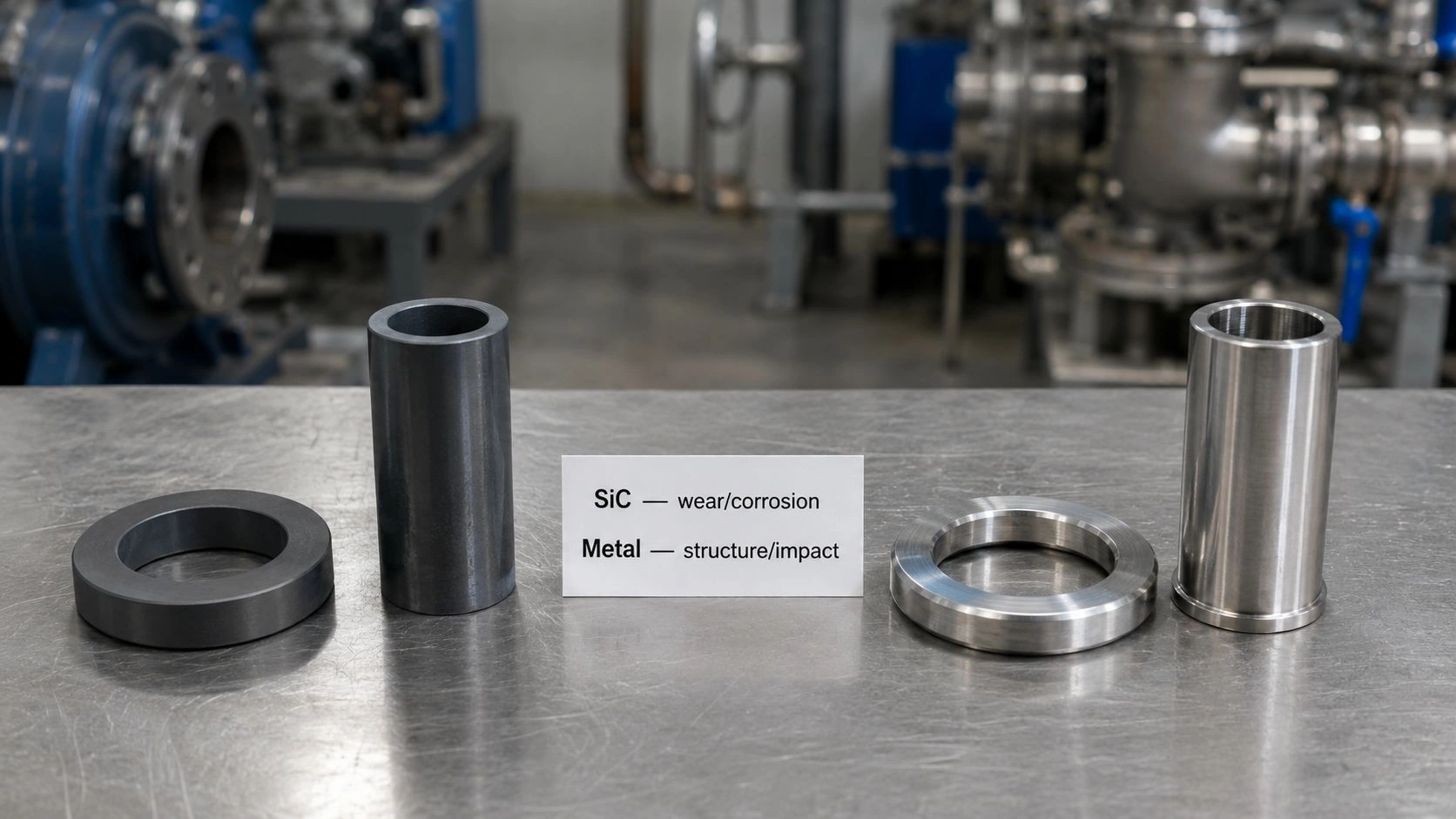
SiC pump components and metal pump components fail in different ways — SiC excels at wear interfaces, seal faces, and corrosive chemical service, while metal provides toughness, impact tolerance, and structural load capability. The best pump design usually combines both.
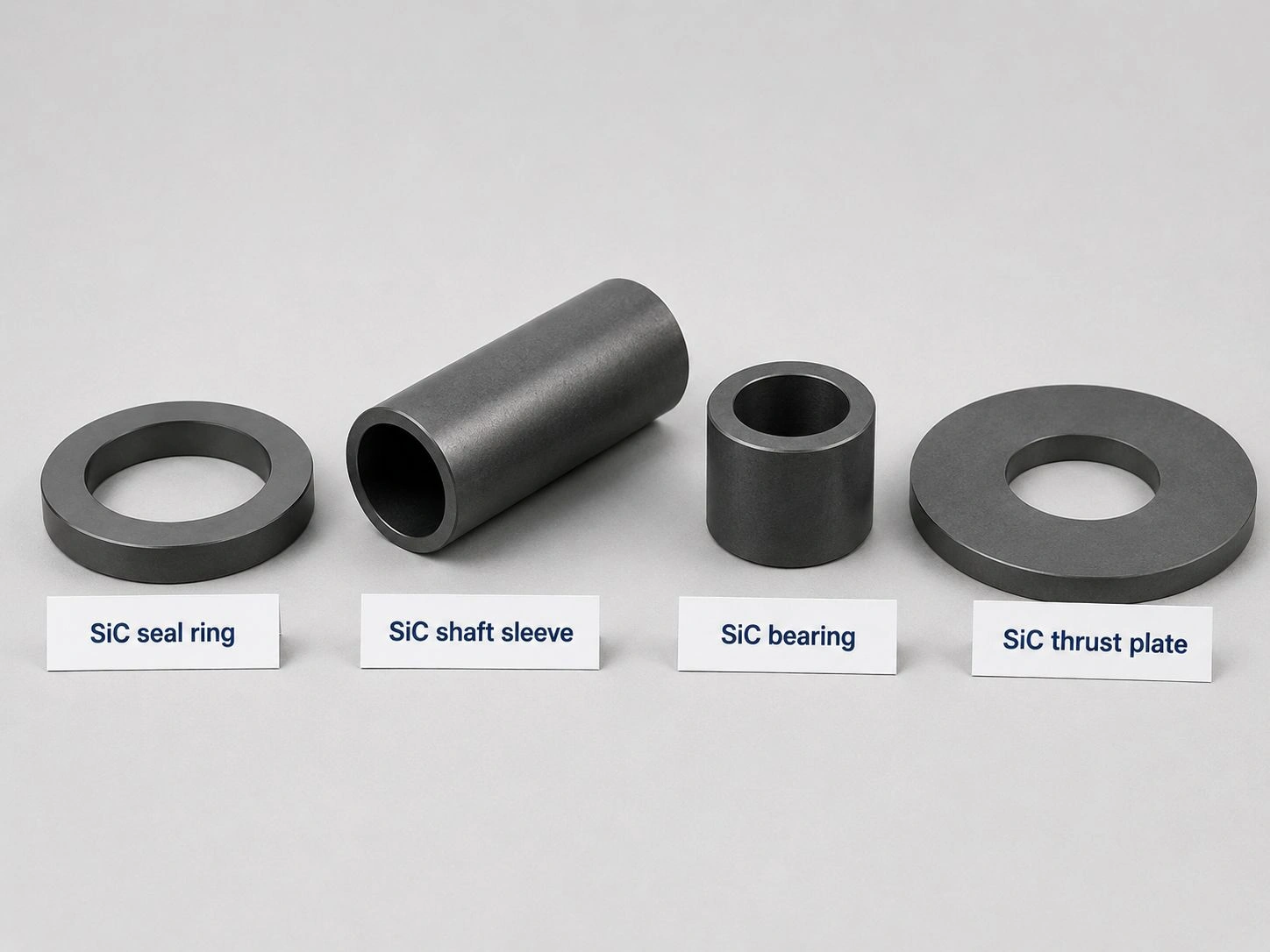
The silicon carbide mechanical components at ADCERAX — covering SiC seal rings, shaft sleeves, bearings, bushings, thrust plates, and custom wear parts for chemical processing, fluid handling, and high-temperature mechanical applications — are the starting point for the pump material selection decisions described in this guide.
The core difference: SiC resists wear, metal absorbs load
The SiC vs Metal decision in pump engineering is not a hardness comparison or a material ranking. It is a failure-mode question: what is the part actually failing from, and which material's properties address that failure mechanism better?
Silicon carbide is extremely hard, chemically resistant to most acids and alkalis, thermally conductive, dimensionally stable, and wear resistant. Metal components — stainless steel, duplex, nickel alloys, titanium, tungsten carbide — offer ductility, machinability, impact tolerance, structural load capacity, and field repairability. Neither set of properties is universally better; they address different failure modes.
The SiC vs Metal Pump Components comparison table below maps the key decision variables:
| Decision variable | SiC advantage | Metal advantage | What to verify |
|---|---|---|---|
| Abrasive wear | Excellent hardness and wear resistance | Coatings may help but can wear through | Particle size, solids %, speed |
| Chemical corrosion | Strong resistance in many acids/alkalis | Alloy-specific; stainless can pit or corrode | pH, chlorides, oxidizers, temperature |
| Impact shock | Brittle; edge chips possible | Better toughness and ductility | Large solids, vibration, assembly stress |
| Dry running | Better than many materials but not unlimited | Depends on alloy/coating and heat generation | Lubrication loss history |
| Seal-face stability | Low wear and good dimensional stability | May gall, score, or corrode | Flatness, lapping, face load |
| Structural load | Limited by brittleness | Strong for shafts, housings, threads | Bending, pressure, torque |
| Thermal conductivity | Good heat dissipation at seal face | Alloy-dependent | Seal-face heat generation |
| Repairability | Difficult to repair once cracked | Easier to machine, weld, or rework | Field maintenance plan |
| Cost | Higher part cost, longer life in harsh service | Lower initial cost in mild service | Lifecycle cost and downtime |
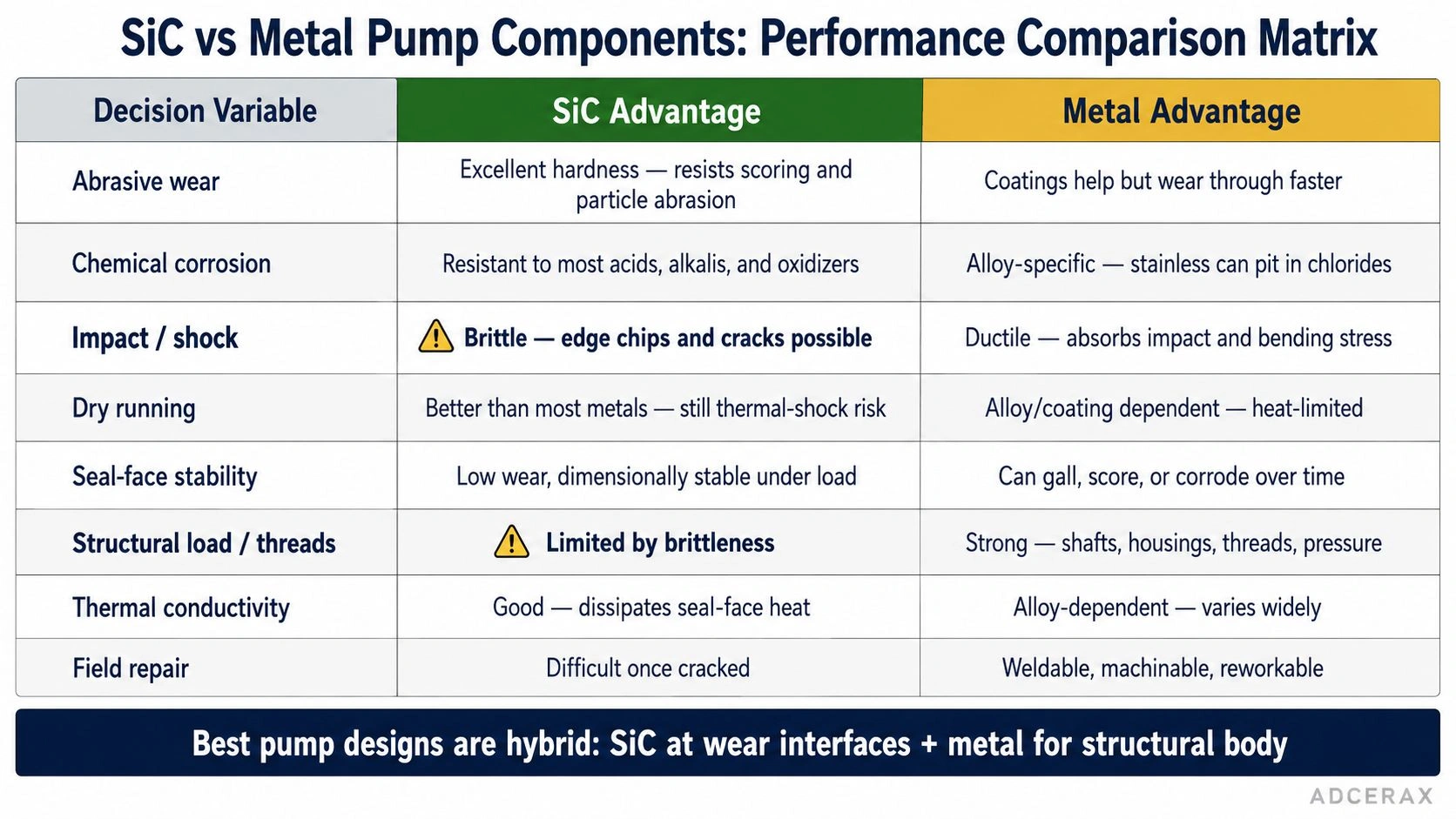
SiC as the wear and corrosion surface. In pumps, SiC is strongest at the tribological interface — the surface where sliding, rotating, or rubbing contact occurs between moving parts and fluid. Seal faces, wear sleeves, bearing and bushing surfaces, thrust washers, and liner bore surfaces are locations where SiC's hardness and chemical resistance extend service life compared with metals that would corrode, score, gall, or abrade under the same conditions.
Metal as the structural and impact-tolerant body. The pump shaft, casing, impeller, fasteners, and pressure-retaining envelope require ductility and toughness. A metal shaft can deflect slightly under radial load and spring back; an SiC shaft would crack. A metal casing can absorb momentary pressure spikes; a full-SiC pump body would require careful engineering to avoid stress concentrations that lead to brittle fracture.
Why hybrid pump designs often beat single-material designs. The most successful industrial pump designs for chemical service — magnetic-drive pumps, ANSI process pumps, and canned-motor pumps handling aggressive fluids — use metal casings, metal shafts, and metal impellers paired with SiC seal faces, SiC sleeves, and SiC bearings. This combination captures the structural performance of metal and the wear and corrosion performance of SiC at exactly the locations where each material is most needed.
Where SiC outperforms metal in pumps
After establishing the functional split, the application conditions that favor SiC over metal can be mapped to specific pump components and service environments.
[CITE: Published mechanical seal face material guidance confirms that SiC provides high hardness, wear resistance, and strong chemical capability and is often specified for lubricating media with high solids content — and published ceramic properties data describes silicon carbide as one of the hardest fine ceramics with high chemical resistance and retained strength at elevated temperatures — confirming that SiC's pump component advantages are material-property-driven rather than incremental, and that corrosion resistance, hardness, and wear resistance together make SiC the strongest candidate at tribological pump interfaces where metals score, corrode, or lose clearance.]
The Pump Component Material Direction table maps each common pump component to its material fit:
| Pump component | SiC fit | Metal fit | Common hybrid approach |
|---|---|---|---|
| Mechanical seal ring | Strong fit | Metal holder/spring hardware | SiC face in metal seal assembly |
| Shaft sleeve | Strong fit in corrosion/wear zones | Metal shaft core | SiC sleeve over metal shaft |
| Bearing/bushing | Strong fit in mag-drive and chemical pumps | Metal housing | SiC bearing in metal cartridge |
| Thrust plate | Strong fit where wear dominates | Metal backing if impact/load high | SiC wear face with metal support |
| Impeller | Limited unless specially designed | Strong fit for toughness and complex geometry | Metal impeller with ceramic wear surfaces |
| Pump casing | Rare as full SiC | Strong fit as pressure boundary | Metal casing with ceramic liner |
| Valve seat | Strong fit in abrasive/corrosive service | Metal holder | SiC seat insert |
| Liner/sleeve | Strong fit as wear barrier | Metal shell | SiC liner inside metal housing |
Corrosive chemical fluids. Metals corrode under specific acid-base-chloride-oxidizer combinations that are commonly encountered in chemical transfer, process fluid handling, and water treatment. Stainless steels can pit under chloride attack; carbon steel corrodes in most acids; even nickel alloys and titanium have pH and oxidizer boundaries. SiC is resistant to most concentrated acids, alkalis, and oxidizing media at elevated temperature, making it practical for pump wear surfaces in service where alloy selection alone cannot prevent corrosion-driven failure.
Abrasive slurries and particle-loaded liquids. In slurry service, seal face scoring, sleeve wear, and bearing clearance loss are driven by hard particles grinding between mating surfaces. SiC's hardness — typically 2400–2800 HV for dense grades — significantly exceeds the hardness of most pump metals and even many hard coatings. In pump applications with fine abrasive solids at moderate velocity, SiC tribological components can outlast metal parts by factors of three to ten.
Seal-face scoring and leakage reduction. Metal seal faces — including hardened steel, chrome oxide-coated, and Stellite surfaces — can develop scoring, grooves, and wear marks over time in abrasive or corrosive fluids. Once the face is scored, leakage rates increase and the seal must be replaced. SiC/SiC or SiC/carbon seal pairs resist scoring and maintain flat sealing surfaces over longer service intervals. The silicon carbide seal rings at ADCERAX are designed for precision sintered sealing bodies in acidic, high-corrosion environments where metal seal faces fail prematurely.
Dimensional stability and low clearance drift. Metal sleeves and bearings can corrode in service, building oxide layers that change the running clearance with the mating surface. SiC has negligible corrosion-driven dimensional change in most chemical service environments, which means initial clearances remain stable over service life.
The silicon carbide sleeves at ADCERAX cover pump sleeves, shaft protection sleeves, and bearing bore sleeves for chemical and industrial fluid handling, and the ceramic pump component range addresses wet-end pump parts for dosing, metering, and plunger pump applications.
Where metal or tungsten carbide still wins
After establishing where SiC is strong, the material's limits — and the conditions where metal or tungsten carbide remains the better choice — must be equally clear.
SiC is hard but brittle. Its fracture toughness is typically around 3–4 MPa·m^(1/2) — far below the values for ductile metals or tungsten carbide grades. In pump applications where the primary failure mode is impact, severe vibration, high mechanical shock, or assembly-induced stress concentrations, SiC is at a disadvantage.
Impact and vibration. Slurry pumps handling large-diameter solid particles, pumps that regularly run against closed valves or through cavitation events, and pumps in vibration-intensive mechanical environments present impact loads that can chip or crack SiC components even when the wear resistance of SiC would otherwise be beneficial. Published guidance on SiC mechanical seals confirms that SiC is preferred for wear and corrosion resistance, while tungsten carbide is more suitable where higher fracture resistance, shock, and vibration are present.
Pressure-boundary and structural loading. Any pump component that forms part of the pressure boundary — casings, covers, flanges, and connections — needs ductility that SiC does not provide. A pressure-boundary crack in a metal casing is detectable and often reparable; in SiC, it is catastrophic. Metal should always remain for pressure-retaining structural components.
Threaded, bolted, and complex mechanical features. Pump components with internal threads, cross-holes, keyways, or flanged connections transmit loads through stress concentrations that brittle ceramics are poorly suited to. Metal hardware provides the fastened, adjustable, field-serviceable assembly features that SiC cannot reliably substitute.
Why tungsten carbide may beat SiC in impact-heavy seal duty. Tungsten carbide has higher fracture toughness than SiC and can provide a harder surface than most metals without the brittleness of monolithic SiC. In pumps where both wear resistance and mechanical shock resistance are required — high-pressure rotary seals, aggressive slurry handling with coarse particles, pumps with significant shaft runout — tungsten carbide grades often provide a better combination of toughness and hardness than SiC.
Do not misdiagnose pump failure as material selection alone
When a pump component — SiC or metal — fails earlier than expected, the material selection is one of several possible causes. Attributing failure to the wrong variable leads to expensive material changes that do not fix the underlying problem.
Dry running vs SiC material failure. SiC seal faces that crack or heat-check are most commonly the result of dry running — loss of fluid film lubrication — rather than the SiC material being inadequate. A pump that loses prime, runs against a closed valve, or operates at low flow without sufficient cooling will generate enough heat at the seal face to fracture SiC regardless of grade. The correct fix is lubrication and flow control, not a different seal material.
Cavitation and particle erosion vs corrosion. Surface pitting on metal wet-end components may come from cavitation damage — which requires correction of NPSH margin, impeller geometry, or system curve — rather than from chemical corrosion that could be addressed with an alloy upgrade or SiC substitution.
Misalignment and shaft runout vs seal-face material. Seal faces that show uneven wear patterns, spiral contact tracks, or thermal distortion are most commonly reacting to shaft misalignment, bearing wear, or runout rather than to material incompatibility. Installing SiC faces on a shaft with uncontrolled runout will not improve seal performance.
Press-fit stress and edge chipping. SiC pump sleeves and bearings that chip at edges during installation were typically press-fit without adequate chamfer design, lubrication, or temperature management. The solution is an installation procedure change, not a different ceramic material or supplier.
The Failure Diagnosis Matrix maps observed pump problems to better diagnostic questions:
| Observed problem | Common assumption | Better diagnostic question |
|---|---|---|
| SiC seal face cracked | SiC is unsuitable | Was there dry running, thermal shock, misalignment, or impact? |
| Metal sleeve scored | Metal grade is poor | Are solids, cavitation, or poor lubrication causing abrasion? |
| SiC bearing chipped | Ceramic quality issue | Was press-fit, edge chamfer, or assembly impact controlled? |
| Metal pump part corroded | Need harder material | Is the alloy chemically compatible with pH/chloride/oxidizer level? |
| Seal leaks after upgrade | SiC did not work | Was mating face, spring load, flatness, and elastomer compatibility checked? |
| High temperature at seal | Material friction issue | Is flow, cooling, lubrication, or face load wrong? |
| Rapid failure in slurry | Wrong SiC grade | Are particle size, velocity, and shock load beyond brittle ceramic limit? |
Diagnosis should be based on failure location, wear pattern, thermal history, and fluid analysis before any material change is specified.
RFQ checklist for SiC or metal pump components
A complete RFQ for SiC or metal pump components must provide both the fluid environment and the mechanical context — without both, the supplier cannot confirm whether SiC, tungsten carbide, a metal alloy, or a hybrid design is appropriate for the specific failure mode being addressed.
[CITE: Engineering guidance on SiC and metal pump component specification confirms the complete RFQ sequence: pump type and component type, fluid chemistry including pH/acid/base/chloride/oxidizer/temperature, solids content with particle size and hardness, operating speed and pressure with face load and shaft diameter, dry-running risk and lubrication history, current failure mode with photographs, mating material for tribological pair, surface finish and flatness requirement, edge chamfer specification, and inspection method — because fluid chemistry and failure mode together determine whether SiC, tungsten carbide, stainless steel, duplex alloy, or a hybrid design is appropriate, and a supplier who receives only "pump seal ring" or "shaft sleeve" cannot confirm material route, surface finish, or mating pair without the remaining application context.]
| RFQ field | Why it matters | Recommended wording |
|---|---|---|
| Pump type | Defines duty and geometry | "Mag-drive/centrifugal/slurry/dosing/chemical pump" |
| Component type | Defines load and wear mode | "Seal ring/sleeve/bearing/bushing/liner/thrust plate" |
| Fluid chemistry | Primary corrosion driver | "pH, acid/base, chloride, oxidizer, solvent, temperature" |
| Solids content | Primary wear driver | "Solids %, particle size, hardness, concentration" |
| Speed and pressure | Controls friction and stress | "RPM, pressure, face load, shaft diameter" |
| Dry-running risk | Controls thermal shock and cracking | "Expected dry-run duration or upset condition" |
| Current failure mode | Guides material choice | "Corrosion, scoring, galling, cracking, leakage, vibration" |
| Mating material | Controls tribology | "SiC/SiC, SiC/carbon, SiC/TC, SiC/metal pairing" |
| Surface finish | Controls leakage and wear | "Ra, flatness, lapping, sealing face finish" |
| Edge design | Prevents chipping | "Minimum chamfer/radius on edges and holes" |
| Inspection | Prevents acceptance disputes | "Flatness, density, porosity, CMM, visual, leak test" |
RFQ fields are the minimum for a pump component material selection inquiry; add duty cycle, thermal cycling, NPSH margin, and replacement access as needed.
For new pump applications or first-time upgrades from metal to SiC, running one service period with the SiC component alongside continued monitoring of seal temperature, flux, and leakage provides the most reliable qualification data before committing to fleet-wide material upgrades.
Evaluating SiC or metal pump components? Share your pump type, fluid chemistry, solids content, temperature, pressure, speed, dry-running risk, current material, failure photos, and component drawing. ADCERAX can review whether SiC, tungsten carbide, stainless steel, nickel alloy, zirconia, alumina, or a hybrid design fits the pump duty; turnaround depends on inquiry complexity — no commitment required at this stage.
Frequently Asked Questions
Is SiC better than metal for pump components?
SiC is better when the dominant failure mode is corrosion, abrasive wear, seal-face scoring, or dimensional clearance drift in aggressive chemical fluids. Metal is better when the part must absorb impact, bending, threading, pressure loads, or field repair. Most demanding pump designs use both — metal for the structural body and SiC for wear and sealing interfaces.
Which pump parts benefit most from SiC?
Seal rings, shaft sleeves, bearings, bushings, thrust plates, wear rings, valve seats, and liners benefit most because these are tribological interface components rather than pressure-boundary structures. SiC's hardness and chemical resistance extend service life at these locations more than at structural parts.
When should metal still be used instead of SiC?
Metal should remain for pump casings, shafts, impellers, threaded components, structural frames, and pressure-boundary hardware. Metal also remains the safer choice when the dominant failure mode is impact, severe vibration, or mechanical shock — conditions where SiC's brittleness creates cracking risk.
Is SiC better than tungsten carbide for pump seals?
SiC is often better for corrosion resistance and low-friction wear in chemically aggressive fluids. Tungsten carbide may be better where shock, vibration, and mechanical impact dominate — tungsten carbide has higher fracture toughness than SiC and handles impact loading more reliably, while SiC's corrosion resistance is superior in most acid and alkali environments.
What is the main disadvantage of SiC pump components?
The main disadvantage is brittleness. SiC can chip or crack under impact, dry-running thermal shock, edge loading, shaft misalignment, or improper assembly forces — even when it has excellent wear and corrosion resistance. Chamfer design, installation procedure, and dry-running protection are all required alongside material selection.
What information should I send to a supplier for SiC pump parts?
Send the pump type, component drawing with all dimensions and tolerances, fluid chemistry (pH, acid/base, chloride, oxidizer, temperature), solids content and particle size, operating speed and pressure, shaft diameter and face load, dry-running risk, current material and failure history with photographs, required mating material pair, surface finish and flatness requirement, edge chamfer requirement, and inspection method.