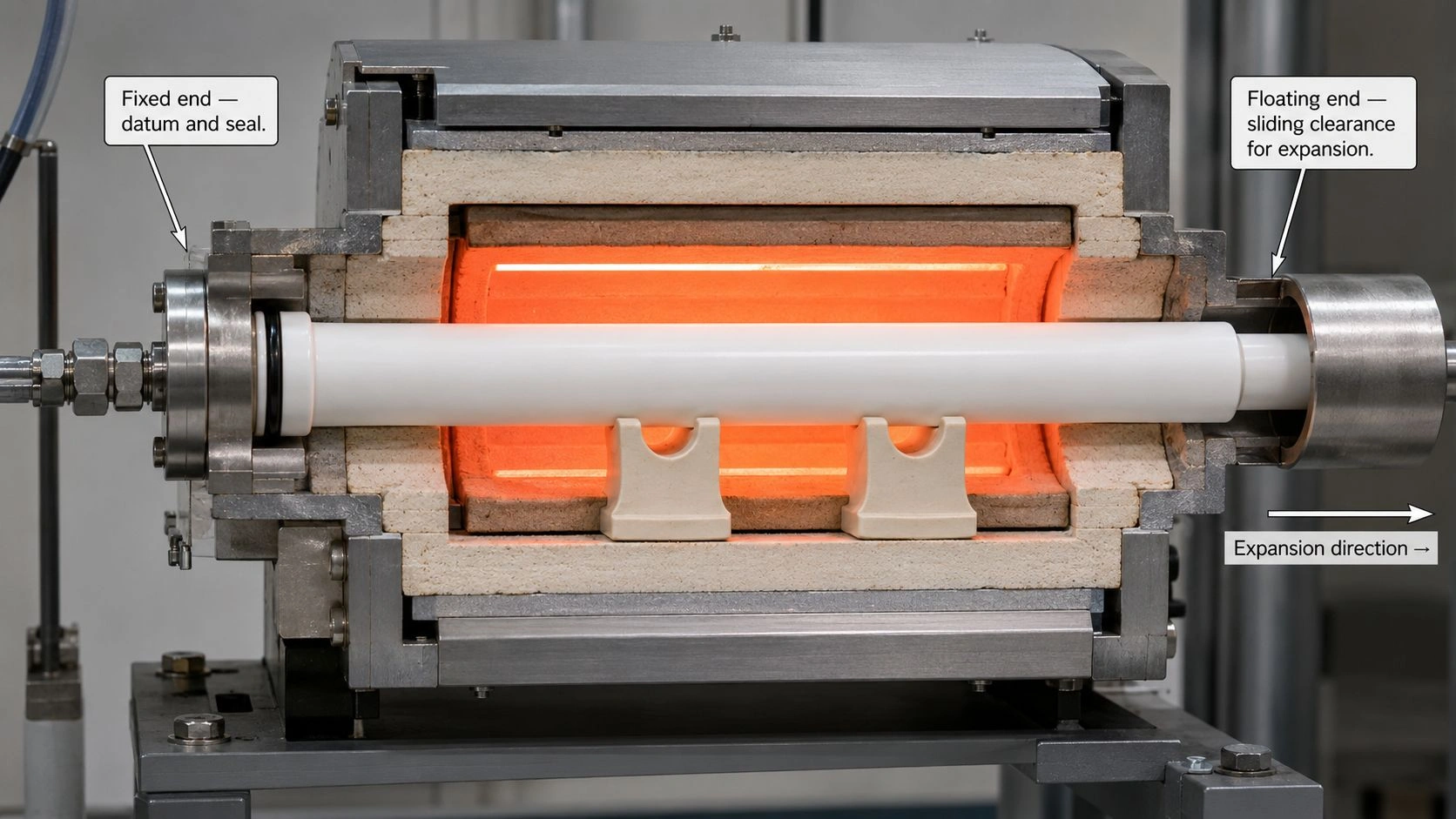
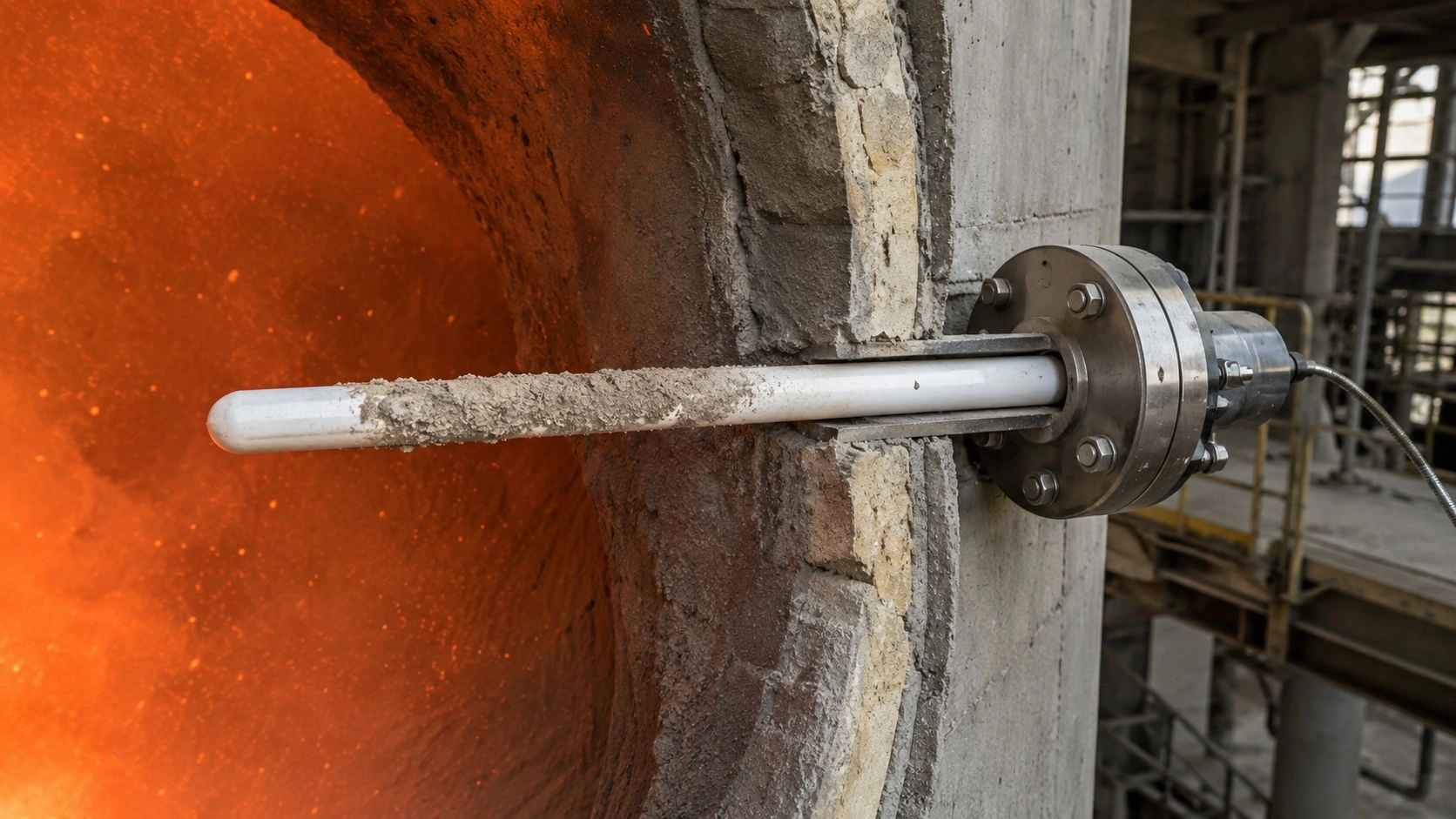
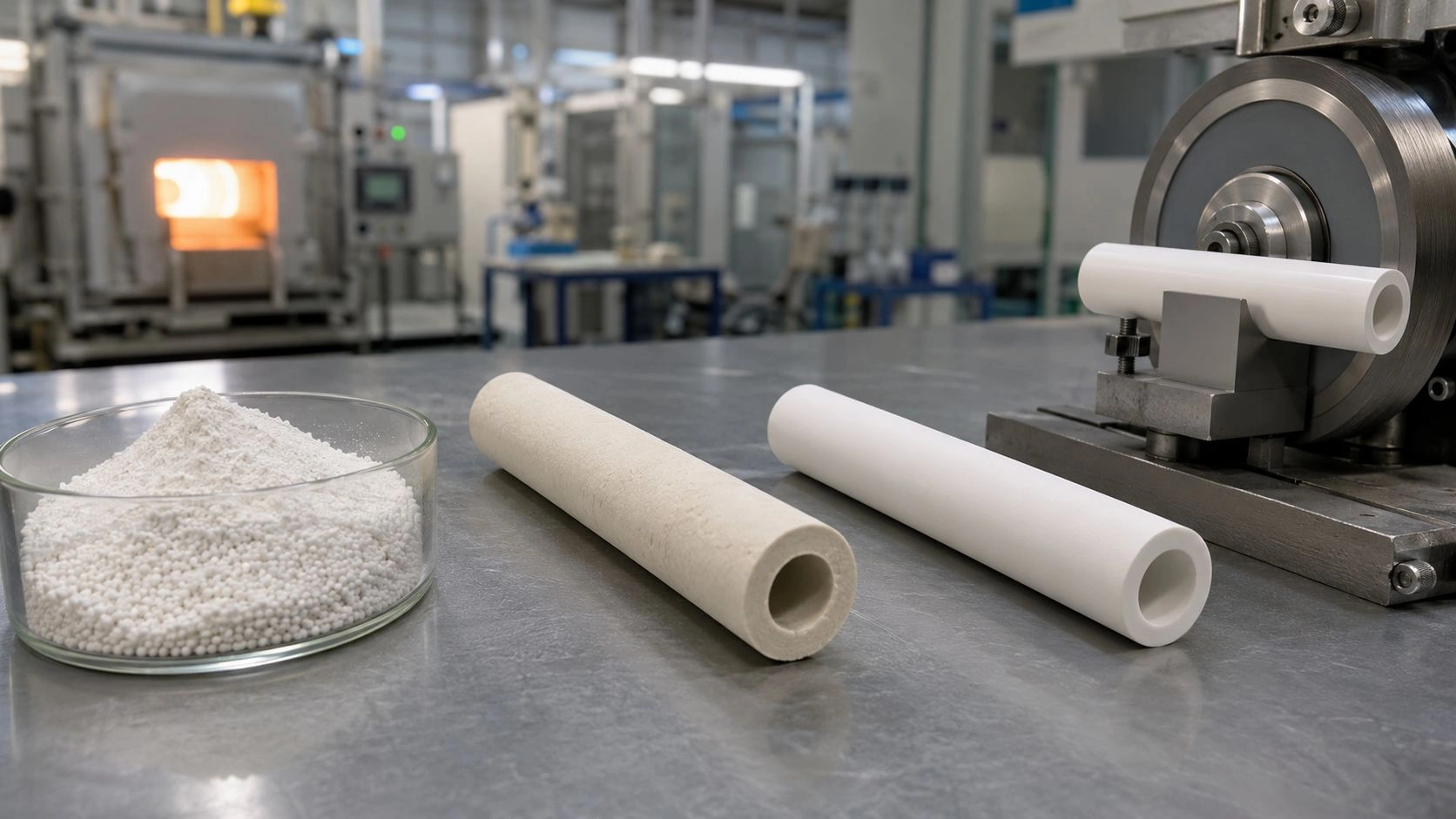
A geometry selection guide for equipment engineers and process engineers — covering when round geometry is the better default, when square geometry solves assembly problems round cannot, what mistakes happen when shape is chosen by availability rather than assembly function, which dimensions belong in the RFQ, and how to verify the selection before repeat ordering.
Choose a round alumina ceramic tube when the electrode assembly needs concentric conductor clearance, circular holder fit, simple insertion, or uniform radial insulation. Choose a square alumina ceramic tube when the assembly needs anti-rotation, flat-face support, fixed active-face orientation, or a square holder pocket. The right choice depends on holder geometry, bore position, wall thickness, unsupported length, electrical insulation path, active electrode face, and whether the part will be stocked, custom-formed, or pilot-approved.
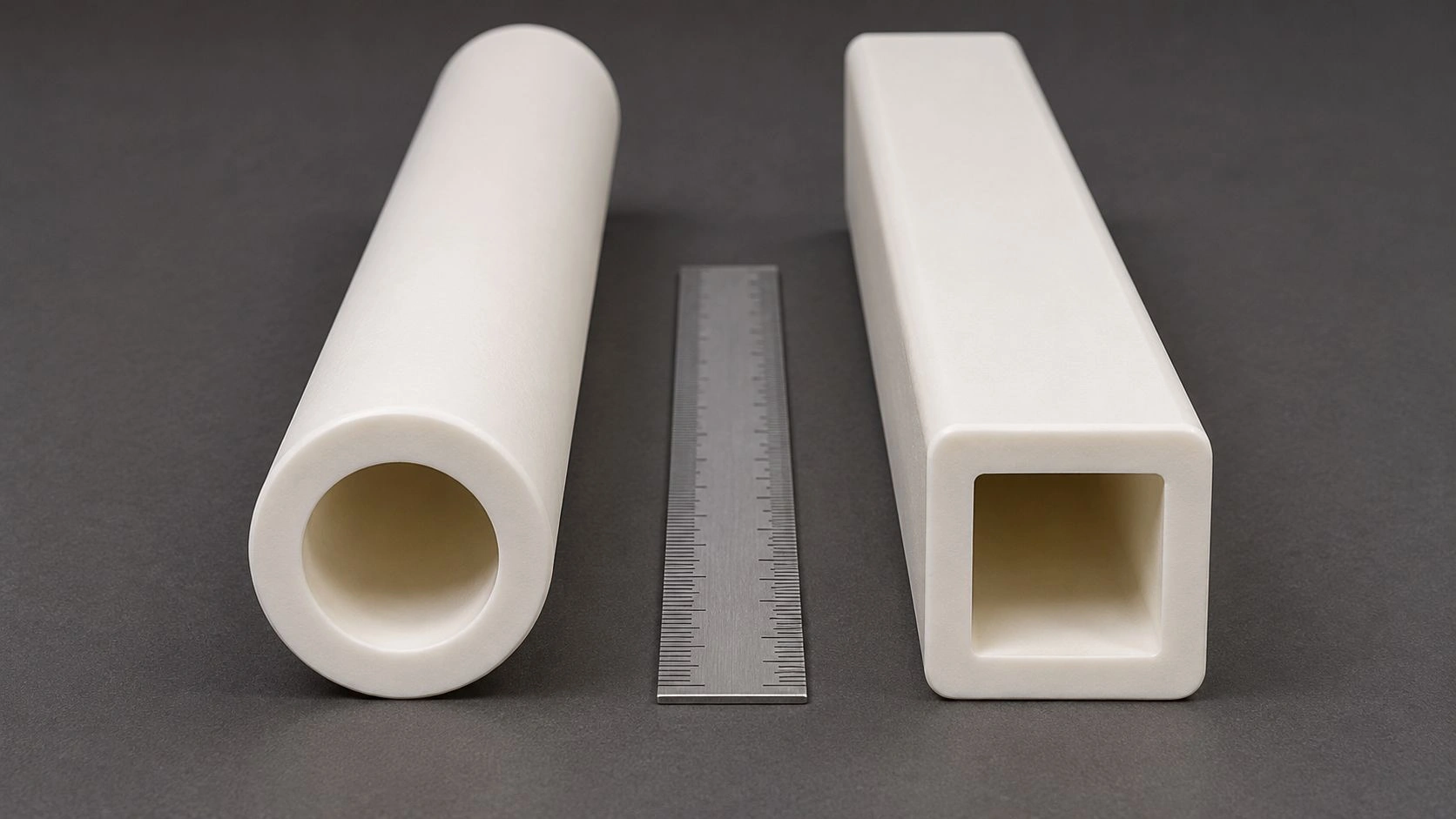
Round and square alumina ceramic tubes should be selected by holder geometry, conductor clearance, and face-orientation needs rather than by stock availability alone.
When Is a Round Alumina Ceramic Tube the Better Default?
A round alumina ceramic tube is often the appropriate starting geometry when the electrode assembly is built around a centered conductor, a circular bore or sleeve pocket, or a cylindrical holder that does not require the ceramic part to stay in a fixed rotational position.
Round cross-section provides uniform radial clearance around the conductor and eliminates the need to specify a reference face — which simplifies insertion, rotation during installation, and replacement in legacy assemblies. The tube can be slid in from either end, aligned by centering, and replaced without worrying about face orientation. For electrode tube applications where the primary function is an insulating sleeve, conductor guide, or spacer in a protected housing, this symmetry is a genuine advantage.
Pillar Technologies confirms that round and square ceramic electrodes are both used in corona-treatment electrode assemblies, with the shape depending on application need. For applications that do not require fixed orientation or flat-face seating, round geometry remains a practical and often more readily available starting point.
Round tubes are also generally easier to manufacture in standard diameter and wall-thickness combinations, which affects stock availability and lead time. However, this does not mean round is always simpler to specify — concentricity, bore quality, wall-thickness consistency, and straightness all still matter and should be included in the RFQ.
Round geometry becomes insufficient when the holder pocket is square, when the ceramic tube must resist rotation during service, when one specific face must align with a discharge gap, reference plane, or clamping surface, or when the electrode assembly specifies a flat active face as part of the discharge geometry.
ADCERAX's alumina ceramic tubes product line covers round alumina tubes for electrical insulation, high-temperature, and structural applications in electrode assembly roles.
When Should an Electrode Assembly Use a Square Alumina Ceramic Tube?
A square alumina ceramic tube becomes the appropriate choice when the electrode assembly requires one or more of the following: anti-rotation, flat-face support, controlled active-face orientation, or seating in a square holder pocket.
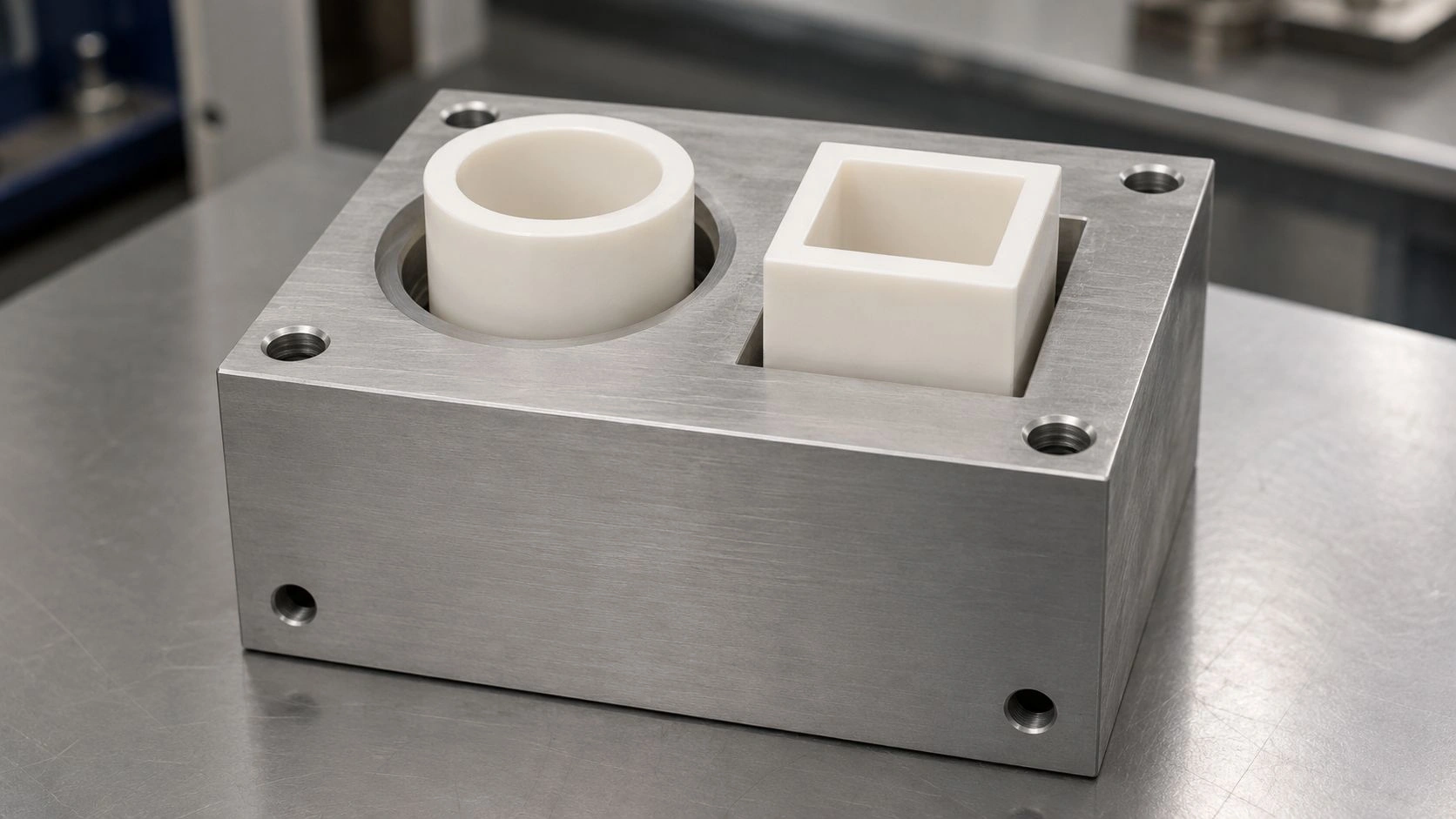
Matching the ceramic tube shape to the holder pocket helps prevent rocking, corner loading, and uncontrolled rotation in electrode assemblies.
Anti-rotation and flat holder pockets
When the ceramic electrode tube sits in a holder with a square or rectangular pocket, a square tube matches the holder geometry and resists rotation by contact between its flat faces and the pocket walls. This is meaningful when the electrode tube must maintain a consistent discharge face orientation relative to the ground roll or material surface over the operating cycle. A round tube in a square pocket would seat with corner contact rather than face contact, creating localized stress and allowing rotation.
Active face and reference face orientation
In some corona electrode assemblies, one face of the ceramic tube functions as the active electrode face — the surface closest to the discharge gap. Square geometry allows this face to be defined on the drawing, specified as a reference face for holder seating, and held in a known orientation during assembly and replacement.
ADCERAX's custom ceramic tubes product line covers drawing-based square tube manufacturing where face orientation, reference face, and anti-rotation features can be specified as part of the component definition.
Square tube additional requirements
Square geometry adds specification complexity that round tubes do not have. The reference face must be defined — which face seats against the holder and which face faces the discharge gap. Corner radius or edge chamfer must be specified to control handling damage and reduce stress concentration at the corners. Wall-thickness balance across all four sides should be verified, particularly for tubes formed from extruded or machined blanks. Twist — the degree to which the cross-section rotates along the tube's length — must be controlled for long tubes where face orientation must be consistent from end to end.
Why Shape Availability Is Not the Same as Assembly Suitability
The most common selection mistake for electrode assembly ceramic tubes is choosing square or round from a supplier catalog based on what is available, rather than from the assembly's actual holder, conductor, and discharge geometry.
A square alumina ceramic tube that can be inserted in any of four orientations — because the holder does not constrain its position — provides no anti-rotation benefit and may seat inconsistently in the holder. A round alumina ceramic tube in a square holder pocket may seat on two corners with line contact rather than flat contact, concentrating stress and allowing the tube to rock during service.
The electrode tube in a corona assembly or high-voltage insulating structure simultaneously controls conductor clearance, insulation distance, discharge-face position, holder seating stability, maintenance access, and replacement repeatability. None of these functions is guaranteed by selecting the correct cross-section shape alone — the dimensions, tolerances, surface finish, edge condition, and holder interface must all be specified together.
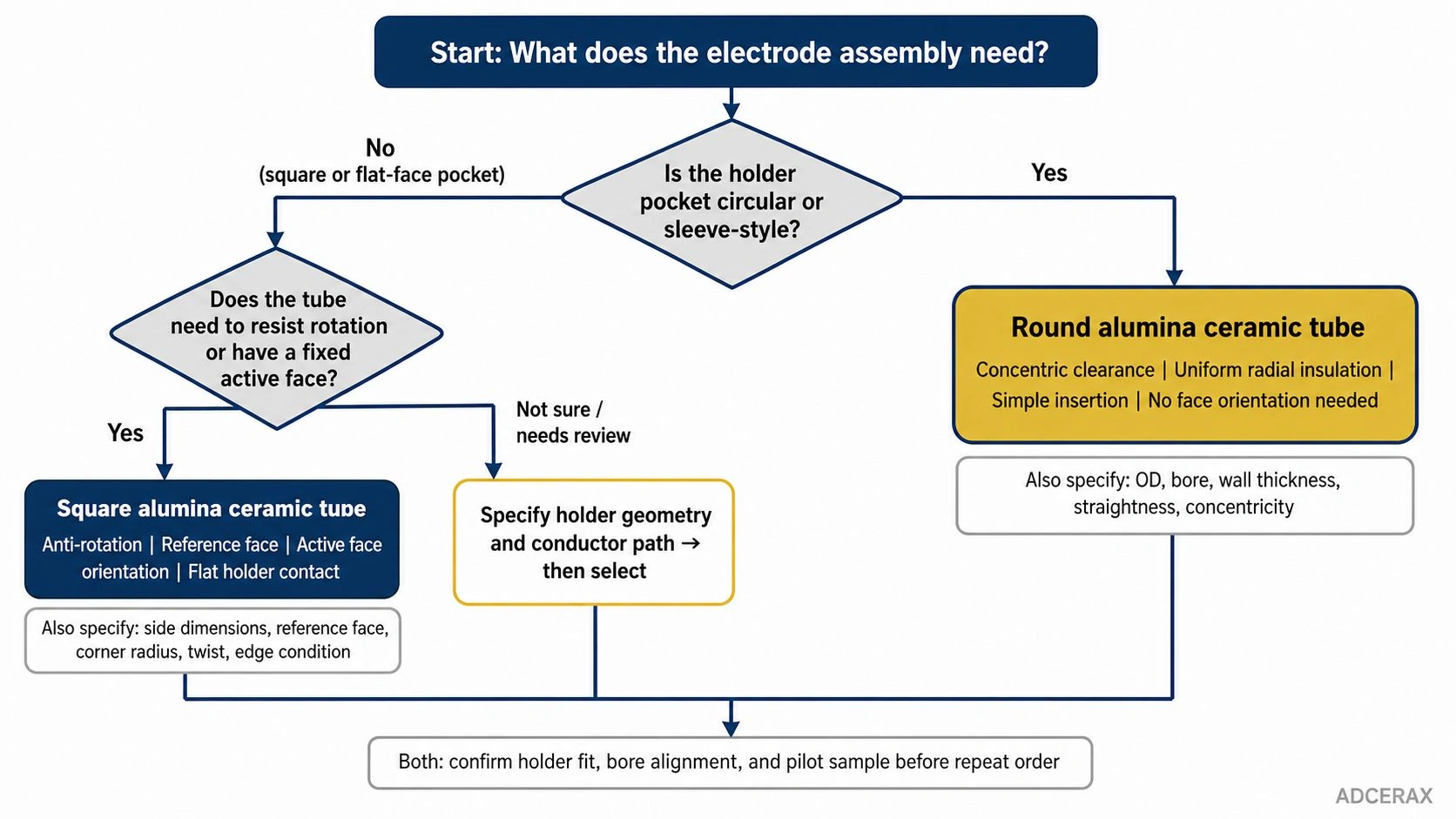
The tube shape decision should start from the electrode assembly requirement, especially holder pocket geometry, anti-rotation need, and active-face orientation.
IEC 60672-2 applies to ceramic and glass-ceramic materials for electrical insulation and confirms that test-piece results on materials are only a guide when the actual finished component differs in size and shape. This principle applies directly here: the material data supports the RFQ, but the electrode tube's actual suitability in the assembly depends on component-level geometry and installation review, not on material testing alone.
ADCERAX's electrical ceramics application page covers alumina ceramic components in electrical isolation and high-voltage insulation roles where this component-level review is standard practice.
Which Dimensions Should Be Specified for Round and Square Electrode Tubes?
The following table maps each selection factor to the recommended cross-section and specification action.
| Selection Factor | Round Alumina Ceramic Tube | Square Alumina Ceramic Tube | Decision Direction |
|---|---|---|---|
| Holder geometry | Circular bore, sleeve, or round pocket | Square pocket or flat-face holder | Match the holder geometry first |
| Conductor clearance | Best for centered conductor and uniform radial gap | Works when bore position and wall balance are specified | Round for concentric clearance |
| Rotation behavior | Can rotate unless mechanically keyed | Resists rotation in a matching square pocket | Square for fixed orientation |
| Active face | No natural flat reference face | Flat face can serve as active or reference face | Square for directional face control |
| Edge condition | No external corners to chip | Corners require radius and edge-condition specification | Square needs explicit edge requirement |
| RFQ complexity | Generally lower | Higher — reference face, twist, edge condition all needed | Square needs a more complete drawing |
| Availability | Often easier to stock in standard sizes | More often custom or application-specific | Confirm stock or custom status early |
Values indicative; verify per applicable ASTM/IEC standards with supplier-specific test data.
For round alumina ceramic tubes, specify:
- OD (outer diameter) and ID (inner diameter) or bore diameter
- Wall thickness — nominal and acceptable tolerance
- Total length and active length if different
- Bore concentricity if required for the specific conductor clearance
- Straightness — maximum bow over the tube length
- End geometry — chamfer, face flatness, or flush-end requirement
- Any slots, grooves, notches, or conductor-clearance features
- Operating temperature and electrical insulation requirement
For square alumina ceramic tubes, specify:
- Outer side length (all four sides, with symmetry or individual side dimensions if needed)
- Bore dimensions and bore position relative to the reference face
- Wall thickness on each side
- Reference face designation — which face seats against the holder
- Active face designation — which face orients toward the discharge or ground side
- Corner radius or edge chamfer on all four exterior edges
- Straightness — maximum bow over the tube length
- Twist — maximum angular deviation from end to end
- Edge condition in no-chip zones near seating or discharge path
- Total length and any length tolerance at the seating end
For both cross-sections, include: operating temperature, electrical insulation function, holder contact surfaces, no-chip zones near tracking paths, inspection method, material grade, and pilot sample requirement.
ASTM C373 covers density, porosity, and specific gravity for fired ceramic bodies, confirming that material verification alongside component geometry review is the appropriate standard for supplier evaluation.
RFQ and Pilot Verification Before Ordering
The following checklist converts the shape selection and dimension specification into a supplier-verifiable RFQ and a pilot approval plan.
Fields to include in the RFQ (both shapes):
- Tube shape (round or square) confirmed as a functional requirement, not a preference
- Material grade and alumina purity
- All critical dimensions (see dimension lists above)
- Holder geometry description — pocket dimensions, contact faces, seating length
- Conductor clearance requirement and bore position tolerance
- Reference face and active face designation for square tubes
- Operating temperature, voltage condition, or insulation requirement
- No-chip zones and edge condition requirements
- Surface finish by area if required
- Quantity and urgency
- Pilot sample requirement and inspection baseline
For round tubes specifically — also confirm:
- Whether concentricity between OD and bore is a CTQ requirement
- Whether free rotation is acceptable or whether a mechanical key or pin is needed
For square tubes specifically — also confirm:
- Twist control over the full tube length
- Corner radius acceptable range
- Whether the supplier can hold the reference face dimension to the stated tolerance
- Whether any four-face orientation is acceptable at installation, or whether there is a defined correct orientation
Before committing to a repeat order, approve one pilot sample and inspect for: holder fit without forcing, bore concentricity or bore position relative to reference face, straightness and twist, edge condition at corners and seating zones, and dimensional compliance at all CTQ points. Freeze the approved drawing and inspection baseline before placing the production quantity.
Specifying square or round alumina ceramic electrode tubes for your assembly? Send the tube shape decision (or describe your holder pocket geometry if undecided), bore dimensions, wall thickness, length, electrical insulation requirement, operating temperature, and whether a pilot sample is needed before repeat production. ADCERAX engineers confirm geometry feasibility, available material grades, and RFQ requirements — no order commitment required at this stage.
Frequently Asked Questions
Is a square alumina ceramic tube better than a round one for electrode assemblies?
Not automatically. Square is better when the assembly requires anti-rotation, flat-face seating, or fixed active-face orientation. Round is better when the assembly needs concentric conductor clearance, circular holder fit, and free rotation does not affect function. Neither shape is universally superior — the holder geometry and assembly function determine the correct choice.
When should a round alumina ceramic tube be selected?
Select round geometry when the electrode tube serves as an insulating sleeve, conductor guide, or spacer in a circular holder or sleeve pocket, where the primary requirement is concentric bore clearance and uniform radial insulation. Round is also preferred when free rotation during insertion or service does not affect assembly function.
When should a square alumina ceramic tube be selected?
Select square geometry when the holder uses a square pocket, the ceramic tube must resist rotation, or one specific face must align with a discharge gap, clamping surface, or reference plane. Always specify the reference face, corner radius, twist tolerance, and edge condition requirements for square tubes.
What dimensions must be specified for square alumina electrode tubes?
Include outer side dimensions, bore size and position relative to the reference face, wall thickness on each side, corner radius, reference face designation, active face designation, straightness, twist, edge condition in no-chip zones, total length, end geometry, and material grade. Separately specify operating temperature, holder contact surfaces, and pilot approval plan.
Do square ceramic electrode tubes require pilot sample approval?
Pilot sample approval is recommended when the square tube is long, orientation-sensitive, tightly fitted to a holder, custom-formed, or positioned near a high-voltage discharge path. A first article verifies holder fit, face orientation, bore alignment, twist, edge condition, and dimensional compliance before the repeat production quantity is released.