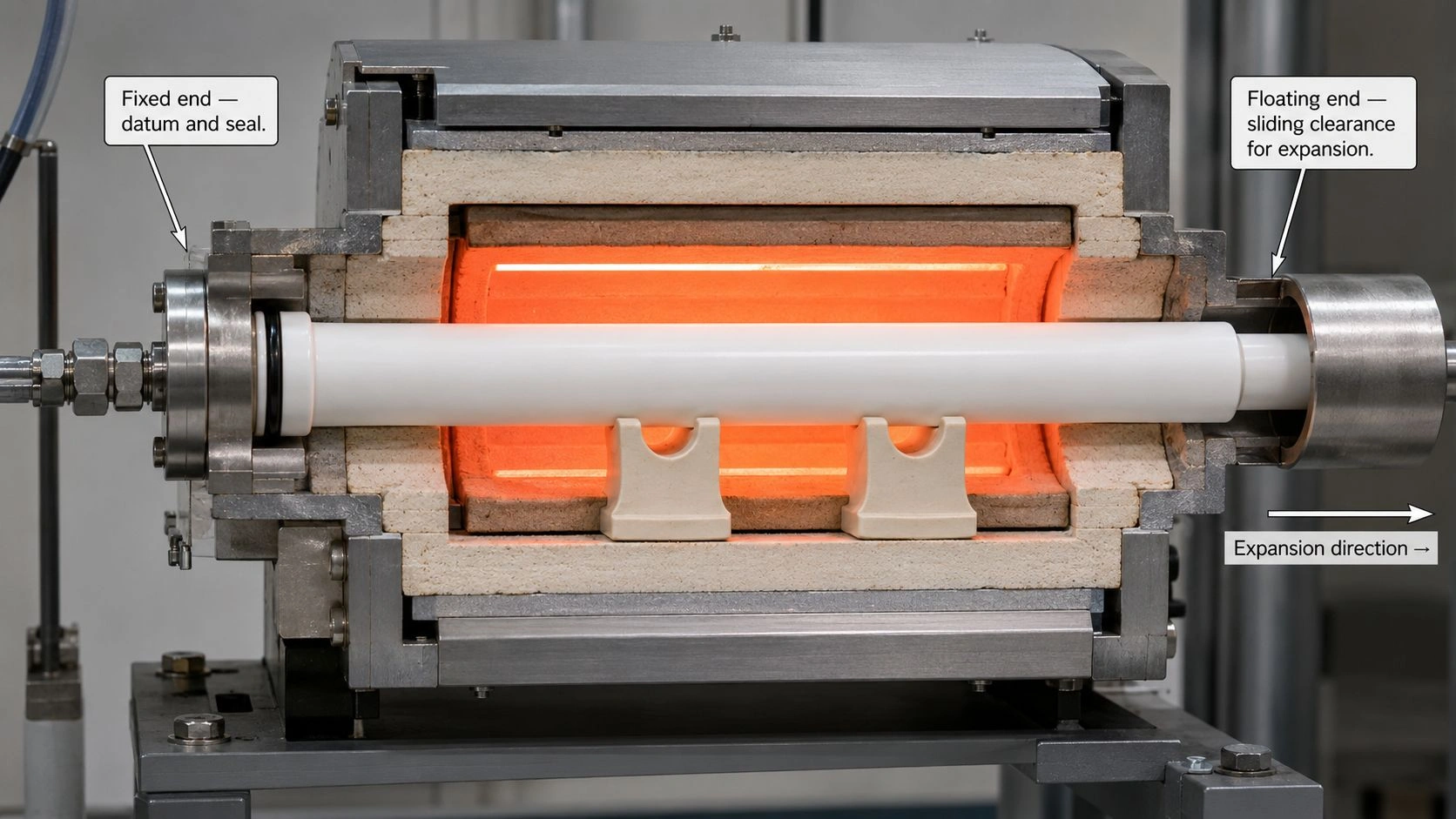
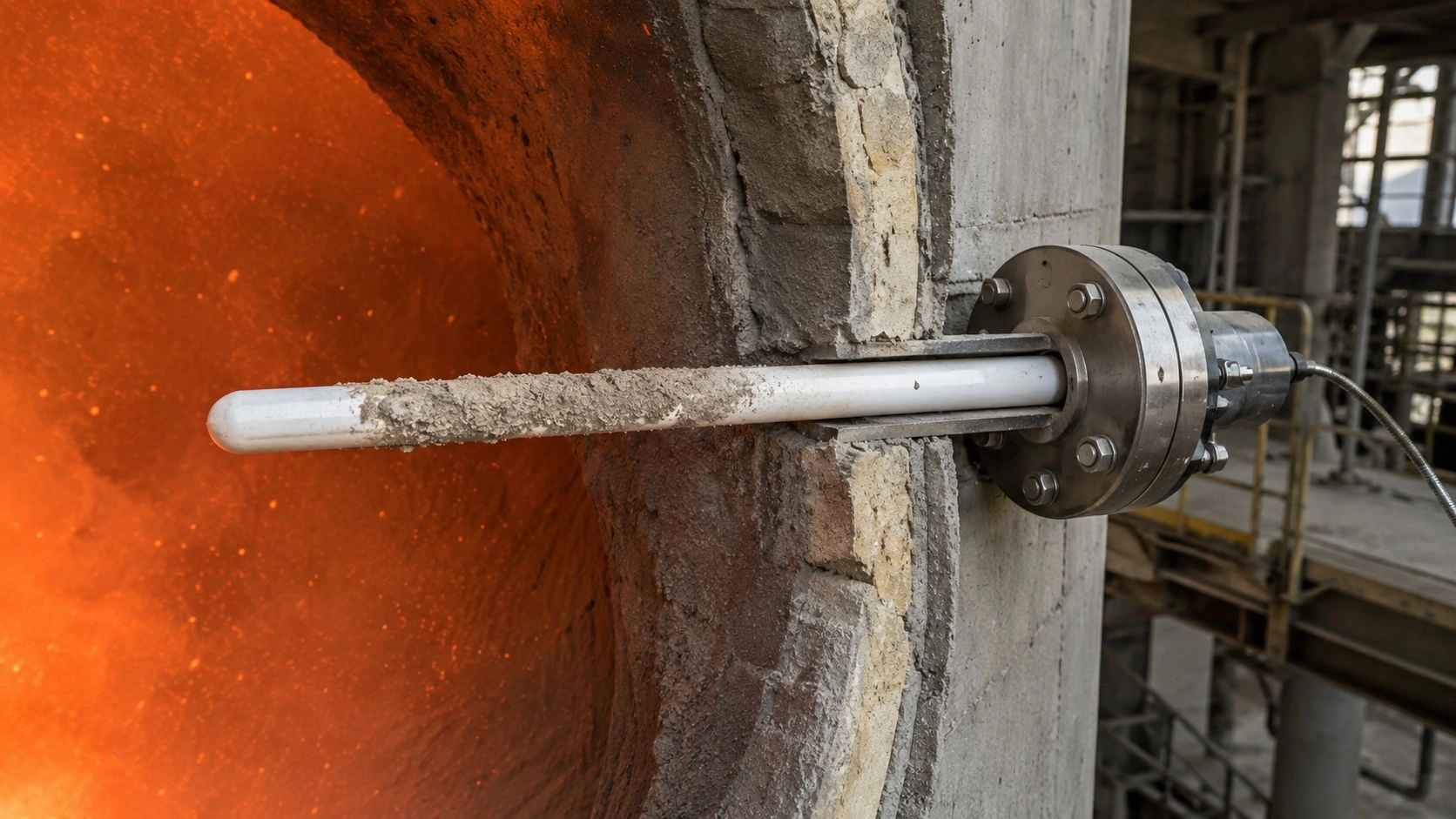
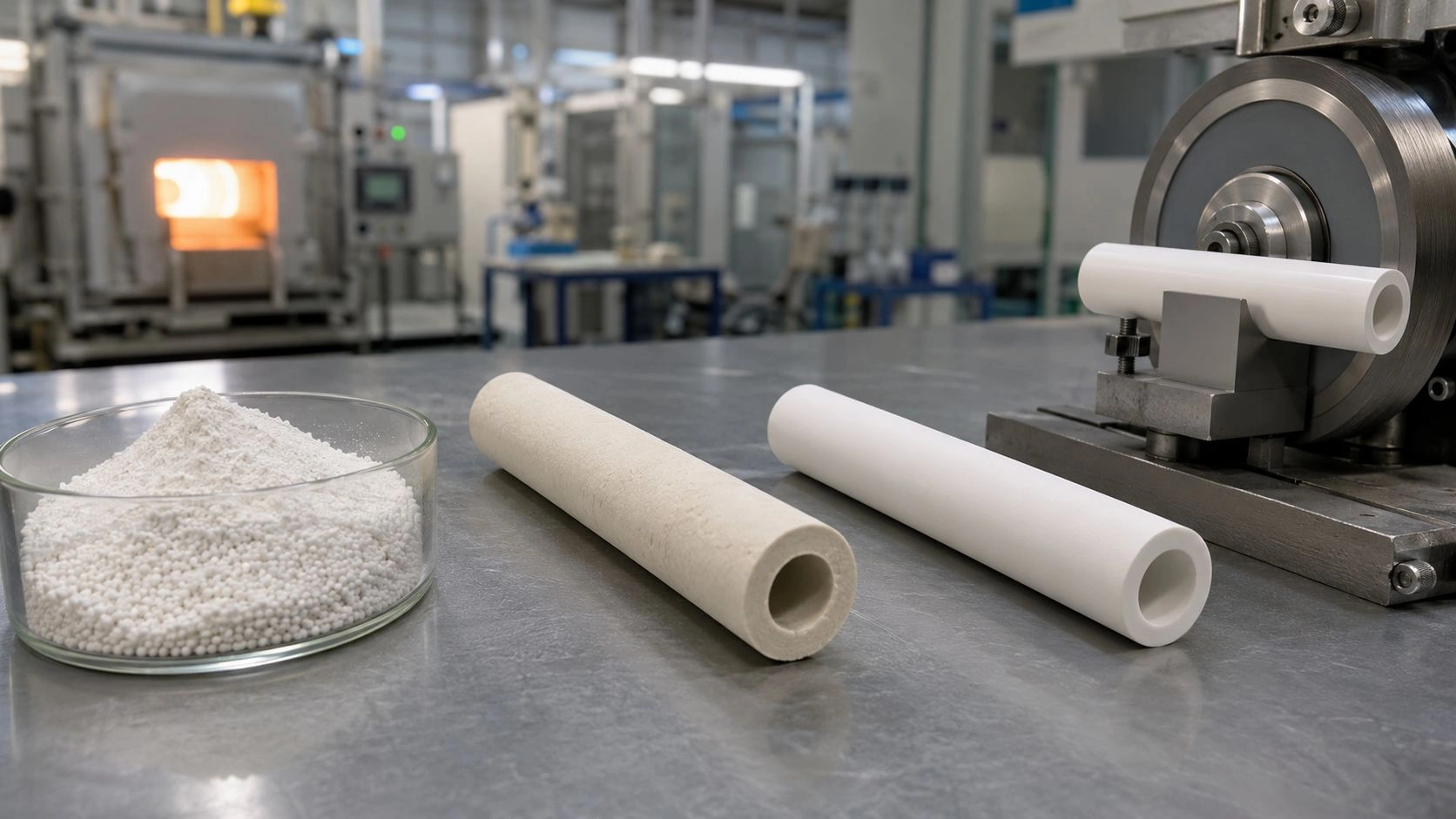
For ceramic electrode tubes, choose alumina purity by duty—not by “higher is always better. Start from ADCERAX material selection grades AD-ALU-950 or AD-ALU-990 for general insulation and moderate industrial service; step to AD-ALU-995, AD-ALU-997, or AD-ALU-999 only when temperature margin, vacuum/cleanliness, metallization surface quality, corrosive atmosphere, or insulation consistency actually limits the design. Geometry, wall thickness, surface finish, and installation constraints sit beside purity in every decision. For catalog forms, bore layouts, and the grade catalog that backs electrode-tube builds, review the alumina tube product line and grade options.
This guide is for process, equipment, and procurement readers who must translate service conditions into a ADCERAX SKU for ceramic electrode tubes. It does not replace a full dimensional RFQ package, and it does not treat legacy percentage families as sellable ADCERAX catalog lines. Use the tables and decision map below to pick AD-ALU-950 / 990 / 995 / 997 / 999, then confirm wall, bore, length, and atmosphere on the drawing.
3-Minute Decision: Which AD-ALU Grade for Electrode Tubes?
3-minute decision: Use this map when you need alumina purity options for ceramic electrode tubescorona sleeves, conductor-guidance tubes, or insulating electrode assembliesand must pick a ADCERAX SKU without over-specifying.
- General insulation / moderate industrial duty → AD-ALU-950 (95%, IEC C795). Default start for protected housings, routine corona/insulation sleeves, and mechanical spacing where contamination from secondary phases is not process-limiting and continuous exposure stays within the 1400 C selection ceiling for that grade.
- Higher continuous temperature or tighter electrical consistency → AD-ALU-990 (99%, C795). Step up when you need more thermal headroom (selection ceiling 1600 °C) or a denser C795 body without jumping into the full C799 cluster.
- Vacuum, cleaner surface, or metallization-sensitive duty AD-ALU-995 (99.5%, C799). Prefer when outgassing risk, surface cleanliness for bonding, or impurity control matters more than raw catalog cost.
- Demanding high-temperature / clean electrical service AD-ALU-997 (99.7%, C799). Use when the duty sits near the 1700 C selection ceiling or when process owners explicitly call for lower secondary-phase content than 995.
- Maximum purity / highest selection ceiling in the ADCERAX grade set AD-ALU-999 (99.90%, C799). Reserve for contamination-critical or ultra-high-temperature selection cases (ceiling 1750 C). Do not default here for every HV sleeve.
- Drawing says 96% / 99.6% / 99.5% / 99.7% only map to ADCERAX grades; do not treat legacy % labels as ADCERAX SKUs. Translate to the nearest AD-ALU-950 / 990 / 995 / 997 / 999 and lock IEC class + geometry on the RFQ.
Default path for most electrode-tube RFQs: start 950 or 990 escalate only when a named duty driver forces C799 verify wall, bore, straightness, and atmosphere on the drawing. Purity never replaces geometry.
ADCERAX Alumina Grades for Ceramic Electrode Tubes
ADCERAX sells ceramic electrode tubes against ADCERAX SKUs tied to IEC 60672-3 composition groups C795 and C799. The table below is the selection source of truth for this page—use it instead of leftover three-band purity language from older catalogs. Long-term temperature values are material selection ceilings—they are not load life, not guaranteed continuous operating temperature under arbitrary atmosphere or mechanical load, and not a substitute for application engineering. Density, MOR, and thermal conductivity figures are typical ADCERAX grade references for comparing grades, not finished-tube guarantees at every length and wall.
| SKU | Al₂O₃ wt% (nom.) | IEC 60672-3 | Density g/cm³ typ. | MOR MPa 20 °C typ. | k W/(m·K) 25 °C | Selection ceiling C |
|---|---|---|---|---|---|---|
| AD-ALU-999 | 99.90 | C799 | 3.94 | 315340 | 35–42 | 1750 |
| AD-ALU-997 | 99.70 | C799 | 3.94 | 330 | 35–40 | 1700 |
| AD-ALU-995 | 99.50 | C799 | 3.90–3.92 | 320350 | 3038 | 1650 |
| AD-ALU-990 | 99.00 | C795 | 3.803.91 | 300–320 | 24 | 1600 |
| AD-ALU-950 | 95 | C795 | 3.75 | 280 | 18–25 | 1400 |
Dielectric strength is listed as a typical ~10 kV/mm value on a 5 mm specimen across these grades—the same column order of magnitude. Do not infer that purity alone sets breakdown performance on a finished electrode tube; wall thickness, surface condition, edges, atmosphere, and temperature dominate installed insulation behavior. Volume resistivity at 20 °C is typically >10¹ Ω·cm for AD-ALU-999 / 997 / 995 / 990 and >10¹² Ω·cm for AD-ALU-950. Tube straightness for 997 / 995 / 990 / 950 is commonly controlled to 1 mm/m against the drawing datum—confirm the callout on your print. IEC grouping is a composition class, not a finished-part certificate.
When AD-ALU-950 (95%, C795) Is Enough
AD-ALU-950 is the practical starting grade for many ceramic electrode tubes whose job is stable electrical insulation, conductor guidance, mechanical spacing, or structural support inside a protected industrial assembly.
- Continuous thermal exposure stays comfortably inside the 1400 C selection ceiling for AD-ALU-950, with margin for your real atmosphere and fixture—not a promise of load life at that number.
- Insulation is set by wall thickness and clearance geometry that already meet the application owner’s voltage plan; you are not chasing ultra-clean vacuum surfaces.
- Secondary-phase impurity content in the alumina body is not a process-limiting contamination source.
- The tube does not require metallized ceramic-to-metal bonding or an active-braze interface that needs a cleaner C799 face.
- Standard manufacturability (round/square forms, commercial straightness, as-fired or lightly finished bore) is adequate.
Routine corona-treater sleeves, general industrial insulating sleeves, conductor-guidance tubes, and spacers in protected housings often stay on AD-ALU-950 when the drawing is honest about duty. If your traveler only says “high purity alumina tube” without a temperature, atmosphere, or metallization driver, challenge the uplift before you leave C795. Cost and lead time usually favor AD-ALU-950 when insulation clearance and mechanical fit are already proven on that grade.
For broader insulation-component context beyond tube purity, see electrical ceramics application coverage. Keep this page focused on electrode-tube grade selection; application hubs explain component families without changing the ADCERAX SKU list.
When to Step Up to AD-ALU-990 / 995 / 997 / 999
Escalate purity only when a named limiting condition appears. Treat geometry and wall thickness as co-equal variables—raising Al₂O wt% will not rescue an undersized wall or a chipped edge.
- Temperature margin → AD-ALU-990, then 995 / 997 / 999. Move up when continuous or cyclic exposure needs the higher selection ceilings: 1600 °C (990), 1650 °C (995), 1700 °C (997), or 1750 °C (999). Always read those figures as selection ceilings, not as guaranteed load life under your load and gas chemistry.
- Vacuum / clean process → AD-ALU-995 or higher (C799). Prefer when outgassing, surface cleanliness, or impurity control can contaminate the process or spoil a seal face.
- Metallization / ceramic-to-metal bonding → typically AD-ALU-995 / 997 (sometimes 999). Cleaner surfaces support more consistent metallization practice; do not hard-bind a single SKU to one proprietary bonding recipe—confirm the route with process engineering. For bonding-family context, see metallized ceramic bonding.
- Corrosive or aggressive vapor atmosphere C799 cluster. When secondary glass phase in lower-purity bodies may be preferentially attacked, start at AD-ALU-995 and justify 997 / 999 from the actual chemistry and temperature plan.
- Insulation consistency at tight margins AD-ALU-990 or C799. Use when local body uniformity matters more than catalog price, still verifying dielectric performance at the finished geometry rather than from purity marketing language.
When two drivers conflict—for example moderate temperature but metallization—grade the SKU to the stricter cleanliness or bonding need, then re-check the selection ceiling against the real hold temperature. Do not stack “one grade higher for safety on top of an already justified C799 step without a second named risk; that habit recreates the over-specification problem this page is meant to stop.
Unusual cross-sections (square or multi-bore electrode stations) still need purity and CTQs on the same travelerform options such as square alumina tube forms do not change the ADCERAX grade logic. Round vs square changes fixturing and CTQ marking, not the allowed AD-ALU list.
Why Higher Purity Is Not Automatically Better
Defaulting every ceramic electrode tube to AD-ALU-999 adds cost, can lengthen lead time, and may tighten machining risk at edges without improving function when duty does not require it. Higher purity can improve cleanliness, thermal selection headroom, chemical resistance, and body uniformity—but only when those traits address a real limiting condition.
An AD-ALU-997 tube with wrong bore position, inadequate wall, poor straightness, or chipped edges will still fail assembly. An AD-ALU-950 tube with correct geometry, verified clearance, and controlled surface condition can be fully appropriate for moderate-duty insulation. Higher-purity bodies may also need different firing and machining practice; long tubes with tight bow callouts deserve as much attention as the wt% line on the RFQ.
IEC 60672-2 test-piece data are guidance when the finished component differs in size and shape. Pair that caution with the grade-table note that dielectric strength ~10 kV/mm is a typical specimen value shared across grades: purity is not a standalone dielectric-strength dial. Volume resistivity differences (C799-class bodies typically >10¹ Ω·cm at 20 °C versus >10¹ Ωcm for AD-ALU-950) matter for some leakage-sensitive designs, but they still do not license ignoring wall thickness or surface damage.
Component review—geometry, wall, finish, edges, atmosphere, temperature—remains mandatory for every SKU. If a prior lot failed from chip-out or bow, fix the machining and straightness callouts before you buy a higher wt% as a proxy repair.
Condition-to-Grade Mapping
Map the limiting service condition to a starting ADCERAX SKU, then verify the items in the right-hand column before you freeze the drawing. Do not rebuild selection around legacy 95–96% / 9999.5% / 99.7%+” columns.
| Application condition | Starting SKU | Must verify |
|---|---|---|
| Protected industrial insulation / corona sleeve / conductor guide | AD-ALU-950 | Wall vs voltage plan; OD/ID; length; edge condition; atmosphere |
| Higher continuous temperature with C795 still acceptable | AD-ALU-990 | Selection ceiling 1600 C vs real duty; straightness; fixture stress |
| Vacuum, clean process, or metallization-sensitive surface | AD-ALU-995 | Surface state; bonding route; outgassing risk; C799 class on RFQ |
| Demanding high-temperature clean electrical service | AD-ALU-997 | Selection ceiling 1700 C; chemistry; machining on long tubes |
| Contamination-critical or maximum ADCERAX-grade thermal selection headroom | AD-ALU-999 | Selection ceiling 1750 C; justification vs 997; cost/lead-time trade |
| Legacy drawing 96% / 99.6% / 99.5% / 99.7% only | Map to nearest ADCERAX grade | Do not treat as ADCERAX SKU; rewrite as AD-ALU SKU + IEC class |
Purity Fields for the RFQ (Not the Full Checklist)
Keep purity language short on this page. On the RFQ, call out:
- Preferred ADCERAX SKU (AD-ALU-950 / 990 / 995 / 997 / 999) and IEC class (C795 or C799)
- Nominal AlO wt% only as a cross-checknot a substitute for the SKU
- Continuous temperature plan vs the grade’s selection ceiling (not claimed load life)
- Atmosphere (air / vacuum / corrosive vapor) and any metallization or braze route
- Whether legacy % wording on an old drawing must be remapped (do not treat 96% / 99.6% as ADCERAX SKUs)
For the full dimensional CTQ, bore, packaging, and quote-package checklist, use the custom electrode tube RFQ checklist—this article only locks the purity fields so the two posts do not duplicate intent. Send SKU + IEC class on the same line as OD/ID (or width/height), wall, length, and any metallization note so purchasing does not reintroduce a bare percentage string.
Frequently Asked Questions
Is higher alumina purity always better for ceramic electrode tubes?
No. Higher purity helps when temperature selection headroom, cleanliness, corrosive atmospheres, metallization surfaces, or body uniformity are limiting. For protected moderate-duty insulation, AD-ALU-950 or AD-ALU-990 is often the correct economic and technical start. Over-specifying AD-ALU-999 without a duty driver wastes cost and can complicate machining.
When is AD-ALU-950 acceptable for an electrode tube?
When the primary job is insulation, guidance, or spacing in a protected industrial environment, continuous exposure stays inside the AD-ALU-950 selection ceiling of 1400 C with application margin, metallization is not required, and secondary-phase contamination is not process-limiting. Confirm wall thickness and geometry against the voltage and fixture plan.
How do I choose between AD-ALU-995 and AD-ALU-997?
Both are C799. Prefer AD-ALU-995 when vacuum/cleanliness or metallization surface quality drives the step-up from C795 and the 1650 C selection ceiling covers the thermal plan. Move to AD-ALU-997 when the duty needs the higher 1700 °C selection ceiling or when process owners explicitly require lower secondary-phase content than 995. If the only difference on the RFQ is a half-percent wt% preference with no temperature or cleanliness driver, stay on AD-ALU-995 and spend the review time on wall and bore CTQs. Compare real temperature, atmosphere, and bonding route—not marketing wt% alone.
Does purity alone determine dielectric strength?
No. ADCERAX grade table lists dielectric strength as a typical ~10 kV/mm (5 mm specimen) across these grades. Finished-tube breakdown depends on wall, surface, edges, atmosphere, and temperature. Treat purity as one input beside geometry; do not buy a higher SKU solely to “raise kV/mm” on paper.
Our drawing says 96% or 99.6% alumina—what should we specify?
Do not treat legacy 96% / 99.6% / 99.5% / 99.7% labels as ADCERAX SKUs. Map to the nearest ADCERAX grade—AD-ALU-950, AD-ALU-990, AD-ALU-995, AD-ALU-997, or AD-ALU-999—state the IEC C795 or C799 class, and freeze geometry and verification on the RFQ.
Is a ceramic electrode tube the same as a vacuum-coating HV electrode?
No. This page covers purity selection for ceramic electrode tubes (insulator/discharge tubes specified by OD/ID or profile, wall, bore, and length). A vacuum-coating HV electrode or flange feedthrough is a different component family. Keep purity and RFQ language on the tube geometrydo not paste feedthrough flange packages into an electrode-tube grade decision.