Machining Hot-Pressed BN: Tolerances vs Graphite
Hot-pressed BN can be machined to close tolerances and is much more machinable than ordinary structural ceramics, but graphite usually remains the stronger route for the finest details and the most forgiving tolerance performance. The practical split is this: use graphite when machining performance, thin features, and fine-detail repeatability dominate; use hot-pressed BN when you need good machinability plus electrical insulation, higher oxidation temperature, or non-wetting molten-metal performance.
That distinction — graphite for fine-detail machining freedom, BN for functional machinability — is more useful than the generic comparison that calls both materials easy to machine. This guide maps what BN can actually achieve in tolerances, explains why graphite still leads for extreme feature detail, identifies the wrong comparisons that lead to over-specified or mismatched drawings, and closes with the specification language that makes a BN or graphite machining RFQ technically actionable.
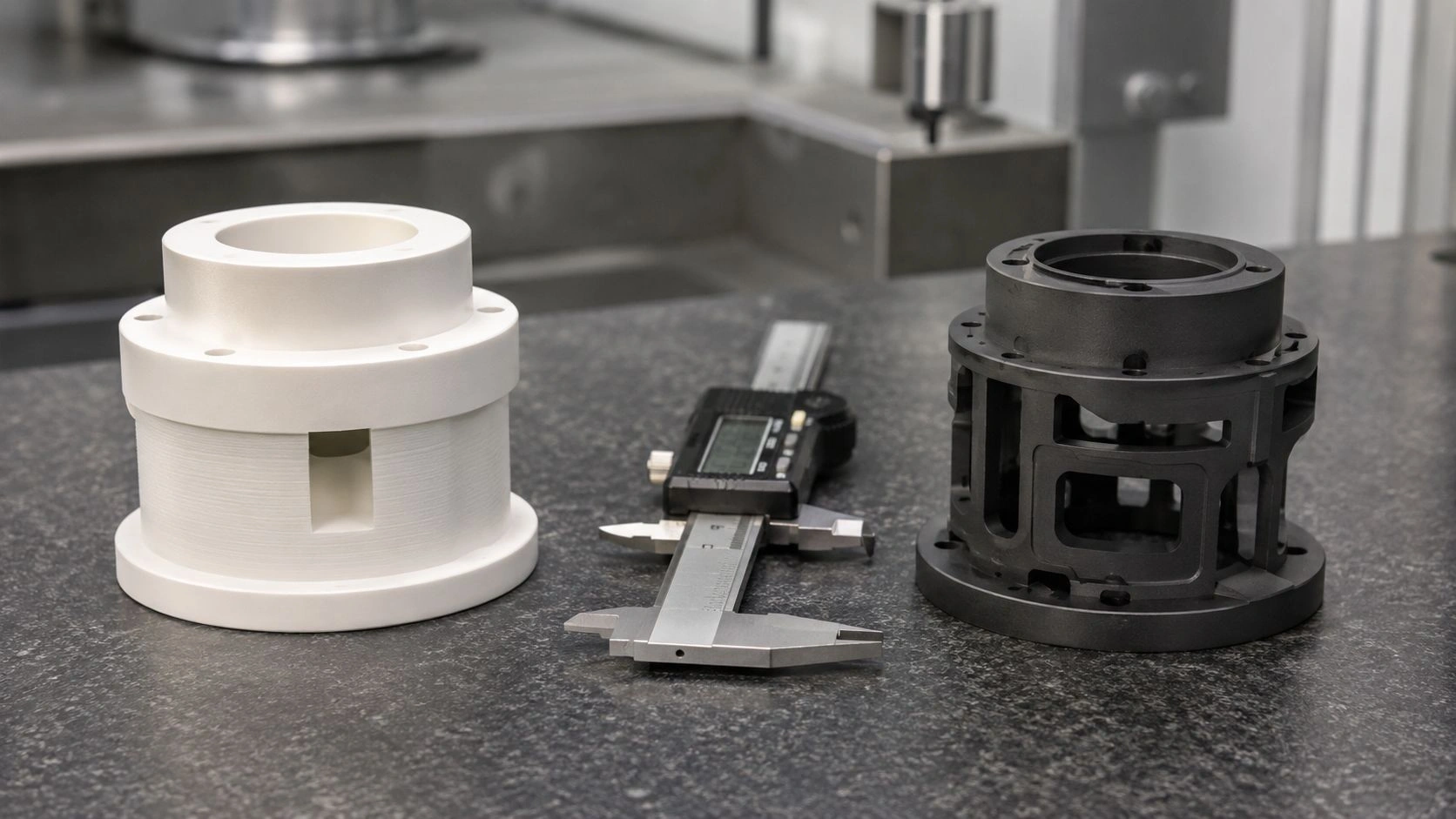
Hot-pressed BN and fine-grain graphite are both machinable without post-firing — but they serve different machining roles: BN for functional insulating precision parts, graphite for extreme fine-detail precision machining.
The boron nitride ceramic grades described in this guide — HPBN and binder-free high-purity BN grades — are the specific material family whose machining tolerance capabilities and limitations are compared against isotropic fine-grain graphite below.
What hot-pressed BN is actually good at in machining
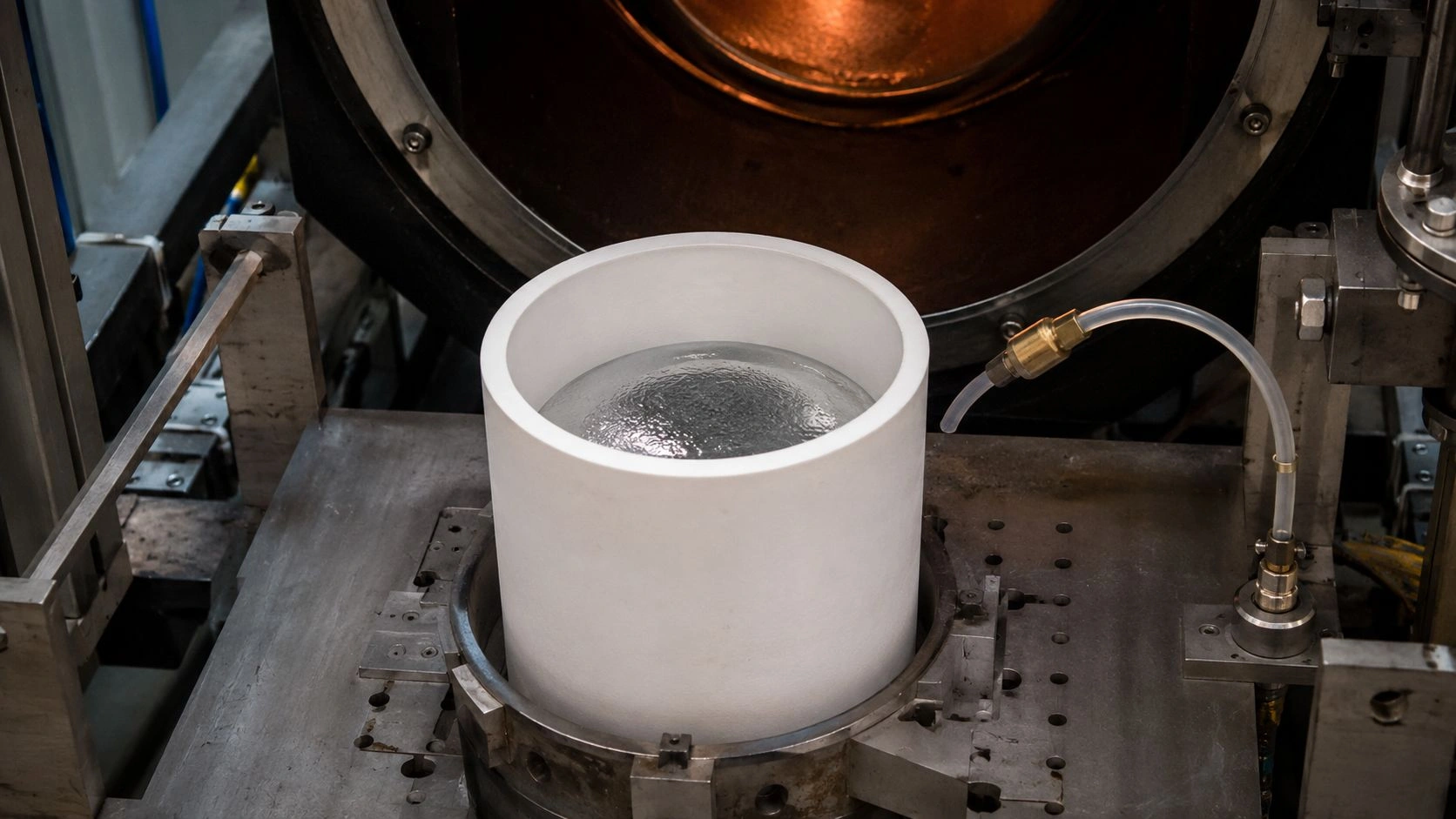
Hot-pressed BN is not easy to machine in a vague marketing sense — the available technical documentation is more specific than that. Published BN materials documentation describes solid BN as easily machinable to close tolerances in virtually any shape, usable without additional heat treatment or firing after machining, and capable of being machined into intricate shapes with narrow tolerances using high-speed steel or carbide tooling in some grades.
The most operationally useful published BN tolerance data comes from Saint-Gobain's machining bulletin for hot-pressed BN grades. That source gives expected tolerances of approximately ±0.002 in (0.05 mm) for most turning or finishing operations, and approximately ±0.005 in (0.125 mm) for lengthy bore holes or drilling. Those are real, documented manufacturing benchmarks — not theoretical material property claims — and they establish hot-pressed BN as a credible close-tolerance ceramic for precision parts.
What makes BN's machining case strongest is that it adds functions graphite does not. Published BN materials documentation consistently emphasizes electrical insulation, resistance to molten metals and slags, and useful service temperatures above graphite's practical oxidation limit. That means BN's machining argument is strongest when the part is not just a geometry problem but a geometry plus function problem.
Hot-pressed BN is anisotropic, and that matters for tolerance interpretation
Both Saint-Gobain's machining bulletin and published precision-ceramics documentation note that hot-pressed BN is anisotropic because the platy hexagonal BN structure orients during hot pressing. In practice, this means the tolerance performance, strength, and property uniformity of a hot-pressed BN part can vary depending on which direction relative to the pressing axis is being machined or loaded. This is different from isotropic fine-grain graphite, where the property distribution is nearly direction-neutral. For parts with functional features in multiple orientations — thin walls, perpendicular bores, off-axis load paths — the anisotropy of hot-pressed BN is a specification variable that must be acknowledged in the drawing notes.
BN is best understood as a machinable functional ceramic, not as a graphite substitute
The most useful framing for engineering decision-making is: BN belongs to the ceramic family that can be machined rather than to the machining material family that also happens to be a ceramic. That distinction matters because it sets the right expectation for tolerance discussions. BN achieves close tolerances. It does not typically achieve the same level of fine-detail feature richness that optimized isotropic graphite grades achieve when machined under ideal shop conditions.
Why graphite usually still leads for the finest details
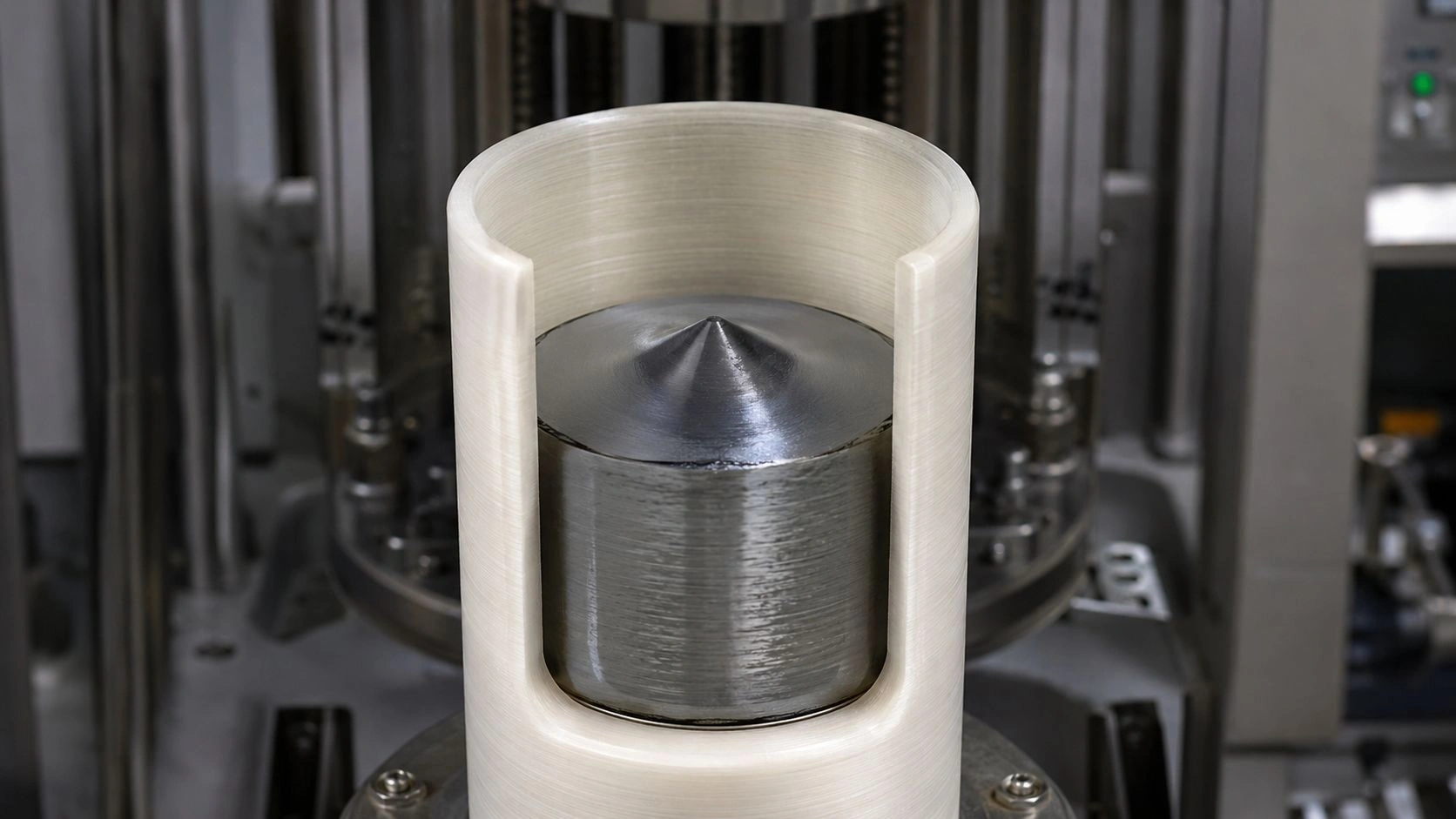
Graphite's real machining advantage in the precision materials literature is not that it alone can be machined — it is that leading graphite suppliers have specifically engineered isotropic fine-grain grades to push feature capability, property stability, and tolerance repeatability to finer levels than conventional machining materials. Published isotropic graphite documentation positions the material as developed specifically because industry demanded increasingly tighter and more stable properties. One officially published EDM-grade graphite specification states that ultrafine isotropic graphite can be machined to thicknesses of 0.1 mm or less, and grades for fine-detail EDM electrodes are specifically positioned for excellent surface finishes and intricate geometry.
That evidence is qualitatively different from BN's documented tolerance benchmarks. BN is supported by published expected tolerance windows from manufacturer machining bulletins — useful, specific, and directly applicable to design. Graphite is supported by a microstructural development story: isotropic fine-grain graphite was purpose-engineered to deliver the finest possible feature detail and most stable properties, with the specific claim that it pushes feature scale below what conventional materials achieve.
In manufacturing terms, that usually means graphite is the better first-look material when the drawing is dominated by very thin ribs, small radii, sharp-edged fine detail, tight feature-to-feature dimensional stability, or high-volume repeatability of complex geometry at or near the limits of machinability.
Isotropy gives graphite a more predictable machining starting point
The isotropic structure of fine-grain graphite means that the material behaves consistently regardless of machining direction — cuts, turns, bores, and slots all encounter the same material microstructure. For complex parts with features in multiple orientations, this property uniformity simplifies process setup, reduces the risk of directional tool load variation, and makes tolerance stability more predictable across the full feature set. Hot-pressed BN requires more attention to pressing-direction orientation before and during machining, which adds a process variable that isotropic graphite avoids entirely.
Oxidation threshold is graphite's main functional boundary
Published industrial graphite grade data documents oxidation thresholds for graphite grades in the range of approximately 440–470°C for 1% weight loss over 24 hours. A representative hot-pressed BN datasheet lists approximately 850°C in air for the same material. That gap — approximately 400°C — is the most important functional boundary in this comparison. For any part that must survive air service above approximately 450°C, graphite's machining advantage becomes irrelevant because the material has already reached its functional limit. BN's machining advantage in that context is not just acceptable — it is often the only route that combines precision machining with adequate temperature tolerance.
Which comparisons are most often wrong
Four wrong comparisons appear most often when engineers compare hot-pressed BN and graphite for precision machined parts:
"BN machines like graphite, so they are interchangeable." This overstates BN's machining equivalence. BN is described as machinable to narrow tolerances and graphite-like in structural character — hence "white graphite" — but published machining data and the anisotropy difference establish that they are not equivalent as precision-machining material families. BN is graphite-like in machinability compared with most structural ceramics, but not equivalent to optimized isotropic graphite for extreme precision-machining applications.
"Graphite is always better because it machines finer." This overstates graphite's general superiority. If the application requires electrical insulation, non-wetting behavior in molten-metal contact, or reliable air service above approximately 450°C, graphite's machining advantage is not the decisive criterion. A part that machines beautifully in graphite but oxidizes, conducts electricity, or wets to a molten metal is not the better part — it is the wrong material for the application.
"Use graphite-equivalent tolerances on BN drawings." There is no universal single graphite-machining tolerance, and published BN documentation provides feature-type-specific tolerance windows rather than one all-application number. Writing "graphite-equivalent tolerance" on a BN drawing is specifying a comparison category rather than a manufacturing requirement. The actionable language specifies the feature, the tolerance by feature type, the orientation relative to the hot-press axis, and the post-machining functional requirement.
"BN anisotropy is a minor detail." Anisotropy affects tolerance interpretation for any feature whose performance depends on property direction. For a simple turned diameter, orientation may not matter. For a thin wall cut perpendicular to the pressing plane, or a bore loaded in tension along the pressing axis, the orientation of the hot-pressed BN body relative to the feature is a first-order design variable. Published BN documentation explicitly calls out this anisotropy rather than treating it as negligible.
When the decision stays with BN and when it flips to graphite
The Machining and Tolerance Matrix below organizes the six most common comparison scenarios:
| If the machining requirement looks like… | Better first-look route | Why |
|---|---|---|
| Standard close-tolerance part with functional need for insulation or non-wetting | Hot-pressed BN is credible | BN achieves approximately ±0.002 in for turning/finishing and approximately ±0.005 in for long bores; ready to use without post-firing |
| Ultra-fine detail, very thin sections, or tight stable properties at scale | Graphite usually has the edge | Official EDM-grade graphite documentation cites machining to 0.1 mm thickness or less; isotropic microstructure developed for stable fine properties |
| Parts where material orientation could affect dimensional behavior | Graphite is often easier to predict | Isotropic graphite is nearly direction-neutral; hot-pressed BN is anisotropic because of platy-structure orientation during pressing |
| Parts exposed to oxidizing atmosphere after machining | BN often has a functional advantage | Published BN data shows approximately 850°C in air; industrial graphite grades document oxidation onset around 440–470°C |
| Parts needing electrical insulation | BN | BN is an electrical insulator; graphite is electrically conductive by nature |
| Lowest machining resistance / easiest prototype edits | Graphite usually wins | Ultrafine isotropic graphite grades are specifically optimized for machining ease and fine detail; BN is machinable but should be treated as a precision ceramic rather than a free-machining graphite equivalent |
Route guidance based on published BN machining bulletins, BN materials documentation, and official isotropic graphite grade references.
The practical decision rule is not "Which one machines better?" It is: "Am I buying machining performance, or am I buying machining performance plus ceramic function?" Pure machining freedom and very fine features favor graphite. Good machinability plus insulation, oxidation margin, or non-wetting behavior favors BN.
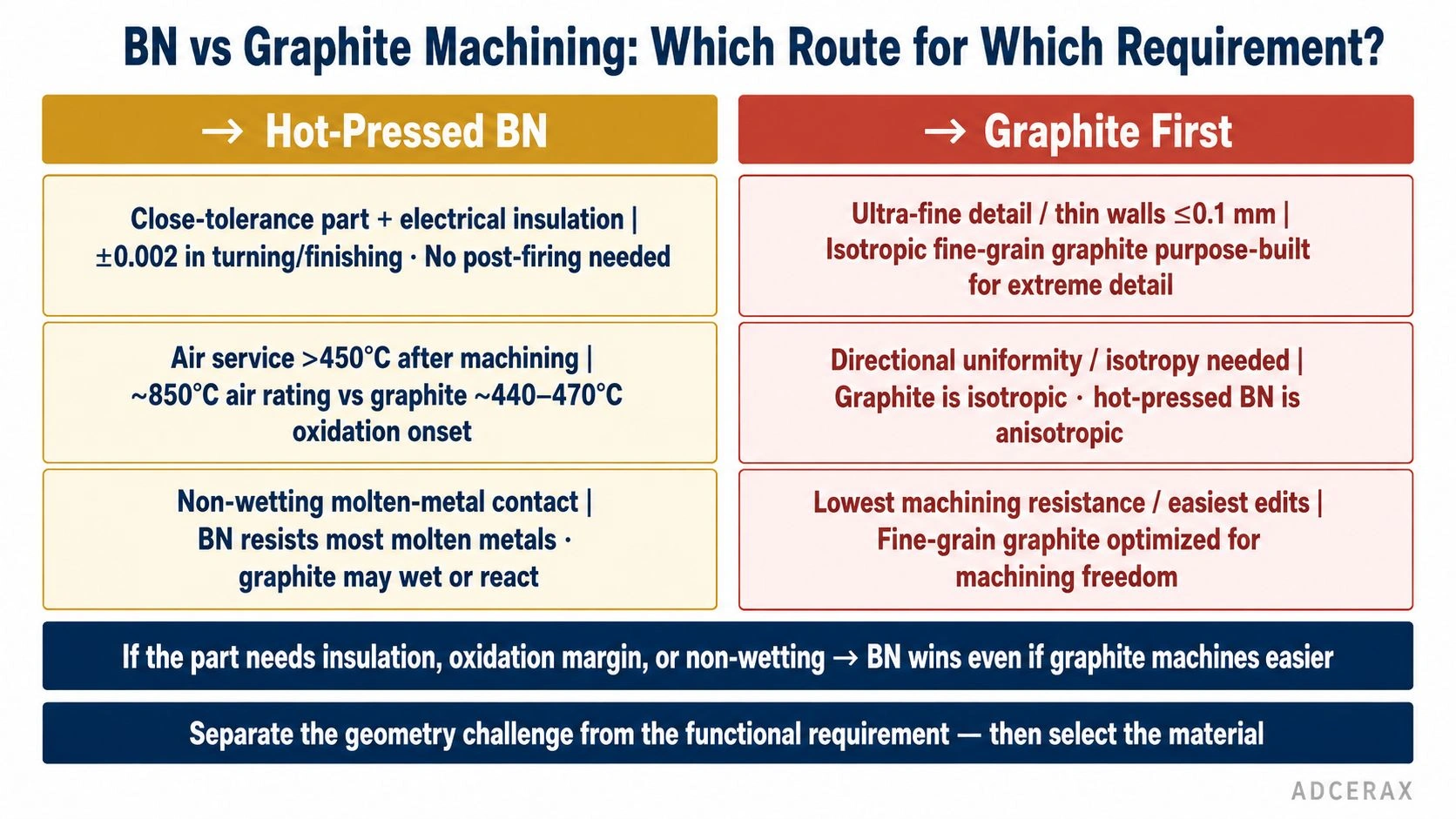
Six machining scenarios — and which material handles each one better. The decision separates into machining-pure problems (graphite often leads) and machining-plus-function problems (BN often leads).
BN is strongest for functional insulating or non-wetting precision parts
When the part requires precise geometry AND electrical insulation AND air service above graphite's oxidation threshold AND non-wetting contact with molten metal, the only machinable ceramic route that addresses all four simultaneously is hot-pressed BN. Graphite achieves the geometry but fails on all three functional criteria. BN achieves the geometry at documented tolerance levels and passes all three functional requirements. The machining comparison is secondary to the functional comparison in those cases.
Graphite is strongest for pure machining economy and the finest geometric features
When the application is structurally and functionally compatible with an electrically conductive carbon material at moderate temperature, and the part challenge is producing the finest possible geometric detail at the lowest machining effort, optimized isotropic fine-grain graphite is the stronger route. BN is machinable, but it is not the easiest-machining material available — it is the most functional machinable ceramic available.
What should go into the RFQ or machining note
Before writing "machine BN to graphite tolerances," the specification must resolve four variables: the feature type, the BN grade, the pressing-axis orientation relative to critical features, and the post-machining functional requirements.
The specification and machining-note checklist for precision BN parts:
- Feature-specific tolerances — specify ±0.002 in for turning and finishing features; specify and review separately for long bores, drilled holes, and features with length-to-diameter ratios above approximately 5:1.
- BN grade — specify HPBN, binder-free high-purity grade, or PBN if required; different grades have different machinability, density, and service temperature profiles.
- Orientation note — state which direction relative to the pressing axis is critical; for anisotropic hot-pressed BN, features loaded or dimensioned perpendicular vs parallel to the pressing plane may behave differently.
- Tooling note — confirm whether carbide or high-speed steel tooling is specified; published BN machining guidance indicates some HPBN grades can be machined with HSS tooling, which may affect shop cost and setup.
- Post-machining functional requirement — state explicitly whether the part must provide electrical insulation, withstand air service at a specified temperature, or serve in non-wetting molten-metal contact; these requirements determine whether BN is specified for its functional properties or could be replaced by graphite.
- Graphite comparison note — if the drawing was originally designed for graphite, flag any features with thin walls below approximately 1 mm, small internal radii below approximately 0.5 mm, or ultrafine surface finish below approximately Ra 0.8 µm; those features may need review before being transferred directly to BN.
A practical RFQ sentence for a BN precision part: "Machine hot-pressed BN HPBN to the attached feature-specific tolerances; assume ±0.002 in (0.05 mm) for turning and finishing features; review all drilled or bored holes longer than 3× diameter for tolerance adjustment; note pressing-axis orientation as marked on drawing." That language is grounded in published BN machining data and avoids the "graphite-equivalent tolerance" ambiguity.
Conclusion
Hot-pressed BN is a genuinely machinable ceramic — not a soft claim but a manufacturing fact supported by published tolerance benchmarks. For most precision-insulating, non-wetting, or oxidation-resistant parts, BN delivers the geometry at documented close-tolerance levels and adds functions graphite cannot provide. For ultra-fine detail, isotropy-dependent repeatability, and the finest possible feature geometry, optimized isotropic fine-grain graphite retains its manufacturing advantage. The specification that works for either material starts by separating the geometry requirements from the functional requirements — and then assigns the material by which one answers both correctly, not by which one is easier to machine in isolation.
Machining hot-pressed BN to close tolerances, or comparing BN and graphite for a specific part design? Send the drawing, critical feature list, pressing-axis preference, service environment, and functional requirements. ADCERAX engineers return a grade recommendation with tolerance guidance, orientation notes, and service-temperature confirmation for the confirmed application; turnaround depends on inquiry complexity — no RFQ commitment required at this stage.
Frequently Asked Questions
Can hot-pressed BN really be machined to close tolerances?
Yes. Published BN materials documentation describes solid BN as machinable to close tolerances in virtually any shape, and the Saint-Gobain BN machining bulletin gives expected tolerances of approximately ±0.002 in (0.05 mm) for most turning and finishing operations, and approximately ±0.005 in (0.125 mm) for lengthy bore holes or drilling. Those are documented manufacturing benchmarks, not theoretical material properties.
Is graphite still better for the finest geometric details?
Usually yes for extreme fine detail. Official isotropic graphite grade documentation from major suppliers emphasizes ultrafine microstructure, stable dimensional properties, and the ability to machine to feature thicknesses of 0.1 mm or less in optimized grades. Graphite suppliers have specifically engineered isotropic fine-grain grades for the finest detail and most stable property distribution, which gives graphite a manufacturing-development advantage at the extremes of feature fineness that hot-pressed BN does not replicate.
Why would you choose BN if graphite machines easier?
Because BN adds functions graphite cannot. Hot-pressed BN is an electrical insulator; graphite is conductive. BN has a published air-service temperature around 850°C; industrial graphite grades begin oxidizing at approximately 440–470°C. BN is non-wetting to most molten metals and slags; graphite may wet and react in some melt-contact applications. When the part requires any of those properties after it leaves the machine, graphite's machining ease becomes irrelevant.
Does the hot-pressed structure of BN matter for machining?
Yes, specifically for orientation-dependent features. Both Saint-Gobain and published precision-ceramics documentation note that hot-pressed BN is anisotropic because its platy hexagonal structure aligns during pressing. Features whose dimensional accuracy or functional performance depends on the relationship between the pressing axis and the feature orientation should be explicitly flagged in the drawing — something isotropic fine-grain graphite does not require because its properties are nearly direction-neutral.
What is the biggest specification mistake on a BN machining drawing?
Writing "graphite-equivalent tolerances" without specifying feature type, BN grade, and pressing-axis orientation. There is no single universal graphite machining tolerance, and published BN tolerance data is feature-type-specific rather than a single all-application number. The correct specification states the expected tolerance by feature class — turning/finishing vs long bores separately — and notes the pressing-axis direction for any feature whose anisotropy sensitivity matters for the application.